
Author: Speed Cooking

  • Shiitake and the Mushrooms on an Asian Menu

    Shiitake and the Mushrooms on an Asian Menu

    Mushrooms turn up all over an Asian menu – in the soups, on the grill, through the noodles – and they are rarely named. Which ones they are, and whether they were dried first, changes the dish more than most people would guess.

    What is shiitake?

    Shiitake is a brown-capped mushroom cultivated across East Asia and now grown worldwide. It has a firm, almost meaty texture and a deeper, more savoury flavour than the white mushrooms most Western kitchens default to.

    It grows naturally on hardwood logs, and is still cultivated that way as well as on sawdust blocks. Britannica’s entry on the mushroom covers how varied the cultivated species are.

    Dried changes everything

    This is the part worth knowing, because it explains why the mushrooms in a soup can taste nothing like the ones on a grill even when they are the same species.

    Drying concentrates the flavour dramatically and changes it in character, producing something much deeper and slightly smoky. Rehydrated, the texture becomes chewier and denser than fresh, and the soaking liquid takes on so much flavour that it is usually kept and used.

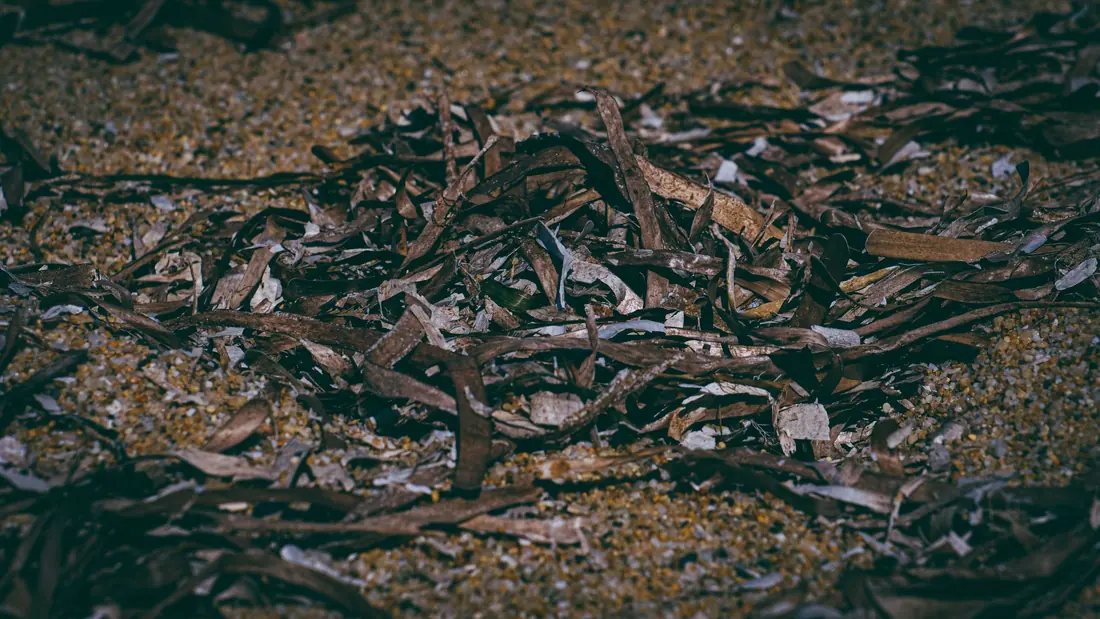
    Dried mushrooms, shrivelled and dark

    Fresh shiitake, by contrast, is mild and springy. Both are legitimate and neither is a substitute for the other – a cook choosing between them is choosing between two fairly different ingredients.

    How they are grown

    Shiitake is a wood-decay fungus, which means it will not grow in soil the way a field mushroom does. It needs wood, and that requirement shapes how it is cultivated.

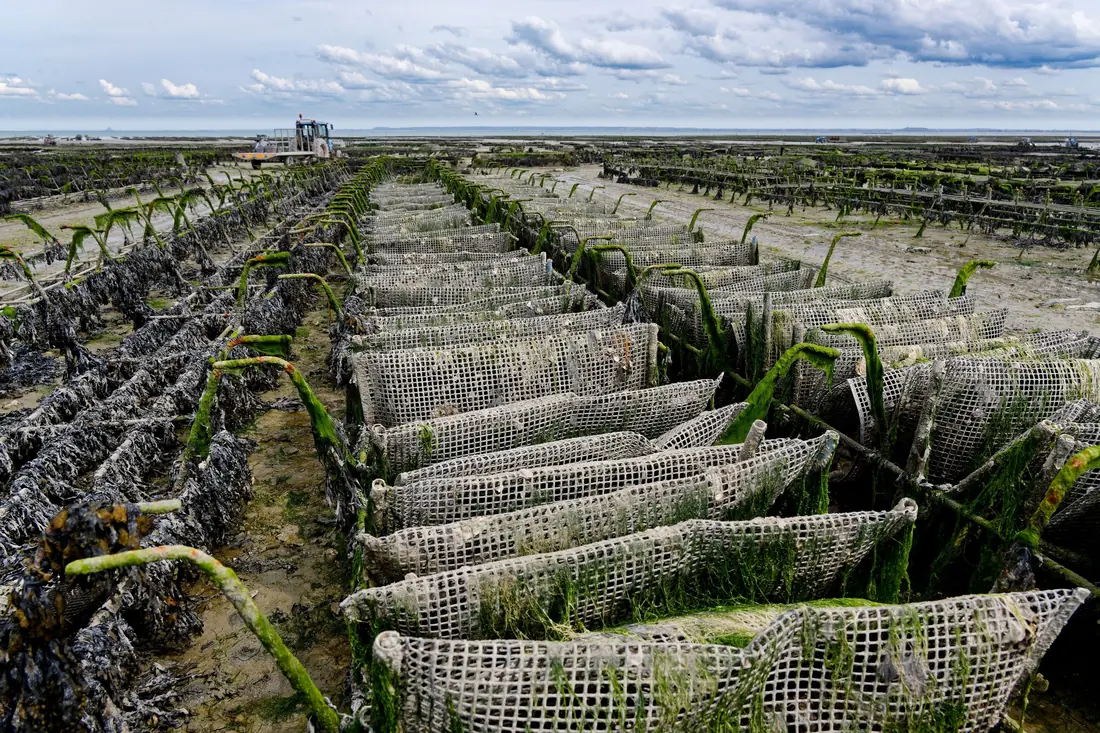
    The traditional method inoculates hardwood logs – oak most often – and leaves them outdoors for a year or more before the first flush appears. The result is slower and more variable, and generally reckoned to have more flavour.

    The modern method uses compressed sawdust blocks indoors, which produces a crop in months rather than years and far more predictably. Most of what reaches a restaurant is grown this way, and it is the reason shiitake went from a specialty item to something available everywhere.

    The mushrooms you will actually meet

    MushroomLooks likeTextureWhere it turns up
    ShiitakeBrown cap, thick stemFirm, meatySoups, grills, stir fries
    ButtonSmall, white or brownSoft, mildGrilled vegetables, stir fries
    EnokiLong thin white strandsCrisp then softSoups and hot pots
    OysterFan-shaped, pale greySilky, tenderStir fries and grills
    Wood earDark, thin, irregularSpringy, gelatinousSoups and noodle dishes
    The five you are most likely to encounter

    The last two are the ones people most often cannot identify. Wood ear in particular surprises diners, because its texture is unlike any other mushroom – springy and slightly crunchy rather than soft.

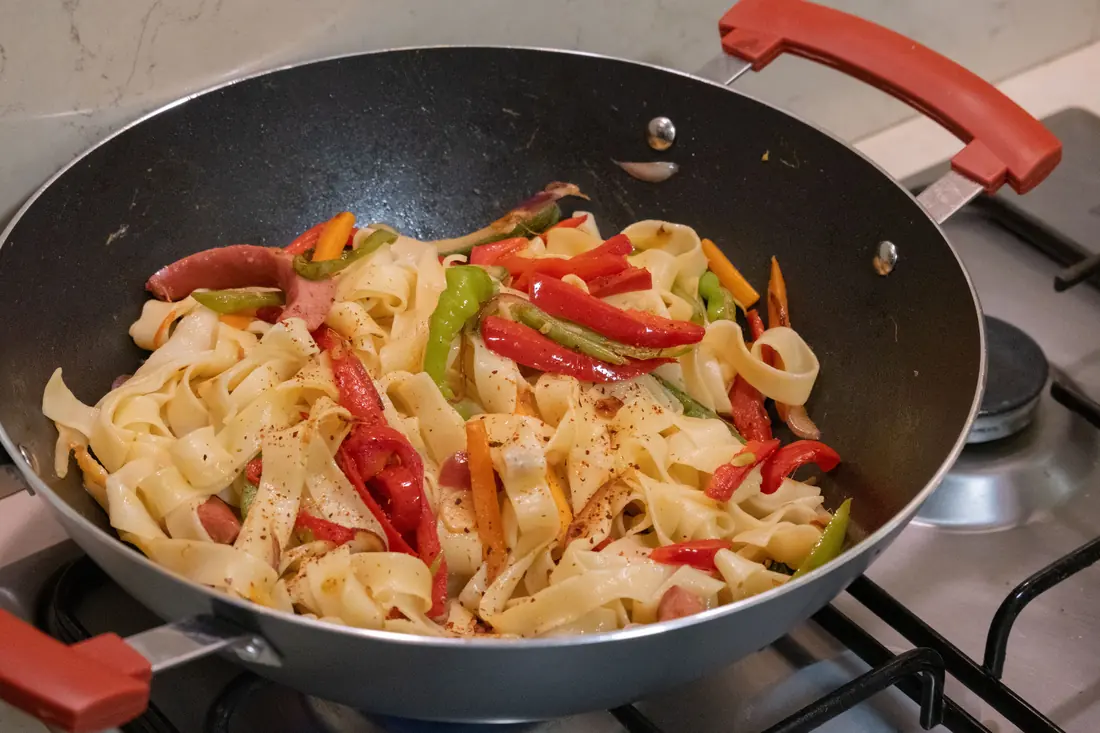
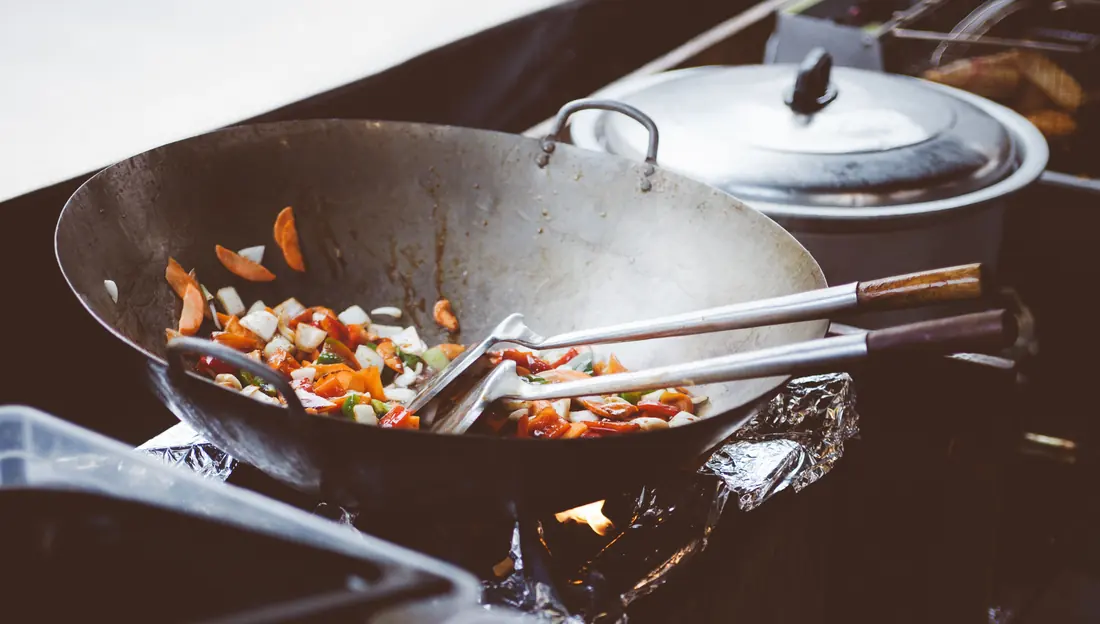
    Sliced mushrooms cooking in a wok

    On the grill

    Mushrooms are part of the standard vegetable mix on a flat-top grill, alongside zucchini, onion and carrot, and there is a good reason they earn their place.

    They hold their shape at high heat, they brown well, and they release moisture early and then concentrate rather than collapsing. A mushroom that has been seared hard on a griddle tastes considerably more of itself than one that has been steamed or boiled.

    The one thing that goes wrong is crowding. Mushrooms release a lot of water, and too many at once on a surface means they stew in it rather than searing – which is why a good griddle cook spreads them out.

    Small mushrooms growing on a fallen log

    The stems are not waste

    Shiitake stems are tough – noticeably more so than the caps – and most recipes tell you to remove them. What they usually do not say is what to do with them next.

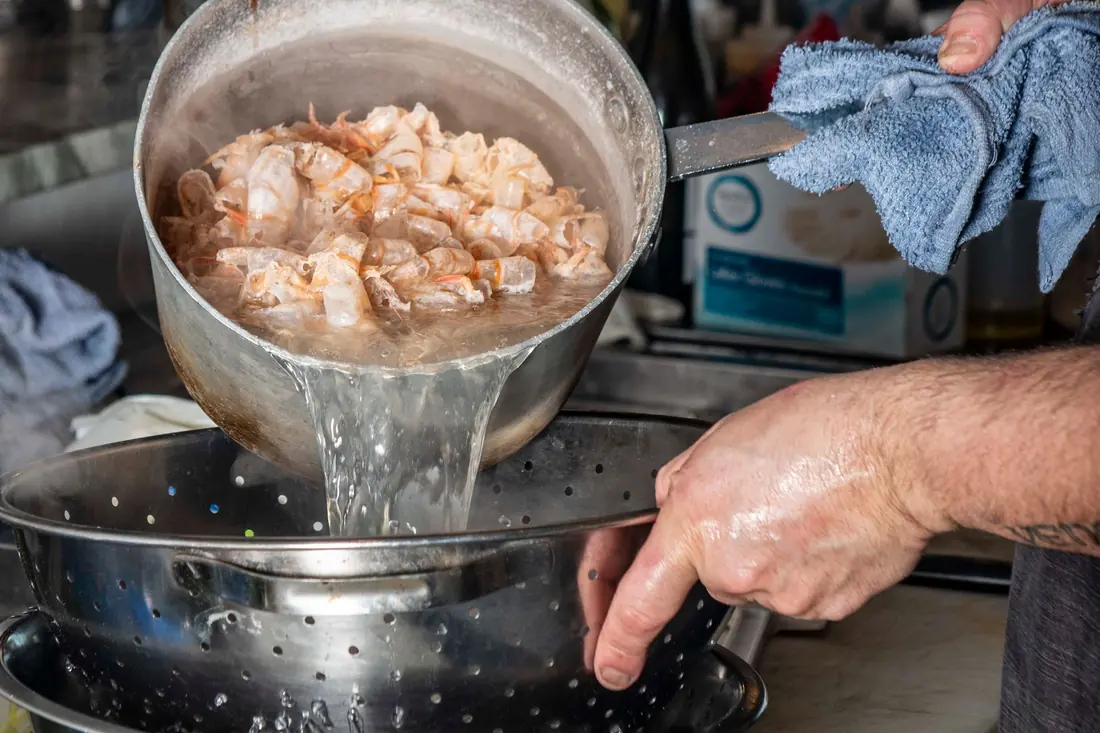
    They are full of flavour and are ideal for stock. A handful of stems simmered in water produces something worth using, which is why a kitchen that goes through mushrooms in quantity rarely throws them out.

    If you find a chewy, fibrous piece in an otherwise tender dish, a stem that should have been trimmed is the most likely explanation.

    In the soups

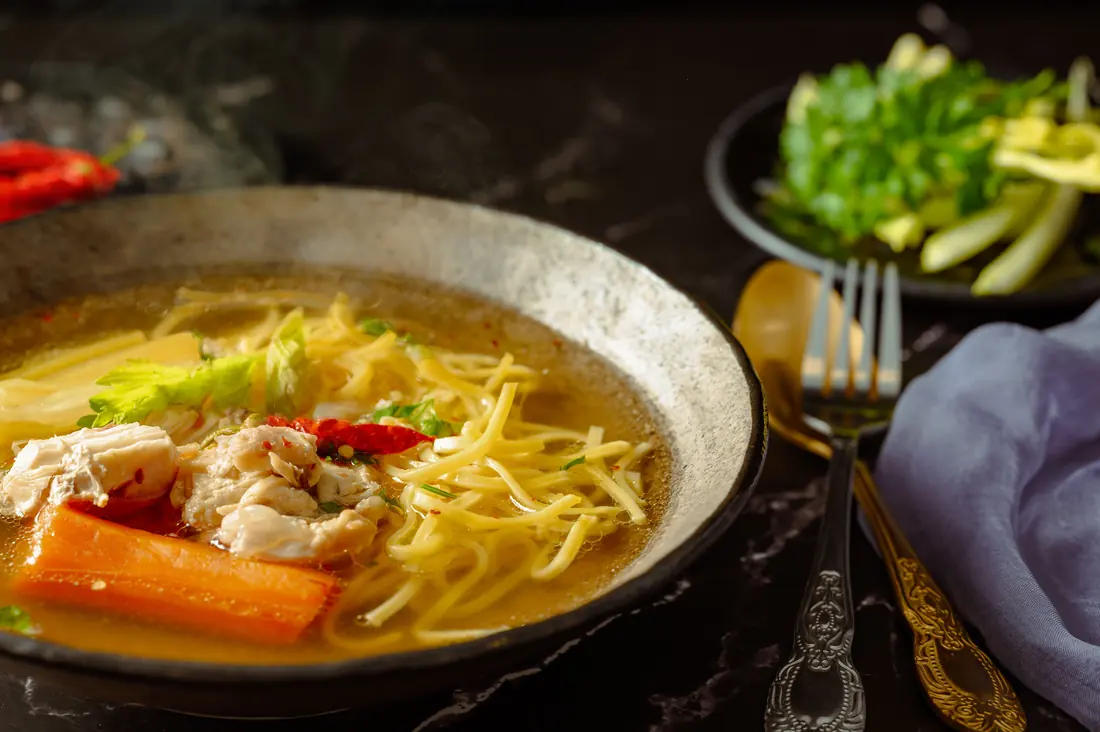
    Mushrooms appear in clear broths, in onion soups and through noodle soups, and here they are usually doing a different job entirely – contributing to the broth rather than being eaten as a component.

    A few slices simmered in a clear broth make the whole thing taste more savoury without adding anything you can identify. This is the same quality that makes dried mushrooms a standard base for vegetarian stocks, where they stand in for the depth that a fish or meat stock would provide.

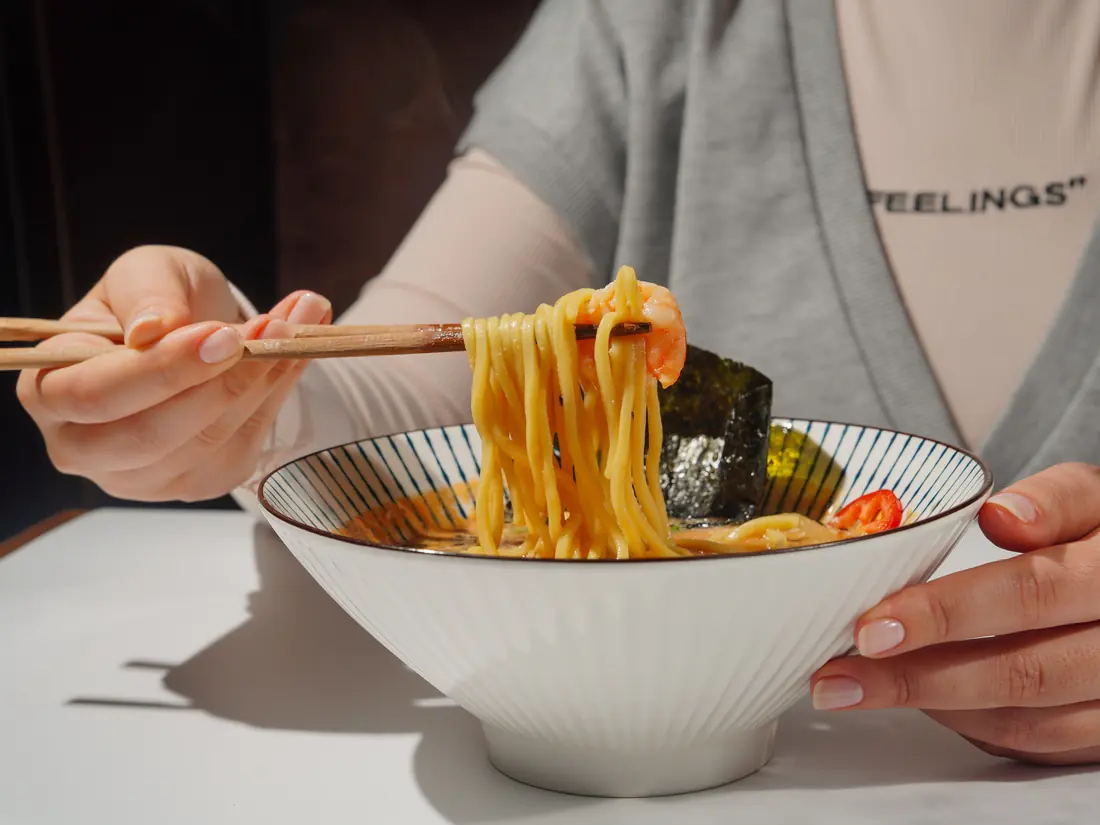
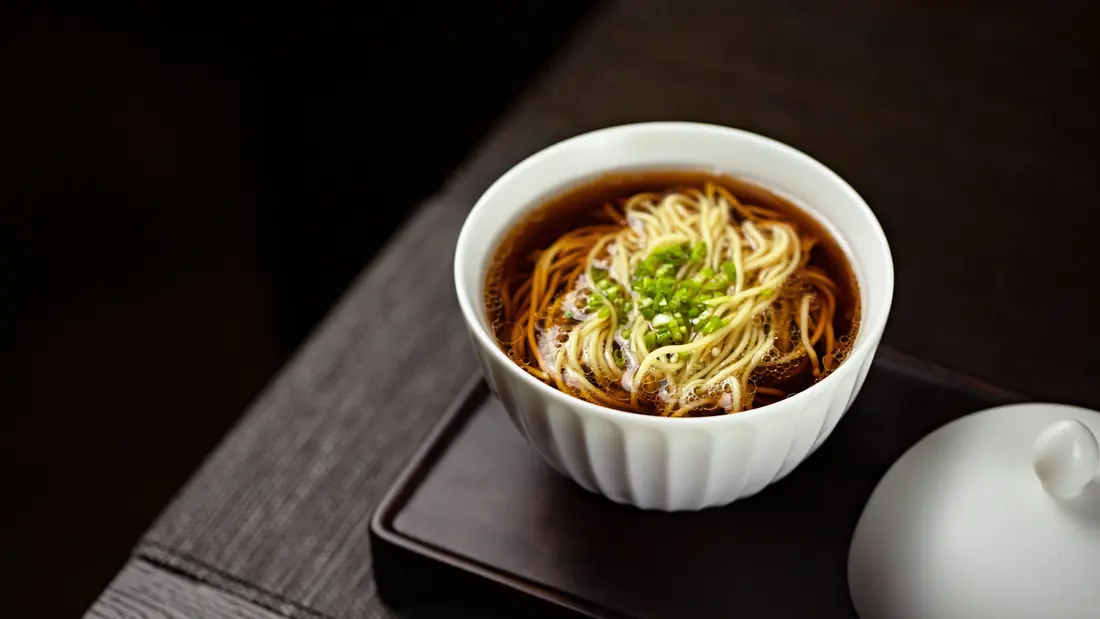
    A bowl of mushroom soup

    Cooking them well

    Mushrooms are mostly water, and every common mistake with them comes from ignoring that.

    1. Do not crowd the pan. Too many at once means they release water faster than it evaporates, and they boil instead of browning.
    2. Do not salt them at the start. Salt draws water out, which works against the searing you are trying to achieve.
    3. Give them time undisturbed. Constant stirring keeps the surface too cool to colour.
    4. Do not soak fresh ones. They absorb water readily, and a wet mushroom will not brown at all.

    Done properly they shrink considerably and concentrate, which is why a large pile going onto a griddle produces a modest quantity on the plate. That reduction is the flavour arriving rather than something going wrong.

    Fresh or dried, on a menu

    Menus almost never specify, but a few signals help.

    • Thin, pale, springy slices – fresh, usually button or shiitake.
    • Dark, chewy, intensely flavoured pieces – rehydrated dried, most often shiitake.
    • Whole caps with a scored cross on top – fresh shiitake, scored so they cook evenly and look deliberate.
    • Broth that tastes deeply savoury with no obvious source – dried mushroom somewhere in the stock.

    Keeping them

    Fresh mushrooms want air rather than plastic. Sealed in a bag they sweat and turn slimy within a couple of days; kept in paper or an open container they last considerably longer.

    Dried ones keep almost indefinitely in a sealed jar away from light, which is part of why they became a staple in the first place. A cupboard with dried mushrooms in it always has the beginnings of a stock.

    Why they matter more in this cuisine

    East Asian cooking has leaned on mushrooms for a very long time, and part of the reason is structural. Where a cuisine uses less dairy and less long-reduced meat stock, it needs another source of savoury depth, and mushrooms are one of the best available.

    That is why they turn up as a background element so often rather than as the star of a dish. The mushrooms in your soup may not be something you notice, and they are probably a large part of why the soup tastes like anything at all.

    Sliced white mushrooms on a board

    For where they appear, our hibachi plate guide covers the grilled vegetables, the soup comparison covers the starter they turn up in, and the hibachi explainer covers the griddle they are cooked on. The current selection is on the ordering page.

    Frequently Asked Questions

    What is a shiitake mushroom?

    A brown-capped mushroom cultivated across East Asia, firmer and more savoury than the white button mushrooms common in Western kitchens.

    What is the difference between dried and fresh shiitake?

    Drying concentrates the flavour and makes it deeper and slightly smoky, and the texture becomes chewier once rehydrated. Fresh is milder and springier.

    What are the long thin white mushrooms in soup?

    Enoki. They grow in clusters of long thin strands and stay crisp briefly before turning soft in hot broth.

    What is the dark springy thing in my noodle soup?

    Most likely wood ear mushroom. Its texture is springy and slightly crunchy rather than soft, which catches people out.

    Why are mushrooms in so many Asian dishes?

    They supply savoury depth in a cuisine that uses less dairy and less long-reduced meat stock. Often they are in the background rather than a visible component.

  • What Is Daikon? The White Radish on Your Plate

    What Is Daikon? The White Radish on Your Plate

    There is a good chance you have eaten it without knowing what it was. Daikon turns up on a Japanese menu in at least four different forms, and they look so unlike one another that most people never connect them.

    What is daikon?

    Daikon is a large white radish, long and cylindrical, common across East Asia. The name means big root, which is a fair description – a full one can be the length of a forearm.

    It is the same species as the small red radishes in a salad; Britannica’s entry on the radish covers how wide that family runs. The difference is size, water content and a much milder flavour.

    Small red radishes being sliced on a board

    What it tastes like

    Mild, faintly sweet and juicy, with a peppery edge that is strongest near the top of the root and fades toward the tip. Raw, it is crisp and refreshing. Cooked, it turns soft and almost translucent and loses the pepper entirely.

    If you know small red radishes, daikon is a much gentler version of the same idea. It is watery rather than dense, and it takes on the flavour of whatever it is cooked in.

    Pale yellow pickled radish slices

    How a kitchen prepares it

    Almost every form starts with peeling, because the skin is tougher and more peppery than what is underneath. Beyond that the preparation is what determines which of the four things it becomes.

    The fine white threads are cut on a specialised tool – or, in a kitchen that does it the traditional way, by rotating the peeled root against a knife to take off one continuous sheet, which is then stacked and shredded. It is a display of knife work as much as a preparation.

    Grated daikon is made on a fine grater and then drained briefly, since it releases a great deal of water. Too wet and it floods the plate; squeezed too hard and it loses the juiciness that makes it refreshing.

    The four forms you will meet

    FormWhat it looks likeWhere it appears
    PickledBright yellow discs or stripsInside rolls, beside rice
    GratedA small wet white moundBeside fried food and grilled fish
    Shredded rawFine white threadsUnder sashimi, in salads
    SimmeredSoft translucent chunksIn stews and hot pots
    The same vegetable in four different guises

    The first three all turn up on a sushi menu, and none of them look like a radish by the time they reach the plate.

    The yellow pickle

    The bright yellow discs are takuan, daikon that has been dried and then pickled. It is sweet, sour, extremely crunchy and coloured far more vividly than anything natural.

    On a sushi menu it turns up inside simple rolls, where its crunch and sharpness do the job that a raw vegetable would otherwise do. It is also served in small amounts beside rice, where it functions as a palate reset between mouthfuls.

    Finely shredded white vegetable

    The white mound beside fried food

    Grated daikon appears next to fried and grilled dishes, sometimes with a little soy poured over it, sometimes with grated ginger mixed through. It looks like a garnish and is not one.

    Its purpose is to cut richness. Grated raw radish is watery, faintly peppery and cold, and a small amount of it between bites of something fried resets the palate completely. Eating it as an accompaniment rather than leaving it on the plate makes a real difference to a fried dish.

    The white threads under sashimi

    Finely shredded raw daikon is the bed that sliced raw fish is often presented on. This one genuinely is partly presentation – it holds the slices up and keeps them separated – but it is also perfectly edible and does the same palate-clearing job.

    It is worth eating rather than pushing aside. Cold, crisp and neutral, it works between different fish in the same way pickled ginger does.

    A white root vegetable growing in the ground

    Which end of the root

    A whole daikon is not uniform, and cooks use different parts for different things. The top, nearest the leaves, is the sweetest and mildest, so it goes into salads and raw preparations.
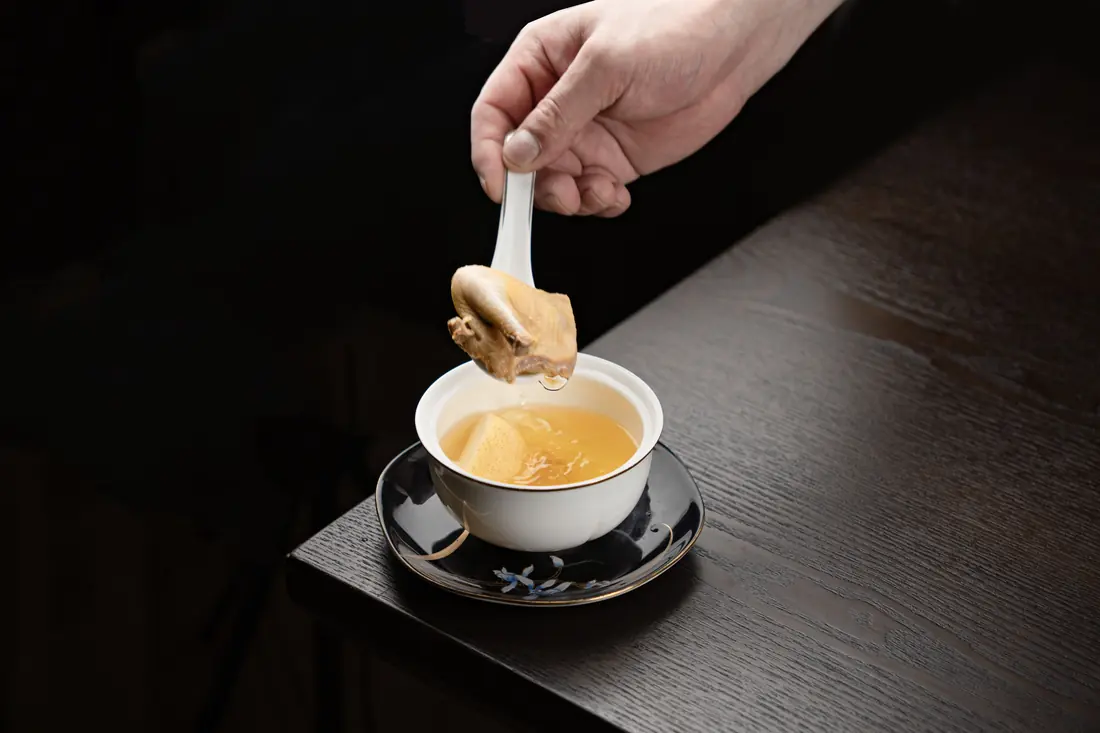
    The middle is the most balanced and is the usual choice for simmering. The tip is the most peppery and the most fibrous, which makes it the part most often grated, where a bit of bite is wanted.

    This is why the same vegetable can seem sharp in one dish and almost sweet in another even when nothing else has changed.

    Simmered daikon

    Cooked slowly in a seasoned broth, daikon becomes something else entirely – soft, translucent, and saturated with whatever it was cooked in. The pepperiness disappears and what is left is texture and absorbed flavour.

    This is the form least likely to appear on an American Japanese menu, but it is worth trying if you find it, because it demonstrates how completely the same vegetable can change character.

    Choosing one

    If you go looking for daikon rather than meeting it on a plate, a few things separate a good root from a tired one. It should feel heavy for its size, which means it has not dried out, and the skin should be smooth and unblemished rather than wrinkled.

    Stored whole and wrapped, it keeps for a couple of weeks in a fridge. Once cut it dries quickly at the exposed face, so the usual approach is to keep the cut end covered and work through it rather than portioning it all at once.

    How to spot it

    A few reliable signals, since it is rarely named on a menu.

    • Bright yellow crunchy discs – pickled daikon, almost always.
    • A wet white mound beside something fried – grated daikon.
    • Fine white threads under raw fish – shredded raw daikon.
    • “Pickled radish” in a roll description – the same thing, named plainly.
    Pickles packed into glass jars

    The leaves are food too

    A daikon sold with its greens attached comes with a second vegetable. The leaves are peppery and slightly coarse, closer to a mustard green than to a lettuce, and they are cooked rather than eaten raw.

    You will not meet them on a restaurant menu often, since daikon usually arrives at a kitchen already trimmed. They are worth knowing about mainly as a reminder that the root you see is one part of a larger plant.

    Why it works so well with rich food

    Almost every use above is doing the same job from a different angle. Daikon is mostly water, it is cold in three of its four forms, and it carries either acidity or a mild pepperiness.

    Those are precisely the qualities that cut through fat and salt. A cuisine that serves a lot of fried food and a lot of rich fish needs something that resets the palate cheaply and quickly, and this is it.

    For where it turns up, our beginners guide to rolls covers the vegetable fillings, the fish-free guide leans on vegetable rolls heavily, and the condiments guide covers the other palate-clearing item on the table. The current selection is on the ordering page.

    Frequently Asked Questions

    What is daikon?

    A large white radish common in East Asian cooking. It is mild, juicy and faintly peppery, and much gentler than the small red radishes it is related to.

    What is the yellow pickled thing in my sushi roll?

    Almost certainly takuan – pickled daikon. It is sweet, sour and very crunchy, and the colour is added rather than natural.

    What is the white mound served with fried food?

    Grated daikon. It is there to cut richness between bites, not as decoration, and it is meant to be eaten.

    Are the white threads under sashimi edible?

    Yes. They are finely shredded raw daikon, and they do the same palate-clearing job as pickled ginger.

    Does daikon taste like a radish?

    Mildly. It has a peppery edge raw, strongest near the top of the root, but it is far less sharp than a small red radish and loses the pepper entirely when cooked.

  • What Is Fish Sauce? Nuoc Mam Explained

    What Is Fish Sauce? Nuoc Mam Explained

    It smells alarming and tastes nothing like it smells. Fish sauce is behind a great deal of what makes Vietnamese and Southeast Asian food taste the way it does, and it is almost always working invisibly.

    What is fish sauce?

    Fish sauce is a thin amber liquid made by packing small fish with salt and leaving them to ferment for many months. The liquid that separates out is drained, filtered and bottled. In Vietnamese it is nuoc mam.

    It is one of the oldest seasonings still in everyday use – Britannica’s entry on fish sauce traces versions of it back to the ancient Mediterranean as well as across Asia.

    Small silver fish packed with salt

    How it is made

    1. Small fish, usually anchovies, are mixed with salt in a high proportion – often three parts fish to one part salt.
    2. The mixture is packed into large wooden barrels or clay vessels and weighted down.
    3. It ferments for anywhere from six months to two years, during which the fish break down completely.
    4. The liquid is drawn off, filtered and graded. The first draw is the most prized.
    Large clay pots standing in a row

    The salt is doing two jobs at once – drawing liquid out of the fish, and keeping the mixture safe while the fermentation runs. That is why the salt proportion is so high and why the finished sauce is intensely salty.
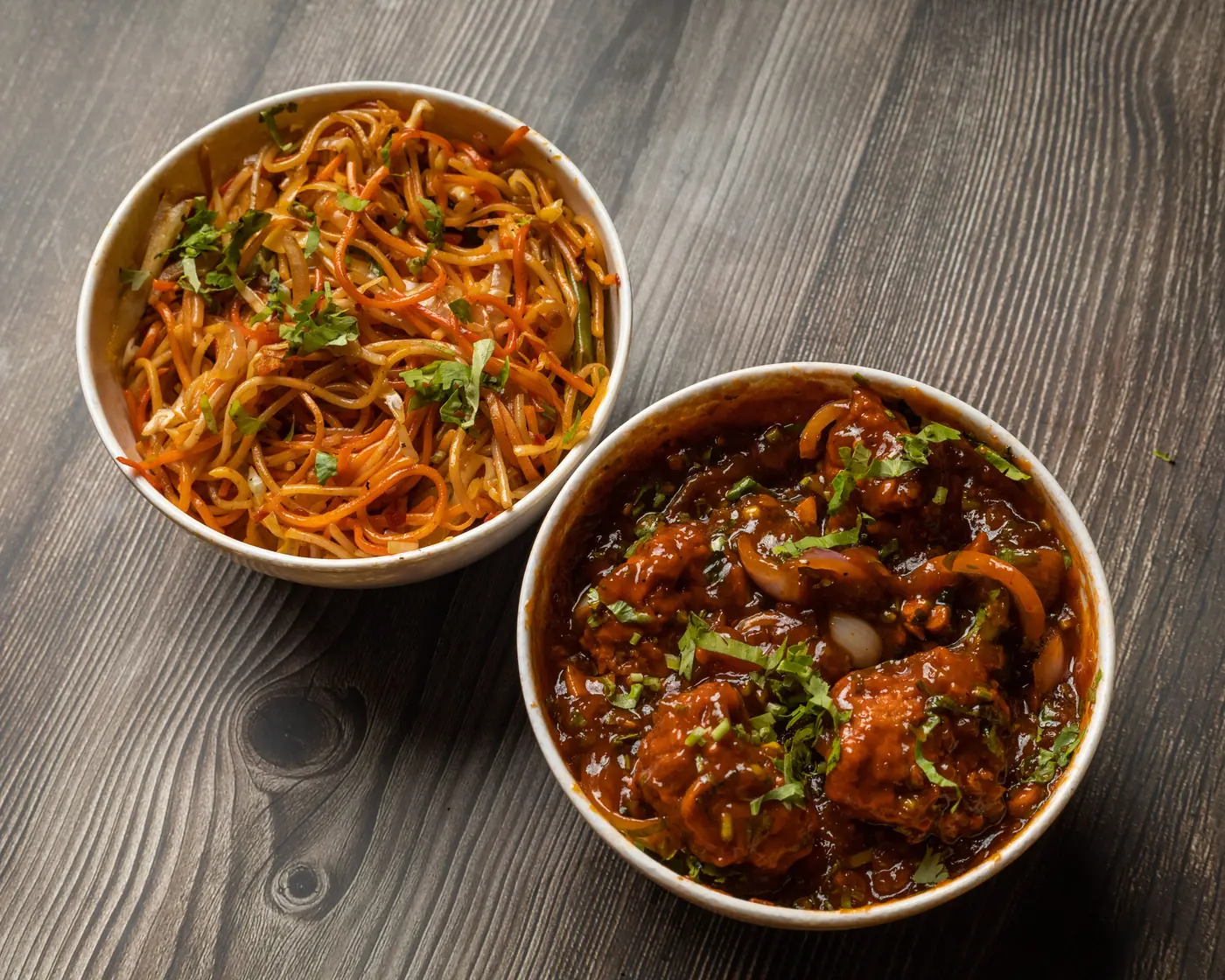
    Why it does not taste fishy

    This is the thing that surprises people. Opened straight from the bottle it smells strongly of the sea and of fermentation. In finished food it registers as savoury depth and salt, and almost never as fish.

    The reason is that fermentation has broken the fish down so thoroughly that what remains is not fish flavour but the components underneath it. Used in the small quantities a dish actually calls for, it disappears into the background and pulls everything else forward.

    Anyone who has been startled by the smell and then enjoyed the food it seasoned has already had this demonstrated.

    Where it is in your order

    DishHow fish sauce is usedHow noticeable
    Pho brothSeasoning in the potNot noticeable – reads as savoury
    Dipping sauceThe main component, dilutedClearly present
    MarinadesFor grilled meatsBarely, in the background
    Stir friesA splash in the panNot noticeable
    Salads and slawsIn the dressingPresent but balanced by lime and sugar
    Where fish sauce appears in Vietnamese cooking

    The second row is the one to know. Nuoc cham – the light dipping sauce served with grilled meats, rolls and rice plates – is fish sauce diluted with water, lime, sugar and chilli, and there it is meant to be tasted.

    A dipping sauce with chilli and herbs in it

    Grades and the first press

    Not all of what comes out of the barrel is the same, and producers grade it. The first liquid drawn – sometimes called first press or virgin – is the most concentrated and the most prized, and it is used where the sauce will be tasted directly rather than cooked into something.

    Later extractions, made by adding brine back to the remaining fish, are thinner and less complex. They are perfectly good for cooking, where the sauce is one seasoning among several and its subtleties would be lost anyway.

    This is why the same cuisine can treat fish sauce as both a precision ingredient and a workhorse. Which grade is appropriate depends entirely on whether you will notice.

    Nuoc cham, in more detail

    It is worth understanding because it turns up constantly and because the balance explains a lot about the cuisine. Four elements: salt from the fish sauce, sourness from lime, sweetness from sugar, and heat from chilli, all diluted with water.

    Every one of those is adjustable, and households and restaurants each have their own proportions. A sauce that tastes sharp in one place and sweet in another is not a mistake anywhere – it is the point of a mixture built to be balanced to taste.
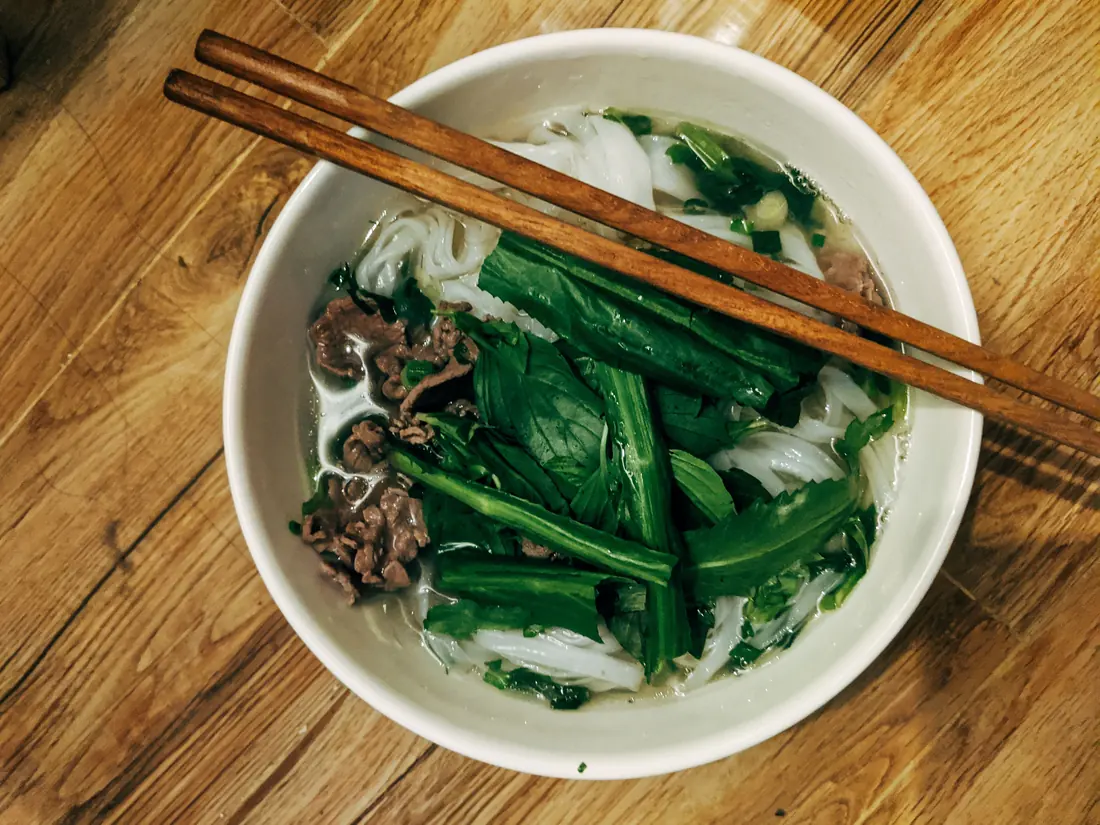
    A noodle bowl served with fresh herbs

    The regional cousins

    Nearly every coastal cuisine in the region has its own version, and they are close relatives rather than the same product.

    • Nuoc mam – the Vietnamese version, generally lighter and cleaner, often used diluted as a dipping sauce.
    • Nam pla – the Thai version, typically stronger and used in larger quantities in cooking.
    • Patis – the Filipino version, a by-product of fermented fish paste production.
    • Colatura – the Italian version, from the same ancient tradition, still made on the Amalfi coast.

    Substituting one for another works, but not in equal amounts. They differ in salt and in intensity, and a recipe written for one will be noticeably off if another is poured in at the same volume.

    Reading a label

    Bottles vary considerably, and a few things on the label tell you what you are looking at.

    • A short ingredient list – anchovy, salt, water and nothing else is the mark of a straightforward sauce.
    • A degree number – some bottles carry a figure indicating nitrogen content, which is a rough proxy for concentration.
    • Added sugar or flavour enhancers – common in cheaper bottles and not a disaster, but a different product from the plain version.
    • Colour – a clear reddish-amber is what you want. Very dark or cloudy usually means age or a lower grade.
    Sauce bottles standing on a shelf

    How little is actually used

    The quantities involved are smaller than the smell suggests. A pot of broth serving several people might take a tablespoon or two, and a stir fry rather less than that.

    It behaves like salt in that respect – it is a seasoning with a threshold, and past that threshold it stops improving the dish and starts dominating it. That is why well-made Vietnamese food does not taste of fish sauce even though it is in practically everything.

    Keeping a bottle

    Fish sauce is stable enough that it does not spoil in any dramatic way, but it does change. It darkens over time and the flavour becomes flatter and saltier as it oxidises, which is a slow process rather than a sudden one.

    Keeping it closed and out of direct light slows that down, and refrigerating an open bottle slows it further. A bottle that has gone very dark is not unsafe – it has simply lost the brightness that made the better grades worth buying.

    If you avoid fish

    This is the practical consequence. Fish sauce is not visible on a plate and rarely appears in a menu description, so a dish can be seasoned with it without anything on the menu saying so.

    Vietnamese dishes described as vegetarian are usually made without it, but the only way to be certain is to ask directly. It is a normal question in any Vietnamese kitchen and one that staff answer regularly.

    For the dishes it seasons, our guide to pho covers the broth it is used in, the condiments guide covers what you add at the table, and the fish-free guide puts the hidden-seasoning question in context. The current selection is on the ordering page.

    Frequently Asked Questions

    What is fish sauce made from?

    Small fish, usually anchovies, packed with salt and left to ferment for six months to two years. The liquid that separates out is drained and filtered.

    Does fish sauce make food taste fishy?

    No. Fermentation breaks the fish down so completely that what remains reads as savoury depth and salt. In most dishes it is not identifiable at all.

    What is nuoc cham?

    The light dipping sauce made from fish sauce diluted with water, lime, sugar and chilli. It is served with grilled meats, rolls and rice plates.

    Why does fish sauce smell so strong?

    The smell comes from the fermentation and is far more assertive than the taste. In the quantities used in cooking it disappears into the background.

    Is fish sauce in everything Vietnamese?

    It is in a great deal, often invisibly, and rarely mentioned on a menu. If you avoid fish, ask directly rather than judging from the description.

  • What Is Panko? The Crumb That Stays Crisp

    What Is Panko? The Crumb That Stays Crisp

    Some fried food is still crisp when it reaches your table twenty minutes later, and some has gone soft by the time it crosses the room. A surprising amount of the difference comes down to which breadcrumb was used.

    What is panko?

    Panko is a Japanese breadcrumb made from crustless white bread, dried into large flat flakes rather than ground into round crumbs. It produces a coating that is coarser, lighter and noticeably crisper than standard breadcrumbs.

    The name is straightforward – it combines the words for bread and for powder or flour – and the bread it starts from is a soft white loaf of the kind Britannica’s entry on bread would recognise anywhere.

    Why it is different

    Three things separate panko from an ordinary breadcrumb, and all three matter.

    • No crust. Only the interior of the loaf is used, so the crumbs are uniformly pale and stay pale when fried.
    • Flakes, not grains. The bread is torn into large irregular shards rather than milled, so the pieces have edges that stand up off the surface.
    • Lower density. The flakes are airy, so there is less material to absorb oil in the first place.
    A sliced loaf of soft white bread

    How the bread is made

    The detail people find surprising is that the bread for panko is often baked without a crust at all. One method passes an electric current through the dough, which cooks it from the inside without browning any surface.

    The loaf that comes out is entirely pale and soft. It is then dried and broken into flakes, which is why panko is white rather than tan and why it stays that way until it actually cooks.

    Coarse pale breadcrumbs scattered on a surface

    Why it stays crisp

    Crispness in fried food is really a question of moisture. A coating goes soft when steam from the food underneath works its way into it, and the more solid the coating, the more thoroughly it traps that steam against itself.

    Panko’s flakes sit at angles with air between them, so steam escapes rather than collecting. The same open structure absorbs less oil, which means less of the heaviness that makes a coating go limp as it cools.

    This is why a panko-coated item can survive a drive home when a batter-dipped one cannot. It is not that panko resists moisture – it is that it lets it out.

    Food frying in a pan of hot oil

    How the coating goes on

    A crumb coating is applied in three stages, and skipping any of them is why coatings fall off.

    1. A dusting of flour, which dries the surface so something can stick to it.
    2. A dip in beaten egg, which is the glue.
    3. A press into the crumbs, firm enough to embed them without crushing the flakes.

    The pressing step is where panko is treated differently from a fine crumb. Pressed too hard, the flakes break and the coating loses the open structure that makes it worth using. Handled lightly, the shards stay standing and fry into the spiky surface that gives the whole thing away.

    Panko and standard breadcrumbs compared

    PankoStandard breadcrumbs
    Made fromCrustless white breadWhole loaf, crust included
    ShapeLarge flat flakesFine round grains
    ColourPale, almost whiteTan or golden
    DensityLight and openDense and packed
    Oil absorbedLessMore
    Texture when friedSpiky, shatteringEven, sandy
    Holds crispnessWellLess well
    The two crumbs side by side

    Where it came from

    Panko is a product of Japan’s encounter with Western cooking rather than of traditional Japanese cuisine. Breaded, deep-fried dishes arrived in the late nineteenth century and were adapted rather than copied.

    The adaptation produced a distinctly Japanese crumb – lighter, coarser and paler than the European original – and it turned out to be better at the job than what it was based on. It has since travelled back out and is now used well beyond Japanese cooking.

    Where you will find it on a menu

    Anything described as crispy or crunchy on a Japanese or pan-Asian menu is a reasonable candidate. It appears on fried shrimp, on breaded cutlets, on fried vegetable pieces, and scattered over rolls as a topping.

    That last use is worth knowing about. The crunchy flakes sprinkled over a sushi roll are usually fried crumbs of this kind, added for texture against soft rice and fish. On a menu they are often described simply as crunch.

    Fried pieces in serving baskets

    Beyond the fryer

    Panko has uses that involve no deep frying at all, and they turn up more often than the name suggests.

    • Baked or air-fried – the coating browns and crisps reasonably well with only a light coating of oil, which is why it appears in oven-cooked versions of fried dishes.
    • As a topping – toasted with a little oil and scattered over pasta, salads or vegetables for texture.
    • As a binder – folded into meatballs and patties, where its lightness keeps the mixture from turning dense.

    The common thread is structure. Wherever a dish needs something to stay separate and crisp rather than dissolving into what surrounds it, the flake shape is doing the work.

    How to tell it was used

    1. Look at the surface. Panko produces visible spikes and shards; standard crumbs produce an even, sandy coating.
    2. Listen. A panko coating makes a distinctly louder, sharper sound.
    3. Look at the colour. Panko browns unevenly, with pale patches between golden edges. A uniformly brown coating is usually something else.
    4. Check how it holds. A panko coating stays separate from the food underneath rather than softening into it.

    Portion size interacts with this too. A large piece of anything fried has more moisture inside it working against the coating, which is why smaller pieces stay crisp longer than one big one. If you are ordering fried food to eat later, several small items will hold up better than a single large portion.

    What goes wrong with it

    Three failures account for almost every disappointing crumb coating, and all three are visible.

    • Soggy. Either the oil was not hot enough, so the coating absorbed rather than sealed, or the food sat covered afterwards.
    • Falling off. The flour stage was skipped or the surface was wet when the coating went on.
    • Dark and dense. The crumbs were pressed too hard, or the oil was old enough to be colouring the coating before it crisped.

    A well-fried panko coating should look almost blonde in places, with darker points where individual flakes have caught. Uniform brown is a warning rather than a sign of thorough cooking.

    What it means for ordering

    If you are ordering to eat at home, a panko coating is the best of the fried options for surviving the trip – not perfect, but noticeably better than batter or tempura.

    Two things help further. Ask for sauces on the side rather than over the top, since sauce defeats any coating within minutes. And leave the container open on the way home if you can – trapped steam is what softens the crumb.

    Fried food resting on a wire rack

    For more on what survives the journey, our takeout guide covers which dishes hold up, the crab rangoon piece looks at a fried appetiser in detail, and the roll comparison explains why wrapper thickness changes everything. The current selection is on the ordering page.

    Frequently Asked Questions

    What is panko made of?

    Crustless white bread, dried and broken into large flat flakes rather than ground into fine crumbs.

    Why is panko crispier than breadcrumbs?

    Its flakes sit at angles with air between them, so steam escapes instead of collecting, and the open structure absorbs less oil.

    Is panko the same as breadcrumbs?

    It is a breadcrumb, but a distinct one. Standard crumbs are fine, dense and made from the whole loaf; panko is coarse, light and made from the interior only.

    What is the crunchy topping on a sushi roll?

    Usually fried panko flakes, added for texture against the soft rice and filling. Menus often describe it simply as crunch.

    Does panko-coated food travel well?

    Better than most fried coatings. Ask for sauces on the side and avoid sealing the container tightly, since trapped steam is what softens it.

  • What Is Dashi? The Stock Under Miso Soup

    What Is Dashi? The Stock Under Miso Soup

    Almost every savoury Japanese dish is built on the same foundation, and most diners have never heard its name. Dashi is the stock underneath miso soup, underneath simmered dishes, and underneath a great many sauces – and it answers a question that comes up constantly.

    What is dashi?

    Dashi is a light Japanese stock, usually made from two ingredients: a thick dried seaweed called kombu, and flakes shaved from a dried, smoked, fermented fish. It takes minutes rather than hours to make.

    That speed is the first thing that separates it from most Western stocks. There is no long simmering and no reduction – kombu is steeped, the flakes go in briefly, and the whole thing is strained.

    What goes into it

    • Kombu – a thick dried kelp, steeped rather than boiled. Boiling it turns the stock bitter and slightly slimy, so temperature control matters more than time.
    • Katsuobushi – flakes shaved from dried skipjack, which has been smoked and fermented until it is hard enough to be shaved like wood. This is where the savoury depth comes from.
    • Water – and nothing else. No aromatics, no bones, no browning.
    Dried seaweed spread out to dry

    There are versions using dried mushrooms or dried sardines instead, and a kombu-only version that uses no fish at all. The two-ingredient version is the one most people mean.

    How it is made

    1. The kombu steeps in water that is heated slowly and pulled off before it boils.
    2. The kombu is removed – it has given what it has to give and will turn bitter if it stays.
    3. The fish flakes go in and steep for a minute or two, no longer.
    4. Everything is strained out, leaving a clear pale liquid.
    Pale dried flakes being added to a pot

    The whole process takes about twenty minutes. Japanese regional cooking is built on this base almost everywhere – Japan’s agriculture ministry maintains an overview of regional Japanese cuisines that shows how widely the same foundation is used.

    What it tastes like

    Very little, on its own, which is exactly the point. Dashi is savoury and faintly smoky with a clean finish, and it is not assertive enough to be a soup by itself.

    What it does is make everything added to it taste more like itself. That is the quality the word umami is reaching for, and dashi is one of the purest examples of it in any cuisine.

    A pot on the stove in a home kitchen

    The other kinds

    The two-ingredient version is the default, but it is not the only one, and the alternatives exist for good reasons rather than as compromises.

    • Kombu dashi – seaweed only, no fish. Lighter and cleaner, and the version used in Buddhist temple cooking where meat and fish are avoided.
    • Shiitake dashi – made from dried mushrooms, deeper and earthier. Frequently combined with kombu to build a stock with no fish in it at all.
    • Niboshi dashi – made with dried sardines rather than shaved skipjack. Stronger, more assertively fishy, and common in noodle broths.

    Which one a kitchen uses is rarely stated, and the difference is noticeable mainly in dishes where the stock is the point. It matters most if you are trying to avoid fish, since two of these three contain it.

    Where you meet it without knowing

    DishWhere the dashi isWhat it contributes
    Miso soupThe base, before the paste goes inThe savoury depth under the miso
    Simmered dishesThe cooking liquidSeasoning that soaks into the ingredients
    Dipping saucesDiluted with soy and mirinBody, so the sauce is not just salt
    Steamed savoury custardMost of the liquidAlmost all of the flavour
    Noodle brothThe baseThe background the noodles sit in
    Where dashi turns up on a Japanese menu

    The first row is the one worth knowing. Miso soup is not miso paste dissolved in water – it is miso paste dissolved in dashi, and the dashi is doing at least half the work.

    A fine kitchen sieve

    The question it answers

    Here is why this matters beyond curiosity. Because the standard dashi contains dried fish, anything built on it contains fish – including miso soup.

    If you avoid fish, this is the single most useful thing to know about a Japanese menu, because miso soup looks entirely fish-free and usually is not. Kombu-only dashi exists and some kitchens use it, but it is not the default and it is worth asking rather than assuming.

    The same applies to a good many sauces and simmered dishes. Where a broth is involved, dashi is a reasonable assumption unless the kitchen says otherwise.

    Why it is never reduced

    Western stock-making is largely a process of concentration – long simmering, reduction, and depth built through time. Dashi works in the opposite direction, and the contrast is instructive.

    Nothing is browned, nothing is reduced, and the whole thing is over in minutes. The flavour is extracted rather than developed, which is why the result stays clear and pale rather than turning golden and viscous.

    Clarity is a goal in itself here rather than a side effect. A soup you can see through, with a few pieces of something suspended in it, is a specific aesthetic, and a cloudy or heavy stock would not serve it.

    Instant dashi is normal

    Most restaurants, and most households in Japan, use a granulated or liquid concentrate rather than making it from scratch for every pot. This is not a shortcut anyone is embarrassed about – it is simply how the ingredient is used at volume.

    The made-from-scratch version is cleaner and more delicate, and the difference is noticeable in a dish where the stock is the main event. In a miso soup served alongside a grilled plate, it is far less noticeable.

    A bowl of miso soup with scallion

    What happens to the leftovers

    The kombu and flakes pulled out of a first batch still have flavour in them, and the usual practice is to use them again for a second, weaker stock. That second extraction goes into simmered dishes where the stock is a cooking liquid rather than something tasted directly.

    After that the solids themselves are often seasoned and eaten rather than discarded, which is a small illustration of how little goes to waste in a kitchen built around an ingredient this carefully.

    Why it is worth knowing about

    Understanding dashi changes how a Japanese menu reads. Dishes that seemed unrelated turn out to share a foundation, and the reason a simple bowl of soup tastes like more than its ingredients stops being mysterious.

    It also explains a difference people notice without being able to name it: why Japanese broths taste light but not thin. There is no fat and no long reduction in them, and the depth is coming from somewhere else entirely.

    For the dishes it sits under, our soup comparison covers the two starters you will be choosing between, the guide for avoiding fish puts the stock question in context, and the seaweed piece covers the other half of what goes into the pot. The current selection is on the ordering page.

    Frequently Asked Questions

    What is dashi made of?

    Usually two things: kombu, a thick dried kelp, and flakes of dried smoked fish. There are versions made with dried mushrooms or with kombu alone.

    Does miso soup contain fish?

    Usually yes, indirectly. Standard dashi is made with dried fish, and miso soup is miso paste dissolved into dashi. A kombu-only version exists but is not the default.

    What does dashi taste like?

    Savoury, faintly smoky and very clean, but mild on its own. Its job is to make everything added to it taste more strongly of itself.

    How long does dashi take to make?

    About twenty minutes. The kombu steeps below boiling, the fish flakes go in for a minute or two, and the whole thing is strained.

    Is instant dashi a shortcut?

    It is standard practice in restaurants and homes alike. The made-from-scratch version is more delicate, but the difference matters most in dishes where the stock leads.

  • Why Is There Avocado in Sushi?

    Why Is There Avocado in Sushi?

    Avocado is in a remarkable proportion of the rolls on an American sushi menu, and it is not a Japanese ingredient. How it got there, and why it stayed, is a better story than the usual explanation that people simply like it.

    The short answer

    Avocado entered sushi as a substitute for fatty tuna. It was reached for because it does something similar in the mouth – rich, soft, mild – and because it was available when good fatty tuna was not.

    It stayed because it turned out to solve several problems at once, only one of which was flavour.

    Where it came from

    The standard account places it in North American sushi kitchens in the 1960s and 1970s, where chefs were working for diners who were unenthusiastic about raw fish and seaweed on the outside of a roll.

    The roll built to solve that – crab, cucumber and avocado, with the rice turned to the outside – is the direct ancestor of an enormous share of what is on menus now. The avocado was the part doing the work that fat would otherwise have done.

    A halved avocado with the stone still in place

    What it actually does in a roll

    Three things, and they are worth separating.

    • Richness. Rice, seaweed and lean fish are all fairly lean. Avocado supplies the fat that makes a mouthful feel complete.
    • Texture. It is soft without being wet, so it fills space in a roll without making the rice soggy the way a watery ingredient would.
    • Structure. Sliced firm, it holds its shape when a roll is cut, which is why it can be laid over the top of a roll and still look like anything.

    The third of these is the underrated one. A great many toppings collapse under a knife. Avocado at the right ripeness does not, and that is why it is draped over so many specialty rolls rather than just hidden inside them.

    Ripeness is the whole game

    Avocado has a narrow window, and a kitchen’s handling of it tells you a lot. Too firm and it is waxy and tasteless, with a sharp edge where it should be soft. Too ripe and it turns to paste, greys at the surface and cannot be sliced at all.

    Britannica’s entry on the avocado notes that the fruit ripens after picking rather than on the tree, which is exactly why the window is so awkward to manage – the ripening is happening in the kitchen’s store room rather than in a field.

    A halved avocado on a chopping board

    How to tell whether it is being handled well

    1. Look at the colour. Bright, even green means it was cut recently. Grey or brown edges mean it was sliced well ahead.
    2. Look at the slices. Clean, even, distinct slices mean the right firmness. Ragged edges or a smeared look mean overripe.
    3. Check whether it holds its shape on top of the roll. Slices that have flattened into each other were too soft when they went on.
    4. Taste for the sharp note. A faint bitterness at the edge means it was cut before it was ready.
    An avocado ripening on the tree

    How kitchens stop it browning

    Cut avocado discolours quickly, and how a kitchen deals with that is one of the clearest signals of how it works generally.

    The reliable method is simply to cut it to order, which is why the best rolls arrive with slices that are evenly bright. Where volume makes that impractical, a little acid – lemon or the vinegar from the rice seasoning – slows the browning without changing the flavour much.

    What does not work is preparing it far ahead and covering it, which is why grey edges are worth noticing. They do not make a roll unpleasant, but they tell you the avocado was sliced a while before it reached you.

    Avocado and fatty fish compared

    AvocadoFatty fish
    MouthfeelRich and smoothRich and smooth
    FlavourVery mild, faintly nuttyDistinct, savoury
    Behaviour when cutHolds shape if firm enoughHolds shape
    AvailabilityYear-round and consistentVaries by season and supply
    Role in a rollAdds body without competingIs the point of the roll
    Why one came to stand in for the other

    The comparison explains both why the substitution worked and why it is not really a substitution any more. Avocado is now an ingredient chosen for itself, in rolls that were never going to contain fatty tuna in the first place.

    Is it traditional?

    No, and it is worth being straightforward about that. Avocado has no history in Japanese sushi and is not native to Japan. What it has is around half a century of history in sushi as it is actually eaten across North America.

    Whether that counts as tradition depends on where you draw the line, but the practical answer is that a menu without it would look strange to almost everyone ordering from it.

    Small maki pieces laid out on a pale surface

    When there is too much of it

    The honest criticism is that avocado is sometimes used to pad. It is cheaper than fish, it fills space, and it is popular enough that few people complain, so a roll can end up being mostly rice and avocado with a token amount of anything else.

    You can see this in the cut face of a roll. If avocado occupies more of the cross section than the named filling does, the roll is leaning on it. That is not necessarily bad – plenty of avocado-forward rolls are good – but it is worth noticing when the menu named something else.

    Ripe avocados, one cut in half

    Where else it turns up

    Once it was established in rolls, avocado spread across the rest of the menu, and it now appears in places that have nothing to do with sushi at all.

    • Salads – sliced or cubed, where it does the same job of adding richness to something lean.
    • Rice bowls – laid over the top, for the same reason it works on a roll.
    • As a topping – fanned over cooked dishes where a cool, soft element is wanted against something hot.

    The pattern is consistent everywhere it appears. It is being used for texture and richness rather than for its own flavour, which is mild enough that it rarely leads a dish.

    Ordering with it in mind

    If you like avocado, look for rolls where it is on top rather than inside. Sliced over the outside it is the first thing you taste, and a kitchen that presents it that way is confident about its ripeness.

    If you are indifferent to it, the vegetable and simpler fish rolls generally use less of it, and asking for a roll without it is a normal request that most kitchens will accommodate.

    For how these rolls are put together, our beginners guide to rolls covers the basics, the specialty rolls guide explains the layered construction avocado is usually part of, and the cooked and raw guide helps if you are avoiding raw fish. The current selection is on the ordering page.

    Frequently Asked Questions

    Why is there avocado in sushi?

    It was adopted in North American kitchens as a stand-in for fatty tuna, because it gives a similar richness and softness. It stayed because it also holds its shape when a roll is cut.

    Is avocado traditional in Japanese sushi?

    No. Avocado is not native to Japan and has no history in traditional sushi. It has roughly half a century of history in North American sushi.

    What does avocado do in a roll?

    It supplies richness, fills space without making the rice wet, and – when sliced at the right firmness – holds its shape well enough to be laid over the top.

    How can I tell if the avocado is good?

    Look for bright even green and clean distinct slices. Grey edges mean it was cut too far ahead; a smeared look means it was overripe.

    Can I order a roll without avocado?

    Usually yes. It is a common request and most kitchens will accommodate it, though it is worth asking rather than assuming.

  • Sriracha, Hoisin and Lime: How to Season Pho

    Sriracha, Hoisin and Lime: How to Season Pho

    A bowl of pho arrives, and so does a small crowd of other things: a plate of herbs, a wedge of lime, two squeeze bottles and a dish of chillies. What to do with them is genuinely contested, and the disagreement is worth understanding before you pick a side.

    What arrives alongside the bowl

    The accompaniments are consistent across most Vietnamese kitchens, even where the broth itself differs.

    • A herb plate – typically basil, sometimes mint or cilantro, with bean sprouts and lime.
    • Hoisin – the thick dark sweet sauce, in a squeeze bottle.
    • Sriracha – the bright red chilli sauce, in the other bottle.
    • Fresh chillies – sliced, in a small dish.
    • Lime – a wedge or two, on the herb plate or beside it.

    None of it is compulsory, and a bowl eaten exactly as it arrives is a complete dish. The additions are there because the broth is a base that different people finish differently.

    Sauce bottles on a restaurant table

    The argument about the sauces

    Here is the disagreement in full. One position holds that a good broth has been simmered for many hours and adding hoisin or sriracha directly to it destroys what that work produced. The other holds that the accompaniments are part of the dish and always have been.

    Both are right about something. Squeezing sauce into the bowl does change the broth permanently, and you cannot taste what it was before. But the condiments are set on the table deliberately, and no Vietnamese kitchen puts them there as a trap.

    The practical resolution most people land on: taste the broth first, then decide. That costs you nothing and settles the question for your own bowl.

    What each addition actually does

    Understanding the mechanism is more useful than a rule.

    AdditionWhat it doesWhere to put it
    LimeSharpens the broth and lifts the aromaticsSqueezed into the bowl
    HerbsAdds fresh aroma as the heat releases themTorn into the bowl
    Bean sproutsAdds crunch and cools the broth slightlyInto the bowl
    Fresh chilliAdds clean heat without sweetnessInto the bowl, or a side dish
    SrirachaAdds heat plus garlic, vinegar and sugarBetter in a side dish
    HoisinAdds sweetness and depth, and clouds the brothBetter in a side dish
    What each accompaniment contributes, and where it is best added
    Lime wedges in a small dish

    The side-dish method

    This is the approach that satisfies both camps, and it is what a lot of regular pho eaters do without thinking about it.

    1. Squeeze a little hoisin and sriracha into the small empty dish on the table.
    2. Leave the broth alone.
    3. Dip the meat into the sauce as you eat it, so the seasoning goes on the protein rather than into the soup.
    4. Adjust the broth itself only with lime, herbs, sprouts and fresh chilli.

    The result is that you get the sweet-and-hot element where it does the most good, and the broth stays as the kitchen made it right down to the last spoonful.

    The order to add things

    Sequence matters more than quantity, because each step changes what you are tasting next.

    Taste the broth plain first. Then add the sprouts and herbs, which need the heat of the broth to release their aroma and should go in early enough to soften slightly. Then the lime, a little at a time. Then chilli, last, because heat builds and cannot be removed.

    A bowl of bean sprouts

    Why the broth is seasoned lightly

    A pho broth is deliberately finished a little short of where you might expect. That is not an oversight and it is not blandness – it is the design.

    The bowl is built to be completed at the table, which means the kitchen has to leave room for the lime, the herbs and whatever heat you add. A broth seasoned to its limit in the pot would be over-seasoned the moment anything went into it.

    It is also why the first spoonful can seem underwhelming and the tenth does not. You are tasting an unfinished dish at the start and a finished one by the middle of the bowl.

    On the chillies

    The fresh sliced chillies do something different from the bottled sauce, and they are worth using even if you normally reach for sriracha. Fresh chilli brings a clean, immediate heat with no sugar and no vinegar attached; Britannica’s entry on the chili pepper covers how varied that heat is across the species.

    Add one or two slices, wait, and taste before adding more. Chilli continues to release into hot liquid for a minute or so after it goes in, so what you taste immediately is not where it will settle.

    Red chillies on a plate

    The herb plate is not a garnish

    The single most common mistake is leaving the herbs on the side plate. They are an ingredient that has been deliberately left uncooked so that you can add them at the moment they will do the most.

    Tear the basil rather than dropping in whole sprigs – torn leaves release far more aroma – and push them under the surface so the heat works on them. Add them in stages rather than all at once, so the last few mouthfuls are as aromatic as the first.

    The bean sprouts are a texture decision rather than a flavour one. In early, they soften; added as you go, they stay crisp. Neither is wrong.

    A bowl of noodle soup set at a table

    It varies by region

    The condiment question is partly a regional one. Northern Vietnamese practice leans toward a clearer broth eaten with very little added – perhaps some chilli and a little vinegar. Southern practice is more generous, and the herb plate, the bean sprouts and the sauces are much more central to it.

    Most Vietnamese restaurants outside Vietnam serve something closer to the southern style, which is why the plate of accompaniments is standard. Knowing that removes some of the heat from the argument: what one person learned as the correct way is genuinely the correct way somewhere.

    A few things not to do

    • Do not season before tasting. The broth is already seasoned, and kitchens differ in how far.
    • Do not empty the bottles into the bowl. Both sauces are concentrated and a long squeeze is far more than it looks.
    • Do not add everything at once. If the result is wrong you will not know which addition did it.

    Beyond that there are no rules that matter. It is your bowl, and the person who made it put the condiments on the table for you to use.

    For the bowl itself, our guide to pho covers the broth and the cuts of beef, the comparison with ramen explains why the two noodle soups are built so differently, and the sushi condiments guide covers the same question on the other side of the menu. The current selection is on the ordering page.

    Frequently Asked Questions

    Should you put hoisin and sriracha in pho?

    It is your choice, but the widely preferred approach is to squeeze them into a side dish and dip the meat, rather than adding them to the broth where they cannot be undone.

    What order should you add things to pho?

    Taste the broth first, then add sprouts and herbs, then lime, then chilli last. Heat builds and cannot be taken back out.

    What is the plate of herbs for?

    It is an ingredient, not a garnish. Tear the leaves and push them into the broth so the heat releases the aroma, adding them in stages as you eat.

    What is the difference between sriracha and fresh chilli?

    Sriracha brings garlic, vinegar and sugar along with the heat. Fresh chilli brings clean heat and nothing else.

    Is it rude to add sauce to pho?

    No. The condiments are put on the table for you. The only argument is a practical one about whether they belong in the broth or in a side dish.

  • What to Order If You Don’t Like Fish

    What to Order If You Don’t Like Fish

    Being taken to a sushi restaurant when you do not eat fish is a common and entirely solvable problem. The menu at most Japanese and pan-Asian kitchens is much wider than the sushi section, and even inside that section there is more available than it first appears.

    Start by looking past the sushi

    The single most useful thing to know is that sushi is one part of the menu rather than the whole of it. Grilled plates, soups, noodles and appetisers are all full options in their own right, and none of them need involve fish at all.

    This is worth saying plainly because a lot of advice on this question stays inside the roll section and ends up recommending a cucumber roll to someone who would have been much happier with a grilled plate.

    A single vegetable roll held in chopsticks

    If you want to stay with sushi

    Vegetable rolls are the obvious answer and they are genuinely good rather than a consolation. Avocado, cucumber and pickled radish rolls are all standards, and avocado in particular gives a roll the richness that fish usually provides.

    Sushi itself was never exclusively about raw fish – Britannica’s entry on sushi sets out how the form developed around the seasoned rice rather than around any one topping.

    One thing to watch for

    This is the trap in the standard advice: the crab in most rolls is not crab, and it is not fish-free. Imitation crab – the “crab mix” that fills so many rolls – is made from white fish, usually pollock.

    So a California-style roll, which is frequently recommended as the safe option for people who do not like fish, contains fish. If that matters to you, it is worth knowing before rather than after.

    Genuinely fish-free rolls are the vegetable ones, and the cooked rolls built around chicken or shrimp where those are offered. If you are unsure about a particular roll, ask what the filling is – it is a normal question.

    Grilled chicken served with vegetables

    If you eat shellfish but not fish

    This is a common position and it opens up most of the menu. Shrimp appears in cooked rolls, in tempura, on hibachi plates and through noodle dishes, and none of it involves fish.

    The one thing to watch is that shrimp and crab are frequently listed together on a menu, and “crab” in a roll usually means the fish-based imitation version rather than shellfish. Shrimp is reliably shrimp; crab often is not.

    Stated plainly to the kitchen – “no fish, shellfish is fine” – this is an easy order to fill, and it is worth saying rather than working it out from the menu.

    The grill is the easiest answer

    If sushi is not appealing at all, a hibachi plate solves the problem completely. Grilled protein, rice and vegetables on one plate, with a soup or salad to start, and nothing on it that needs explaining.

    It is also the order least likely to feel like a compromise, which matters if everyone else at the table is enthusiastic about the sushi. You are not eating around the menu; you are eating a different part of it.

    Soups and noodles

    Both are strong options and both usually have versions that work.

    • Onion soup – a clear broth with fried onions, mushrooms and scallions, and nothing fish-related about it.
    • Noodle dishes – stir-fried noodles come with a choice of protein in most kitchens, so chicken, beef or vegetables are all available.
    • Noodle soups – beef, chicken and vegetarian versions are standard where they are offered.

    One caution worth knowing: miso soup contains a seaweed element and is built on a soybean paste, and some broths use a fish-based stock. If that matters, the onion soup is the more predictable choice.

    A bowl of soup at the table

    Where to be careful

    Usually fineWorth asking about
    RollsVegetable rolls, chicken rollsAnything with “crab mix” or “krab”
    GrillChicken, beef, vegetable platesSauces, which vary by kitchen
    SoupsOnion soupAny broth, which may use a fish stock
    NoodlesVegetable and meat versionsWhether the sauce contains fish
    AppetisersEdamame, vegetable rollsAnything described as seafood
    A quick map of what to order and what to check first

    The right-hand column is not a warning so much as a reminder that these are reasonable questions. Kitchens field them constantly.

    A pan of stir-fried noodles with shrimp and vegetables

    The appetisers are safer than you would think

    Edamame is the simplest option on almost any Japanese menu – young soybeans in the pod, boiled and salted, with nothing else involved. Fried vegetable appetisers and spring rolls are similarly straightforward.

    If you are ordering for a table where only one person avoids fish, appetisers are the easiest place to make sure that person has something to eat while everyone else works through the rolls.

    Fried finger food with dipping sauces on a board

    Ordering for a table where one person avoids fish

    The mistake is treating it as a separate order made alongside everyone else’s. It works much better to build the shared part of the table around what everybody can eat, and let the sushi be the thing individuals add on top.

    • Share the appetisers. Edamame and vegetable starters work for the whole table.
    • Order one grill plate to the middle. Rice and grilled vegetables divide easily and give a fish-free anchor.
    • Let the rolls be individual. Nobody has to compromise on those if the shared food already covers everyone.

    Done this way the person avoiding fish is eating the same meal as everyone else rather than a parallel one, which is usually the actual concern.

    The rice and the sauces are usually fine

    Two things people worry about unnecessarily. Sushi rice is seasoned with vinegar, sugar and salt – there is no fish in it, and it is the same rice under every roll on the menu.

    Most of the sauces are also straightforward. Soy sauce is made from soybeans and wheat. The sweet dark glaze often called eel sauce is usually a soy-and-sugar reduction rather than anything made from eel, despite the name. The pale creamy sauces on grilled plates are mayonnaise-based.

    The exceptions are broths and any dashi-based seasoning, which frequently use a fish stock. That is the one category genuinely worth asking about rather than assuming.

    How to ask without making it awkward

    The most efficient phrasing is a statement followed by a question: “I don’t eat fish – what would you suggest?” That gets a better answer than working through the menu item by item, because the kitchen knows what it has.

    It is also worth being specific about what you mean. Some people avoiding fish are fine with shellfish; some are not. Some avoid raw fish but eat it cooked. Those are three different orders, and saying which one you are saves everybody time.

    For more on the individual options, our guide to cooked and raw rolls covers what is safe to order from the sushi section, the hibachi plate guide explains the grill option in full, and the edamame piece covers the simplest starter on the menu. The current selection is on the ordering page.

    An order that always works

    If you want a single answer to fall back on: edamame to start, a hibachi plate with steamed rice, and an avocado or cucumber roll alongside it if the table is sharing sushi. Nothing in that order involves fish, none of it needs explaining to the kitchen, and it is a full meal rather than a collection of side dishes.

    Frequently Asked Questions

    What can I eat at a sushi restaurant if I don’t like fish?

    A great deal. Vegetable rolls, hibachi plates, stir-fried noodles, onion soup and most appetisers all work. The grill is usually the easiest full meal.

    Is a California roll safe if I don’t eat fish?

    Not necessarily. The crab in most rolls is imitation crab, which is made from white fish. Vegetable rolls are the reliable choice.

    Are there sushi rolls with no fish at all?

    Yes – avocado, cucumber and pickled vegetable rolls are standard, and some kitchens offer cooked chicken or shrimp rolls.

    Does miso soup contain fish?

    It is built on soybean paste, but some broths use a fish-based stock. If that matters, an onion soup is the more predictable option.

    What is the easiest thing to order?

    A hibachi plate. Grilled protein, rice and vegetables, with a soup or salad – a complete meal with nothing on it that needs explaining.

  • Masago vs Tobiko: The Tiny Orange Eggs

    Masago vs Tobiko: The Tiny Orange Eggs

    The tiny orange beads on the outside of a roll are one of the most recognisable things on a sushi menu and one of the least explained. There are two of them in common use, they come from different fish, and telling them apart is easier than it sounds.

    The short answer

    Tobiko is flying fish roe. Masago is capelin roe. Tobiko is slightly larger, firmer and audibly crunchy; masago is smaller, softer and generally the less expensive of the two.

    Both are used the same way – rolled onto the outside of a roll, spooned on top, or scattered as a garnish – and on a menu they are frequently used interchangeably.

    What tobiko is

    Tobiko comes from flying fish, the species that escape predators by gliding above the surface of the water; Britannica’s entry on flying fish describes how far they can travel that way.

    The eggs are around a millimetre across, firm enough to pop distinctly between the teeth, and naturally a bright red-orange. That texture is the reason tobiko is used on the outside of a roll rather than inside it – the contrast against soft rice is the whole point.

    A flying fish above the surface of the sea

    What masago is

    Masago comes from capelin, a small cold-water fish that spawns in enormous numbers in the North Atlantic and North Pacific; Britannica’s entry on capelin covers the scale of those runs.

    The eggs are smaller than tobiko and softer, closer to a fine paste when a spoonful is pressed. Naturally they are a duller yellow-orange, so they are usually coloured to reach the orange most people expect.

    Because capelin is caught in such quantity, masago is the cheaper of the two, which is why it turns up far more often in high-volume kitchens.

    A fisherman casting a net at dusk

    The two compared

    TobikoMasago
    FromFlying fishCapelin
    SizeAbout 1mm, individually visibleSmaller, closer to a paste
    TextureFirm, pops distinctlySoft, yields quietly
    Natural colourBright red-orangeDull yellow-orange
    UsuallyUsed as-is or dyed for effectColoured to a standard orange
    CostHigherLower
    Tobiko and masago at a glance

    How it is prepared

    Neither roe arrives at a restaurant in anything like its natural state, and the processing explains most of what you taste.

    1. The roe sacs are separated and the eggs are washed free of membrane.
    2. They are brined, which firms them and is where most of the saltiness comes from.
    3. They are seasoned – soy, sometimes mirin or a little sugar, varying by producer.
    4. They are coloured, if the natural shade is not what the market expects.
    5. They are chilled and kept cold, because both are served cold and neither is cooked.

    This is curing rather than cooking. Nothing is heated, which is why both keep their distinct texture, and why both are always served straight from the fridge.

    How to tell them apart on a roll

    Three checks, in order of reliability.

    1. Listen. Tobiko makes a faint crackle as you bite; masago does not.
    2. Look closely at the surface. If you can pick out individual beads at arm’s length, it is tobiko. If the coating reads as a single textured layer, it is masago.
    3. Feel it against the roof of your mouth. Tobiko stays separate; masago flattens.

    Colour is the least useful signal, because both are routinely dyed. A jet-black or vivid green coating is a coloured roe rather than a different species.

    Noodles topped with orange roe

    The bigger orange pearls are something else

    There is a third roe that is often confused with these two and is not remotely the same thing. If the beads are large – four or five millimetres, glossy, individually distinct and translucent – that is salmon roe, usually called ikura.

    The difference is obvious once you have seen them together. Salmon roe is eaten a spoonful at a time, typically on its own piece of sushi, and it bursts rather than crunches.

    A piece of sushi topped with large orange roe

    It is also a different experience to eat. Tobiko and masago are textures added to something else; salmon roe is the dish. If a menu lists a piece topped with large orange pearls, it is not offering you a garnish.

    Large orange roe piled on a piece of sushi, close up

    What they taste like

    Less fishy than people expect, and much saltier. The dominant note in both is the brine, followed by a mild savoury sweetness from the seasoning, with the sea flavour a long way behind.

    Tobiko has a slightly cleaner finish and a faint smokiness in some versions. Masago is a little more assertive and a little saltier, which is partly why it works well as a coating spread thin across a whole roll rather than concentrated in one place.

    If you have avoided both on the assumption that fish eggs taste strongly of fish, the assumption is worth testing on a single piece.

    The coloured versions

    Both roes take dye readily, and kitchens use that.

    • Black – coloured with squid ink, used where a dark outer coating is wanted.
    • Green – coloured with wasabi, which adds a faint heat as well as the colour.
    • Red – a deeper shade than the natural orange, sometimes with a chilli element.
    • Yellow – coloured with yuzu, adding a citrus note.

    These are presentation choices rather than different ingredients. If the flavouring matters to you – the wasabi green in particular – it is worth asking, because the colour alone does not tell you whether it is a dye or a seasoning.

    Why it is always cold

    Both roes are cured rather than cooked, which means temperature is doing real work rather than being a serving preference. Warm roe loses its pop almost immediately and the texture is most of what you are paying for.

    This is worth knowing when ordering to take away. A roll coated in roe is not ruined by the trip, but it is noticeably better eaten soon after it is made, and it should not be left sitting out once it arrives.

    How menus name it

    Menu wording is inconsistent, and a few conventions are worth recognising. Some menus name the roe directly as tobiko or masago. Many simply write “roe” or “fish roe” and leave it there. Masago is also sometimes listed as smelt roe, which is a naming convention rather than a different ingredient.

    Where the menu does not say, the safe assumption in a high-volume kitchen is masago, because it is the cheaper of the two and the one used at scale. If it matters to you, the texture will tell you within one bite.

    Why rolls are coated in it at all

    Beyond appearance, the coating does two useful things. It gives a soft roll a textural edge, and it stops the outside of the rice sticking to the plate, to the chopsticks and to the next piece.

    That second function is why you see it most on rolls with the rice on the outside. A roll wrapped in seaweed does not need it; a roll with exposed rice benefits from almost anything on the surface, and roe happens to look striking while doing the job.

    If you want to know why house rolls are built with these outer layers in the first place, our specialty rolls guide covers the construction, the beginners guide explains the basics, and the piece on crab mix covers the other component you will find in almost every one. The current selection is on the ordering page.

    Frequently Asked Questions

    What is the difference between masago and tobiko?

    Tobiko is flying fish roe – larger, firmer and audibly crunchy. Masago is capelin roe – smaller, softer and less expensive. They are used the same way.

    Is masago just cheap tobiko?

    They come from different fish. Masago is cheaper because capelin is caught in far greater quantity, not because it is a lesser grade of the same product.

    Why is the roe on my roll green or black?

    It has been coloured – squid ink for black, wasabi for green, yuzu for yellow. The underlying roe is the same, though wasabi green does add a little heat.

    Are the big orange balls on sushi the same thing?

    No. Those are salmon roe, usually called ikura. They are several times larger, translucent, and burst rather than crunch.

    Is the roe raw?

    It is cured rather than cooked – brined and seasoned. It is not heat-treated, and it is served cold.

  • What Is Spicy Tuna? The Roll Filling Explained

    What Is Spicy Tuna? The Roll Filling Explained

    Spicy tuna is on more American sushi menus than almost anything else, and it raises two questions that the menu never answers. Is it raw, and how spicy is spicy? Both have clear answers.

    What is spicy tuna?

    Spicy tuna is raw tuna, chopped or minced, mixed with a chilli-based sauce and used as a filling. It is not a cooking method or a cut of fish – it is a preparation, made in the kitchen and then rolled, scooped or spooned into whatever it is going into.

    Because it is a mixture rather than a single ingredient, it varies more between restaurants than almost anything else on a sushi menu.

    Slices of raw tuna

    Yes, it is raw

    This is the part that catches people out. The chilli sauce reads as cooking to some diners, and the mixture’s texture makes the fish less obviously raw than a clean slice would be. Neither changes what it is.

    If you are avoiding raw fish, spicy tuna is not the compromise it appears to be. Tuna is one of the most widely eaten raw fish in the world – Britannica’s entry on tuna covers how many species carry the name – and the spicy version is simply that fish with a sauce through it.

    How spicy is it, really

    Mild, by the standards of anything actually described as spicy. The heat is there to be noticed rather than to be a challenge, and in most kitchens it sits well below what a chilli-forward dish would deliver.

    There is a practical reason for the restraint. The fish is expensive and delicate, and a sauce hot enough to dominate would waste it. What the chilli is doing is adding warmth and a little sharpness to something that is otherwise very soft and very rich.

    If you want to know where a particular kitchen sits, the reliable question is not “is it spicy” but “how hot do you make it”. Kitchens vary, and they know it.

    A sushi chef at work behind the counter

    What is actually in the mix

    The components are consistent even though the proportions are not.

    • Tuna – chopped, minced or scraped, depending on the kitchen and the cut being used.
    • A chilli element – usually a chilli paste or chilli-based hot sauce.
    • Something creamy – most often a mayonnaise, which carries the heat and binds the mixture.
    • Sesame oil – a small amount, common but not universal.
    • Scallion – chopped fine, for sharpness and colour.

    The creamy element is the one people are most surprised by, and it is the reason spicy tuna is softer and richer than plain tuna. It is also why the mixture holds together well enough to be rolled.

    A plate of raw fish with a light garnish

    Chopped, minced or scraped

    How the fish is cut changes the result more than the sauce does. Chopped tuna keeps distinct pieces and a firmer bite. Minced tuna is smoother and more uniform. Scraped tuna – taken from close to the bone or the skin – is the softest of the three and almost paste-like.

    None of these is a lesser version. Kitchens choose based on what they are making: a firmer mix suits a hand roll, where the filling needs structure, while a smoother one spreads more evenly through a cut roll.

    Fresh chillies beside a bowl of red chilli paste

    Why the preparation exists at all

    There is a practical reason spicy tuna is on every menu, and it is not only that people order it. A tuna loin does not break down into uniform slices. There are trimmings, there is meat close to the sinew, and there are pieces too small or too irregular to serve on their own.

    Chopping and seasoning turns all of that into something with a use. That is not a shortcut – it is the same logic that produces a great many good dishes, and it is why the preparation exists in kitchens that take their fish seriously as well as in ones that do not.

    It also means quality varies with what a kitchen has been cutting. A restaurant slicing a lot of tuna has good trimmings to work with; one buying pre-cut fish has to make the mixture from something else.

    Spicy tuna and other common fillings

    Spicy tunaPlain tunaCrab mix
    Raw or cookedRawRawCooked
    FormChopped and mixedSliced or in a stripShredded and dressed
    TextureSoft, slightly looseFirm and cleanFirm and even
    FlavourRich, warm, savouryClean and directMild and faintly sweet
    HeatMild warmthNoneNone
    SuitsRolls and hand rollsNigiri and simple rollsRolls and salads
    How spicy tuna compares with the other fillings you will see most

    The comparison worth drawing is with plain tuna rather than with other spicy things. The question is really whether you want the fish to lead or the seasoning to.

    How to tell a good one

    A few things separate a well-made spicy tuna from a poor one, and none of them require any expertise.

    1. The colour should be deep red or pink running through the mixture, not uniformly orange. Orange throughout means a lot of sauce and not much fish.
    2. It should hold its shape when the roll is cut. A filling that runs is over-sauced.
    3. You should taste fish first and heat second. If the order is reversed, the sauce is doing too much work.
    4. It should be cold. Spicy tuna sitting at room temperature is a sign of a filling made too far ahead.
    Sushi rolls presented on wooden boards

    The other spicy fillings

    The same treatment gets applied to several other things, and they behave differently enough to be worth distinguishing.

    • Spicy salmon – softer and more oily than tuna, so the mixture is looser and the fish flavour carries further through the sauce.
    • Spicy crab – built on the cooked crab mixture rather than raw fish, which makes it the option to look for if raw is the problem.
    • Spicy scallop – the sweetest of the group and the most delicate; the heat sits very much on top of it.

    If you like the idea of spicy tuna but not the raw part, spicy crab is the direct equivalent. It is the same seasoning applied to a cooked filling, and it is on most menus that carry the tuna version.

    Ordering it

    Spicy tuna works in more formats than most fillings, which is part of why it is everywhere. It appears as a simple cut roll, as the base of larger specialty rolls, and as a hand roll, where the softness of the mixture plays against the crisp seaweed.

    As a first raw-fish order it is a reasonable place to start, precisely because the sauce softens the introduction. As a way to taste tuna itself it is a poor choice, because the seasoning is designed to sit on top of the flavour.

    If you are working out whether raw is what you want at all, our guide to cooked and raw rolls lays out how to read a menu for it, the beginners guide covers how a roll is put together, and the piece on crab mix explains the cooked filling that sits next to it on most menus. The current selection is on the ordering page.

    Frequently Asked Questions

    Is spicy tuna raw?

    Yes. It is raw tuna chopped and mixed with a chilli sauce. The sauce does not cook the fish, and the preparation does not change what it is.

    How spicy is spicy tuna?

    Mild in most kitchens. The heat is meant to add warmth rather than dominate, because a sauce hot enough to take over would waste the fish underneath it.

    What is the sauce made of?

    Usually a chilli paste or hot sauce combined with a creamy element such as mayonnaise, often with a little sesame oil and chopped scallion.

    Why is spicy tuna softer than plain tuna?

    Because it is chopped or minced rather than sliced, and because the creamy element in the sauce binds it. The texture is a result of the preparation, not the fish.

    Is spicy tuna a good first order?

    It is a reasonable introduction to raw fish, since the seasoning softens it. It is a poor way to taste tuna itself, for exactly the same reason.