
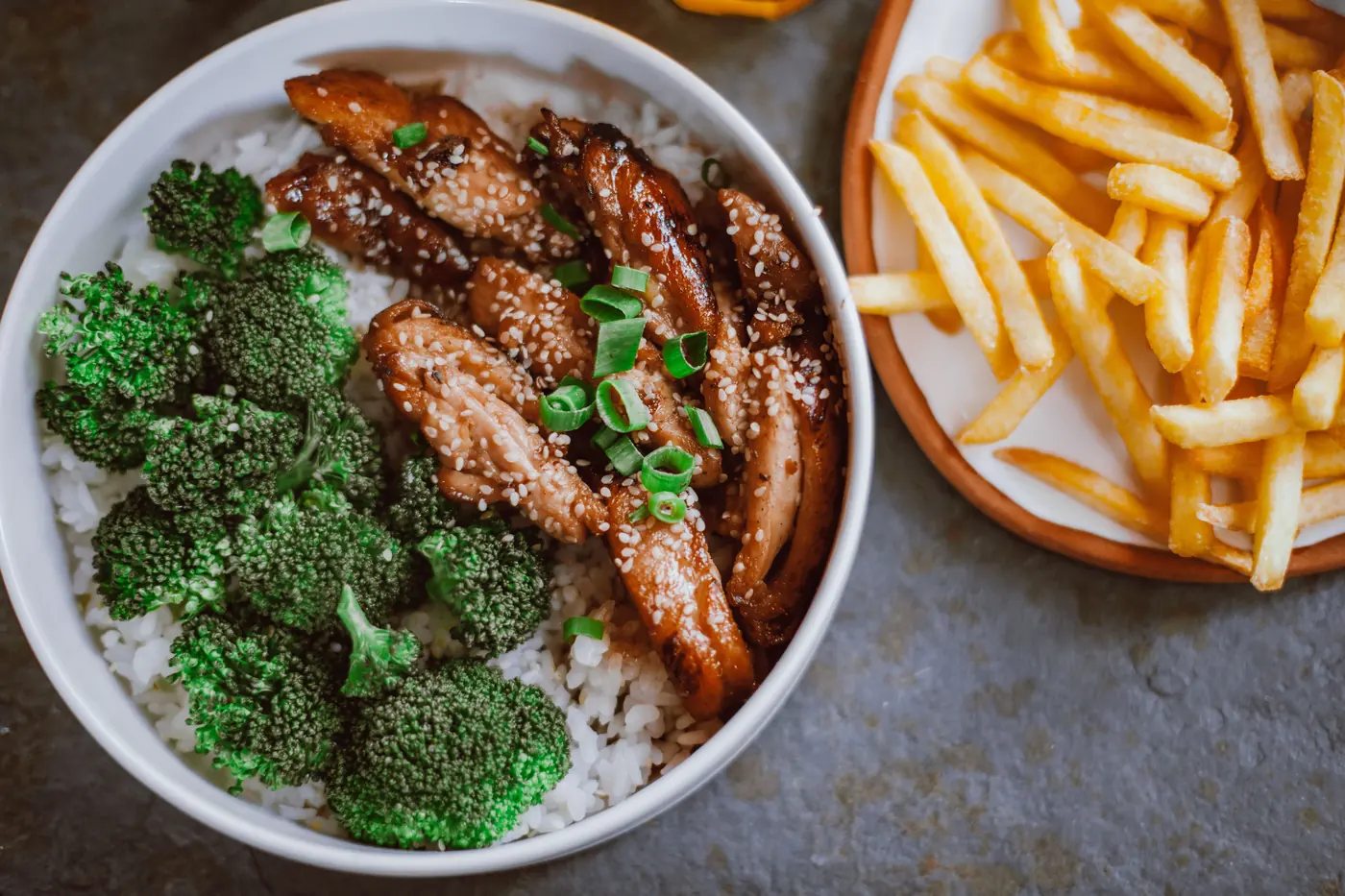
A dry, flaky, faintly savoury seasoning that goes over rice. It is on tables, in cupboards and increasingly on things that are not rice at all – and the name covers a category rather than a single product.
The short answer
Furikake is a Japanese dry seasoning for rice. The word means, roughly, to sprinkle over – which describes the action rather than the ingredients, and is why so many different mixtures share the name.
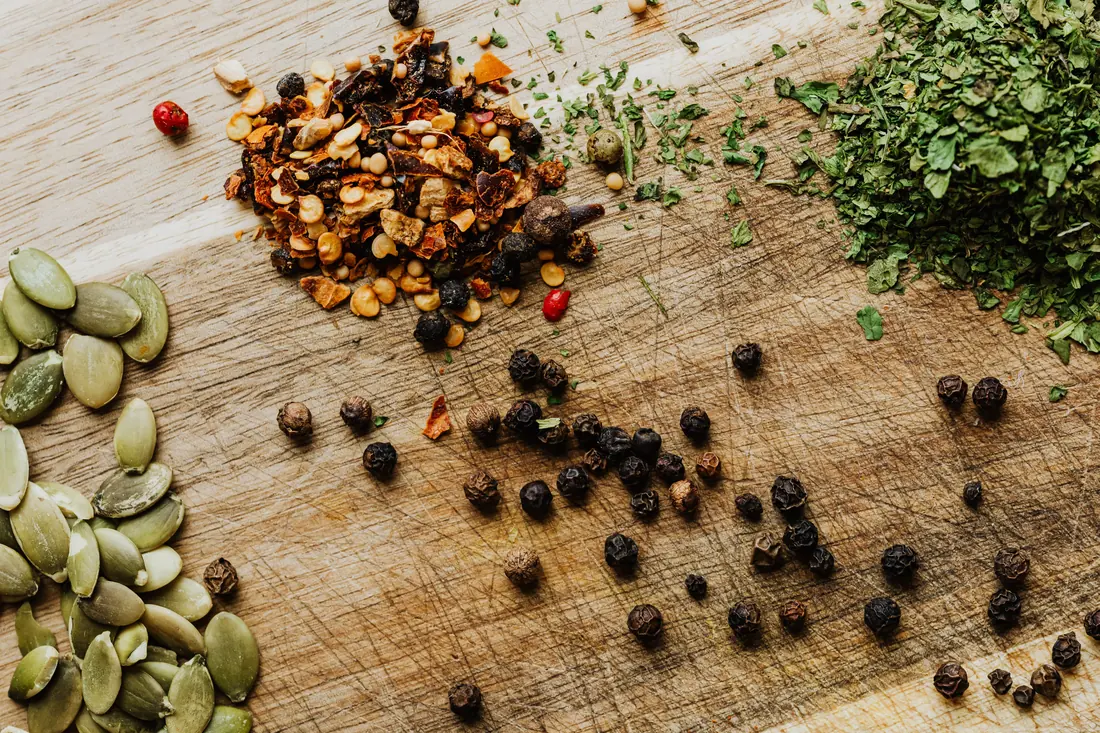
What is in it
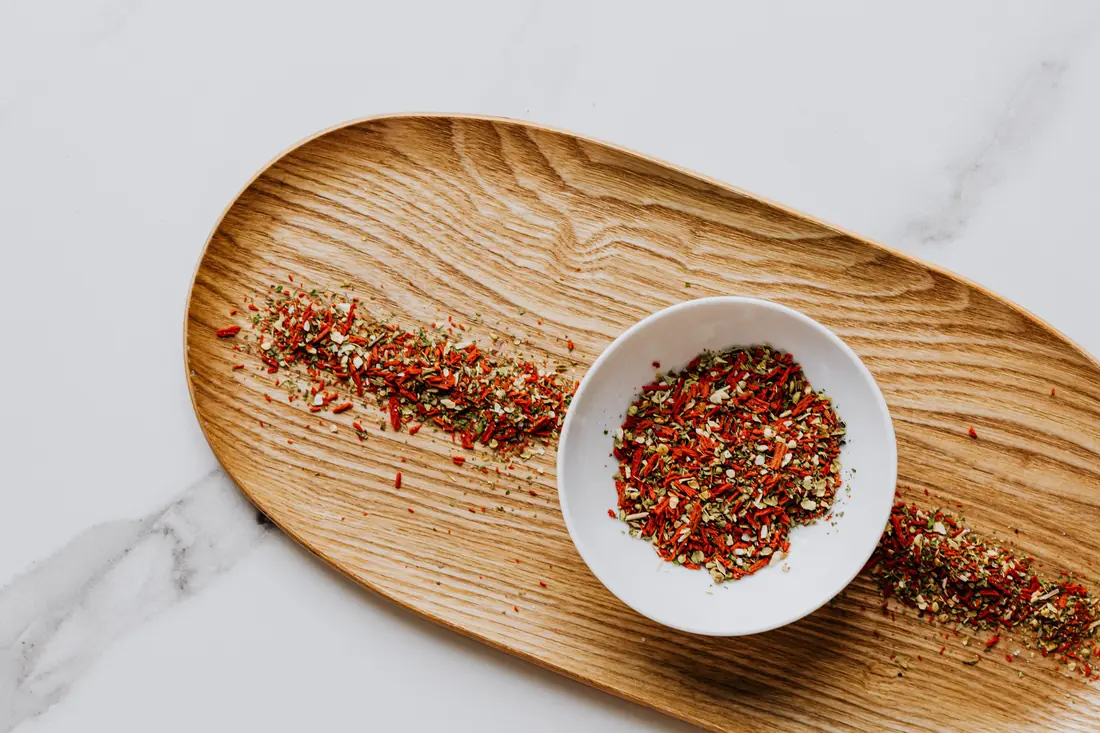
Almost all versions are built from the same short list, in varying proportions.
- Sesame seeds – white, black or both, and usually toasted.
- Nori – dried seaweed, cut or crumbled into flakes.
- Salt and sugar – in small amounts, doing the seasoning.
- Dried fish – most often bonito, sometimes salmon, ground fine.
- Egg, shiso, wasabi or vegetable flakes – depending on the variety.
Many commercial versions also include added glutamate, which is worth knowing if you are trying to account for why a spoonful of dry flakes tastes so savoury. Our piece on MSG covers what that is doing.
The sesame is doing most of the work
By volume, sesame is usually the largest component, and toasting it is what makes the difference. Raw sesame is bland; toasted sesame is nutty and aromatic, and the aroma is the first thing you get from a bowl.
Britannica’s entry on sesame covers the plant – one of the oldest cultivated oilseeds, grown across Asia and Africa for millennia, and the source of both the seeds here and the oil elsewhere on the same menu.
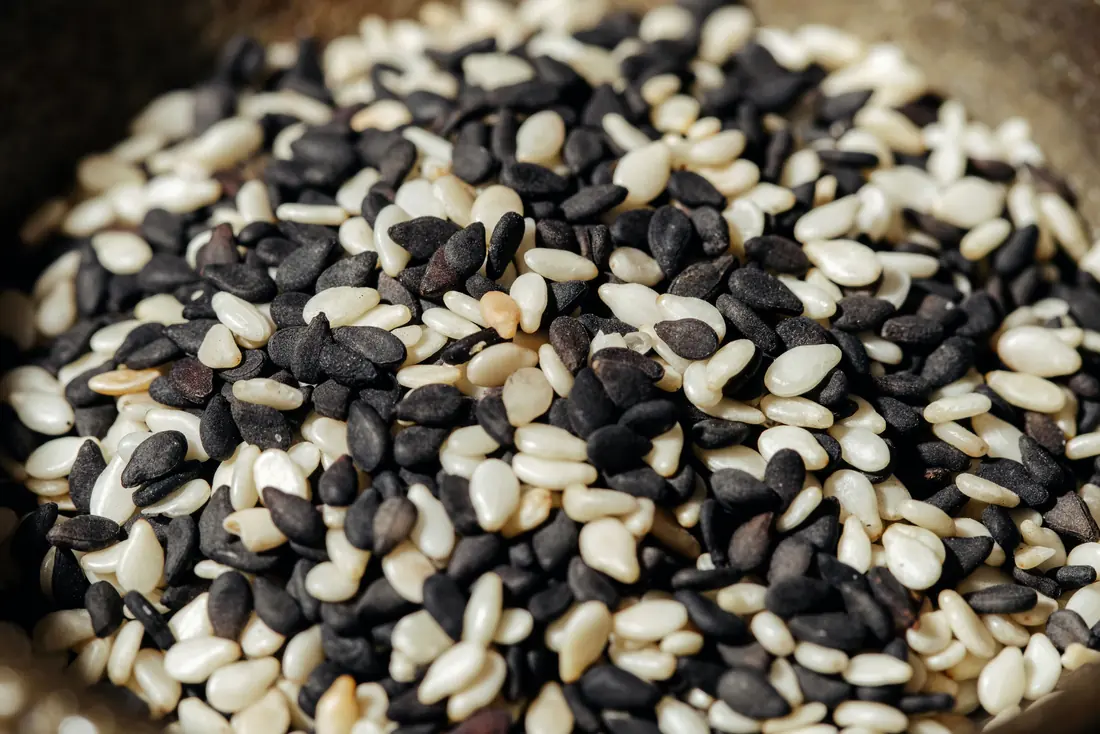
Black and white seeds are the same plant at different stages of processing. White seeds have been hulled; black ones have not, which makes them slightly more bitter and noticeably more striking against pale rice.
Why plain rice needs a seasoning at all
This is the part that explains the whole category. Japanese short-grain rice is served deliberately plain – unsalted, unbuttered, unseasoned – because it is meant to work as a neutral base against strongly flavoured dishes.
That works at a full meal. It does not work when the rice is the meal, or most of it – a packed lunch, a bowl at the end of a long day, a child who will not eat anything else. Furikake exists to turn plain rice into something worth eating on its own, without turning it into a different dish.
Which also explains why it is dry. A wet seasoning would make the rice soggy and would not keep in a cupboard; a dry one seasons each grain it touches and lasts months.
Where it came from
It has a specific origin, which is unusual for a seasoning. The first commercial version was developed in Japan in the early twentieth century by a pharmacist, and the intention was nutritional rather than culinary – ground fish bone, sesame and seaweed, dried and powdered, as a way of getting more calcium into a diet where it was scarce.
It caught on because it tasted good and travelled well, and it was issued in ration packs, which spread it further and faster than a supermarket ever would have. The nutritional framing faded; the product stayed.
That history explains the format. A dry, shelf-stable powder that makes plain rice palatable is exactly what you would design if the problem was feeding people cheaply and portably, and it is still what makes it useful in a lunchbox a century later.
The common varieties
| Variety | Built around | Tastes |
|---|---|---|
| Nori komi | Seaweed and sesame | Savoury, marine, the standard |
| Katsuo | Dried bonito | Deeply savoury, smoky |
| Shiso | Dried perilla leaf | Herbal, sharp, faintly minty |
| Salmon | Dried salmon flakes | Rich, salty, popular with children |
| Wasabi | Horseradish powder | Hot in the nose rather than the mouth |
| Seto fumi | Bonito and seaweed together | The two mainstays combined |
Reading a packet
Supermarket furikake is sold in small bottles and foil sachets, and the packaging is usually entirely in Japanese, which makes buying it a guessing game. A few things are readable regardless.
- A picture of a fish means bonito or salmon, and a savoury, fish-forward blend.
- Green flecks in the window mean shiso or vegetable, and a sharper, herbal flavour.
- A cartoon character means it is aimed at children, which in practice means milder and sweeter.
- Multiple small sachets in one box are a variety pack – the practical way to find out which one you like.
Once opened it goes stale faster than the best-before date suggests, because the seaweed absorbs moisture and the sesame oxidises. A sealed jar in a cupboard is fine for months; an opened one is at its best for weeks.
It is not the same as togarashi
The two sit next to each other on a shelf and get confused constantly. Togarashi is a chilli-based spice blend whose job is heat and aroma; furikake is a rice topping whose job is savouriness and texture.
Some furikake contains a little chilli and some togarashi contains sesame and seaweed, which does not help. The test is what happens when you taste a pinch on its own: heat means togarashi, salt and sesame means furikake.
What to put it on
Rice first, obviously, and a rice ball is the classic – the seasoning goes through the rice as it is shaped rather than sitting on top.
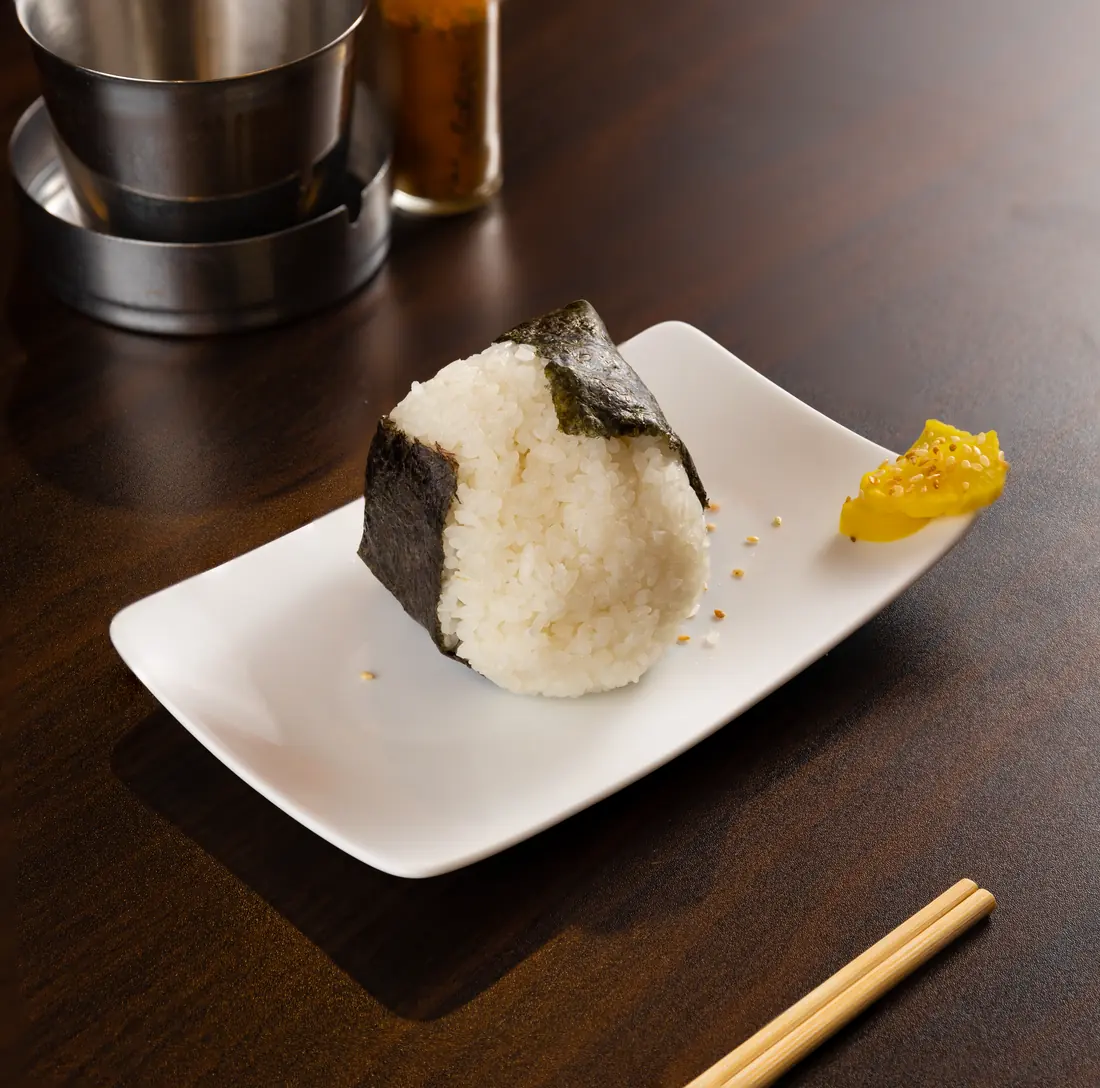
Beyond that it has escaped its category almost everywhere. It works on plain noodles, on avocado, over eggs, on roasted vegetables, and on popcorn, which sounds wrong and is not. Anything bland and warm is a candidate.
How much to use
Less than the packet implies. A generous pinch across a bowl is the intended quantity – enough that most mouthfuls get some, not enough that the rice disappears under it.
Overdoing it is a real failure mode, because most varieties are salty and the salt accumulates as you eat down through the bowl. If the last few mouthfuls are sharper than the first, too much went on at the start.
It also wants adding at the moment of eating rather than in the kitchen. The seaweed softens on contact with hot rice and the sesame loses its snap, so a bowl seasoned five minutes early has already lost the texture contrast that was the reason for it.
Making a rough version
- Toast sesame seeds in a dry pan until they colour and start to pop.
- Cut or crumble a sheet of nori as small as you have patience for.
- Combine roughly two parts sesame to one part seaweed.
- Add salt, and a pinch of sugar if you want the commercial roundness.
- Store airtight, and treat it as a two-week product rather than a two-month one.
It will not taste exactly like the shop version, and the gap is mostly the dried fish and the glutamate. It will taste fresher, which is a fair trade.
For the rice underneath it, our rice comparison covers why short-grain behaves as it does, the seaweed salad piece covers the other form seaweed arrives in, and the condiments guide covers what is already on the table. The current selection is on the ordering page.
Frequently Asked Questions
What is furikake?
A Japanese dry seasoning sprinkled over rice, usually built from toasted sesame seeds, dried seaweed, salt and often dried fish.
What does furikake taste like?
Savoury and nutty, with a marine note from the seaweed. The exact flavour depends heavily on the variety – bonito, salmon, shiso and wasabi versions all differ.
Is furikake the same as togarashi?
No. Togarashi is a chilli-based spice blend for heat; furikake is a rice topping for savouriness and texture. A pinch on its own tells them apart.
What do you put furikake on?
Traditionally plain rice and rice balls, but it works on noodles, eggs, avocado, roasted vegetables and popcorn.
Why is Japanese rice served plain?
It is meant to be a neutral base against strongly flavoured dishes. Furikake exists for the times when the rice is the meal rather than the background.