
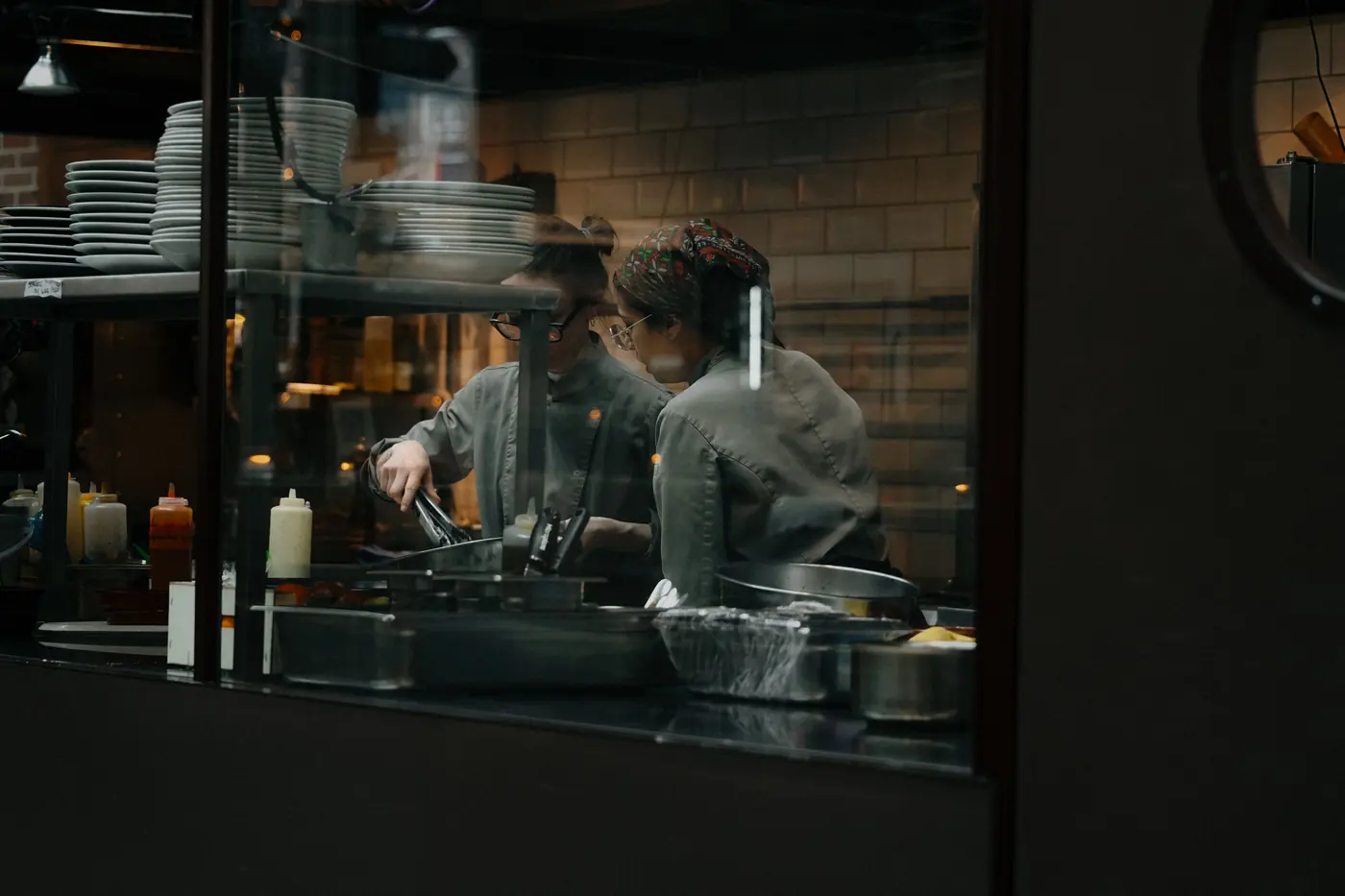
You order, you drive over, and it is waiting. Ten minutes for a dish that takes forty at home, and the natural suspicion is that it was sitting there already. Almost always, it was not.
The short answer
Most of the work happened hours before you ordered. What happens after you order is assembly and a very short burst of heat – often ninety seconds or less.
What a prep shift actually does
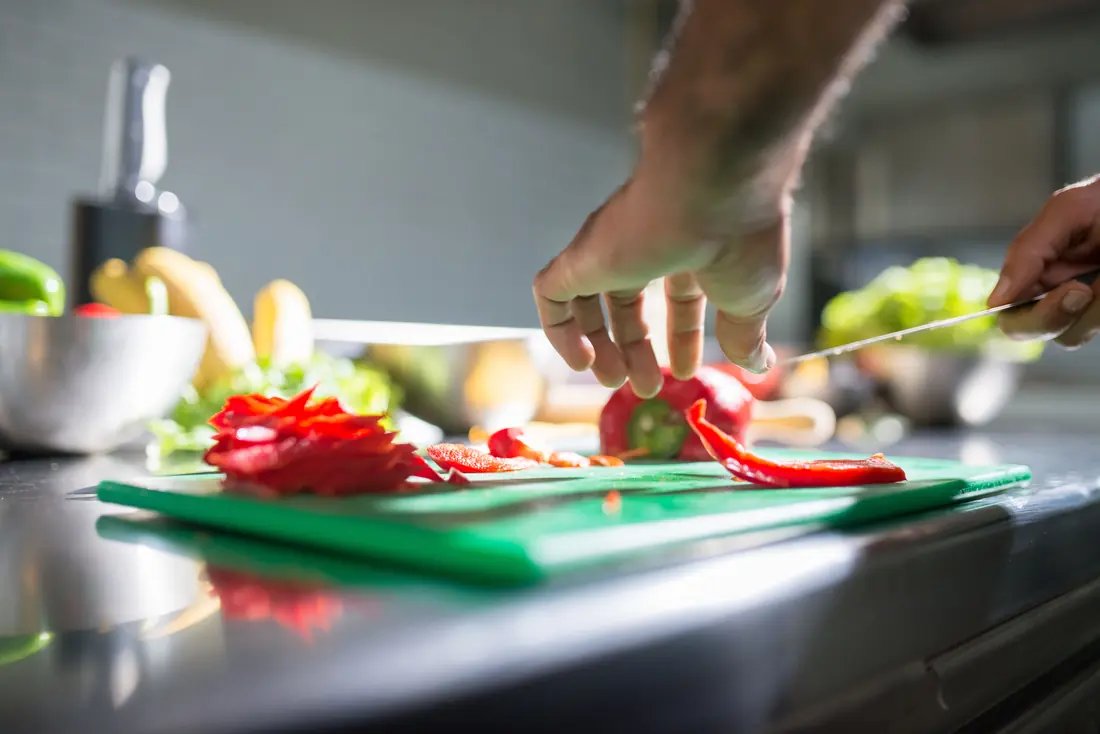
A restaurant kitchen runs a preparation shift before service, and its entire purpose is to convert raw ingredients into components that can be combined instantly.
- Everything is cut. Vegetables portioned, meat sliced and often marinated, aromatics minced – all of it done once, in bulk.
- Sauces are made. Mixed in quantity and held in squeeze bottles, so a dish is seasoned in one motion.
- Rice and noodles are cooked. Rice held warm, noodles blanched and portioned into single servings.
- Stocks and braises are done. The things that need hours had them, yesterday or this morning.
- Stations are set. Every component within arm’s reach of the cook who needs it.
Britannica’s entry on the restaurant covers how the professional kitchen developed as a system of stations and division of labour, which is precisely the arrangement that makes ten minutes possible.
The cooking is genuinely short
This is the part that surprises people. A stir fry over a proper burner is done in under two minutes, and it has to be – our piece on why restaurant stir fry tastes different covers the heat involved, which is far beyond a domestic hob.
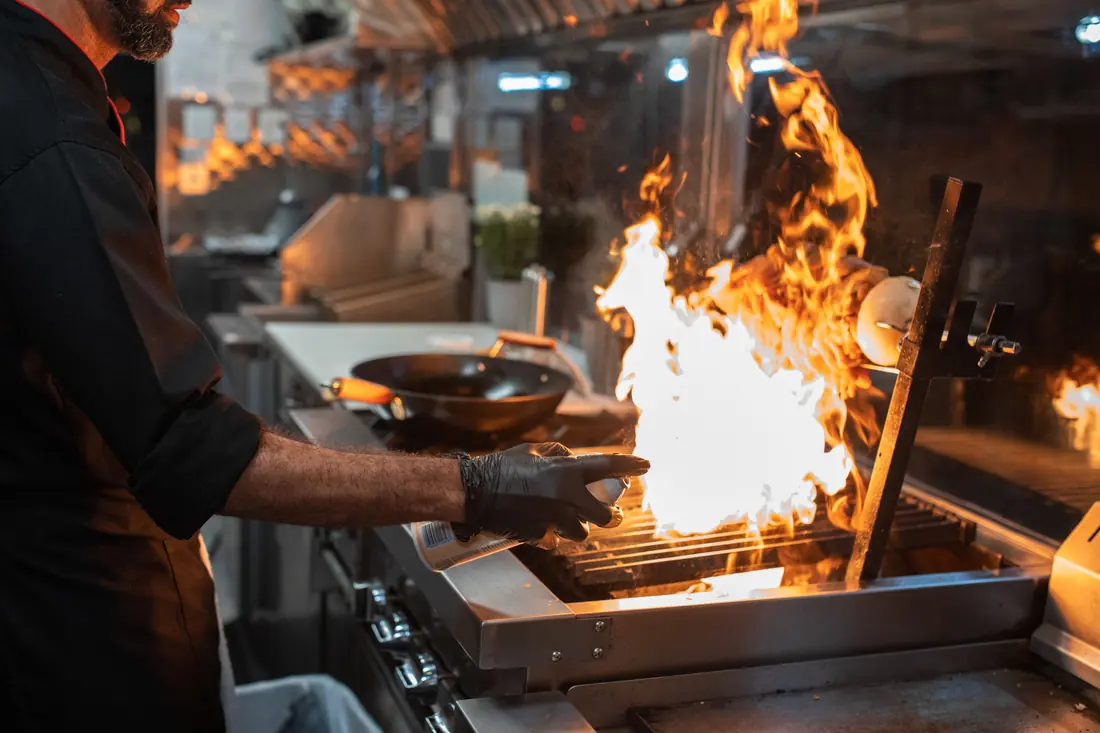
A hibachi plate is a few minutes on a flat top. Noodles that were blanched earlier need thirty seconds to reheat. A roll is assembled cold. The only things that take real time are the ones that are already done.
The menu is designed around it
A menu that can be cooked fast is a menu that was written to be. Look at any Asian takeaway list and the same components reappear across dozens of dishes – the same three sauces, the same cut vegetables, the same proteins, recombined.
That is not laziness; it is the design that makes the speed possible. Sixty dishes built from twenty components can all be assembled from one set of stations, where sixty dishes with sixty distinct ingredient lists could not be.
It also explains why an unusual special sometimes takes noticeably longer. It is the one dish on the menu that does not share components with anything else.
Where home cooking loses the time
| Stage | At home | In a restaurant |
|---|---|---|
| Deciding and finding things | Five to ten minutes | Zero – the station is set |
| Chopping and portioning | Fifteen to twenty minutes | Done in the prep shift |
| Making sauce | Five minutes, measuring | Squeeze bottle, one motion |
| Cooking rice or noodles | Twenty minutes | Already cooked and held |
| Actual cooking | Five to ten minutes | Ninety seconds |
| Washing up as you go | Continuous | Somebody else’s station |
The equipment is not domestic
A restaurant wok burner produces several times the heat of a household hob, a commercial fryer recovers temperature in seconds rather than minutes, and a rice warmer holds forty portions at serving temperature indefinitely.
None of that is exotic; it is simply sized for the job. But it means a direct comparison with home cooking is unfair in both directions – the kitchen is faster because it is equipped to be, not because the cook is doing something you could replicate with a better recipe.
It also explains which dishes suffer most in a home kitchen. Anything that depends on very high heat for a very short time is the hardest to reproduce, which is exactly the category most Asian takeaway food falls into.
Does that mean it was sitting there?
No, and the distinction is worth being clear about. Prepared components are not a prepared dish. The rice was cooked earlier and held hot, the sauce was mixed earlier, the vegetables were cut earlier – but they became your dish after you ordered it.
There are genuine exceptions and they are visible. Anything on a steam table or under a heat lamp was made in advance, which is a different service model and one you can see from the counter.
Why the food is hot when a home-cooked dish is not
A related puzzle: takeaway that has travelled twenty minutes often arrives hotter than food carried from a home kitchen to a table in the next room. The reason is that it left the pan considerably hotter to begin with.
Food cooked over restaurant heat comes off the burner well above the temperature a domestic hob achieves, and it is packed immediately into a closed container that traps steam. Both are working in its favour on the journey – which is also why the texture suffers even when the temperature does not.
What actually causes a wait
When an order does take longer, it is rarely the cooking. It is almost always one of three things.
- Timing several dishes together. A table’s worth of food has to arrive at once, so quick dishes wait for slow ones.
- Something genuinely long. A whole fried item, or anything that has to go in an oven, sets the pace for everything else.
- Queue position. You are behind other tickets, and a kitchen at peak is a queue rather than a kitchen.
Ordering in a way that helps
A few things genuinely shorten the wait, and none of them involve asking the kitchen to hurry.
- Order slightly off-peak. Twenty minutes either side of the rush is a different kitchen entirely.
- Keep modifications simple. A change that breaks the station routine costs more time than the ingredient it changes.
- Expect fried items to be slowest. They are cooked to order and cannot be rushed.
- Collect rather than wait for delivery if the food is texture-sensitive – our piece on pickup versus delivery covers what survives the journey.
What the ten minutes is actually spent on
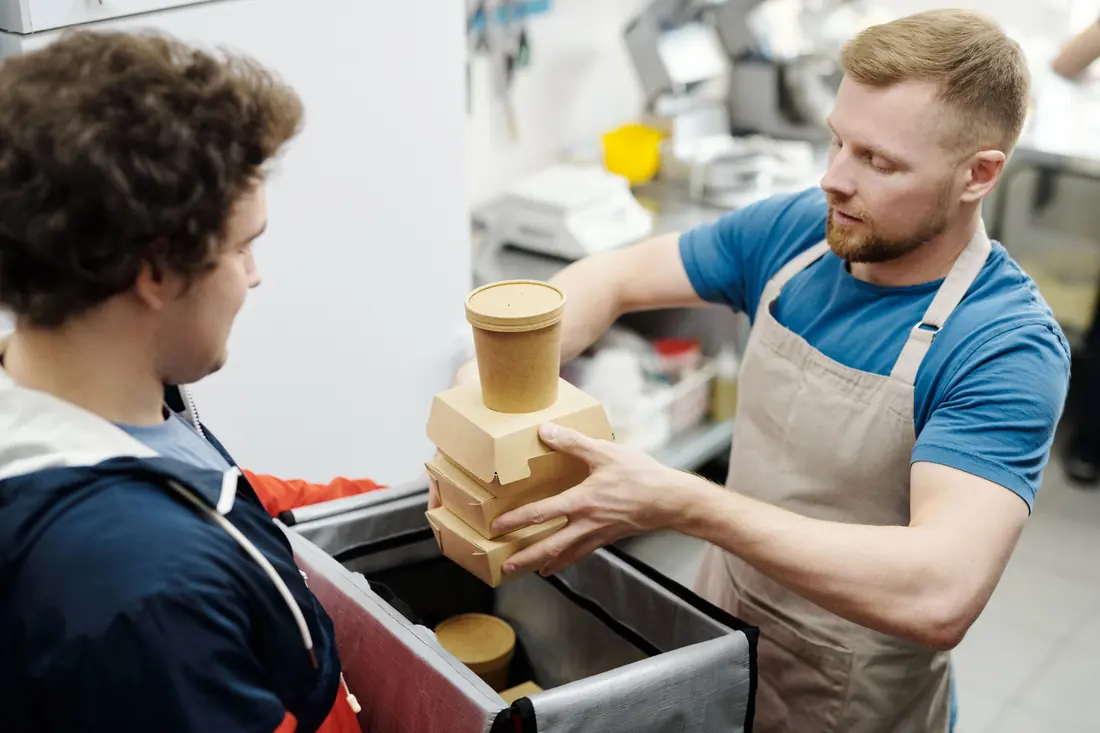
Broken down, a typical ten-minute wait for a two-dish order looks roughly like this: a minute or two before the ticket is even started, because other orders are ahead; two or three minutes of actual cooking spread across two stations; a minute of plating and packing; and the rest is the gap between the food being ready and you arriving to collect it.
Which is why an order collected exactly when promised is often at its best, and one collected ten minutes late is not. The kitchen optimised for the time it gave you.
The real answer is unglamorous
Restaurant speed is not skill in the way people imagine, or at least not only that. It is preparation, arrangement and repetition – the same dish made several hundred times by someone who no longer has to think about the order of operations.
Which is also the transferable lesson. Most of what makes home cooking slow is not cooking. It is everything either side of it, and that part is organisable.
For what happens to the food afterwards, our pickup and delivery guide covers the journey home, the stir fry piece covers the heat, and the hibachi plate guide covers a dish built for exactly this kind of service. The current selection is on the ordering page.
Frequently Asked Questions
Why is restaurant takeaway ready so quickly?
Most of the work happens in a prep shift hours earlier. After you order, the kitchen is assembling prepared components and applying a very short burst of heat.
Was my food sitting there already?
Usually not. Components are prepared in advance, but the dish is put together after the order. Steam tables and heat lamps are the visible exception.
How long does a stir fry actually take to cook?
Under two minutes over a proper restaurant burner. The heat is far beyond a domestic hob, and the dish is designed around that.
Why does my order sometimes take much longer?
Usually queue position, or one slow dish holding back the rest of a table’s food so everything arrives together.
Can I do anything to get food faster?
Order slightly off-peak, keep modifications simple, and expect anything fried to be cooked to order.