
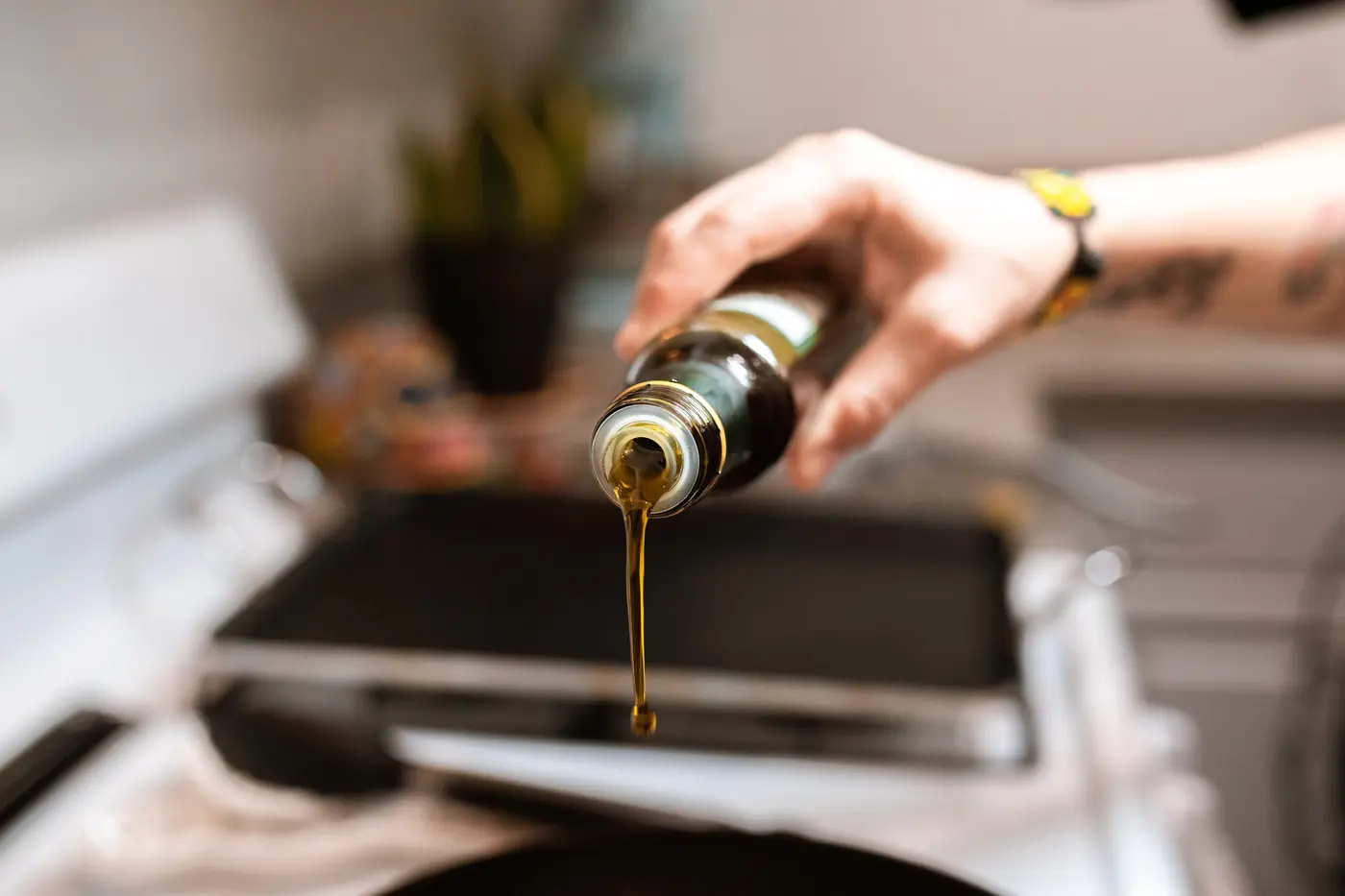
A great many Japanese sauces are faintly sweet, and the sweetness has a particular quality – rounded rather than sugary, with a shine to it. That is usually mirin, and it is doing more than one job.
What is mirin?
Mirin is a sweet rice wine used as a seasoning rather than as a drink. It is made by fermenting glutinous rice with a cultured mould and distilled alcohol, which converts the rice starch into sugars over months.
It is closely related to sake – Britannica’s entry on sake covers the fermentation both come from – but the process is steered toward sweetness rather than toward alcohol, and the result is syrupy where sake is dry.
What it does in a dish
Four things, and only the first is obvious.
- Sweetness – rounder and less sharp than sugar, with more going on behind it.
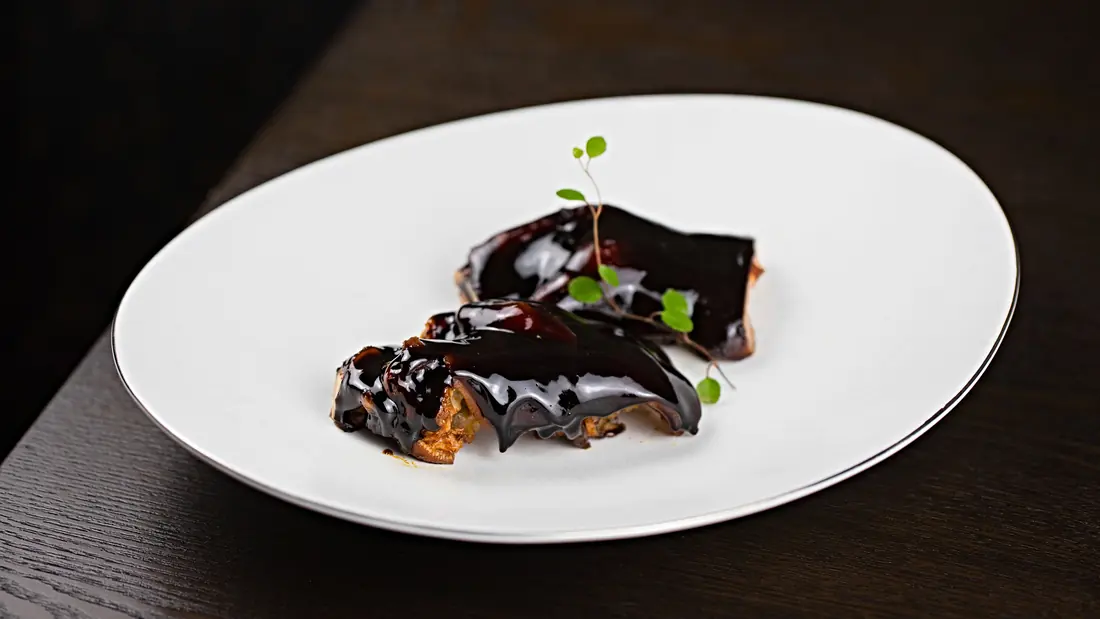
- Shine – the sugars caramelise into the glossy surface on glazed dishes. Sugar alone does not produce the same effect.
- Balance – it softens the salt in soy sauce, which is why the two are so often used together.
- Firming – the alcohol firms the surface of fish and meat slightly, which helps things hold together in a simmering liquid.
The shine is the one that gives it away on a plate. A dark glossy glaze that catches the light almost always has mirin in it, because that particular finish is very hard to get any other way.
Where it turns up on a menu
| Where | What mirin is doing | How to spot it |
|---|---|---|
| Glazes on grilled food | Sweetness and shine | A dark lacquered surface |
| The sweet sauce on rolls | Most of the sweetness | Thick, dark, glossy drizzle |
| Dipping sauces | Balancing the soy | Sweet-salty rather than just salty |
| Simmered dishes | Sweetness and firming | Ingredients hold their shape |
| Sushi rice seasoning | Occasionally, alongside vinegar | A rounder sweetness |
The second row covers a lot of ground. The sweet dark sauce drizzled over so many specialty rolls is generally a reduction of soy sauce, mirin and sugar, and mirin is what gives it both the gloss and the depth.
The three kinds
Not everything sold as mirin is the same product, and the difference is worth knowing.
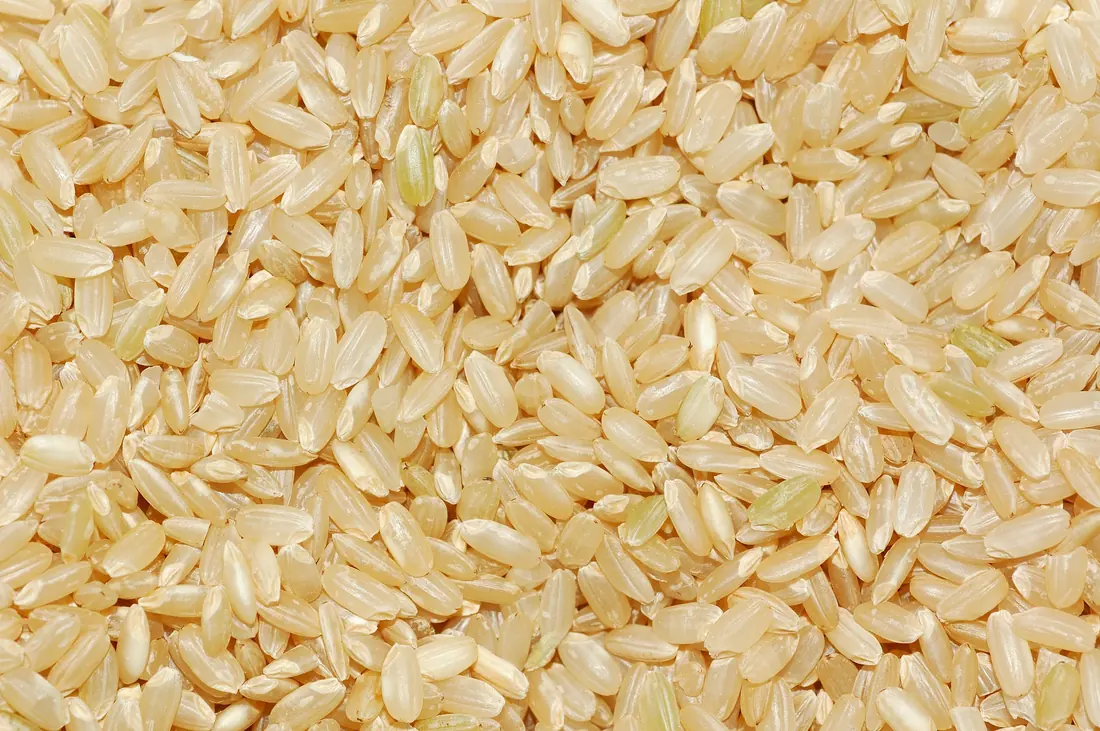
- Hon mirin – the real thing. Brewed over months, around fourteen percent alcohol, no added sugar.
- Mirin-style seasoning – a lower-alcohol version with sugar and other flavourings added to approximate the taste. Much more common on shelves.
- Mirin-flavoured seasoning – essentially no alcohol, built from sugar, corn syrup and flavourings.
The differences show up mainly in the finish. The brewed version produces a better glaze and a more complex sweetness; the substitutes are sweeter and flatter and will do the job in a simmered dish where subtlety is not the point.
How it is made
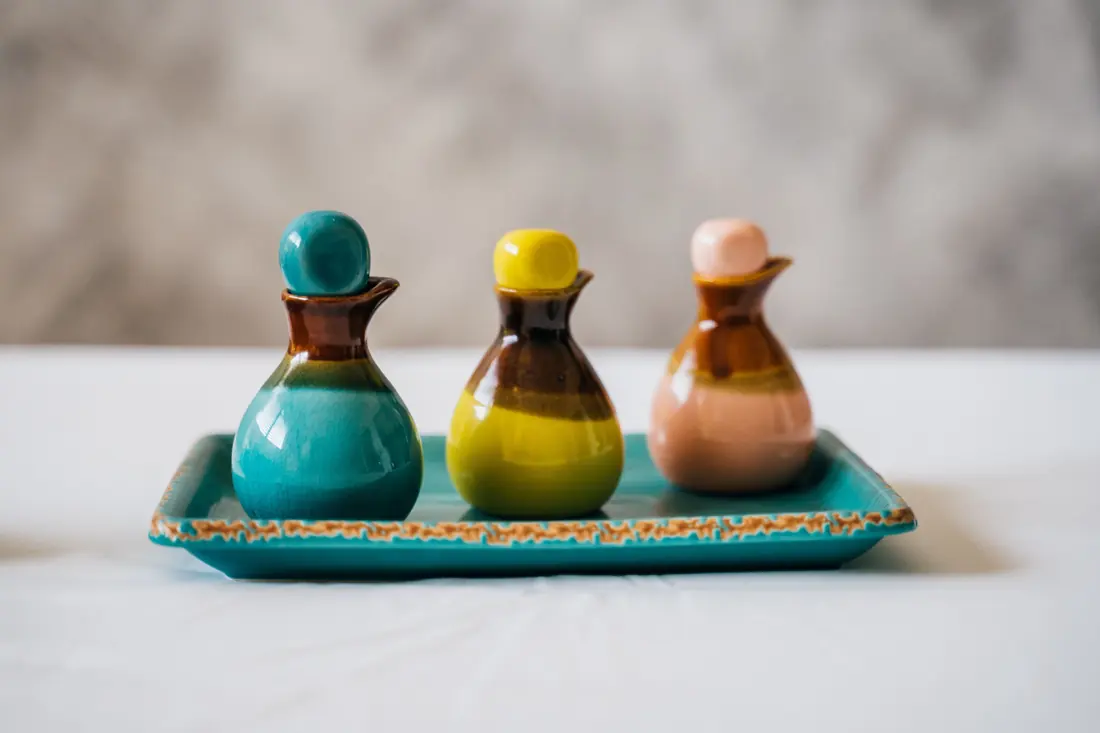
The production is closer to brewing than to anything a kitchen does. Glutinous rice is steamed and combined with a cultured mould, the same one used for sake and for miso, along with distilled alcohol.
The mould breaks the rice starch down into sugars over a period of months, and the alcohol present from the start prevents the mixture fermenting further into something dry. What results is thick, golden and intensely sweet, with a complexity that comes from the long conversion rather than from anything added.
That is the difference between brewed mirin and the sweetened substitutes. One developed its sugars slowly out of rice; the other had them poured in.
Mirin and sake are not interchangeable
They come from the same tradition and get confused constantly, but they behave differently in a pan. Sake is dry and is used to add depth and to remove strong odours from fish; mirin is sweet and is used for balance and shine.
A recipe calling for both wants both. Using only sake produces something noticeably flat and thin; using only mirin produces something cloying, because the sweetness has nothing dry to push against.
The sauce it is most often in
If mirin is in one thing you have eaten, it is the sweet dark glaze that appears on grilled dishes and drizzled over rolls. The base of it is simple – soy sauce, mirin and sugar, simmered until it thickens – and the proportions vary by kitchen.
What the simmering does is drive off the alcohol and reduce the liquid until the sugars concentrate enough to coat rather than run. Reduced too far it turns bitter and sets hard as it cools; not far enough and it slides off whatever it is put on.
That narrow window is why the glaze on a well-made dish looks lacquered and clings in an even film, while a poorly made one either pools on the plate or sits in sticky patches.
Does the alcohol cook off?
Mostly, and that is the intention. In most preparations the mirin goes into a hot pan or a simmering liquid, and the alcohol burns off in a minute or two, leaving the sugars and the flavour behind.
Some sauces are made without heating, and in those a little alcohol remains. It is a small quantity in a small quantity of sauce, but it is worth knowing if you avoid alcohol entirely – the mirin-flavoured seasonings exist partly for that reason.
What to use if you have none
There is no exact substitute, but the components can be approximated. A common stand-in is a dry white wine or sake with a little sugar dissolved into it, which covers the sweetness and some of the acidity.
What it will not cover is the shine. The glossy finish comes from the particular sugars that months of conversion produce, and no quick mixture reproduces it, so a glaze made with a substitute will taste close and look duller.
Storing it
Brewed mirin keeps well at room temperature, sealed, because the alcohol content protects it. It darkens slowly over a year or two and the flavour deepens rather than spoiling.
The low-alcohol and alcohol-free substitutes are less stable and are usually better refrigerated after opening, since there is little protecting them beyond the sugar. If a bottle has been open for a long time, the substitute is the one to check.
If you are cooking with it
A little goes a long way, and the most common mistake is treating it as a one-for-one replacement for sugar. It is sweet, but it is also liquid, acidic and alcoholic, and all three of those change how a sauce behaves.
The standard starting point is equal parts soy sauce and mirin, adjusted from there. Reduce that mixture and you have the base of most of the glazes on a Japanese menu, which is a useful thing to know how to make.

For the sauces it goes into, our condiments guide covers what arrives at the table, the dashi piece covers the other half of most Japanese sauces, and the specialty rolls guide covers the drizzles on a house roll. The current selection is on the ordering page.
Frequently Asked Questions
What is mirin?
A sweet rice wine used as a seasoning rather than a drink. It is brewed from glutinous rice and adds sweetness, shine and balance to sauces.
Is mirin alcoholic?
The brewed version is around fourteen percent alcohol, though most of it cooks off when heated. Low-alcohol and alcohol-free substitutes are widely sold.
What is the difference between mirin and sake?
Mirin is sweet and used for balance and glaze; sake is dry and used for depth. They come from the same tradition but are not interchangeable.
What gives Japanese glazes their shine?
Mirin. Its sugars caramelise into a glossy surface that sugar alone does not reproduce, which is why glazed dishes look lacquered.
Can I use sugar instead of mirin?
Only roughly. Sugar supplies sweetness but not the acidity, alcohol or shine, so the sauce will taste flatter and look duller.