
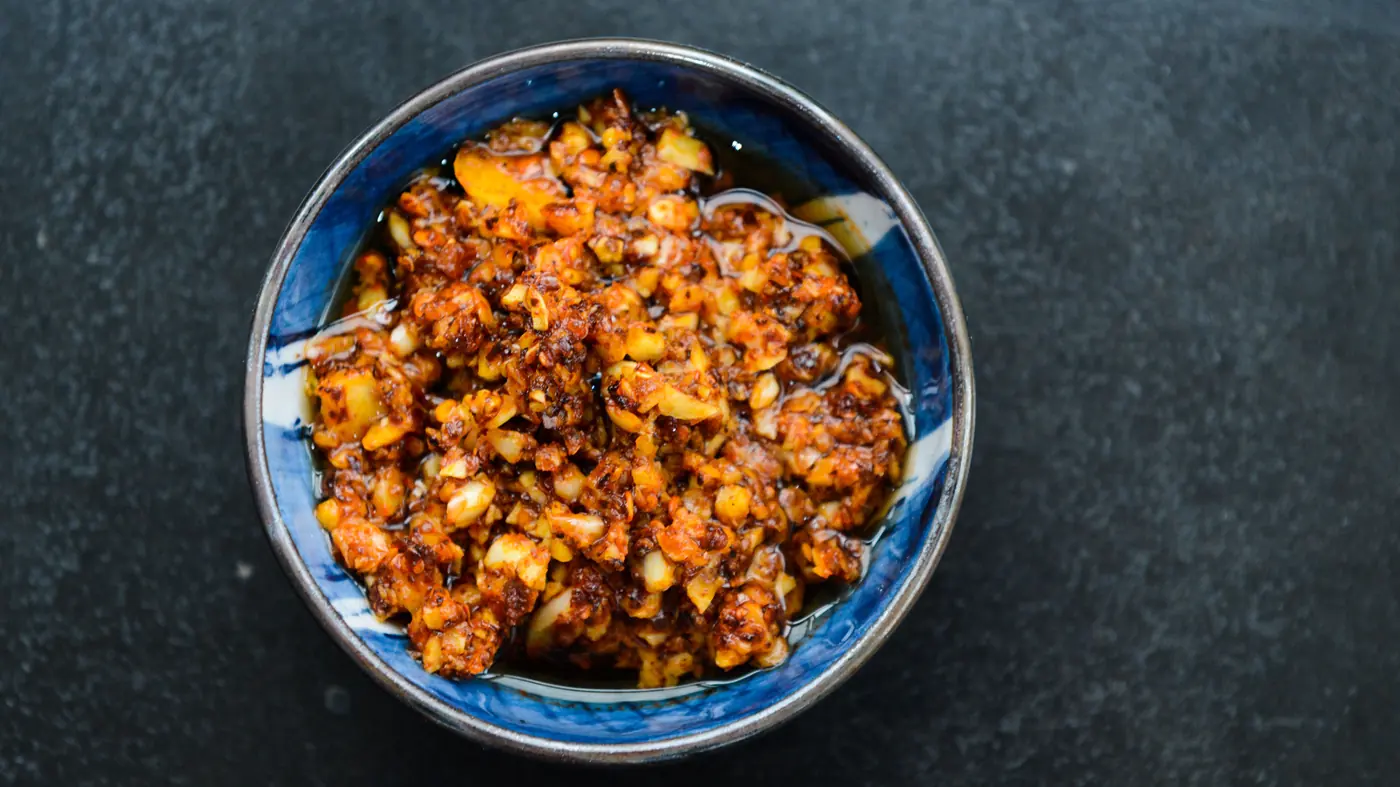
The jar of red oil on the table is not hot sauce, and treating it like one is the usual mistake. Chilli oil does something different, works differently, and belongs in different places.
What is chilli oil?
Chilli oil is oil that has been infused with dried chillies, usually by heating the oil and pouring it over chilli flakes. What you get is a fragrant red oil carrying heat and toasted aroma rather than acidity.
It sits within a long tradition of chilli-based seasonings in Chinese cooking; Britannica’s overview of Chinese cuisine gives a sense of how regionally varied that tradition is, and chilli oil is a good example of a preparation that differs sharply from province to province.
How it is made
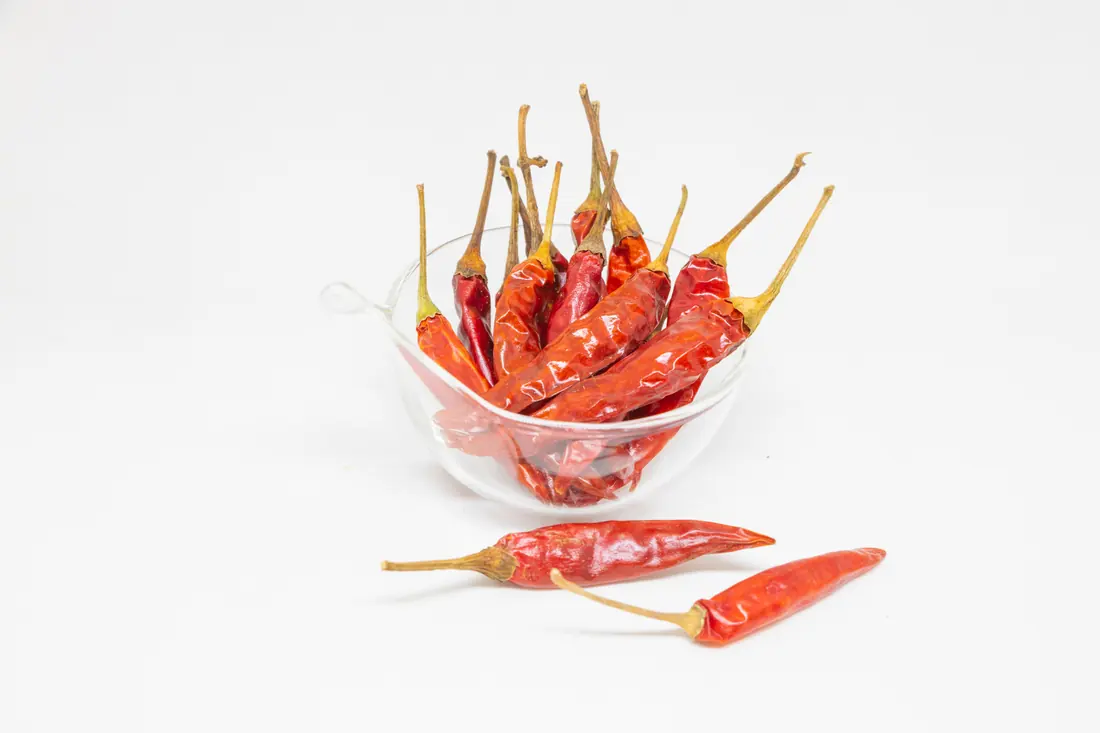
- Dried chillies are ground to coarse flakes – coarse, not fine, so they do not burn.
- Aromatics go in with them: sichuan pepper, star anise, bay, ginger, garlic, depending on the recipe.
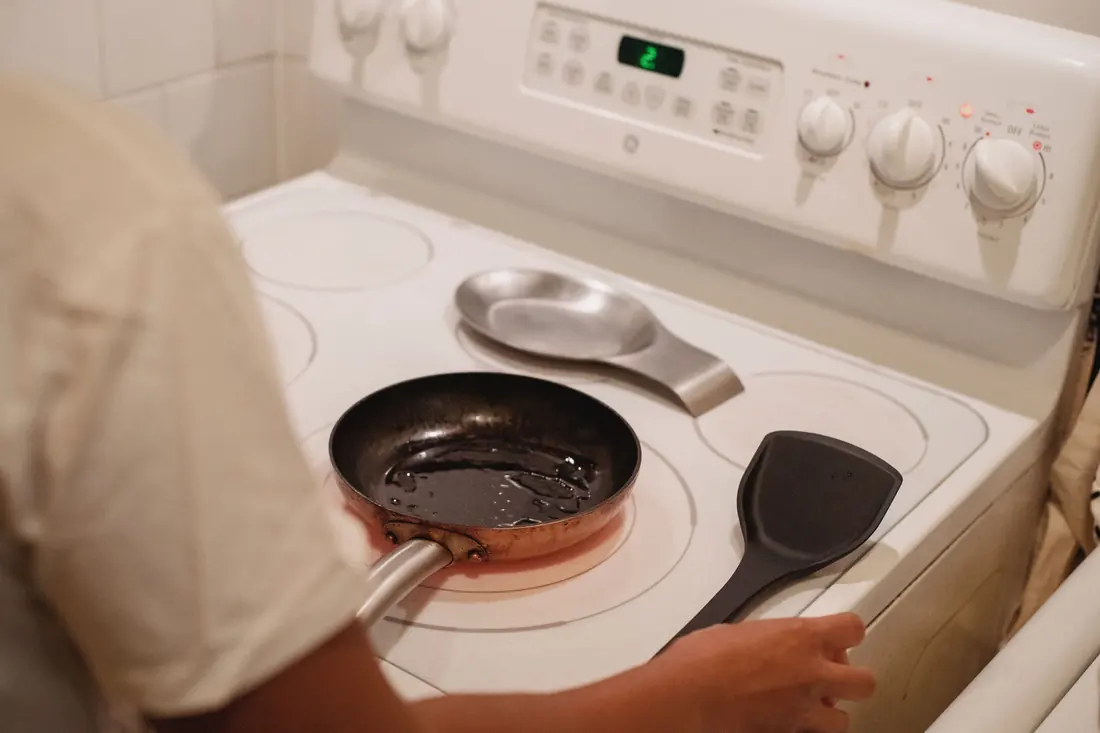
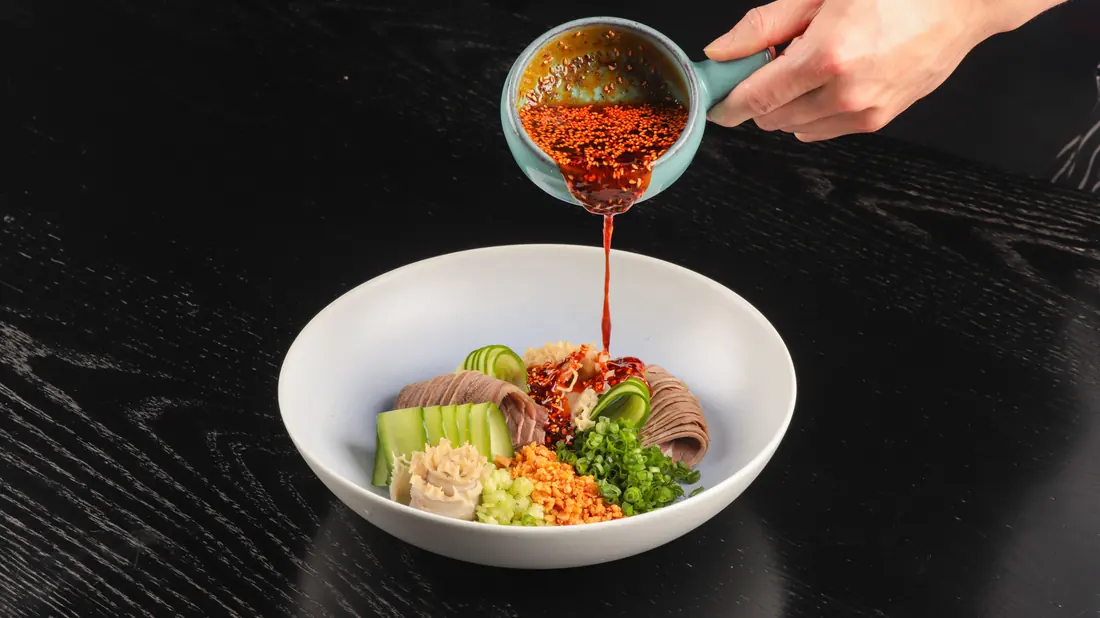
- Oil is heated until it is very hot but not smoking, then poured over the flakes.
- The mixture is left to settle. The heat toasts the chilli and the aromatics infuse into the oil as it cools.
The pour is the whole technique. Too cool and nothing infuses; too hot and the chilli scorches and turns bitter within seconds. That narrow window is why well-made chilli oil tastes toasted rather than burnt.
Why it is not a hot sauce
| Chilli oil | Hot sauce | |
|---|---|---|
| Base | Oil | Vinegar or water |
| Adds | Heat, aroma, richness | Heat and sharpness |
| Effect on a dish | Coats and carries flavour | Cuts through it |
| Texture | Slick, sometimes with crisp bits | Thin and liquid |
| Best on | Noodles, dumplings, rice | Fried food, eggs, sandwiches |
| Heat character | Slow and rounded | Sharp and immediate |
The key row is the third. Oil coats everything it touches and carries fat-soluble flavour with it, so chilli oil spreads through a bowl of noodles in a way a vinegar-based sauce never does. A hot sauce cuts against richness; chilli oil adds to it.
The crispy kind
The version that has become popular recently keeps the solids in rather than straining them out – fried chilli flakes, garlic, shallots and sometimes soybeans, suspended in the oil.
It is a different product in use rather than just in appearance. The crisp bits add texture and a great deal of savoury flavour, which means a spoonful is doing more than adding heat. It is closer to a condiment with substance than to a seasoning.
If a jar needs stirring before use, it is this kind, and the solids settled at the bottom are most of what you are paying for.
The regional versions
Chilli oil is not one recipe, and where it comes from changes what it does.
- Sichuan style – built around sichuan pepper alongside the chilli, so it brings a distinctive tingling numbness as well as heat.
- Guizhou and Hunan styles – hotter and more direct, with less aromatic spicing behind the chilli.
- Crispy styles – heavy on fried garlic, shallot and soybean, where savoury depth matters as much as the heat.
If a chilli oil produces a faint buzzing or numbing sensation on the lips rather than a straight burn, that is the sichuan pepper rather than the chilli, and it is a feature rather than a fault.
How hot is it?
Less than people expect, generally. Oil is a poor carrier of the compound that produces the burning sensation compared with the chilli itself, so a spoonful of chilli oil is usually milder than the same quantity of the flakes it was made from.
It varies enormously between houses and brands, though. The reliable approach is to add half of what you think you want, mix it through, and taste before adding more – oil disperses, so the second spoonful goes much further than the first.
Making it at home
It is one of the easier things to make and one of the easiest to ruin, and the whole difficulty is temperature.
Oil heated until it just begins to shimmer is roughly right. Poured over coarse flakes it should sizzle steadily for several seconds without the chilli darkening sharply. If it goes black immediately the oil was too hot, and the result will be acrid rather than toasted.
Pouring in two stages helps considerably: half the oil to toast the flakes, then a pause, then the rest once the first has calmed down. It gives a much wider margin than trying to hit the right temperature in one pour.
What to use it on
- Noodles – the classic use. It coats every strand and adds richness as well as heat.
- Dumplings – a small amount in the dipping sauce, alongside vinegar and soy.
- Rice – a spoonful stirred through plain rice turns it into something.
- Soups – a swirl on the surface rather than stirred in, so the aroma hits before the heat.
Where it works less well is on anything already fried or already rich. It is adding fat as well as heat, and a crisp coating plus an oil-based condiment is usually one richness too many.
Getting the proportions right
Because it is oil, chilli oil behaves differently from a sauce when it goes into a dish, and a couple of habits make it work better.
- Add it to something hot. Heat thins the oil and helps it spread rather than sitting in one place.
- Mix it through properly before judging. An unmixed spoonful gives a very misleading first taste.
- For a crispy version, take some solids with the oil rather than pouring off the top – the solids are most of the flavour.
- Use it at the end rather than cooking with it. The aroma is the point and heating it again drives it off.
A last note on quantity: chilli oil looks like a small addition and is not one. A tablespoon carries a meaningful amount of fat as well as heat, which is part of why it makes a plain bowl of noodles satisfying rather than just spicy.
Keeping a jar
Chilli oil keeps for months in a sealed jar away from light. What degrades first is the aroma rather than the heat, so an old jar will still be hot but will have lost the toasted quality that made it worth having.
The crispy kind is the exception. Once solids are in the jar, and particularly if there is garlic among them, it is better kept in the fridge and used within a few weeks rather than left in a cupboard indefinitely.
For the other things on the table, our guide to seasoning pho covers the sauces served with noodle soup, the sushi condiments guide covers the other side of the menu, and the spicy tuna piece covers what heat is doing inside a roll. The current selection is on the ordering page.
Frequently Asked Questions
What is chilli oil made of?
Oil infused with dried chilli flakes, usually with aromatics such as sichuan pepper, star anise, ginger or garlic. Hot oil is poured over the flakes to toast and infuse them.
Is chilli oil the same as hot sauce?
No. Hot sauce is vinegar-based and cuts through richness; chilli oil is oil-based, coats what it touches and adds richness along with heat.
How spicy is chilli oil?
Usually milder than expected, because oil carries less of the burning compound than the chilli itself. It varies a lot between brands, so add half and taste.
What is crispy chilli oil?
The version that keeps the solids in – fried chilli, garlic, shallots – suspended in the oil. It adds texture and savoury depth as well as heat.
How long does chilli oil keep?
Months, sealed and away from light. The aroma fades before the heat does. Crispy versions with garlic in them are better refrigerated and used sooner.