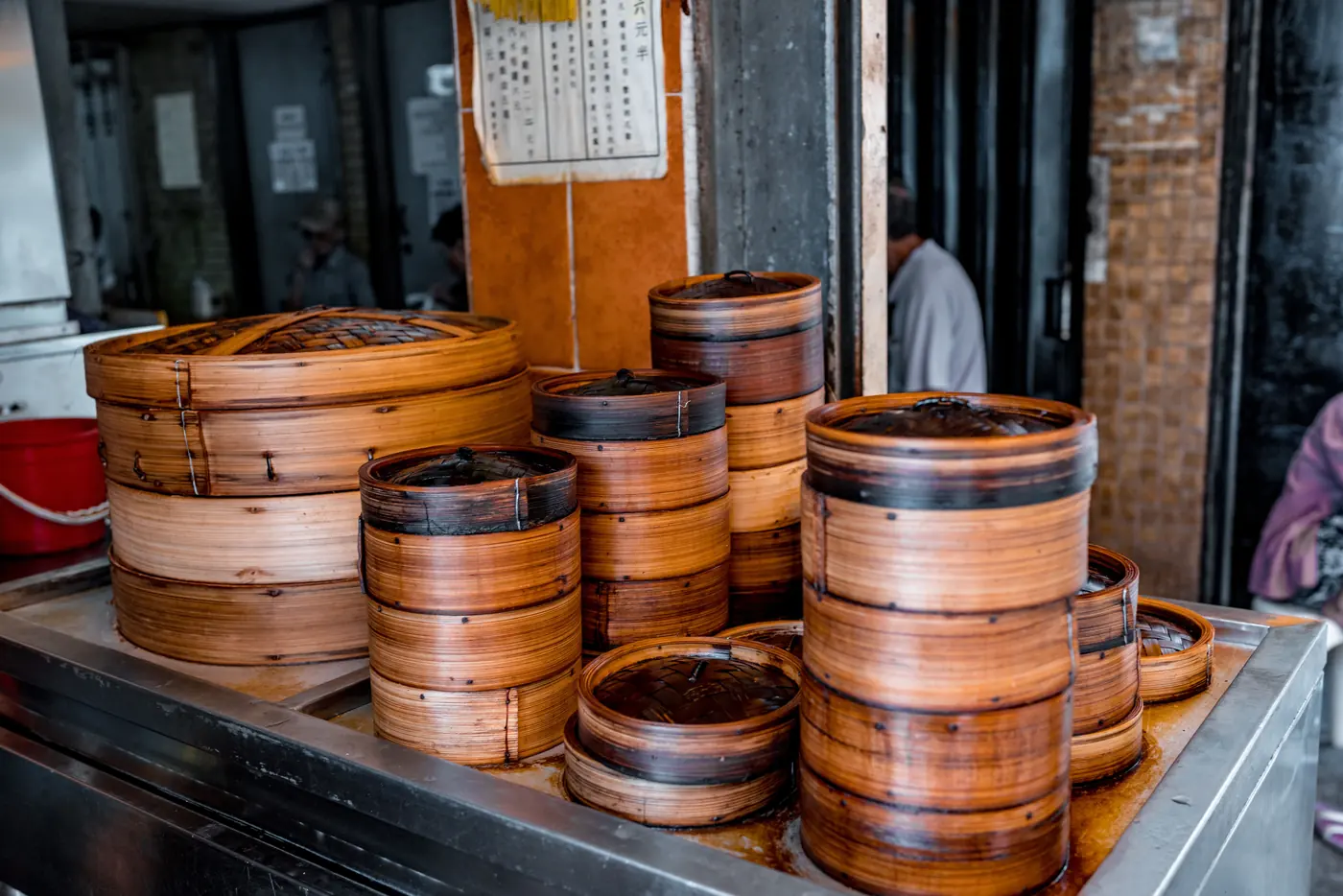
Small plates, bamboo steamers, a trolley being pushed between tables, and a great deal of tea. Dim sum is one of the few restaurant formats where the service model intimidates people more than the food does, and almost nothing written about it explains how the room actually works.
The short answer
Dim sum is a Cantonese tradition of small dishes served with tea, usually from mid-morning to early afternoon. The phrase translates roughly as touch the heart, and it describes the dishes rather than the meal.
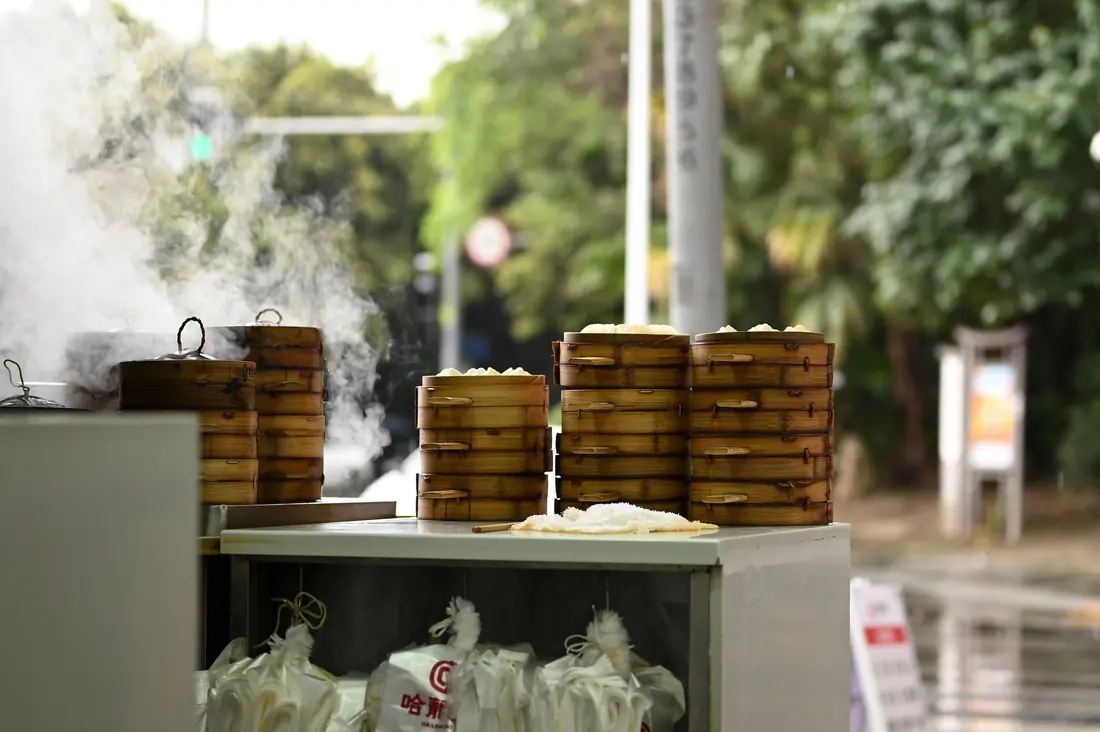
The meal itself is yum cha – literally drink tea – which is the more accurate name and the one used across Cantonese-speaking regions. You go to drink tea; the food is what arrives alongside it.
Where it came from
Teahouses on the trade routes into southern China, serving travellers who stopped for tea and wanted something small with it. Britannica’s entry on dim sum covers how the form developed in Guangdong and spread with Cantonese emigration.
That origin explains the shape of the meal. Tea first, food second, small portions so a traveller could stop briefly, and a menu of things that steam well in quantity because a teahouse could hold them ready.
Why it is a daytime meal
It is served from breakfast until early afternoon and almost never in the evening. The reason is partly historical – teahouses were morning places – and partly practical, since the kitchen work involved is enormous and front-loaded.
A dim sum kitchen makes hundreds of individually folded items before service, which is a morning’s work in itself. A restaurant doing that twice in a day would need two brigades.
How the service works
There are three models and a restaurant will use one of them, which is the single most useful thing to know before you walk in.
| Model | How you order | Where you find it |
|---|---|---|
| Trolley | Flag down a cart and point | Traditional, larger rooms |
| Order card | Tick a paper list, hand it over | Most modern restaurants |
| Menu service | Order from a menu as usual | Smaller and newer places |
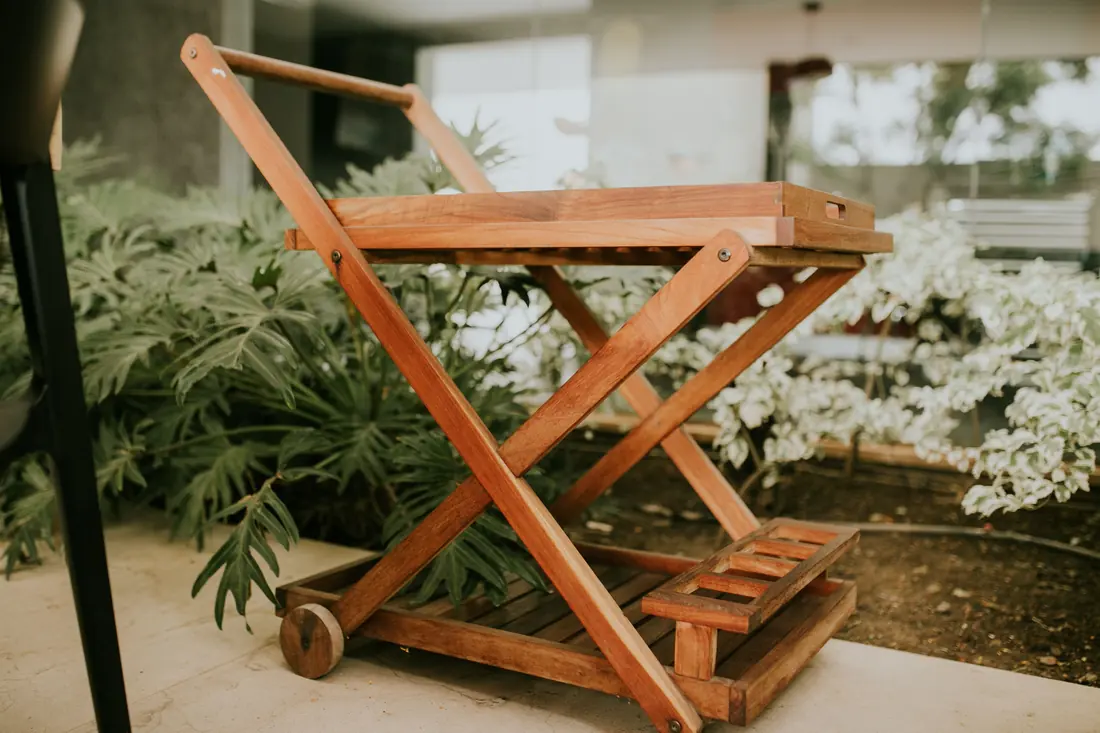
The trolley is the one people picture and the one in decline, because it is labour-intensive and food sitting on a cart is food cooling. Where it survives it is usually a large room at weekend peak, when turnover is fast enough that nothing waits.
How you are charged
By the plate, and the plates are graded. Each dish is a size – small, medium, large, special – and the bill is a count of how many of each you took.
The mechanism is the card on your table. Every time a dish arrives it is stamped or ticked in the relevant column, and that card is your bill. Do not lose it, and do not stack it under the teapot.
What actually arrives
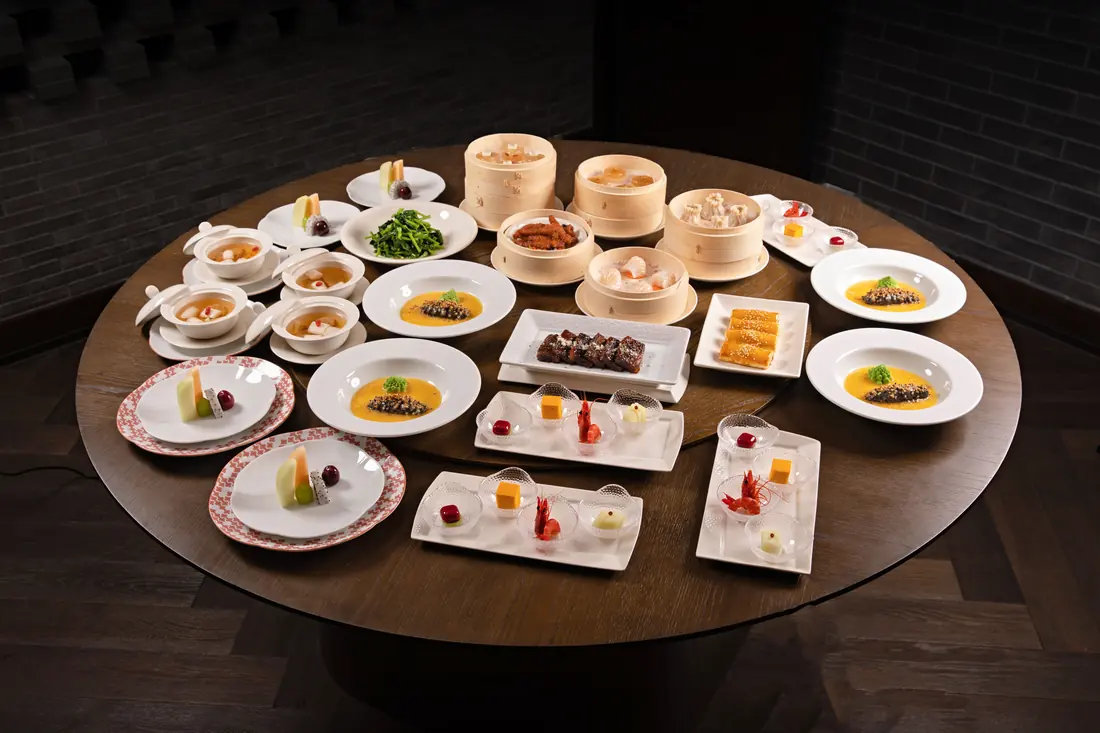
Four broad categories, and a good order takes from all of them rather than four things from one.
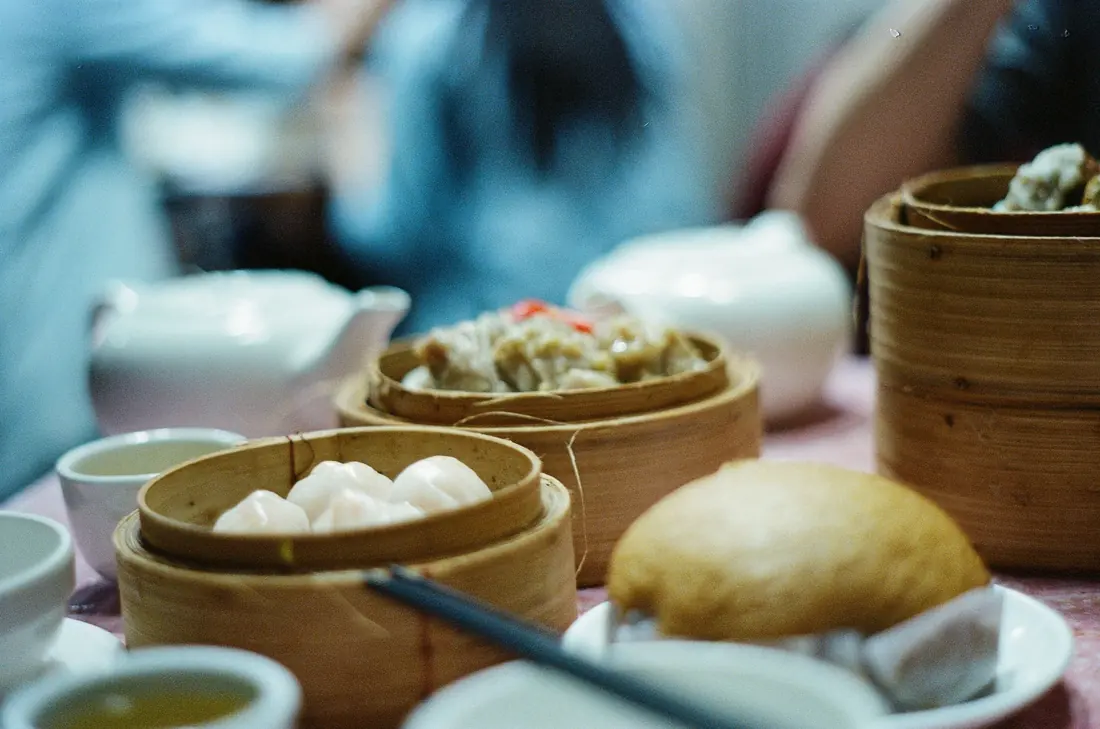
- Steamed – dumplings in bamboo baskets, buns, rice noodle rolls. The heart of the meal.
- Fried – spring rolls, taro puffs, anything crisp. Our piece on egg rolls and spring rolls covers the family.
- Baked – the sweet-glazed buns and pastries, often overlooked.
- Sweet – custard tarts, sesame balls, tofu pudding, eaten at the end or whenever the trolley reaches you.
The tea is not an afterthought
You will usually be asked which tea before you are asked anything about food, and it is a real question rather than a formality – jasmine, oolong, pu-erh and chrysanthemum all behave differently against fried food.
Our piece on tea with a meal covers the palate-clearing role, which matters more here than almost anywhere else: a two-hour meal of small rich plates needs something cutting through it continuously.
Two conventions worth knowing
Neither is complicated, and both make you look like you have done this before.
The first is the refill signal. When the teapot is empty, tip the lid ajar or rest it upside down on the pot – staff read it across a room and it saves flagging anyone down.
The second is the finger tap. When someone pours your tea, tap two fingers on the table beside your cup. It is a silent thank you that does not interrupt the conversation, and it is used constantly.
The dishes everyone starts with
A first visit is easier with three or four names in your head, and these are the ones on almost every trolley.
- Har gow – prawn dumplings in a translucent wrapper, pleated. The technical benchmark; a good one has a thin wrapper that does not tear.
- Siu mai – open-topped pork and prawn dumplings, usually with an orange dot on top.
- Char siu bao – the soft white bun filled with sweet barbecued pork, either steamed or baked.
- Cheung fun – wide rice noodle rolls, slippery, served with a sweetened soy sauce poured over.
- Egg tarts – the custard tart eaten at the end, and the one thing nobody argues about.
If a room is unfamiliar and the trolley is moving fast, those five will give you a complete meal with one from each category.
Ordering well
- Order in small rounds rather than all at once, so nothing sits and cools.
- Take one steamed, one fried and one you do not recognise each round.
- Do not fill the table early – things keep arriving and the room is busiest in the middle of service.
- Leave the sweet things until the end, or take them when they pass and set them aside.
- Go with more people. The whole format rewards a larger table, for the same reason our piece on family style dining describes.
What to do about the bill card
Two practical things, both of which catch people out. The card stays on the table and is not a menu – moving it, folding it or putting it under a teapot makes the count harder and occasionally impossible.
And the count is by plate rather than by person, so a table splitting the bill is dividing one number. Dim sum is a poor format for separate bills, which is worth knowing before rather than after.
It is loud, and that is correct
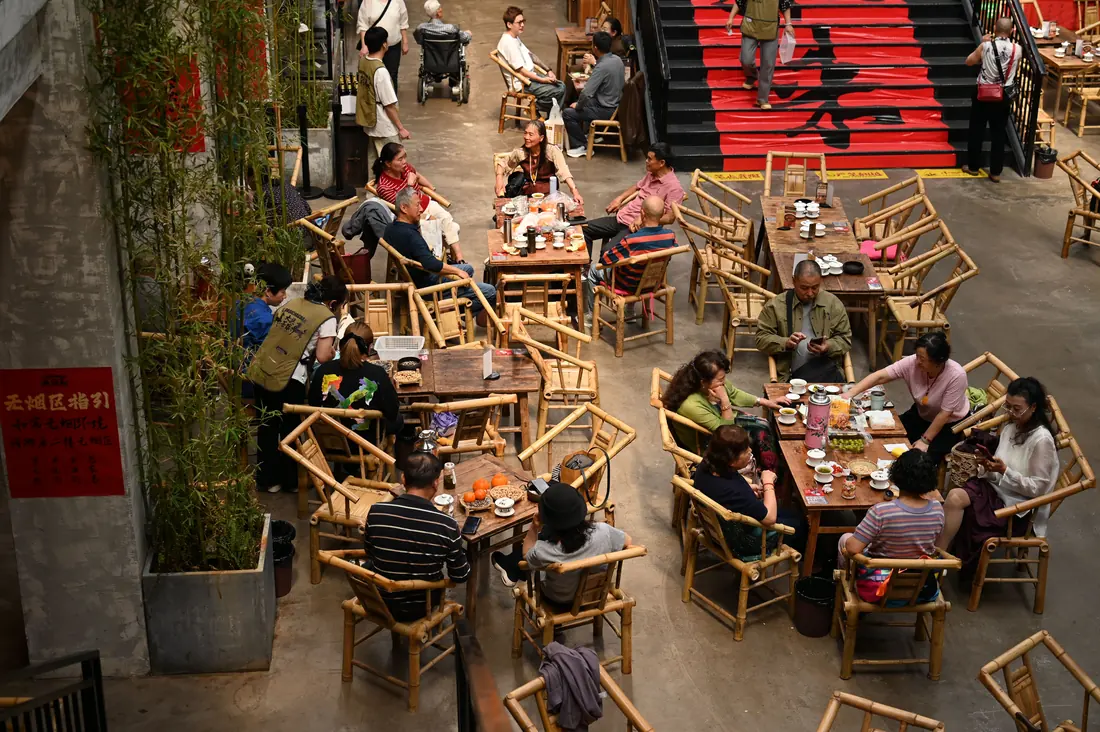
A dim sum room at peak is noisy, crowded, and staffed by people moving quickly. That is the format working rather than the format failing, and a quiet dim sum room on a Sunday lunchtime is usually a worrying sign rather than a pleasant one.
Turnover is the mechanism that keeps the food fresh. The busier the room, the less time anything has spent on a trolley.
For the dishes themselves, the crab rangoon piece covers a fried favourite, the roll comparison covers the wrappers, and the family style guide covers ordering for a table. The current selection is on the ordering page.
Frequently Asked Questions
What is dim sum?
A Cantonese tradition of small dishes served with tea, usually from mid-morning to early afternoon. The meal itself is called yum cha, meaning drink tea.
How does dim sum ordering work?
Three models: a trolley you flag down, a paper card you tick, or a normal menu. The trolley is the traditional one and now the rarest.
How are you charged for dim sum?
By the plate, graded by size. A card on your table is stamped as each dish arrives, and that card is your bill.
Why is dim sum only served during the day?
It grew out of morning teahouses, and the kitchen work is enormous and front-loaded – a restaurant could not realistically do it twice a day.
What does tapping the table mean?
It is a silent thank you when someone pours your tea. Two fingers tapped beside your cup, so the conversation is not interrupted.