
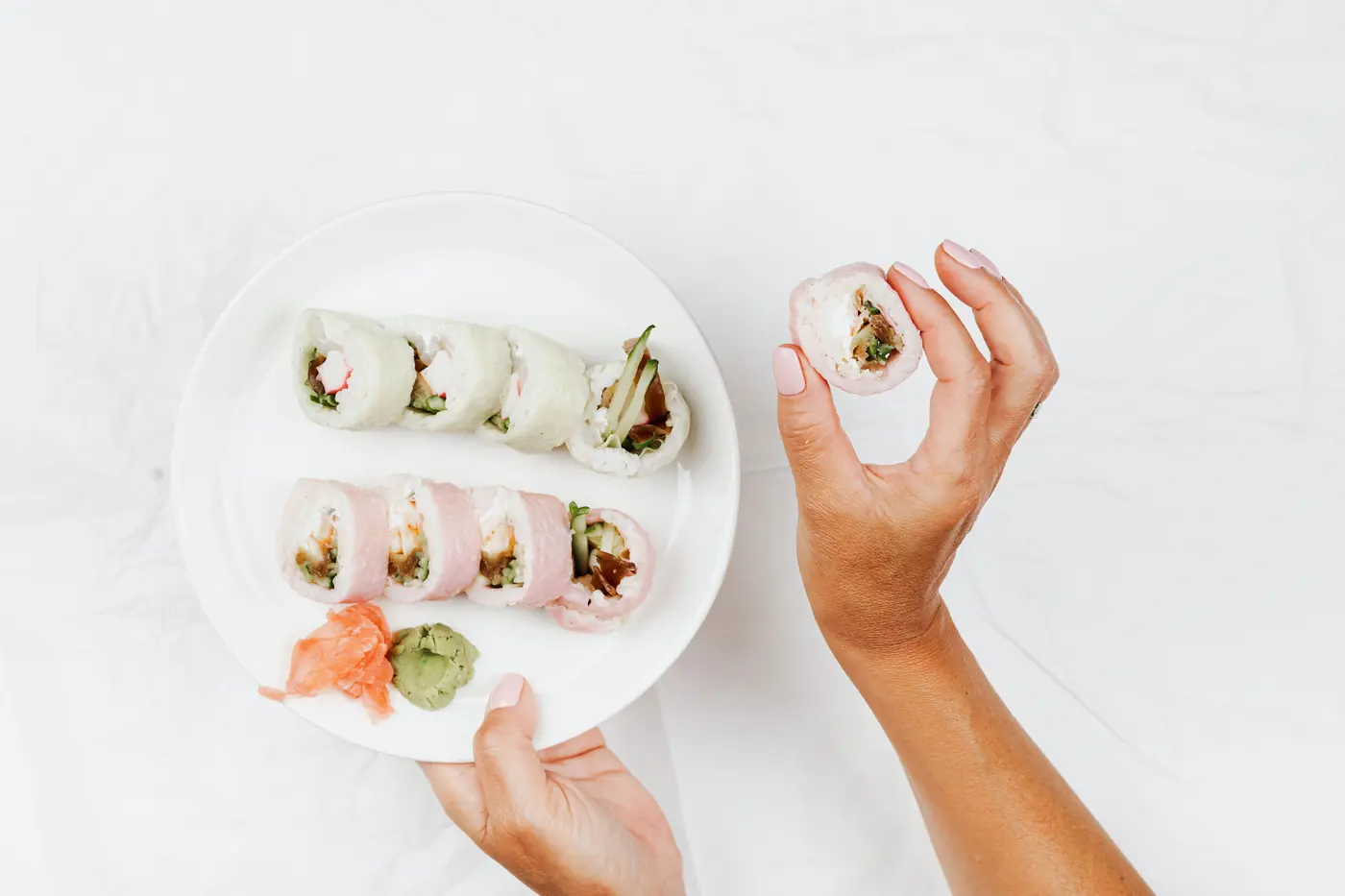
A roll arrives wrapped in something pale – pink, or orange, or a flat cream – and it is clearly not seaweed. It is soy paper, and it exists for a specific reason that the menu never explains.
The short answer
Soy paper is a thin sheet made from soybeans, used as an alternative to nori. In Japanese it is mamenori, from mame, meaning bean.
It is made much the way soy milk skin is: soybeans are processed into a liquid, the liquid is spread thin and dried into flexible sheets. Colour and flavourings are added at that stage, which is why it comes in pink, orange, green and yellow as well as plain.

Britannica’s entry on the soybean covers the plant behind it, which turns up on an Asian menu in more forms than any other single crop – as a sauce, a curd, a paste, a bean and, here, as a wrapper.
How it is actually made
The process is closer to papermaking than to cooking. Soybeans are soaked and ground into a liquid, that liquid is heated, and the resulting mixture is spread in a very thin, even layer and dried until it holds together as a flexible sheet.
Sheets are cut to standard sizes matching nori, because the whole point is that a kitchen can swap one for the other without changing anything else about how a roll is made. Colour and flavouring go in while the mixture is still liquid, which is why the tint is even all the way through rather than printed on.
The nearest familiar comparison is the skin that forms on hot soy milk – the same material, gathered the same way, dried flat instead of folded. Anyone who has eaten beancurd skin has met the ingredient in another form.
Why it exists
Because a meaningful number of people do not like nori, and the reasons are consistent: the sea flavour, the way it can go chewy rather than crisp, and the fact that it can be difficult to bite cleanly through, so a piece pulls apart as you eat it.
Soy paper answers all three. It is close to neutral in flavour with a faint sweetness, it stays smooth rather than turning leathery, and it cuts and bites cleanly. For someone who wants sushi without the seaweed, it is the whole solution.
How it differs from nori
| Nori | Soy paper | |
|---|---|---|
| Made from | Pressed, dried seaweed | Processed, dried soybean |
| Colour | Very dark green to black | Pale – white, pink, orange, green |
| Flavour | Marine, savoury, faintly smoky | Neutral, faintly sweet |
| Texture when fresh | Crisp, then softening | Soft, pliable, stays even |
| Biting through it | Can tear rather than cut | Cuts cleanly |
| Holding a roll | Grips the rice tightly | Looser – a slacker roll |
What it changes about the roll
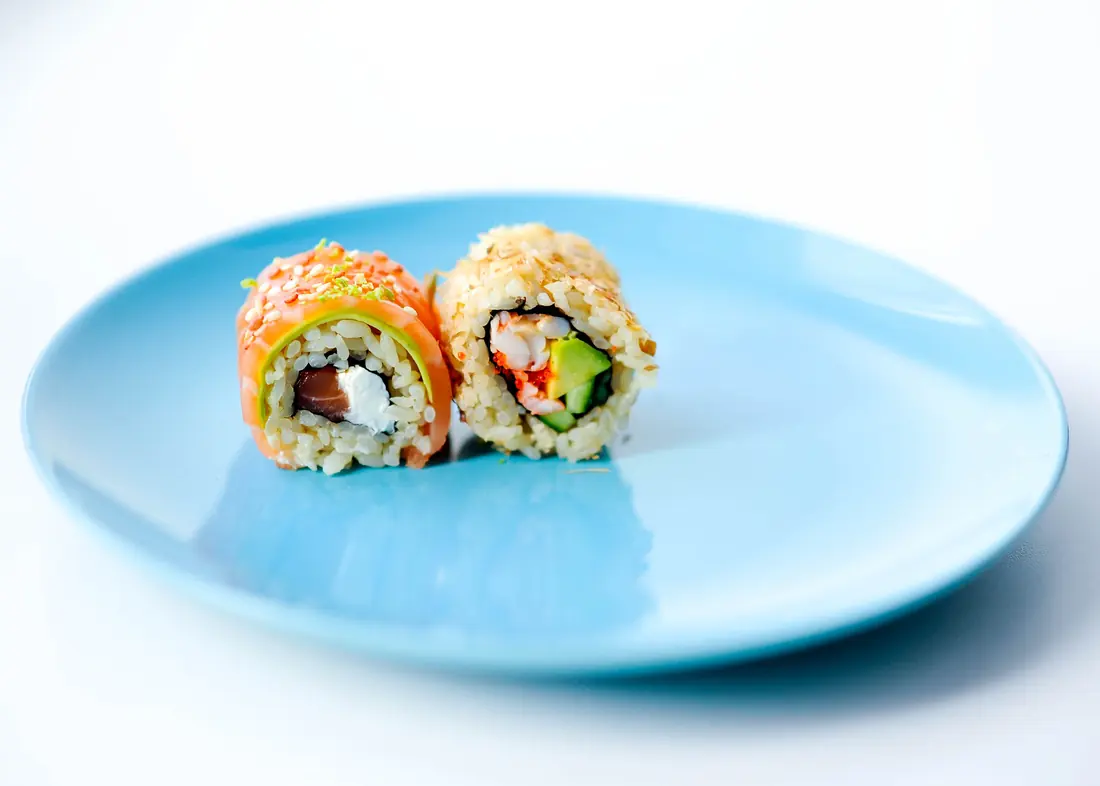
The trade-off is real and worth knowing before you order. Nori contributes flavour – a savoury, marine note that most rolls are built to include. Take it away and the roll tastes cleaner, sweeter and slightly flatter, because a component that was doing seasoning work has been replaced with one that is not.
There is a structural cost too. Nori grips rice as it absorbs moisture from it, which is part of what holds a roll together. Soy paper is smoother and does less of that, so rolls wrapped in it are marginally looser and more inclined to slump if they sit.
Where it works, and where it does not
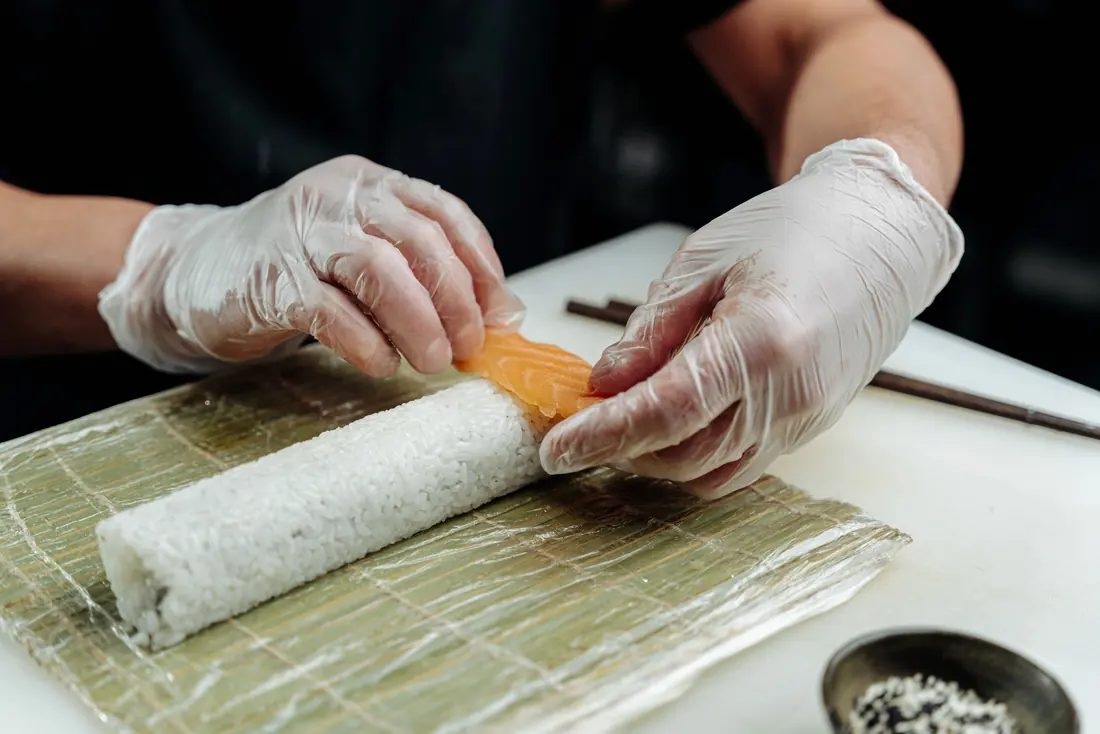
It suits an inside-out roll with plenty going on inside, because there is enough else happening that the missing marine note is not noticed. It also suits anyone eating sushi for the first time, where nori is one unfamiliar thing too many.
It is a poor fit for a hand roll. The whole appeal of a hand roll is a sheet of nori that is still crisp, eaten within a minute or two of being made – a wrapper that does not crisp has nothing to offer there.
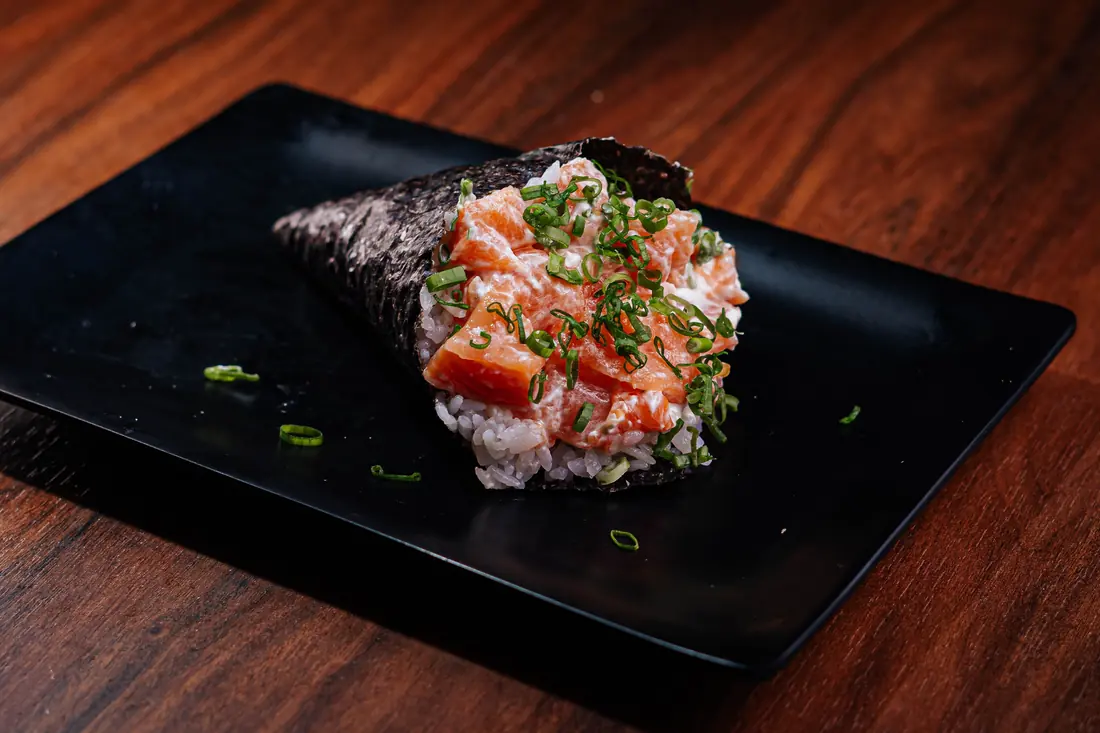
Our comparison of hand rolls and cut rolls covers why the crispness matters so much in that particular format.
It is not rice paper
The two get confused because both are pale, thin and not seaweed, and they are entirely different products doing entirely different jobs.
Rice paper is made from rice flour and tapioca, sold dry and brittle as translucent discs, and has to be soaked in warm water before use – which is what makes it turn soft and slightly tacky. It is the wrapper on a fresh summer roll, and it is chewy in a way soy paper is not.
Soy paper arrives ready to use, stays matte and flexible without soaking, and is cut square to match a nori sheet. If a wrapper was soaked in water before it reached your plate, it was not soy paper.
Handling and storage
It is more forgiving than nori in almost every respect, which is the other reason kitchens keep it. Nori is hygroscopic – it pulls moisture out of the air and goes limp within minutes of a packet being opened in a humid kitchen. Soy paper does not care nearly as much.
That has a practical consequence for takeaway. A roll wrapped in nori is noticeably worse twenty minutes into a car journey, because the wrapper has been sitting against damp rice the whole time. A soy paper roll changes far less, which makes it a reasonable choice for anything that is not going to be eaten immediately.
The colours are decoration
Worth being clear, because the bright pink and orange sheets look like they should mean something. They usually do not – the colour is added at the sheet stage and signals nothing about the filling.
Occasionally a kitchen uses colour as a code, so pink means one roll and green means another, but that is a house convention rather than a standard. If you want to know what is inside, the description is the only reliable source.
Who tends to order it
Three groups, fairly consistently. People who have tried nori and actively dislike the marine flavour. People eating sushi for the first time, for whom seaweed is one more unfamiliar thing in an already unfamiliar meal. And children, who object to the colour as often as the taste.
There is a fourth, less obvious one: people who find nori physically awkward. A sheet that does not bite cleanly can pull a whole roll apart mid-mouthful, which is a genuine problem rather than a fussiness, and it is the reason a lot of people quietly stopped ordering rolls before soy paper existed.
Spotting it on a menu
It is rarely called soy paper on the menu itself. The usual signals are a roll described as wrapped in soy wrap or mamenori, a note that a roll comes without seaweed, or simply a photograph in which the roll is pale.
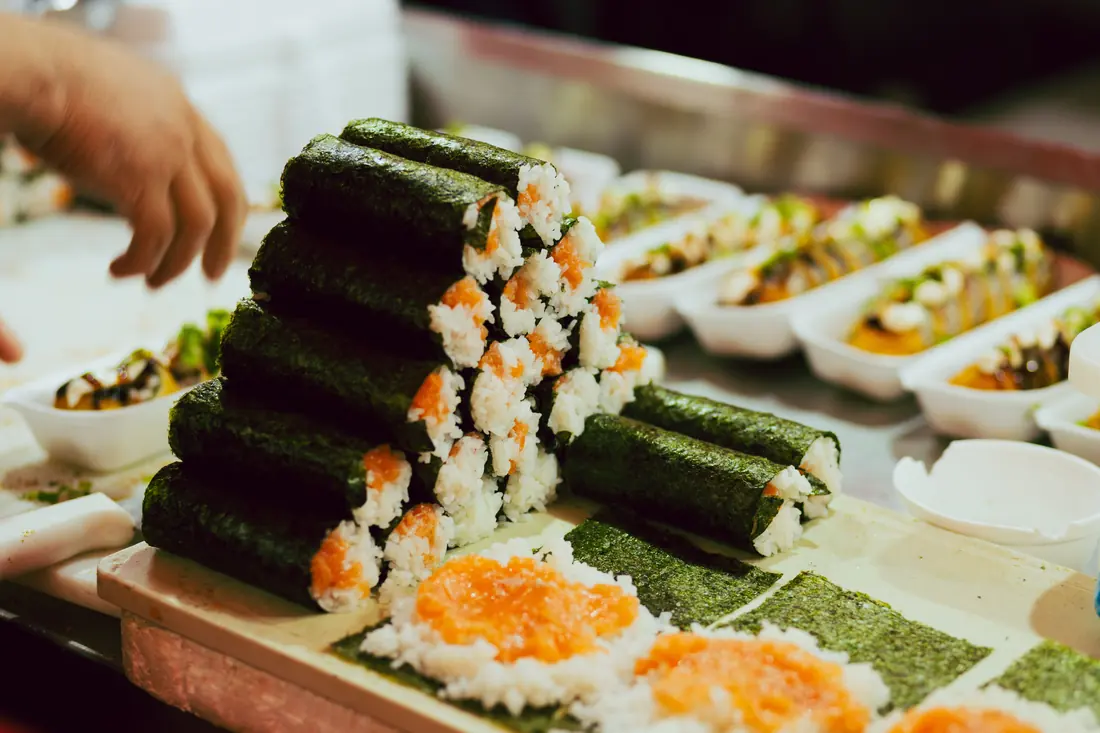
It is also almost always available on request even where it is not listed, since a kitchen that stocks it can wrap most rolls in it. Asking is the shortest route.
For the rolls themselves, the beginners guide covers what a roll is made of, the specialty roll piece covers the inside-out construction it suits best, and the hand roll comparison covers the one format it does not suit. The current selection is on the ordering page.
Frequently Asked Questions
What is soy paper made of?
Processed soybean, spread thin and dried into flexible sheets. In Japanese it is called mamenori, from mame, meaning bean.
What does soy paper taste like?
Close to neutral, with a faint sweetness. It contributes far less flavour than nori, which is precisely why some people prefer it.
Is soy paper healthier than seaweed?
They are different ingredients rather than ranked ones, and it depends on the product. Ask the restaurant for anything specific to a dish.
Why is soy paper pink or orange?
Colour is added when the sheets are made. It is usually decorative and does not indicate anything about the filling.
Can I ask for a roll without seaweed?
Usually yes. A kitchen that stocks soy paper can generally wrap most rolls in it, even where the menu does not list it.