
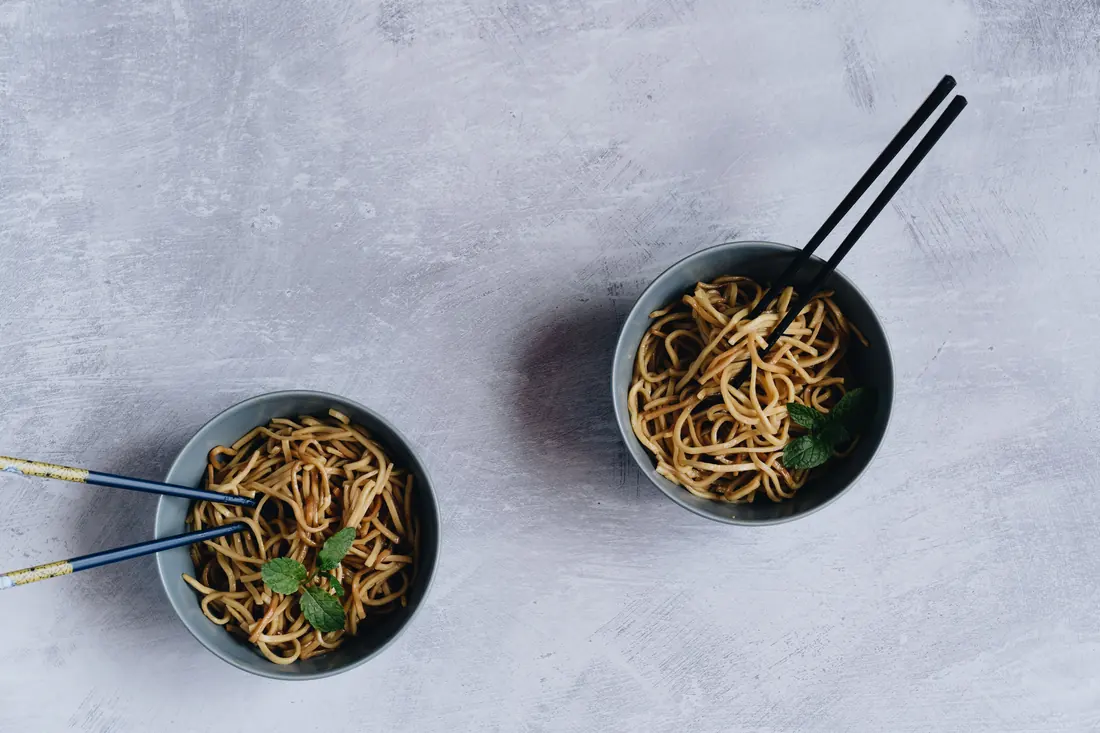
Thick, beige, and behind several sauces you have eaten without being able to name them. It looks exactly like tahini, is sold beside tahini, and is not tahini – and substituting one for the other is why a lot of home versions taste wrong.
The short answer
Chinese sesame paste is ground toasted sesame seeds. Tahini is ground raw or lightly toasted sesame seeds. One step of difference, and it changes the product completely.
Toasted paste is darker, browner, deeply nutty and aromatic. Tahini is paler, greyer, milder and noticeably more bitter.
Why toasting changes so much
The same reason it matters everywhere else on this site. Toasting drives browning reactions that generate a large family of aromatic compounds – the ones that make toast smell like toast rather than like bread.
Raw sesame is mild and slightly bitter. Toasted sesame is the flavour people mean when they say something tastes of sesame. Our piece on sesame oil describes the same transformation applied to the pressed oil rather than the ground seed.
Britannica’s entry on sesame covers the crop behind both – one of the oldest cultivated oilseeds, and unusually rich in oil, which is why a ground paste separates so readily.
Telling them apart
| Chinese sesame paste | Tahini | |
|---|---|---|
| Seeds | Toasted, often heavily | Raw or lightly toasted |
| Colour | Deep tan to brown | Pale beige to grey |
| Flavour | Nutty, roasted, sweet-edged | Milder, greener, more bitter |
| Texture | Thicker, often stiffer | Looser, pourable |
| Used in | Noodle sauces, hot pot dips, dressings | Hummus, halva, dressings |
Two more pastes worth not confusing
The shelf has several beige jars on it and only some of them are sesame.
- Japanese neri goma – the closest relative, made from toasted seeds much like the Chinese version, sold in white and black varieties.
- Korean sesame paste – generally lighter and often blended with other ingredients for dipping sauces.
- Peanut butter – which is what many restaurant sesame noodle sauces actually contain, either alongside the sesame paste or in place of it.
That last one is worth knowing if a sauce you liked tasted more peanut than sesame. It is a common and long-standing substitution rather than a corner being cut, and plenty of recipes call for both together.
Where you have eaten it
More places than you would guess, usually as the body of a sauce rather than as a flavour you could name.
- Cold noodle sauces – the thick beige sauce on sesame noodles is mostly this, thinned with soy, vinegar and a little sugar.
- Hot pot dipping sauces – the base of the standard sesame dip, loosened with stock.
- Salad dressings – the creamy Japanese sesame dressing served on shredded cabbage.
- Dumpling and wonton sauces – blended with chilli oil and vinegar.
Neither is a nut butter
It gets shelved beside peanut butter and behaves nothing like it. Nut butters are usually stabilised, sweetened or salted, and they are made from seeds and nuts with a much lower oil content held in a coarser grind.
Sesame paste is unstabilised, unsweetened and unsalted, made from a seed that is roughly half oil and ground far finer. That is why it separates aggressively, why it is bitter on its own, and why every recipe using it adds sugar, salt or acid – it is an ingredient rather than a spread.
It separates, and that is normal
A jar left standing develops a layer of oil on top and a dense paste underneath, and the paste sets almost solid. Nothing is wrong; sesame is roughly half oil, and nothing is holding the emulsion together.
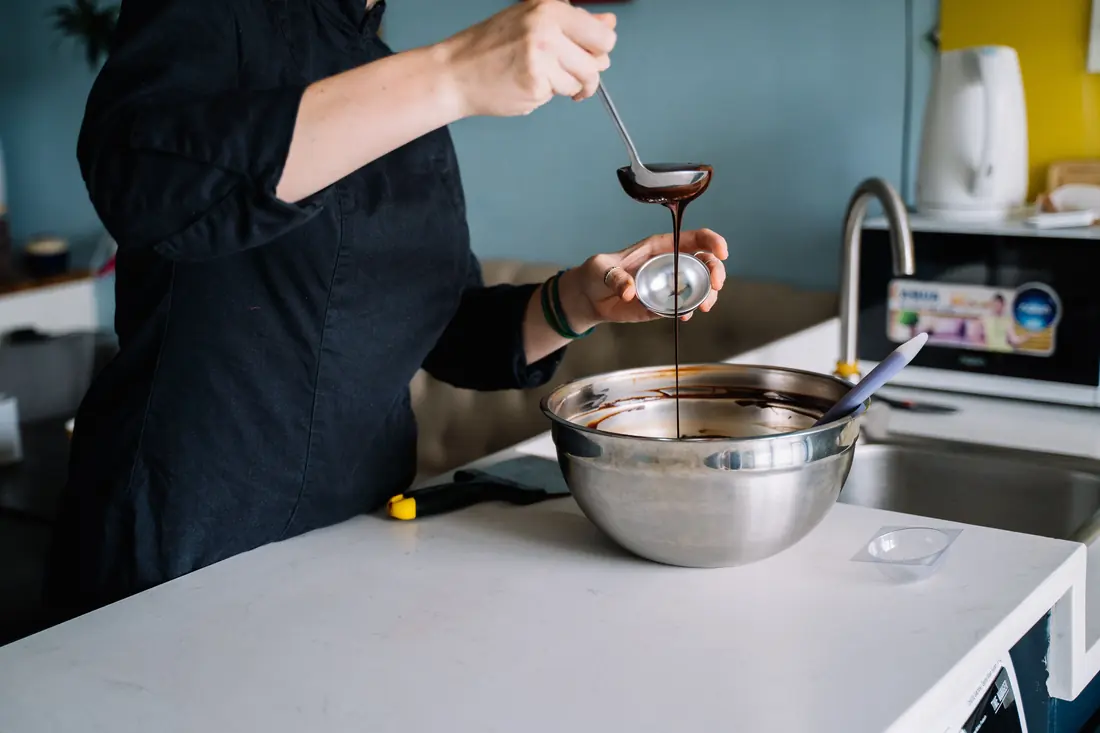
Stir it back together before use, which takes more effort than it sounds – a table knife works better than a spoon. Storing the jar upside down between uses makes the next stir considerably easier.
Thinning it
Straight from the jar it is too thick to be a sauce, and it behaves counterintuitively when you thin it.
- Add liquid a very small amount at a time.
- Expect it to seize – the paste will tighten and look ruined after the first splash.
- Keep going. It loosens suddenly, and the seizing is a stage rather than a mistake.
- Use warm liquid rather than cold, which shortens the seizing phase considerably.
- Finish with the seasoning – soy, vinegar, sugar, chilli oil – once it is already pourable.
That seizing step is where most people give up and add far too much water at once, which produces a thin, split sauce that never comes back together.
Grinding your own
Genuinely feasible, and the results are better than anything in a jar – freshly ground toasted sesame is startlingly aromatic in a way the shop version is not, because the aroma compounds start leaving the moment the seed is broken.
- Toast sesame seeds in a dry pan until they colour and start to pop.
- Cool them completely, or the paste will be greasy rather than smooth.
- Grind in a food processor, scraping down repeatedly – it takes several minutes and goes through a crumbly stage before it turns.
- Add a neutral oil a teaspoon at a time only if it refuses to come together.
The crumbly stage is where people stop too early. Sesame has enough oil to become a paste on its own; it simply needs longer in the machine than instinct suggests.
Freshly ground paste also separates faster than the commercial kind, because there is nothing in it to slow that down. Make it in small quantities and expect to stir it every time.
Buying it
Sold in jars in East Asian groceries, usually labelled sesame paste or sesame butter. If the label is not in English, colour is the guide: distinctly brown means toasted, and pale means you have picked up tahini.
It keeps for months in a cupboard and longer refrigerated, though cold makes it stiffer still. If it smells sharp rather than nutty, the oil has gone and the jar is past it.
If you only have tahini
You can get closer than you might think. Toast a few tablespoons of sesame seeds until fragrant, grind them, and stir them through the tahini – you are adding back the step that was missed.
Whichever route you take, taste before you commit it to a sauce. The gap between the two pastes is large enough that a dressing balanced for one will be noticeably off with the other, usually needing more sugar and more salt to compensate.
A few drops of toasted sesame oil does something similar and takes ten seconds, though it thins the paste rather than deepening it. Neither is identical, and both are far better than using tahini straight.
For the rest of the sesame family, the sesame oil explainer covers the pressed version, the furikake piece covers the whole seeds, and the ginger dressing guide covers another blended dressing on the same menu. The current selection is on the ordering page.
Frequently Asked Questions
What is Chinese sesame paste?
Ground toasted sesame seeds. It is darker, nuttier and thicker than tahini, which is made from raw or lightly toasted seeds.
Is sesame paste the same as tahini?
No. The seeds for Chinese sesame paste are toasted first, which makes it browner, nuttier and less bitter. They are not interchangeable.
Why does my sesame paste seize when I add water?
It is normal and temporary. Add liquid slowly and keep stirring – it tightens first, then loosens suddenly. Warm liquid shortens the stage.
Why has my jar separated?
Sesame is roughly half oil and nothing holds the emulsion. Stir it back together, and store the jar upside down to make the next stir easier.
Can I use tahini instead?
At a push. Toast and grind a few tablespoons of sesame seeds into it, or add a few drops of toasted sesame oil, to replace the missing step.