

White, folded, with a thin wire handle across the top. It is probably the most recognisable piece of food packaging ever made, it appears in every film that wants to say takeaway without saying anything, and it has never been used in China.
The short answer
It is an American invention, patented in Chicago in 1894, and it was not designed for Chinese food at all. It was designed for oysters – which is why the trade still calls it an oyster pail.
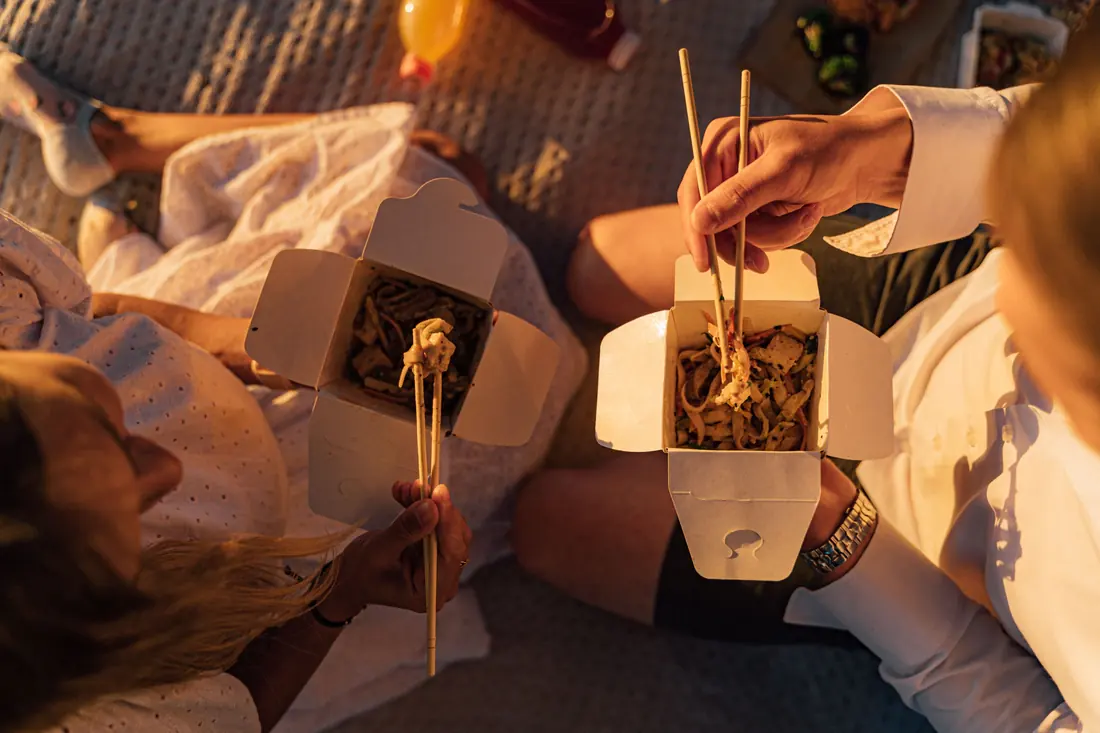
Shellfish were sold live and wet from barrels, and the problem was carrying something damp home without it leaking through paper. The folded pail solved that, and when American Chinese restaurants began doing a takeaway trade decades later it was already sitting on the shelf as the obvious container for wet food.
The design is genuinely clever
The whole box is one piece of board, folded, with no glued seams along the bottom where liquid collects. That is the entire trick, and it is why the thing works.
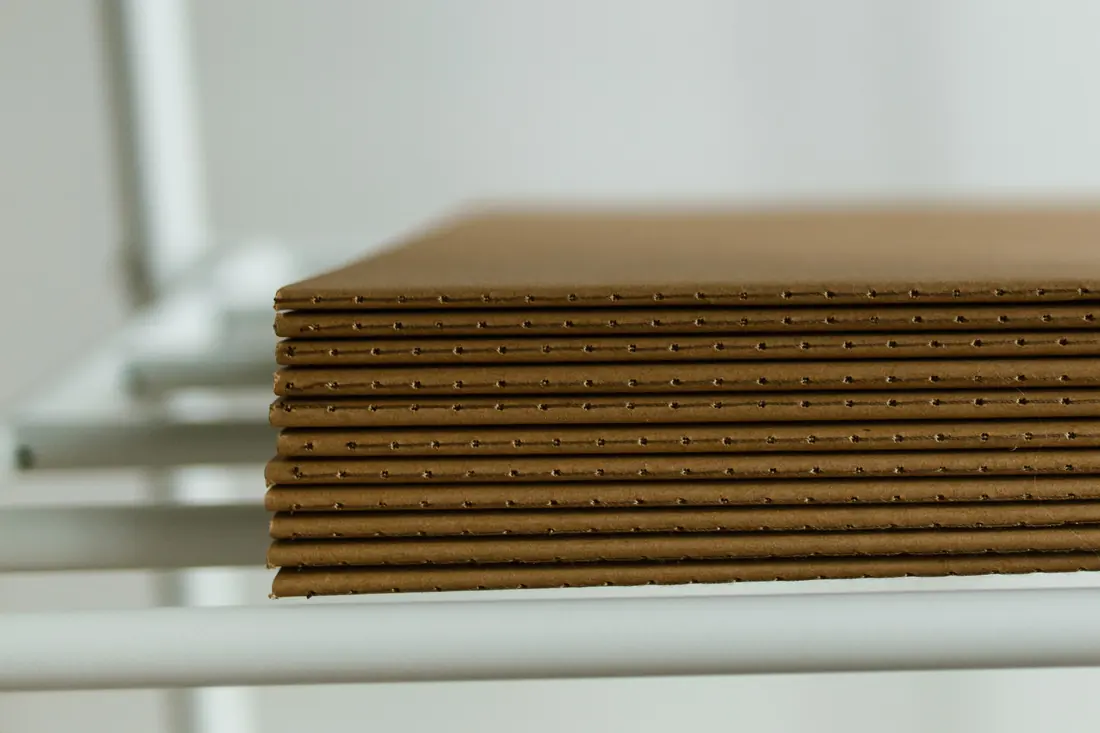
- One sheet. Cut and creased flat, folded into shape at the point of use, so it ships and stores nearly flat.
- No bottom seam. The base is formed by folding rather than joining, so there is no glue line for sauce to work through.
- A wire handle. Bent over the top, taking the weight without needing a reinforced rim.
- A coated interior. Originally wax, now usually a thin polymer film, which is what actually stops it going soft.
Britannica’s entry on packaging sets out the constraints every container is solving – contain, protect, transport, inform – and this one solves the first three unusually elegantly for something that costs a few pence.
It unfolds into a plate, sort of
The party trick is real: pull the wire handle off, unfold the flaps and the seams, and the box lies flat into a rough paper plate. It works, and it is a legitimate consequence of the single-sheet design rather than an accident.
It is also less useful than the internet suggests. The board is thin, the coating is only on one side, and anything with sauce will find the creases within a couple of minutes. It is a plate for dry fried rice and not much else.
Can you microwave it?
Not with the handle on. The wire will arc, and that is a genuine fire risk rather than a caution printed for legal reasons.
Without the handle it depends entirely on the coating, which you cannot identify by looking. Some are microwave-safe by design and some are not, and the packaging rarely says. Tipping the food onto a plate takes five seconds and removes the question.
What it does to the food
The same thing every closed container does, which is trap steam. Food packed hot into a sealed box continues cooking gently and softens, and anything fried loses its crispness on the journey.
Our piece on panko covers why some coatings survive that better than others, and our pickup and delivery guide covers which dishes travel well. The short version is that the box is not the problem – any closed container does this – but a tall narrow box traps more steam against a small surface area than a flat one does.
The red pagoda is a piece of design history
The printed version – a red pagoda, a curl of script, sometimes the words thank you – was not designed by any restaurant. It was a stock print offered by packaging suppliers, which is why the same design appeared across thousands of unrelated businesses in different cities.
That is the reason it reads as generic rather than as anyone’s brand. A single supplier’s stock artwork became the visual shorthand for an entire cuisine in a country, largely by accident.
Sizes are standardised too
They come in a small number of capacities, and the sizes are chosen around portions rather than around geometry. The small one holds a side of rice, the medium is a main dish for one, and the large is designed to be shared.
A kitchen packing an order is therefore making a portion decision when it chooses a box, which is part of why takeaway portions are so consistent between very different restaurants. Everyone is buying from the same short list of container sizes.
Why you see it less than you used to
Because the economics changed. Delivery platforms want containers that stack securely in a bag on a bike, and a tapered pail with a wire handle stacks badly and tips easily.
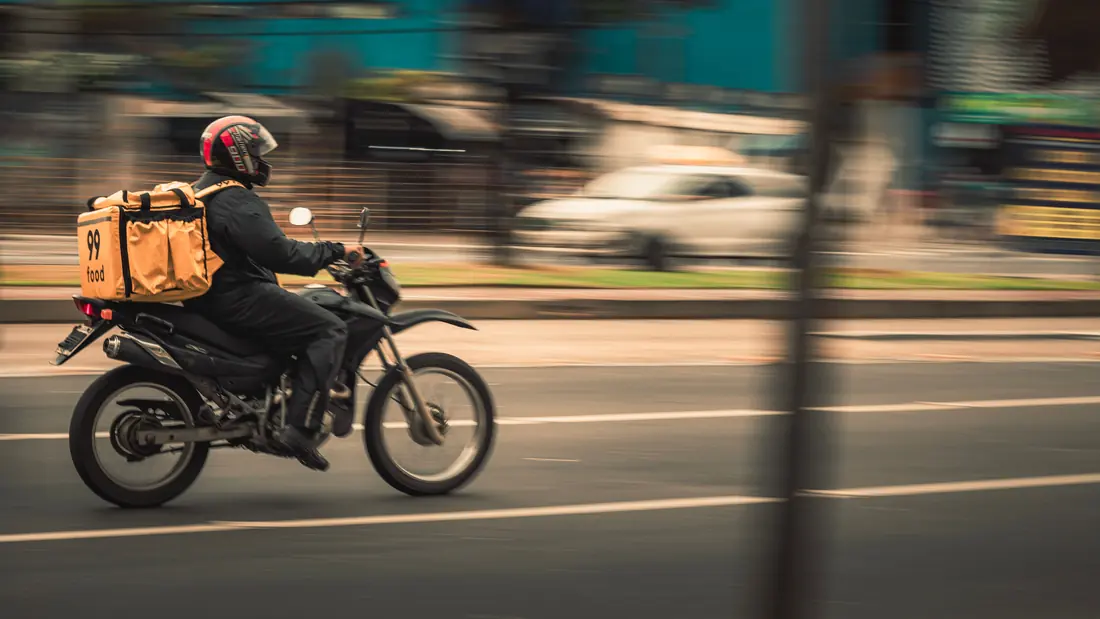
Rigid plastic and moulded fibre containers stack flat, seal with a lid, survive being carried at an angle, and let a courier see what is inside. The pail was designed for a customer carrying one bag home by hand, and that is no longer how most takeaway travels.
What kitchens actually use now
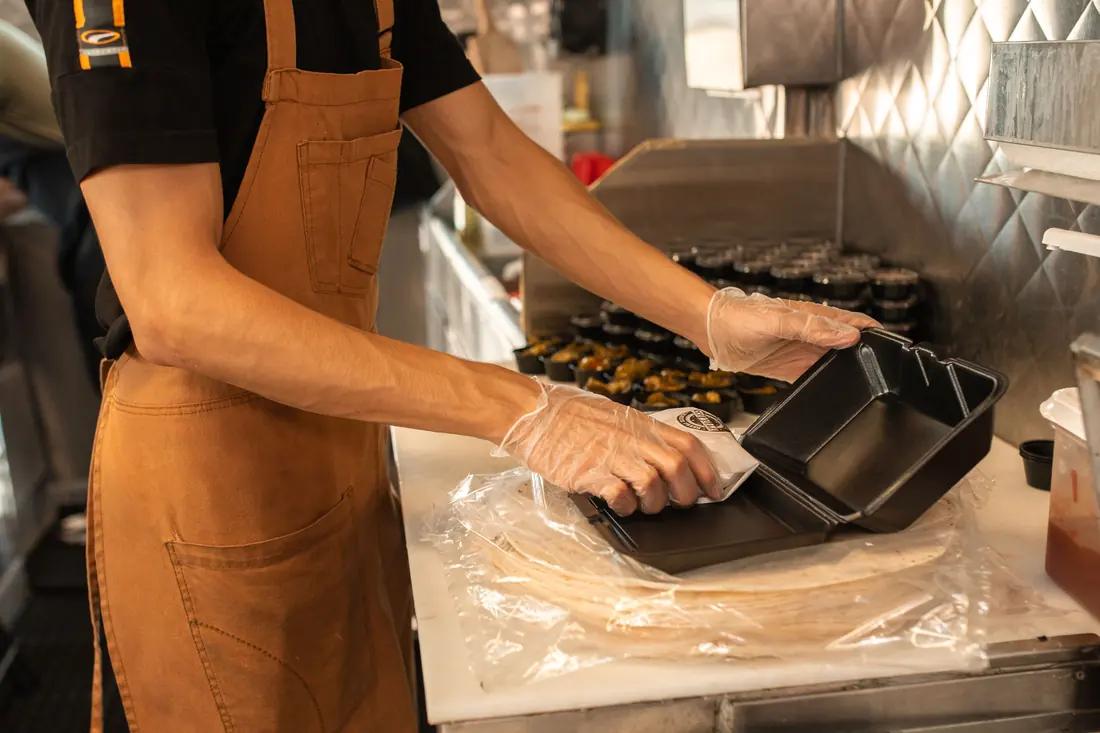
Mostly rectangular containers with snap lids, in plastic or increasingly in coated board, in a small number of standard sizes chosen so they stack.
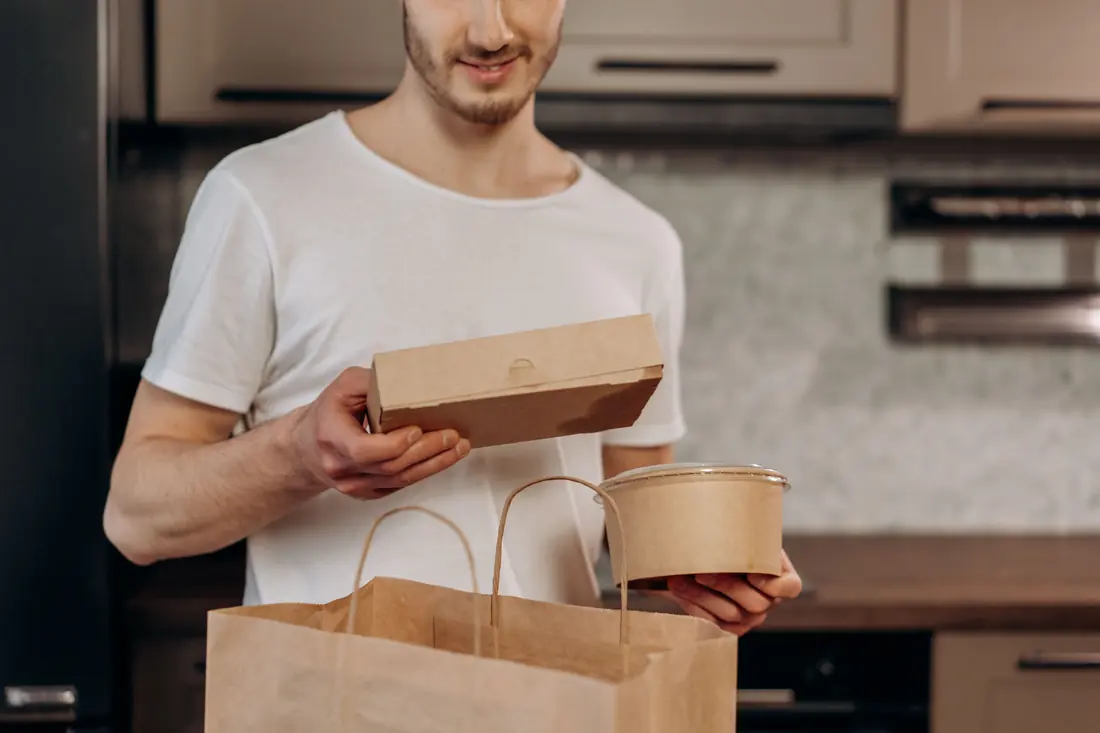
That standardisation matters more than it sounds. A kitchen packing forty orders an hour needs containers that go together predictably, and the pail – which has to be folded, filled and closed by hand – is slow at exactly the moment a kitchen has no time. Our piece on why takeaway is ready so quickly covers how tight that packing window actually is.
Reheating what came in one
- Take the food out of the box first, whatever the box is made of.
- Separate anything fried from anything sauced – they want different treatment.
- Rice reheats best with a splash of water and a cover, which restores the steam it lost.
- Fried items go in a hot dry pan or an oven, never a microwave, to drive moisture off rather than in.
- Sauced dishes reheat in a pan over a moderate heat, stirred, rather than in bursts in a microwave.
The other containers in the bag
The pail rarely travels alone, and the rest of the bag is chosen just as deliberately. Soup goes in a lidded tub because a folded box cannot hold liquid at that depth. Rice goes in a wide shallow container so it does not compact. Anything fried goes in something vented or paper-lined, because a sealed box would steam it on the way home.
If a kitchen is packing your fried starter into a closed plastic tub, it is making a speed decision rather than a quality one – and it is the single most common reason a crisp thing arrives soft.
Why it stuck around in the culture
Because it is instantly legible. A white pail with a red pagoda print says takeaway, late night, eating on a sofa – and it says it in one frame with no dialogue, which is exactly what a prop is for.
That shorthand has outlasted the object’s practical life by a good margin. Plenty of people picture the box when they think of a Chinese takeaway and have never actually been handed one.
For the journey itself, our pickup and delivery guide covers what survives it, the kitchen speed piece covers what happens before it, and the panko explainer covers why some fried food holds up. The current selection is on the ordering page.
Frequently Asked Questions
What is a Chinese takeaway box called?
An oyster pail. It was patented in the United States in 1894 for carrying live oysters, and adopted by American Chinese restaurants much later.
Is the takeaway box actually Chinese?
No. It is an American invention and has never been standard packaging in China.
Can you microwave a Chinese takeaway box?
Not with the wire handle attached – it will arc. Without it, the coating determines whether it is safe, and that is rarely stated. Use a plate.
Does the box really unfold into a plate?
Yes, because it is folded from a single sheet. It works for dry food; anything saucy leaks through the creases fairly quickly.
Why do fewer restaurants use them now?
They stack badly in a delivery bag, tip easily and are slow to assemble by hand. Rigid containers with snap lids suit modern delivery better.