
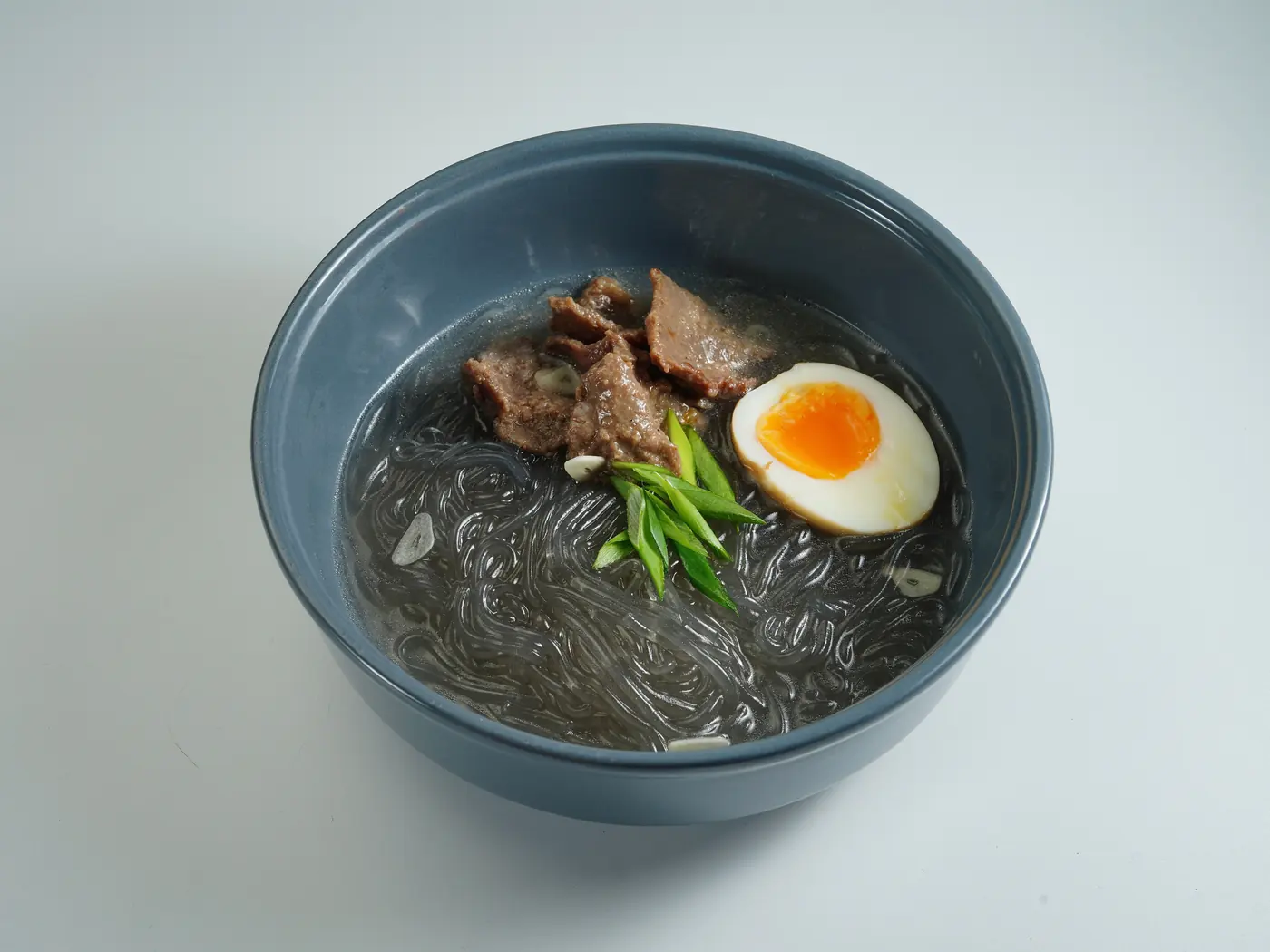
They arrive clear. Not white, not pale yellow – actually see-through, so whatever is in the bowl with them shows through. It is the most distinctive noodle on any Asian menu and the one people can least often name.
The short answer
Glass noodles are made from starch rather than flour, most often mung bean starch. That single fact explains everything else about them: the transparency, the slipperiness, the springy bite and the way they behave in a bowl.
They go by several names – cellophane noodles, bean thread noodles, fensi, dangmyeon, woon sen – and the names are regional rather than descriptive of different products.
Why they are transparent
Wheat and rice noodles are made from milled grain, which brings along protein and fibre as well as starch. Those extra components scatter light, which is why an ordinary noodle is opaque.
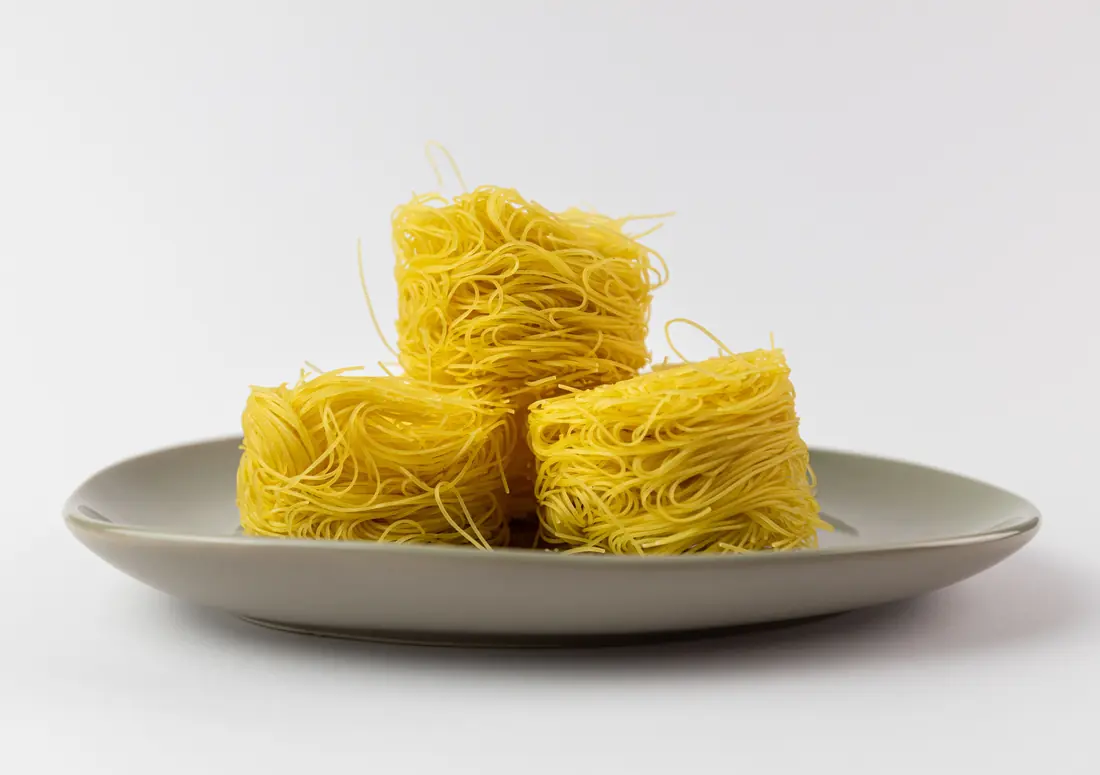
A starch noodle has had all of that removed. Mung beans are ground, the starch is washed out and separated, and the noodle is made from that purified starch alone. With nothing left to scatter light, the cooked noodle goes clear.
Britannica’s entry on the mung bean covers the crop behind them – the same bean that produces the sprouts you meet elsewhere on the same menu, put to a completely different use.
What they are like to eat
Springy and slippery, with a bite that is bouncier than a wheat noodle and cleaner than a rice one. They have essentially no flavour of their own, which is the point – they are a carrier for whatever they are cooked with.
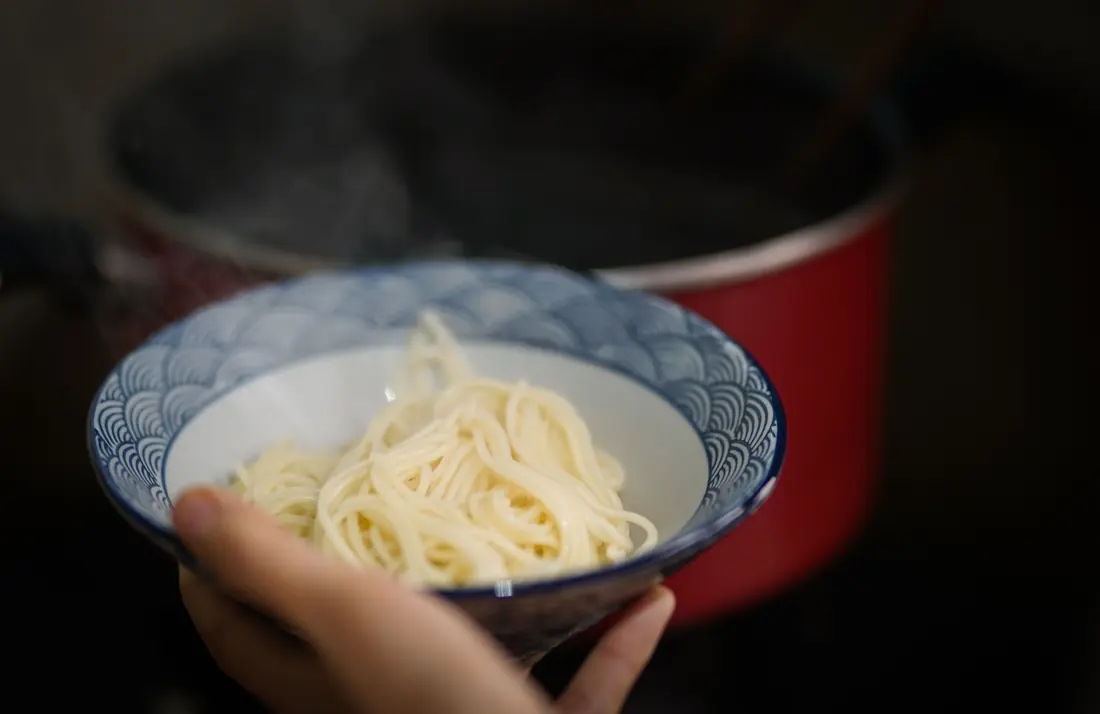
The slipperiness is worth a warning. They are genuinely difficult to eat with chopsticks if they are long and undressed, and most kitchens cut them for that reason.
How they differ from the noodles next to them
| Made from | Cooked colour | Texture | Absorbs sauce | |
|---|---|---|---|---|
| Glass noodles | Mung bean starch | Transparent | Springy, slippery | Very well |
| Rice noodles | Rice flour | Opaque white | Soft, tender | Moderately |
| Wheat noodles | Wheat flour | Pale yellow | Chewy, firm | Poorly |
| Sweet potato noodles | Sweet potato starch | Grey-brown, translucent | Very chewy | Very well |
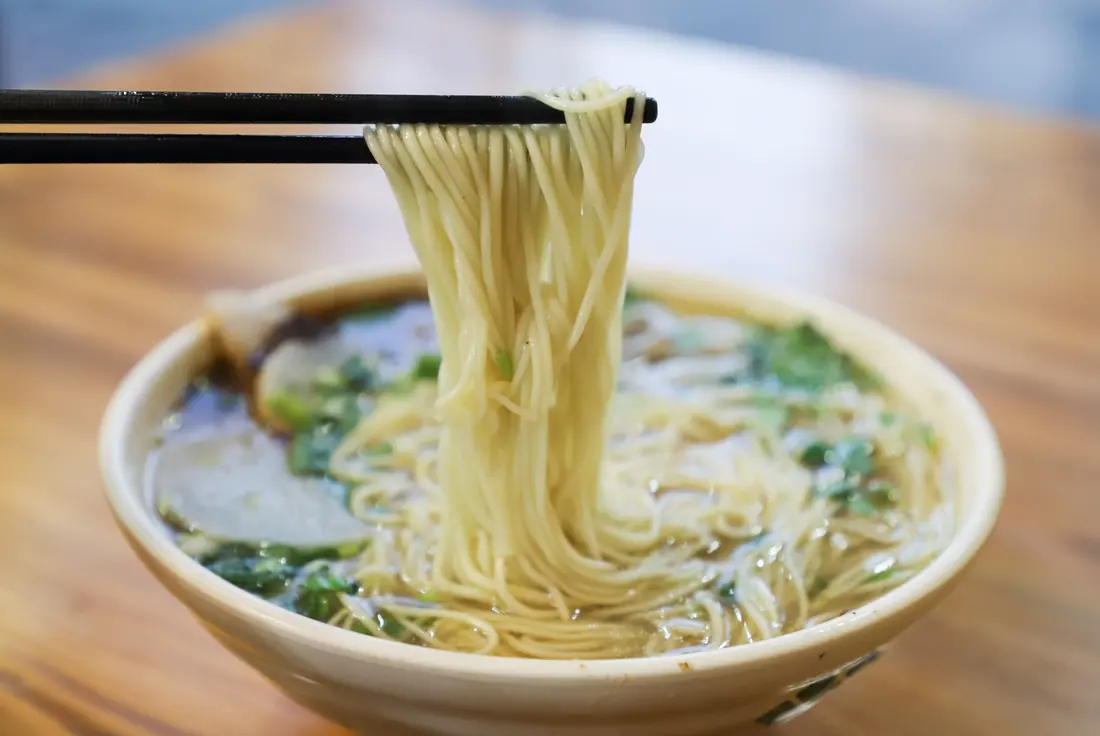
The last column is the practical one. Starch noodles soak up liquid far more aggressively than flour noodles, which is why a glass noodle dish that sat for ten minutes has no sauce left in the bowl – it is all inside the noodles.
They are soaked, not boiled
This is the mistake almost everyone makes first. Dried glass noodles do not want a rolling boil. Hot water off the heat, for a few minutes, until they are pliable but still firm, is the whole method.
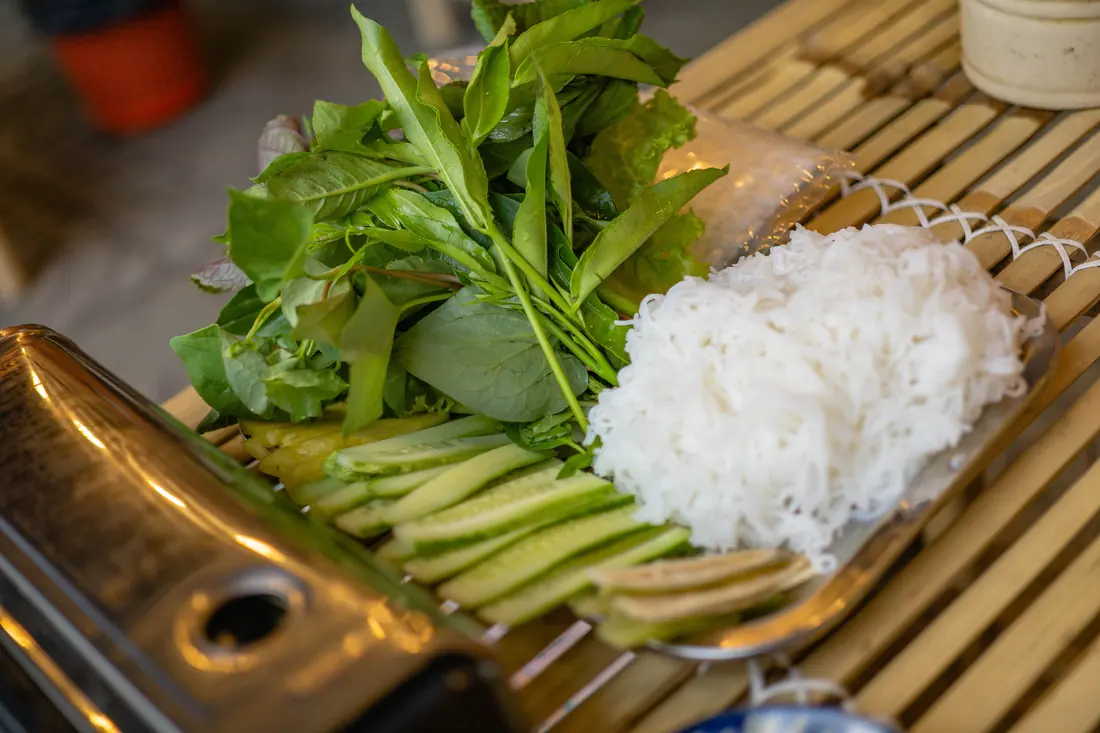
Boiled properly hard, they go from springy to gluey with very little warning, and there is no recovering them. They also continue softening in whatever they are added to, so they should come out of the water slightly underdone.
Where you meet them
Across a wider range of dishes than most noodles, because their neutrality makes them adaptable.
- In soups – added at the end, where they take on the broth.
- In cold salads – dressed with lime, chilli and herbs, which is where the springiness shows best.
- Stir fried – soaked first, then tossed with sauce that they absorb almost completely.
- Inside things – in spring roll fillings and in dumplings, where they add bulk without adding flavour.
Our comparison of yaki soba and lo mein covers the wheat-noodle end of the same menu, and the difference between those two and these is larger than the difference between them.
The Korean ones are a different noodle
Worth separating, because the two get sold under overlapping names. Japchae – the Korean stir-fried noodle dish – uses dangmyeon, made from sweet potato starch rather than mung bean.
They are thicker, greyer, chewier and considerably more robust. Where a mung bean noodle is delicate and springy, a sweet potato noodle is bouncy to the point of being a workout, and it holds up to being tossed in a hot pan in a way the finer ones do not.
If a recipe specifies one and you have the other, the dish still works but it is a different dish. The clearest tell is thickness: hair-fine means mung bean, and anything approaching spaghetti thickness means sweet potato.
Why they turn up inside things
A large share of the glass noodles most people eat are not in a bowl at all – they are chopped short and folded into a filling.
They earn that job by adding bulk and moisture without adding flavour, and by holding their texture through a second cooking. A filling that has been mixed, wrapped and then steamed or fried has been cooked twice, and most starches would have given up by then.
It is also a cost decision, and not a dishonest one – a filling stretched with noodles is a filling that stays juicy, because the noodles hold the liquid that would otherwise run out.
Buying and storing
They are sold dried, usually in tight bundles inside a bag, and they keep more or less indefinitely in a cupboard. The one thing worth checking is what the packet actually says the starch is.
Mung bean is the standard and the springiest. Sweet potato starch noodles – the thicker, greyer ones used in Korean cooking – are a different eating experience and not an equal substitute. Pea starch turns up too and sits between the two.
Cheap packets are worth avoiding, and the tell is breakage: a bundle that has shattered into short fragments in the bag was brittle to begin with, and brittle usually means padded with a cheaper starch. Good ones bend before they snap.
Dry, they are also surprisingly hard to cut. Kitchen scissors through the bundle before soaking is far easier than trying to shorten them afterwards, and it makes the finished dish considerably easier to eat.
They swell more than you expect
A useful practical warning: dried glass noodles roughly triple in volume, which is more than a wheat noodle does and considerably more than the bundle in your hand suggests.
A portion that looks meagre dry will fill a bowl, and the classic error is soaking the whole packet because it looks like nothing. Weigh them if you are unsure – around fifty grams dry is one serving, and a standard bundle is often three or four.
They also keep absorbing after cooking, so a dish made to eat later wants slightly more liquid than one eaten immediately. This is the same property that makes them good in soup and awkward in a lunchbox.
For the rest of the noodle menu, the yaki soba and lo mein comparison covers the fried and tossed wheat noodles, the pho guide covers the flat rice noodle in a broth, and the pho and ramen piece covers how a broth changes what a noodle should be. The current selection is on the ordering page.
Frequently Asked Questions
What are glass noodles made of?
Starch rather than flour – usually mung bean starch, sometimes sweet potato or pea starch. That is why they turn transparent when cooked.
Why are glass noodles see-through?
The starch has been separated from the protein and fibre that make ordinary noodles opaque, so there is nothing left to scatter light.
Are glass noodles the same as rice noodles?
No. Rice noodles are made from rice flour and cook to an opaque white; glass noodles are made from bean starch and cook clear, with a springier bite.
How do you cook glass noodles?
Soak them in hot water off the heat for a few minutes until pliable but still firm. Boiling them hard turns them gluey.
Why does the sauce disappear from a glass noodle dish?
Starch noodles absorb liquid far more aggressively than flour noodles, so a dish left standing ends up with the sauce inside the noodles.