
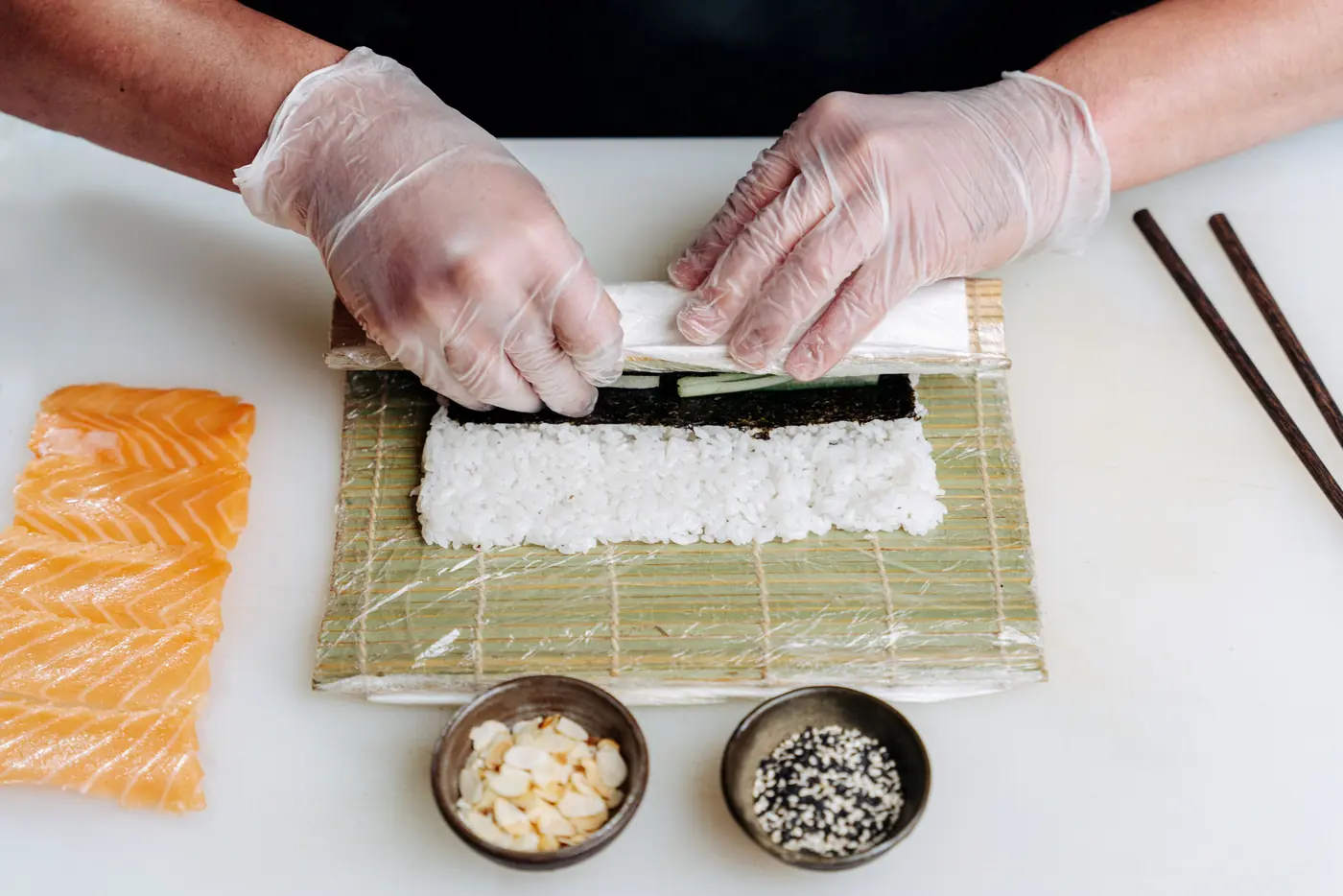
A square of thin bamboo sticks tied together with cotton string. It costs almost nothing, it is the only specialist tool sushi actually requires, and nearly everyone using one for the first time gets two things wrong.
What it is
The Japanese name is makisu – maki meaning roll, su meaning mat. It is a flexible sheet, usually about twenty-four centimetres square, made of bamboo slats bound with cotton twine.
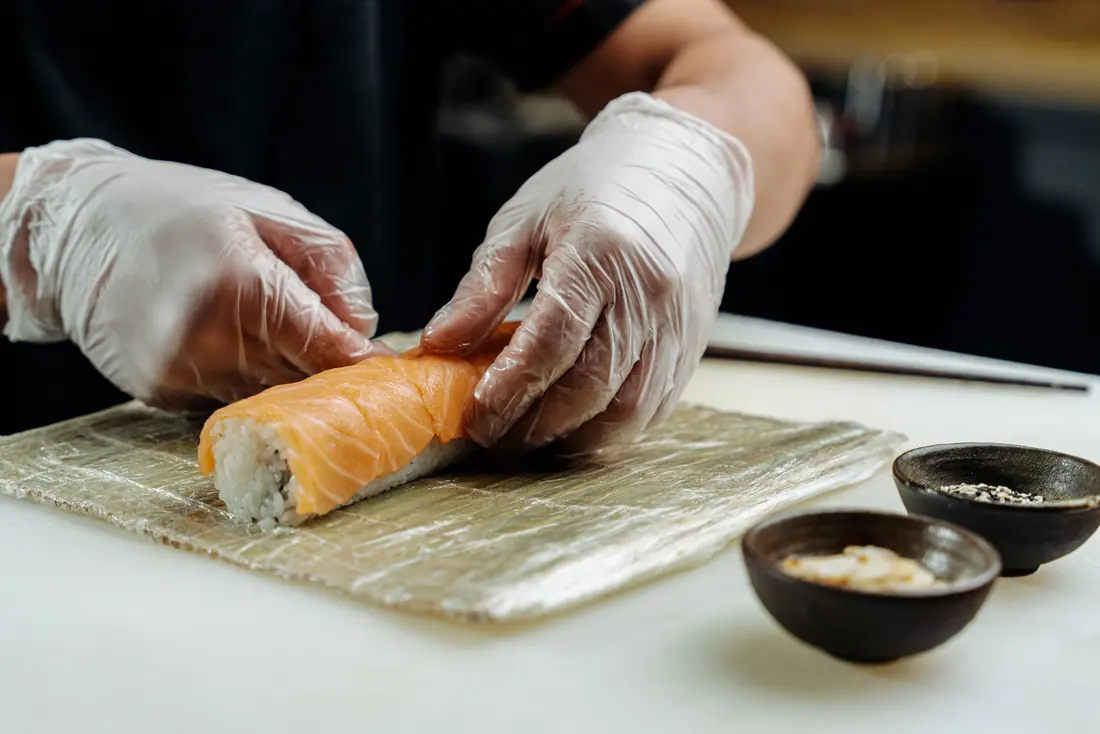
The flexibility is the entire function. It lets you apply even pressure along a cylinder while curling it, which is not something hands alone can do well – and even pressure is what stops a roll being loose at one end and crushed at the other.
The two mistakes
First: the flat side goes up. A makisu has a flat face and a rounded face, and the flat one is the working surface. Rolled on the rounded side, the slats print ridges into the rice and the pressure lands unevenly.
Second: wrap it in cling film. Rice gets between the slats and into the string, and a mat that has had rice worked into it is close to impossible to clean properly. A layer of film takes ten seconds and makes the mat effectively self-cleaning.
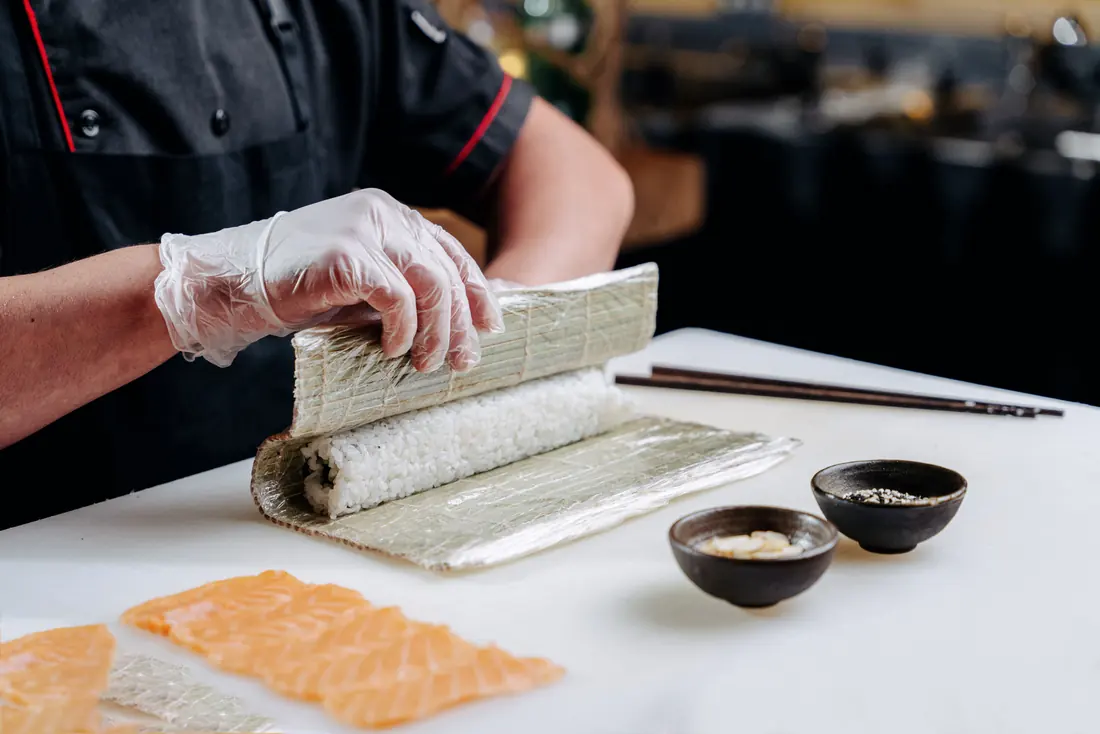
The film is not traditional and no professional counter uses it for a standard roll. It is, however, the right advice for a domestic kitchen where the mat lives in a drawer between uses.
Why bamboo
Britannica’s entry on bamboo covers the plant – a giant grass, with a hollow stem whose walls are strong along the grain and easy to split into even strips.
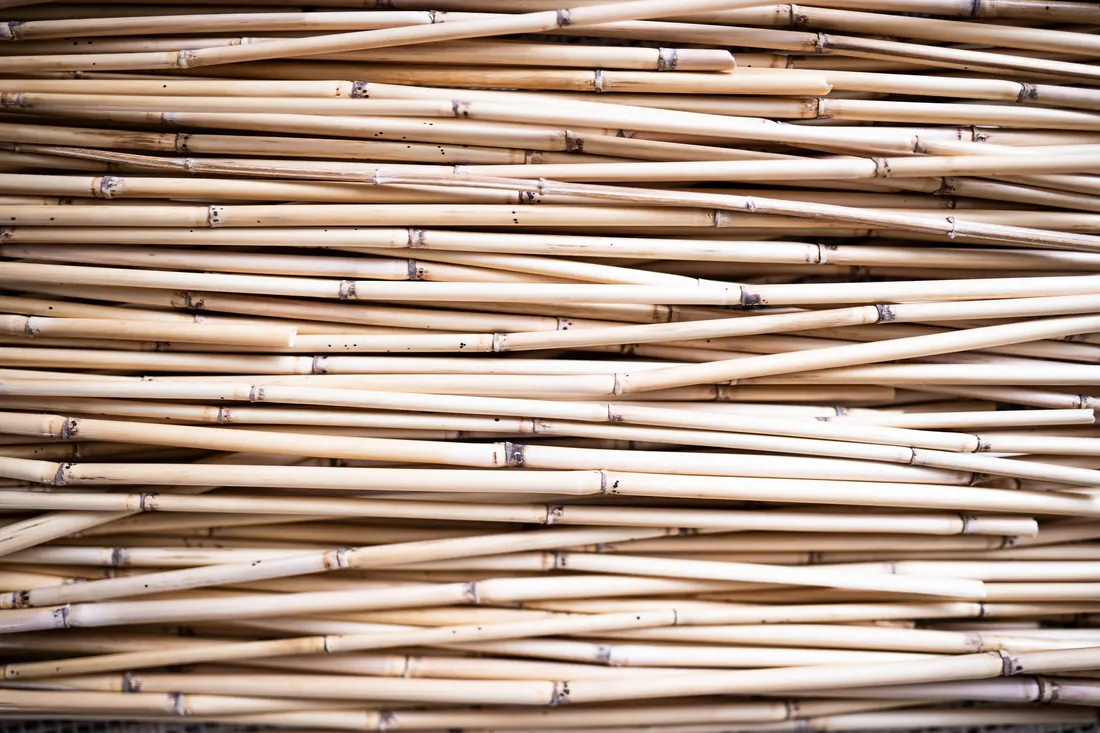
That is why the slats are consistent and why they stay rigid across their width while the mat as a whole bends. It is also naturally water-resistant and does not absorb odours the way a soft wood would.
Using it
- Wrap the mat in cling film and lay it flat side up, slats running left to right.
- Place the nori shiny side down, and spread rice with wet hands, leaving a clear strip along the far edge.
- Lay the filling in a line across the near third rather than the middle.
- Lift the near edge of the mat with your thumbs and roll it over the filling, tucking the edge under as it meets the rice.
- Squeeze gently along the whole length once, not repeatedly – the aim is to firm the cylinder, not to compress it.
- Roll forward to seal, then rest the roll seam-side down for a minute before cutting.
Step five is where most rolls are lost. Repeated squeezing forces rice out of the ends and compacts the middle, and the piece falls apart when cut because the grains have been crushed rather than held together.
Rice on the mat is the enemy
Almost every problem people have with a makisu traces back to rice getting where it should not. Rice in the slats holds moisture, rice in the string never fully comes out, and a mat that has been left to dry with rice in it becomes permanently sticky.
Wet hands are the other half of the answer. A bowl of water with a splash of rice vinegar beside the board – tezu – is what stops rice adhering to fingers, and handling rice with dry hands is how it ends up everywhere.
Inside-out rolls need one extra step
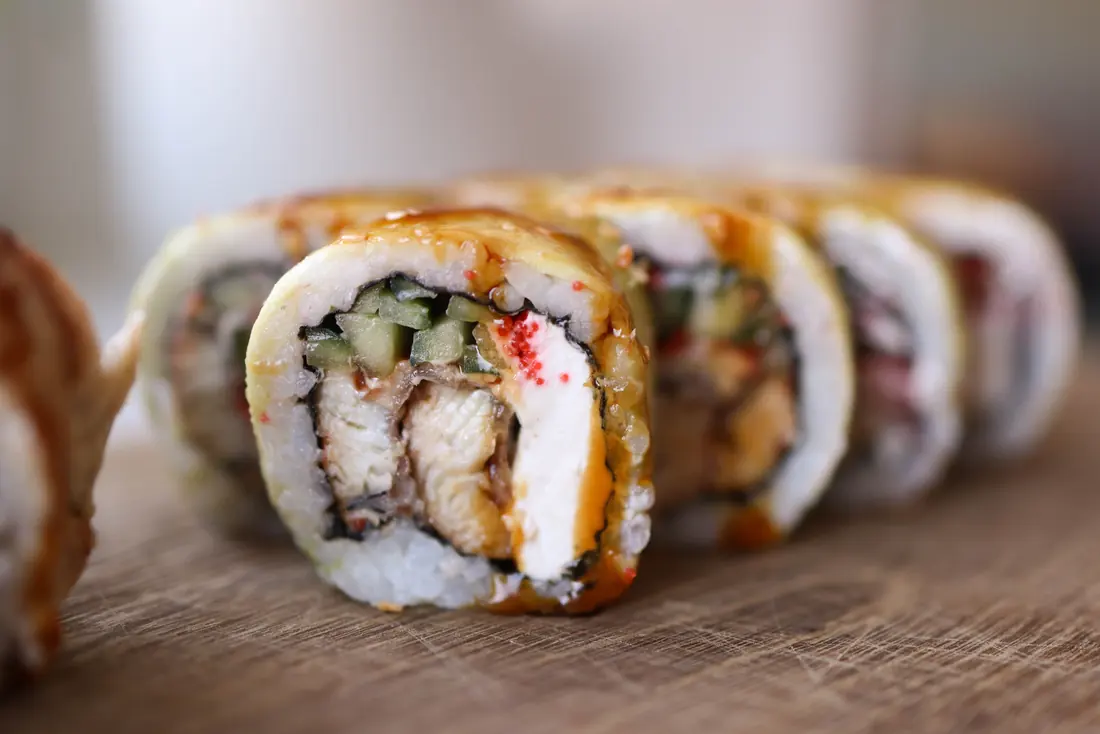
For a roll with the rice on the outside – the construction our piece on specialty rolls covers – the assembled sheet is flipped over before filling, so the rice ends up against the mat.
Without film this is a genuine mess. With it, the rice releases cleanly, which is the main reason the film trick became standard advice at all.
What it is actually doing
It is worth being precise about the mechanics, because it explains every piece of advice about using one. A roll needs three things applied at once: an even curl, even pressure along the length, and a surface that releases.
Hands can do any one of those but not all three together – the pressure lands where the fingers are and the curl follows the palm. The mat spreads the pressure across the whole cylinder and turns an irregular squeeze into a uniform one, which is why a mat-rolled cylinder cuts into pieces that all look the same.
It is also why a mat is unnecessary for a cone. A hand roll is not compressed into a shape at all; it is wrapped, and wrapping is something hands do well.
Cleaning and keeping it
- Rinse and scrub along the slats, not across them, so anything trapped comes out the way it went in.
- Never put it in a dishwasher. The heat splits the bamboo and rots the string.
- Dry it completely before storing. A damp mat in a drawer grows mould in the string, which is where a mat usually dies.
- Replace it when the string frays. They cost very little and a loose slat ruins every roll made on it.
Sizes and variants
The standard mat is around twenty-four centimetres square, sized to a full sheet of nori with a little to spare. Smaller ones exist for thin rolls and larger ones for commercial use, but one standard mat covers essentially everything a home cook does.
There is also a variant with much wider, flatter slats, used for shaping rolled omelettes and for pressing rather than rolling. It is the tool a tamago block is shaped in, and it is not a good sushi mat – the slats are too broad to curl smoothly.
Silicone imitations are sold and they work, in the narrow sense that a roll comes out. They are also floppier and do not hold a curve, which makes the pressure harder to judge, and they cost several times what bamboo does.
Buying one
Any of them will do, which is not true of much kitchen equipment. Check only that the slats are even and the string is tight, and prefer a plain undyed mat over a lacquered or coloured one, which can shed onto the rice.
Do you need one?
For a cut roll, effectively yes. There are workarounds – a clean tea towel, or a sheet of parchment on a flexible chopping board – and they produce a rounder, looser roll that is harder to cut cleanly.
For a hand roll you need nothing at all, which is the argument for starting there. Our comparison of hand rolls and cut rolls covers the difference, and the cone is assembled entirely by hand in about fifteen seconds.
For the craft around it, our piece on what a sushi chef is called covers why the rice matters more than the tool, the hand roll comparison covers the format that needs no mat, and the specialty roll guide covers the inside-out build. The current selection is on the ordering page.
Frequently Asked Questions
What is a bamboo rolling mat called?
A makisu – maki meaning roll and su meaning mat. It is a flexible square of bamboo slats bound with cotton string.
Which side of a sushi mat goes up?
The flat side. The rounded side prints ridges into the rice and spreads pressure unevenly.
Should you wrap a sushi mat in cling film?
At home, yes. Rice works into the slats and string and is very hard to clean out, and film is essential for inside-out rolls.
Can you make sushi without a bamboo mat?
A cut roll is much harder without one, though a tea towel or parchment on a flexible board can work. A hand roll needs no mat at all.
How do you clean a bamboo rolling mat?
Rinse and scrub along the slats rather than across them, and dry it completely before storing. Never put it in a dishwasher.