
Category: Dining Guides

Practical help choosing what to order, and dining in Daphne.

  • Restaurant Sushi vs Grocery Store Sushi

    Restaurant Sushi vs Grocery Store Sushi

    Supermarket sushi has got considerably better over the past decade, which makes the comparison a real one rather than an obvious win for restaurants. The differences are mostly about time rather than skill.

    The short answer

    Both are regulated and both can be perfectly safe. The difference is freshness: restaurant sushi is made to order and eaten within minutes, while packaged sushi is assembled in advance and refrigerated, which hardens the rice and mutes the fish. Buy packaged sushi the day it was made, and eat it the same day.

    A chef shaping sushi rice by hand

    Why refrigeration is the deciding factor

    Sushi rice is seasoned and served at close to room temperature for a reason. Chilling it causes the starch to firm up, which is why supermarket rice tends to be denser and drier than rice from a counter.

    The same applies to the fish, whose texture and aroma both flatten when cold. None of this is a safety issue — refrigeration is exactly what keeps packaged sushi safe — it is simply the trade-off that makes the product possible.

    A sealed plastic tray of pre-made sushi

    What each does well

    Restaurant sushiPackaged supermarket sushi
    MadeTo orderIn advance, often off-site
    Rice textureSoft, close to room temperatureFirmer from chilling
    RangeFull menu, including specialty rollsA small fixed selection
    CustomisationYes — substitutions and requestsNone
    ConvenienceRequires a visit or an orderGrab and go
    CostHigherLower
    Best eatenImmediatelySame day, as soon as possible
    Where each option genuinely wins.
    Freshly made sushi presented on a wooden board

    Safety is mostly about handling

    Packaged sushi sold in the United States is subject to the same food-safety framework as other prepared retail food, and reputable producers hold to it. The risks that do exist come from temperature and time rather than from the format.

    The FDA’s guidance on safe food handling covers the general principles — keeping cold food cold, and not leaving prepared food at room temperature. Both matter more for packaged sushi than for a plate that was made ninety seconds ago.

    • Check the date. Same-day is the standard to aim for.
    • Buy it cold and get it home cold. A long warm car journey undoes the chilling the shop has maintained.
    • Do not keep leftovers overnight, particularly anything with raw fish.
    • Look at it. Fish should look moist rather than dull or dry, and rice should look plump rather than cracked.

    What changed in supermarket sushi

    A decade ago the comparison was not close. What shifted is mostly logistics: in-store counters preparing rolls on site, shorter supply chains, and better packaging that holds humidity around the rice instead of drying it out.

    Some stores now assemble on the premises through the day rather than receiving a single delivery each morning. Where that is happening, the freshness gap narrows considerably, and the remaining difference is range rather than quality.

    It is still worth checking which model a shop uses. A counter with someone visibly making rolls is a different product from a chilled shelf stocked once a day, even though both sit under the same heading.

    What survives packaging and what does not

    The gap between the two is far wider for some items than others, and knowing which is which makes the choice straightforward.

    • Travels well — cucumber, avocado and other vegetable rolls, and simple cooked rolls. Little to lose in the first few hours.
    • Travels adequately — cooked rolls with a crab or shrimp filling, provided the rice has not been over-chilled.
    • Travels badly — anything with tempura in it, which softens within minutes, and anything dressed with a sauce that soaks into the rice.
    • Does not travel — hand rolls, which depend on nori that has just been folded.

    This is why packaged ranges skew heavily toward the first two groups. It is a sensible response to the format rather than a limitation of the shop.

    When packaged sushi is the right answer

    It genuinely is sometimes. A supermarket tray at lunchtime, eaten within the hour, is a reasonable meal and does not pretend to be anything else.

    Chilled shelves in a grocery store

    It is also the more sensible option when the alternative is sushi that has to travel a long way. A packaged roll designed to be eaten cold beats a restaurant roll that has spent forty minutes in a delivery bag.

    When it is worth going to a restaurant

    Anything raw, anything fried and anything with a sauce is worth eating where it was made. Those three categories all lose the most in the gap between kitchen and table, and they are also where a kitchen’s own decisions show most.

    The other reason is range. Packaged selections stick to a handful of reliable, well-travelling rolls. A restaurant menu carries the specialty rolls, which are the ones built with toppings and finishing sauces that do not survive packaging.

    A shopper choosing items in a grocery aisle

    Roll & Go Sushi is a fast casual kitchen, which sits usefully between the two — made to order, but quick enough to collect and eat straight away. Our guide to pickup versus delivery covers how to keep it at its best on the way home.

    Reading a packaged label

    Two lines on the label tell you most of what matters, and both are easy to miss.

    • The made-on or use-by date. Same-day is what you want. A tray dated yesterday may still be within its window but will have lost the most in rice texture.
    • The ingredient list for the fish. Terms like “seafood blend” or “surimi” indicate imitation crab rather than crab, which is not a problem but is worth knowing.

    Beyond that, trust what you can see. Rice that looks cracked or translucent has been chilled too long, and fish that has dried at the edges will taste like it.

    Takeout sits between the two

    There is a third option that the usual comparison leaves out. Ordering from a restaurant to eat at home gives you the made-to-order preparation and the full menu, with a short delay rather than a full day of refrigeration.

    Most of the freshness advantage survives that trip. Rice made an hour ago is still close to its best, and the items that suffer are the same ones that suffer in a packaged tray — tempura and anything folded rather than cut. Ordering around them closes most of the gap.

    If the question is really about eating at home rather than about cost, this is usually the better answer than either side of the comparison.

    A quick way to decide

    1. Are you eating within fifteen minutes? If yes, either works.
    2. Do you want raw fish, tempura, or a sauced specialty roll? Go to the restaurant.
    3. Is it a weekday lunch you will eat at your desk shortly? Packaged is fine.
    4. Has the packaged tray got today’s date on it? If not, choose something else.

    The cost difference, honestly

    Packaged sushi is cheaper, and the reasons are structural rather than a matter of corner-cutting. Production runs are larger, the labour is spread across many trays rather than one order, and there is no table service attached to the price.

    A restaurant is selling something different: made-to-order preparation, a full menu including items that cannot be packaged, and the option to ask for changes. Whether that is worth the difference depends entirely on what you want from the meal.

    For a quick lunch eaten within the hour, the cheaper option is genuinely adequate. For anything you are looking forward to, the gap is easy to justify.

    Frequently Asked Questions

    Is grocery store sushi safe to eat?

    Generally yes, when it has been kept properly chilled and is eaten by its date. The usual advice is to buy it the day it was made and eat it the same day.

    Why does supermarket sushi rice taste different?

    Refrigeration firms up the starch in the rice, making it denser and drier than rice served near room temperature at a counter.

    Can you keep leftover packaged sushi overnight?

    It is not recommended, particularly with raw fish. Quality drops sharply and it is not worth the risk.

    Is restaurant sushi always better?

    Not automatically, but it has the advantage of being made to order. For fried, raw or sauced items the difference is significant.

    Packaged sushi is a convenience product and a decent one. Restaurant sushi is a different thing being sold, and the gap shows most in the items that depend on being eaten immediately.

    If you want something made to order, see what is on the menu, or read our guide to which rolls travel well.

  • Ordering Asian Takeout in Daphne: Pickup vs Delivery

    Ordering Asian Takeout in Daphne: Pickup vs Delivery

    Ordering Asian food to take home involves a few decisions that do not come up when you eat in: what survives the drive, whether to collect it yourself, and how long you actually have before the food stops being at its best.

    Pickup or delivery?

    Pick up if you are within about ten minutes and want the food at its best, particularly anything fried or raw. Use delivery if convenience matters more than texture, or if you are ordering dishes that hold well — grilled plates, stir-fried noodles and soups packed properly.

    The illuminated Roll & Go Sushi Asian Kitchen storefront sign in Daphne, Alabama

    What travels well, and what does not

    Not everything degrades at the same rate. Roughly, in order of how well it holds:

    • Holds well — hibachi plates, stir-fried noodles, anything grilled with rice. These are robust and reheat without much loss.
    • Holds reasonably — cooked and glazed sushi rolls, crab salad rolls. They soften slightly but stay pleasant.
    • Time-sensitive — tempura and anything fried, which loses its crispness within about fifteen minutes of leaving the kitchen.
    • Best eaten soon — rolls with raw fish on top, and noodle soup, where the noodles keep absorbing broth in the container.
    A member of staff taking a call inside a restaurant

    Ordering noodle soup to go

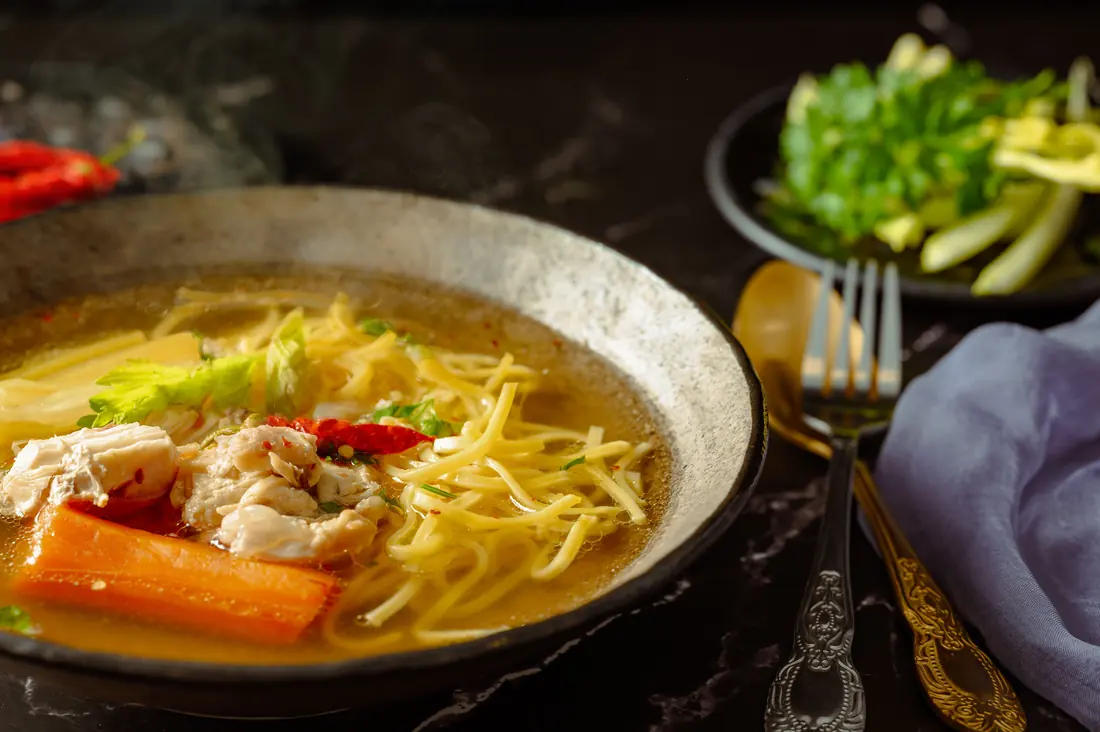
    Pho is the one dish that genuinely benefits from being packed in parts. The broth goes in one container, the noodles in another, and the herbs stay separate. Assembled at home it is close to as-served; packed together it arrives with the noodles swollen and soft.

    If a restaurant packs it as one container, eat it promptly rather than letting it sit. Our guide to how a bowl of pho is put together explains why the timing matters.

    A courier carrying an insulated delivery bag

    Pickup and delivery compared

    PickupDelivery
    Food qualityBest — shortest time in the boxDepends on distance and packing
    CostNo delivery fee or service chargeFees and tip on top
    Timing controlYou choose when to collectSet by the courier’s route
    Best forFried food, raw fish, short distancesGrilled plates, noodles, when convenience wins
    EffortYou driveNone
    Order changesEasy to ask at the counterHarder once placed
    Choosing between collecting an order and having it brought to you.

    Where Roll & Go Sushi sits

    Roll & Go Sushi is at 1410 U.S. HWY 98, Suite J, in the Colonial Plaza shopping centre — near Target and Chick-fil-A. It is a fast casual kitchen, so orders are generally quick rather than leisurely, which suits collection well.

    Sushi rolls packed neatly in a clear takeout container

    Phone orders go through the restaurant directly, and delivery is handled through partners including DoorDash, GrubHub, ASAP and Uber Eats. Availability and fees are set by each partner rather than the restaurant.

    Opening hours run Tuesday to Saturday, with the kitchen closed Sunday and Monday. Hours can change, so it is worth checking the current ordering page before you set out.

    What to check before you order

    A few minutes of checking saves the common frustrations, particularly if you are ordering somewhere for the first time.

    • Opening hours for the day you want. Many independent kitchens close one or two days a week, and those days are not always the ones you would guess.
    • Whether the restaurant takes the order directly. Phoning the kitchen is usually faster and avoids third-party fees.
    • Which delivery partners actually cover your address. Coverage and fees are set by each platform, not by the restaurant.
    • Roughly how long the order will take. This sets when you should leave if you are collecting.

    None of that is unique to Asian food, but it matters more here because so much of the menu is time-sensitive once it leaves the kitchen.

    Timing your order

    1. Order ahead rather than on arrival if you are collecting at a busy hour.
    2. Aim to be eating within twenty minutes of collection for anything fried.
    3. Ask for sauces on the side so nothing goes soft in transit.
    4. Keep containers flat in the car, not stacked on a seat where they can tip.
    5. Take food out of the bag as soon as you are home — trapped steam softens everything.
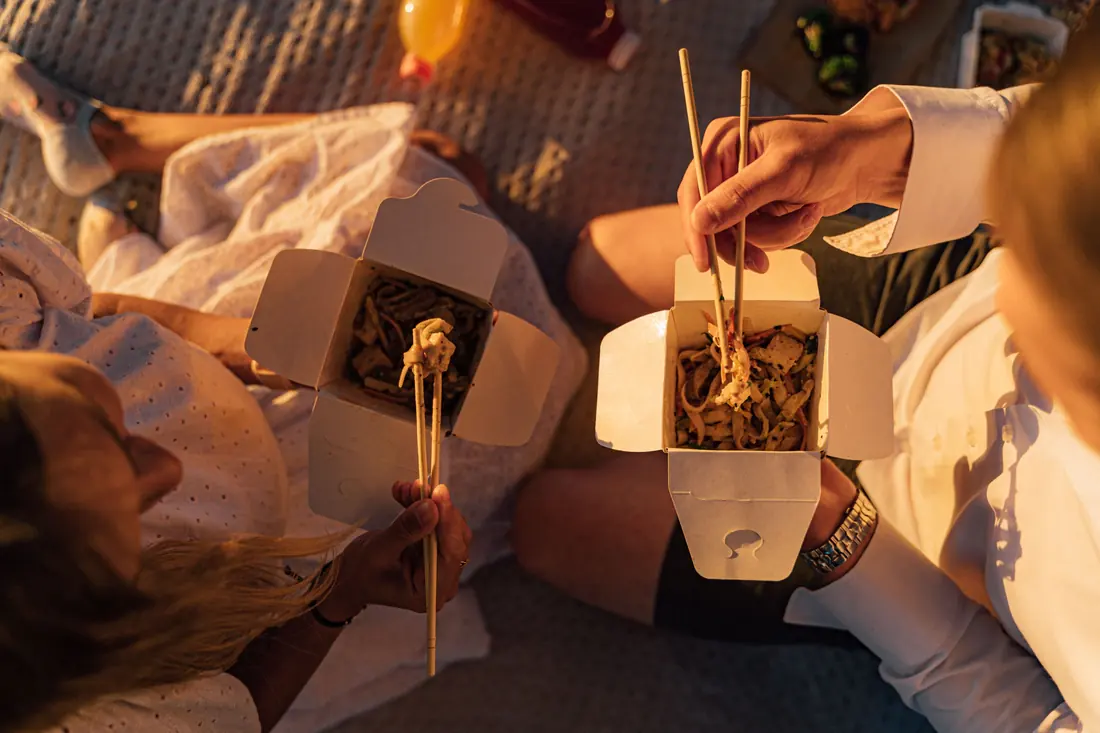
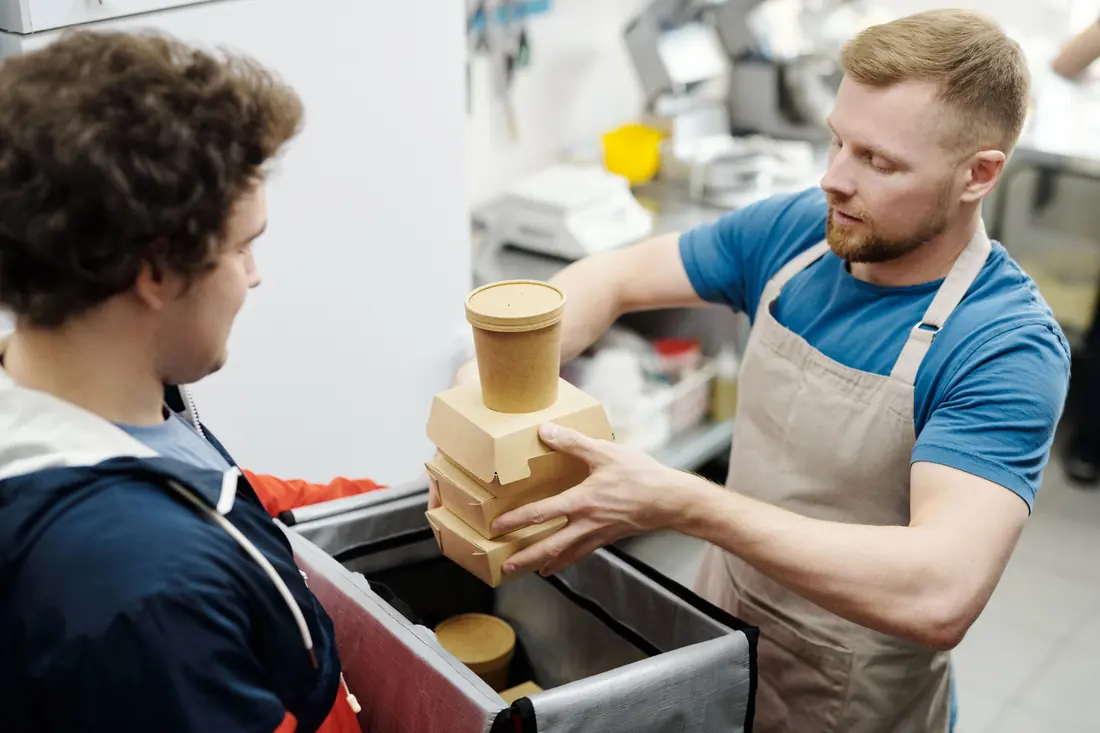
    Takeout containers stacked and ready for collection

    Ordering around the kitchen’s hours

    Fast casual kitchens are busiest in two narrow windows — roughly midday to one, and six to seven-thirty. Ordering at the edges of those bands usually means a shorter wait and food that has spent less time sitting in a bag waiting for a courier.

    The other timing point is the end of service. Ordering in the final fifteen minutes before closing is when kitchens are least able to be flexible about substitutions, and when fried items are most likely to have been sitting. If you have a specific request, earlier is better.
    Roll & Go Sushi is closed Sunday and Monday, which catches people out — a weekend takeaway plan needs to land on Saturday rather than Sunday.

    Feeding a group at home

    Takeaway for a group is a different exercise from ordering for yourself, mostly because everything arrives at once and then cools at different rates.

    1. Order the robust dishes in quantity and the delicate ones sparingly — grilled plates and noodles scale well, tempura does not.
    2. Ask for rice separately from anything saucy if that is an option; it keeps better.
    3. Have plates and serving spoons out before the food arrives, so nothing sits in containers while you look for them.
    4. Serve the fried items first while they still have texture, and the noodles second.
    5. Keep soup in its container until people are ready for it rather than decanting early.

    If you are ordering sushi for a group, a mix of cooked and topped rolls covers more preferences than several of one kind, and the cooked ones are the ones that will still be good if someone arrives late.

    Storing what you do not finish

    Cooked leftovers should go into the fridge promptly rather than sitting out. General guidance on safe food handling and storage applies to restaurant food the same way it applies to home cooking.

    Two practical exceptions worth knowing. Sushi rice hardens in the fridge, so rolls are much better eaten the same day than saved. And noodle soup is best stored with the broth and noodles separated if you have containers for it, because the noodles will otherwise keep softening overnight.

    It is also worth having somewhere to put the bag before you set off. A footwell is flatter and more stable than a passenger seat, and it keeps containers level over the kind of short, stop-start drive most takeaway journeys involve.

    Packing your own order sensibly

    If you are collecting, a few seconds of arranging makes a noticeable difference. Keep hot and cold items apart in the car — a warm hibachi container sitting against a box of sushi will soften the rice surprisingly quickly.

    Leave the bag open rather than sealed if you have more than a short drive. Trapped steam is what turns tempura soft and makes rice sticky, and simply venting the bag slows both.

    Flat and level beats stacked. Most containers are designed to be carried upright, and toppings and sauces slide the moment a box tilts.

    Frequently Asked Questions

    Does sushi survive a delivery order?

    Cooked rolls do reasonably well. Rolls topped with raw fish are better collected and eaten quickly, since both texture and temperature matter more.

    What is the best Asian dish to order for takeout?

    Grilled plates and stir-fried noodles are the most robust. They hold their texture and reheat without much loss.

    Should I reheat leftover hibachi?

    It reheats well in a pan or oven. A microwave works but tends to soften the rice and vegetables more than dry heat does.

    Is it cheaper to pick up than to have food delivered?

    Usually, since delivery adds fees, service charges and a tip. The exact difference depends on the partner used.

    For anything fried or raw, collect it and eat it soon. For grilled plates and noodles, delivery is barely a compromise.

    You can see the current menu and ordering options, or read our guide to choosing between sushi, hibachi and pho if you are still deciding what to get.

  • Sushi, Hibachi or Pho? How to Choose at an Asian Kitchen

    Sushi, Hibachi or Pho? How to Choose at an Asian Kitchen

    Some Asian kitchens do one thing. Others put sushi, a grill and a pot of noodle soup on the same menu, which is genuinely useful when a group cannot agree — and genuinely paralysing when you are ordering for yourself.

    The short version

    Choose sushi when you want something light and cool and are not especially hungry. Choose hibachi when you want a hot, filling plate with protein and rice. Choose pho when you want one large warm bowl and nothing else. Those three cover most situations.

    A diner reading a menu at a restaurant table

    Start with how hungry you are

    This decides more than taste does. The three options sit at genuinely different scales, and misjudging it is the most common ordering mistake.

    • Light — one or two sushi rolls, or a small soup and a roll.
    • Moderate — a hibachi plate, or a couple of rolls with a starter.

    • Very hungry — a full bowl of pho, or hibachi with a roll alongside.

    A bowl of pho at Roll & Go Sushi is 32 oz, which is a meal in itself. The miso and onion soups on the same menu are 8 oz and are starters. Reading those sizes before ordering avoids most disappointments.

    Then think about temperature

    Sushi is cool and clean. Hibachi is hot, seared and savoury. Pho is hot but light, and it is the only one of the three you keep adjusting as you eat.

    A shared platter of assorted sushi

    On a hot day the cool option tends to win; in winter the warm bowl does. It sounds obvious, but it is a more reliable guide than trying to rank the dishes by preference.

    Comparing the three

    SushiHibachiPho
    ServedCoolHotHot
    PortionSmall to moderate, scalableFull plateOne large bowl
    FillingDepends how much you orderYesYes
    Good for sharingVery — cut into piecesNot reallyNot really
    Customisable at the tableA littleSauces onlyExtensively
    Travels wellCooked rolls doYesBest packed separately
    Best forGrazing and varietyA hot square mealOne warming bowl
    Choosing between the three formats on an Asian kitchen menu.
    Grilled sliced beef served with rice

    Ordering for a group

    The mistake is everyone ordering their own large dish. Sushi is the only one of the three built for sharing — it arrives cut into pieces, so a few rolls in the middle of the table works far better than one roll each.

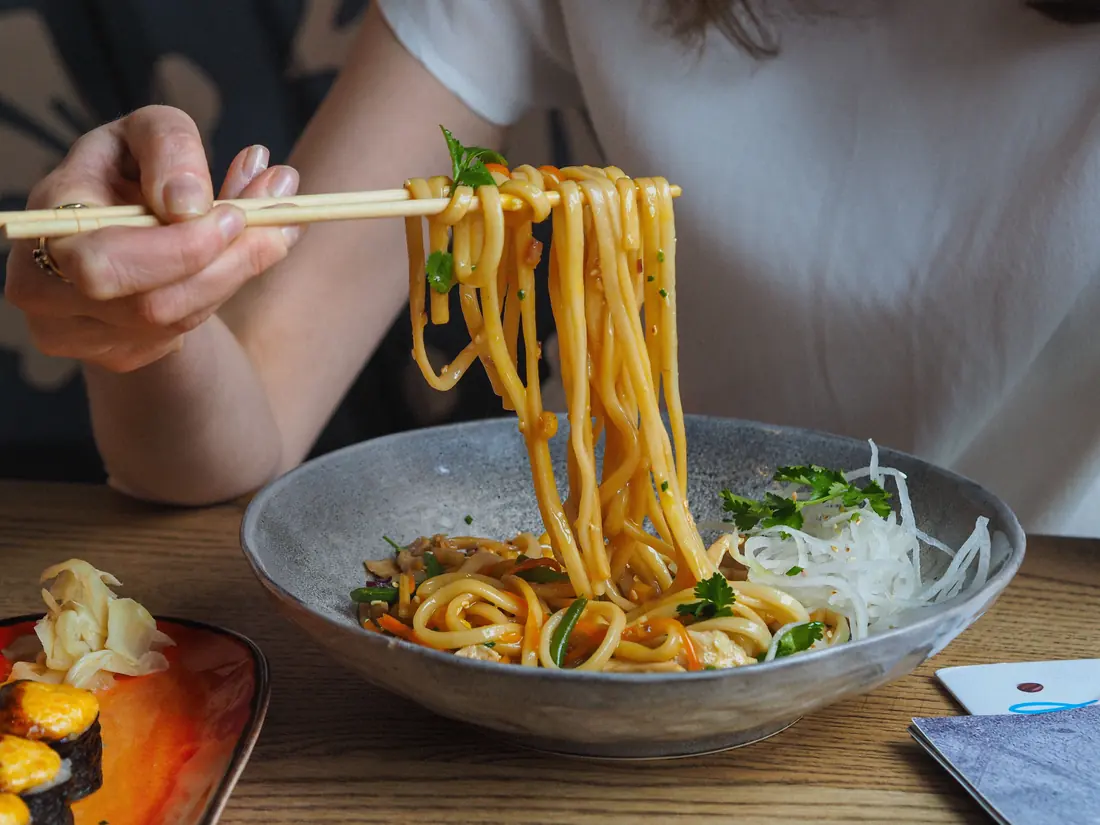
    Noodles lifted from a bowl of hot broth with chopsticks

    A reliable structure for four people: two or three rolls to share, one or two hibachi plates, and one bowl of pho for whoever wants it. Add a couple of small soups and everyone gets variety without anyone over-ordering.

    If the group includes someone who does not eat raw fish, the cooked rolls solve it quietly. Our guide to telling cooked and raw rolls apart is worth a look before you order for other people.

    Timing matters more than it does elsewhere

    These three dishes arrive on very different schedules. Sushi is assembled to order and usually comes out quickly. A hibachi plate takes as long as the protein needs. A bowl of noodle soup is essentially ready — the broth has been simmering for hours and only needs assembling.

    At a table where people have ordered across all three, expect things to arrive in stages rather than together. That is normal for a kitchen running a grill and a sushi counter side by side, and it is worth mentioning to the table so nobody waits politely while their food cools.
    If you want everything at once, say so when ordering. Most kitchens will hold plates to bring them out together if they know in advance.

    Building a balanced order

    Across a table, aim for contrast rather than repetition — something cool, something hot, something with vegetables. General guidance on building a varied plate applies as much to a shared restaurant order as it does at home.

    1. Pick the anchor first — the one large dish someone definitely wants.
    2. Add a shared item that everyone can pick at, usually sushi.
    3. Add one contrasting texture: something fried or grilled if the anchor is soup.
    4. Add a small soup or salad only if you actually want a starter.
    5. Stop. Most tables order roughly a third more than they finish.
    A group sharing dishes around a restaurant table

    Ordering for children and cautious eaters

    An Asian kitchen menu is easier for fussy eaters than it looks, because two of the three categories are entirely familiar in structure: grilled meat with rice, and noodles in broth.

    • A hibachi plate is protein, rice and vegetables — recognisable to almost anyone, and the sauces are optional.
    • Cooked or vegetable sushi rolls contain no raw fish and are often the first sushi a child will eat, particularly cucumber or crab salad.
    • A noodle soup can be served plain, with the herbs and chilli left on the side entirely.

    What tends not to work is starting someone on a heavily sauced specialty roll or a bowl they have to assemble themselves. Familiar structure first, new flavours second.

    Dietary requirements and allergies

    Ask rather than infer. Dish names on Asian menus rarely list every component, sauces frequently contain soy and wheat, and a soup base is not always what the title suggests — a miso soup may be built on a fish stock, for instance.

    Restaurants deal with these questions constantly and would far rather answer one before the order than deal with a problem afterwards. If an allergy is serious, say so explicitly at the point of ordering rather than reading the description and hoping.

    Vegetarian options exist across all three categories at most kitchens, but the specifics vary, so it is worth confirming rather than assuming a vegetable dish is prepared separately.

    If you genuinely cannot decide

    Order the thing you would be annoyed to miss, and let the rest of the table cover the other categories. At a kitchen serving all three, you are one visit away from trying the others.

    For a first visit, one cooked roll plus a hibachi plate is the lowest-risk order on the menu. It gives you both halves of the kitchen and neither is unfamiliar.

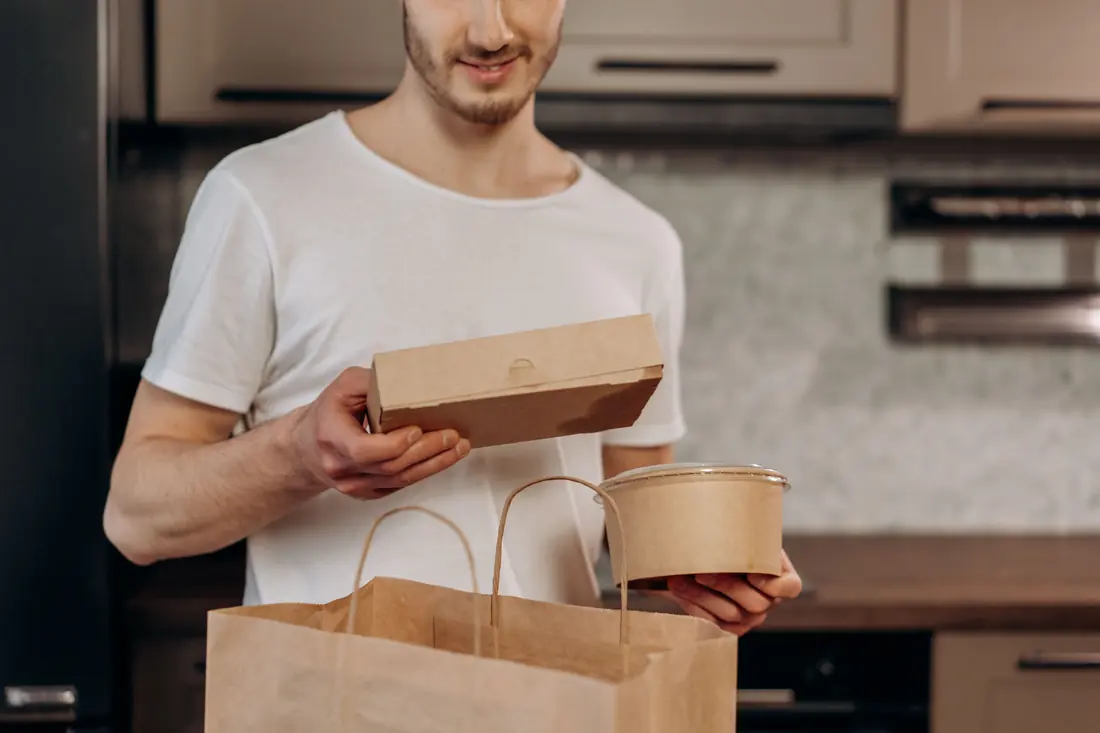
    Takeaway boxes packed and ready to go

    One more practical point: prices and portions differ across the three categories, so a table ordering one of each will not split the bill evenly. It is easier to agree how you are handling that before the food arrives than to work it out afterwards over a pile of shared plates.

    What to do with leftovers

    The three formats keep very differently, which is worth factoring in if you suspect you are over-ordering. A hibachi plate is the best of them — it refrigerates and reheats without much loss.

    Sushi is the worst. The rice hardens once chilled and does not recover, so rolls are genuinely a same-day food. Noodle soup sits in between: the broth keeps well, but the noodles will keep absorbing it, so separate the two if you can.

    If you are ordering with leftovers in mind, order the grill generously and the sushi precisely.

    Frequently Asked Questions

    Can you order sushi and hibachi together?

    Yes, and it is a common order. The two contrast well — one cool and clean, one hot and savoury.

    Is a bowl of pho too much for one person?

    It is a full meal, so it is plenty on its own. If you also want sushi, consider sharing the bowl or ordering one roll rather than several.

    What should I order if I do not like raw fish?

    Cooked rolls, hibachi or pho all work. Only some sushi contains raw fish, and plenty of rolls are built on tempura or crab salad.

    What is the best option for a quick lunch?

    A hibachi plate or a couple of rolls. Both come together quickly and travel well if you are taking them back to work.

    Hunger first, temperature second, sharing third. That order of questions resolves most menus faster than reading every description.

    You can see what is currently available before you decide, or check the hours and location if you are planning a visit.