
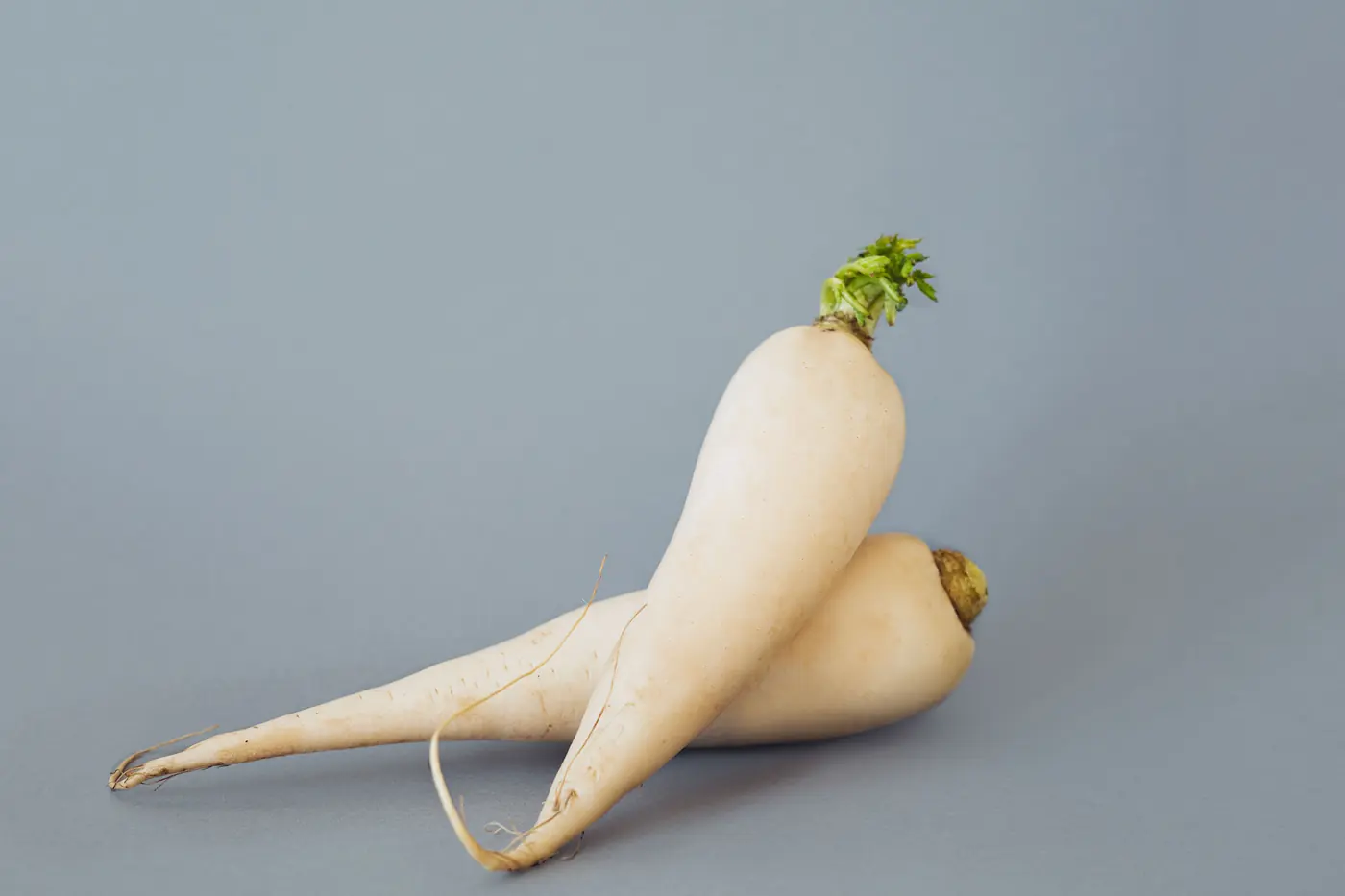
There is a good chance you have eaten it without knowing what it was. Daikon turns up on a Japanese menu in at least four different forms, and they look so unlike one another that most people never connect them.
What is daikon?
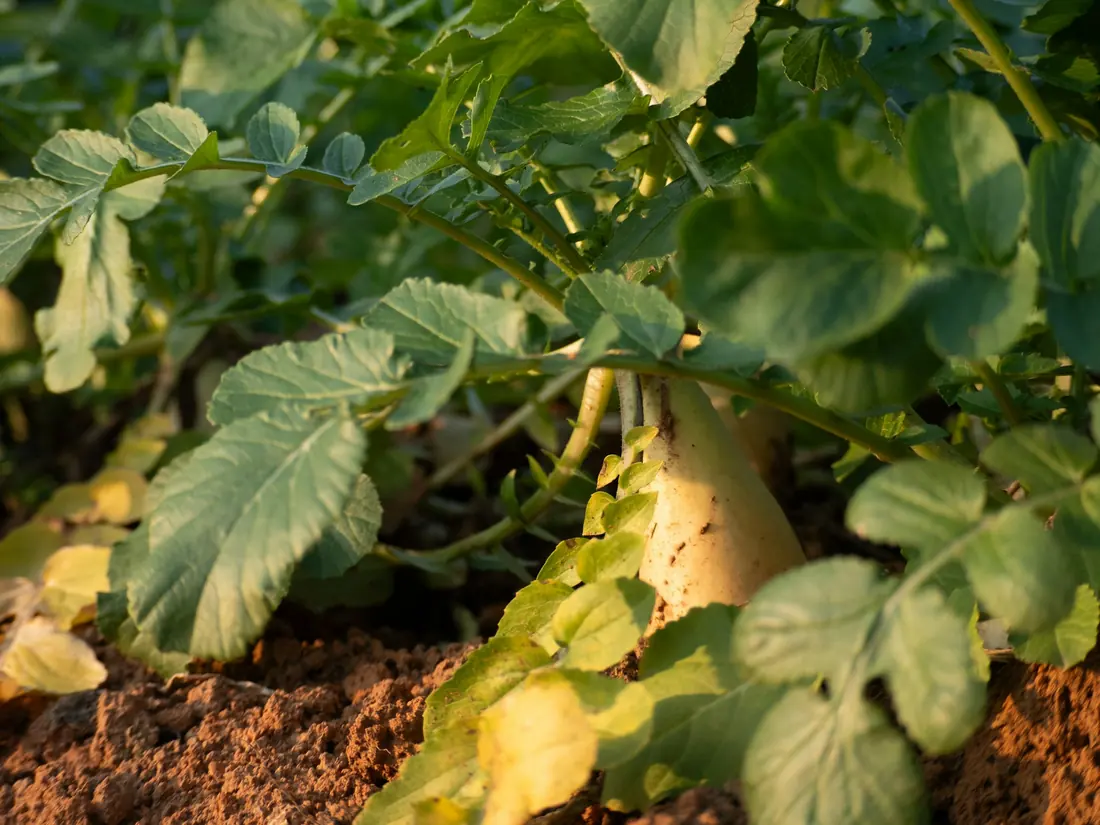
Daikon is a large white radish, long and cylindrical, common across East Asia. The name means big root, which is a fair description – a full one can be the length of a forearm.
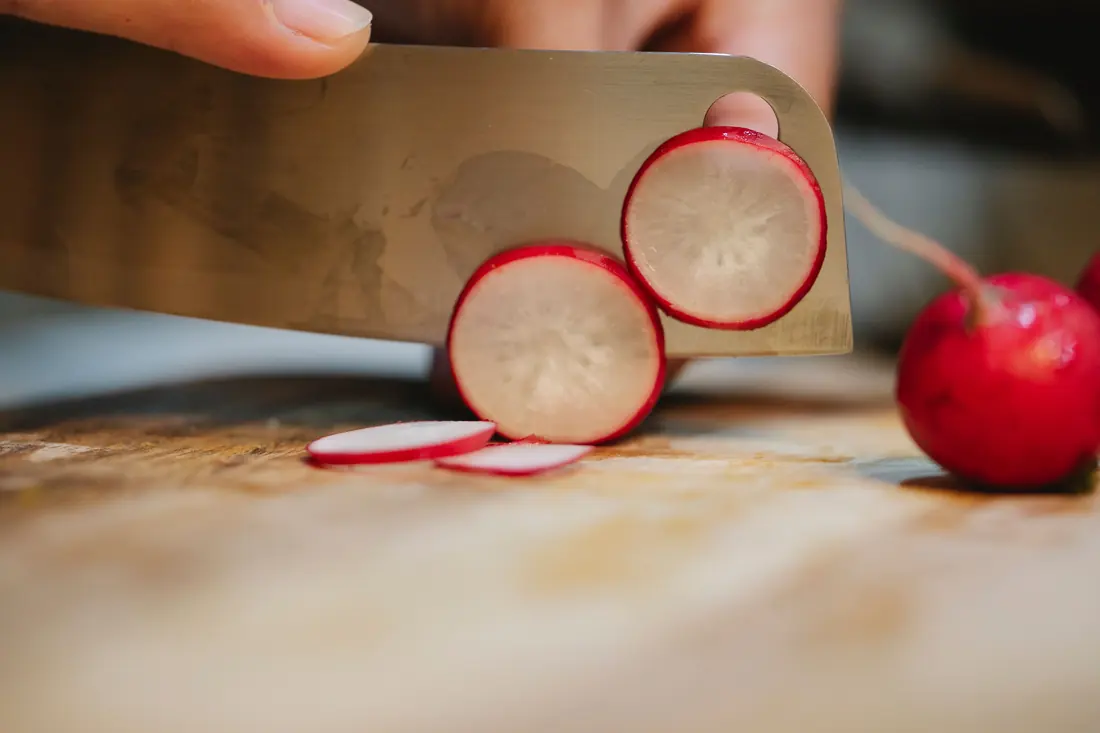
It is the same species as the small red radishes in a salad; Britannica’s entry on the radish covers how wide that family runs. The difference is size, water content and a much milder flavour.
What it tastes like
Mild, faintly sweet and juicy, with a peppery edge that is strongest near the top of the root and fades toward the tip. Raw, it is crisp and refreshing. Cooked, it turns soft and almost translucent and loses the pepper entirely.
If you know small red radishes, daikon is a much gentler version of the same idea. It is watery rather than dense, and it takes on the flavour of whatever it is cooked in.
How a kitchen prepares it
Almost every form starts with peeling, because the skin is tougher and more peppery than what is underneath. Beyond that the preparation is what determines which of the four things it becomes.
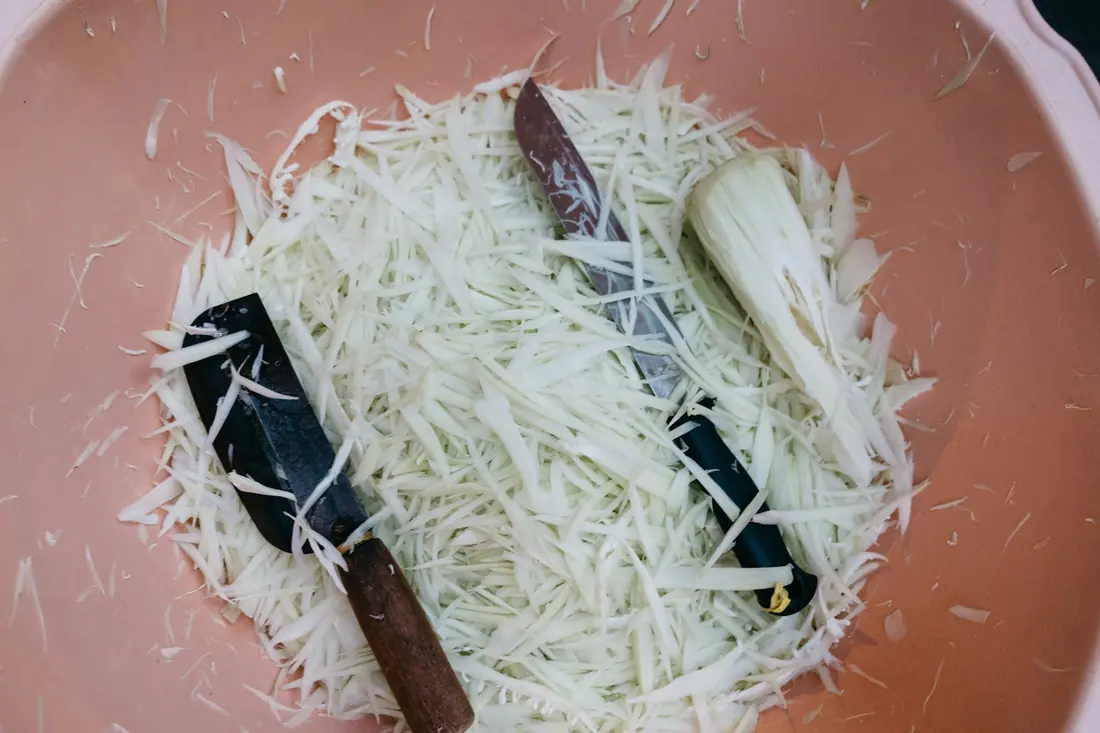
The fine white threads are cut on a specialised tool – or, in a kitchen that does it the traditional way, by rotating the peeled root against a knife to take off one continuous sheet, which is then stacked and shredded. It is a display of knife work as much as a preparation.
Grated daikon is made on a fine grater and then drained briefly, since it releases a great deal of water. Too wet and it floods the plate; squeezed too hard and it loses the juiciness that makes it refreshing.
The four forms you will meet
| Form | What it looks like | Where it appears |
|---|---|---|
| Pickled | Bright yellow discs or strips | Inside rolls, beside rice |
| Grated | A small wet white mound | Beside fried food and grilled fish |
| Shredded raw | Fine white threads | Under sashimi, in salads |
| Simmered | Soft translucent chunks | In stews and hot pots |
The first three all turn up on a sushi menu, and none of them look like a radish by the time they reach the plate.
The yellow pickle
The bright yellow discs are takuan, daikon that has been dried and then pickled. It is sweet, sour, extremely crunchy and coloured far more vividly than anything natural.
On a sushi menu it turns up inside simple rolls, where its crunch and sharpness do the job that a raw vegetable would otherwise do. It is also served in small amounts beside rice, where it functions as a palate reset between mouthfuls.
The white mound beside fried food
Grated daikon appears next to fried and grilled dishes, sometimes with a little soy poured over it, sometimes with grated ginger mixed through. It looks like a garnish and is not one.
Its purpose is to cut richness. Grated raw radish is watery, faintly peppery and cold, and a small amount of it between bites of something fried resets the palate completely. Eating it as an accompaniment rather than leaving it on the plate makes a real difference to a fried dish.
The white threads under sashimi
Finely shredded raw daikon is the bed that sliced raw fish is often presented on. This one genuinely is partly presentation – it holds the slices up and keeps them separated – but it is also perfectly edible and does the same palate-clearing job.
It is worth eating rather than pushing aside. Cold, crisp and neutral, it works between different fish in the same way pickled ginger does.
Which end of the root
A whole daikon is not uniform, and cooks use different parts for different things. The top, nearest the leaves, is the sweetest and mildest, so it goes into salads and raw preparations.
The middle is the most balanced and is the usual choice for simmering. The tip is the most peppery and the most fibrous, which makes it the part most often grated, where a bit of bite is wanted.
This is why the same vegetable can seem sharp in one dish and almost sweet in another even when nothing else has changed.
Simmered daikon
Cooked slowly in a seasoned broth, daikon becomes something else entirely – soft, translucent, and saturated with whatever it was cooked in. The pepperiness disappears and what is left is texture and absorbed flavour.
This is the form least likely to appear on an American Japanese menu, but it is worth trying if you find it, because it demonstrates how completely the same vegetable can change character.
Choosing one
If you go looking for daikon rather than meeting it on a plate, a few things separate a good root from a tired one. It should feel heavy for its size, which means it has not dried out, and the skin should be smooth and unblemished rather than wrinkled.
Stored whole and wrapped, it keeps for a couple of weeks in a fridge. Once cut it dries quickly at the exposed face, so the usual approach is to keep the cut end covered and work through it rather than portioning it all at once.
How to spot it
A few reliable signals, since it is rarely named on a menu.
- Bright yellow crunchy discs – pickled daikon, almost always.
- A wet white mound beside something fried – grated daikon.
- Fine white threads under raw fish – shredded raw daikon.
- “Pickled radish” in a roll description – the same thing, named plainly.
The leaves are food too
A daikon sold with its greens attached comes with a second vegetable. The leaves are peppery and slightly coarse, closer to a mustard green than to a lettuce, and they are cooked rather than eaten raw.
You will not meet them on a restaurant menu often, since daikon usually arrives at a kitchen already trimmed. They are worth knowing about mainly as a reminder that the root you see is one part of a larger plant.
Why it works so well with rich food
Almost every use above is doing the same job from a different angle. Daikon is mostly water, it is cold in three of its four forms, and it carries either acidity or a mild pepperiness.
Those are precisely the qualities that cut through fat and salt. A cuisine that serves a lot of fried food and a lot of rich fish needs something that resets the palate cheaply and quickly, and this is it.
For where it turns up, our beginners guide to rolls covers the vegetable fillings, the fish-free guide leans on vegetable rolls heavily, and the condiments guide covers the other palate-clearing item on the table. The current selection is on the ordering page.
Frequently Asked Questions
What is daikon?
A large white radish common in East Asian cooking. It is mild, juicy and faintly peppery, and much gentler than the small red radishes it is related to.
What is the yellow pickled thing in my sushi roll?
Almost certainly takuan – pickled daikon. It is sweet, sour and very crunchy, and the colour is added rather than natural.
What is the white mound served with fried food?
Grated daikon. It is there to cut richness between bites, not as decoration, and it is meant to be eaten.
Are the white threads under sashimi edible?
Yes. They are finely shredded raw daikon, and they do the same palate-clearing job as pickled ginger.
Does daikon taste like a radish?
Mildly. It has a peppery edge raw, strongest near the top of the root, but it is far less sharp than a small red radish and loses the pepper entirely when cooked.