
Category: Sushi & Rolls

Guides to sushi, specialty rolls and how to order them.

  • What Is Imitation Crab? Surimi Explained

    What Is Imitation Crab? Surimi Explained

    Read a sushi menu closely and the phrase “crab mix” turns up again and again. It is in the roll descriptions, it is in the salads, and it is almost never explained. Most of the time what it means is imitation crab.

    What is imitation crab?

    Imitation crab is a fish product shaped and coloured to resemble crab meat. The proper name for it is surimi, a Japanese term for white fish that has been minced, rinsed and worked into a smooth paste, then bound, formed and lightly cooked.

    It is not a modern shortcut. Surimi has been made in Japan for centuries as a way of turning plentiful white fish into something that keeps and travels. The crab-shaped version most people recognise dates from the 1970s.

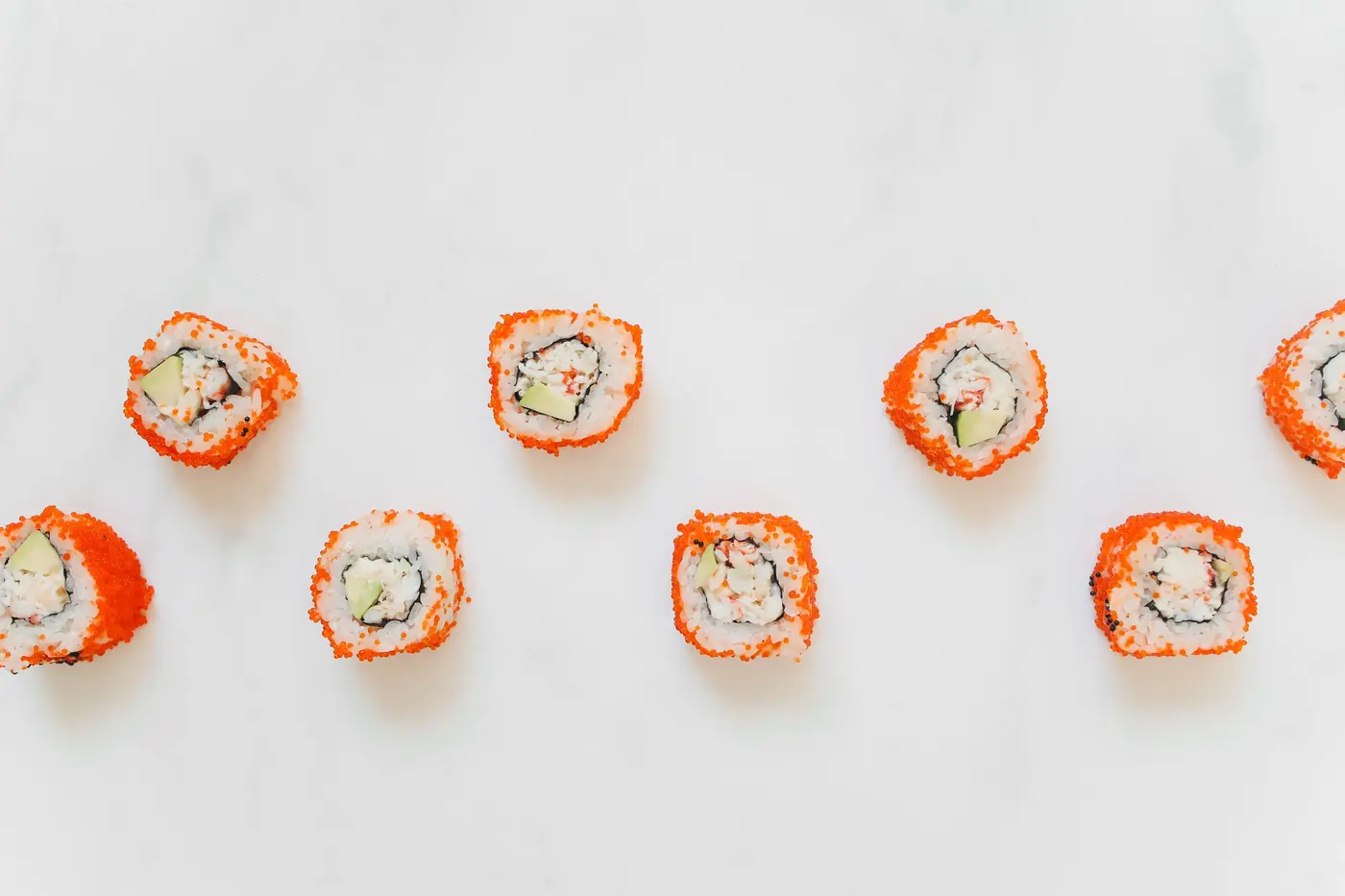
    Cut sushi rolls arranged on a white plate

    What it is actually made from

    The base is white fish. Alaska pollock is the most common choice by a wide margin, because it is mild, pale and caught at scale; NOAA Fisheries’ profile of Alaska pollock gives a sense of how large that fishery is.

    From there the process is mechanical rather than mysterious. The fish is minced and washed repeatedly until what remains is close to flavourless, then worked with starch and seasoning into a firm paste that can be shaped.

    The red edge is added last. It is a surface colouring only, which is why a crab stick is white when you pull it apart, and why the red rubs off slightly on your fingers.

    Fish fillets laid out on ice at a market counter

    Why it tastes the way it does

    The washing stage is the reason imitation crab tastes clean and slightly sweet rather than fishy. Nearly everything that would read as “fish” is rinsed out before the paste is seasoned.

    What replaces it is a mild savoury seasoning built to suggest shellfish. The result is deliberately simple, and that simplicity is exactly why it works inside a roll, where it sits alongside rice, avocado, cucumber and sauce without fighting any of them.

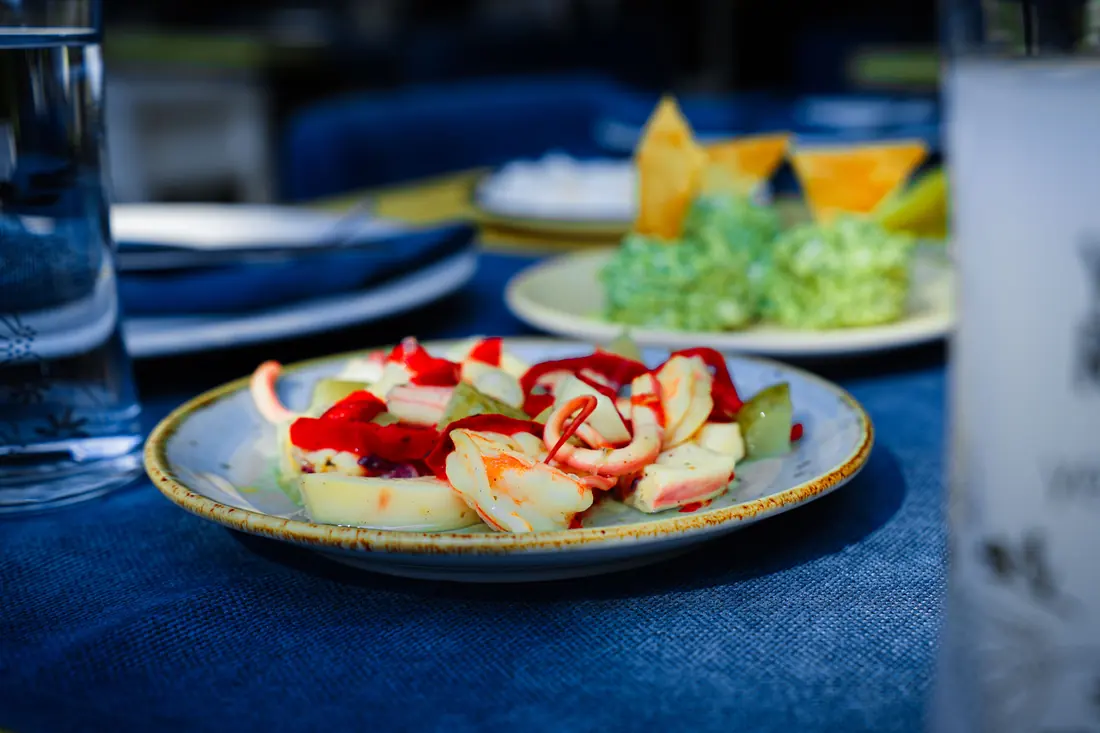
    Shredded seafood salad dressed in a bowl

    The shapes it comes in

    Surimi is sold in several forms, and which one a kitchen buys tells you something about how it will be used.

    • Sticks – the familiar rectangular batons, used whole in hand rolls and cut into lengths for cut rolls.
    • Flakes – short irregular pieces, mixed with a dressing to make the crab salad that fills so many rolls.
    • Shreds – long fine strands, used where the filling needs to pack tightly without lumps.
    • Chunks – larger pieces shaped to imitate leg meat, used where the crab is meant to be visible on top.

    The differences are mechanical rather than culinary. All four are the same product formed differently, and a kitchen chooses between them based on what the dish needs to hold together.

    Imitation crab and real crab compared

    Imitation crab (surimi)Crab meat
    Made fromMinced white fish, usually pollockCrab
    TextureFirm, even, slightly springyLoose flakes of varying size
    FlavourMild and faintly sweetDistinctly shellfish
    FormSticks, flakes or shredsPicked meat, lump or claw
    Typical useRolls, salads, fillingsServed on its own or lightly dressed
    On a menu“crab mix”, “crab stick”, “krab”“crab”, named by cut
    How surimi differs from crab meat

    The spelling is worth noticing. Some restaurants write “krab” with a K specifically to signal the difference, and where a kitchen does that it is being helpful rather than coy.

    Where it shows up on a sushi menu

    Once you know the term, the pattern is easy to read.

    • Classic rolls – the standard combination of crab mix, avocado and cucumber is built on it.
    • Specialty rolls – crab mix is frequently the base layer under a topping of fish, because it holds its shape when the roll is cut.
    • Salads – shredded and dressed, served cold.
    • Hand rolls – where its firmness stops the filling collapsing.

    If you want to know which one a particular dish uses, the reliable move is simply to ask. Kitchens answer this question constantly and nobody finds it odd.

    A bamboo rolling mat used for making sushi

    Where else it turns up

    Sushi is where most people meet it, but it is not confined there. Cold seafood salads are frequently built on it, as are the fillings in a number of hot dishes where a firm, mild seafood texture is wanted.

    It travels well beyond Japanese cooking too. Surimi products appear in soups and stews across East and Southeast Asia in the form of fish cakes and fish balls, which are made by the same washing-and-binding process without the crab shaping.

    The through-line is convenience of a specific kind: a seafood ingredient that is mild, keeps well, and behaves predictably under heat and under a knife.

    Is it worse than crab?

    It is different rather than worse, and treating it as a substitute misses what it is good at. Crab meat is delicate and comes apart; surimi holds together under a knife, which is the entire reason it ended up inside rolls.

    A roll built on crab meat would fall apart when sliced and the flavour would be lost under the rice and sauce anyway. The imitation version was not chosen to save money alone. It behaves better in the format.

    Where real crab makes sense is when it is the point of the dish rather than a component of one, served plainly enough that you can taste it.

    A chilled seafood counter stocked with shellfish

    The names it goes by

    Very little of what surimi is sold under uses the word surimi, which is part of why it stays unexplained. On menus and packaging you will see crab stick, crab mix, seafood stick, ocean stick, and the deliberate misspelling krab.

    In Japanese it is usually kanikama, a contraction of the words for crab and for the fish-cake family it belongs to. That name is the most honest of the lot, since it says plainly that the thing is a fish cake in the shape of crab.

    How to tell them apart on the plate

    1. Look at the edges. A uniform red or orange line along one side means surimi.
    2. Pull a piece apart. Surimi separates into long even strands; crab meat breaks into irregular flakes.
    3. Check the shape. Perfectly rectangular sticks or evenly shredded strands are manufactured.
    4. Taste for sweetness. Surimi is mild and slightly sweet; crab is unmistakably shellfish.

    None of this matters much when it is inside a roll. It matters when a dish is built around crab and you want to know which one you are getting.

    Rolls are where most people meet it, so if you are still working out how the different styles fit together, our guide to sushi rolls for beginners covers the basic construction, and the specialty rolls guide explains why house rolls are built in layers. You can see the current selection on the ordering page.

    Frequently Asked Questions

    Is there any real crab in imitation crab?

    Usually none at all. It is made from white fish, most often pollock, with seasoning and a surface colouring. Some products include a small amount of crab extract for flavour, but the substance of it is fish.

    What does surimi mean?

    It is the Japanese term for minced, washed fish paste. Imitation crab is one product made from surimi; fish cakes and fish balls are others.

    Why is it used in sushi rolls instead of crab?

    It holds its shape when a roll is sliced, and its mild flavour sits comfortably under rice, avocado and sauce. Crab meat would break up and largely disappear.

    Is imitation crab cooked?

    Yes. The paste is cooked as part of forming it, so what arrives has already been through heat. That is why rolls built on crab mix are described as cooked rolls.

    How can I tell if a roll uses it?

    Look for “crab mix”, “crab stick” or “krab” in the description, and look for the red-edged white strands in the cut face of the roll. If it is not clear, ask.

  • Soy Sauce, Wasabi and Ginger: How to Use Them

    Soy Sauce, Wasabi and Ginger: How to Use Them

    Three things arrive alongside almost every sushi order: a bottle of soy sauce, a small green mound, and a pile of pink slices. Most people use at least one of them wrongly, and the pink one is routinely eaten at the wrong moment entirely.

    What each one is for

    Soy sauce is for dipping, sparingly, fish-side down. The green paste is wasabi, a seasoning already present inside most nigiri. The pink slices are pickled ginger, eaten between pieces to reset your palate — not piled on top of the sushi.

    Fresh wasabi rhizomes growing

    Soy sauce

    The single most common mistake is soaking the rice. Sushi rice is seasoned and loosely packed; saturate it and it both falls apart and overwhelms whatever it was wrapped around.

    Pour a small amount into the dish — far less than feels right — and dip the fish side rather than the rice side. For a cut roll, a light touch on one edge is enough.

    A small mound of green paste served beside sushi

    Rolls finished with their own sauce need none at all. If a roll arrives with a drizzle across the top, the kitchen has already seasoned it, and adding soy on top of that is doubling up.

    Wasabi

    Real wasabi is the grated rhizome of a plant grown in cold running water. It is difficult to cultivate and loses its aroma within minutes of being grated, which is why very few restaurants anywhere serve it.

    Thin slices of pink pickled ginger

    What arrives on most plates is a blend based on horseradish, mustard and colouring. It is sharper and more persistent than the real thing, which is milder and more aromatic. Britannica’s entry on wasabi covers the plant itself and why it is so rarely used fresh.

    Either way, the heat is volatile — it hits the nose rather than the tongue and fades quickly, unlike chilli. That is also why mixing it into a dish of soy sauce dulls it almost immediately.

    Pickled ginger

    Known as gari, this is thinly sliced young ginger pickled in vinegar and sugar. The pink colour is sometimes natural to young ginger and often added.

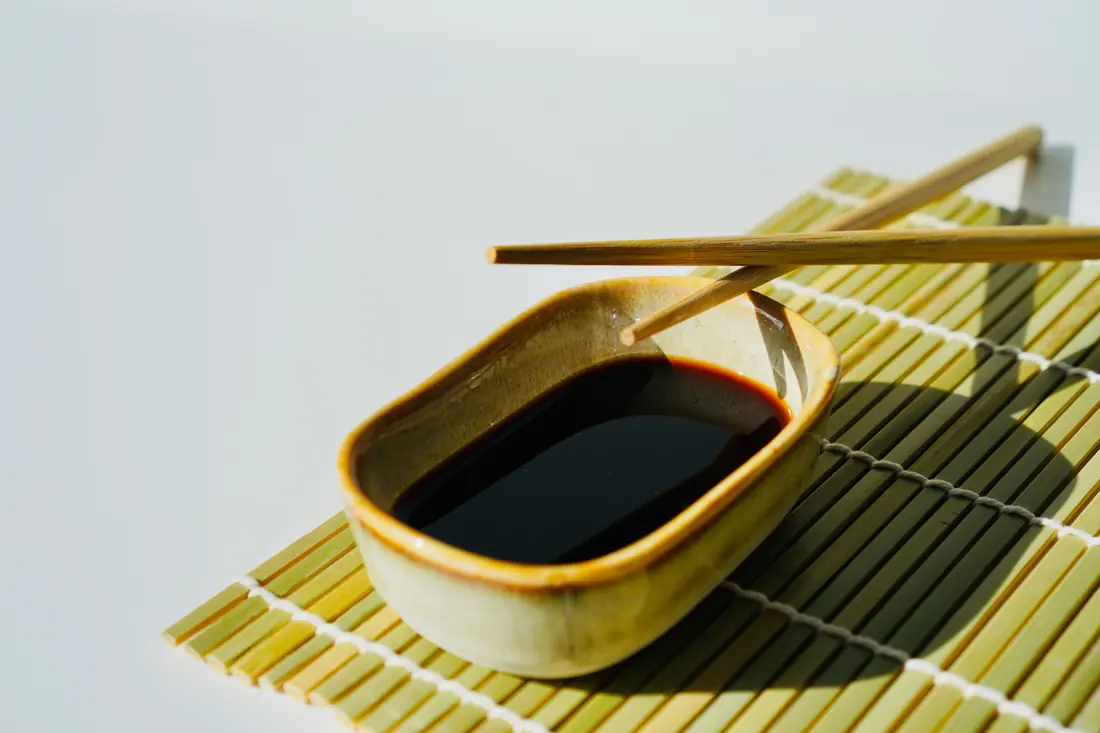
    Soy sauce being poured into a shallow dipping dish

    It is a palate cleanser, taken between pieces so that one roll does not bleed into the next. Eating it on top of a piece of sushi buries whatever you were about to taste, which defeats its purpose entirely.

    The three compared

    Soy sauceWasabiPickled ginger
    What it isFermented soybean and wheat seasoningGrated rhizome, or a horseradish blendYoung ginger pickled in vinegar
    PurposeSalt and depthAromatic heatResets the palate
    When to use itAs you eat each pieceSparingly, or not at allBetween pieces
    Common mistakeSoaking the riceStirring it into soy sauceEating it on top of the sushi
    Already in the dish?Sometimes, as a glazeOften, inside nigiriNo
    What the three condiments are for and how they are misused.

    What else turns up on the table

    Beyond the three, a few other items appear often enough to be worth recognising.

    • A small shallow dish — for soy sauce, and deliberately shallow so you cannot pour much into it.
    • A chopstick rest — chopsticks go across it between bites rather than on the table or upright in food.
    • A hot towel — for your hands before eating, particularly relevant where hand rolls or nigiri are on the table.
    • Green tea — served throughout rather than at the end, and traditionally the drink that accompanies sushi.

    None of it is compulsory and no restaurant expects a performance. Knowing what the items are for simply removes the guesswork.

    What they are called on a Japanese menu

    The names turn up often enough on menus and in restaurants that they are worth recognising, even though nobody expects you to use them.

    • Shoyu — soy sauce. The word covers a family of styles rather than one product, which is why the flavour differs from restaurant to restaurant.
    • Gari — the pickled ginger. Sliced thin and pickled in sweetened vinegar, which is where both the sharpness and the pale pink come from.
    • Wasabi — the green paste, whether it is the true rhizome or the more common horseradish-based version.

    You will also see oroshi for grated daikon and ponzu for a citrus-soy sauce, both of which turn up beside cooked dishes more often than beside sushi.

    Mixing wasabi into soy sauce

    This is the practice that draws the most comment, and the objection is practical rather than ceremonial. Wasabi’s aroma is volatile; dissolved into liquid it disperses and flattens, so you get salt where you wanted sharpness.

    If you want heat, a small amount placed directly on the fish keeps it where you can taste it. Nobody will mind if you mix it — but the result is genuinely less good, which is a better reason than tradition.

    A piece of sushi held with chopsticks above a dish of soy sauce

    Why it varies so much between restaurants

    Condiment quality is one of the least visible differences between sushi restaurants and one of the most noticeable once you pay attention to it. Soy sauces differ considerably in salt and sweetness, and some kitchens dilute or blend their own.

    Pickled ginger varies just as much — thickness of slice, sharpness of the pickle, and how much sugar is in it. A thin, sharp ginger does its job; a thick, sweet one competes with the food it was meant to clear.

    Because these are supplied rather than made in most kitchens, they tell you something about how much attention the restaurant pays to details the customer rarely comments on.

    The sauces that are not condiments

    A second group of sauces appears on the rolls themselves rather than on the table, and they change how you should treat the three classics.

    Spicy mayonnaise, the sweet dark glaze often labelled eel sauce, and the various house drizzles on specialty rolls are all applied in the kitchen as part of the dish. They are seasoned to work on their own.

    That is the practical reason a heavily dressed roll rarely needs soy sauce. Adding it stacks salt on salt and flattens whatever the glaze was doing. Save the soy dish for the plain rolls and the nigiri on the same plate.

    When to skip them entirely

    Plenty of rolls need nothing added. Anything already sauced, anything with a strong topping, and most tempura rolls are seasoned to be eaten as served.

    A useful habit is to taste the first piece with nothing at all. It tells you whether the roll needs anything, and quite often it does not — particularly with specialty rolls, which are usually built with their finishing sauce as an integral part rather than an optional extra. Our guide to how specialty rolls are constructed covers why.

    How much of each to use

    Rough proportions help more than rules. For a six-piece roll, a teaspoon of soy sauce in the dish is plenty, and most people pour four or five times that.

    Wasabi, if you are adding it at all, means a smear roughly the size of a grain of rice per piece — enough to notice, not enough to overwhelm. And one or two slices of ginger between rolls, rather than a mouthful.

    The underlying principle is that all three are seasonings rather than ingredients. If you can taste the condiment more clearly than the fish, the balance has tipped, and the fish is usually the more expensive part of what you ordered.

    Frequently Asked Questions

    Is the wasabi at most restaurants real?

    Usually not. Most is a horseradish-based blend, because real wasabi is difficult to grow and loses its aroma within minutes of grating.

    Should you mix wasabi into soy sauce?

    It is common, but it dulls the wasabi. A small amount placed directly on the fish keeps the aroma where you can taste it.

    When do you eat the pickled ginger?

    Between pieces, as a palate cleanser — not on top of the sushi.

    How much soy sauce should you use?

    Less than most people pour. Dip the fish side lightly rather than soaking the rice, which falls apart when saturated.

    Do rolls with sauce on top need soy sauce as well?

    Generally no. If a roll arrives with a drizzle, it has already been seasoned by the kitchen.

    Dip lightly, keep the wasabi out of the soy, and save the ginger for between pieces. Three small habits that make a noticeable difference.

    If you are working out what to order in the first place, our guide to sushi rolls for beginners is the place to start, or see what is currently on the menu.

  • Hand Rolls vs Sushi Rolls: What’s the Difference?

    Hand Rolls vs Sushi Rolls: What’s the Difference?

    Most sushi arrives cut into neat rounds. Occasionally something turns up that looks like an ice cream cone made of seaweed, and it is not a mistake — it is a hand roll, and it is meant to be eaten differently.

    The short answer

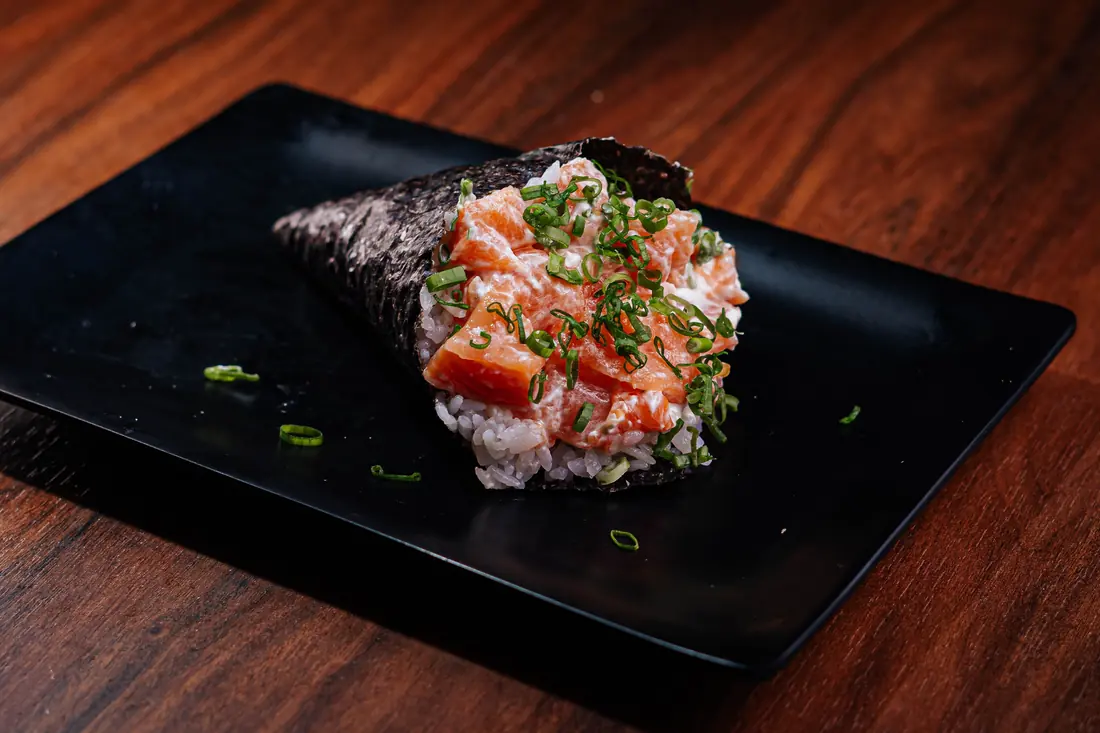
    A sushi roll is rolled into a cylinder and cut into six or eight pieces, eaten with chopsticks. A hand roll, or temaki, is a single cone of seaweed wrapped around rice and filling, not cut, and eaten with your hands straight away. Same ingredients, different format.

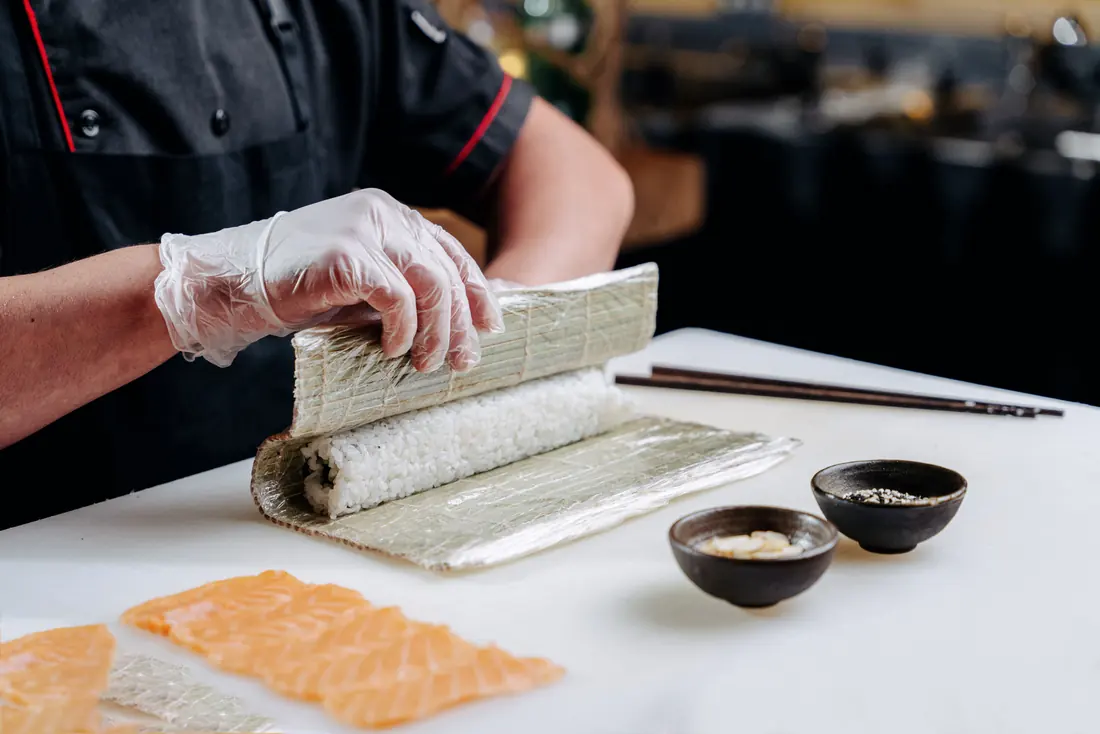
    A sushi roll being assembled on a bamboo rolling mat

    Why the shape matters

    It comes down to the nori. In a cut roll the seaweed spends time in contact with the rice, softening as it sits — which is fine, because the roll is designed to hold together after cutting.

    A hand roll is built to be eaten within a minute or two of being made, while the nori is still crisp enough to snap. That contrast between brittle seaweed and soft rice is the entire point, and it disappears quickly.

    A cut maki roll laid out in even pieces

    How each is assembled

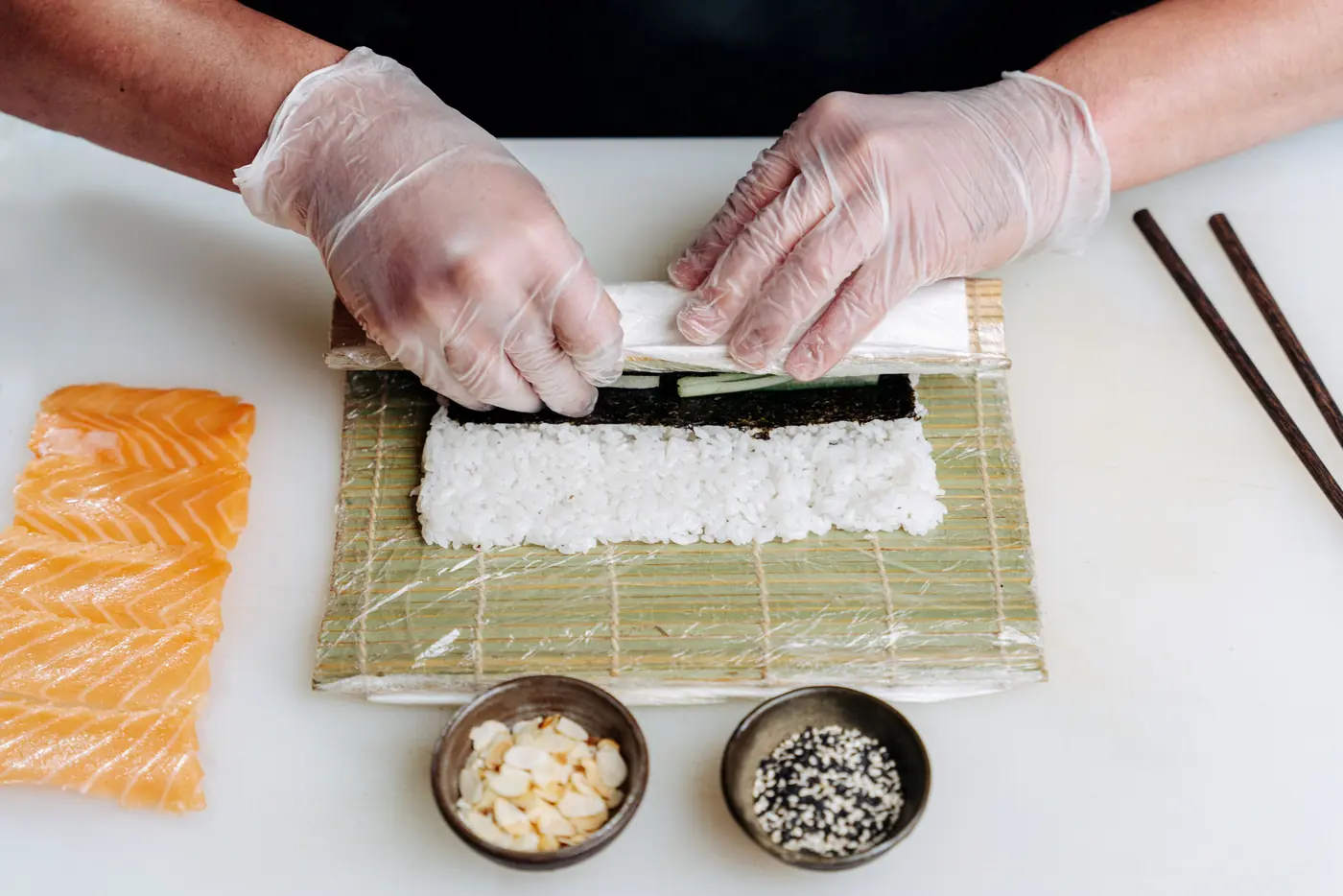
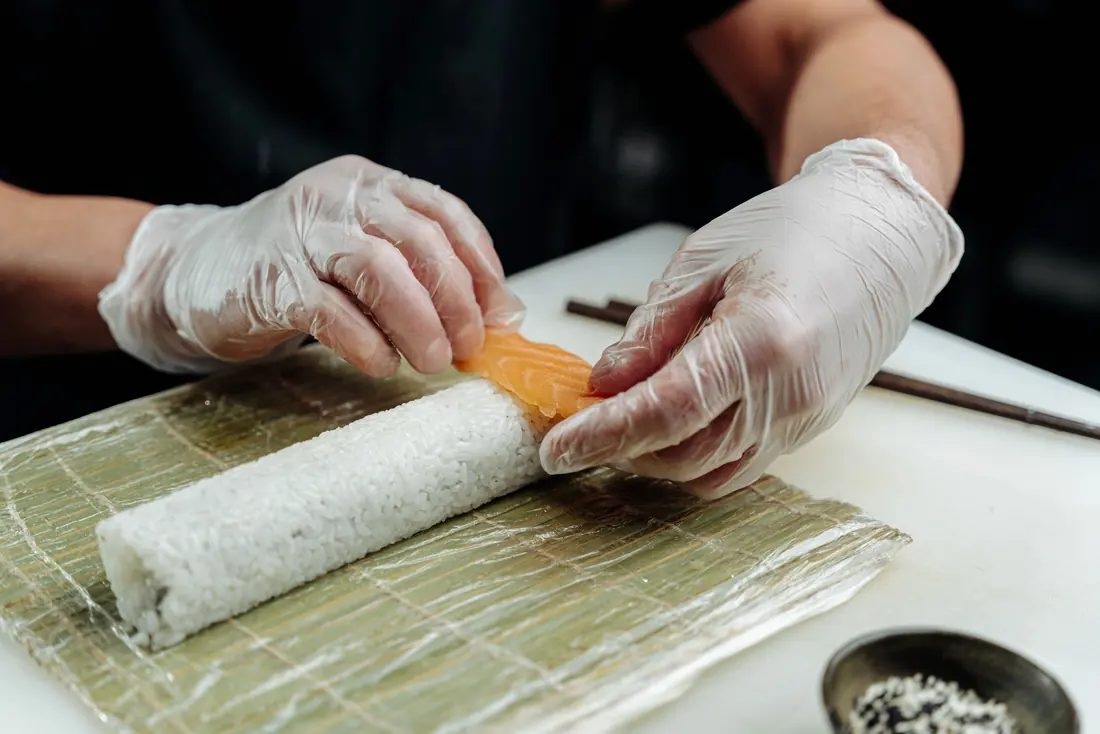
    A cut roll is made on a bamboo mat. Rice is spread across a sheet of nori, the filling is laid in a line, the mat is used to roll it into an even cylinder, and the cylinder is cut with a wet knife.

    Diners seated at a sushi counter

    A hand roll needs no mat. A half sheet of nori is held in one hand, rice is pressed into one end at an angle, the filling goes in diagonally, and the sheet is folded around it into a cone. It takes seconds, which is why sushi counters often make them to order and hand them straight over.

    Hand rolls and cut rolls compared

    Hand roll (temaki)Cut roll (maki)
    ShapeConeCylinder, cut into pieces
    PiecesOneSix or eight
    Eaten withHandsChopsticks
    Nori textureCrisp, if eaten quicklySofter
    Rice to fillingMore filling, less riceMore even
    Good for sharingNo — one per personYes
    Holds while waitingPoorlyWell
    TravelsBadlyReasonably
    The practical differences between the two formats.
    Dried nori sheets stacked close up

    How to eat a hand roll

    Pick it up. Chopsticks make it worse — the cone is not structurally designed to be gripped in the middle, and it will collapse.

    1. Eat it immediately. This is the one sushi format where waiting genuinely spoils it.
    2. Hold it at the narrow end and eat from the open top.
    3. Do not dip it in soy sauce. The filling is already seasoned and the nori goes soggy on contact.
    4. Eat it in two or three bites rather than nibbling, so it does not unravel.

    Japanese cooking places a lot of weight on the moment a dish is served, and the hand roll is one of the clearest examples. The Japanese government’s guide to regional cuisine gives a wider view of how much that timing thinking runs through the food.

    Where the format comes from

    Temaki developed as informal food — quick to assemble, requiring no mat, no knife and no plating. That casualness is the point rather than a compromise, and it is why the format never picked up the elaborate toppings that specialty rolls carry.

    It also explains the seating. Hand roll counters, where a chef makes one at a time and passes it directly across, exist because the format demands immediacy. The moment you introduce a tray, a queue or a delivery bag, the thing that makes it worth ordering has already gone.

    Some restaurants now build entire menus around this, serving hand rolls in sequence the way an omakase counter serves nigiri. Most, though, treat them as one option among many.

    The nori does most of the work

    In a cut roll the seaweed is one component among several. In a hand roll it is the entire structure, the first thing you bite through and the loudest texture in the mouthful — which is why the quality of the nori matters far more here.

    Good nori is toasted, dark, and snaps rather than tears. It should resist for a moment and then give way cleanly. Sheet that bends without breaking has absorbed moisture, either from the rice or from sitting out, and that is the single most common way a hand roll goes wrong.

    It also explains the assembly order. The cone is folded at the last possible moment specifically so the nori spends as little time as possible in contact with warm rice, and every minute after that works against it.

    Which should you order?

    • Eating at a counter, alone or in a pair — hand rolls are at their best here, made and eaten one at a time.
    • Sharing a table — cut rolls. They arrive in pieces designed to be divided.
    • Ordering takeaway — cut rolls, without question. A hand roll will not survive the journey in any recognisable state.
    • Want more filling and less rice — hand rolls have a higher ratio.
    • New to sushi — cut rolls. Smaller pieces, easier to try a little of several things.
    A cut sushi roll laid out with pickled ginger and accompaniments

    What tends to go inside one

    Fillings lean simple, because a cone holds less than a cylinder and there is no flat surface for a topping. One or two components is normal — spicy tuna, salmon and avocado, or a single vegetable.

    • Single fish — tuna, salmon or yellowtail, sometimes with scallion.
    • Fish plus one soft component — usually avocado or cucumber.
    • Cooked options — shrimp tempura or crab salad, which work well because the crunch plays against the crisp nori.
    • Vegetable — cucumber, avocado or pickled radish on their own.

    Because there is less rice proportionally, the filling registers more strongly than it does in a cut roll. That makes hand rolls a good way to taste one ingredient clearly, and a poor way to sample something complicated.

    What you will find on most menus

    Cut rolls dominate American sushi menus, and specialty rolls in particular are almost always cut — the toppings and sauces that define them need a flat surface to sit on, which a cone does not provide.

    Hand rolls, where offered, tend to be simpler: one or two fillings, minimal sauce. That is a function of the format rather than a lack of ambition.

    Roll & Go Sushi’s specialty rolls follow the cut-roll pattern — the Geisha, for instance, is shrimp tempura and crab mix topped with fresh salmon, which needs the roll to be cut and laid flat for the topping to work. You can see the current roll selection or read about which rolls suit a first order.

    Making the most of one

    If you do order a hand roll, a few small decisions change the experience considerably.

    1. Order it last rather than first, so it arrives when you are ready to eat it.
    2. Ask for it to come out on its own rather than with the rest of the order.
    3. Do not let it sit while you photograph or pass it around — the clock starts as soon as it is folded.
    4. Eat it from the wide end down, so the filling does not fall out of the bottom.

    If the restaurant is busy and things are arriving in batches, a cut roll is the better choice. A hand roll that has waited ten minutes on a pass is simply a worse version of a roll you could have ordered instead.

    Frequently Asked Questions

    Are hand rolls cut into pieces?

    No. A hand roll is served whole as a single cone and eaten in a few bites.

    Should you eat a hand roll with chopsticks?

    No. Hands are the intended way, and chopsticks tend to break the cone. It is one of the few sushi items where using your hands is clearly correct.

    Why do hand rolls have to be eaten quickly?

    The nori starts absorbing moisture from the rice as soon as it is assembled. Within a few minutes the crisp texture that defines the format is gone.

    Can you order hand rolls for takeaway?

    You can, but they will not be at their best. Cut rolls hold up far better over even a short journey.

    One is built to be shared and to keep; the other is built to be eaten in the next sixty seconds. Choosing between them is mostly a question of where you are eating.

    Browse the sushi and specialty rolls, or read about cooked and raw fillings if you are still deciding.

  • Cooked vs Raw Sushi Rolls: Which Should You Order?

    Cooked vs Raw Sushi Rolls: Which Should You Order?

    “Is it raw?” is the single most common question at a sushi counter, and the honest answer is that it depends entirely on the roll. Plenty of sushi contains no raw fish.

    The short answer

    Cooked rolls use fried, poached, grilled or imitation-seafood fillings and are served at or near room temperature. Raw rolls use uncooked fish as the main component. Many popular rolls sit in between — a cooked centre with a few slices of raw fish laid across the top.

    Battered prawns frying to a golden colour in hot oil

    What counts as a cooked roll

    Cooked does not only mean fried. Several categories qualify, and they taste quite different from one another.

    • Tempura — shrimp or vegetables in a light batter, fried until crisp. Britannica’s entry on tempura traces the technique’s arrival in Japan through Portuguese traders in the sixteenth century.
    • Crab salad — usually a seafood blend bound with mayonnaise. Mild and the most common cooked filling on American menus.
    • Glazed and grilled fish — eel is the classic example, cooked and brushed with a sweet, dark sauce.
    • Baked or torched rolls — finished under heat, often with a creamy topping that browns slightly.
    Freshly sliced raw salmon on a cutting board

    What a raw roll actually involves

    Raw rolls put uncooked fish at the centre rather than on top. Texture is the real difference: raw fish is soft and clean-tasting, and it carries sauce very differently from a fried filling.

    Fish served this way is handled under specific conditions. The FDA’s advice about eating fish sets out who should be careful with raw seafood, including people who are pregnant, young children and anyone with a weakened immune system.
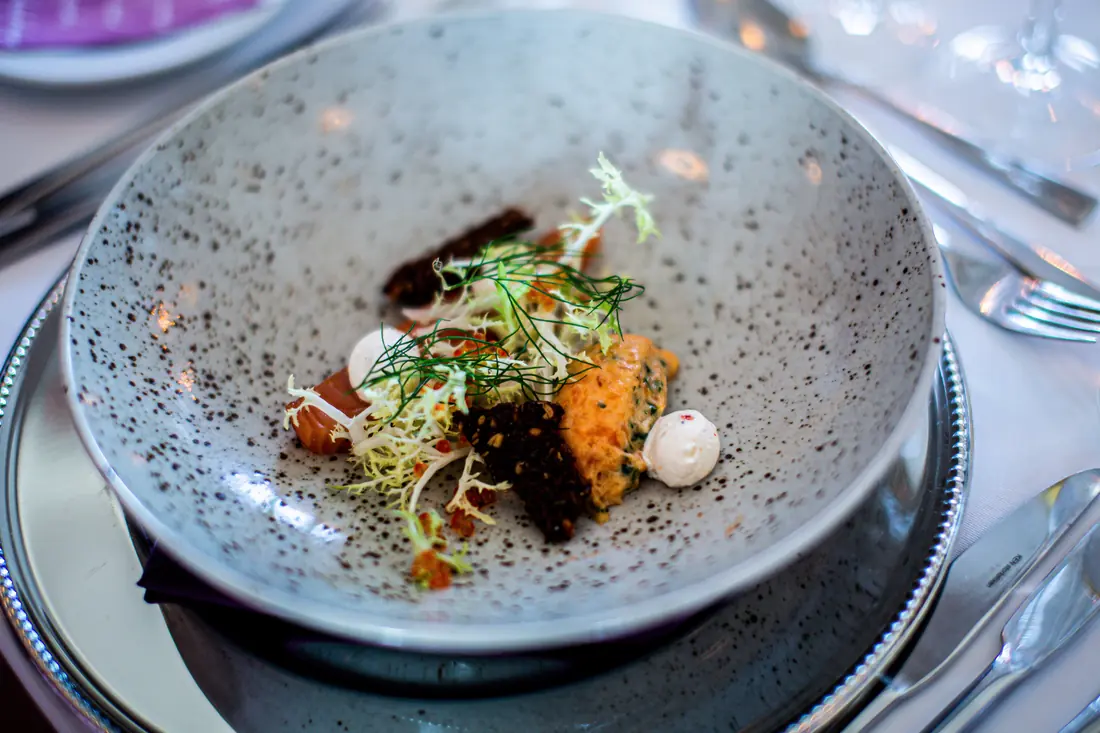
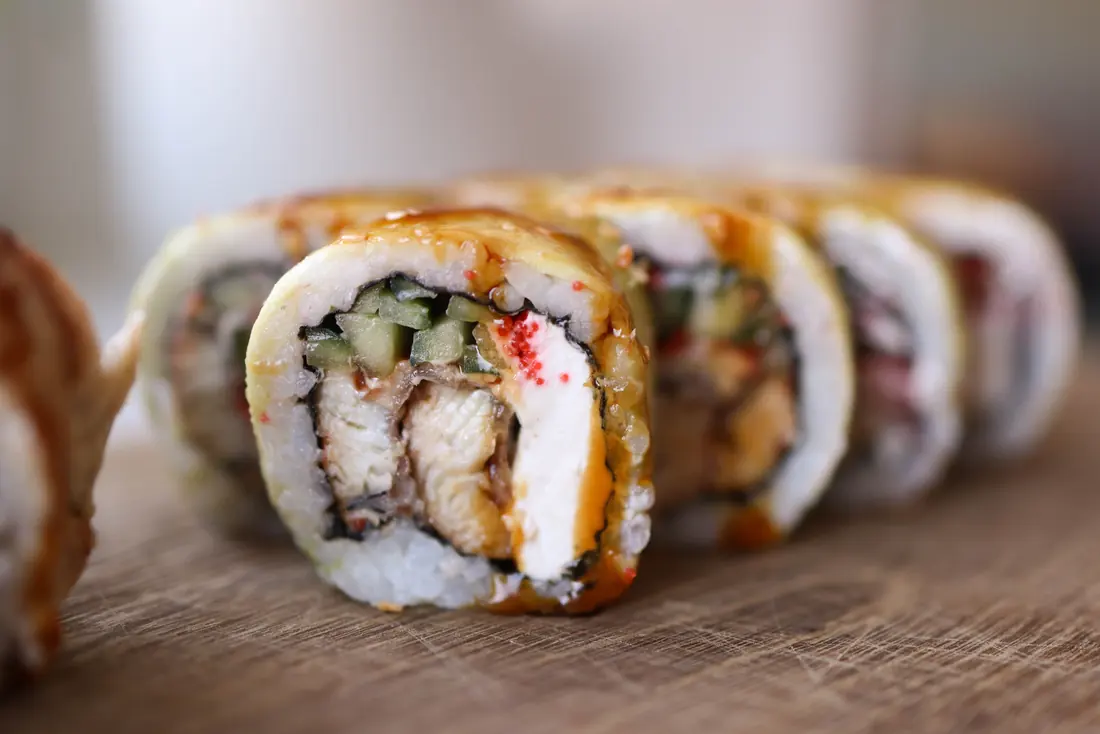
    A sushi roll finished with a dark sweet glaze

    Cooked and raw rolls compared

    Cooked rollsRaw rolls
    TextureCrisp, warm or creamy depending on methodSoft, smooth, cool
    FlavourSauces and frying leadThe fish itself leads
    TemperatureWarm centre in tempura and baked rollsServed cool
    SauceUsually a central part of the rollUsed sparingly
    Travels wellGenerally yes — holds up to a short driveBest eaten soon after it is made
    Good starting pointYesBetter once you know you like the texture
    How cooked and raw rolls differ in practice.

    The middle ground: a cooked centre with raw fish on top

    Many specialty rolls are built this way deliberately. The filling is fried or creamy, and a few slices of raw fish are laid across the outside. You get raw fish in a small, controlled amount alongside a texture you already recognise.

    On Roll & Go Sushi’s menu the Geisha follows this pattern — shrimp tempura and crab mix topped with fresh salmon — as does the Tan GO, which adds avocado and is topped with fresh tuna. If you want to try raw fish without ordering a fully raw roll, this is the format to look for. You can check the current roll selection before ordering.

    Crab salad mixed and ready to be rolled into sushi

    Which should you order?

    • New to sushi — start cooked. Tempura or crab salad.
    • Dislike the idea of raw fish specifically — glazed cooked fish gives you the flavour without the texture.
    • Curious but hesitant — a topped roll, where raw fish is a garnish rather than the filling.
    • Ordering for pickup or delivery — cooked rolls generally hold their texture better over a short journey.
    A chef slicing a finished sushi roll at the counter

    Ordering for a mixed group

    If some people at the table eat raw fish and others do not, order across both columns rather than negotiating. Two cooked rolls, one topped roll and a shared soup gives everyone something without anyone compromising.

    A shared soup is a useful anchor here — Roll & Go Sushi’s menu includes a Vietnamese-style pho noodle soup served with fresh herbs and vegetables, alongside miso and onion soups. Our guide to what pho actually is covers how it is put together.

    A baked sushi roll with a lightly torched topping

    Why texture matters more than you expect

    People who say they dislike sushi are usually describing texture rather than flavour. Raw fish is soft and yielding in a way that has no real equivalent in most Western cooking, and that unfamiliarity is what puts people off far more often than the taste does.

    Cooked rolls sidestep this entirely. A shrimp tempura roll is crisp on the outside and warm in the middle; a crab salad roll is creamy and cool. Both are textures anyone already knows. That is why they work as a starting point, and why someone who dislikes one raw roll should not conclude they dislike sushi.

    Telling cooked from raw on the menu itself

    You can usually work this out from the description alone, without asking. A few words do almost all of the signalling.

    • Tempura, crunchy, fried, baked, grilled, glazed — cooked.
    • Crab mix, crab salad, imitation crab — cooked.
    • Fresh salmon, fresh tuna, spicy tuna, yellowtail, hamachi — raw.
    • Smoked salmon, eel, shrimp (not tempura) — cooked, though the texture is closer to raw fish than to anything fried.

    The word fresh in front of a fish name is the clearest raw signal on most American menus. When a description reads “topped with fresh salmon”, the salmon on top is raw even if everything inside the roll is cooked.

    Where a description is genuinely ambiguous — and some are — ask. Kitchens vary, and the same roll name can be built two different ways in two restaurants.

    What the sauces actually are

    Sauce is one of the biggest differences between cooked and raw rolls, and the names on a menu are rarely self-explanatory.

    • Eel sauce — dark, thick and sweet, closer to a reduced soy glaze than anything fishy. It appears on cooked and glazed rolls far more often than raw ones.
    • Spicy mayonnaise — mayonnaise blended with chilli sauce. Creamy first, warm second. This is what “spicy” usually means on a sushi menu.
    • Ponzu — a thin citrus and soy dressing, sharp rather than sweet, and more common alongside raw fish.

    If you are unsure whether you will like a roll, the sauce is often the deciding factor rather than the fish. Asking for it on the side is a normal request.

    Ordering cooked rolls for pickup or delivery

    Cooked rolls are the more practical choice when food has to travel. Tempura softens but holds together, crab salad rolls are unaffected, and glazed rolls arrive much as they left. Fully raw rolls are best eaten close to where they were made.

    1. Choose cooked or vegetable fillings if the journey is more than a few minutes.
    2. Ask for sauces on the side so nothing goes soft in transit.
    3. Keep the container flat rather than upright, which stops toppings sliding off.
    4. Eat it soon after it arrives — refrigerating sushi rice makes it hard and dry.

    Roll & Go Sushi takes pickup orders by phone and works with several delivery partners, so the practical choice often comes down to how far the food has to go. The ordering page lists the current options.
    Frequently Asked Questions

    Which sushi rolls are completely cooked?

    Tempura rolls, crab salad rolls, grilled or glazed eel rolls, baked rolls and vegetable rolls contain no raw fish. Always confirm with the restaurant, since recipes vary between kitchens.

    Is a California roll raw?

    Usually not. It is typically made with imitation crab, avocado and cucumber, all of which are cooked or raw vegetables rather than raw fish.
    Does a tempura roll stay crispy for delivery?

    Partly. The batter softens as it sits, so tempura rolls are best eaten shortly after they are made, though they still hold together better than fully raw rolls.

    Can I ask for a roll to be made without raw fish?

    Often yes, though it depends on the roll and the kitchen. Ask when you order rather than assuming a substitution is possible.

    Cooked and raw are not a hierarchy. They are two different eating experiences, and most people end up ordering both depending on the day.

    Have a look at the current sushi and specialty rolls, or read our guide to what makes a roll a specialty roll.

  • What Makes a Specialty Roll Different from a Classic Roll?

    What Makes a Specialty Roll Different from a Classic Roll?

    Most sushi menus split into two halves. One lists short, familiar names — cucumber, salmon, California. The other lists rolls with invented names and three lines of description each. That second half is the specialty section.

    What makes a roll a specialty roll?

    A specialty roll is a house creation rather than a standard one: it combines multiple fillings, is usually built inside-out, and is finished with a topping, a sauce, or both. Classic rolls follow recognised formulas; specialty rolls are the kitchen’s own compositions and vary from restaurant to restaurant.

    Geisha specialty roll - shrimp tempura and crab mix topped with fresh salmon

    The four things that make a roll ‘specialty’

    It is usually inside-out

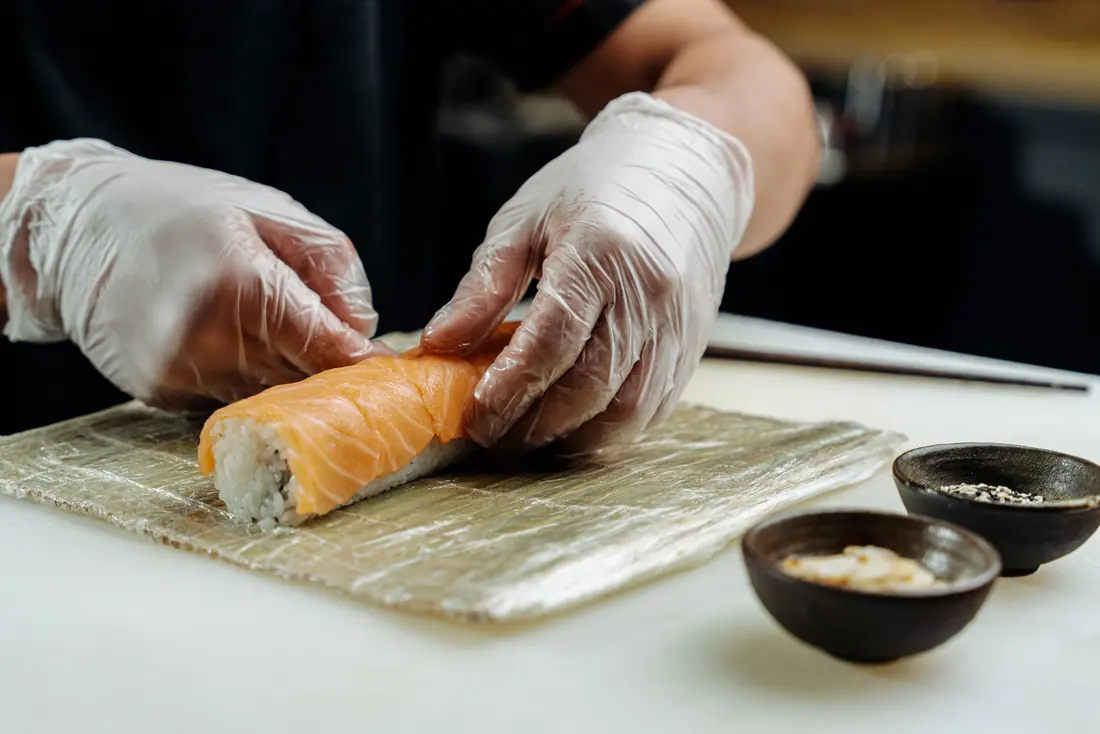
    In an inside-out roll the rice sits on the outside and the nori wraps the filling. That exterior is then coated — sesame seeds, roe, crispy onion — or left bare so a topping can sit directly on the rice.

    An inside-out roll coated in toasted sesame seeds

    It combines more than one filling

    A classic roll typically has one or two components. A specialty roll layers three or more: a fried element for texture, a creamy element for body, and something fresh like avocado or cucumber to cut through both.

    It is topped

    The topping is what most obviously separates the two categories. Sliced fish laid across the roll, roe scattered over it, or scallion and crispy garnish are all common. A topped roll is usually described by its topping, which is the quickest way to read the menu.

    A roll layered with thin slices of salmon across the top

    It is finished with sauce

    Eel sauce, spicy mayonnaise and similar finishes are applied after the roll is cut. Sauce is a large part of why specialty rolls taste richer than classic ones.

    Classic rolls and specialty rolls side by side

    Classic rollSpecialty roll
    FillingsOne or twoThree or more, layered
    ConstructionOften nori on the outsideUsually inside-out
    ToppingRarelyFrequently — fish, roe or garnish
    SauceServed on the sideApplied to the roll
    ConsistencyMuch the same everywhereUnique to each restaurant
    Best forLearning what you likeOnce you know what you like
    Classic and specialty rolls compared.

    Reading a specialty roll description

    Menu descriptions follow a reliable order: what is inside, then what is on top. Split the sentence at the word ‘topped’ and you have the whole roll.

    Take the Geisha at Roll & Go Sushi, described as shrimp tempura and crab mix topped with fresh salmon. Everything before ‘topped’ is the cooked filling; everything after is the raw garnish. The Tan GO reads the same way — shrimp tempura, crab mix and avocado, topped with fresh tuna.

    Roe and sliced scallion used as a sushi garnish

    Not every house creation is a roll, either. The Crab Angels on the same menu are house-made stuffed crab wontons, which sit with the appetisers rather than the sushi. You can see the full ordering page for what is currently available.

    How to choose one

    1. Find the protein you want — salmon, tuna, shrimp or crab.
    2. Check whether the filling is fried, creamy or fresh. That decides the texture.
    3. Look at the topping. Raw fish on top means a small amount of raw fish overall.
    4. Note the sauce. Anything described as spicy usually means a mayonnaise-based sauce, not chilli heat alone.
    Finishing sauce being drizzled across a plated roll

    How many should you order?

    Specialty rolls are richer than classic ones, so they fill you up faster. One specialty roll plus one simpler roll is a comfortable meal for most people; two specialty rolls is more food than it looks like on the menu.

    If you are ordering for a group, treat them as the centrepiece rather than the whole order. A couple of specialty rolls shared around, with plainer rolls and a soup alongside, gives everyone a taste of the interesting ones without the meal becoming heavy.

    Why they vary so much between restaurants

    There is no standard recipe for a specialty roll, so the same name can mean different things in two kitchens. This is a feature rather than a flaw — it is where a sushi chef’s preferences show. Japan’s own culinary tradition is strongly regional in the same way, as the Japanese government’s regional cuisine resource illustrates.

    It also means the description matters more than the name. A roll called the same thing at two restaurants may share nothing but the title.

    Patterns you will recognise once you know them

    Specialty sections differ between restaurants, but a handful of constructions turn up almost everywhere under different names.

    • The crunch roll — a fried filling, usually shrimp tempura, with crispy tempura flakes or fried onion outside. Texture is the whole point.
    • The topped roll — a cooked or creamy centre with sliced raw fish laid across the top. The most common bridge between cooked and raw.
    • The baked roll — finished under heat with a creamy topping that browns. Served warm, and usually the least fish-forward option on the list.
    • The layered fish roll — several kinds of fish arranged in stripes across the top. Visually the most striking and the most raw-fish-heavy.
    • The wrapped roll — cucumber or soy paper instead of nori, for people who dislike the seaweed flavour.

    Once you can place a roll into one of those groups, its name matters much less than its description.

    Why the name tells you almost nothing

    Specialty rolls are named by the kitchen, and the names are marketing rather than description. A roll called the same thing in two restaurants may share no ingredients at all, and a dramatic name says nothing about whether the roll is mild or rich, cooked or raw.

    This is the single most useful habit to build when reading a sushi menu: skip the name and read the description underneath it. Everything you actually need — the filling, whether it is fried, what is on top, which sauce — is in that one line.

    Thinly fanned avocado laid over a sushi roll

    What to put alongside one

    Specialty rolls are rich — fried fillings, creamy sauces and a topping all in one piece. What you order with them matters more than it does with a plain roll.

    A clear soup is the usual counterweight. Roll & Go Sushi’s menu includes a miso soup made with soybean paste broth, seaweed and tofu, and an onion soup with fried onions, mushrooms and scallions — both light enough not to compete with a sauced roll. There is also a Vietnamese-style pho noodle soup served with fresh herbs and vegetables, which is substantial enough to be the main part of a meal rather than a side.

    If you are ordering for two, one specialty roll plus one simpler roll and a shared soup tends to work better than two rich rolls. For a fuller meal, something from the hibachi grill alongside a single roll gives you contrast in both temperature and texture — you can see what is on the menu to plan it.

    Questions worth asking before you order

    Sushi staff field these constantly, and asking gets you a better meal than guessing.

    1. Is there raw fish in this, or only on top?
    2. Is the sauce sweet or spicy?
    3. Can I have the sauce on the side?
    4. Which of these is the mildest?
    5. Does this contain anything I would not guess from the name?

    That last question matters most if you are avoiding a specific ingredient. Roll names rarely list everything inside, and no dish should be assumed safe for an allergy based on its description alone — always tell the restaurant directly.

    Frequently Asked Questions

    Are specialty rolls always more expensive than classic rolls?

    They usually cost more because they contain more ingredients and take longer to assemble, though the difference varies by restaurant. Check the current menu for pricing.

    Is a specialty roll always raw?

    No. Many are built on cooked fillings such as shrimp tempura or crab mix, with raw fish appearing only as a topping — or not at all.

    What does ‘inside-out’ mean on a sushi menu?

    The rice is on the outside of the roll and the nori is wrapped around the filling. It is also called uramaki.

    Can I ask for a specialty roll without the sauce?

    Often yes. Sauce is normally applied at the end, so it is one of the easier requests to make — ask when you order.

    Once you can read the construction, the specialty section stops being a guessing game. Filling, topping, sauce — in that order.

    Browse the specialty rolls currently on the menu, or start with our guide to which rolls suit first-timers.

  • Sushi Rolls for Beginners: What to Order First

    Sushi Rolls for Beginners: What to Order First

    Ordering sushi for the first time is mostly a vocabulary problem. The food itself is simple — rice, seaweed, a filling, sometimes a topping — but menus tend to list thirty rolls with invented names and no explanation of what is inside them.

    This guide covers what a roll is actually made of, which styles suit people who are new to it, and how to order without guessing.

    Where should a beginner start?

    Start with a cooked or vegetable roll built on familiar textures — crab salad, shrimp tempura, cucumber or avocado. These give you the rice, seaweed and sauce experience without raw fish, and they are the easiest way to work out whether you like the format before moving on.

    A California roll cut into pieces showing cucumber, avocado and crab filling

    What is actually in a sushi roll

    Almost every roll is a variation on four components. Once you can spot them on a menu, most descriptions stop being mysterious.

    Rice and seaweed

    Sushi rice is short-grain rice seasoned with vinegar, a little sugar and salt. That seasoning is what makes it sushi rather than plain rice — the word itself refers to the soured rice, not to the fish. Nori, the thin dark sheet, is dried and pressed seaweed, and it is what holds the roll together.

    The filling

    This is the part that varies most: crab salad, cucumber, avocado, cream cheese, shrimp tempura, salmon, tuna, or a combination. Fillings are where a menu tells you whether a roll is cooked or raw, so read this part carefully.

    What goes on top

    Simple rolls stop at the filling. Others are finished with sliced fish, roe, scallion, crispy onion or a sauce. A roll topped with fish is usually described as such — for example a roll topped with fresh salmon or fresh tuna.

    Sushi rice being spread across a sheet of nori

    Five styles that suit first-timers

    1. Cucumber or avocado rolls. No fish at all. A clean way to find out whether you enjoy the rice-and-nori texture.
    2. Crab salad rolls. Mild, slightly sweet and creamy. The most forgiving starting point on most menus.
    3. Shrimp tempura rolls. Battered and fried shrimp gives you crunch and a warm centre. Frequently the roll that converts sceptics.
    4. Cooked salmon or eel rolls. Cooked fish, often with a sweet glaze, so you get the flavour without the raw texture.
    5. A topped specialty roll. Once the basics feel comfortable, a roll finished with sliced fish is the natural next step.

    At Roll & Go Sushi’s ordering page the specialty rolls follow that same logic. The Geisha is shrimp tempura and crab mix topped with fresh salmon, and the Tan GO is shrimp tempura, crab mix and avocado topped with fresh tuna — both built on a cooked centre with raw fish on the outside, which makes them a reasonable bridge between the two.

    Cooked, raw, or somewhere in between

    Roll styleWhat you getBest if you
    VegetableCucumber, avocado, sometimes pickled radishWant to skip fish entirely
    Crab saladMild, creamy, lightly sweet fillingPrefer familiar flavours
    TempuraBattered and fried filling, warm and crispLike texture and crunch
    Cooked and glazedCooked fish with a sweet, savoury sauceWant fish but not raw fish
    Topped with raw fishCooked centre, sliced raw fish on topAre ready to try raw fish gradually
    Fully rawRaw fish as the main fillingAlready know you enjoy it
    Roll styles arranged from most to least beginner-friendly.
    A crispy shrimp tempura roll on a dark plate

    How much to order

    A standard roll is cut into six or eight pieces. For most people one roll is a light meal and two are a full one, though tempura and topped rolls are heavier than vegetable rolls.

    If you are ordering for a table, a mix works better than multiples of one thing. Two cooked rolls, one vegetable roll and a shared soup covers a wide range of preferences without anyone committing to something they have not tried.

    The things beside your plate

    • Soy sauce — for dipping, and easy to overdo. Touch the fish side rather than soaking the rice, which falls apart when saturated.
    • Wasabi — sharp rather than lingering. Most restaurants already put a small amount inside nigiri; adding more is a preference, not a requirement.
    • Pickled ginger — eaten between pieces to reset the palate, not piled on top of a roll.
    Soy sauce, wasabi and pickled ginger set beside a sushi plate

    Ordering without overthinking it

    Two questions solve most of the menu. First: is it cooked or raw? Second: is there anything in it I already know I dislike? If a description lists an ingredient you have never had, ask — staff answer this constantly and it is a normal question.

    Japanese food culture treats seasonality and simple preparation as central, and the Japanese government’s guide to regional cuisine gives a sense of how varied that tradition is beyond the rolls most Western menus show.

    A spicy tuna roll finished with a chilli sauce drizzle

    A note on raw fish

    Raw fish is safe to eat for most people when handled properly, but it is not recommended for everyone. The FDA’s advice about eating fish covers the groups who should be more cautious, including people who are pregnant. If that applies to you, the cooked and vegetable rolls above are the straightforward alternative.

    If you have a food allergy, tell the restaurant directly rather than inferring from a dish name. Roll names rarely list every ingredient.

    A single sushi roll piece lifted with chopsticks

    A short glossary for reading the menu

    Most sushi menus lean on the same dozen words. Knowing them removes almost all of the guesswork.

    • Maki — a rolled piece, cut into rounds. The default format.
    • Uramaki — an inside-out roll, rice on the outside.
    • Nigiri — a pressed finger of rice with a topping, not rolled.
    • Sashimi — sliced fish served on its own, with no rice.
    • Tempura — battered and fried, usually shrimp or vegetables.
    • Unagi — freshwater eel, always served cooked and glazed.
    • Masago and tobiko — small fish roe used as a coating or garnish; they add a mild salty pop rather than a strong flavour.
    • Spicy — on most American menus this means a mayonnaise-based sauce rather than chilli heat on its own.

    Two of those words do most of the work. If a description says tempura, expect crunch and a warm centre. If it says topped, expect something laid across the outside — often raw fish, sometimes avocado or roe.

    How it travels, and where to eat it

    Sushi is at its best within a short window of being made, which matters if you are choosing between eating in and taking it home. Rice firms up as it cools and fried elements lose their crunch, so a five-minute drive is fine while an hour is not.

    Roll & Go Sushi is a fast casual kitchen in Daphne serving sushi alongside hibachi and soups, so a first visit does not have to be sushi-only. If someone in your group is unsure, one roll plus something from the grill is a low-risk way to start. You can find the location and opening hours before you go.

    Frequently Asked Questions

    Is all sushi raw?

    No. A large share of rolls on most menus contain no raw fish at all — vegetable rolls, crab salad rolls, tempura rolls and cooked, glazed rolls are all common.

    What is the difference between a roll and nigiri?

    A roll is rice and filling wrapped in nori and cut into pieces. Nigiri is a small pressed mound of rice with a topping laid over it, and is not rolled or cut.

    Should I eat sushi with chopsticks or my hands?

    Either is acceptable. Hands are traditional for nigiri; chopsticks are easier for rolls, particularly ones finished with sauce.

    How do I order if I do not like seaweed?

    Ask for an inside-out roll, where the rice is on the outside and the nori sits against the filling. The seaweed flavour is much less noticeable.

    Sushi rewards a bit of trial and error. Start with something cooked, notice what you liked about it, and let that guide the next order.

    You can see what Roll & Go Sushi is serving or read more about the kitchen in Daphne before you order.