
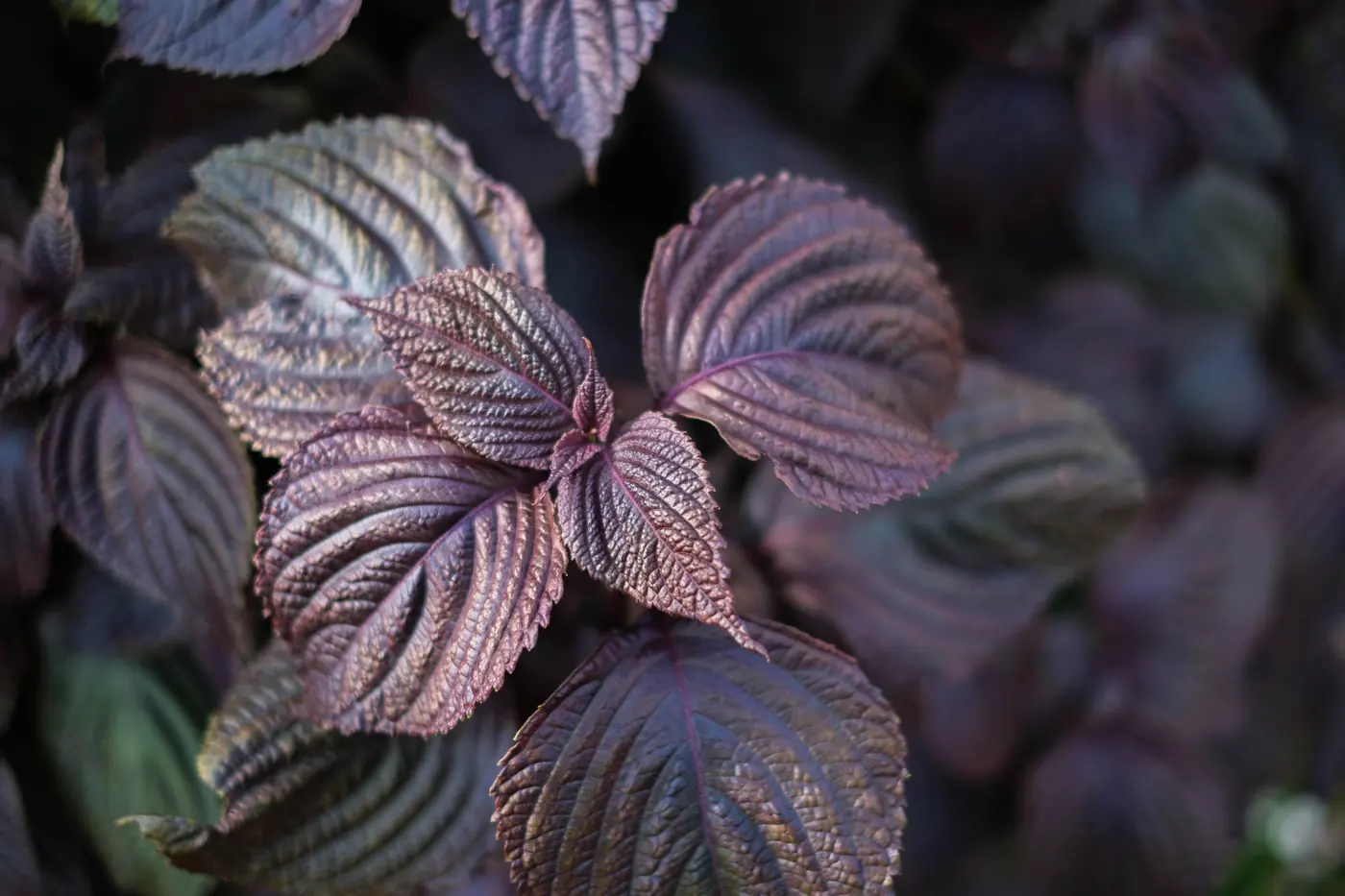
A large pointed leaf with a serrated edge, arriving under raw fish or beside a plated dish. Most people move it to the side of the plate, which is a waste – it is an ingredient, not a decoration.
What it is
Shiso is perilla, a leafy herb in the mint family. It grows as a bushy annual, the leaves broad and slightly crinkled with a distinctly toothed edge.
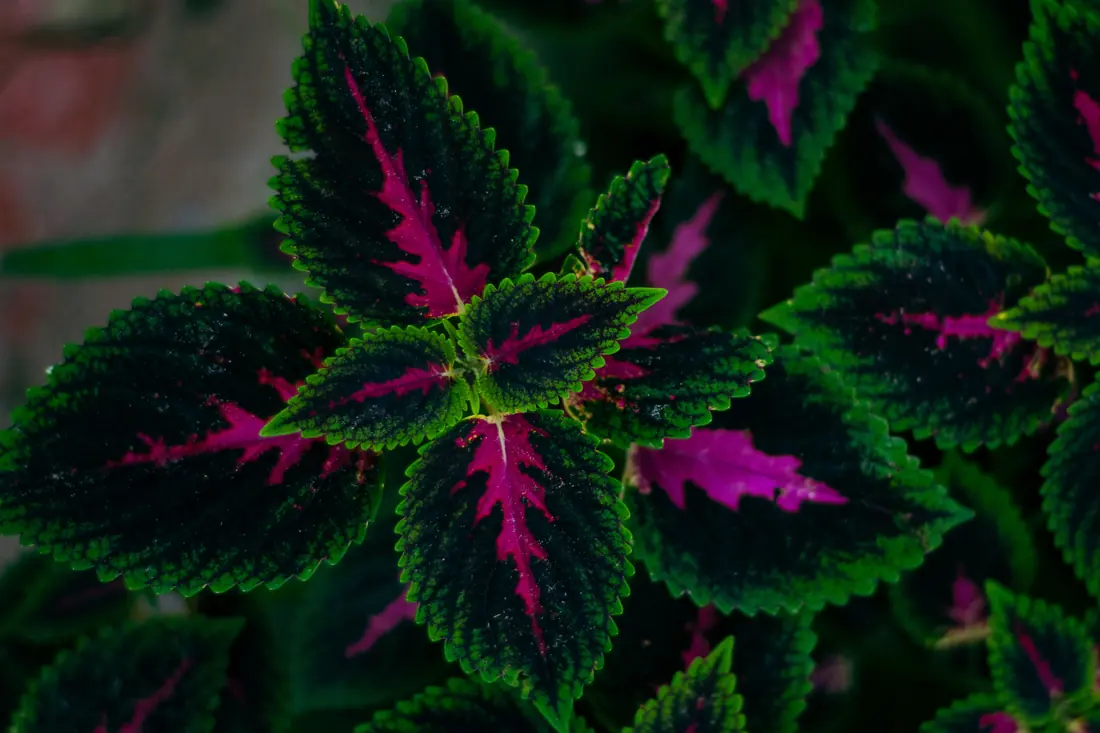
Britannica’s entry on the mint family covers the group it belongs to – which also contains basil, mint, sage and rosemary, and explains a lot about why shiso tastes the way it does.
What it tastes like
The honest answer is that it tastes like several things at once and none of them exactly. There is basil in it, and mint, and something anise-like, with a faint cinnamon warmth underneath.
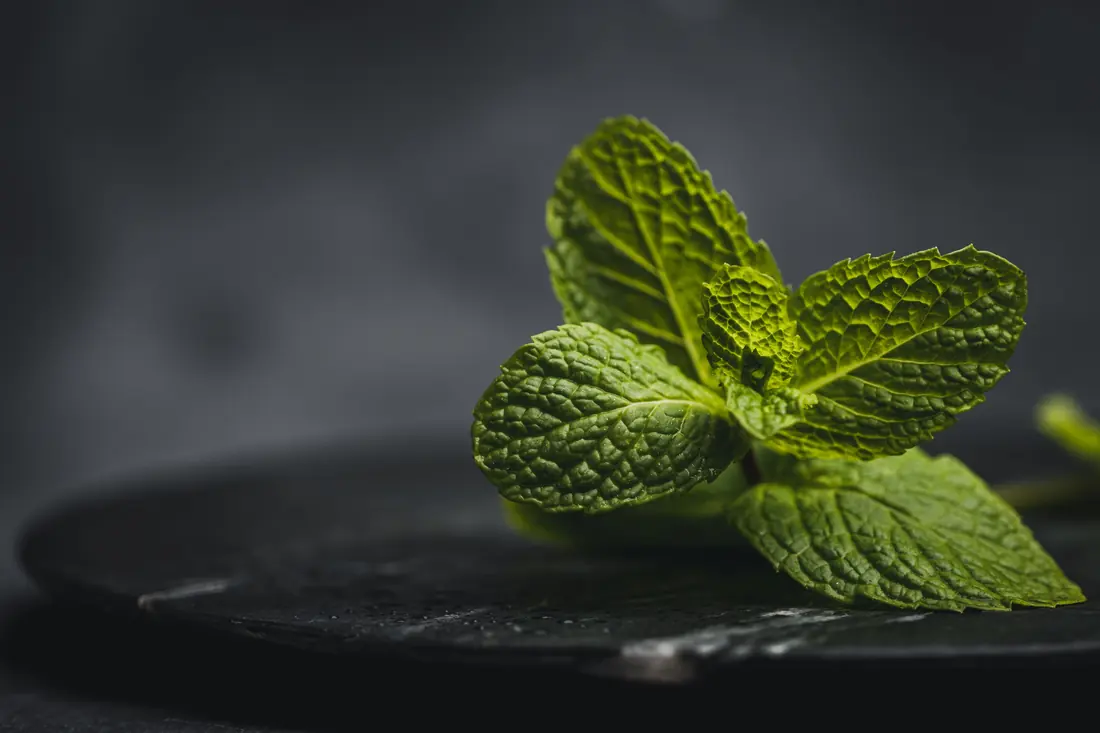
It is also more aromatic than it is flavourful. Most of what you get from a shiso leaf arrives through the nose rather than on the tongue, which is why tearing one releases so much more than eating it whole.
Against the herbs you already know
| Herb | Dominant note | Holds up to heat | Usual role |
|---|---|---|---|
| Shiso | Anise and mint together | Poorly – add at the end | Aromatic, eaten with the dish |
| Basil | Sweet, peppery | Poorly | Stirred through at the end |
| Thai basil | Aniseed, sturdier | Reasonably | Cooked into curries |
| Mint | Cool, sharp | Poorly | Fresh, in salads and drinks |
| Coriander | Citrus, soapy to some | Poorly | Scattered over finished dishes |
The pattern in the third column is the useful one. Every herb in this family carries its flavour in volatile oils, and volatile means exactly what it sounds like – heat drives it off. That is why none of them is added early, and why a dish that smells extraordinary as it is served smells of much less ten minutes later.
Buds, sprouts and seeds
The leaf is not the only part used, and the others turn up on the same plates without being recognised at all.
Mejiso are the seedlings – tiny two-leaved sprouts, sold as a microherb and scattered over raw fish, where they look like decoration and taste like a concentrated version of the full-grown leaf. Hojiso are the flowering stems, served alongside raw fish so the tiny buds can be stripped off with chopsticks and dropped into soy sauce.
Both are edible, both are deliberate, and both are among the most commonly abandoned things on a plate. If something small and green arrived with your fish, it was almost certainly meant to be eaten.
Green and red are not the same
Green shiso – aojiso – is the one served with raw fish, and the one people mean by default. It is the more aromatic of the two and is used fresh.
Red shiso – akajiso – is stronger, more astringent and rarely eaten as a leaf. Its main job is colour: it is what turns umeboshi plums their deep red, and it is used in pickling and to tint drinks and syrups.
Yes, you eat it
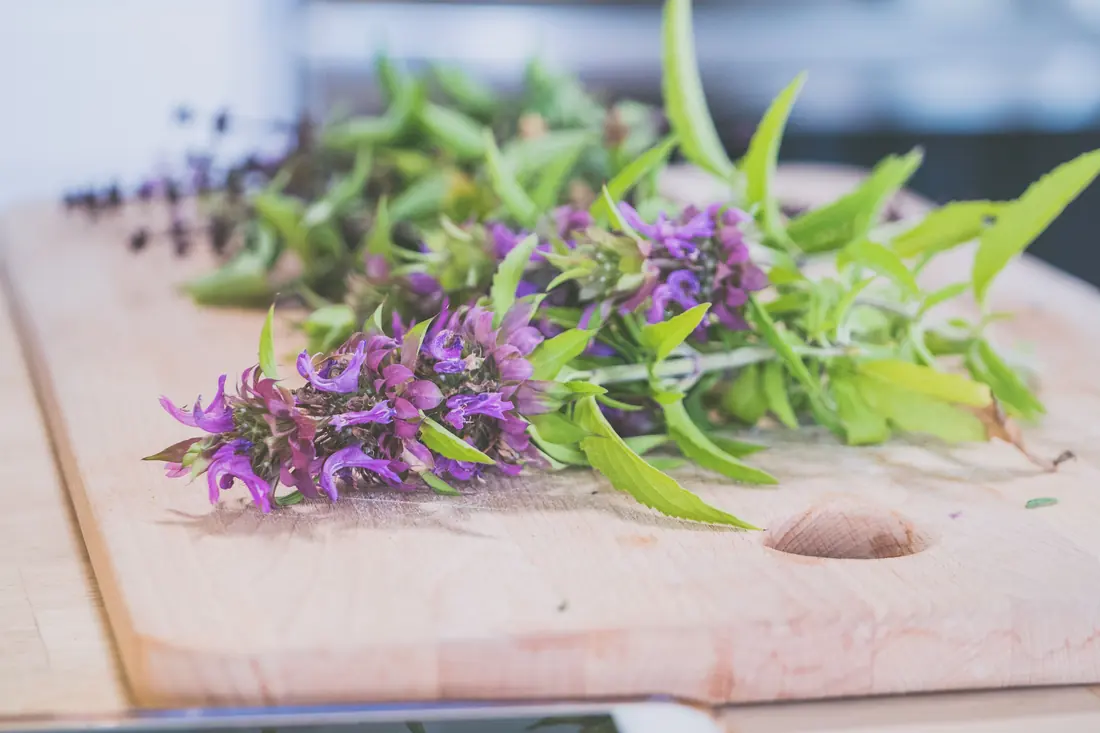
This is the question most people actually have, so: the leaf under your fish is food, and it is there to be eaten with the thing it came with.
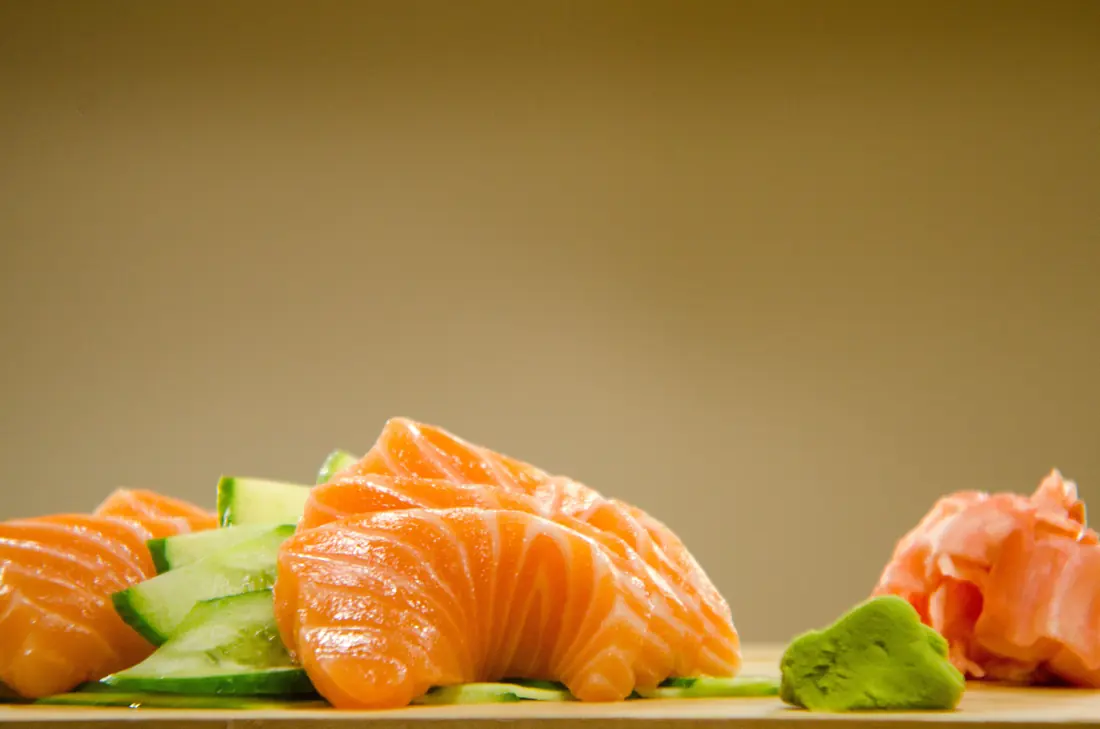
The intended use is to wrap or fold – a slice of fish and a piece of leaf together, so the aroma arrives at the same moment as the fish. Eating the leaf alone at the end is a much duller experience than eating it as it was meant to be used.
The exception is a plastic leaf. Some kitchens use a green plastic divider shaped like a shiso leaf – the same silhouette, glossy and obviously artificial up close. That one is not food, and telling them apart takes about a second.
Why it is served with raw fish
Three reasons, in descending order of how well they hold up.
- Aroma against richness. A sharp herbal note cuts oily fish the way a squeeze of lemon does, and resets the palate between pieces.
- Separation. A leaf keeps pieces from sticking together and stops flavours running into one another on the plate.
- Tradition. Shiso was long believed to have preservative and antibacterial properties, and it became standard alongside raw fish partly for that reason. Treat that as history rather than as a food-safety measure – the practices that actually keep raw fish safe are freezing, handling and cold storage.
Our piece on cooked and raw rolls covers where raw fish sits on a menu, and the leaf turns up almost exclusively on that side of it.
It is not the only edible garnish on the plate
Shiso keeps company with several other things people mistake for decoration. The shredded white mound is daikon radish, cut fine and held in cold water so it curls; it is a palate cleanser and entirely edible.
Our explainer on daikon covers that one in full. The pattern is worth internalising: on a well-composed Japanese plate, very little is there purely to look at.
Korean perilla is a close cousin, not the same leaf
Korean cooking uses a perilla leaf too – kkaennip – and it is a different variety of a closely related plant. The leaves are larger, rounder and softer, with a flavour that leans more strongly anise and less towards mint.
They are used differently as well. Where shiso is a garnish and an aromatic, kkaennip is treated as a vegetable in its own right: pickled in soy, layered in a jar, or used as a wrap for grilled meat and rice. Substituting one for the other works, but the dish changes.
Using it at home
Three things are worth knowing before you buy a packet.
- Tear rather than chop where you can. A knife bruises the leaf and the aroma goes into the board; torn edges release it into the dish.
- Add it at the end. Heat destroys the volatile compounds fast, so a leaf cooked into something tastes of very little.
- Keep it like a flower, not a vegetable. Stems in a little water, loosely covered, in the fridge. Sealed in a bag it turns black within a day or two.
It is also easy to grow, aggressively so – it self-seeds and will take over a bed given the chance, which is why anyone who has grown it once tends to have it permanently.
Where else it turns up
Once you know the flavour it becomes recognisable across a menu – chopped through rice, shredded into a salad, wrapped around a filling and fried in tempura batter, or as one of the flavours of dry rice seasoning.
It is also a summer herb in the most literal sense. It grows fast, bolts in heat and is at its best fresh, which is why it is one of the few Japanese herbs almost never sold dried – drying takes away the aroma, and the aroma is the whole point.
For the rest of what arrives on the plate, the condiments guide covers soy sauce, wasabi and ginger, the daikon explainer covers the other edible garnish, and the cooked and raw comparison covers the dishes it accompanies. The current selection is on the ordering page.
Frequently Asked Questions
What is shiso?
A leafy herb in the mint family, also called perilla. The green variety is the one served with raw fish; the red is used mainly for pickling and colour.
What does shiso taste like?
Something between basil, mint and anise, with a faint cinnamon warmth. It is more aromatic than strongly flavoured, and tearing it releases far more than biting it.
Do you eat the leaf under sushi?
Yes, if it is a real shiso leaf – it is meant to be eaten with the fish it came with. A glossy green plastic divider shaped like a leaf is not food.
Why is shiso served with raw fish?
Its aroma cuts richness and resets the palate between pieces, and it keeps pieces separate on the plate. It was also traditionally believed to have preservative properties.
What is the difference between green and red shiso?
Green shiso is aromatic and eaten fresh with food. Red shiso is stronger and more astringent, used mainly to colour and flavour pickles.