
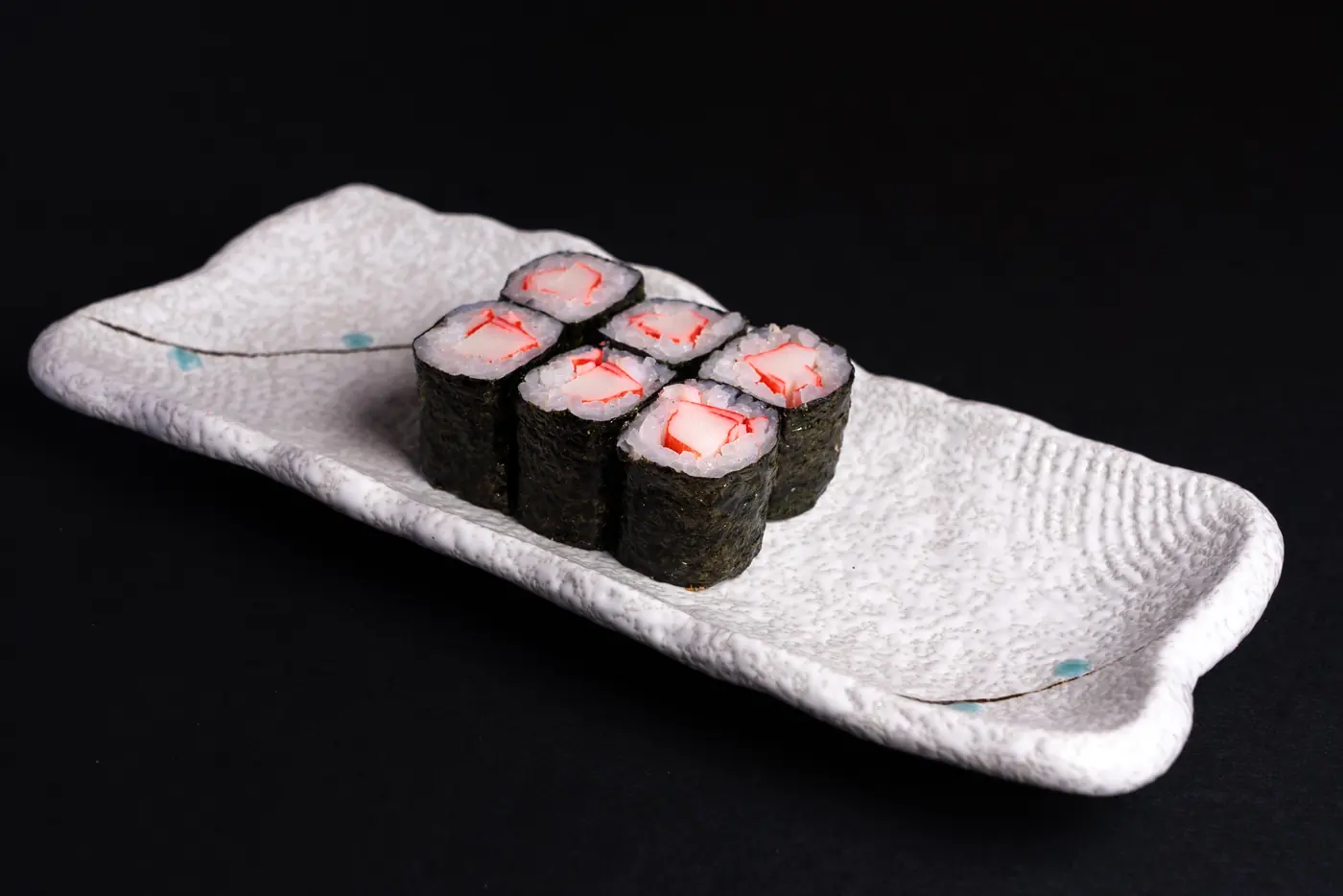
Read a sushi menu closely and the phrase “crab mix” turns up again and again. It is in the roll descriptions, it is in the salads, and it is almost never explained. Most of the time what it means is imitation crab.
What is imitation crab?
Imitation crab is a fish product shaped and coloured to resemble crab meat. The proper name for it is surimi, a Japanese term for white fish that has been minced, rinsed and worked into a smooth paste, then bound, formed and lightly cooked.
It is not a modern shortcut. Surimi has been made in Japan for centuries as a way of turning plentiful white fish into something that keeps and travels. The crab-shaped version most people recognise dates from the 1970s.
What it is actually made from
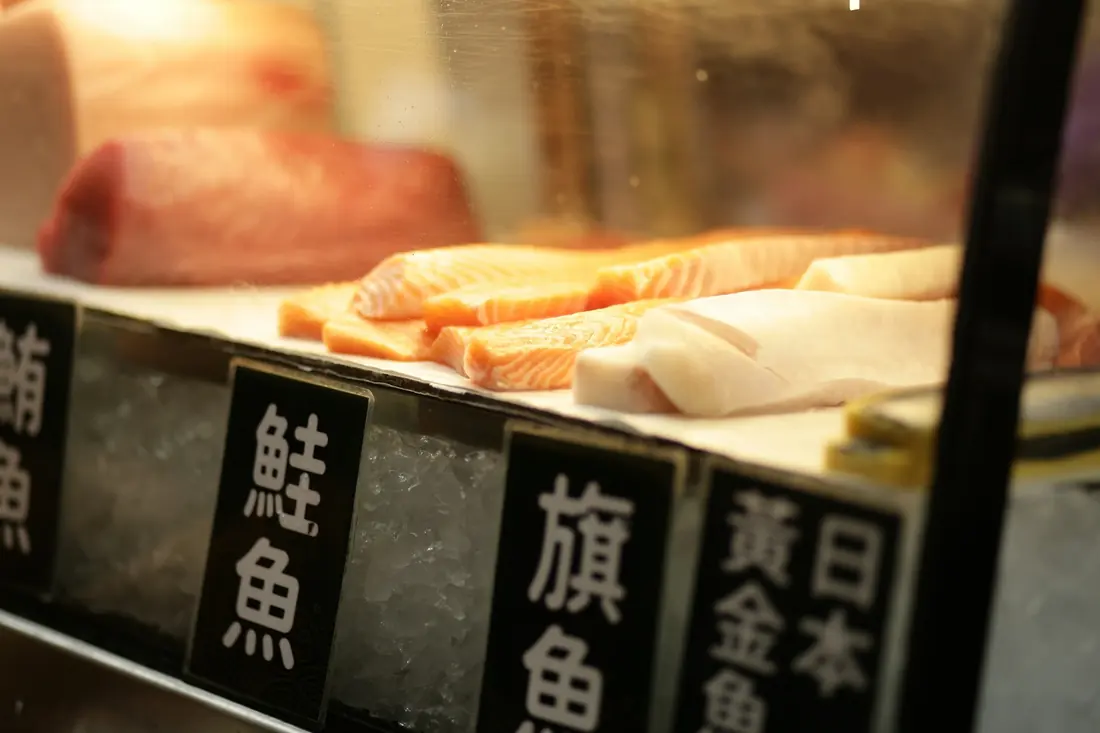
The base is white fish. Alaska pollock is the most common choice by a wide margin, because it is mild, pale and caught at scale; NOAA Fisheries’ profile of Alaska pollock gives a sense of how large that fishery is.
From there the process is mechanical rather than mysterious. The fish is minced and washed repeatedly until what remains is close to flavourless, then worked with starch and seasoning into a firm paste that can be shaped.
The red edge is added last. It is a surface colouring only, which is why a crab stick is white when you pull it apart, and why the red rubs off slightly on your fingers.
Why it tastes the way it does
The washing stage is the reason imitation crab tastes clean and slightly sweet rather than fishy. Nearly everything that would read as “fish” is rinsed out before the paste is seasoned.
What replaces it is a mild savoury seasoning built to suggest shellfish. The result is deliberately simple, and that simplicity is exactly why it works inside a roll, where it sits alongside rice, avocado, cucumber and sauce without fighting any of them.
The shapes it comes in
Surimi is sold in several forms, and which one a kitchen buys tells you something about how it will be used.
- Sticks – the familiar rectangular batons, used whole in hand rolls and cut into lengths for cut rolls.
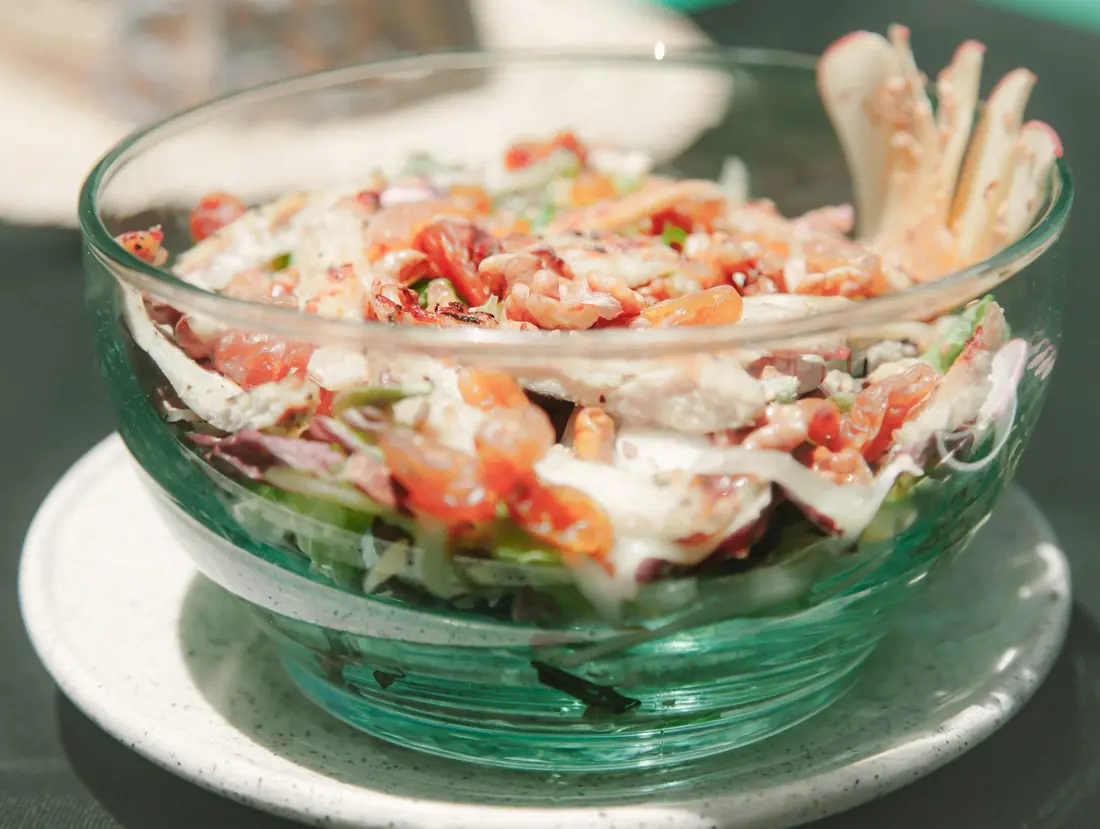
- Flakes – short irregular pieces, mixed with a dressing to make the crab salad that fills so many rolls.
- Shreds – long fine strands, used where the filling needs to pack tightly without lumps.
- Chunks – larger pieces shaped to imitate leg meat, used where the crab is meant to be visible on top.
The differences are mechanical rather than culinary. All four are the same product formed differently, and a kitchen chooses between them based on what the dish needs to hold together.
Imitation crab and real crab compared
| Imitation crab (surimi) | Crab meat | |
|---|---|---|
| Made from | Minced white fish, usually pollock | Crab |
| Texture | Firm, even, slightly springy | Loose flakes of varying size |
| Flavour | Mild and faintly sweet | Distinctly shellfish |
| Form | Sticks, flakes or shreds | Picked meat, lump or claw |
| Typical use | Rolls, salads, fillings | Served on its own or lightly dressed |
| On a menu | “crab mix”, “crab stick”, “krab” | “crab”, named by cut |
The spelling is worth noticing. Some restaurants write “krab” with a K specifically to signal the difference, and where a kitchen does that it is being helpful rather than coy.
Where it shows up on a sushi menu
Once you know the term, the pattern is easy to read.
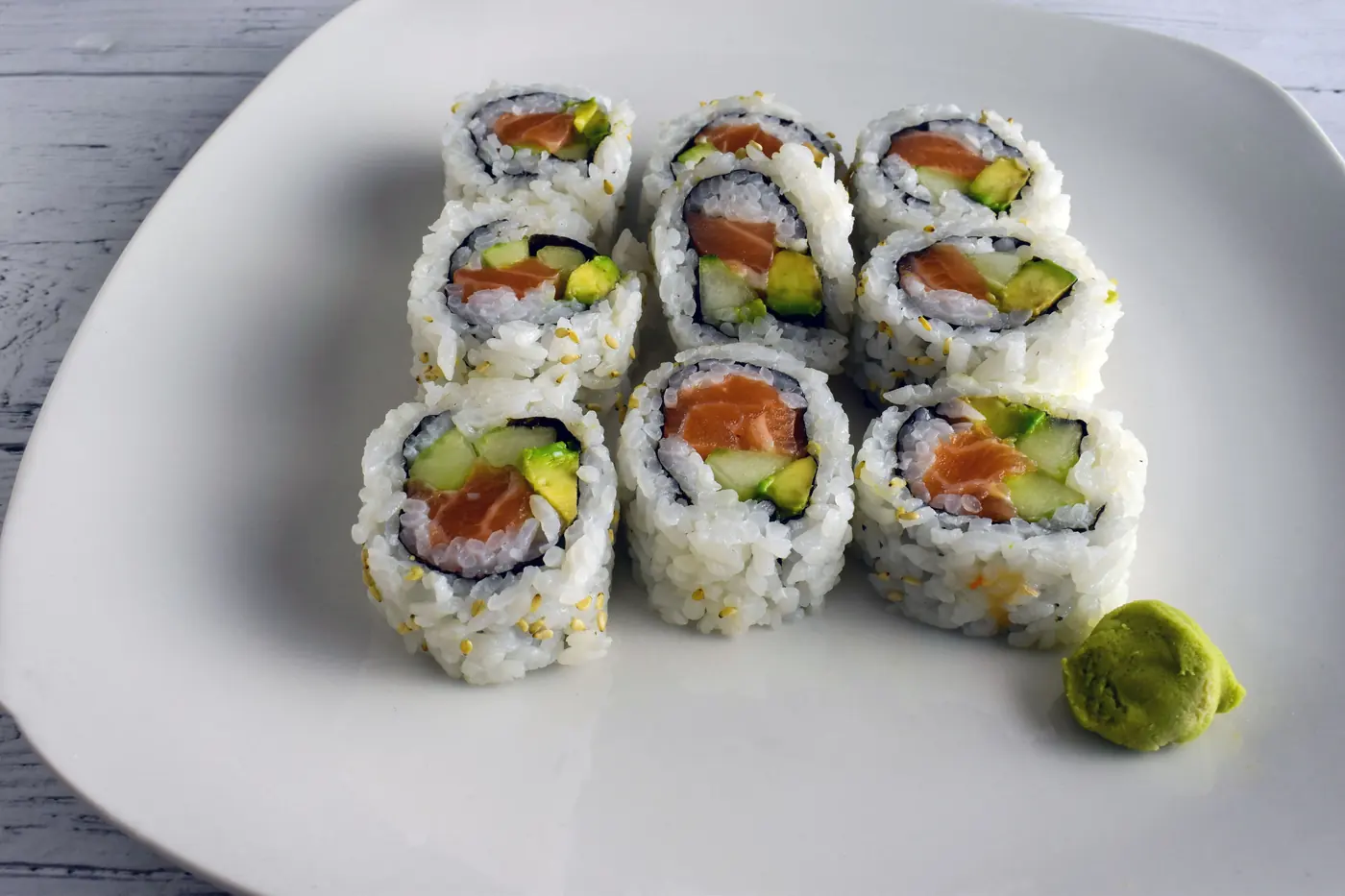
- Classic rolls – the standard combination of crab mix, avocado and cucumber is built on it.
- Specialty rolls – crab mix is frequently the base layer under a topping of fish, because it holds its shape when the roll is cut.
- Salads – shredded and dressed, served cold.
- Hand rolls – where its firmness stops the filling collapsing.
If you want to know which one a particular dish uses, the reliable move is simply to ask. Kitchens answer this question constantly and nobody finds it odd.
Where else it turns up
Sushi is where most people meet it, but it is not confined there. Cold seafood salads are frequently built on it, as are the fillings in a number of hot dishes where a firm, mild seafood texture is wanted.
It travels well beyond Japanese cooking too. Surimi products appear in soups and stews across East and Southeast Asia in the form of fish cakes and fish balls, which are made by the same washing-and-binding process without the crab shaping.
The through-line is convenience of a specific kind: a seafood ingredient that is mild, keeps well, and behaves predictably under heat and under a knife.
Is it worse than crab?
It is different rather than worse, and treating it as a substitute misses what it is good at. Crab meat is delicate and comes apart; surimi holds together under a knife, which is the entire reason it ended up inside rolls.
A roll built on crab meat would fall apart when sliced and the flavour would be lost under the rice and sauce anyway. The imitation version was not chosen to save money alone. It behaves better in the format.
Where real crab makes sense is when it is the point of the dish rather than a component of one, served plainly enough that you can taste it.
The names it goes by
Very little of what surimi is sold under uses the word surimi, which is part of why it stays unexplained. On menus and packaging you will see crab stick, crab mix, seafood stick, ocean stick, and the deliberate misspelling krab.
In Japanese it is usually kanikama, a contraction of the words for crab and for the fish-cake family it belongs to. That name is the most honest of the lot, since it says plainly that the thing is a fish cake in the shape of crab.
How to tell them apart on the plate
- Look at the edges. A uniform red or orange line along one side means surimi.
- Pull a piece apart. Surimi separates into long even strands; crab meat breaks into irregular flakes.
- Check the shape. Perfectly rectangular sticks or evenly shredded strands are manufactured.
- Taste for sweetness. Surimi is mild and slightly sweet; crab is unmistakably shellfish.
None of this matters much when it is inside a roll. It matters when a dish is built around crab and you want to know which one you are getting.
Rolls are where most people meet it, so if you are still working out how the different styles fit together, our guide to sushi rolls for beginners covers the basic construction, and the specialty rolls guide explains why house rolls are built in layers. You can see the current selection on the ordering page.
Frequently Asked Questions
Is there any real crab in imitation crab?
Usually none at all. It is made from white fish, most often pollock, with seasoning and a surface colouring. Some products include a small amount of crab extract for flavour, but the substance of it is fish.
What does surimi mean?
It is the Japanese term for minced, washed fish paste. Imitation crab is one product made from surimi; fish cakes and fish balls are others.
Why is it used in sushi rolls instead of crab?
It holds its shape when a roll is sliced, and its mild flavour sits comfortably under rice, avocado and sauce. Crab meat would break up and largely disappear.
Is imitation crab cooked?
Yes. The paste is cooked as part of forming it, so what arrives has already been through heat. That is why rolls built on crab mix are described as cooked rolls.
How can I tell if a roll uses it?
Look for “crab mix”, “crab stick” or “krab” in the description, and look for the red-edged white strands in the cut face of the roll. If it is not clear, ask.