
A pale yellow block, faintly striped, sitting on rice or cut into a roll. It looks like a slice of cake and it tastes sweet, which surprises almost everyone who orders it expecting egg to taste like egg.
The short answer
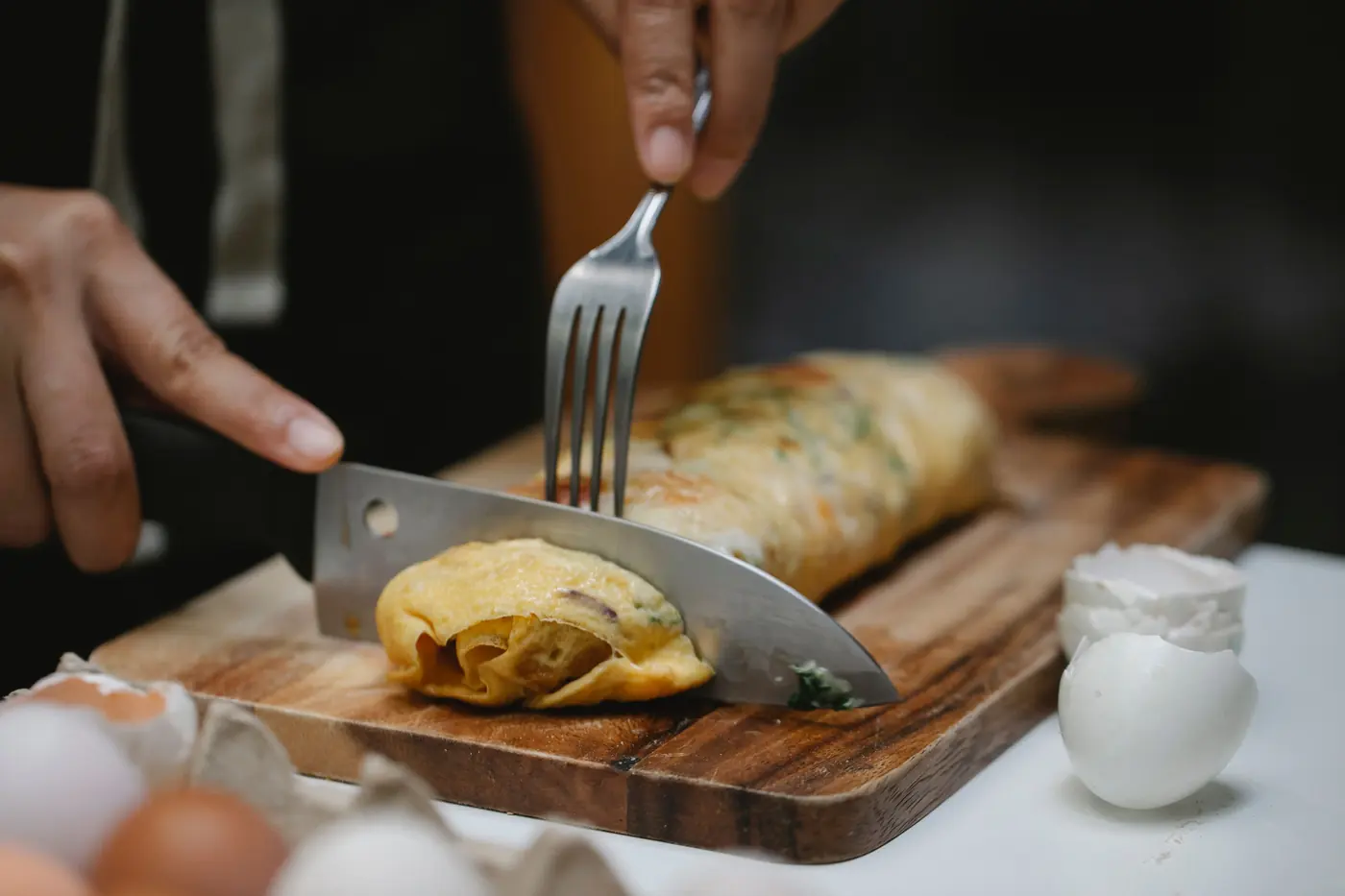
Tamago is a Japanese omelette – tamagoyaki, meaning grilled egg. It is made by cooking a very thin layer of seasoned egg, rolling it, pouring in another layer, rolling that around the first, and repeating until a many-layered block is built up.

The stripes you see in a slice are not decoration. They are the edges of each rolled layer, and counting them tells you how many times the cook poured and rolled.
Why it is sweet
Because sugar is in the recipe, deliberately and in quantity. Along with the eggs there is usually dashi, soy sauce, mirin and sugar – so the seasoning is sweet and savoury at once rather than salty.
Proportions vary regionally and by kitchen. Some versions are barely sweet and heavily stocked; others are closer to a dessert. Sushi counters tend toward the sweeter end, which is why the version you meet in a roll is usually the sweetest one you will encounter.
Britannica’s entry on eggs as food covers what is happening underneath – egg proteins setting into a network as they heat, which is the same process behind every omelette and is what makes the timing so unforgiving here.
The pan is a specific shape
A tamagoyaki pan is rectangular, which is not a stylistic choice. A round pan produces a round sheet, and a round sheet rolled up gives a lopsided log with thin ends and a fat middle.
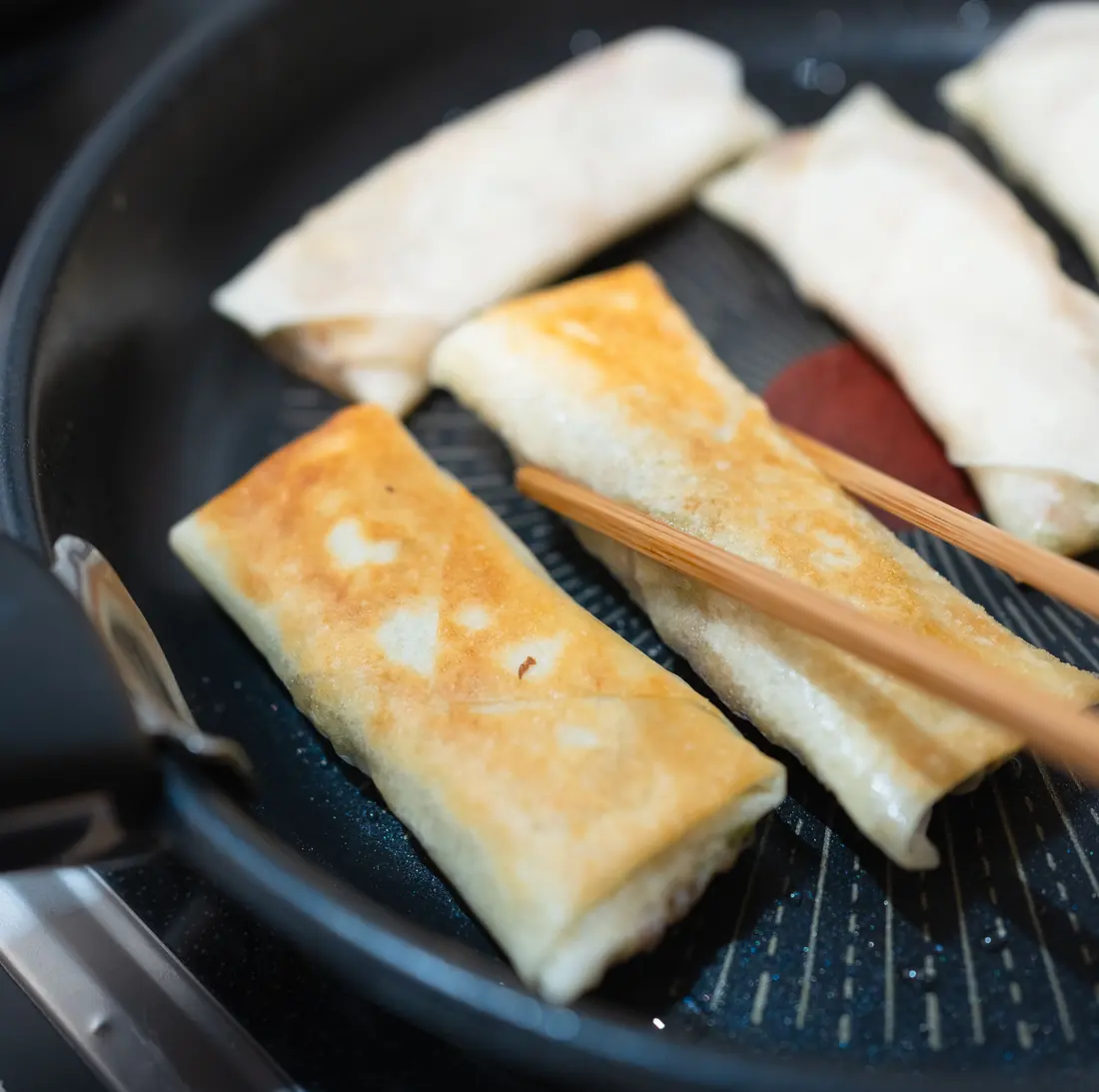
A rectangular pan gives a rectangular sheet, and a rectangular sheet rolls into an even block that slices into identical pieces. Every slice on a plate looking the same is a consequence of the pan.
It is possible without one – a round pan and trimmed edges will get you there – but it is fiddly, and the trimmings are the cook’s lunch.
How it is made
- Beat the eggs with dashi, soy, mirin and sugar, and strain the mixture for an even texture.
- Oil the pan lightly and bring it to a moderate heat – too hot and the egg browns, which is a fault.
- Pour a thin layer, and pop any bubbles as it sets.
- Roll the set layer to one end of the pan while it is still slightly soft on top.
- Oil the empty part, pour the next layer, and lift the roll so the new egg runs underneath it.
- Roll again, so each layer wraps the last, and repeat until the mixture is gone.
- Shape the hot block, often in a bamboo mat, and cool before slicing.
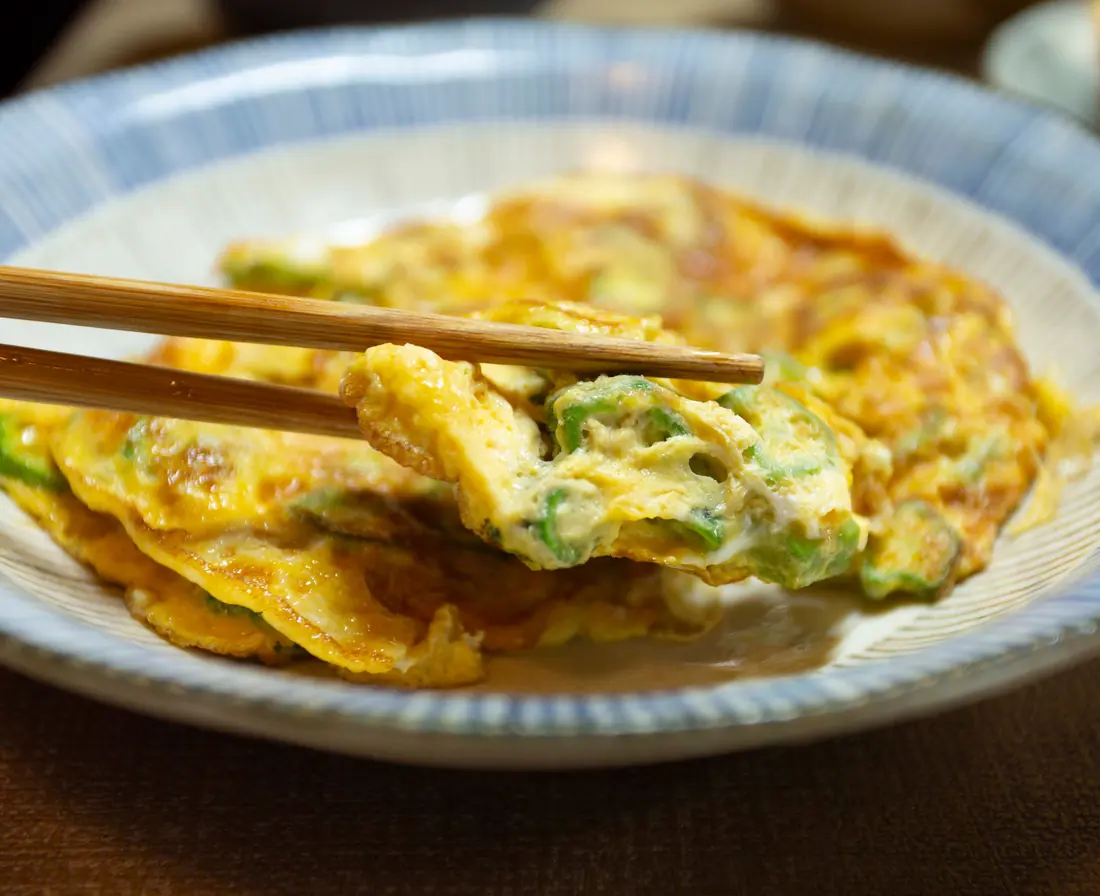
Step five is the whole technique. If the new layer does not flow under the existing roll it will not bond to it, and the finished block comes apart into separate sheets when it is cut.
Why it is served cold
It is cooked well in advance and rested, which is unusual for an egg dish and is part of what makes it work. A freshly cooked block is fragile and weeps; a few hours of rest lets the layers set together and the seasoning even out through them.
It also means the slice you get was made that morning rather than to order, which is why a counter’s tamago is a fair test of how it works when nobody is watching.
Why it is a test of a sushi chef
Traditionally it is the dish a diner orders to judge a counter, and the reasoning is sound. There are four ingredients, no sauce, no seasoning applied afterwards, and nothing that can be corrected once it is cooked.
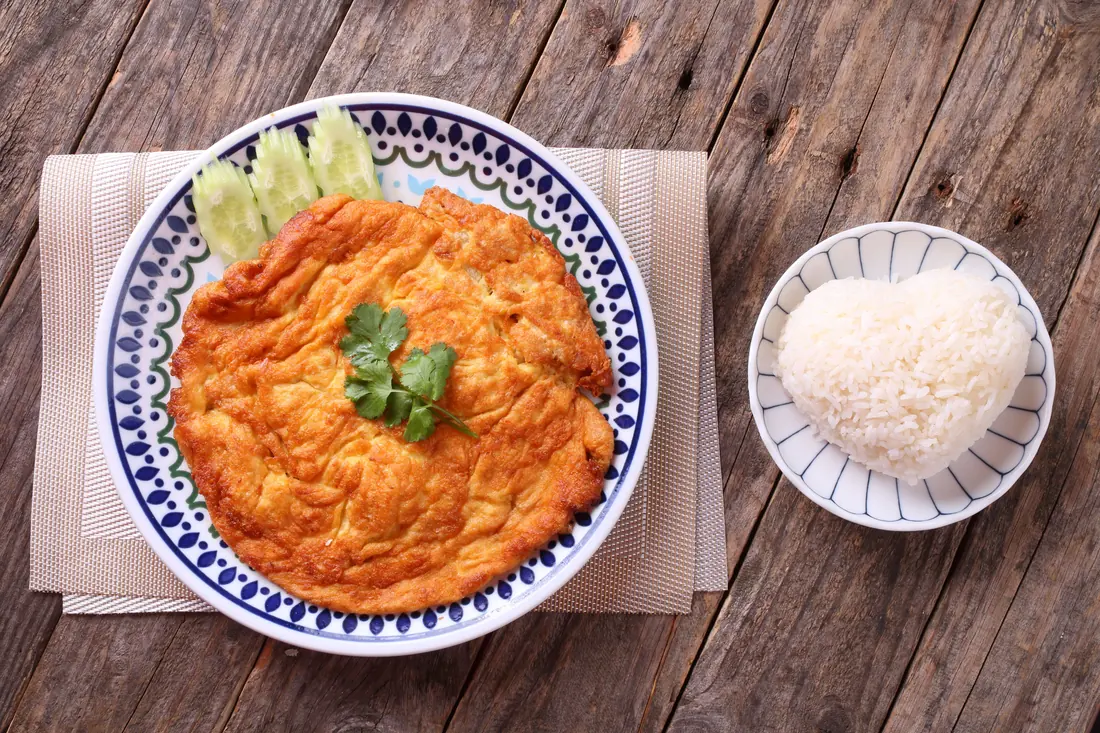
A good one is evenly coloured with no browning, uniformly layered with no gaps, smooth rather than rubbery, and holds together when cut. Every one of those is a consequence of heat control and attention, which is exactly what our piece on what a sushi chef is called describes as the point of the training.
Sweet or savoury depends on where you are
There is a genuine regional split, and it is not a small one. Kanto – the Tokyo side – leans sweet, with more sugar and a firmer, denser block. Kansai – around Osaka and Kyoto – leans savoury, with more dashi, less sugar, and a softer, wetter result that is closer to a custard than to a cake.
| Kanto style | Kansai style | |
|---|---|---|
| Sugar | More | Less or none |
| Dashi | Less | Considerably more |
| Texture | Firm, dense, sliceable | Soft, moist, delicate |
| Cooked | Browned edges tolerated | Pale, no colour at all |
| Eaten | As a sweet slice on rice | As a savoury side dish |
Sushi counters outside Japan almost universally serve the sweeter version, which is why the surprise for most first-time orderers is the sugar rather than the stock.
Where you meet it
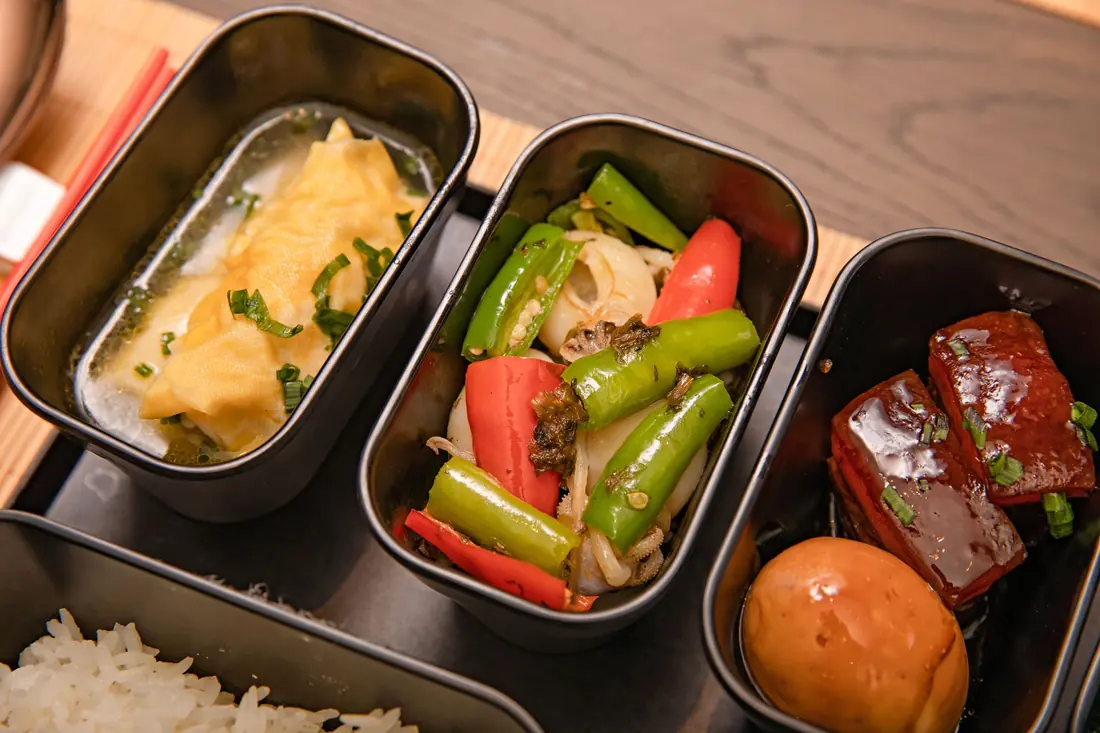
On rice as a topping, cut into rolls, sliced into a lunch box, or served on its own as a small plate. It is also one of the standard components of a mixed platter, where it does the job of a palate break between richer things.
It is the reliable order for anyone unsure about raw fish, and for children – it is cooked, mild, sweet and entirely unthreatening. Our cooked and raw comparison covers the rest of that ground, and the beginners guide covers where to start.
Buying it ready-made
Supermarkets with a Japanese section sell it chilled in blocks, and it is a reasonable product – denser and sweeter than a good fresh one, but perfectly usable sliced into a lunch box or over rice.
The thing to look at is the cut end. A good block shows distinct layers all the way through and no gaps between them. A block with a visible seam, or one that looks like a solid mass of egg rather than a roll, was made in a mould rather than rolled, and it eats like a very sweet omelette rather than like tamago.
It also does not freeze well. The texture goes watery and the layers separate, which is a shame given how convenient it would otherwise be.
Not to be confused with the other egg on the menu
Two other eggs turn up in the same cuisine and neither is this. A soft-boiled marinated egg, halved to show a jammy yolk, belongs to noodle soups. A thin plain omelette shredded over rice or noodles is a garnish rather than a dish.
Tamago is the thick layered block, served cold or at room temperature, and sweet. If it is warm and runny it is something else.
There is also a thicker, softer version served as a small hot dish in its own right, closer to a savoury custard and eaten with a spoon. It shares the name and the ingredients and almost nothing else, and it will never turn up on a plate of sushi.
For the rest of the counter, the beginners guide covers what to order first, the piece on the craft covers why this dish is the test, and the cooked and raw comparison covers the wider menu. The current selection is on the ordering page.
Frequently Asked Questions
What is tamago?
A Japanese omelette – tamagoyaki – made by rolling many thin layers of seasoned egg into a block, then slicing it. It is served cold or at room temperature.
Why is tamago sweet?
Sugar is part of the recipe, along with dashi, soy sauce and mirin. Sushi counter versions tend to be the sweetest.
Why is the pan rectangular?
A rectangular sheet of egg rolls into an even block that slices into identical pieces. A round pan gives a lopsided roll with thin ends.
Why is tamago used to judge a sushi chef?
It has four ingredients, no sauce and nothing that can be fixed after cooking, so the result shows heat control and attention directly.
Is tamago suitable for someone who does not eat raw fish?
Yes. It is fully cooked, mild and sweet, and it is one of the standard options for anyone avoiding raw fish.