
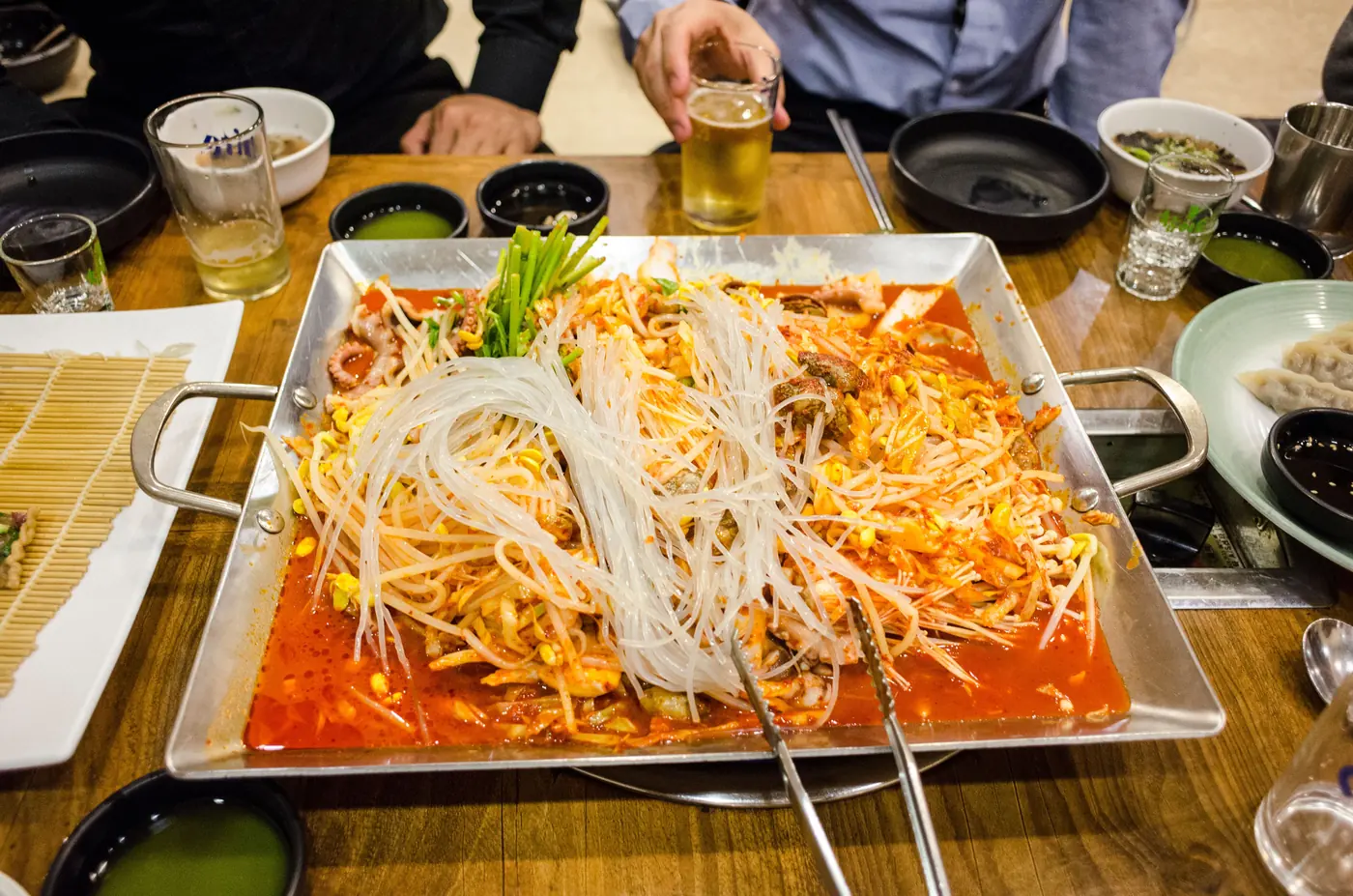
Both are on the same street, both are called Asian food, and both are frequently served by the same kitchen. The differences are real, but almost nothing written about them names an actual mechanism – so here are the ones you can see on a plate.
The short version
Chinese cooking is built around applying very high heat very quickly, and seasoning during the cooking. Japanese cooking is built around applying restraint, and seasoning at the table or at the end.
Everything else follows from those two habits.
Heat is the first difference
The defining Chinese technique is the wok over a fierce burner – food cooked in under two minutes, tossed constantly, with the flavour coming partly from the scorching itself.
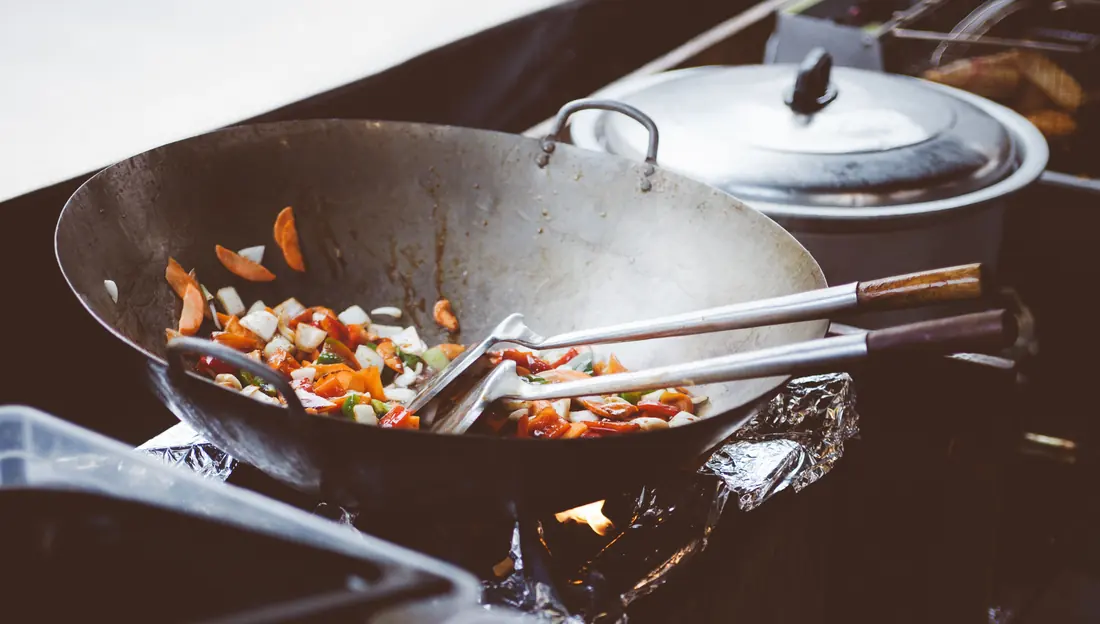
Japanese technique leans on gentler methods: simmering in seasoned stock, grilling over charcoal, steaming, and serving things raw. Our piece on why restaurant stir fry tastes different covers the heat side; there is no Japanese equivalent of it because the cuisine does not ask for one.
Britannica’s entry on Chinese cuisine covers how regionally varied that tradition is, which is worth stressing – Sichuan and Cantonese cooking differ from each other more than either differs from some of its neighbours.
Seasoning goes in at different moments
In Chinese cooking the sauce is usually part of the dish, added in the pan and reduced onto the food. What arrives is finished, and the seasoning is inseparable from the ingredient.
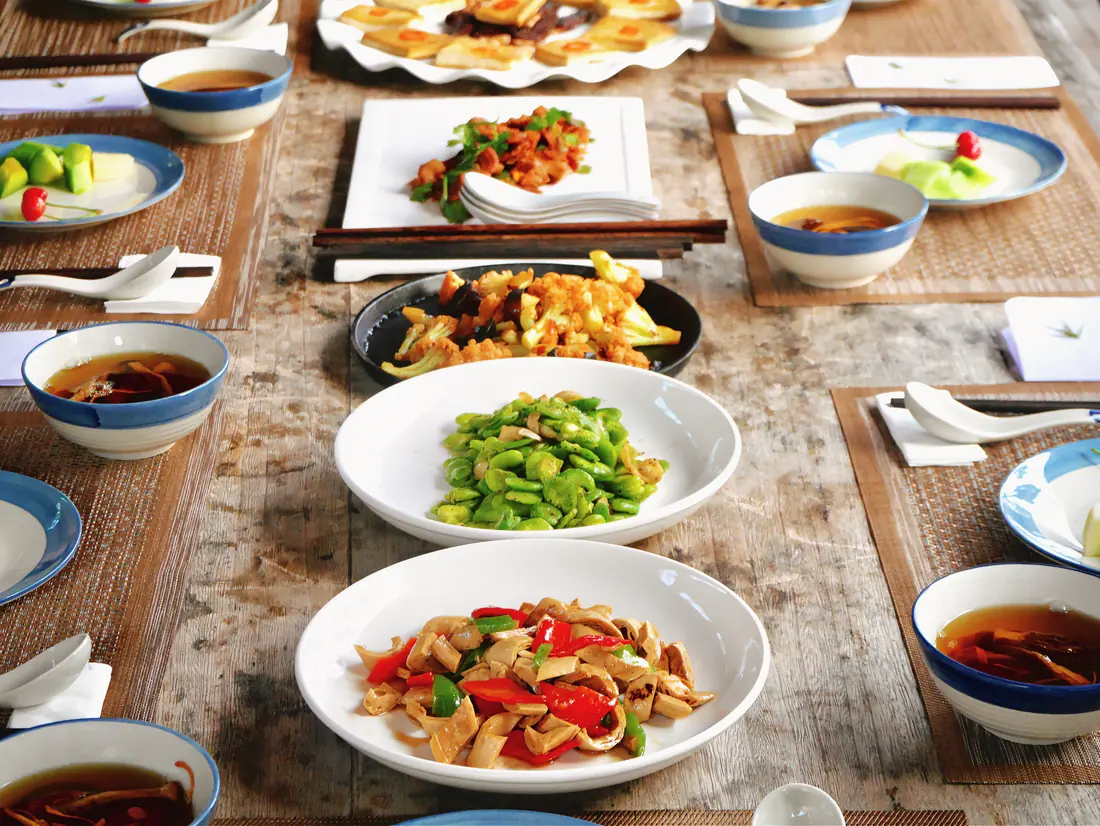
In Japanese cooking a great deal of the seasoning arrives separately – soy sauce in a dish, a citrus-soy dipping sauce, a pot of tea, a mound of grated radish. The diner assembles the final flavour, which is why the condiments on the table matter so much more in one cuisine than the other.
What the fat is
A small technical difference with large consequences. Chinese cooking uses a good deal of oil, and oil is a flavour carrier – aromatics are bloomed in it and the whole dish is coated.
Japanese cooking uses comparatively little, and where fat appears it is usually in the ingredient rather than added to it: fatty fish, or the richness of an egg. Dishes taste cleaner partly because there is less fat holding flavour on the palate.
The two stocks are different in kind
Chinese stock is generally long-simmered from bones and aromatics, in the way most Western stocks are. Japanese dashi takes minutes and is made from kelp and dried fish.
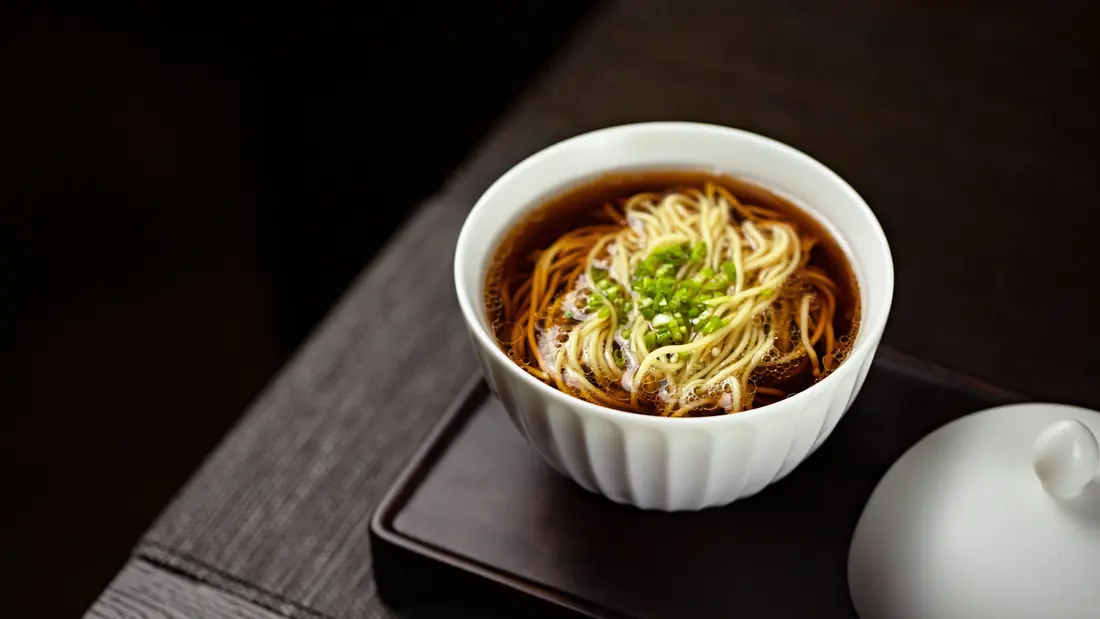
Our explainer on dashi covers why that matters: a stock made by steeping rather than simmering tastes of the sea and of savouriness rather than of meat, and it is the base of an enormous share of Japanese cooking.
What each cuisine does with fish
A clear divergence, and a useful one. Chinese cooking overwhelmingly cooks its fish – steamed whole with ginger and spring onion, braised, or fried – and treats freshness as something demonstrated by the cooking.
Japanese cooking developed an entire discipline around serving it raw, which requires a supply chain and a set of handling standards that cooking makes unnecessary. Our piece on sushi-grade fish covers what that actually involves.
So a Chinese menu with no raw fish on it is not being cautious, and a Japanese menu built around raw fish is not being reckless. They are two different answers to the same question about how to serve something perishable.
Side by side
| Chinese | Japanese | |
|---|---|---|
| Defining heat | Very high, very short | Gentle – simmer, grill, steam, raw |
| Fat | Generous, a flavour carrier | Sparing, usually in the ingredient |
| Seasoning applied | In the pan | At the end, or by the diner |
| Stock | Long-simmered bones | Kelp and dried fish, minutes |
| Aromatics | Garlic, ginger, spring onion, chilli | Kelp, bonito, soy, mirin |
| Plating | Communal platters, shared | Individual portions, composed |
The knife work is a discipline in one and not the other
Chinese cooking cuts everything to a uniform size before it goes anywhere near heat, because a two-minute stir fry only works if every piece cooks in two minutes. The prep is where the skill sits.
Japanese knife work is aimed at the finished appearance as much as the cooking – the angle of a slice of fish, the shape of a cut vegetable – because a great deal of the food is served without further processing. Our piece on what a sushi chef is called covers how central that is to the training.
How the food is served
Chinese meals are built to be shared – large plates in the middle, everyone reaching in, dishes chosen to balance each other across the table. Our piece on family style dining covers the logic.
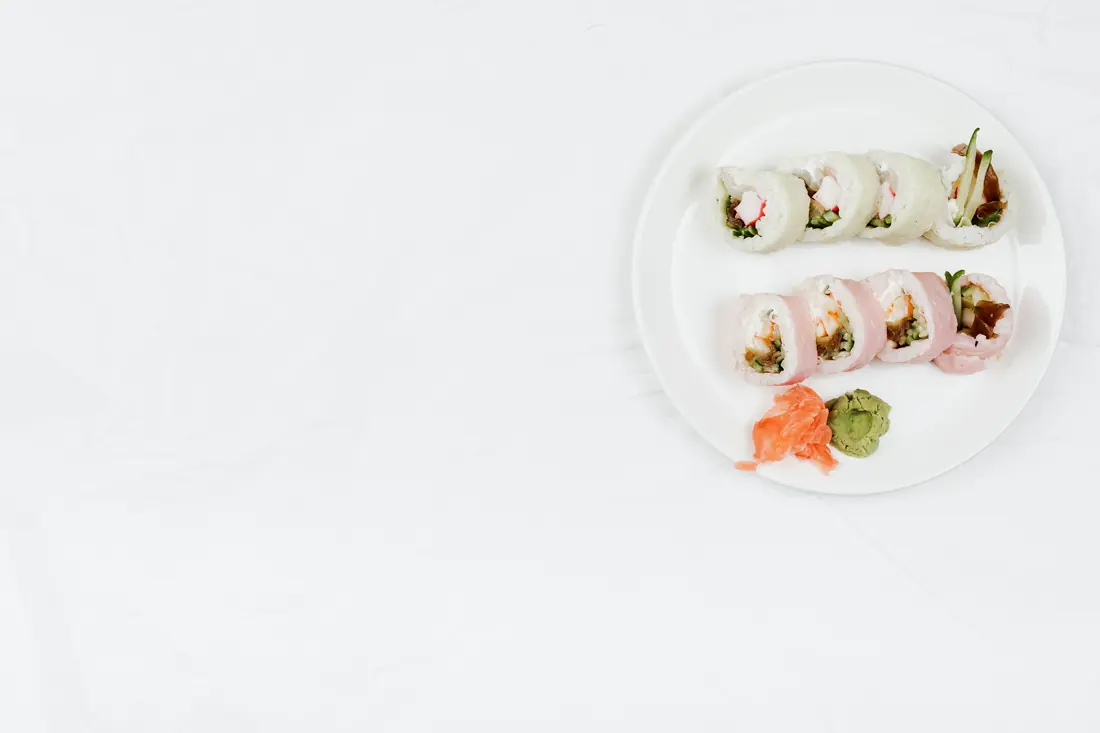
Japanese meals lean toward individual portions, composed as a set: rice, soup, a main, some pickles. Where a Chinese table is one large arrangement, a Japanese place setting is several small ones.
Rice is treated differently too
Both cuisines are built on rice, but they use different varieties for different purposes. Chinese cooking generally uses long-grain rice that cooks fluffy and separate, and it is often fried.
Japanese cooking uses short-grain rice that clings, served plain, and treated as the centre of the meal rather than a base for it. Our comparison of jasmine and sushi rice covers what makes them behave so differently.
Sweetness sits in different places
Both cuisines use sugar, and they use it for different purposes. Chinese cooking often balances sweetness against sourness and heat within a single sauce, which is why sweet-and-sour is a recognisable category rather than an aberration.
Japanese cooking uses sweetness more quietly and more constantly – mirin and sugar in a simmering liquid, in a glaze, in the rice itself. Our explainer on mirin covers the ingredient that does most of that work, and it is doing it almost everywhere without ever being the point.
Where the two overlap
More than either purist would like. Japan took noodles, dumplings, fried rice and the wok itself from China, and adapted all of them – which is why a Japanese menu and a Chinese one can share several dishes with different names.
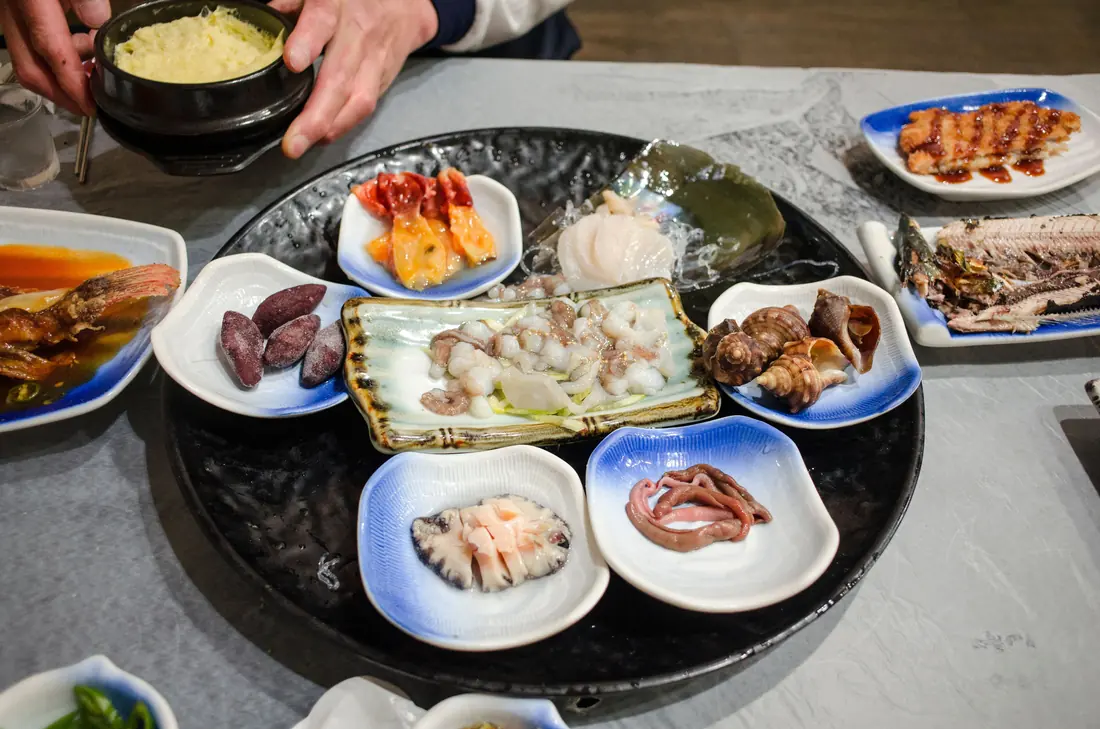
A restaurant serving both is not therefore doing anything odd. The overlap is historical, and the two traditions have been borrowing from one another for well over a thousand years.
The vegetables differ more than people notice
Chinese cooking uses a wide range of leafy greens and stem vegetables cooked hard and fast – bok choy, gai lan, water spinach – usually with garlic, and usually as a dish in their own right.
Japanese cooking uses a narrower set, more often simmered, pickled or served raw, and more often as a component of something else. A plate of plain greens with garlic is a Chinese dish; a small dish of pickles beside rice is a Japanese one, and our piece on tsukemono covers why that small dish is structural rather than decorative.
Which is which on a menu
A few reliable signals, if you are trying to place a dish.
- Sauce integral to the dish usually means Chinese. Sauce served separately usually means Japanese.
- Anything raw is almost certainly Japanese.
- Large shared platters lean Chinese; small individual dishes lean Japanese.
- Heavy garlic and chilli lean Chinese; kelp, soy and citrus lean Japanese.
For the dishes themselves, the hibachi piece covers a Japanese-American format, the noodle comparison covers one dish on each side of the line, and our guide to choosing covers ordering across the whole menu. The current selection is on the ordering page.
Frequently Asked Questions
What is the main difference between Japanese and Chinese food?
Chinese cooking applies very high heat quickly and seasons in the pan. Japanese cooking uses gentler methods and seasons at the end or at the table.
Is Japanese food less oily than Chinese food?
Generally yes. Chinese cooking uses oil as a flavour carrier; Japanese cooking uses comparatively little, with richness coming from the ingredient.
Why do both cuisines have noodles and dumplings?
Japan adopted noodles, dumplings and the wok from China and adapted them. The overlap is historical and goes back well over a thousand years.
Can one restaurant serve both properly?
Yes. The two traditions share ingredients and history, and many kitchens cook across both.
How can I tell which a dish belongs to?
Sauce cooked into the dish and shared platters lean Chinese. Sauce served separately, raw preparations and individual portions lean Japanese.