
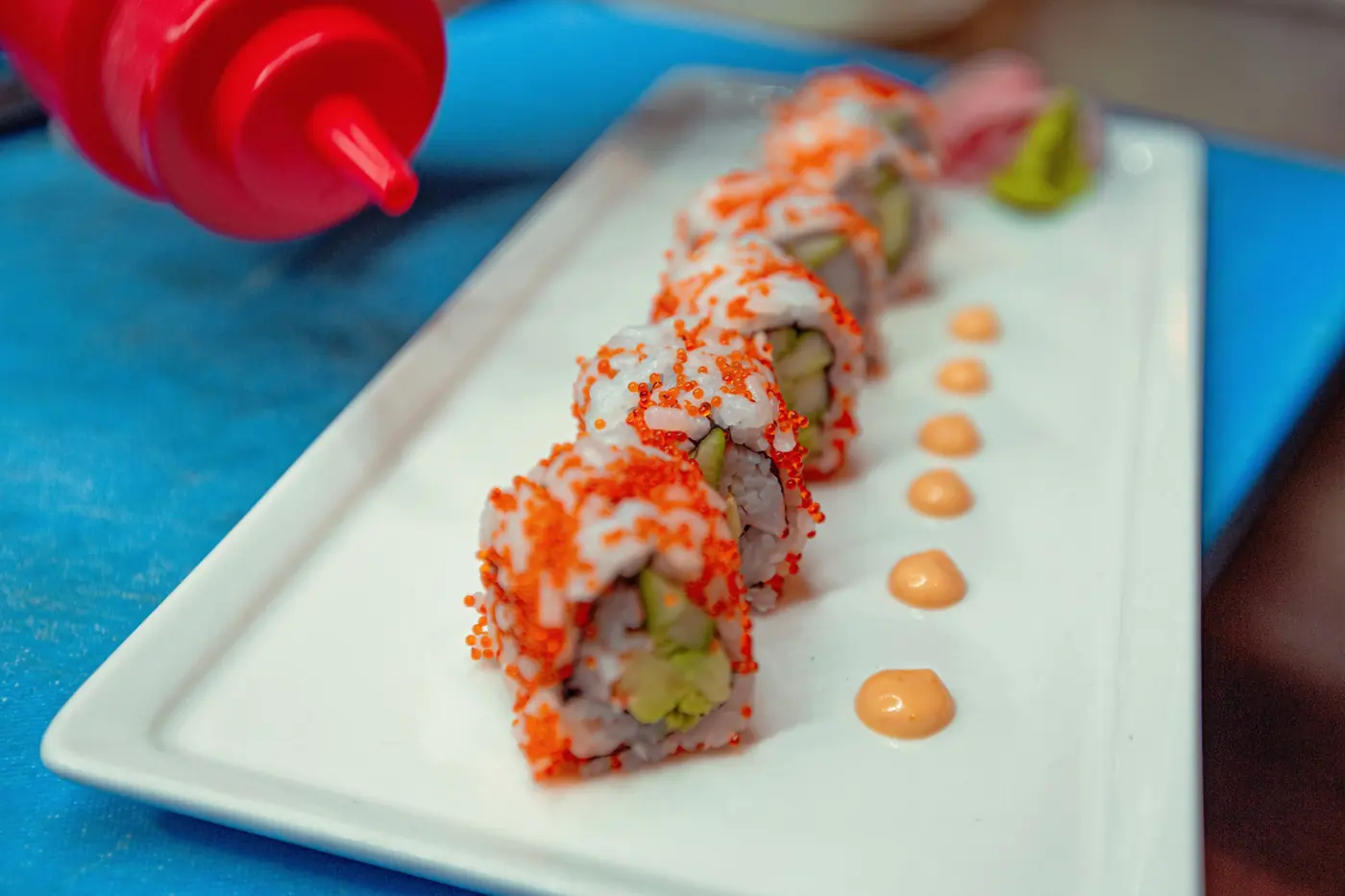
Pale orange, thick, drizzled in lines or dots across a roll, and by some distance the most common sauce on an American sushi menu. The name is doing it no favours: most people who avoid it because it says spicy would not find it hot.
The short answer
Spicy mayo is mayonnaise mixed with a chilli sauce. Usually Japanese mayonnaise and usually sriracha, in a ratio somewhere around three or four to one.
That is genuinely all of it. Some kitchens add sesame oil, a little rice vinegar, or a squeeze of citrus, but the two-ingredient version is what most rolls carry.
Why it is not very hot
Here is the part that matters when you are ordering. Capsaicin – the compound responsible for chilli heat – dissolves in fat, and mayonnaise is mostly fat. The same chilli sauce that is sharp on its own arrives blunted and slowed once it is suspended in an emulsion.
So the sauce reads as rich first, tangy second and warm somewhere at the end. It is the same reason dairy is the standard remedy for a mouthful of something too hot, applied in advance rather than afterwards.
If a menu says a roll is spicy and the only spicy thing about it is this sauce, the heat is mild. Our piece on spicy tuna makes the same point about the filling it is named for.
Japanese mayonnaise is not the same as American
The difference is real and it is why a home version made with a jar from a supermarket tastes thinner than the restaurant one.
| Japanese mayonnaise | American mayonnaise | |
|---|---|---|
| Eggs | Yolks only | Whole eggs |
| Acid | Rice vinegar | Distilled vinegar or lemon |
| Texture | Thicker, denser | Lighter, fluffier |
| Taste | Richer, faintly sweet, savoury | Sharper, more neutral |
| Sold as | A soft squeeze bottle | A jar |
Britannica’s entry on mayonnaise covers the emulsion itself – oil suspended in egg yolk, which is what makes any of this possible and what makes it split if you rush it.
The savoury depth in the Japanese version is not an accident either. It is one of the products that added glutamate turns up in routinely, which is worth knowing if you are trying to work out why a two-ingredient sauce tastes like more than two ingredients.
Where it came from
It is an American sushi bar invention, and a fairly recent one. It spread through the same wave of rolls that produced everything else on a modern specialty menu – the period when kitchens were building for people who wanted sushi to be richer, softer and less austere than the traditional version.
Sriracha did the rest. A single widely available chilli sauce with a consistent flavour meant every kitchen’s version tasted broadly like every other kitchen’s, which is how a two-ingredient sauce becomes a standard rather than a house recipe.
Sriracha is not the only option
Plenty of kitchens use something else, and it changes the sauce more than the quantity does.
- Sriracha – garlicky, sweet, vinegary. The default, and the reason most spicy mayo tastes faintly of garlic.
- Chilli garlic sauce – coarser, hotter, less sweet.
- Gochujang – fermented and deeper, giving a darker, savoury version.
- Chilli oil – a different proposition again, since it brings its own fat and its own toasted flavour.
Our piece on chilli oil covers why that last one behaves differently from a sauce – it is a seasoned fat rather than an emulsion, and mixing it into mayonnaise gives you something closer to a dressing.
Why it is orange rather than red
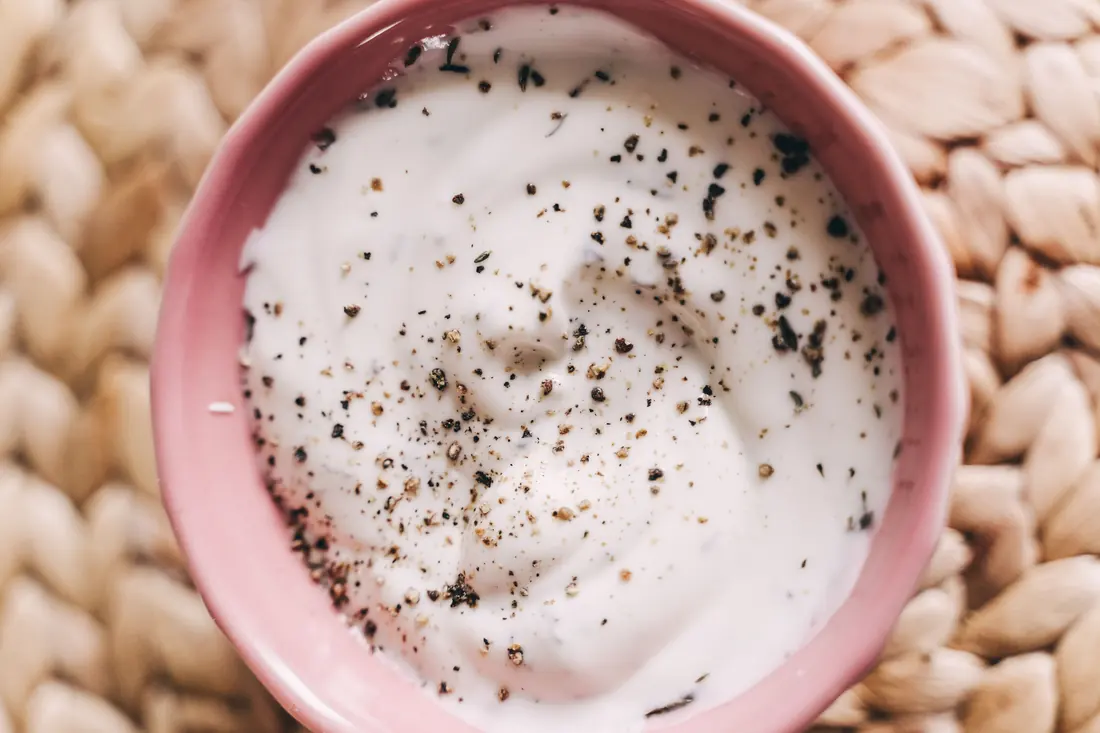
Because it is mostly mayonnaise. A red chilli sauce stirred into a large volume of pale emulsion lands somewhere between salmon pink and pale orange, and the exact shade tells you roughly how much chilli went in.
A deep orange sauce is a hotter one. A barely tinted cream is a sauce where the chilli is a rumour. It is the most reliable visual cue on the plate.
Colour is a better guide than the menu wording, too. Kitchens describe the same sauce as spicy, dynamite, volcano or house sauce with no consistency between them, and none of those words tells you a quantity. What is actually on the roll does.
Why it turns up on so many rolls
Because it solves several problems at once, which is unusual for something this simple.
- It adds fat. A roll built on lean fish and rice can taste austere, and fat is the quickest way to give it body.
- It binds. Mixed into chopped fish it holds the filling together, which is why the chopped-fish rolls are almost always dressed rather than plain.
- It carries flavour. Fat holds aromatic compounds and releases them slowly, so the seasoning lasts through the mouthful rather than arriving and leaving.
- It looks like something. A pale roll with a piped line across it reads as finished in a way a bare one does not.
The fourth reason is not trivial. A specialty roll is sold partly on appearance, and sauce is the cheapest way to make a cut roll look deliberate rather than merely assembled.
It is applied in the kitchen
Like the sweet dark glaze it often shares a roll with, spicy mayo is piped on after the roll is cut, from a squeeze bottle, in an amount the kitchen chose.
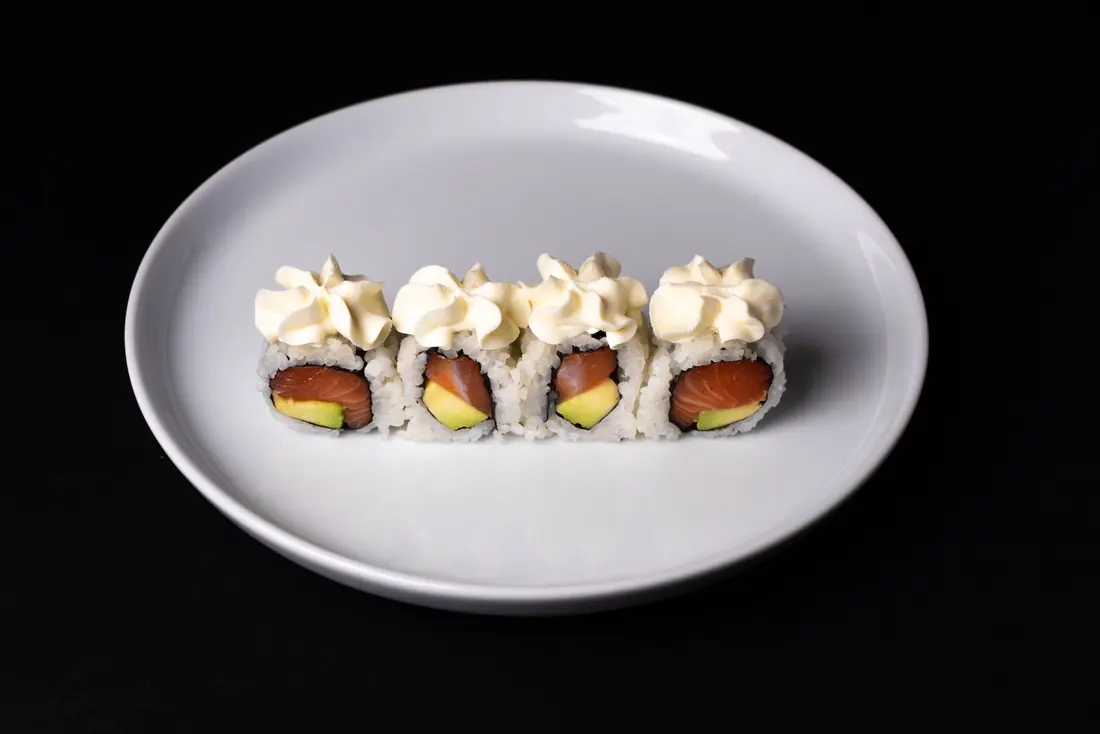
This is worth knowing because it is adjustable. Asking for it on the side, or lightly, is a completely ordinary request, and it changes a roll more than most substitutions would.
It splits if you rush it
Mayonnaise is an emulsion – oil suspended in egg yolk in droplets small enough to stay put – and emulsions are held together by nothing more than surface chemistry. Add liquid too quickly and the droplets merge, the suspension breaks, and what was a thick sauce becomes a greasy separated one.
Which is why chilli sauce goes in gradually and gets stirred rather than beaten. It is also why a homemade version left in a warm kitchen can separate on its own, and why the restaurant one lives in a cold squeeze bottle.
Making it at home
- Start with four tablespoons of Japanese mayonnaise.
- Add one tablespoon of sriracha and stir until the colour is even.
- Taste. Add chilli sauce a little at a time – it is easy to go past where you meant to.
- Optional: a few drops of sesame oil, or a squeeze of lime.
- Rest it for ten minutes before using; the flavour settles noticeably.
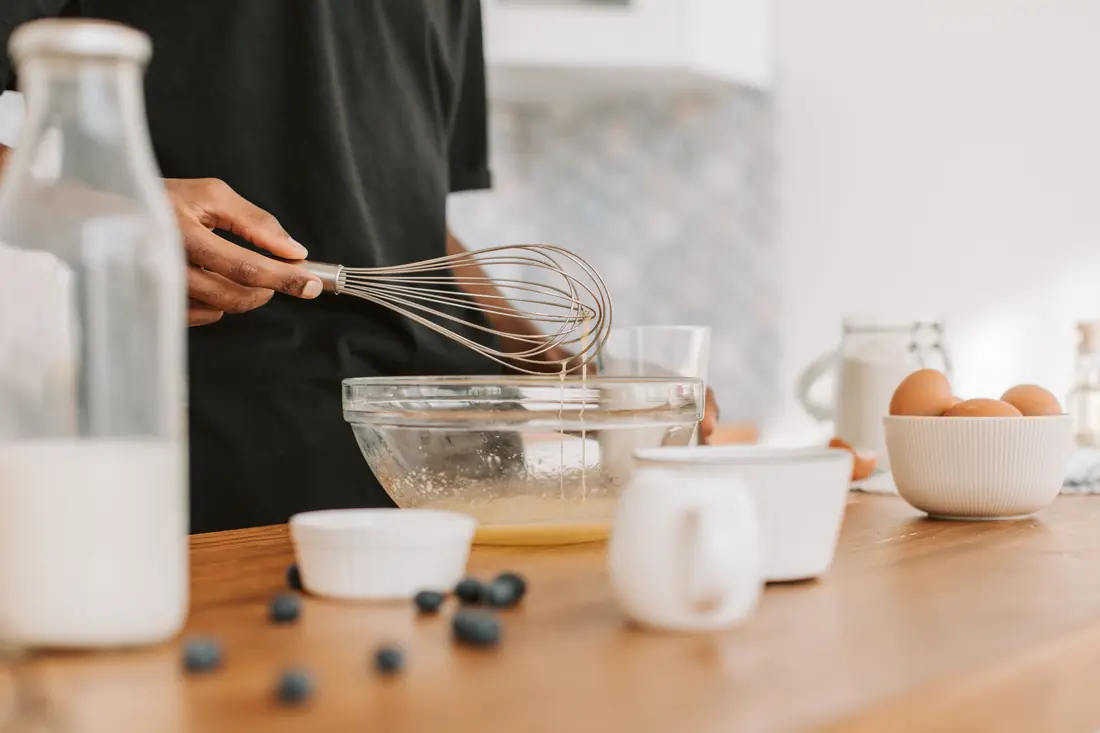
Use a squeeze bottle if you have one. Spooning it on gives you a blob where the kitchen version gives you a line, and the difference is more than cosmetic – a thin line seasons every piece rather than one.
For the rolls it turns up on, the specialty roll guide covers how sauce fits into the build, the condiments piece covers what is on the table instead, and the spicy tuna explainer covers the filling with the same misleading name. The current selection is on the ordering page.
Frequently Asked Questions
What is spicy mayo made of?
Mayonnaise and a chilli sauce, usually Japanese mayonnaise and sriracha at roughly three or four to one. Some versions add sesame oil or citrus.
Is spicy mayo actually spicy?
Mildly. Capsaicin dissolves in fat, so mayonnaise blunts the heat – the sauce reads as rich and tangy first, with warmth at the end.
Why is spicy mayo orange?
It is mostly pale mayonnaise with a small amount of red chilli sauce stirred in. The deeper the orange, the more chilli sauce went in.
What is the difference between Japanese and American mayonnaise?
Japanese mayonnaise uses egg yolks only and rice vinegar, making it thicker, richer and slightly sweet. American mayonnaise uses whole eggs and is lighter and sharper.
Can I ask for less spicy mayo on a roll?
Yes, and it is an ordinary request. It is applied by the kitchen from a squeeze bottle, so on the side or lightly are both easy to accommodate.