
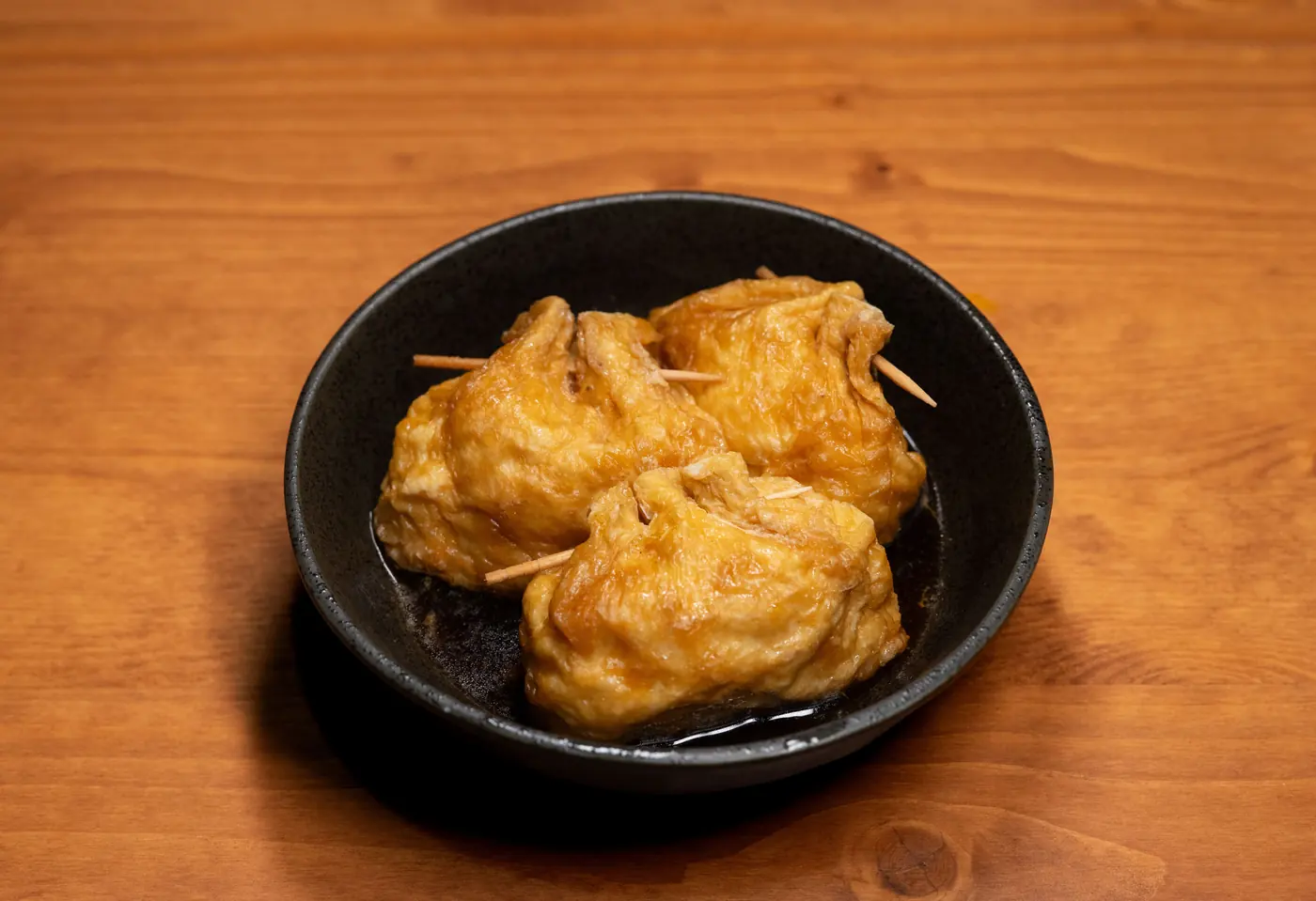
A soft brown pouch, faintly sweet, packed with seasoned rice and eaten in two bites. It sits on sushi menus without any of the usual explanation, and most people order everything around it.
The short answer
Inari is a pouch of fried tofu, simmered in a sweet soy broth and stuffed with sushi rice. The full name is inarizushi, and it counts as sushi for the same reason everything else does: the rice is seasoned with vinegar.
There is no fish in it at all, raw or otherwise.
How a block of tofu becomes a bag
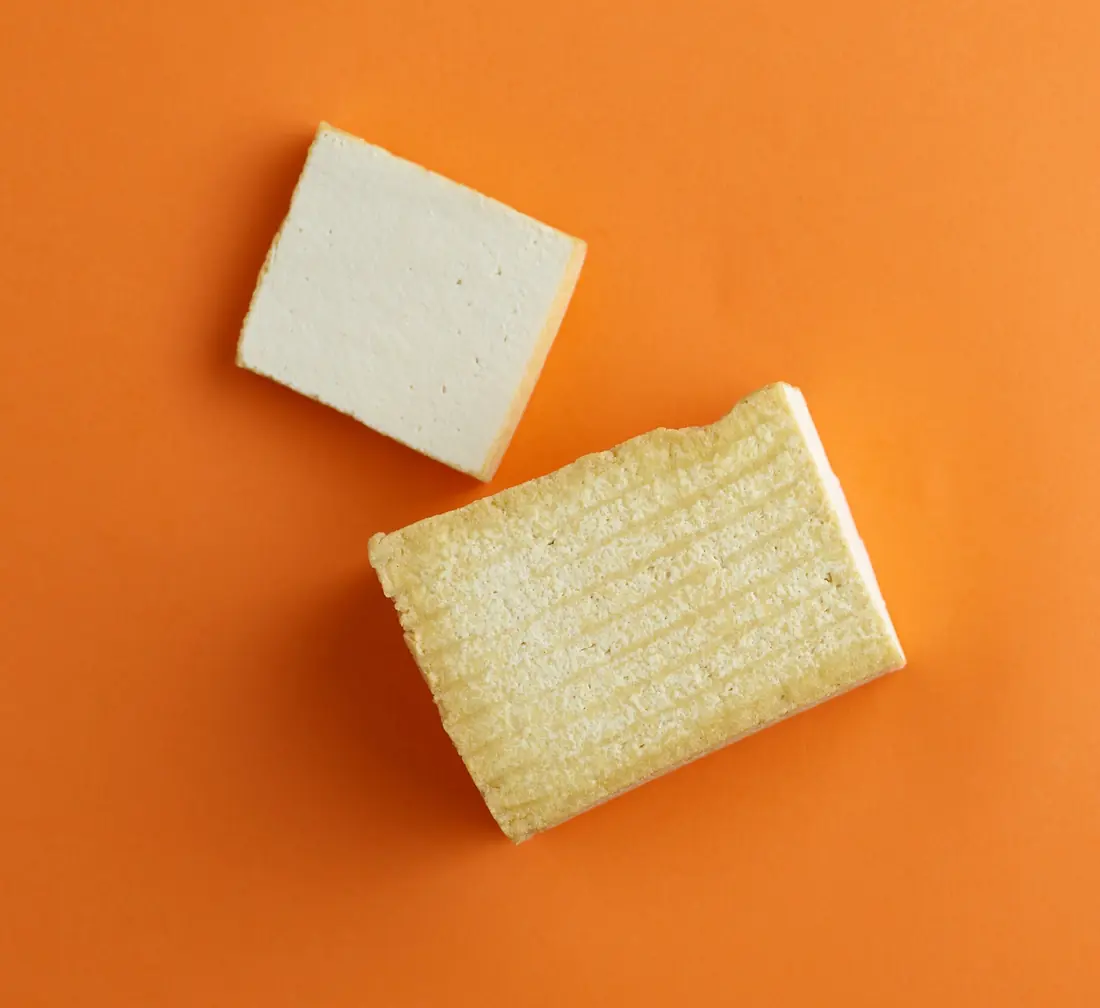
This is the part nothing explains, and it is the whole trick. The pouch is aburaage – thin slices of tofu, fried twice.
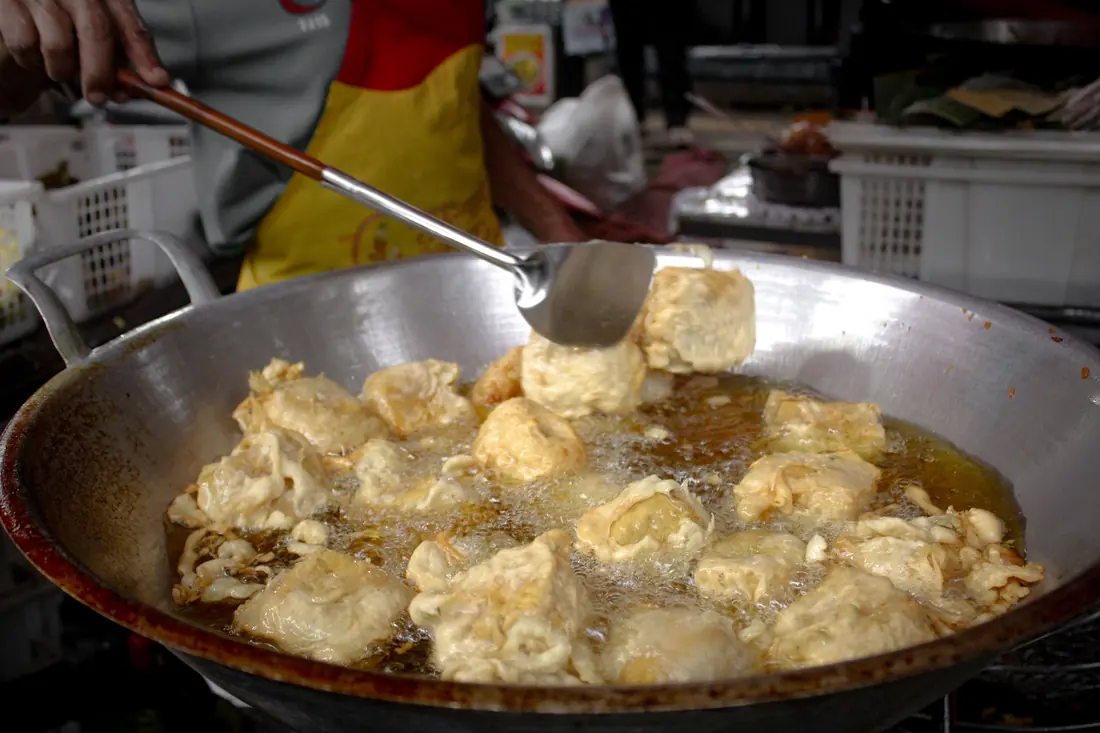
The first fry is at a lower temperature, which drives moisture out and sets the surface. The second is hotter, and the steam still trapped inside expands fast enough to inflate the slice like a balloon, leaving it hollow.
Once it cools it stays hollow, so the cooled slice can be cut in half and opened into a pocket. Britannica’s entry on tofu covers the base ingredient, which our own explainer on tofu covers in more detail – this is the same curd, treated far more aggressively.
Then it is simmered
A fried pouch on its own tastes of oil and very little else. What makes inari taste the way it does is the second stage: the pouches are blanched to remove surface oil, then simmered in dashi, soy sauce, sugar and mirin until they have soaked up the liquid completely.
They come out sweet, savoury and heavy, and they are squeezed gently before filling so they do not flood the rice. The sweetness is pronounced – closer to a glaze than a seasoning – and it is the reason the dish divides people.
The rice inside
Ordinary sushi rice, sometimes plain and sometimes mixed through with something: toasted sesame, chopped pickle, carrot, or shredded egg.
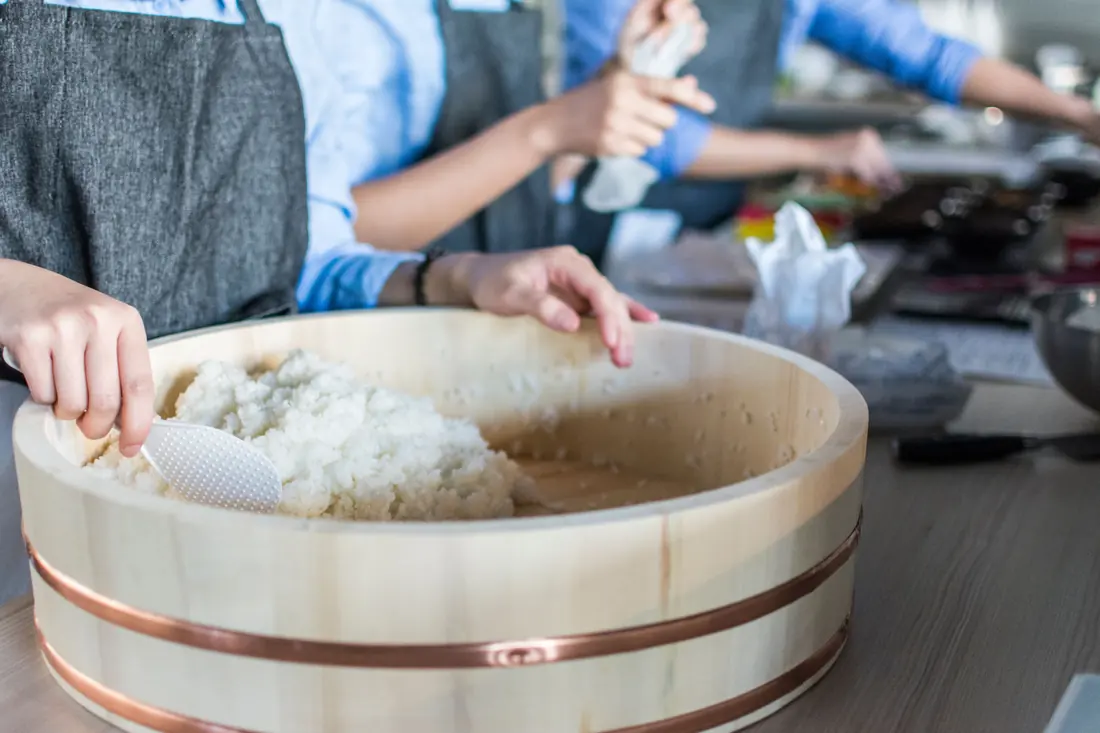
The rice is packed in loosely rather than pressed. A pouch stuffed tight splits when picked up, and the texture goes dense in a way that fights the softness of the wrapper.
The name comes from a shrine
Inari is a Shinto deity associated with rice, agriculture and prosperity, whose shrines are guarded by fox statues. Fried tofu is the traditional offering left at them, and the dish takes its name from that association.
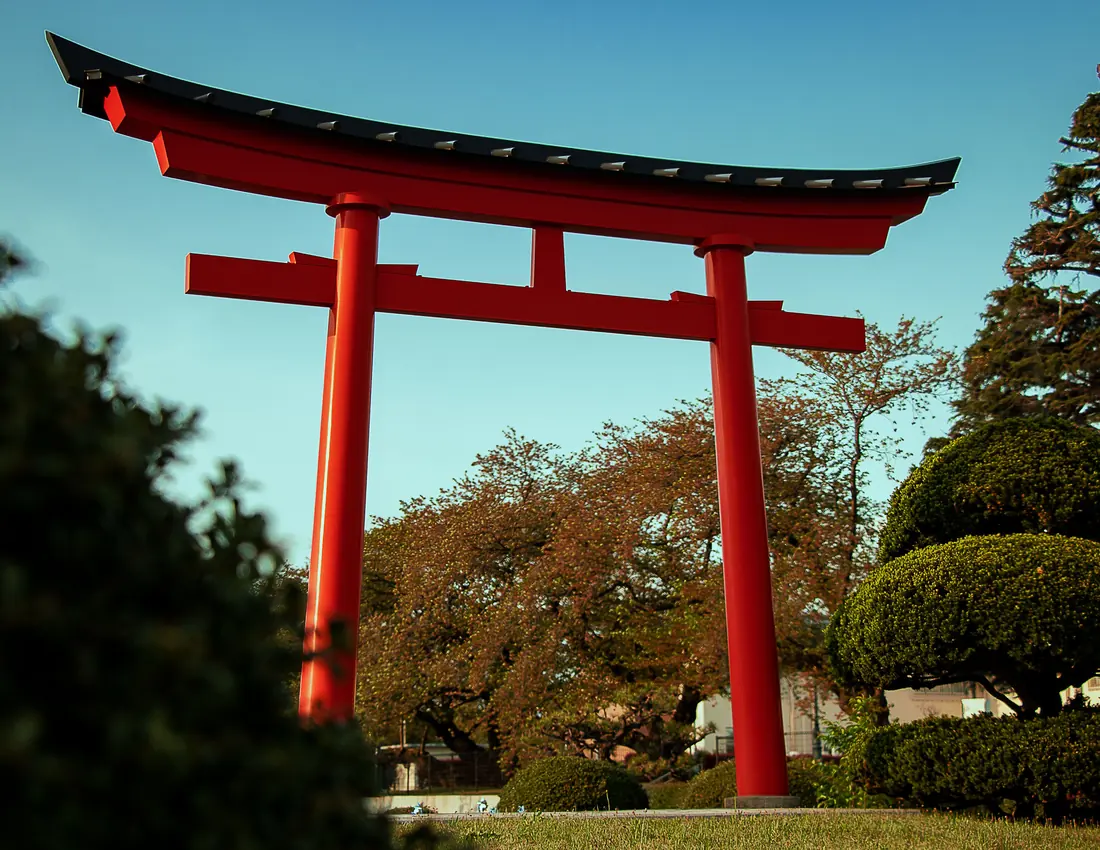
The connection also explains a nickname the dish still carries in places – fox sushi – and it is one of the few sushi items whose name has nothing to do with what is in it.
It is one of the oldest things on the menu
Inarizushi predates most of what a modern sushi counter sells. It was street food in Edo-period Japan, cheap and portable, sold from stalls at a time when the raw-fish sushi we now think of as traditional was itself a relatively new fast food.
That history shows in the design. It needs no refrigeration for the length of a journey, it is eaten with the fingers, it holds together when carried, and it is made from ingredients that keep. Every one of those was a requirement rather than a style choice.
Shapes vary by region
| Kanto (Tokyo side) | Kansai (Osaka side) | |
|---|---|---|
| Shape | Rectangular, like a small cushion | Triangular |
| Said to resemble | A rice bale | A fox’s ear |
| Rice | More often plain | More often mixed with vegetables |
| Seasoning | Sweeter | Lighter |
How to eat it
In one or two bites, with your fingers or with chopsticks, and without soy sauce. The pouch is already seasoned – it has been simmered in a sweet soy broth – so dipping it adds salt to something that has plenty.
It is also not a dish to eat cold from a fridge. The pouch firms up and the rice goes hard, and twenty minutes at room temperature makes a substantial difference to both.
Why it travels so well
Inari is the most practical thing on a sushi menu. It contains no raw fish, it is eaten at room temperature by design, and the pouch holds the rice together so it survives being carried.
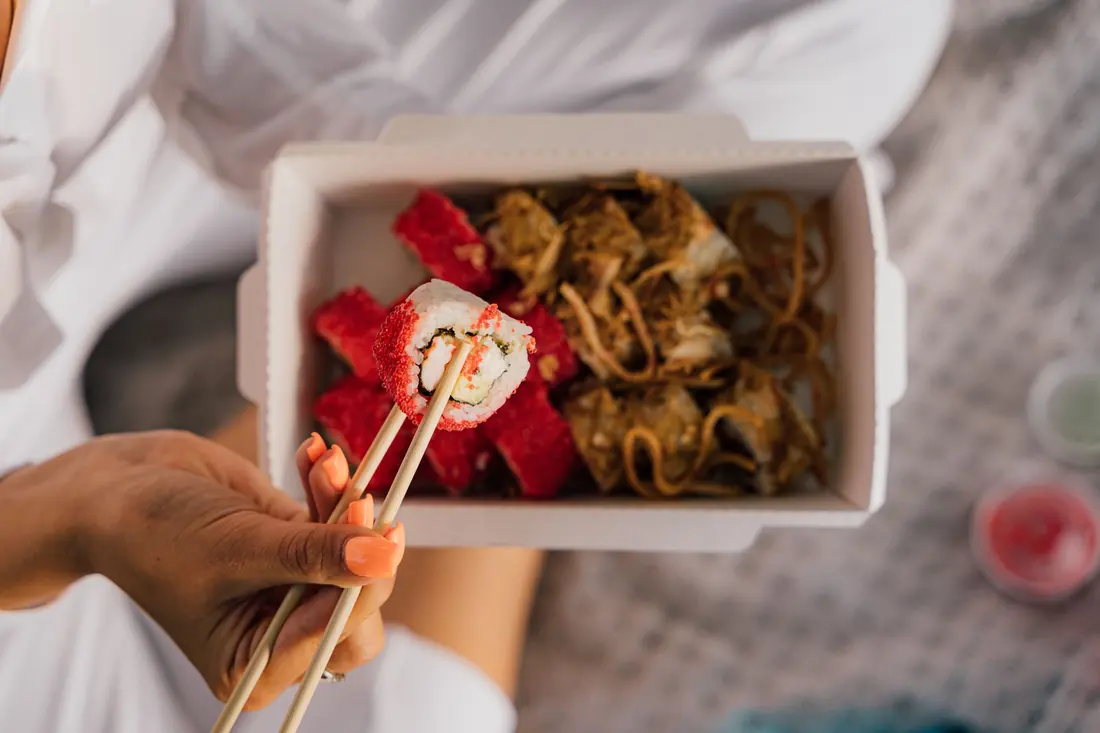
That is why it turns up in packed lunches and at picnics far more than in a restaurant, and why it is a sensible thing to order for a takeaway journey where a delicate roll would suffer. Our guide to ordering as a beginner covers the rest of the cooked end of a menu.
The same pouch turns up elsewhere
Aburaage is an ingredient in its own right rather than only a container. Sliced into strips it goes into miso soup, where it soaks up broth and turns silky; cut smaller it is folded through rice dishes and simmered vegetables.
It behaves unlike anything else in a soup, which is why it is worth knowing about. It is fried, so it carries fat. It is hollow, so it holds liquid. And it is tofu, so it contributes almost no flavour of its own. A few strips make a thin broth taste considerably richer without changing what it tastes of.
Making it at home
- Buy aburaage – sold frozen or chilled in East Asian groceries, usually in packs of six or eight.
- Pour boiling water over the slices to wash off surface oil, then press them gently between your hands.
- Simmer in dashi, soy sauce, sugar and mirin for ten to fifteen minutes, until the liquid has nearly gone.
- Let them cool in the pan – most of the absorption happens as they cool rather than as they cook.
- Cut each slice in half, open it into a pocket, fill loosely with seasoned rice and fold the edges over.
Making the pouch from scratch is possible and not worth it. Getting a domestic fryer to puff a tofu slice reliably is a difficult piece of temperature control, and the bought ones are good.
Why it is rarely made in-house
Almost no restaurant fries its own aburaage, and there is no shame in that. The double-fry is a specialist process, tofu shops have done it for centuries, and the bought product is consistent in a way a kitchen improvising it would not be.
What a good kitchen does control is the simmer. The difference between a decent inari and a poor one is almost entirely in that broth – its sweetness, and whether the pouch was given long enough to absorb it properly.
Who it suits
Anyone avoiding raw fish, anyone who finds seaweed off-putting, vegetarians where the simmering broth is made without fish stock, and children, who tend to like it immediately because it is sweet and soft.
The one thing worth checking is that broth. Dashi is usually made with dried fish, so a pouch simmered in standard dashi is not vegetarian even though nothing in it looks like fish. Kitchens vary, and it is a question for the restaurant rather than a general guide.
For the rest of the cooked menu, the tofu explainer covers the ingredient it starts from, the rice comparison covers what goes inside, and the beginners guide covers where to start. The current selection is on the ordering page.
Frequently Asked Questions
What is inari?
A pouch of fried tofu simmered in sweet soy broth and filled with seasoned sushi rice. It contains no fish.
How is the tofu pouch made hollow?
Thin tofu slices are fried twice. The second, hotter fry turns the trapped moisture to steam, which inflates the slice and leaves it hollow when it cools.
Why is inari sweet?
The pouches are simmered in dashi, soy sauce, sugar and mirin until they absorb the liquid, so the sweetness is in the wrapper rather than the rice.
Is inari vegetarian?
The pouch and rice are, but the simmering broth usually contains dashi made with dried fish. Ask the restaurant rather than assuming.
Why is it called inari?
After the Shinto deity Inari, whose shrines are guarded by foxes and where fried tofu is the traditional offering.