
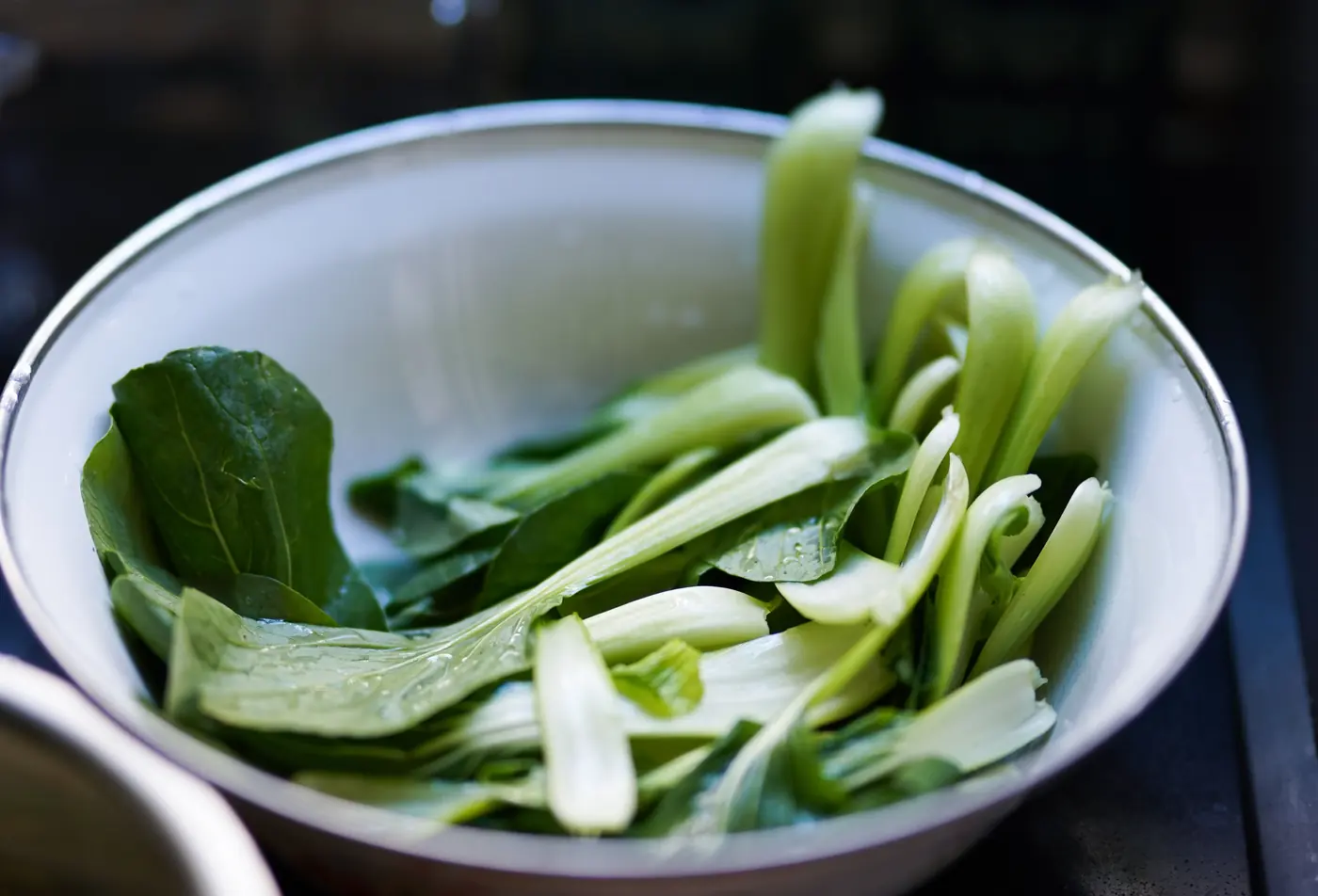
It is the green thing in the soup, and it turns up in noodle bowls and on stir-fry plates across half a dozen cuisines. Bok choy is one of the most common vegetables on an Asian menu and one of the least often named on it.
What is bok choy?
Bok choy is a leafy green in the cabbage family, with thick pale stems and dark green leaves growing from a single base. It is sometimes spelled pak choi, and both spellings describe the same plant.
It is a Chinese cabbage rather than a lettuce, though it looks closer to the latter; Britannica’s entry on Chinese cabbage covers how the group divides. Unlike a European cabbage it does not form a tight head – the stems grow outward in a loose bunch.
Two vegetables in one
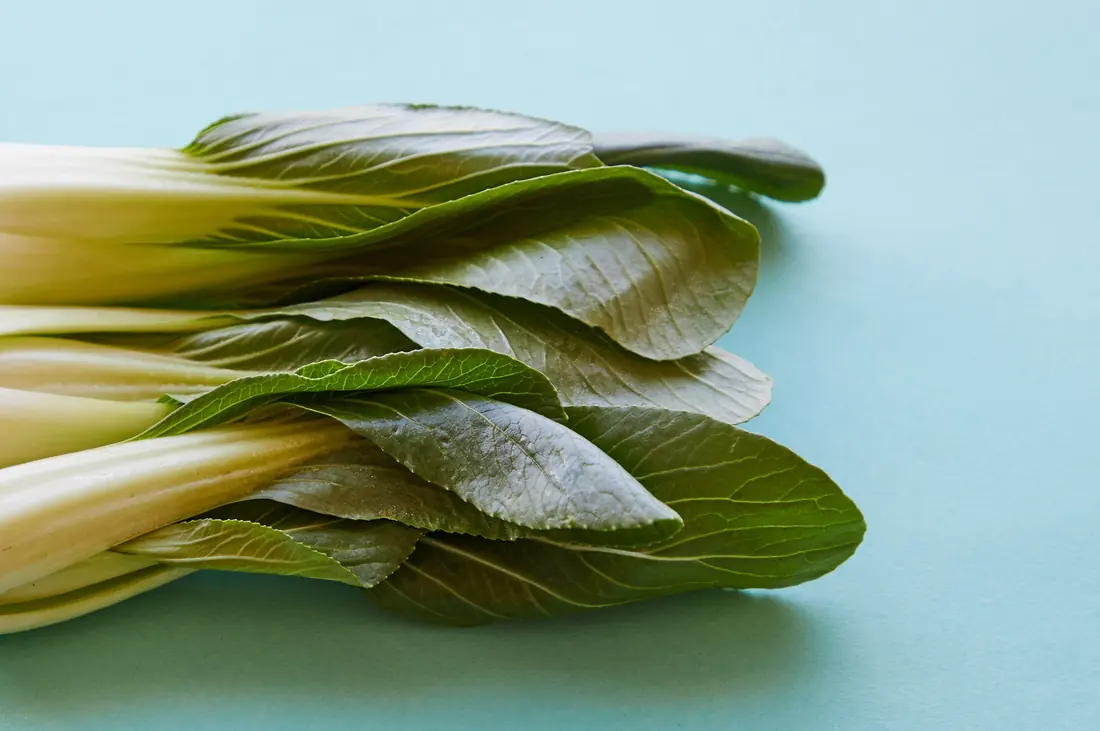
The single most useful thing to know is that the stem and the leaf behave completely differently, and a kitchen treats them as separate ingredients.
- The stems are thick, pale and full of water. They stay crisp under heat, take longer to cook, and taste faintly sweet.
- The leaves are thin and dark. They wilt in seconds, taste more mineral and slightly peppery, and collapse to almost nothing.
This is why you will often see the stems sliced away and started first, with the leaves thrown in at the end. It is also why bok choy that has been cooked as one piece often arrives with soggy leaves and undercooked stems.
What it tastes like
Mild, faintly sweet and clean, with a slight cabbage note that is much gentler than an actual cabbage. There is a mustardy edge to the leaves that comes out more when raw and softens with cooking.
It is one of the more approachable green vegetables for exactly that reason. There is very little bitterness in it, and the texture does most of the work.
Baby bok choy is not just small
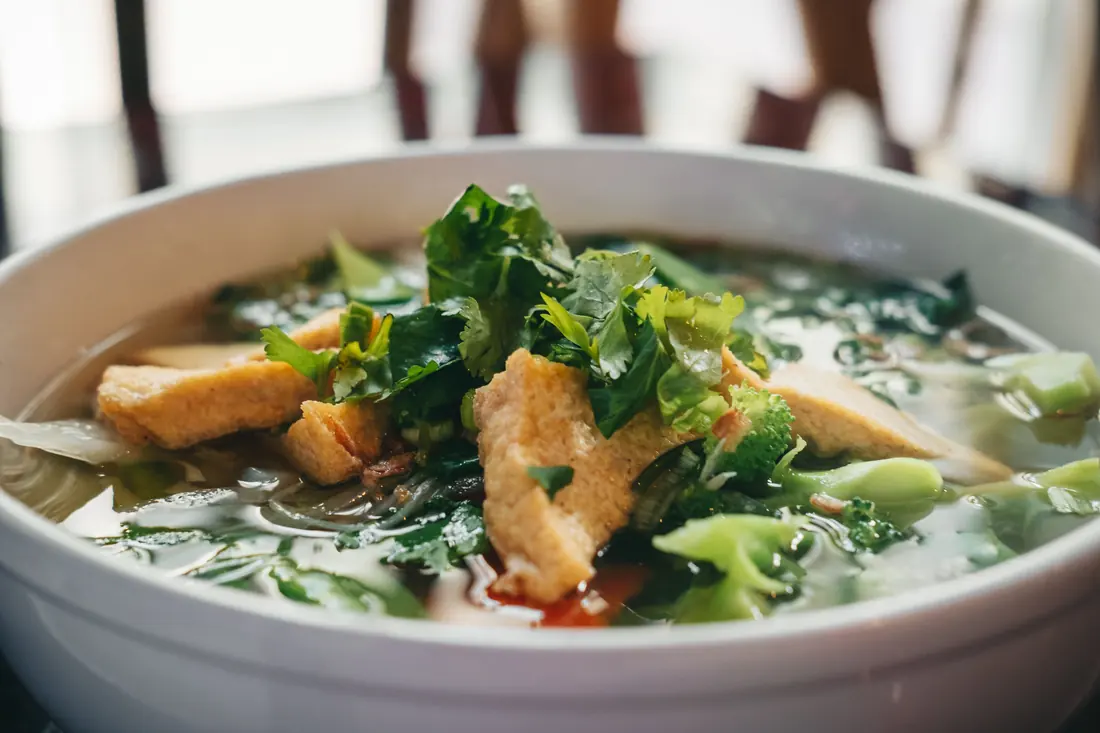
You will see both the full-sized version and a much smaller one, usually labelled baby bok choy. The difference is not only size – the small ones are more tender throughout, with a narrower gap between how the stem and leaf cook.
That makes them easier to serve whole or halved, which is why the little ones turn up in restaurant presentations while the large ones are more often cut up and mixed through a dish.
How to pick a good one
Bok choy shows its age faster than most greens, and the signs are easy to read.
- Stems should be firm and pale, with no brown along the cut base and no softness when squeezed.
- Leaves should be upright rather than drooping, and dark green rather than yellowing.
- The base should be tight, with the stems held closely together rather than splayed open.
It keeps for about a week in a fridge, loosely wrapped rather than sealed. Sealed in plastic it sweats and the leaves go slimy well before the stems give out.
Where you will meet it
| Dish | How it is used | What to expect |
|---|---|---|
| Noodle soup | Blanched, added at the end | Crisp stems, softened leaves |
| Stir fry | Cut and cooked with the rest | Browned edges, still crunchy |
| Steamed and dressed | Whole or halved, with sauce | Very tender, mild |
| Hot pot | Dipped briefly by the diner | Whatever texture you choose |
| Rice bowls | As a green alongside | A crisp counterpoint |
Is the whole thing edible?
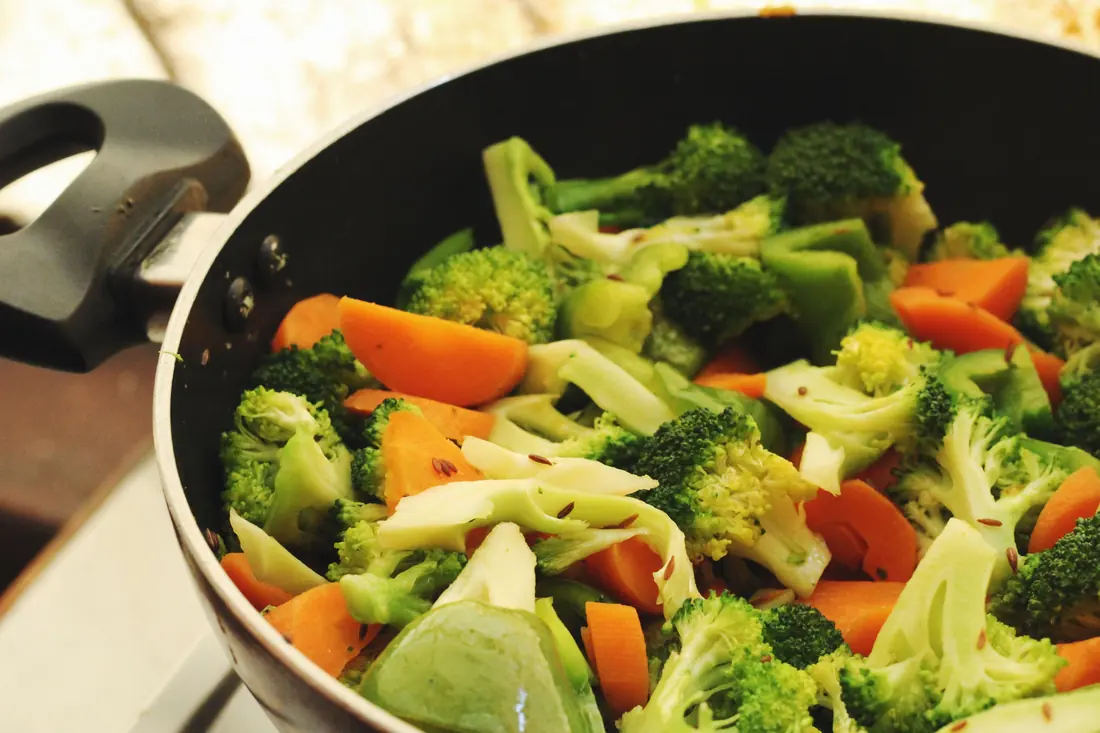
Yes, all of it – stems, leaves and the base once trimmed. Nothing needs peeling and nothing is discarded except the very bottom of the root end.
It does need washing carefully, because the way the stems grow from a single base traps grit at the bottom. The usual approach is to cut the base off and separate the stems rather than trying to rinse a whole head.
Its shape helps too. A head of bok choy separates into pieces that are already roughly the right size for a bowl, so a kitchen gets usable portions with very little knife work – which matters when a vegetable is going into dozens of dishes a night.
The related greens on the same menu
Several other Asian greens turn up in similar roles, and they are easy to confuse.
- Napa cabbage – a pale, tightly furled cabbage from the same family, much larger and sweeter, used in hot pots and pickles.
- Choy sum – thinner stems with small yellow flowers, more slender and slightly more bitter.
- Gai lan – Chinese broccoli, thick-stemmed with broad leaves and a definite bitterness.
Bok choy is the mildest of the group, which is why it turns up most often as a component in dishes where the green is not meant to be the loudest thing on the plate.
Raw or barely cooked
Bok choy is usually cooked, but it does not have to be. Shredded finely, the stems are crisp and juicy enough to work in a salad, closer to a mild cabbage than to a leaf.
The leaves are less successful raw – they are thin, and without heat they stay a little tough and taste more strongly of mustard. If you are using it raw, the stems are the part worth using.
A middle option that works well is a brief blanch: thirty seconds in boiling water, then straight into cold. The colour becomes vivid, the stems keep almost all their crunch, and the leaves lose their raw edge.
Why restaurants use so much of it
It suits restaurant cooking unusually well. It cooks in under two minutes, it holds its colour brilliantly, it does not release much water into a pan, and it looks like a vegetable on the plate rather than dissolving into the dish.
It is also available year-round and cheap, which matters when a vegetable is going into a great many dishes as a component rather than being the point of any of them.
It is also one of the few vegetables that is genuinely better cooked fast than slow. Long cooking turns the stems limp without adding anything, so there is no gentle-braise version that improves on a hard two-minute sear.
If you are cooking it
- Cut the base off and separate the stems, then wash thoroughly – grit collects where they join.
- Separate stems from leaves if the plant is large. Slice the stems, leave the leaves whole.
- Start the stems first, in a hot pan, for about two minutes.
- Add the leaves for the last thirty seconds, no longer.
- Season at the end. Salt early draws water out and the stems lose their crunch.
Baby bok choy can skip the separation step. Halved lengthways and put cut-side down in a hot pan, it browns on the cut face while the leaves steam above it.
For the dishes it turns up in, our guide to pho covers the noodle soup it appears in, the noodle comparison covers the stir-fried versions, and the fish-free guide leans on vegetable dishes heavily. The current selection is on the ordering page.
Frequently Asked Questions
What is bok choy?
A leafy green in the cabbage family with thick pale stems and dark leaves. It is sometimes spelled pak choi, and it is a Chinese cabbage rather than a lettuce.
Do you eat the stems of bok choy?
Yes. The whole plant is edible. The stems stay crisp and take longer to cook than the leaves, which is why they are often started first.
What does bok choy taste like?
Mild, faintly sweet and clean, with a slight mustardy note in the leaves. Much gentler than a European cabbage.
What is the difference between bok choy and baby bok choy?
Size and tenderness. The small ones are tender throughout, so they can be served whole or halved; larger ones are usually cut up.
Why is my bok choy soggy?
Usually because the leaves and stems were cooked for the same length of time. The leaves need seconds while the stems need a couple of minutes.