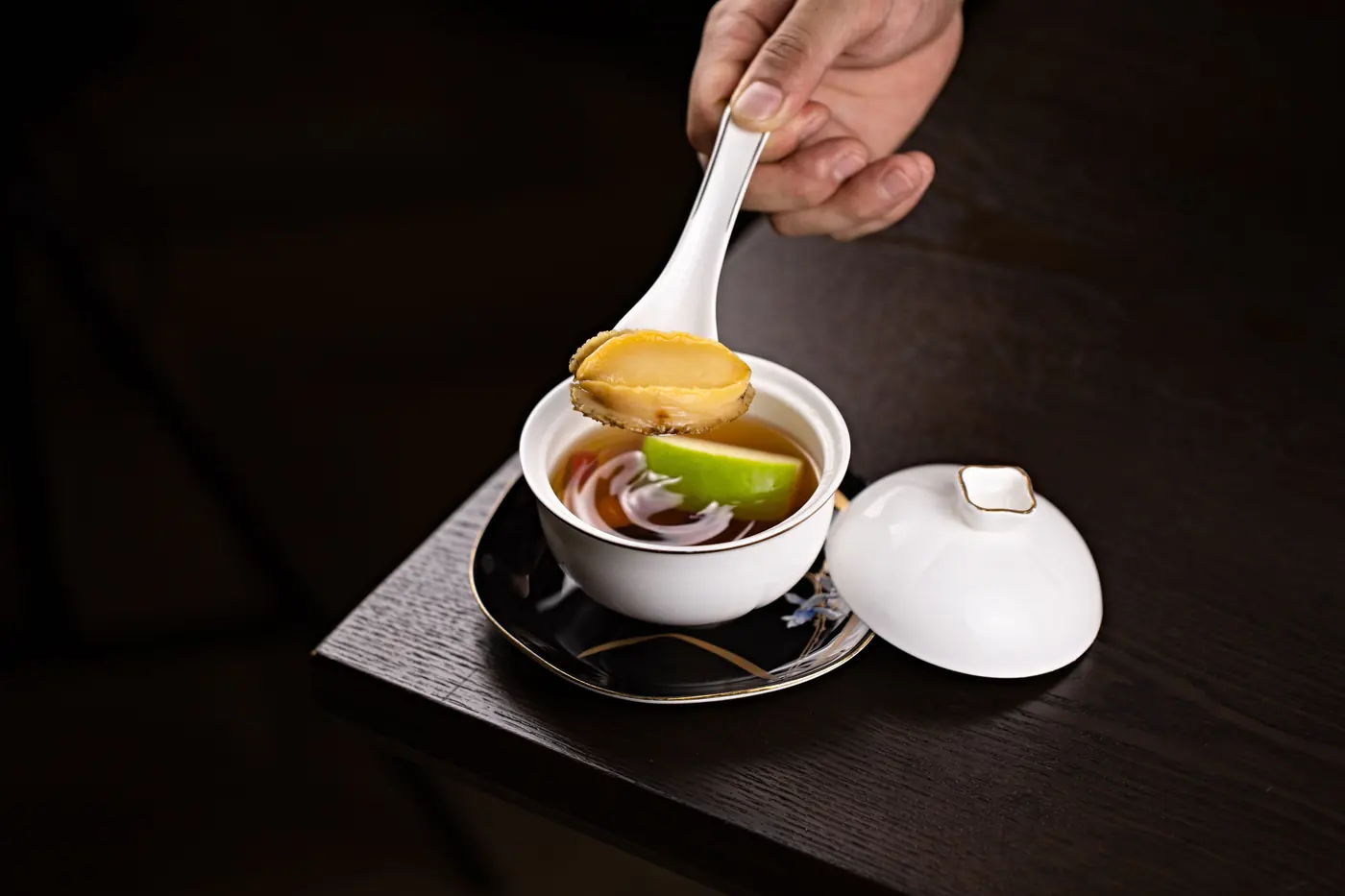
Short handle, deep bowl, flat underneath. It arrives with every noodle soup and it is a genuinely different tool from the spoon in your kitchen drawer – which becomes obvious the moment you put it down.
The short answer
It is a ceramic spoon with a flat base and a stubby handle, used across Chinese, Japanese and Vietnamese cooking. In Japanese it is a renge, which means lotus petal – a fallen one, which is what the shape is named for.
Why the bottom is flat
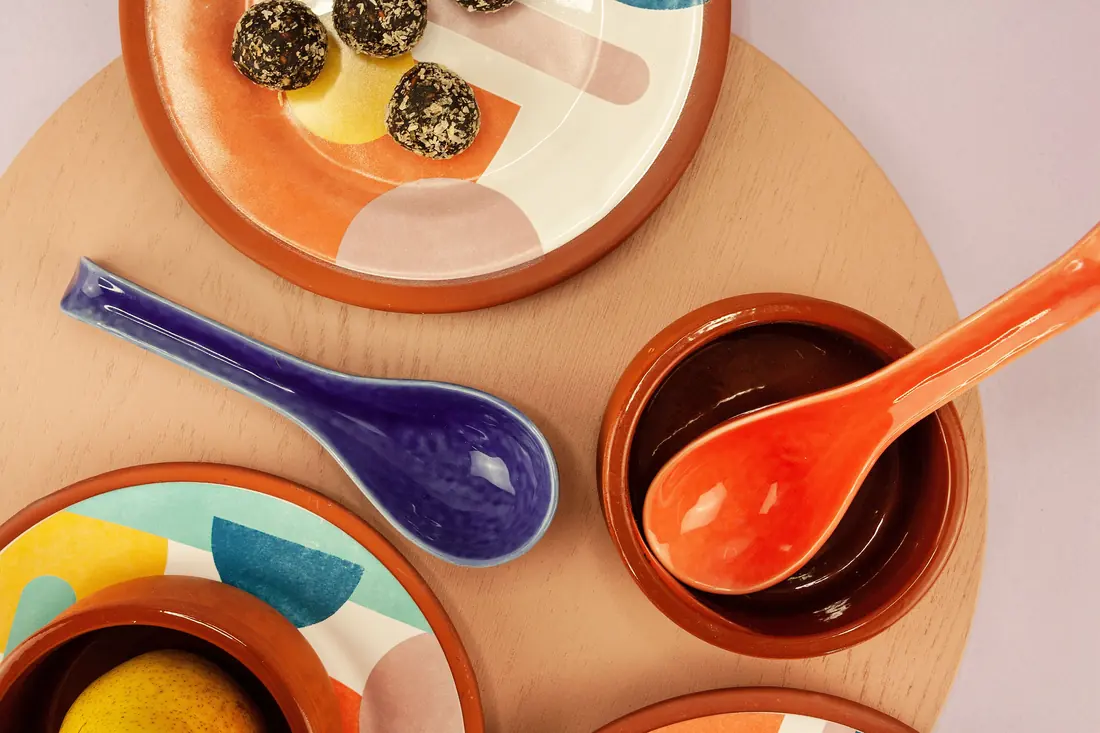
So it sits still. A Western spoon has a rounded underside and rolls or slides the moment it is set down, which is why it lives on a saucer.
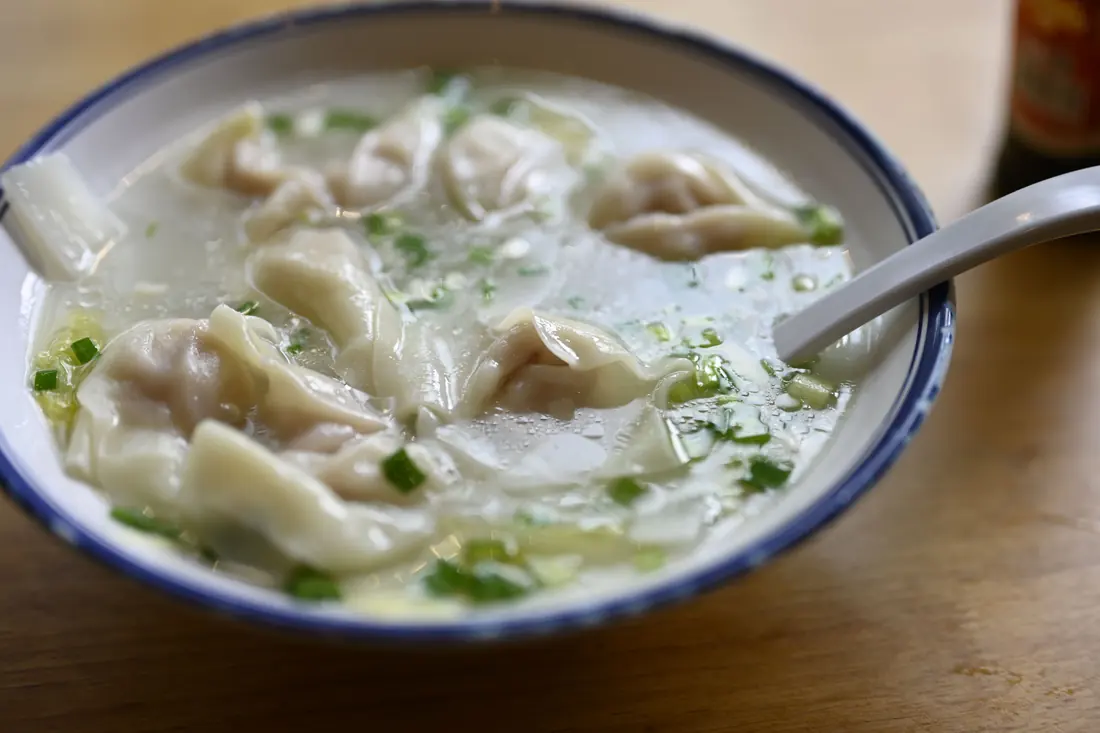
A flat-bottomed spoon rests in the bowl, on the table, or on a spoon rest without moving, and – crucially – it rests inside a bowl of soup without sinking or tipping. In a meal where the bowl is deep and the spoon is in and out of it constantly, that is not a small thing.
Why the handle is so short
Because it is not held like a Western spoon. The grip is closer to holding a small shovel: the handle sits along the fingers with the thumb on top, rather than balanced between thumb and forefinger.
That grip works with a short thick handle and is awkward with a long thin one. It also keeps the hand well clear of a bowl of very hot liquid, and leaves the other hand free for chopsticks – which is the real design constraint.
It is designed to work with chopsticks
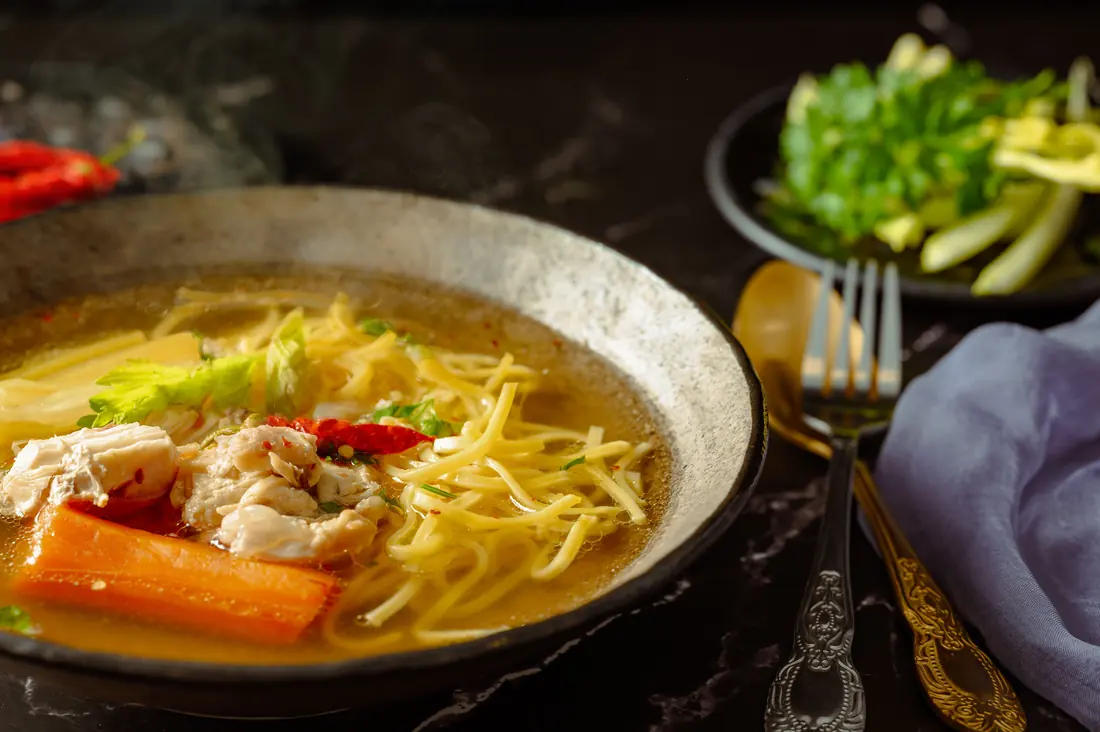
This is the part that explains everything else. A noodle soup is eaten with both hands: chopsticks lift the noodles and the solids, the spoon carries the broth, and the two alternate constantly.
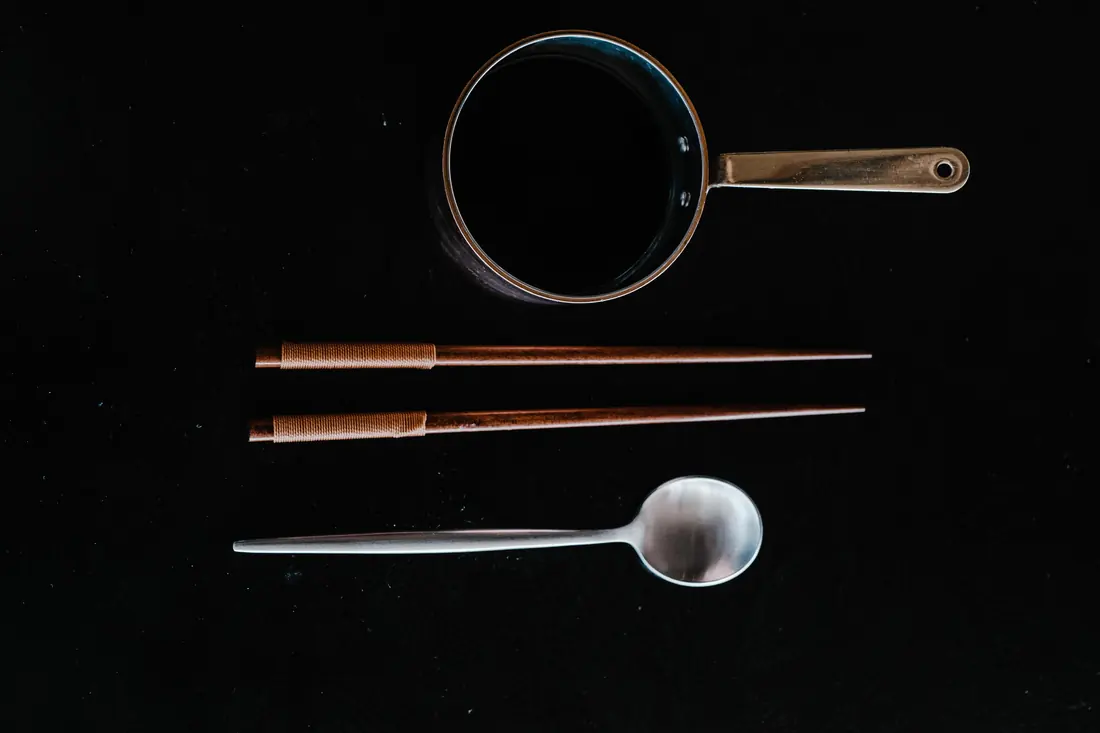
The most common technique is to hold both at once – noodles lifted onto the spoon with the chopsticks, then eaten from the spoon with a little broth. Our guide to using chopsticks covers the other half of that pairing.
Which is why it is deeper than a Western soup spoon as well. It has to hold a mouthful of noodles and broth together, not just liquid.
It is not a serving spoon
A common mistake at a shared table: the spoon in your setting is for eating, and the larger one in a communal dish is for serving. Using your own to take from a shared bowl is the equivalent of using your fork in the salad bowl.
Where no serving spoon is provided, the convention in many households is to turn your chopsticks around and use the clean ends, or simply to ask. Neither is fussy; both are ordinary table manners in the same way passing a serving dish is.
Ceramic rather than metal
Almost always ceramic, and there are three good reasons.
- It does not conduct heat. A metal spoon in near-boiling broth becomes unpleasant to hold and to put in your mouth.
- It does not taste of anything. Metal can leave a faint tang in a delicate broth.
- It is heavy enough to stay put. A light spoon slides in a bowl; a ceramic one settles.
Korean practice is the exception and goes the other way – a long metal spoon paired with metal chopsticks, used for rice as much as for soup, which is a different eating style rather than a different opinion about metal.
Britannica on the wider category
Britannica’s entry on tableware covers how eating implements developed regionally around what was being eaten – which is exactly this story. A cuisine of deep bowls, hot broth and noodles produces a different spoon from a cuisine of flat plates and cut meat.
The shape is older than the porcelain
Versions of this spoon appear in Chinese archaeology long before porcelain was in common domestic use – in bronze, in lacquered wood, and in earthenware. The form is genuinely ancient rather than a modern restaurant convention.
What has stayed constant is the flat base and the short handle, which is a good indication that both were solving real problems rather than following a style. The material changed repeatedly; the geometry did not.
Cheap ones and good ones
The difference is thickness and glaze. A thin, hard-fired spoon with a smooth glaze is pleasant in the mouth and does not hold heat unpleasantly; a thick, coarsely glazed one is clumsy and can feel gritty against the teeth.
Weight is the quick test in a shop. A good ceramic spoon feels dense for its size and rings faintly when tapped. A dull thud usually means a porous body that will stain over time.
How to use it
- Hold it with the handle along your fingers and your thumb on top, not pinched.
- Use chopsticks to load noodles or solids onto the spoon.
- Add a little broth to the same spoonful rather than alternating.
- Rest it in the bowl or on the rest between mouthfuls – it will not slide.
- Do not tip the bowl to drink from it while the spoon is in it, which is how spoons end up on the floor.
Drinking the last of the broth straight from the bowl is acceptable in most settings and is often the intended end of the meal. Lift the bowl with both hands rather than leaning down to it.
The rest of the setting
A full place setting in this tradition is chopsticks, a spoon, a small dish and sometimes a rest – and the arrangement is consistent enough to read. Chopsticks sit horizontally nearest the diner, tips to the left; the spoon sits to the right or rests in the bowl.
A small dish is for dipping sauce, or for bones and shells rather than for food. Putting bones back on the main plate is the mistake most Western diners make, and the small dish is the answer to a question they did not know was being asked.
One more small convention: the spoon goes back in the bowl when you have finished, rather than on the table. A spoon left on the cloth beside an empty bowl is the signal that something was wrong with it.
If you did not get one
Ask. Some kitchens only bring one for dishes that obviously need it and will happily provide one for anything else, and a soup eaten with chopsticks alone is a soup eaten badly.
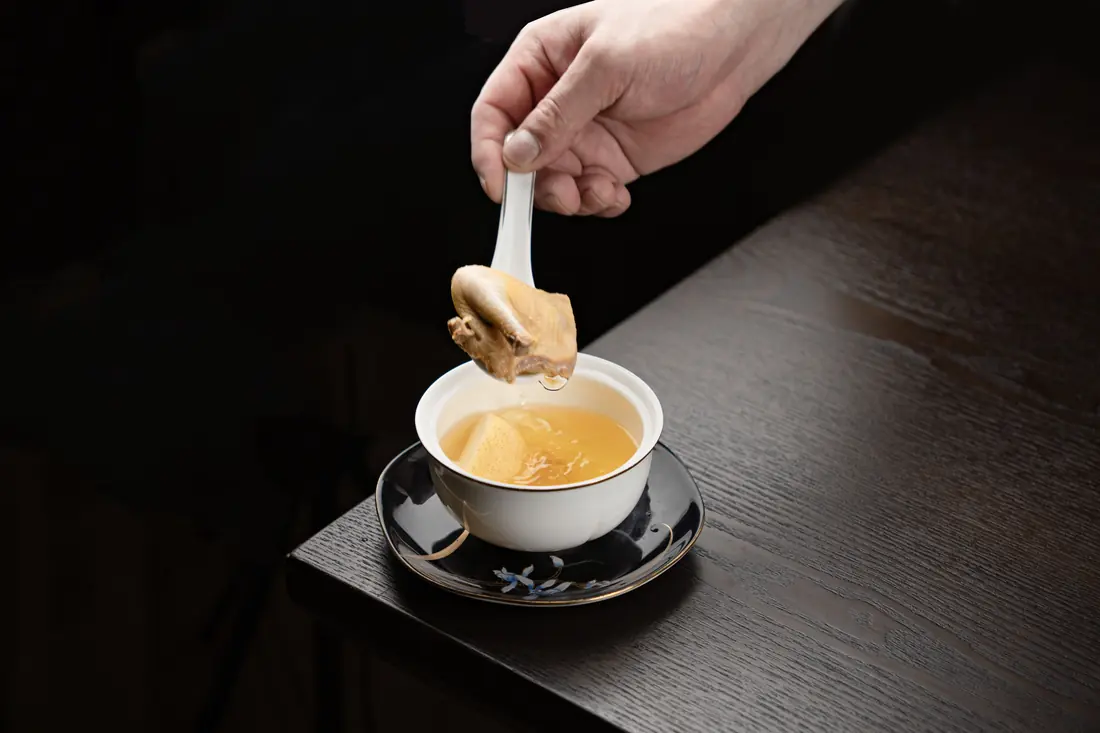
Some places bring one automatically with anything in a bowl and never with anything on a plate, which is a reasonable rule and not a judgement about your order.
They are also cheap to buy and unusually pleasant to own. A ceramic spoon is better than a metal one for any hot soup, not only an Asian one, which is the sort of quiet upgrade that costs almost nothing.
For the bowls it belongs to, the pho guide covers the soup it is most associated with, the soup comparison covers two that need it less, and the chopsticks piece covers the tool it works alongside. The current selection is on the ordering page.
Frequently Asked Questions
What is a Chinese soup spoon called?
In Japanese it is a renge, meaning lotus petal, after its shape. It is used across Chinese, Japanese and Vietnamese cooking.
Why is the bottom of the spoon flat?
So it sits still – in a bowl, on a table or on a rest – rather than rolling like a rounded Western spoon.
Why is the handle so short?
It is held with the handle along the fingers and the thumb on top, which suits a short thick handle and keeps the hand clear of hot broth.
How do you use it with chopsticks?
Chopsticks lift the noodles onto the spoon, then broth is added to the same spoonful. Both are used together rather than alternately.
Is it rude to drink soup straight from the bowl?
Generally no, and it is often how the meal is meant to end. Lift the bowl with both hands.