
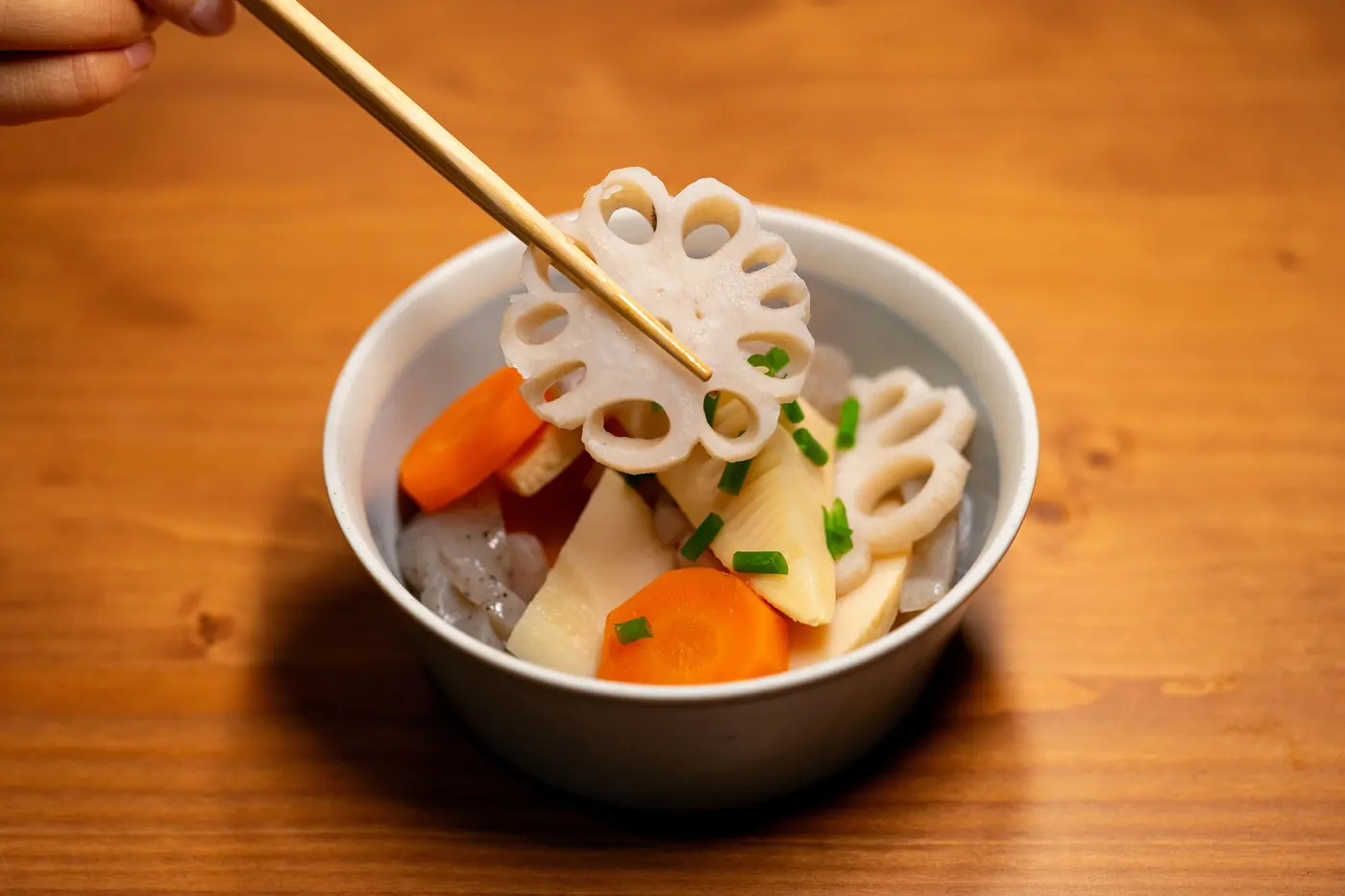
Pale, wedge-shaped, slightly translucent at the edge, and in a great many stir fries and soups without ever being introduced. Most people have eaten them several times without knowing what they were.
What they are
Bamboo shoots are exactly what the name says: the young shoots of bamboo, harvested shortly after they break the ground and long before they become the plant anyone would recognise.
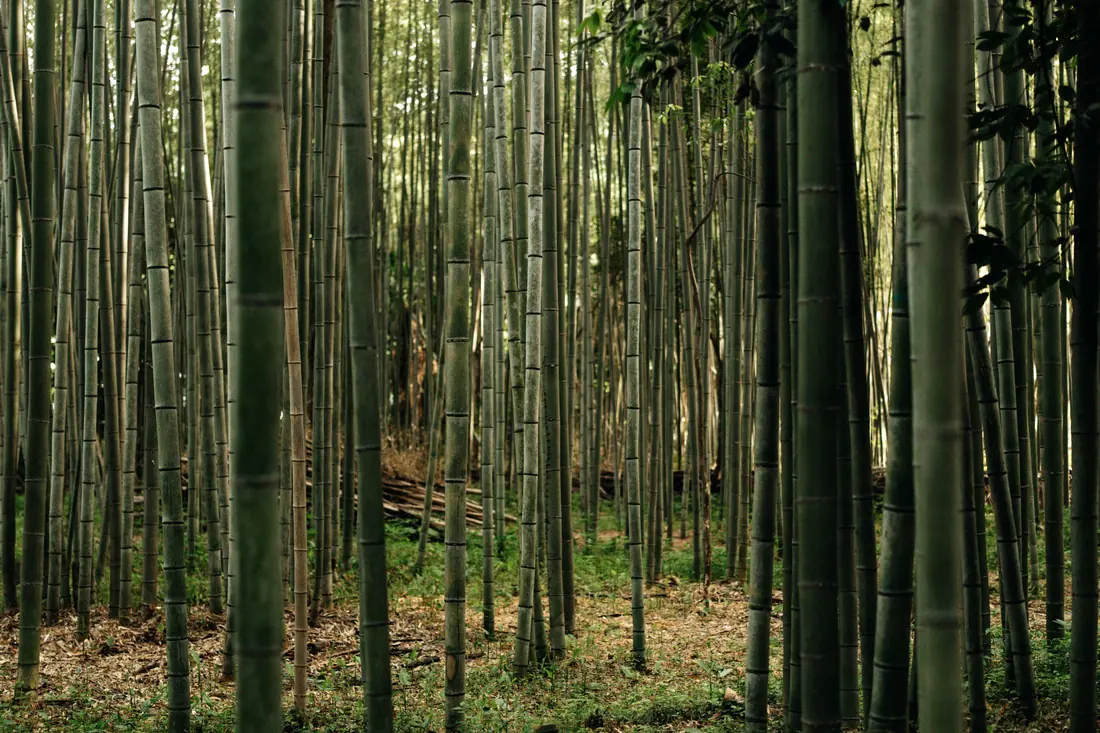
Britannica’s entry on bamboo covers the plant – a giant grass rather than a tree, which is also why the shoots grow so fast and why the harvest window is so short.
That speed is the whole practical story. A shoot is tender for a matter of days before it starts turning woody, which is why fresh ones are seasonal and local and the ones in your bowl almost certainly were not.
Not one plant, and not one shoot
Bamboo is a family rather than a single species, and only some of them produce shoots worth eating. Moso is the one most often grown for the purpose – thick, mild and the source of most of what is preserved commercially – while winter shoots, harvested before they break the surface, are prized for being more tender and are correspondingly harder to find.
This is part of why the tinned ones vary so much between brands. They are not necessarily the same plant, harvested at the same stage, and the label rarely says.
What they taste like
Very little, and that is the point. Mildly sweet, faintly earthy, and mostly a texture rather than a flavour – crisp, dense, and holding that crispness through cooking in a way most vegetables do not.
They are in the dish to provide bite. A stir fry of soft ingredients needs something that resists, and bamboo shoots do it without introducing a flavour that has to be worked around.
Why they arrive from a jar or tin
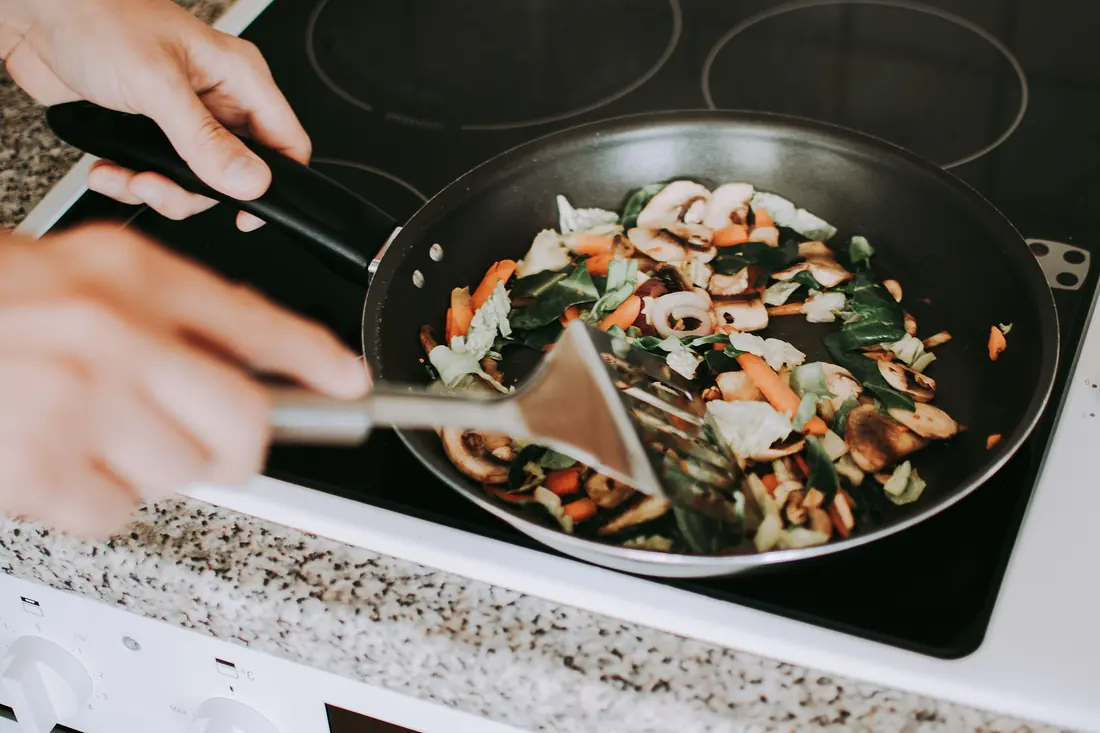
Two reasons, and they compound. The harvest window is short, so fresh shoots are available for a few weeks a year in places where bamboo grows. And fresh shoots require processing before they can be eaten at all.
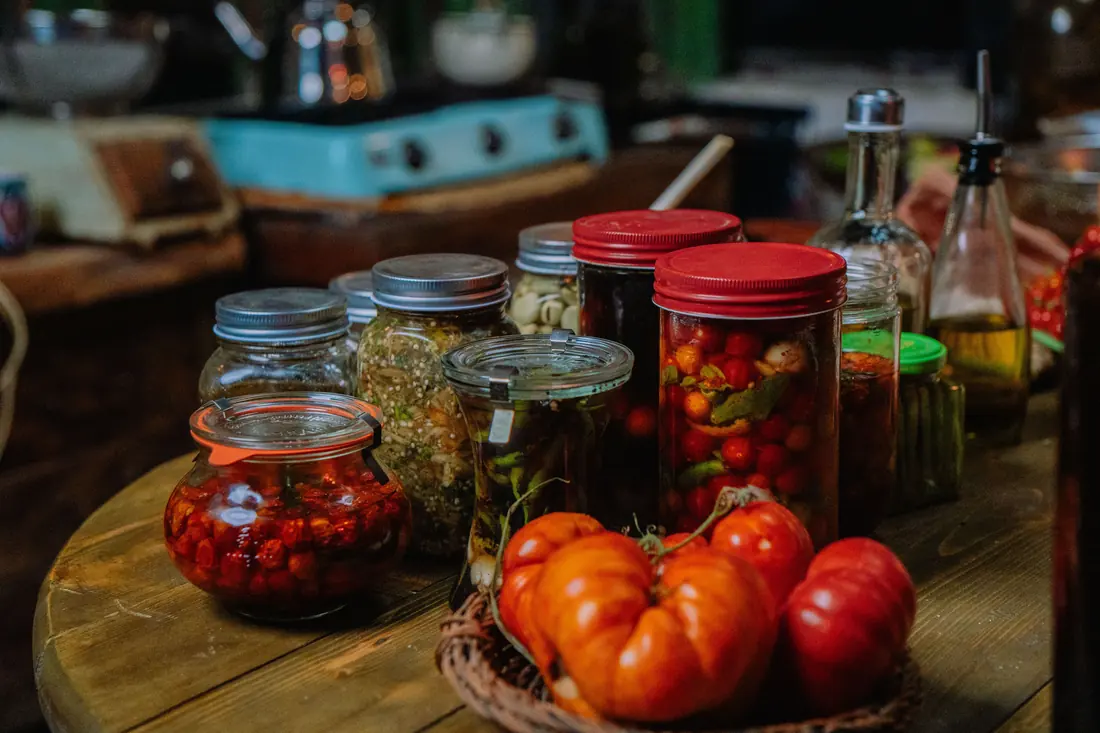
Preserved shoots are therefore the norm rather than a compromise – they are what the cuisine is actually built on outside the growing regions, and a kitchen using them is not cutting a corner.
Why fresh ones must be cooked first
Raw bamboo shoots contain naturally occurring compounds that release cyanide when the plant tissue is damaged – a defence mechanism, and a common one across a number of plants including cassava and some stone fruit kernels.
Boiling breaks them down, which is why every traditional preparation starts with the shoots being boiled and the water discarded, often more than once. This is why bamboo shoots are never eaten raw and never served as a crudité, unlike almost every other crunchy vegetable on the table.
Anything sold preserved has already been through this, which is the other reason the tinned ones are the default.
Buying them, and what the forms mean
Tinned and jarred shoots come in several cuts, and they are not interchangeable.
- Whole or halved – the tender tip is intact, so these are the ones worth slicing yourself. Best texture, most work.
- Sliced – the standard, cut into the pale wedges you meet in a stir fry.
- Strips or shreds – thin matchsticks, used where the shoot is meant to disappear into a soup rather than stand out.
- Tips – the most tender part sold separately, and the closest a tin gets to fresh.
Vacuum-packed shoots are generally better than tinned, for the straightforward reason that they have spent less time sitting in liquid. Refrigerated after opening and covered in fresh water, either keeps for a few days.
Fresh ones, if you find them
They look nothing like the tinned version – conical, wrapped in tough overlapping husks, and considerably larger than the pale wedges suggest. The husks are peeled away to reach a core perhaps a third the size of what you started with.
From there it is boiling, and more of it than seems reasonable: whole, in plenty of water, for the better part of an hour, with the water discarded. Only then is the shoot sliced and used. It is a genuinely different ingredient in flavour – sweeter, with a faint nuttiness the preserved ones lose – and a real amount of work.
The pale crunchy things, told apart
| Looks like | Tastes like | Texture | |
|---|---|---|---|
| Bamboo shoots | Pale wedges, ridged edge | Mild, faintly sweet | Dense, stays crisp |
| Water chestnuts | Pale discs | Sweet, clean | Very crisp, juicy |
| Daikon | White batons or shreds | Peppery when raw, mild cooked | Softens readily |
| Napa cabbage | Pale ribs, frilled leaf | Sweet, mild | Collapses when cooked |
The distinguishing feature is behaviour under heat. Bamboo shoots and water chestnuts stay crisp; daikon and cabbage give way. If something in a long-simmered soup is still crunchy, it is one of the first two.
Why they hold their crunch
Most vegetables soften in a hot pan because heat breaks down the pectin holding their cell walls together, and once that goes the structure collapses. Bamboo shoots hold out much longer because they are dense and fibrous – closer to a stem than to a leaf or a fruit, which is exactly what they are.
That density is why they are added for texture rather than flavour, and why they survive being simmered in a soup that would reduce a leaf to nothing. It is also why they need to be sliced thinly: a thick wedge is not pleasant to chew, and the shoot will not soften to rescue you.
Where you have already eaten them
More places than you would guess, usually where a dish needs something to resist. They turn up in hot and sour soups, in mixed vegetable stir fries, in braised dishes where everything else has gone soft, and folded into the filling of fried appetisers where a crunchy element has to survive both a filling and a fryer.
The giveaway is always the same: a pale, faintly ridged piece that is still firm when everything around it has given up. Once you have identified one, they become very hard to miss.
Using them at home
- Drain and rinse them thoroughly – the packing liquid carries a sour note you do not want in the dish.
- If the smell is strong, blanch them briefly in fresh water and drain again.
- Slice them thinly across the grain for stir fries, or leave them in wedges for soups.
- Add them late. They need heating rather than cooking, and long exposure softens the texture you bought them for.
The rinsing step is the one worth insisting on. Most complaints about the taste of tinned bamboo shoots are complaints about the liquid they were sitting in.
For the other things in the bowl, the bok choy explainer covers the green that cooks at two speeds, the mushroom guide covers the other texture ingredient you meet constantly, and the noodle comparison covers the dishes they turn up in. The current selection is on the ordering page.
Frequently Asked Questions
What are bamboo shoots?
The young shoots of bamboo, harvested days after they emerge. Bamboo is a giant grass, and the shoots turn woody very quickly.
What do bamboo shoots taste like?
Very mild – faintly sweet and slightly earthy. They are in a dish for texture rather than flavour, staying crisp through cooking.
Why are bamboo shoots always canned?
The fresh harvest window is only a few weeks, and fresh shoots need boiling before they can be eaten. Preserved shoots have already been processed.
Can you eat bamboo shoots raw?
No. Raw shoots contain compounds that release cyanide, which boiling breaks down. Every traditional preparation starts by boiling and discarding the water.
How do you get rid of the tinned taste?
Drain and rinse thoroughly, and blanch briefly in fresh water if the smell is strong. Most of the off taste is the packing liquid.