
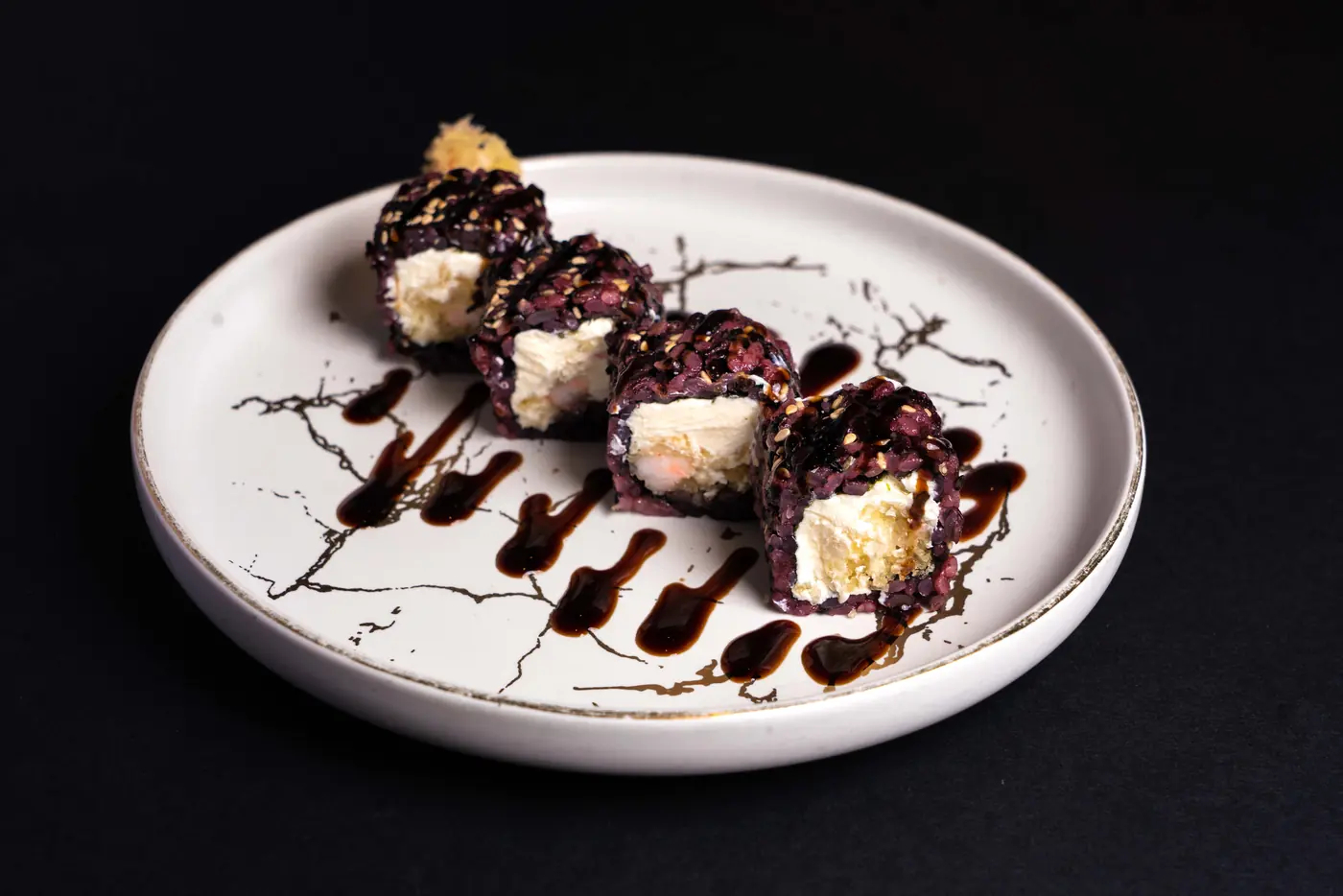
Sweet, dark, thick enough to sit where it lands, and on an enormous number of rolls. It is the first thing most people ask about after eating one, usually phrased as “what is that brown sauce”.
The short answer
Eel sauce is soy sauce, sugar and mirin, reduced over heat until it thickens. Some versions add sake. That is the whole recipe.
It contains no eel. Not a trace, in the standard version – the name describes what it was originally brushed onto, not what went into it.
Why it is called eel sauce
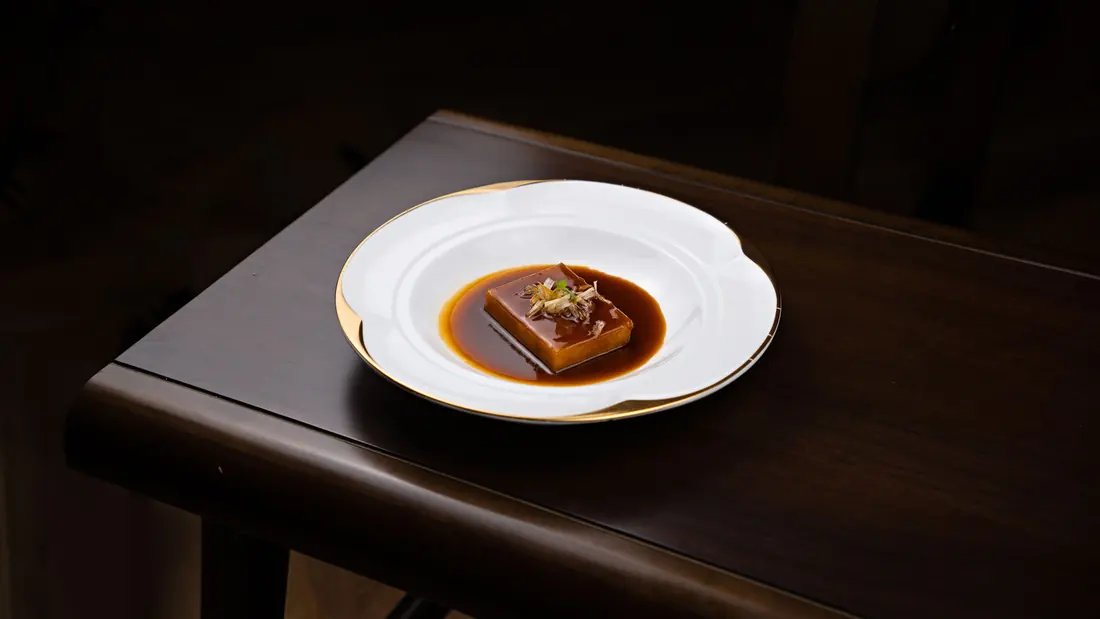
In Japan the sauce is the glaze for grilled eel, a dish with its own long tradition, and it is named there for that dish rather than for itself. English-language menus shortened the association to “eel sauce” and it stuck, including on the very many rolls that contain no eel at all.
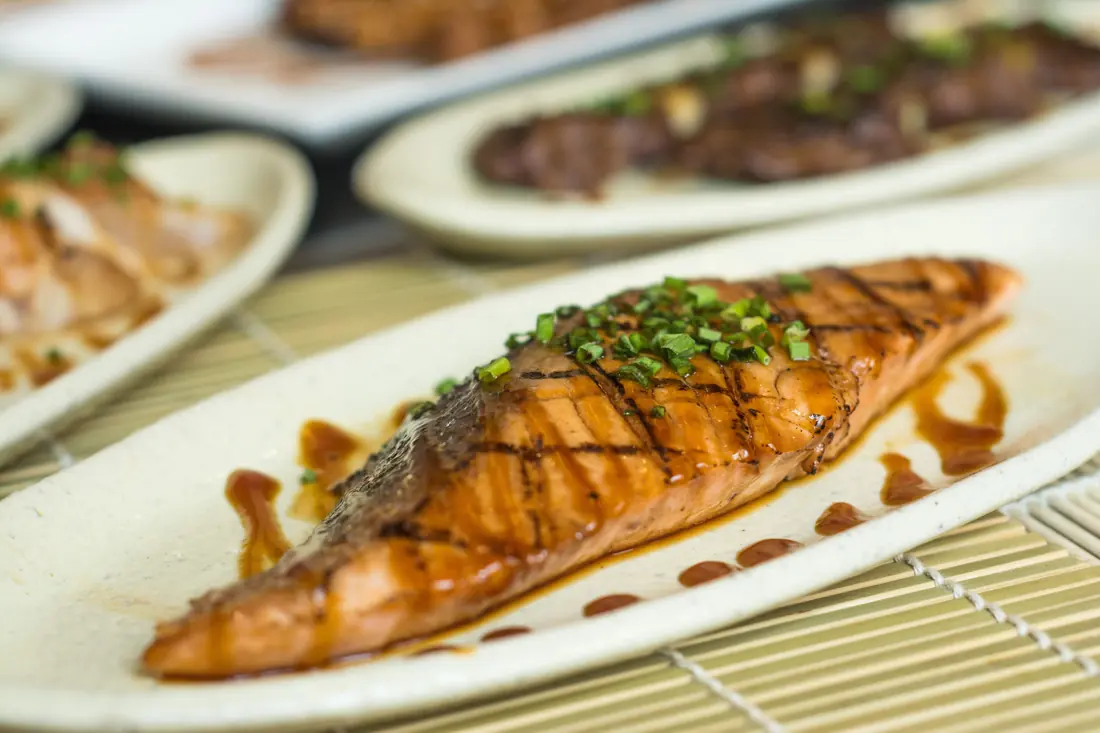
You will also see it written as unagi sauce, which is the same shortening in the other language. Kitchens that want to avoid the confusion label it sweet soy glaze, which is more accurate and less memorable.
What is in it
- Soy sauce – the base, and where the salt and the colour come from.
- Sugar – more than people expect, and the reason it thickens.
- Mirin – sweet rice wine, which adds gloss as well as sweetness.
- Sake – in some versions, cooked off almost entirely.
Our explainer on mirin covers the one ingredient people have usually not met. It is doing two jobs here: sweetening, and giving the finished sauce the shine that makes a drizzle look deliberate.
Britannica’s entry on soy sauce covers the base – a brewed, fermented product rather than a simple salt solution, which is why reducing it produces depth rather than just saltiness.
Why it is thick without a thickener
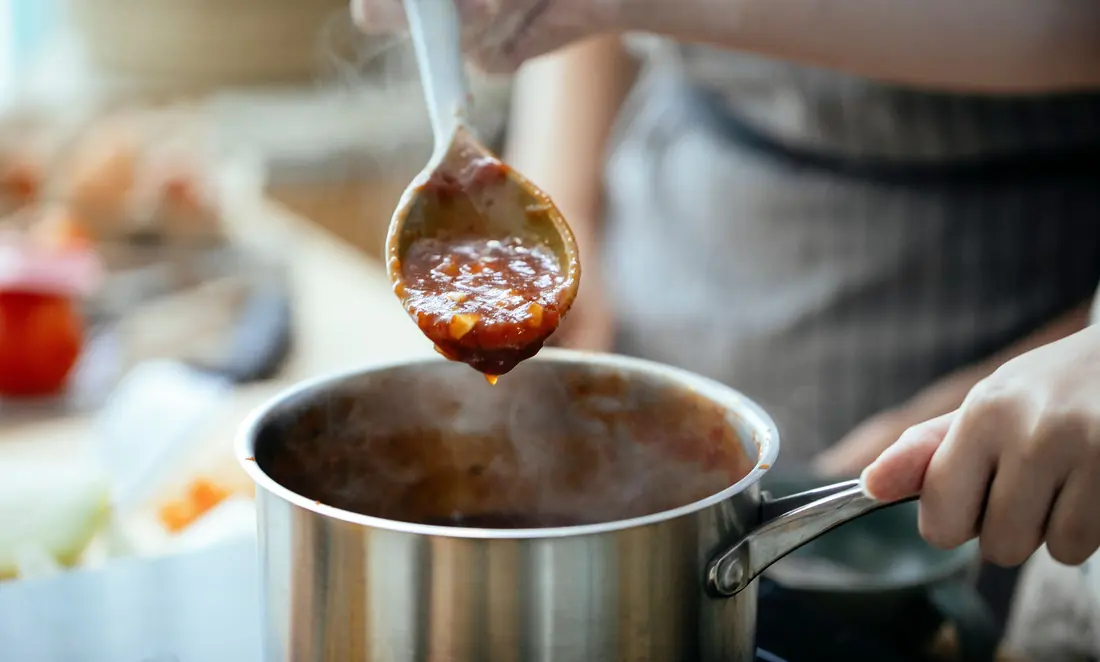
No cornstarch, no flour. The thickness comes from reduction: the mixture is simmered until enough water has evaporated that the dissolved sugar concentrates, and concentrated sugar syrup is viscous.
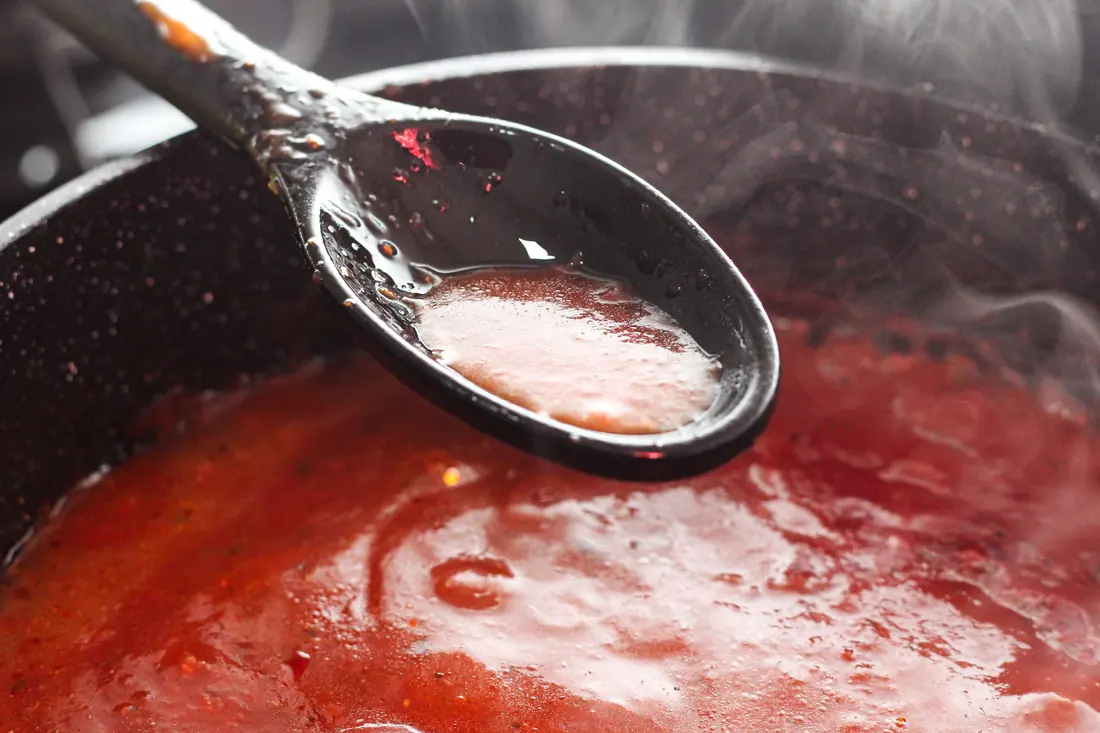
This is why it behaves the way it does on a plate. A starch-thickened sauce is thick when hot and can turn gluey as it cools; a reduction gets thicker as it cools and stays glossy. A drizzle that holds its line half an hour later is a reduction.
The sugar is doing more than sweetening
Sugar in a reduction is structural. It concentrates as the water leaves, it browns as it heats, and it is what makes the sauce cling to a piece of fish instead of running off it. Take the sugar out and you have salty soy sauce that has been boiled.
It is also why the sauce is easy to ruin. Past a certain point the sugar goes from caramelised to burnt, and burnt sugar is bitter in a way nothing else in the pan can cover. Kitchens hold the pan below a boil for exactly this reason.
Where else you will meet it
Once you know the taste it is recognisable across a menu. The same reduction, or a close relative of it, turns up brushed onto grilled fish, drizzled over fried appetisers, and painted onto anything the kitchen wants to look glossy under a light.
The tell is always the same: a dark sauce that has been applied in a deliberate line or a controlled pool rather than served in a dish. Anything thick enough to hold a shape has had water taken out of it, and sugar is almost always how.
How it compares to the other dark sauces
| Sauce | Base | Sweetness | Texture |
|---|---|---|---|
| Eel sauce | Soy, sugar, mirin, reduced | High | Thick, glossy, clings |
| Soy sauce | Fermented soybean and wheat | None | Thin, watery |
| Hoisin | Fermented soybean paste, sugar, spice | High | Thick, smooth, opaque |
| Ponzu | Citrus juice and soy | Low | Thin, sharp |
The row that matters is the last one. Eel sauce is the only one of the four that is applied as a finish rather than offered as a dip, and that is a consequence of the texture rather than the flavour.
Applied in the kitchen, not at the table
It arrives on the roll rather than beside it, from a squeeze bottle, after the roll is cut. That is a deliberate decision: the sauce is strong and sweet enough that the amount is part of the recipe, not a preference to be exercised.

Which is also why adding soy sauce on top of a roll that already carries it usually overwhelms the fish. Our guide to soy sauce, wasabi and ginger makes the same point from the other direction: the finished rolls are seasoned already.
How much ends up on a roll
Less than it looks, and that is deliberate. A drizzle reads as generous because it is dark against pale rice, but the actual volume across eight pieces is on the order of a teaspoon. A reduction is concentrated, so a little of it carries a long way.
This is also why a heavy hand is obvious immediately. Past a certain point the sweetness stops being a counterweight to the rice’s acidity and becomes the thing you taste instead of the fish, and the roll turns into a dessert with seaweed on it.
If you want to know how much a kitchen uses, look at the plate rather than the roll. A neat set of lines is a measured application; a pool the pieces are sitting in is not.
Storing it
It keeps far longer than most sauces, which is a consequence of what it is made of: a high-sugar, high-salt syrup is an inhospitable environment. Refrigerated in a sealed container it holds for weeks, and it thickens further as it sits.
If it sets too firm to drizzle, warm it gently and it loosens. If sugar crystals appear at the edges it has reduced too far, and a spoonful of water stirred in over low heat brings it back.
Making it at home
- Combine equal parts soy sauce, mirin and sugar in a small pan.
- Bring to a simmer and hold it there – not a boil.
- Reduce by roughly a third, which takes ten minutes or so.
- Take it off the heat while it still looks slightly too thin.
- Cool completely before using; it thickens substantially as it cools.
The fourth step is the one people get wrong. A reduction that looks right in a hot pan sets into something closer to toffee, and it cannot be un-reduced.
If you are avoiding fish
The standard recipe is soy, sugar and mirin, all of which are plant-derived. Some commercial versions add dashi or eel extract, and there is no way to tell from a bottle on a menu.
So this is a kitchen question rather than a general one. If it matters to you, ask the restaurant what is in theirs rather than working from a recipe you found elsewhere.
For the rolls it usually lands on, our specialty roll piece covers why the elaborate builds carry sauce at all, the condiments guide covers what is on the table rather than on the roll, and the mirin explainer covers the sweetness underneath it. The current selection is on the ordering page.
Frequently Asked Questions
What is eel sauce made of?
Soy sauce, sugar and mirin, reduced over heat until thick. Some versions add sake. There is no eel in the standard recipe.
Why is it called eel sauce if there is no eel in it?
In Japan it is the glaze brushed onto grilled eel, so it is named for the dish it belongs to rather than its ingredients. English menus shortened it.
Is eel sauce the same as unagi sauce?
Yes. Unagi is the Japanese word for freshwater eel, so both names describe the same sauce by way of the same dish.
Why is eel sauce so thick?
It is a reduction, not a thickened sauce. Simmering evaporates water and concentrates the sugar, and it thickens further as it cools.
Is eel sauce vegetarian?
The standard recipe is, but some commercial versions add dashi or eel extract. Ask the restaurant rather than assuming either way.