
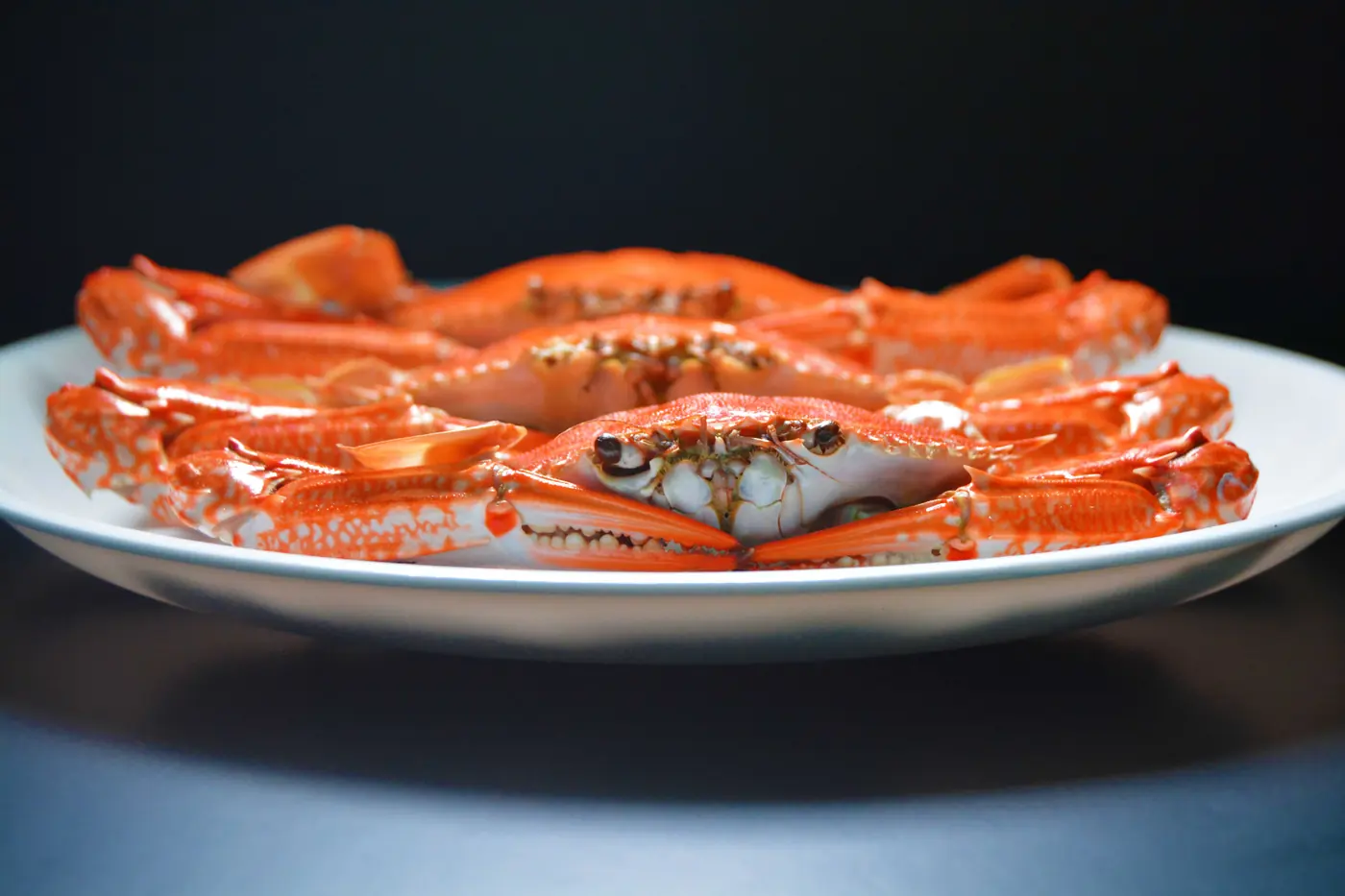
A whole crab, legs and all, fried and served to be eaten entire – shell included. It looks like a mistake the first time it arrives, and the question everyone asks is the right one: do you really eat all of that?
The short answer
Yes, all of it. And it is not a special kind of crab – it is an ordinary crab caught during the few hours after it has shed its old shell and before the new one hardens.
What is actually happening
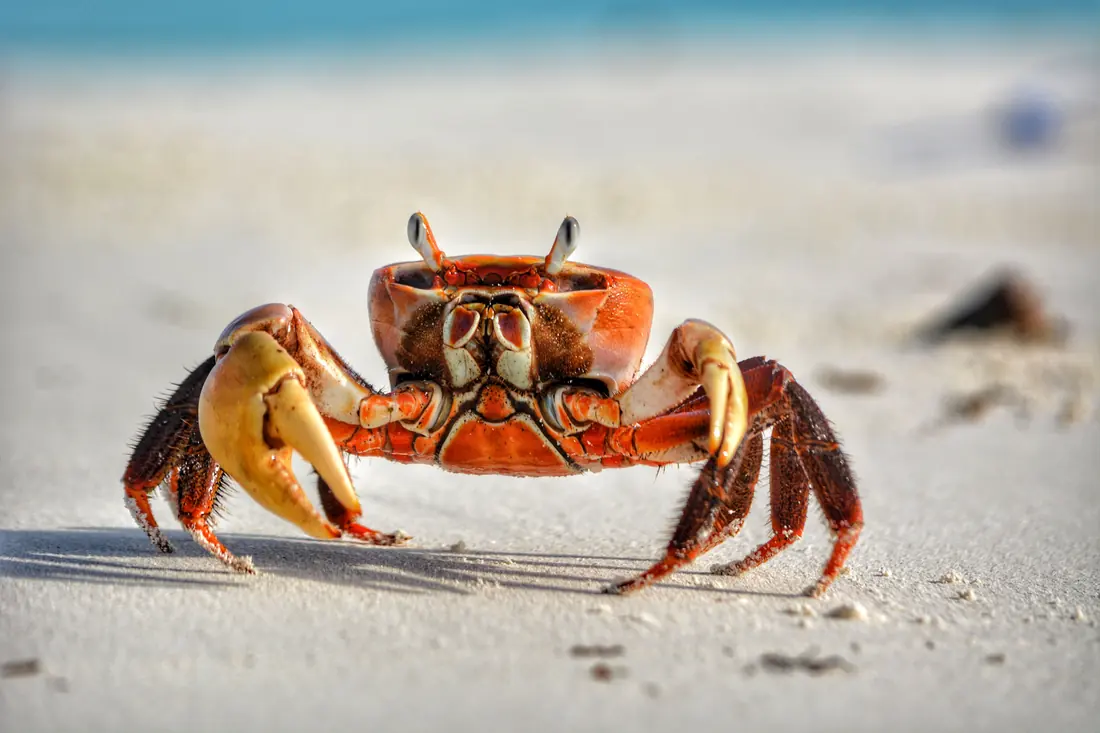
A crab’s shell does not grow. To get bigger it has to abandon the shell entirely, which it does by absorbing water, splitting the old casing along a seam and backing out of it – eyes, legs, claws and gills all withdrawn from the old shell like fingers from a glove.
What emerges is the same crab, slightly larger, wearing a soft membrane instead of armour. That membrane hardens – and this is the part that matters commercially – within a few hours.
Britannica’s entry on the blue crab covers the species behind most of the American trade, which moults repeatedly as it grows and is the reason a soft shell season exists at all.
Which is why it is expensive
The window is the whole economics of the ingredient. A crab is soft for a matter of hours out of a life measured in years, and if it hardens before it is harvested it is simply an ordinary crab again.
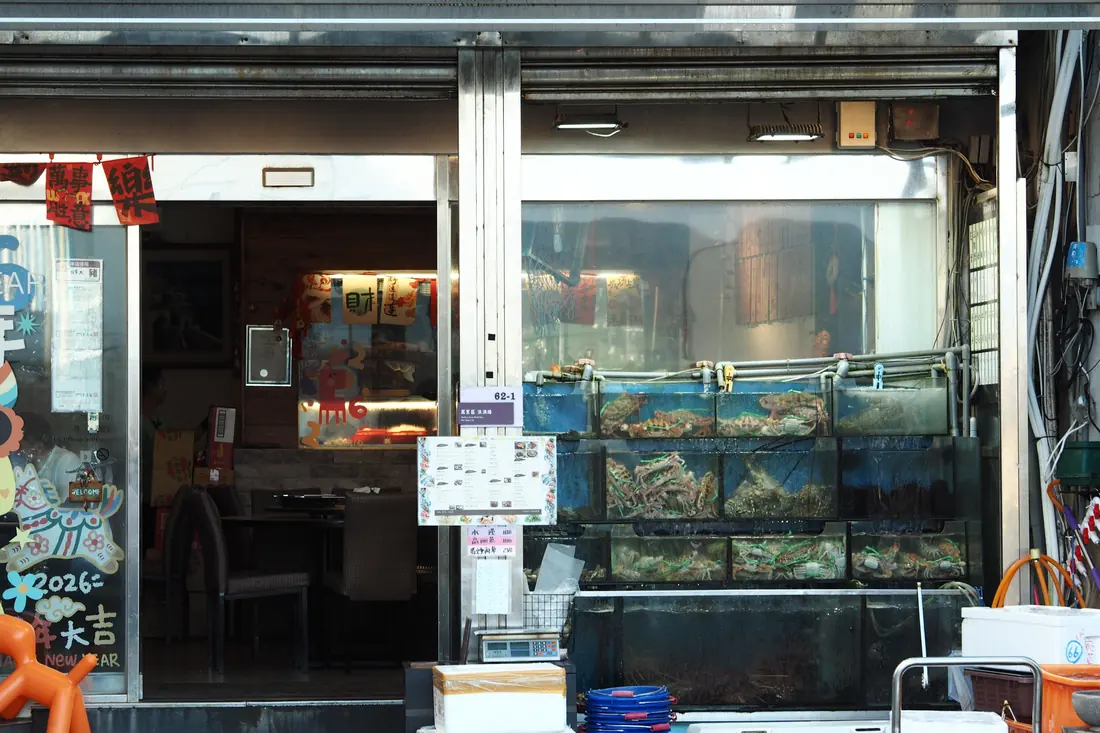
So the crabs are watched rather than caught. They are held in tanks and monitored for the signs that a moult is coming – a coloured line along the back paddle that changes shade as the moult approaches – and pulled out within hours of shedding. That is labour, tank space and constant attention, and the price reflects it.
It also explains why almost all of it is frozen. A soft crab has to be killed and chilled quickly, and freezing at that point preserves the state it was caught in. Fresh soft shell crab is a seasonal, local thing; frozen is the normal case and not a compromise.
There is a season, and it is short
Crabs moult when the water is warm, so the trade runs from late spring through the summer, with the first run of the year – the first moult after winter – treated as the best of it.
Outside that window everything on a menu is frozen, and the honest position is that this matters less than it would for most seafood. A crab frozen within hours of moulting, before any deterioration begins, is closer to its fresh state than a chilled one that has travelled for three days.
Sizes have names
The trade grades them by width across the shell, and the names are old and strange enough to be worth recognising on a supplier’s list.
- Hotel – the smallest commonly sold.
- Prime – a step up, and the usual restaurant size.
- Jumbo – larger again.
- Whale – the largest grade, and exactly as impractical to eat neatly as it sounds.
Bigger is not automatically better here. A larger crab has a slightly thicker membrane, so the very biggest grades can be less delicate than a mid-size one – which is why kitchens tend to settle in the middle of the range rather than at the top of it.
What you do not eat
Three parts are removed before cooking, and any kitchen serving it will have done this already.
- The face. The front section including the eyes and mouthparts is cut away.
- The gills. The feathery grey structures under each side of the shell – sometimes called dead man’s fingers – are unpleasant in texture rather than harmful.
- The apron. The flap on the underside is pulled off.
What remains is body, legs and claws, and all of it goes in the pan. If you are buying them raw, the fishmonger will do the cleaning on request and it is worth asking.
How it is cooked
Almost always fried, and for a specific reason: the soft shell crisps in a way nothing else about the crab does, so the texture contrast between a crackling exterior and soft interior is the entire appeal.
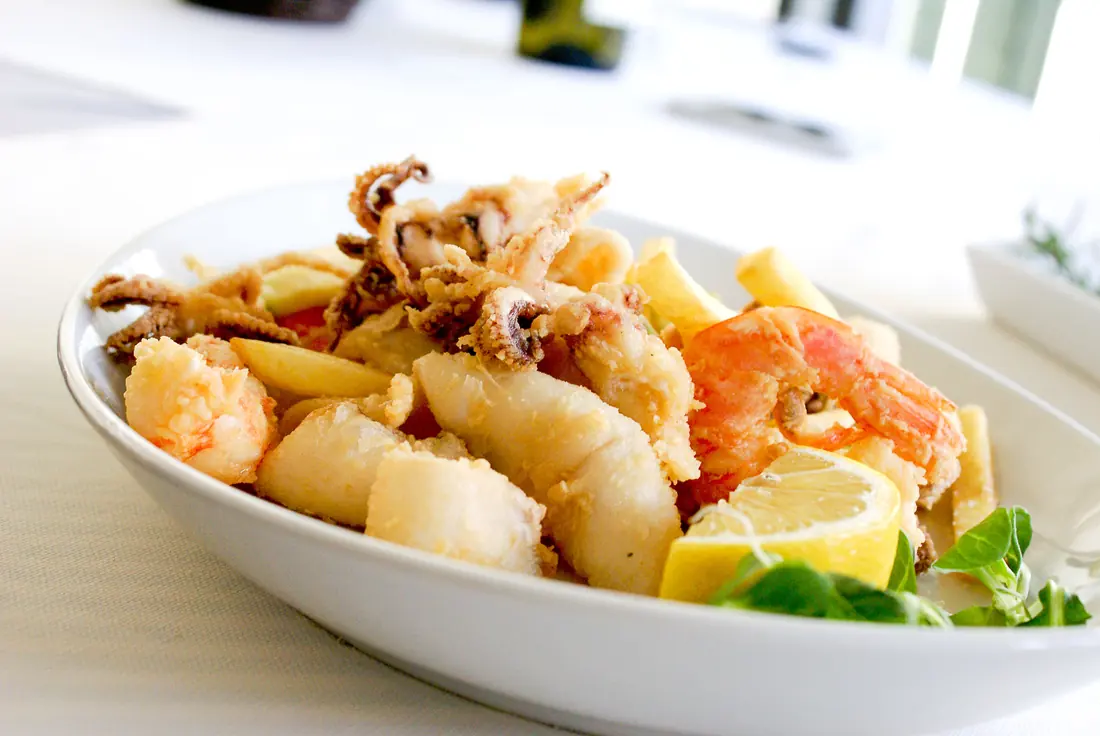
A light coating is standard – seasoned flour, a thin batter, or a starch dusting. Heavy batter defeats the point, because the shell itself is supposed to be providing the crunch.
It also spits ferociously. A moulted crab is full of water, and water meeting hot oil behaves the way it always does, which is why this is a dish that is far more pleasant to order than to make at home.
What it tastes like
Sweeter and more delicate than hard shell crab meat, and considerably easier to get at – there is no picking, no cracking and no equipment.
The shell adds a faint mineral crispness rather than a flavour of its own. If you have eaten a soft shell crab and found it unpleasant, the usual culprits are a crab that was slightly past the window and had begun to harden, or heavy batter hiding everything that made it worth ordering.
Where it turns up on a menu
Two places, mostly. As an appetiser – the whole crab, fried, with a dipping sauce – and inside a roll, where the legs are left deliberately sticking out of the ends.
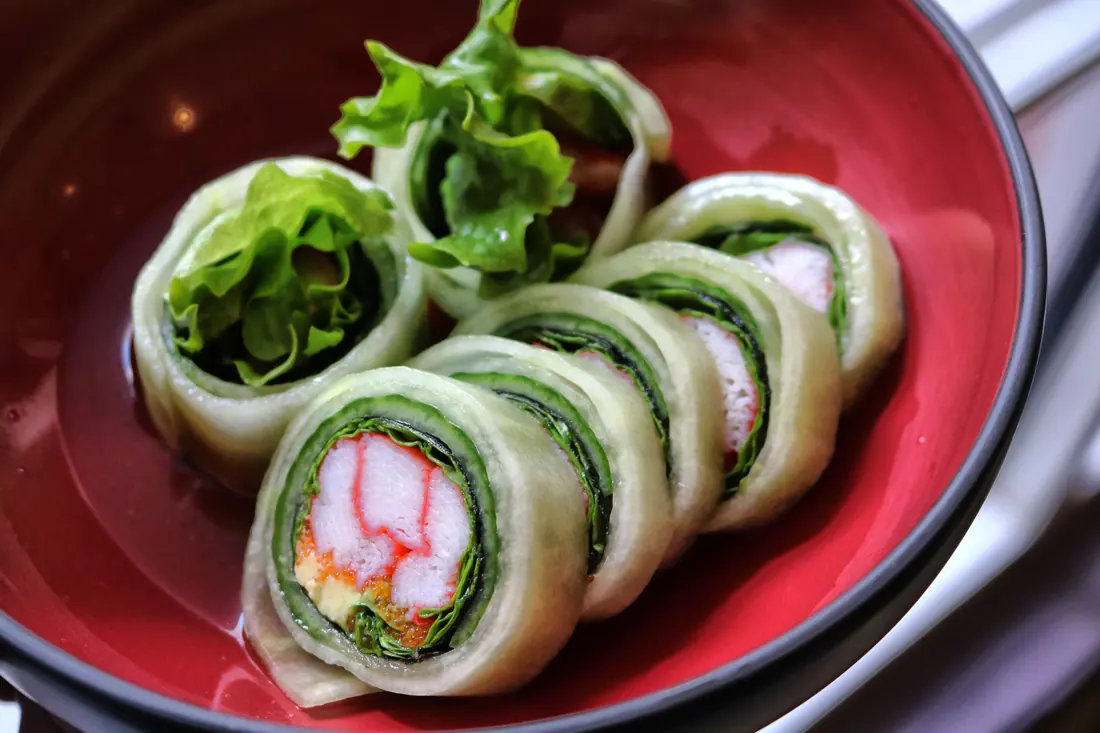
The protruding legs are the giveaway on a menu photograph, and they are the reason the roll built around it usually has a name involving a spider. Our piece on specialty rolls covers how a filling like that changes the construction.
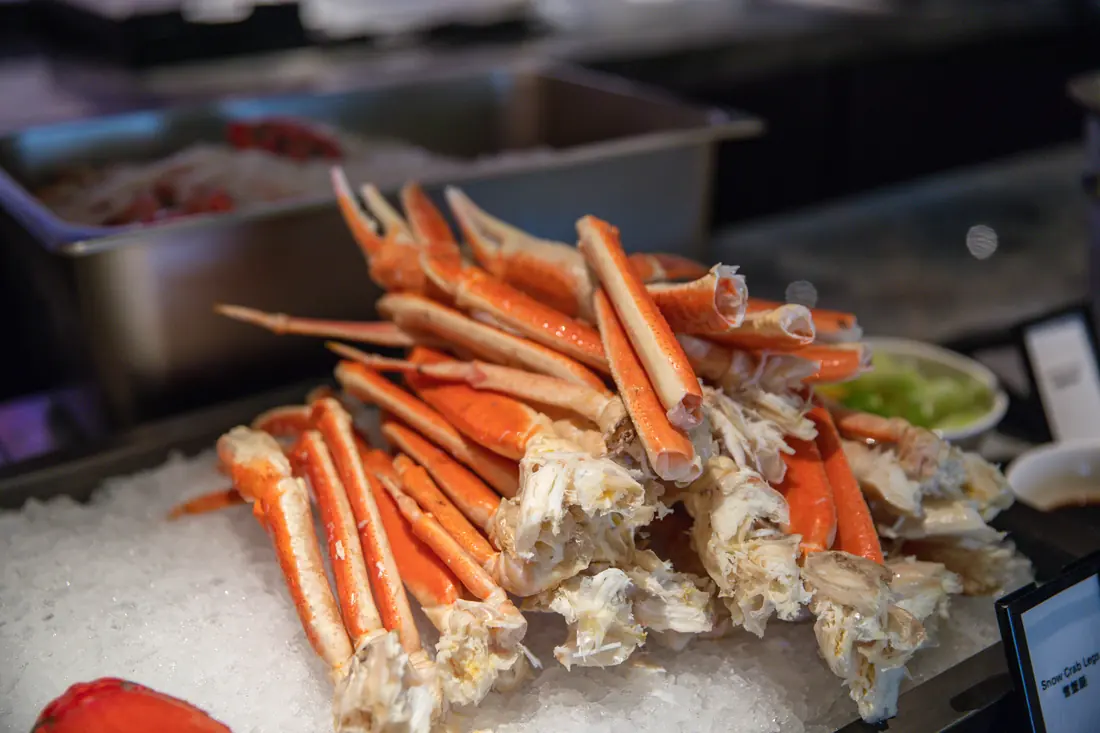
How to eat one
Straightforwardly, and with your hands if it is served whole. There is no technique to learn and nothing to pick around – the whole point of the dish is that the work has already been done by biology.
The legs are the best part and the crispest, so they are worth eating first while they are still hot. The body is softer and holds most of the moisture, and it is usually cut in half before serving for exactly that reason.
The one thing worth knowing is that it will be juicier than it looks. Biting into the body of a whole fried soft shell crab releases a surprising amount of liquid, which is why it is worth leaning over the plate the first time.
It is not imitation crab, and it is not crab mix
Worth separating, because a menu can carry all three. This is a whole animal. Imitation crab is processed fish shaped and coloured to resemble crab, and the crab mix in many rolls is that same product dressed with mayonnaise.
There is nothing wrong with any of them, but they are different ingredients at different prices, and a roll that names soft shell crab is telling you which one it is using.
For the crab on the rest of the menu, the imitation crab explainer covers what surimi is, the crab rangoon piece covers the fried appetiser version, and the specialty roll guide covers the rolls it turns up in. The current selection is on the ordering page.
Frequently Asked Questions
What is soft shell crab?
An ordinary crab caught in the few hours after it has shed its old shell, before the new one hardens. The whole crab is eaten, shell included.
Do you really eat the shell?
Yes. At that stage the shell is a soft membrane rather than armour, and it crisps when fried. The face, gills and apron are removed first.
Why is soft shell crab expensive?
The soft window lasts only hours, so crabs are held and monitored rather than simply caught, and harvested within hours of moulting.
Is soft shell crab a different species?
No. It is the same crab at a different moment in its life – most commonly the blue crab, which moults repeatedly as it grows.
Why is it almost always fried?
The soft shell crisps when fried, and the contrast between the crackling outside and the soft inside is the point of the dish.