Category: Hibachi & Grill

Flat-top grilling, hibachi plates and stir-fried noodles.

  • What Comes With a Hibachi Plate?

    What Comes With a Hibachi Plate?

    Ordering hibachi is usually a two-part decision. You pick a protein, and then you are asked two or three follow-up questions in quick succession. Knowing what those questions are before they arrive makes the whole thing easier.

    What comes with a hibachi plate?

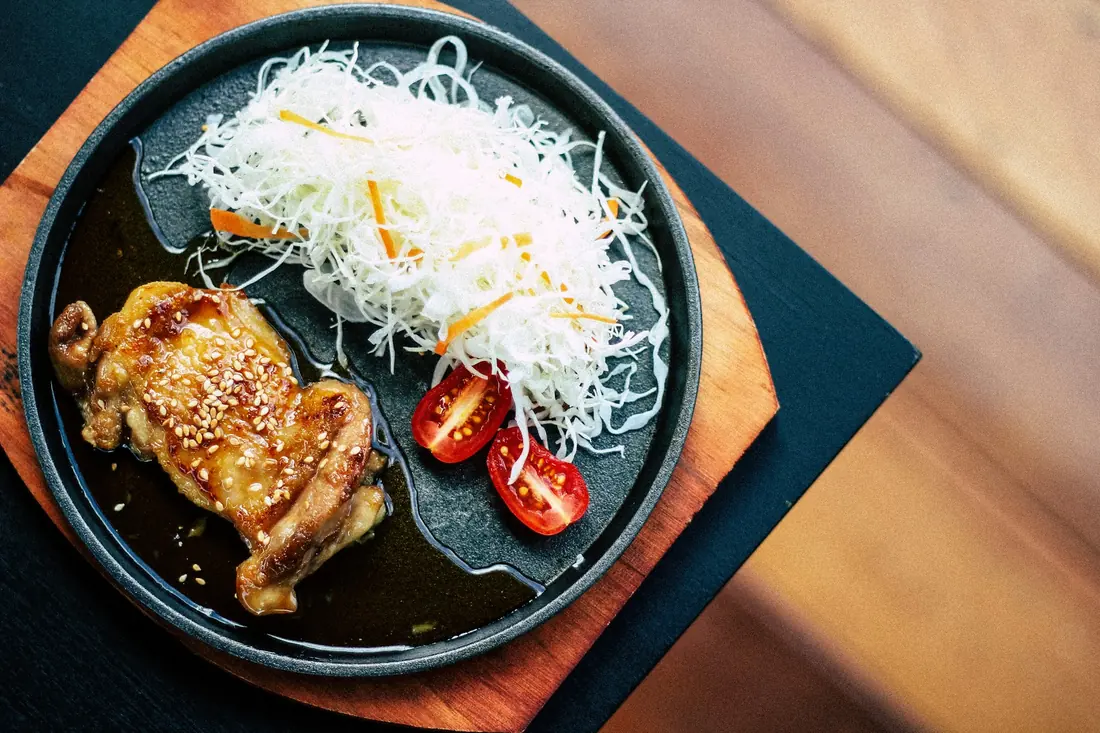
    A hibachi plate is a complete meal rather than a single dish. The protein is seared on a flat top grill and served with rice, grilled vegetables, and a choice of soup or salad to start.
    That structure is why it is such a dependable order. There is no assembling of sides and no guessing at portions – the plate arrives as a set, and the only decisions are which protein, which rice, and which starter.

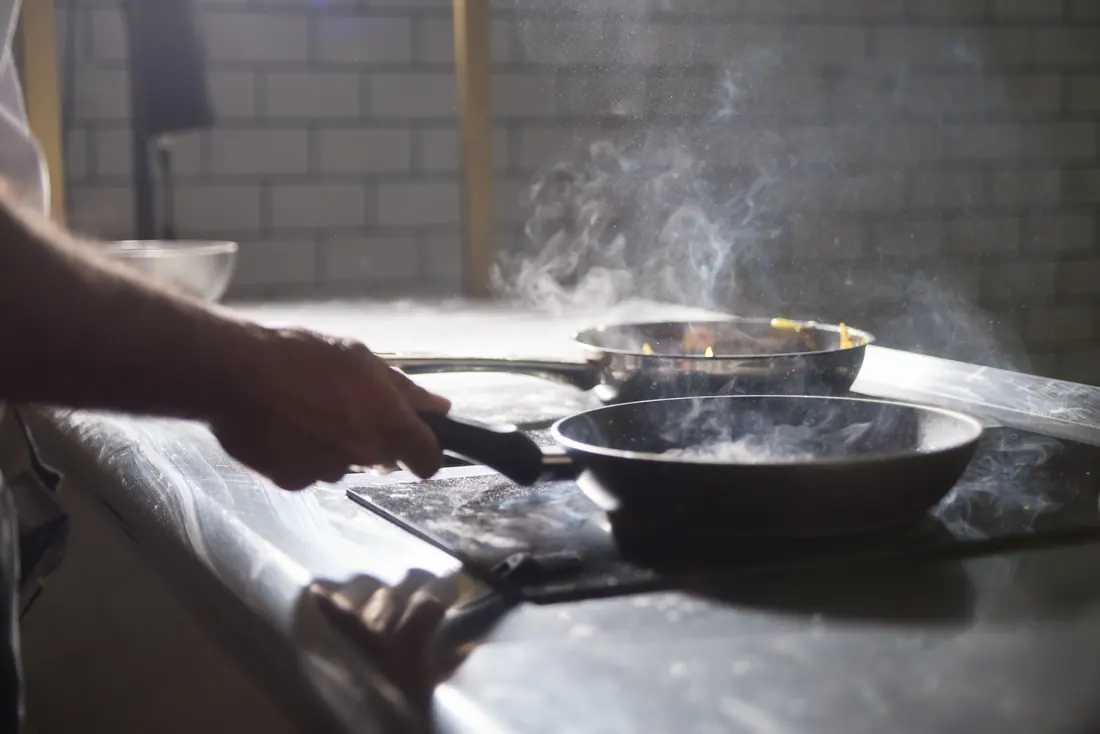
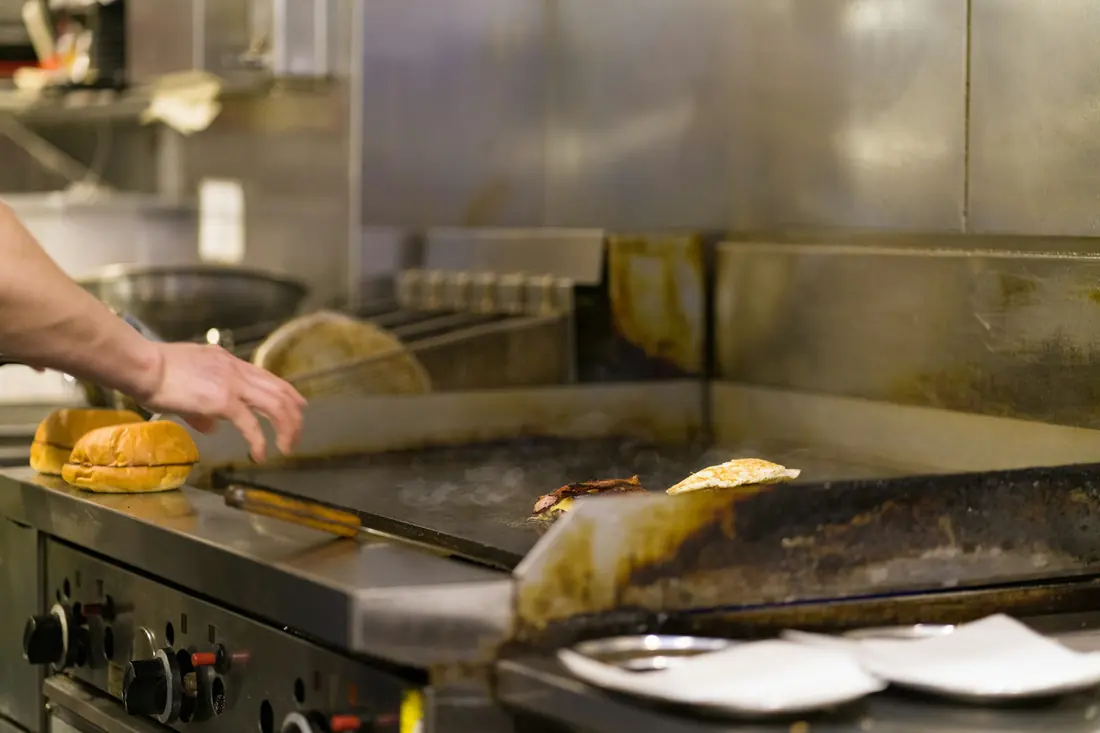
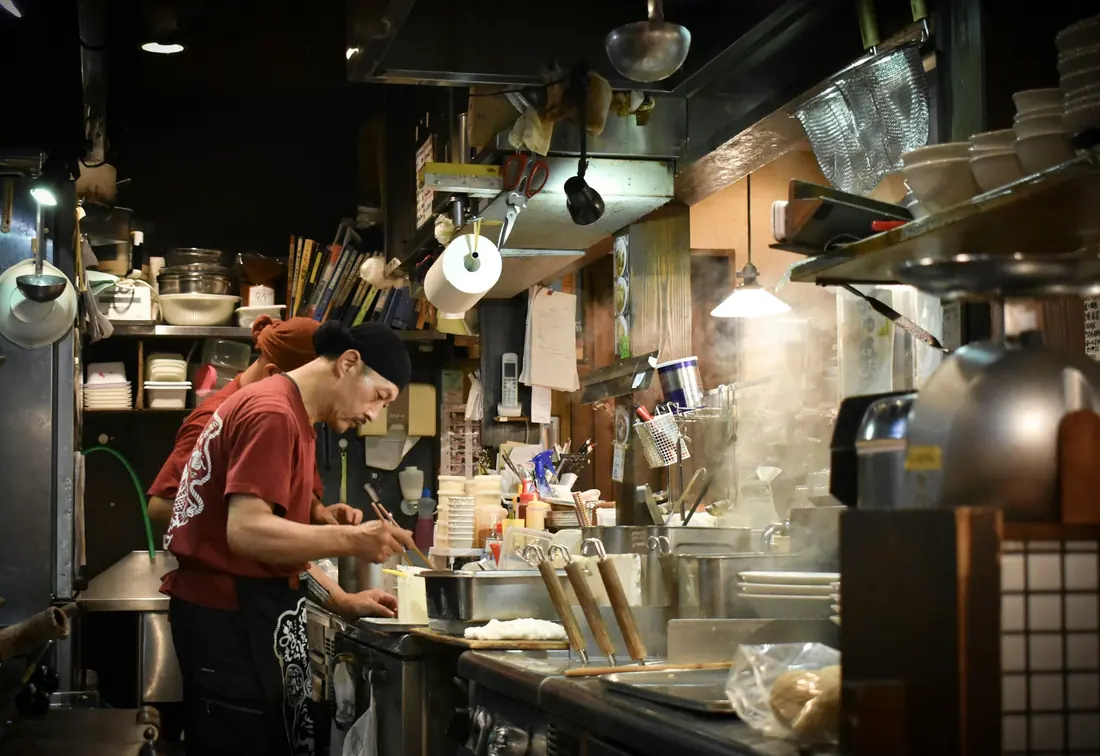
    A flat-top griddle in use in a restaurant kitchen

    The protein

    This is the first choice and the one that changes the plate most. Kitchens typically offer a range of meats alongside a vegetarian option, and some allow two proteins on a single plate.

    Cooking time is the practical difference between them. Everything is cooked to order on the same surface, so a plate does not take noticeably longer because of what you chose.

    Fried rice or steamed rice

    The second question, and the one people hesitate over most. Both are standard, and neither is an upgrade on the other.

    Fried riceSteamed rice
    CookedOn the griddle, to orderAhead, held hot
    TextureSeparate grains, slightly chewySoft and sticky
    SeasoningSeasoned as it cooksPlain
    Works well whenYou want the rice to be part of the dishYou want the sauces and protein to lead
    TravelsVery well – reheats without much lossFirms up when chilled
    Choosing between fried and steamed rice

    A simple way to decide: if you are having a heavily sauced protein, steamed rice gives it somewhere to go. If the protein is plainly seasoned, fried rice adds the flavour the plate would otherwise be missing.

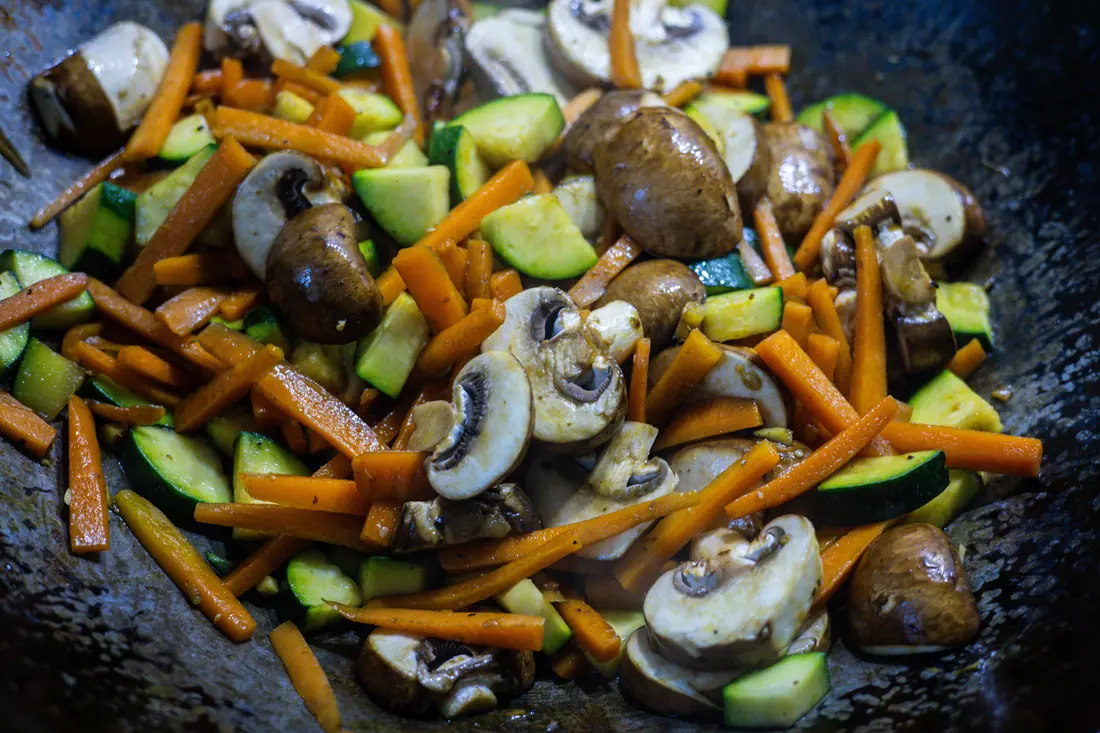
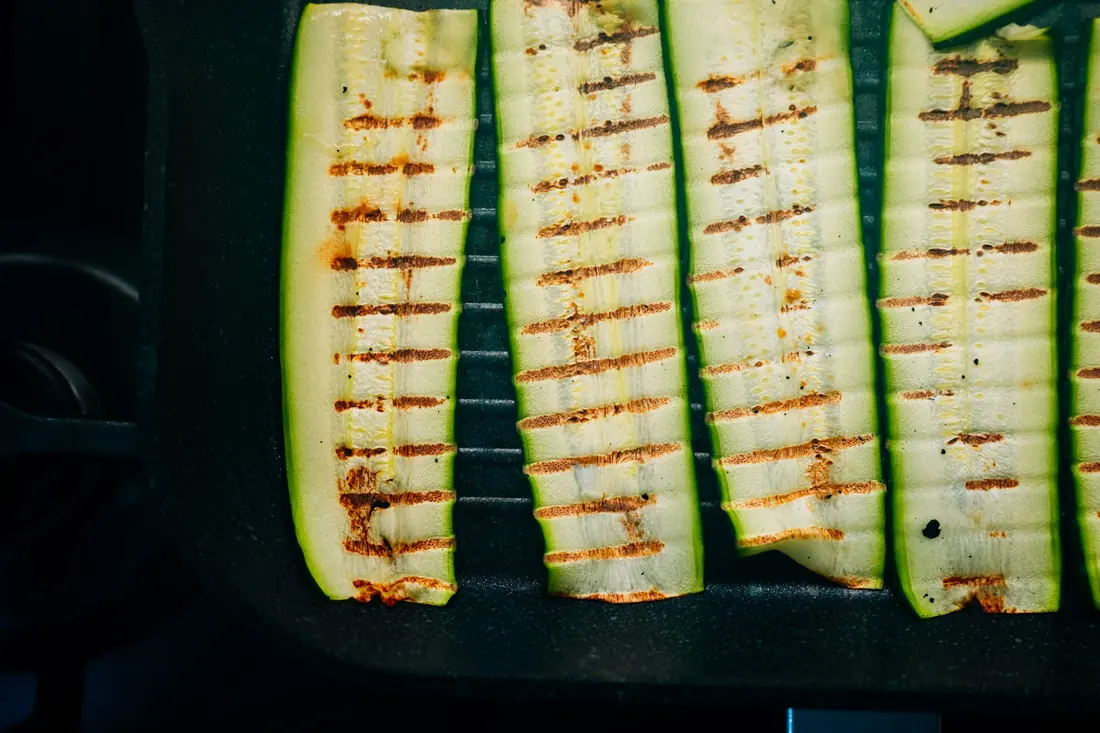
    Sliced zucchini grilled until marked

    Why it is cooked on a flat surface

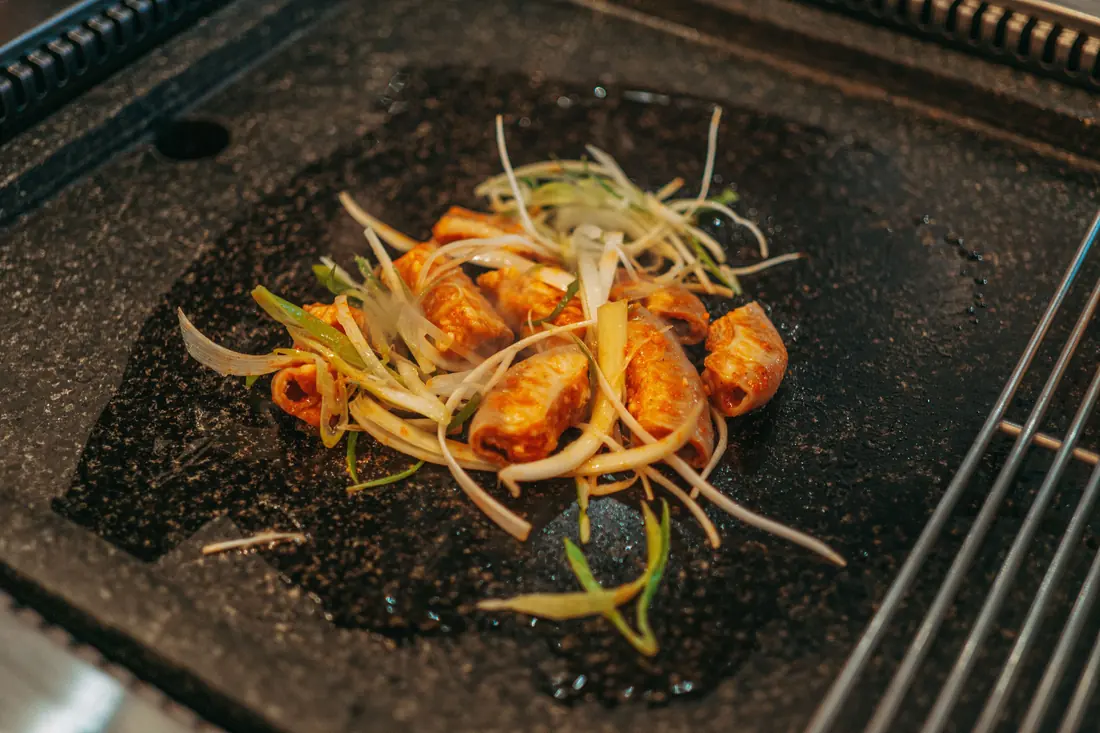
    The whole plate depends on the griddle, and the reason is contact. A flat steel surface touches every part of what sits on it, so heat moves into the food quickly and evenly instead of only where it meets a bar.

    That matters most for the things that would fall through a grate. Rice, small vegetable pieces and thinly cut protein all need a solid surface, and all three are on a hibachi plate.

    It also means everything can be cooked in the same place at the same time, which is why the components arrive together and equally hot rather than in the order they were started.

    The vegetables

    Grilled vegetables come as part of the plate rather than as a side you choose. What appears varies with what the kitchen has, but the treatment is consistent – cut into pieces that cook quickly, seared hard on the flat top, and seasoned simply.

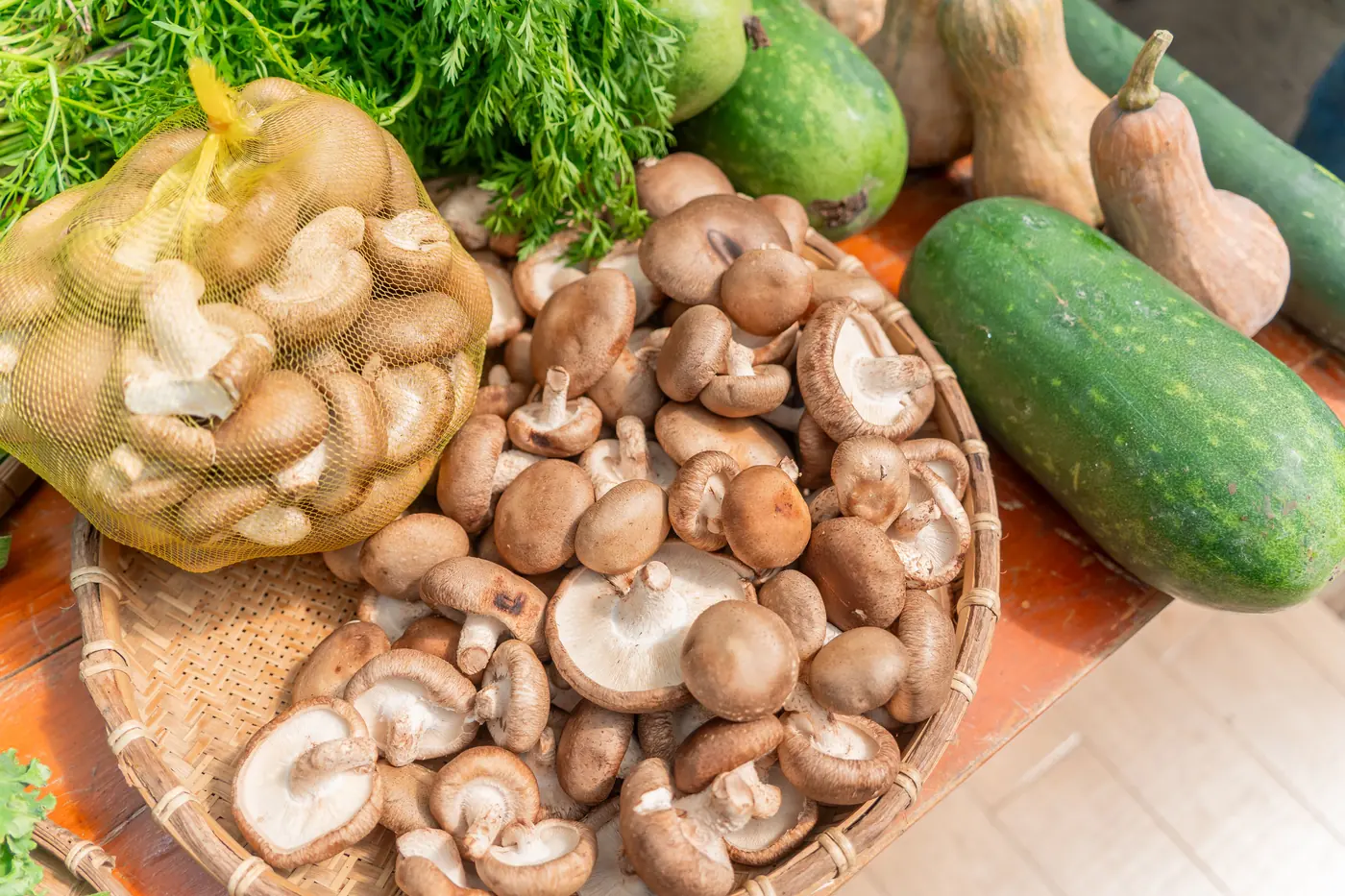
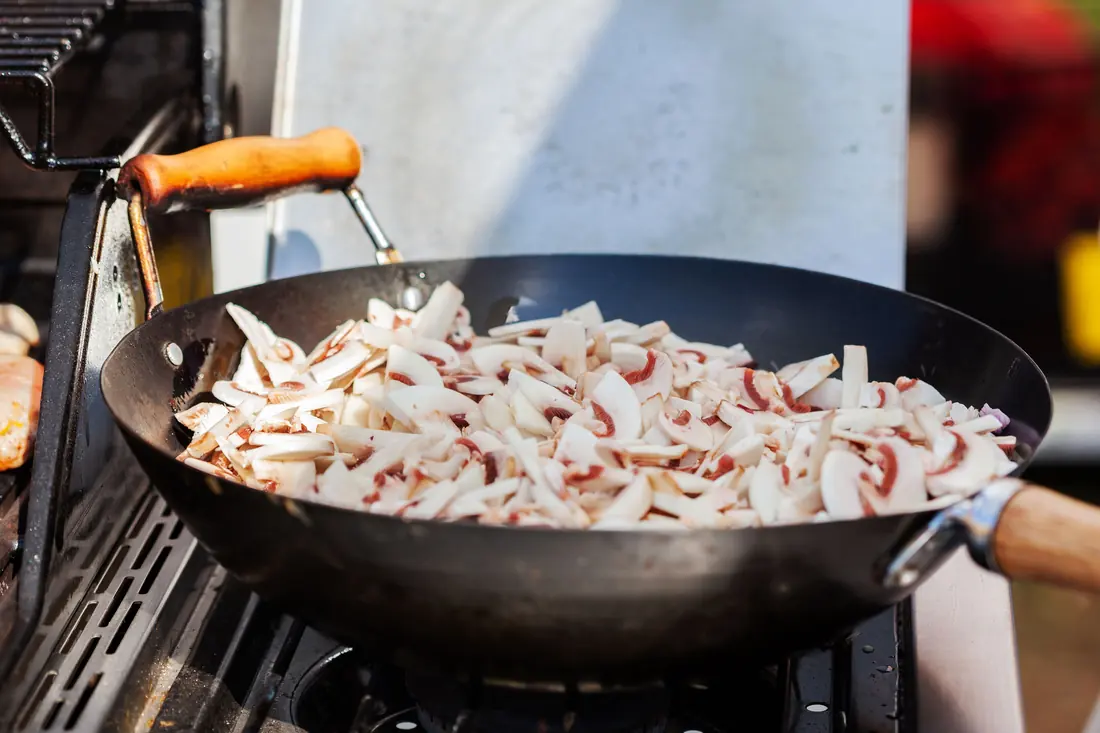
    Zucchini, onion, carrot and mushroom are the usual suspects, because all four hold their shape at high heat and pick up colour quickly. The searing is the point: it concentrates the flavour rather than softening it.

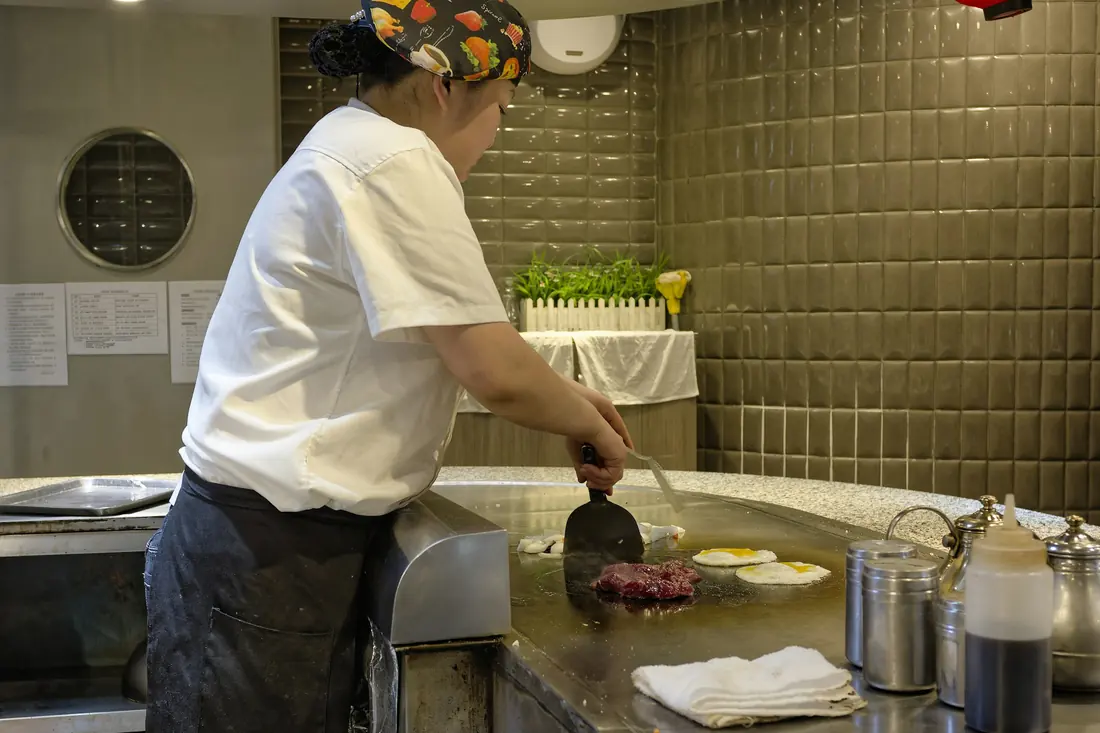
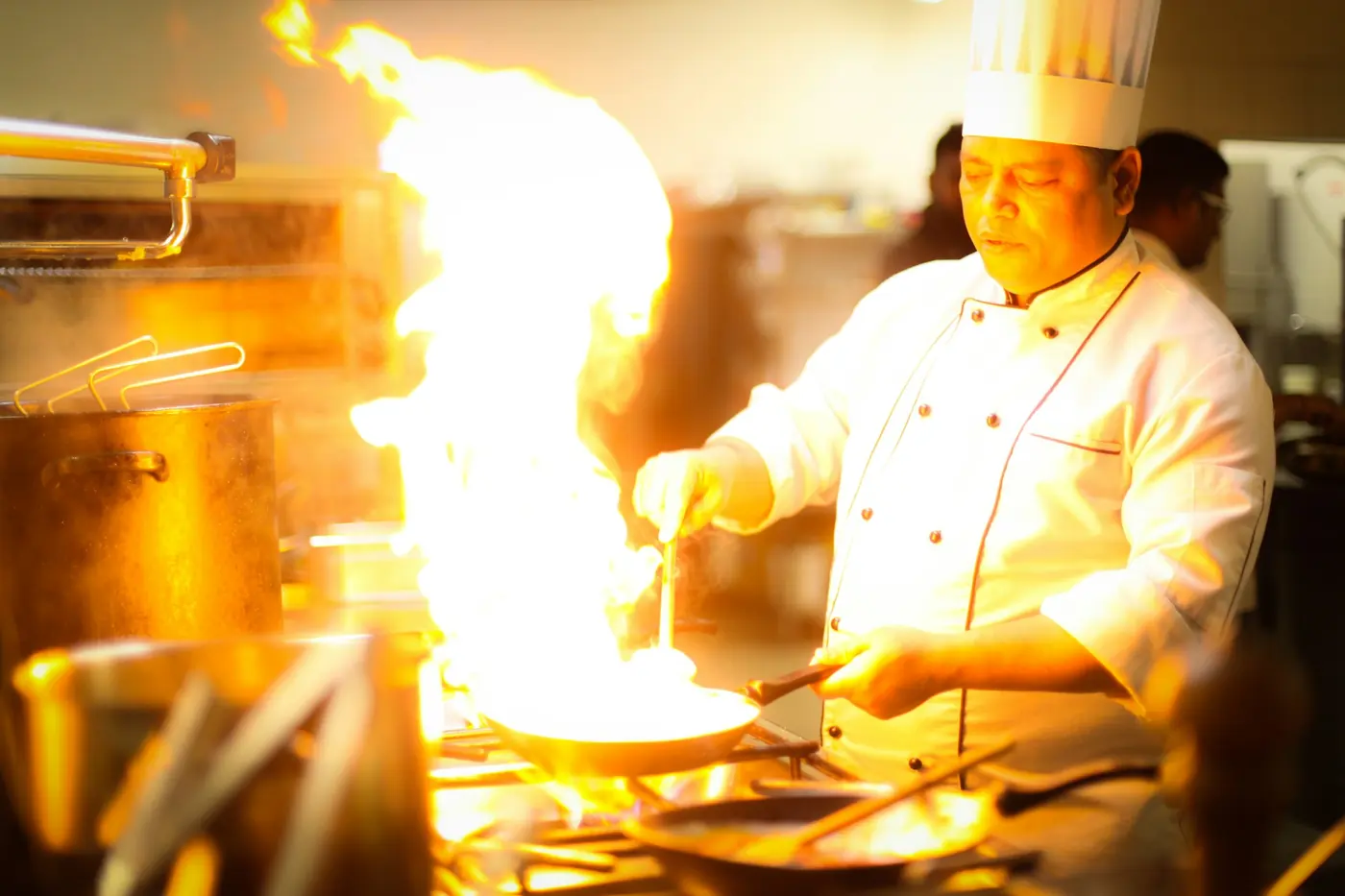
    A chef cooking on a flat teppan grill

    A small thing worth asking about: some kitchens will put both proteins and both rices on one plate if you ask, and some will not. It costs nothing to ask, and it is the easiest way to try two things on a first visit without ordering twice.

    Soup or salad

    The starter choice arrives before everything else, and it is a genuine fork in the road rather than a formality.

    • Miso soup – a light savoury broth made from fermented soybean paste, usually with tofu and seaweed in it. Britannica’s entry on miso covers where the paste itself comes from.
    • Onion soup – a clear broth, typically with fried onions, mushrooms and scallions.
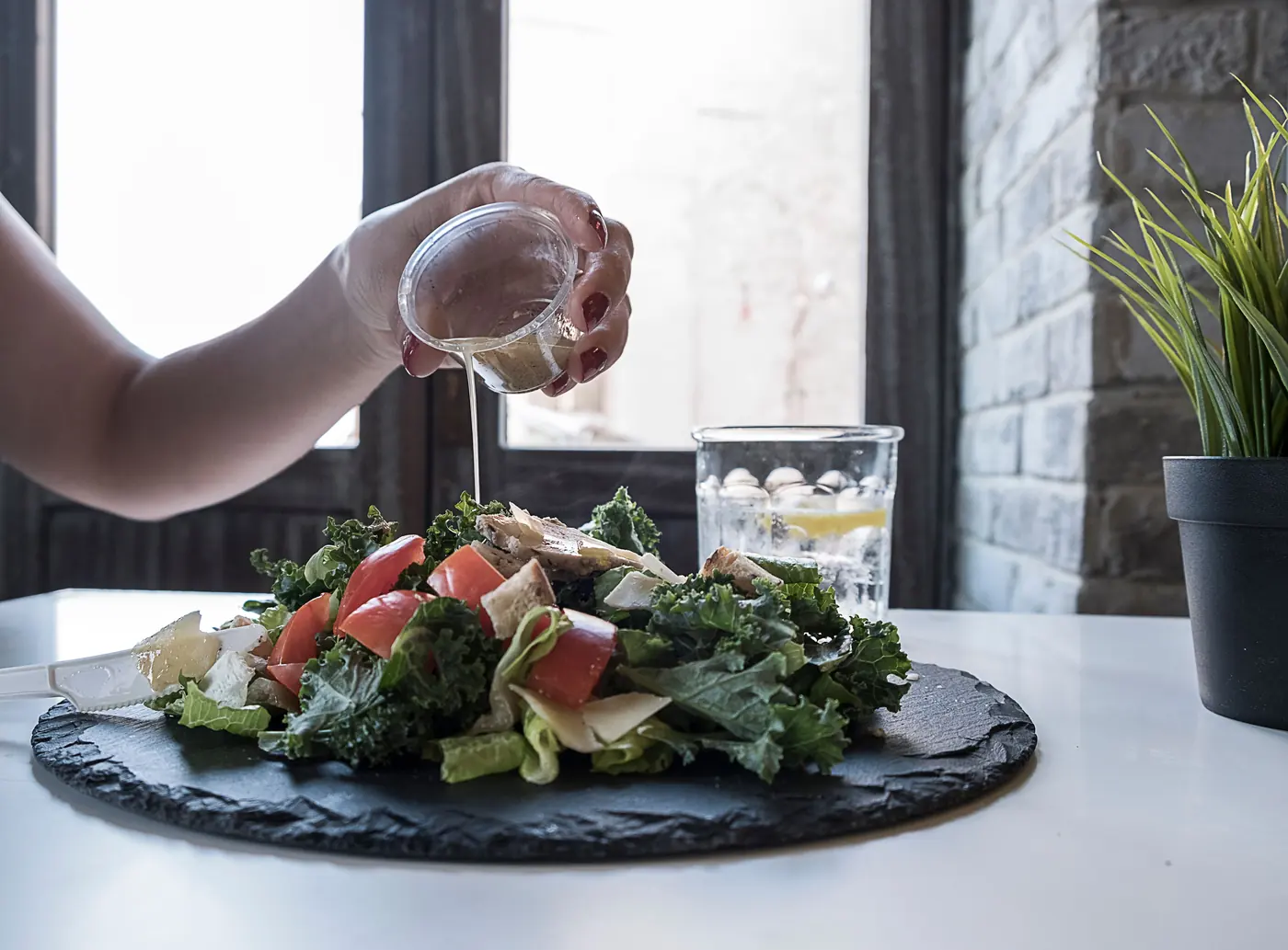
    • Salad – a small plate of leaves with a dressing, served cold.

    The salad is the better choice if the rest of your order is hot and heavy, because it resets the palate. The soup is better on a cold evening or when you are waiting for a table’s worth of food to arrive together.

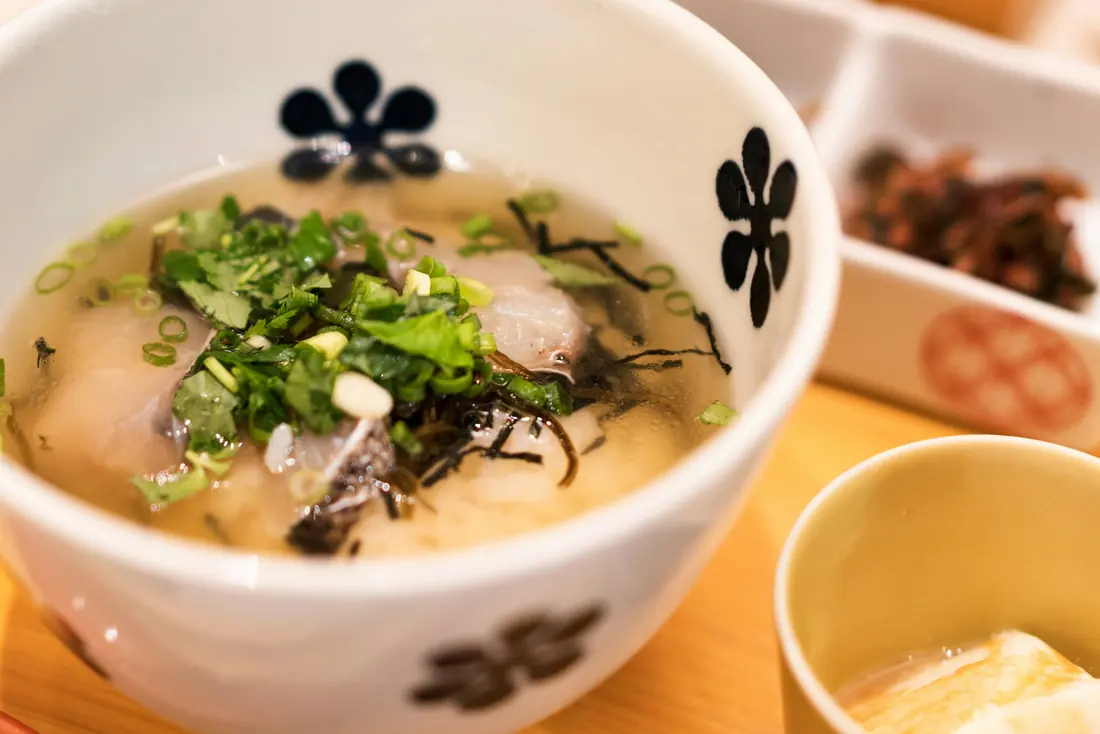
    A bowl of miso soup

    The sauces

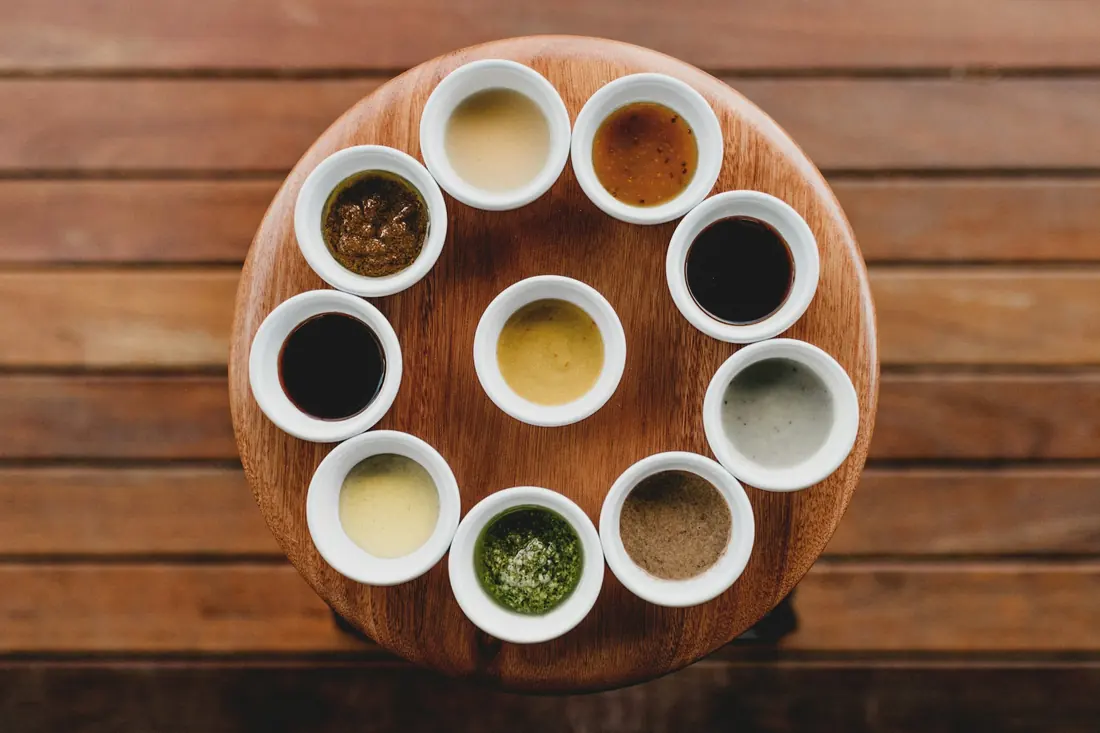
    Most kitchens send one or two sauces with the plate. A pale, thick, mildly sweet sauce is near-universal; a thinner, darker, saltier one often comes alongside it.

    Use them sparingly at first. The protein and vegetables are already seasoned on the grill, and the sauces are designed to accent rather than coat. It is easy to add more and impossible to take it back off.

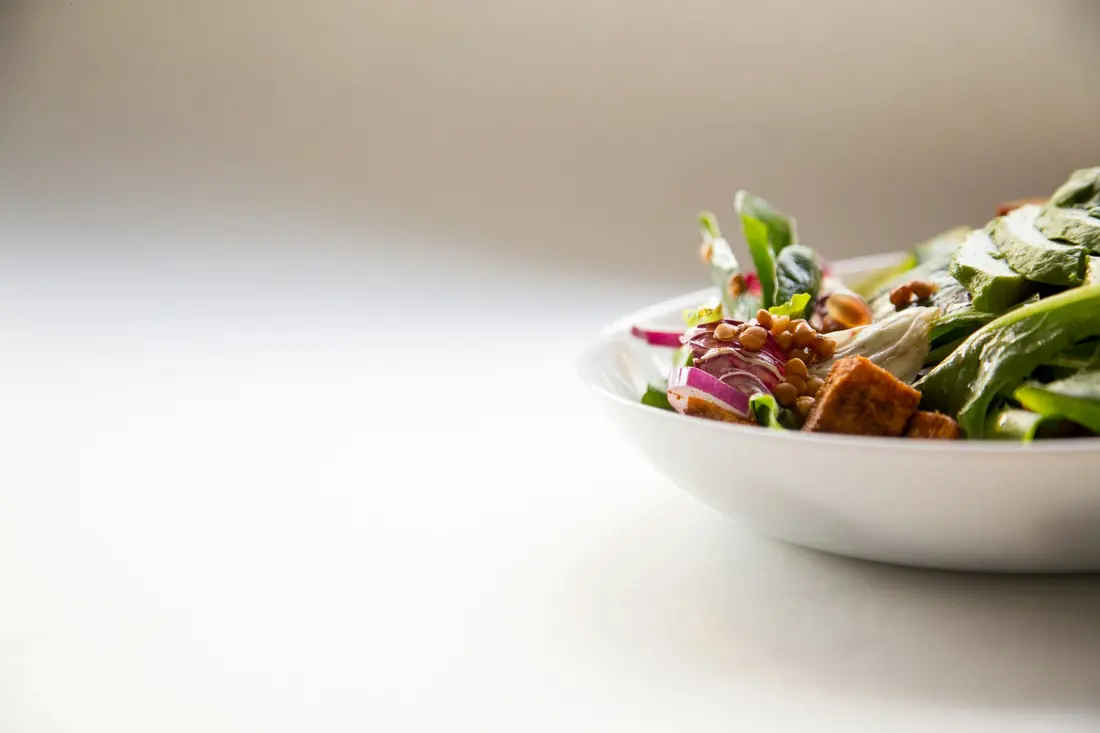
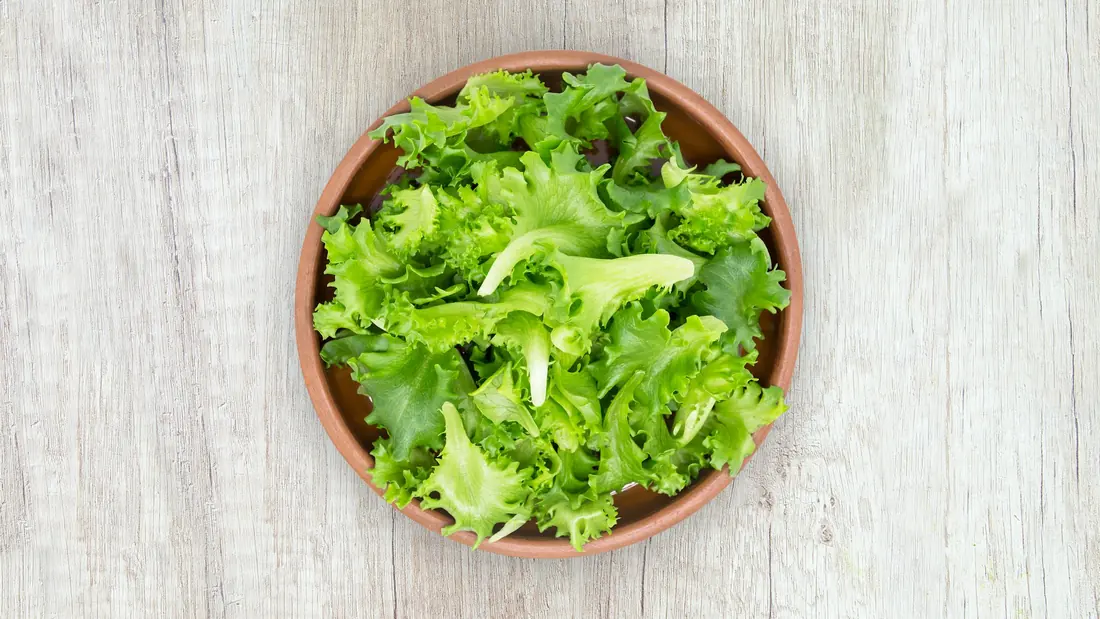
    A simple green salad in a bowl

    How the plate is timed

    From the kitchen’s side the order runs backwards from what you might expect. The starter goes out immediately, because it is already made. The rice is started next, since it takes the longest on the griddle.

    The vegetables follow, then the protein, which is usually the quickest thing on the plate and is cooked last so it is not sitting while everything else finishes.

    This is worth knowing if you are ordering with a group. Adding one more plate does not delay the table much, because the griddle is already hot and running, but adding fried appetisers partway through the meal usually does.

    How much food it actually is

    A hibachi plate is generous by design. Between the protein, a full portion of rice and the vegetables, it is comfortably a full meal for one person, and the starter sits on top of that.

    This matters when ordering for a group. Two plates and something to share often feeds three people more comfortably than three plates, particularly if anyone is also ordering rolls.

    Ordering it for a child

    Hibachi is one of the easier things on an Asian restaurant menu to order for a child, largely because it is recognisable. Grilled protein, rice and vegetables on one plate needs no explanation.

    Two adjustments make it simpler still: ask for the sauces on the side rather than on the plate, and choose steamed rice, which is plainer than the seasoned fried version. Between them, that removes almost everything a cautious eater might object to.

    Ordering it to take away

    Hibachi is one of the better things to order for eating at home. Grilled protein and rice hold their texture on the drive and reheat the next day without much loss, which is not true of most fried food.

    Two small adjustments help. Ask for the sauces separately if that is an option, so the rice does not sit in them, and choose fried rice over steamed if the meal is going to be reheated rather than eaten straight away.

    If you are still deciding whether hibachi is the right order at all, our guide to what hibachi actually means explains the grill it is named after, the soup comparison goes further into the starter choice, and the three-way comparison helps if a table cannot agree. The current selection is on the ordering page.

    Frequently Asked Questions

    Does a hibachi plate come with rice?

    Yes. Rice is part of the plate rather than a side you add, and you are normally asked whether you want it fried or steamed.

    What is the difference between the soup and the salad option?

    The soup is hot and savoury – miso is a soybean paste broth, onion soup is a clear broth with fried onions and mushrooms. The salad is a cold plate of leaves with dressing. You choose one, not both.

    Can you order hibachi without meat?

    Vegetarian options are a standard part of how hibachi is served. What is available varies by kitchen, so it is worth checking when you order.

    Is fried rice or steamed rice better with hibachi?

    Neither is better. Fried rice is seasoned and cooked to order; steamed rice is plain and lets sauces lead. Choose steamed if your protein is heavily sauced.

    Is a hibachi plate enough for two people?

    It is built as a single meal, but it is a generous one. Two plates plus something shared usually suits three people better than three plates.

  • Hibachi vs Teppanyaki: What You’re Actually Ordering

    Hibachi vs Teppanyaki: What You’re Actually Ordering

    In Japan these are two different things. In the United States the words have collapsed into one, and “hibachi” now describes a style of cooking it does not technically refer to at all.

    The short answer

    A hibachi is a small charcoal brazier with an open grate — food sits over the fire. Teppanyaki is cooking on a flat solid iron plate, usually built into a table, and it is what almost every American restaurant advertising “hibachi” is actually doing. The difference is grate versus griddle.

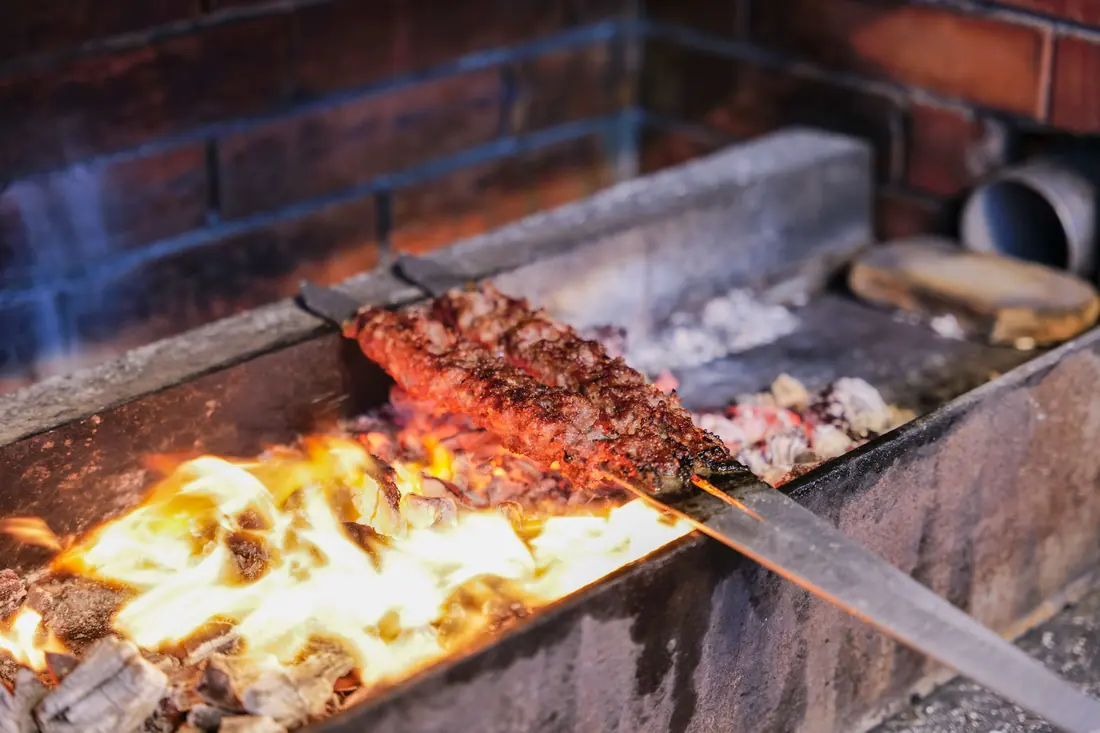
    Skewers cooking over an open charcoal fire

    What a hibachi originally was

    The word translates roughly as “fire bowl”. Traditional hibachi were open, round or box-shaped containers holding burning charcoal, used for heating rooms as much as for cooking. Food went on a grate above the coals, which is why anything cooked this way picks up smoke.

    A chef cooking on a griddle in front of seated diners

    That is grilling in the ordinary sense: direct heat, open air, minimal seasoning, with the flavour coming from the fire. Japan’s own cooking traditions are strongly regional, and the Japanese government’s guide to regional cuisine shows how much variation sits behind the handful of dishes that travelled abroad.

    What teppanyaki is

    Teppan means iron plate and yaki means grilled or pan-fried. There is no grate and no exposed flame under the food. Everything cooks on a flat steel surface, which means nothing falls through, sauces can be added directly, and rice and noodles can be cooked on the same surface as the protein.

    Fried rice being turned on a griddle with metal spatulas

    The theatrical version — the chef cooking at a table in front of guests, with knife work and an onion volcano — is a mid-twentieth-century restaurant format that became the American image of Japanese dining. It is teppanyaki, not hibachi.

    Hibachi and teppanyaki compared

    Hibachi (traditional)Teppanyaki
    SurfaceOpen grate over coalsFlat solid iron plate
    Heat sourceCharcoal or woodGas or electric under steel
    FlavourSmoky, from the fireSavoury, from sauces and butter
    SeasoningMinimalSoy, garlic, butter, sauces
    Can cook rice or noodlesNo — they would fall throughYes, on the same surface
    Typical settingSmall, portable, domesticBuilt into a table or counter
    What US menus call itRarely offeredUsually labelled “hibachi”
    What the two terms actually describe.

    What arrives when you order “hibachi”

    At a fast casual restaurant it is a plate rather than a performance. The protein is seared on the flat top, vegetables are cooked alongside it, and rice comes with it.

    Vegetables sizzling on a hot steel cooking plate

    Roll & Go Sushi’s hibachi follows that format: seared on a flat top grill, with a choice of meat or vegetarian options, either fried or steamed rice, fresh grilled vegetables, and a choice of soup or salad. There is no table-side show — it is cooked in the kitchen and plated.

    That distinction matters when you are deciding where to eat. A teppanyaki steakhouse is an evening out with a booking. A fast casual hibachi plate is lunch.

    Where the American version came from

    The table-side format arrived in the United States in the 1960s and spread quickly. It solved a practical problem: it made an unfamiliar cuisine legible to diners who had never eaten Japanese food, by turning the cooking into something you could watch and understand.

    It worked, and it shaped what several generations of Americans think Japanese restaurants are. That is why the vocabulary drifted — the format was marketed as hibachi, and the name stuck to the griddle rather than to the brazier it originally described.

    None of which makes it inauthentic in any useful sense. It is a real style of cooking with a real history; it just is not the thing the word originally meant.

    Steakhouse or fast casual?

    The two formats deliver quite different evenings, and the menu word is the same for both, so it is worth checking which you are booking.

    • Teppanyaki steakhouse — a seated table around a built-in griddle, a chef cooking in front of you, a set sequence of courses, and an hour or more at the table. Usually a booking, usually an occasion.
    • Fast casual hibachi — the same cooking method done in the kitchen, plated and handed over. Faster, cheaper, and equally suited to lunch or takeaway.

    If you want the show, look for tables with grills built into them. If you want the food, the fast casual version gives you the same plate without the wait.

    Fried rice or steamed?

    Where a choice is offered, it changes the plate more than people expect. Fried rice is cooked on the same surface with egg and seasoning, so it carries some of the same flavour as the protein. Steamed rice stays neutral and lets sauces do the work.

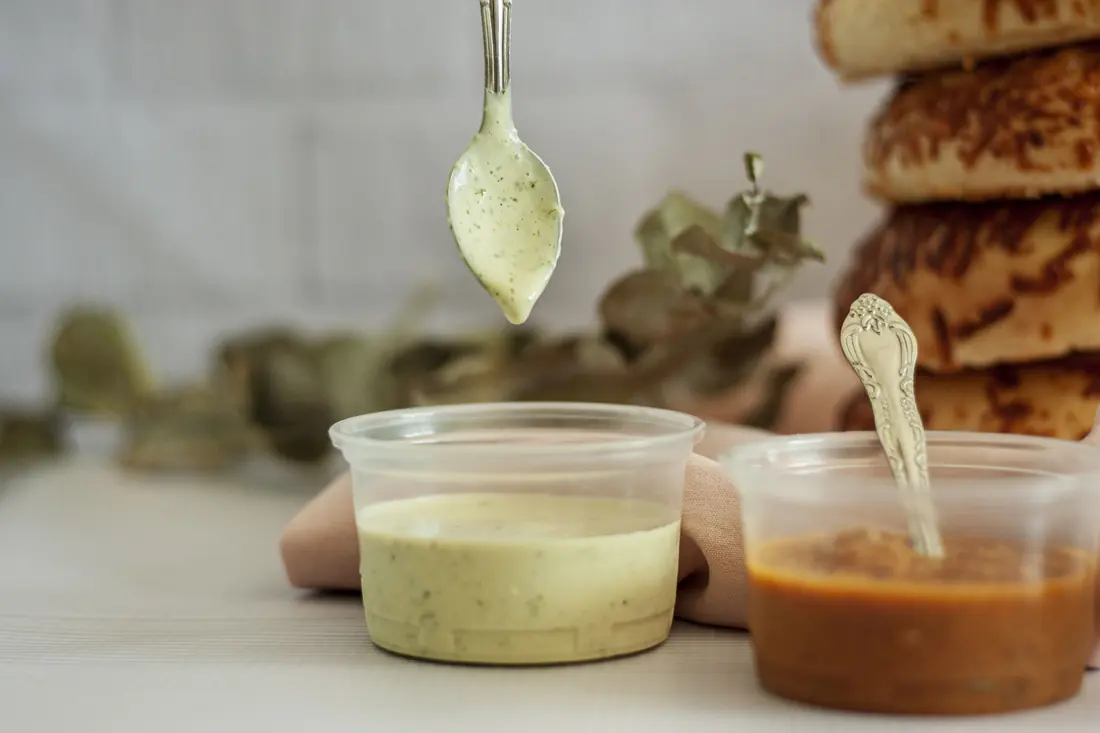
    A selection of small dipping sauces in individual cups

    If the protein is already heavily sauced, steamed rice balances it. If you want the whole plate to taste of the grill, fried rice is the one.

    What the vegetables tell you

    A flat top lets vegetables cook in the same fat and seasoning as the protein, which is why hibachi vegetables taste different from steamed or roasted ones. Onion, courgette, mushroom and carrot are the usual set, cut to sizes that finish at roughly the same time as the meat.

    They also serve a practical purpose on the plate. Grilled food with rice can be heavy on its own, and the vegetables provide the moisture and sweetness that stop it becoming monotonous.

    Roll & Go Sushi’s hibachi comes with fresh grilled vegetables as standard, alongside the rice and the choice of soup or salad, so the plate arrives balanced rather than needing additions.

    The sauces

    Two usually appear alongside a hibachi plate in the United States, and neither is traditional Japanese cooking.

    • The pale, creamy one — mayonnaise-based, mildly sweet, sometimes called yum yum sauce. An American invention, and the one most people reach for.
    • The thin brown one — ginger-based, sharper, closer to a dressing. Better with vegetables than with rice.
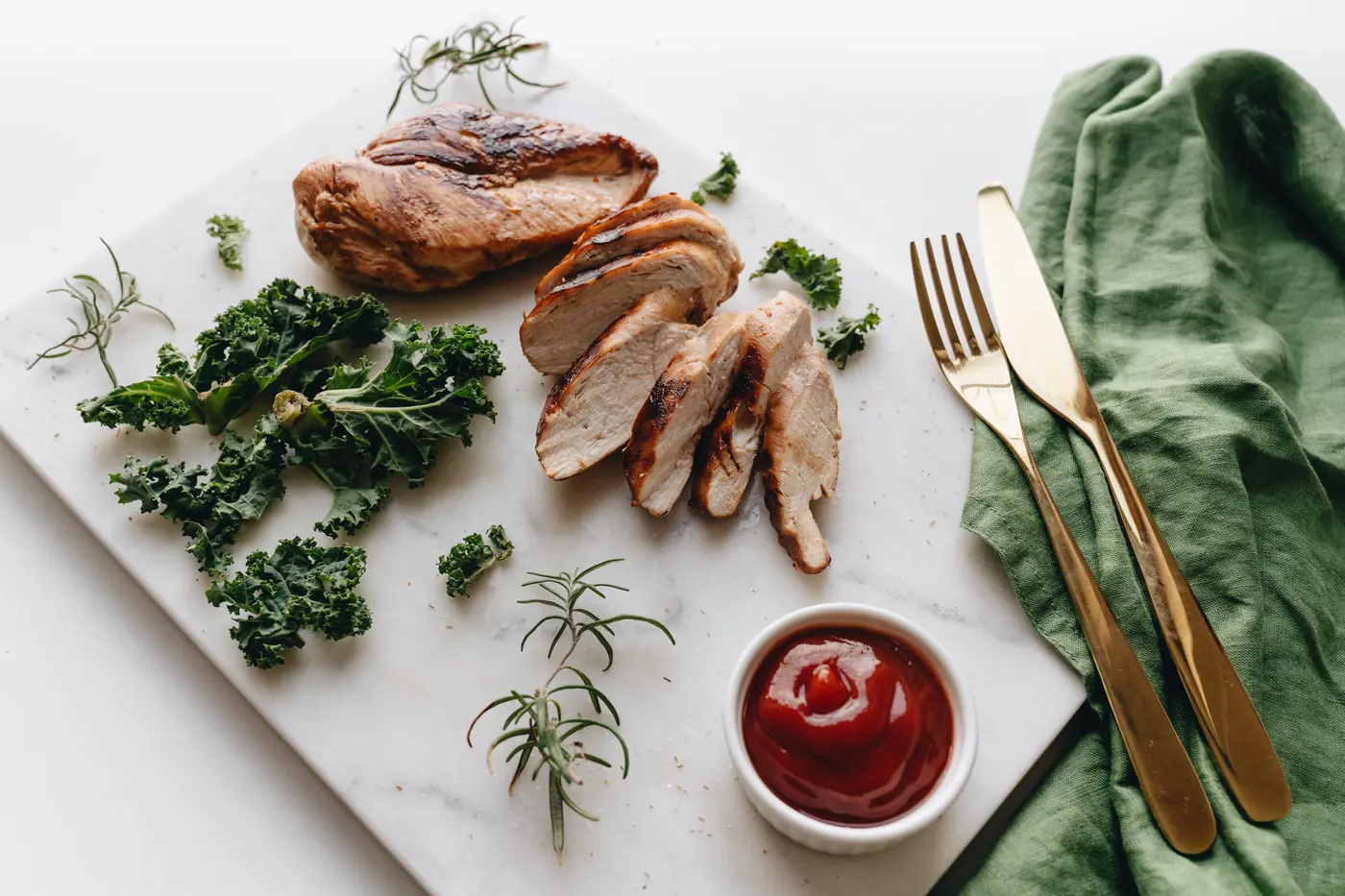
    Grilled chicken plated with shredded daikon

    Both are optional. A well-seasoned plate does not need either, and using them heavily flattens the flavour that came off the grill.

    Ordering it for a first visit

    A hibachi plate is one of the safest first orders on any Asian kitchen menu. The structure is familiar, the portion is predictable, and the choices you are asked to make are limited to the protein and the rice.

    It also travels well, which makes it a reasonable choice if you are ordering to take home rather than eating in. Grilled protein and rice hold their texture far better than fried food does, and reheat without much loss the next day.

    If you are still weighing it against the other things on the menu, comparing hibachi with sushi and pho is the quickest way to narrow it down, particularly when you are ordering for a table with different tastes.

    Frequently Asked Questions

    Is hibachi Japanese or American?

    The word and the original brazier are Japanese. The restaurant format most Americans picture — a chef cooking on a flat griddle at your table — is teppanyaki, and the table-side show developed in the United States.

    Why do American restaurants call teppanyaki hibachi?

    It became the common usage decades ago and stuck. Most menus now use “hibachi” to mean flat-top cooking, and nobody in the industry expects it to mean a charcoal brazier.

    Does hibachi always come with a show?

    No. At fast casual restaurants it is cooked in the kitchen and plated like any other dish. The performance belongs to teppanyaki steakhouses with table grills.

    What normally comes with a hibachi plate?

    Usually a protein, grilled vegetables and rice, often with a soup or salad. The exact combination varies by restaurant, so check the menu.

    If you want smoke, you want a charcoal grill. If you want a seared plate with rice and vegetables, you want what the menu calls hibachi — which is teppanyaki, and there is nothing wrong with that.

    You can see the current hibachi options, or compare them with the stir-fried noodle dishes cooked on the same surface.

  • Yaki Soba vs Lo Mein: How Stir-Fried Noodles Differ

    Yaki Soba vs Lo Mein: How Stir-Fried Noodles Differ

    Both are wheat noodles cooked with vegetables and a brown sauce, and both turn up on menus across the United States. They are not the same dish, and the difference is mostly in the sauce and the pan.

    The short answer

    Yaki soba is Japanese: noodles stir-fried hard on a hot surface with a tangy, slightly sweet sauce, so the edges catch and crisp. Lo mein is Chinese: noodles boiled first, then tossed with a soy-based sauce off the heat, so they stay soft and glossy. Yaki soba is fried; lo mein is dressed.

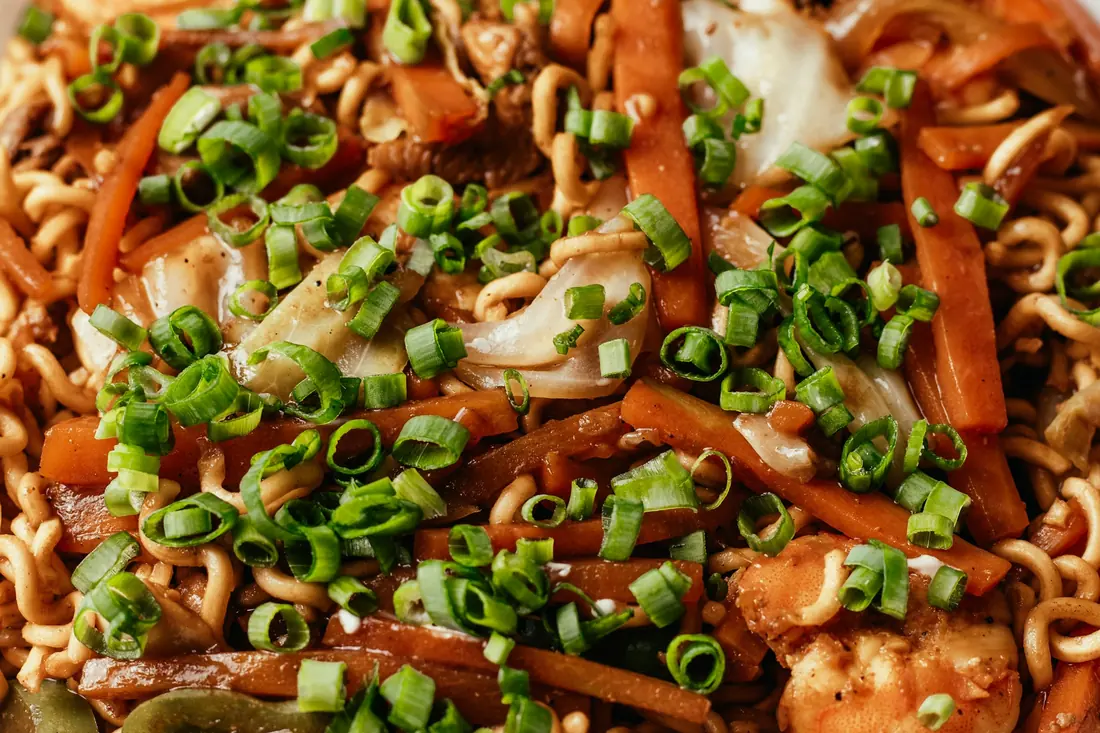
    Stir-fried noodles tossed with vegetables and spring onion

    What yaki soba is

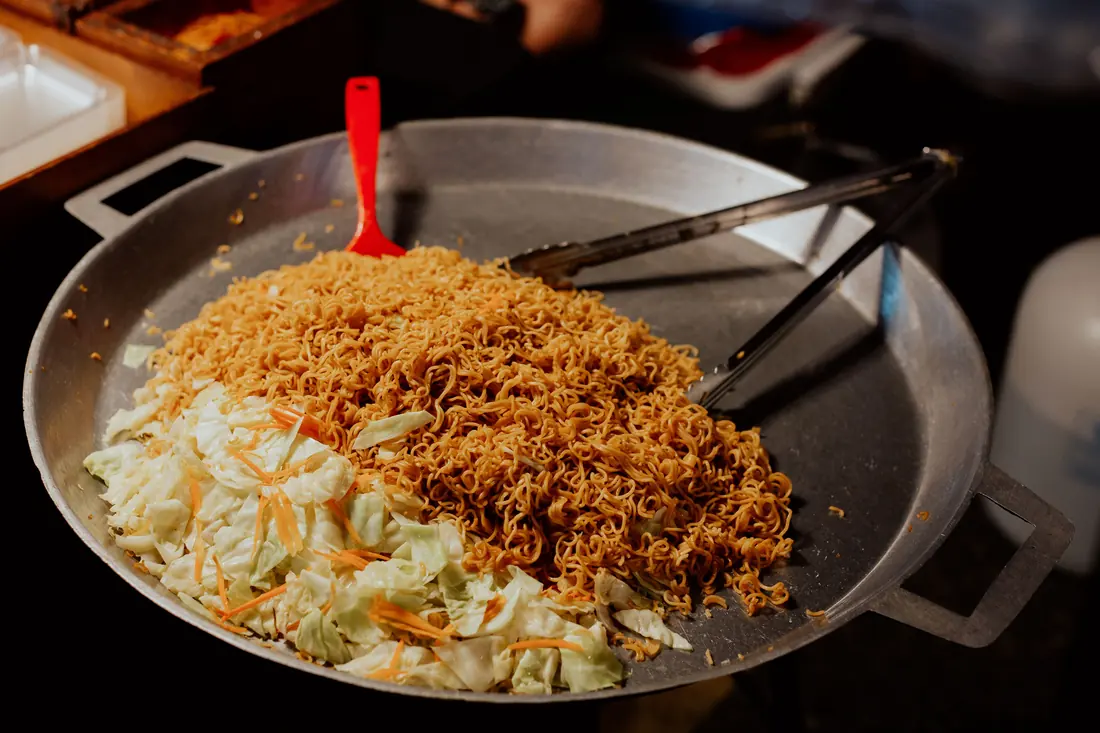
    Yaki means grilled or fried, and soba here is misleading — despite the name, yaki soba uses wheat noodles rather than buckwheat ones. They are the same family of noodle used for ramen, cooked on a flat top or in a wok with cabbage, onion and carrot, plus a protein.

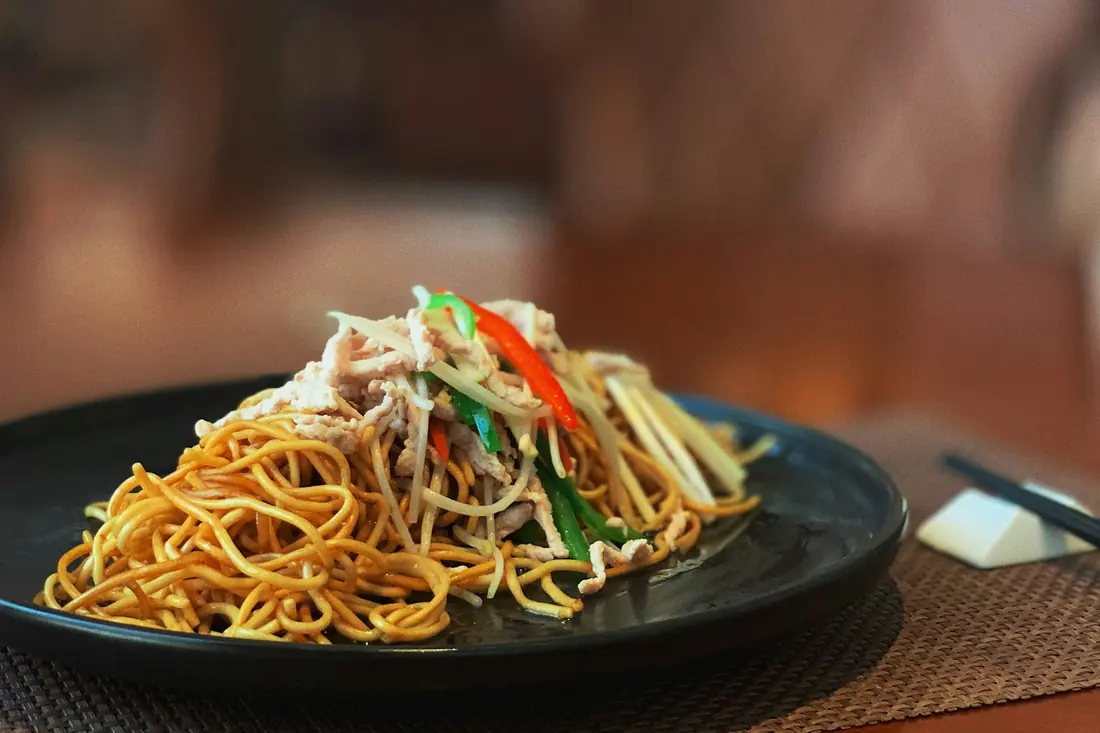
    Soft egg noodles coated in a dark sauce

    The defining element is the sauce: dark, fruity and tangy, closer to a thin Worcestershire than to soy sauce. It goes on during cooking, reduces against the hot surface, and coats the noodles rather than pooling.

    Roll & Go Sushi lists yaki soba stir-fry noodles among its Asian dishes alongside sushi, hibachi and pho.

    What lo mein is

    Lo mein means “tossed noodles”, and the method is in the name. The noodles are boiled to done, drained, then combined with cooked vegetables and protein and a soy-based sauce. The pan is often off the heat by that point.

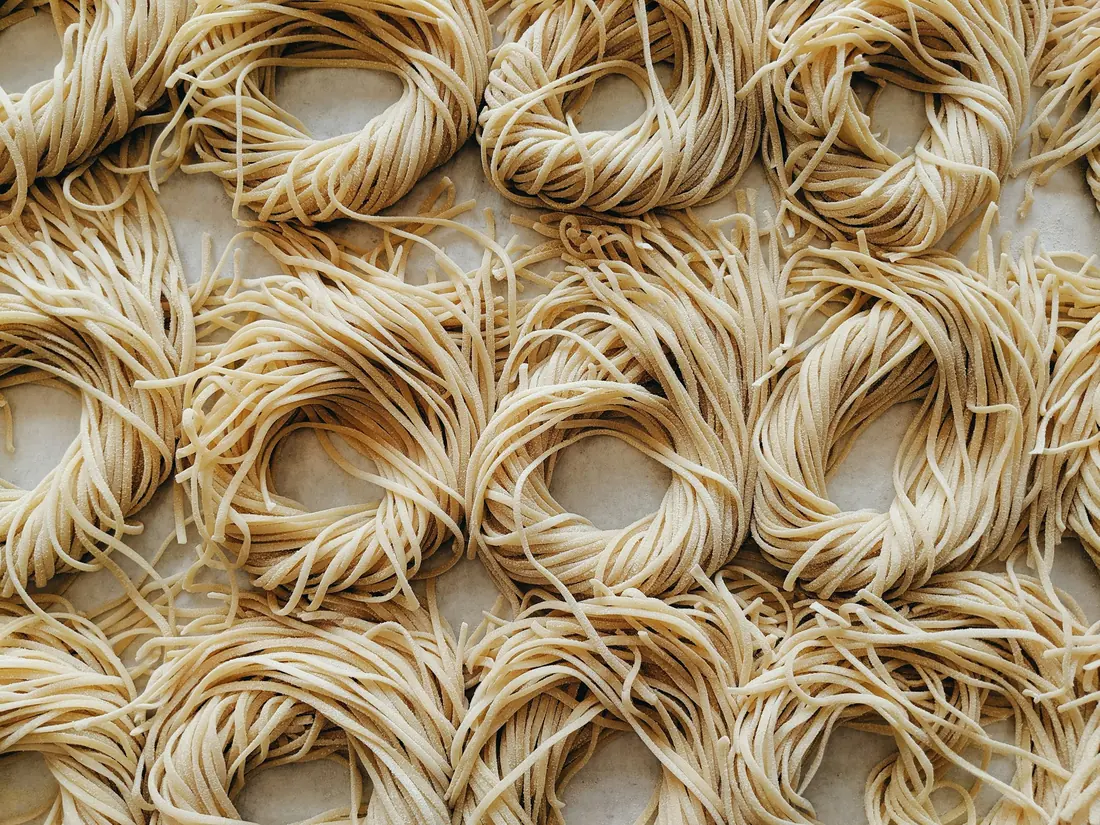
    Bundles of dried wheat noodles before cooking

    Because nothing fries, the noodles stay soft and slippery, and the sauce sits on them as a coating rather than caramelising into them. Britannica’s entry on noodles covers how widely wheat-noodle cooking varies across Asia.

    Yaki soba and lo mein compared

    Yaki sobaLo mein
    OriginJapanChina
    NoodleWheat, ramen-styleWheat, often egg noodles
    MethodStir-fried hard on a hot surfaceBoiled, then tossed with sauce
    SauceTangy, fruity, slightly sweetSoy-based, savoury
    TextureSome crisp edges, drierSoft and glossy throughout
    Usual vegetablesCabbage, onion, carrotVaries widely
    Common garnishPickled ginger, seaweed flakesScallion
    How the two stir-fried noodle dishes differ.
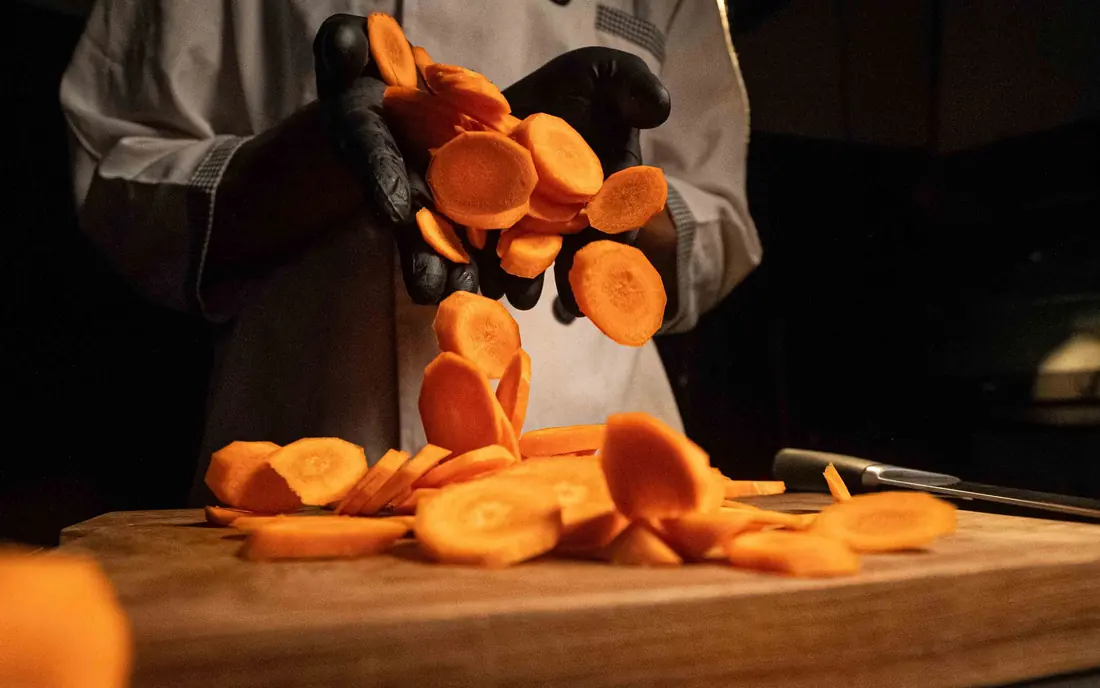
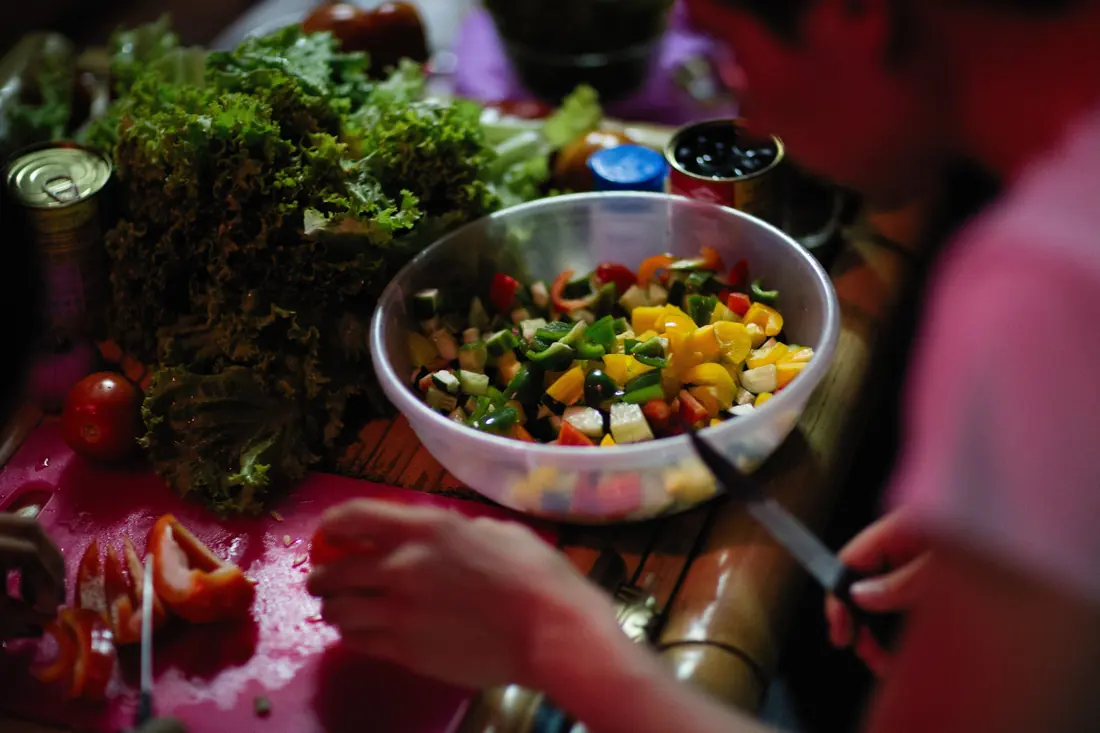
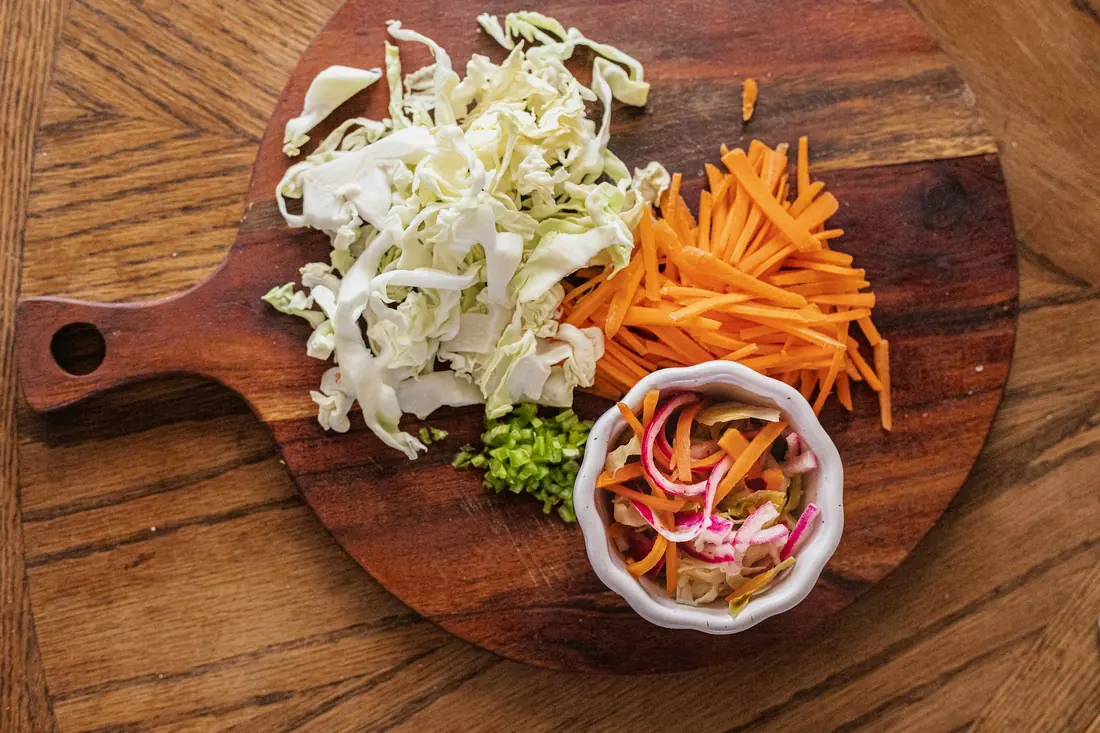
    Sliced cabbage and carrot prepared for stir-frying

    How to tell them apart on the plate

    If the noodles look dry-ish with browned edges and a matte coating, it is yaki soba. If they are uniformly glossy and slide off the fork, it is lo mein.

    Colour helps too. Yaki soba tends toward a warmer brown from the reduced sauce; lo mein is darker and more even, because the sauce was added at the end rather than cooked down.

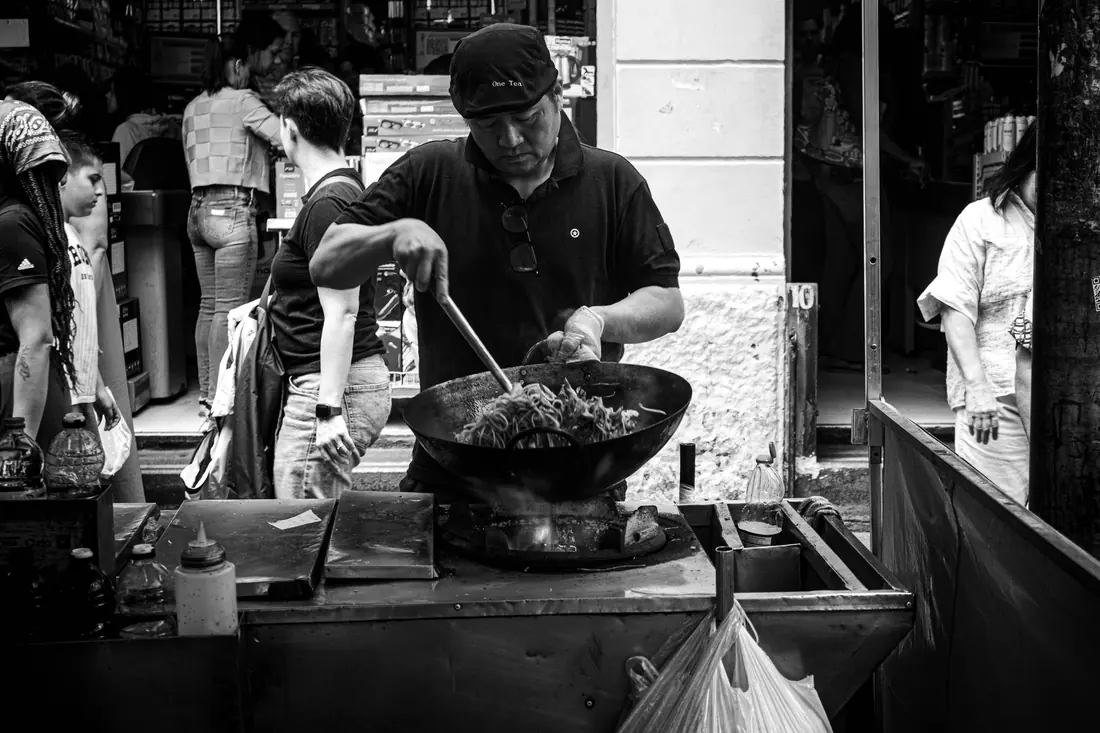
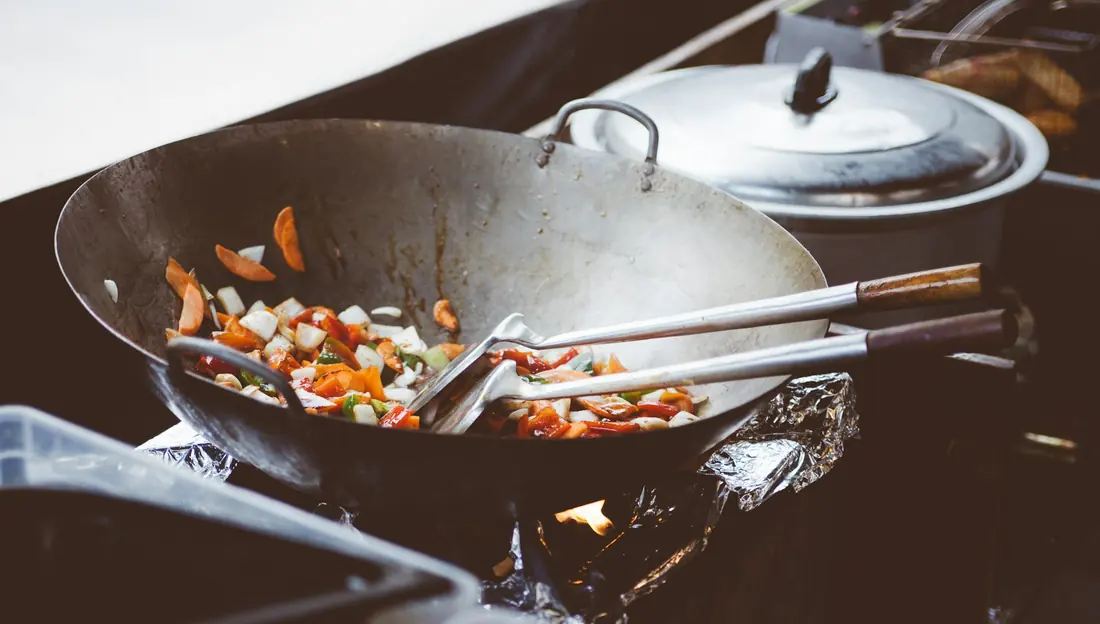
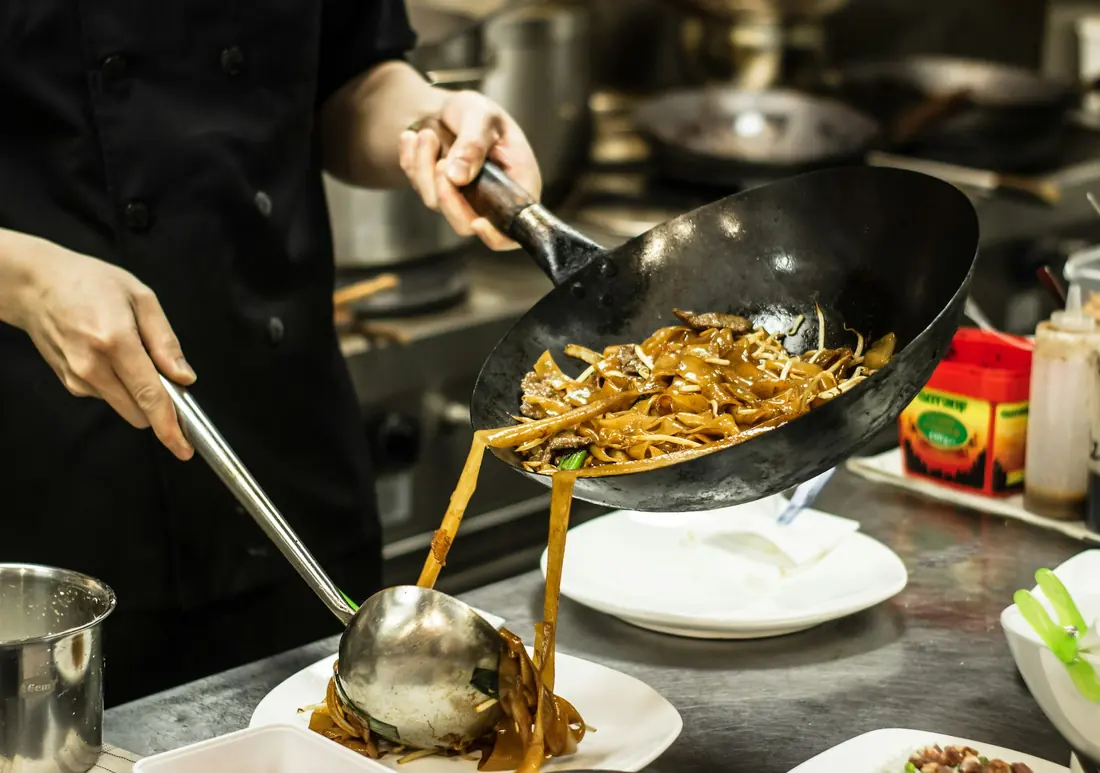
    A cook tossing noodles in a wok with tongs

    Which should you order?

    • Like texture and slightly charred edges — yaki soba.
    • Prefer soft noodles and a savoury sauce — lo mein.
    • Want something that reheats well — lo mein holds up better, since there is no crispness to lose.
    • Ordering alongside grilled food — yaki soba shares a flavour vocabulary with hibachi, which makes for a coherent table.
    • Feeding a mixed group — lo mein is the more neutral of the two and tends to please more people.

    Where chow mein fits in

    Chow mein is the third dish people confuse with these two, and it belongs closer to yaki soba than to lo mein. The noodles are fried rather than tossed, sometimes until genuinely crisp, and the sauce is soy-based like lo mein.

    So the rough map is: lo mein is boiled and dressed, chow mein is fried with a soy sauce, and yaki soba is fried with a tangy fruit-and-vinegar sauce. Method and sauce are the two variables, and every one of these dishes is a different combination of them.

    How restaurants get the texture

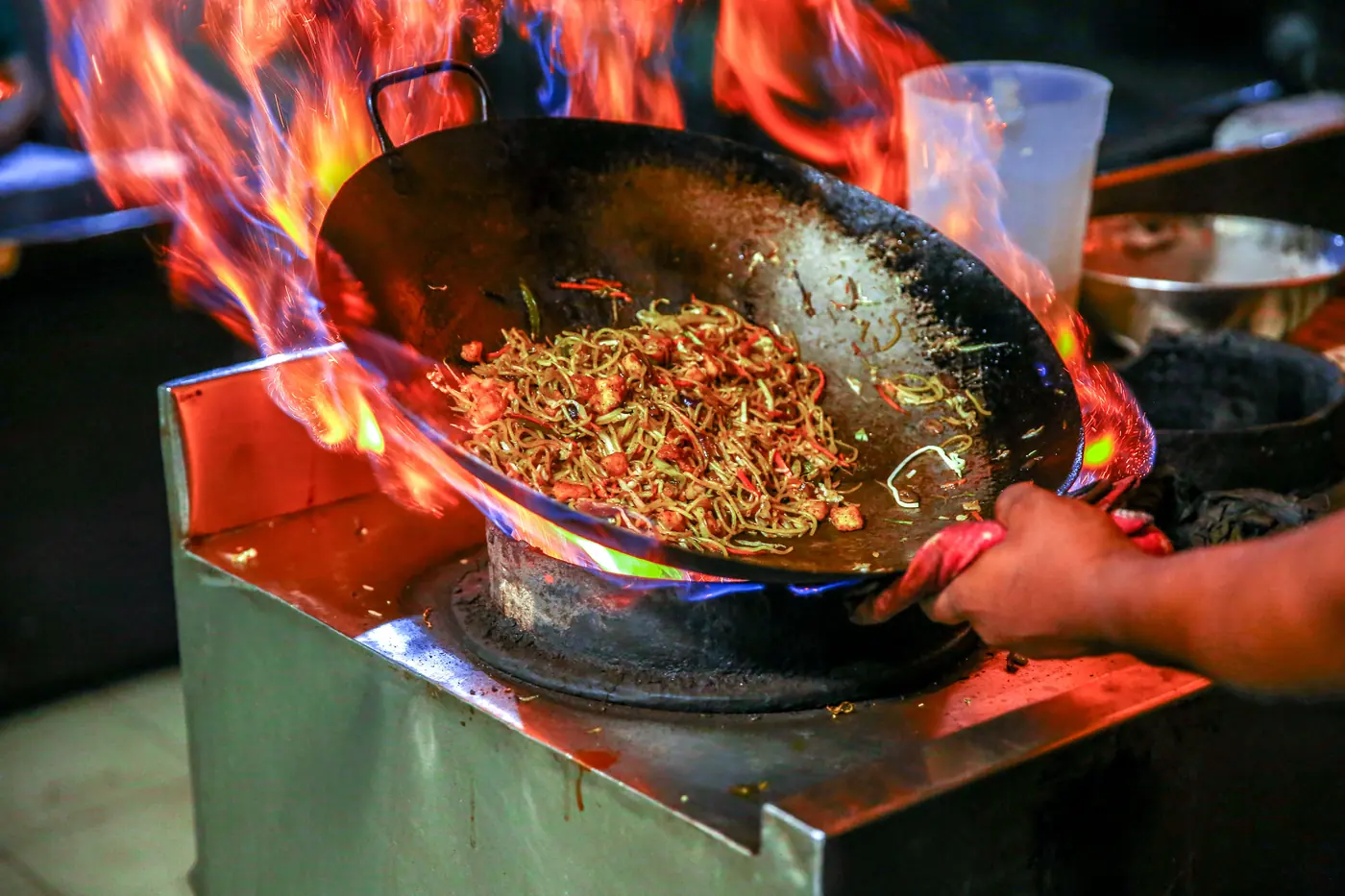
    The reason a restaurant stir-fry tastes different from a home one is mostly heat. A commercial burner or flat top runs far hotter than a domestic hob, which lets the noodles catch and brown in seconds rather than steaming in their own moisture.

    That heat is also why the dish is cooked in small batches. Overloading the surface drops the temperature and the noodles go soft, which is exactly the failure mode people run into cooking it at home in one big pan.

    Practically, this means yaki soba is at its best straight out of the kitchen. It still reheats acceptably, but the crisp edges that define it are the first thing to go.

    A note on the word soba

    This trips people up constantly. Plain soba refers to thin buckwheat noodles, usually served cold with a dipping sauce or hot in broth. Yaki soba is a different thing entirely and contains no buckwheat.

    If you are looking for actual buckwheat soba, the menu will normally say so, and it will not be a stir-fry.

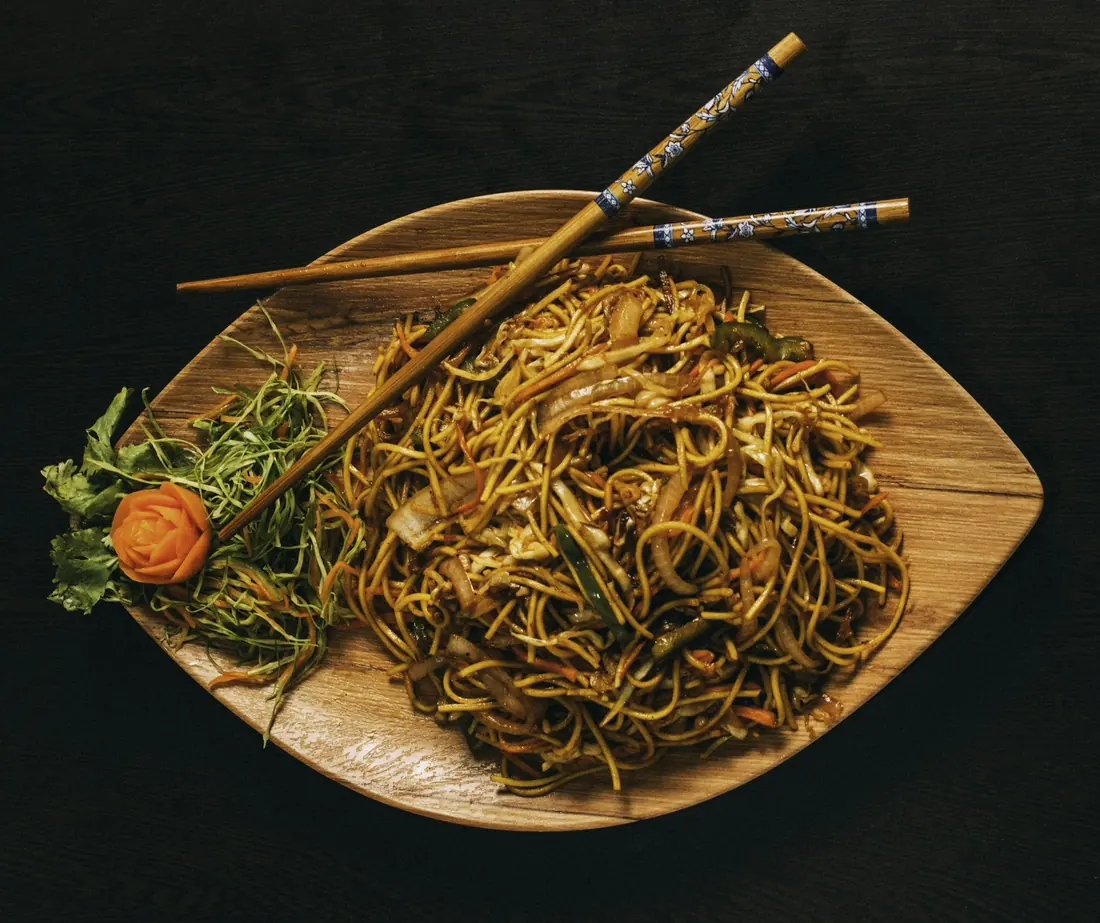
    Stir-fried noodles plated on a serving dish

    Which one reheats better

    If you routinely have leftovers, this is the practical difference between them. Lo mein reheats almost perfectly, because there is no texture to lose — the noodles were soft to begin with and the sauce protects them.

    Yaki soba reheats acceptably but never returns to what it was. The browned edges soften in the fridge and do not come back, so what you get the next day is a perfectly good noodle dish that is missing the thing that made it distinctive.

    A dry pan works better than a microwave for both. A minute or two over a medium heat, moving them constantly, recovers more texture than steaming them in a covered dish does.

    Ordering it as part of a meal

    A noodle plate is filling and works as a main course on its own. If the table is sharing, it sits comfortably next to sushi — the noodles are warm and savoury, the rolls are cool and clean, and neither overwhelms the other.

    What does not work as well is pairing a noodle stir-fry with a full bowl of noodle soup. Two large noodle dishes is more starch than most people want, so if someone is having a bowl of pho, choose something else alongside.

    Portion sizes for both tend to be generous, since noodles are cheap relative to protein and kitchens plate them accordingly. If you are ordering several dishes for a table, one noodle plate usually stretches further than the menu suggests, so it is worth ordering it as a shared item rather than one each.

    What usually comes with them

    Both dishes are normally sold as a complete plate rather than a side. A protein is included or chosen — chicken, beef, shrimp or vegetables are the usual options — and the vegetables are cooked into the noodles rather than served separately.

    That makes them one of the better value items on most menus, and one of the easier things to order when you want a single dish rather than a combination. If you are sharing, one noodle plate between two alongside something else works well.

    Garnishes vary. Yaki soba is often finished with pickled ginger or dried seaweed flakes, both of which are there to cut the sweetness of the sauce. They are worth eating rather than pushing aside.

    Frequently Asked Questions

    Is yaki soba made with buckwheat noodles?

    No, despite the name. Yaki soba uses wheat noodles, the same style used for ramen. Buckwheat soba is a separate dish.

    Is lo mein the same as chow mein?

    No. Lo mein noodles are boiled and tossed with sauce; chow mein noodles are fried, often until crisp. Chow mein sits closer to yaki soba in method.

    Which one is spicier?

    Neither is spicy by default. Both are savoury, and any heat comes from chilli added separately or from a specific version on the menu.

    Can I get either without meat?

    Many restaurants offer vegetable versions, but preparation varies between kitchens. Ask when you order if this matters to you.

    One is fried and tangy, the other is tossed and savoury. Both are good; they are just not substitutes for one another.

    Have a look at the noodle and stir-fry options, or read how flat-top cooking works if the method interests you.