
Author: Speed Cooking

  • Ordering Asian Takeout in Daphne: Pickup vs Delivery

    Ordering Asian Takeout in Daphne: Pickup vs Delivery

    Ordering Asian food to take home involves a few decisions that do not come up when you eat in: what survives the drive, whether to collect it yourself, and how long you actually have before the food stops being at its best.

    Pickup or delivery?

    Pick up if you are within about ten minutes and want the food at its best, particularly anything fried or raw. Use delivery if convenience matters more than texture, or if you are ordering dishes that hold well — grilled plates, stir-fried noodles and soups packed properly.
    The illuminated Roll & Go Sushi Asian Kitchen storefront sign in Daphne, Alabama

    What travels well, and what does not

    Not everything degrades at the same rate. Roughly, in order of how well it holds:

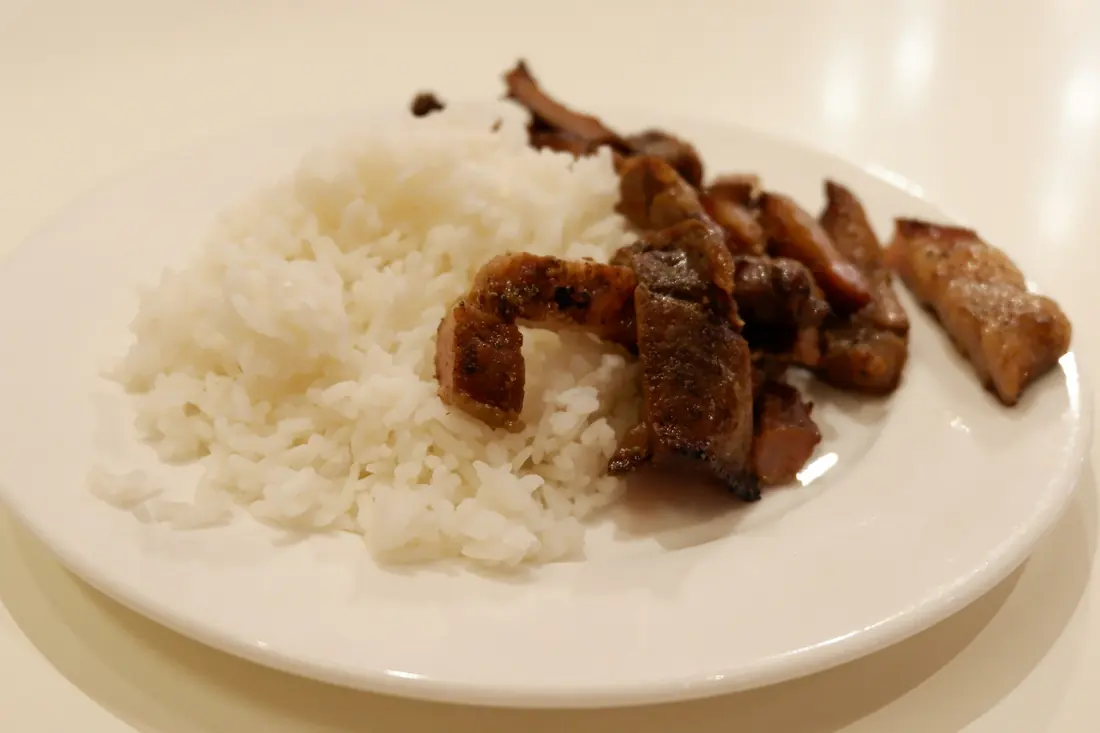
    • Holds well — hibachi plates, stir-fried noodles, anything grilled with rice. These are robust and reheat without much loss.
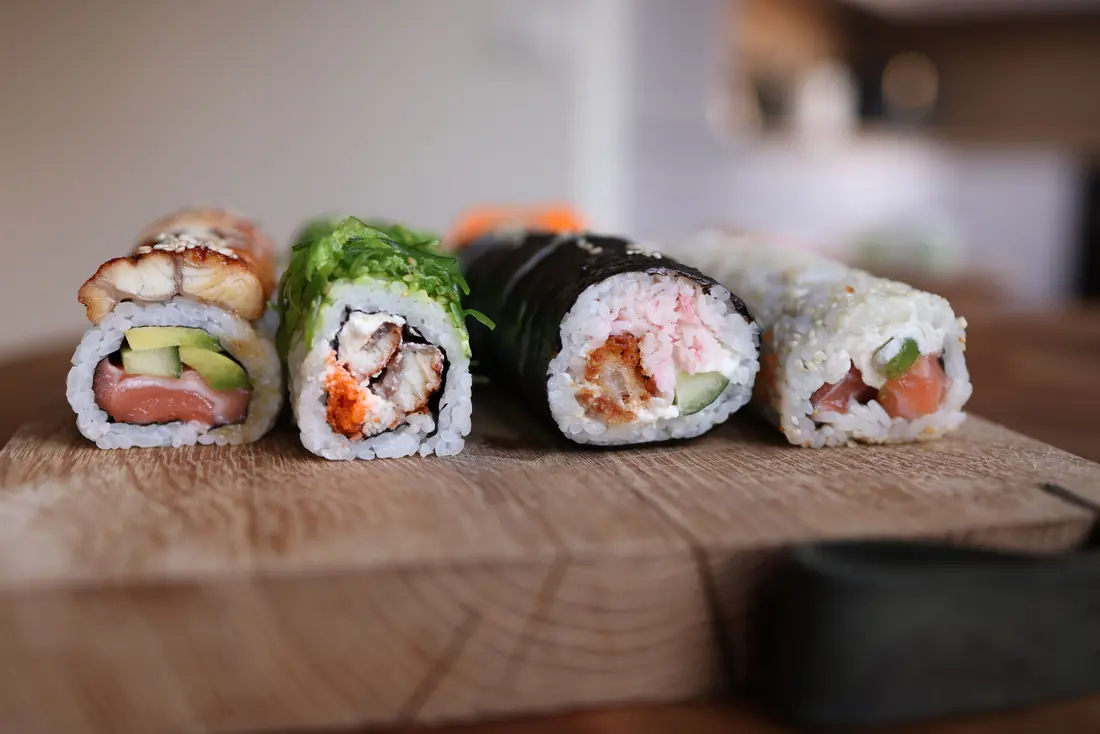
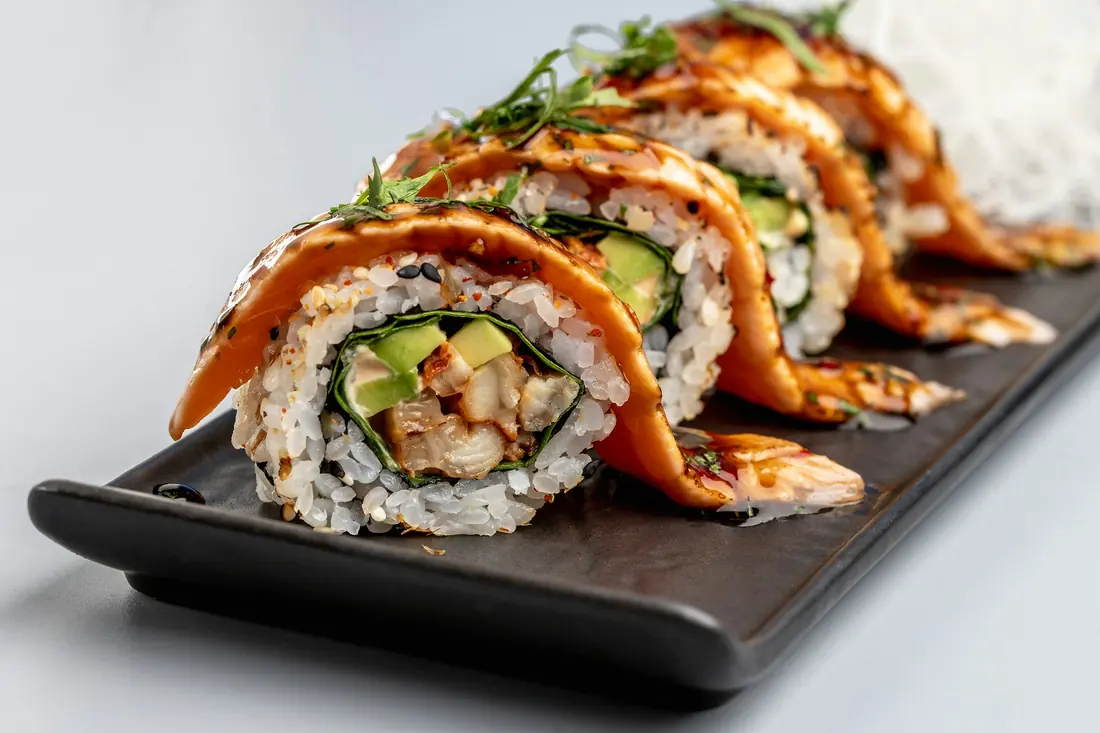
    • Holds reasonably — cooked and glazed sushi rolls, crab salad rolls. They soften slightly but stay pleasant.
    • Time-sensitive — tempura and anything fried, which loses its crispness within about fifteen minutes of leaving the kitchen.
    • Best eaten soon — rolls with raw fish on top, and noodle soup, where the noodles keep absorbing broth in the container.

    A member of staff taking a call inside a restaurant

    Ordering noodle soup to go

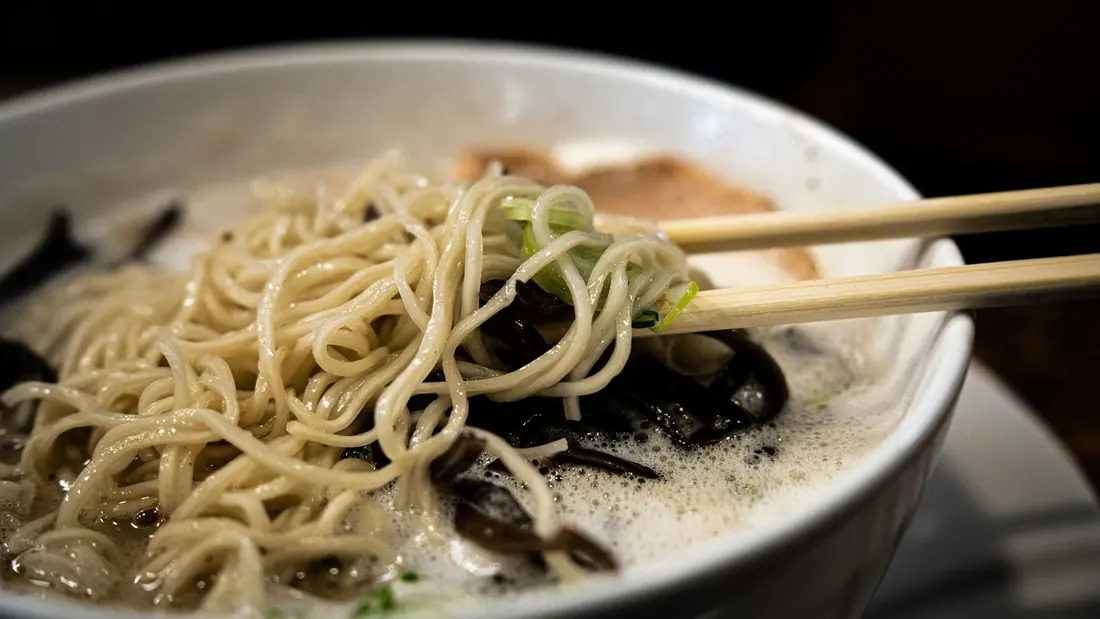
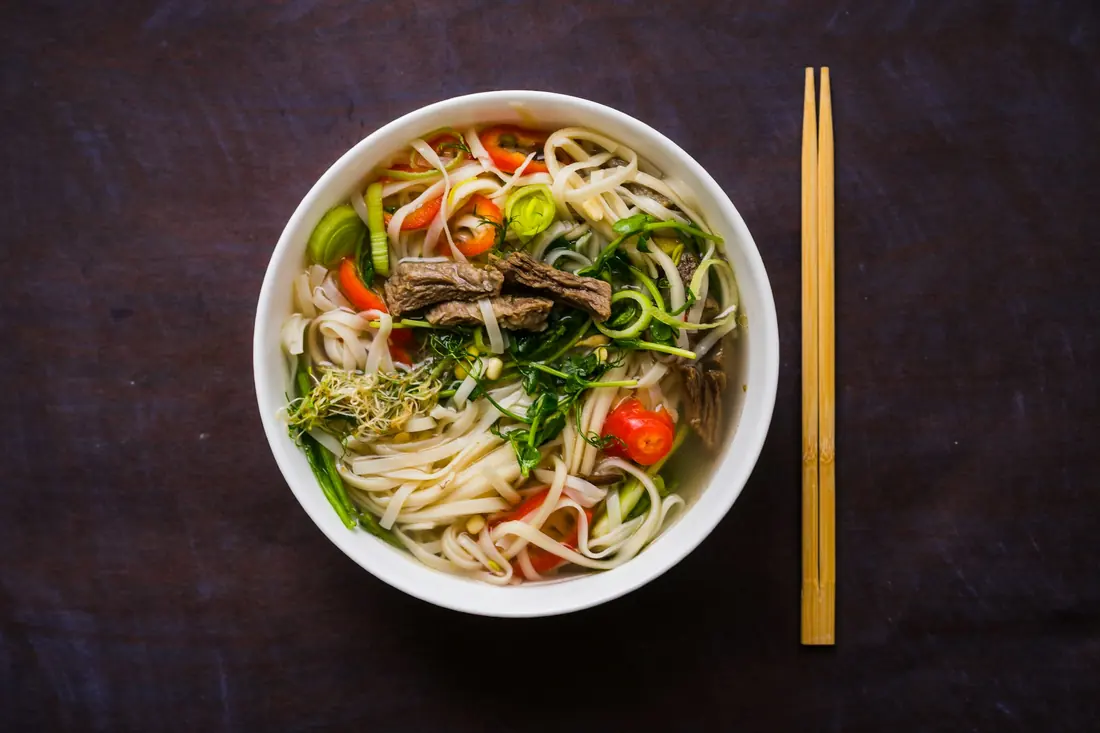
    Pho is the one dish that genuinely benefits from being packed in parts. The broth goes in one container, the noodles in another, and the herbs stay separate. Assembled at home it is close to as-served; packed together it arrives with the noodles swollen and soft.

    If a restaurant packs it as one container, eat it promptly rather than letting it sit. Our guide to how a bowl of pho is put together explains why the timing matters.

    A courier carrying an insulated delivery bag

    Pickup and delivery compared

    PickupDelivery
    Food qualityBest — shortest time in the boxDepends on distance and packing
    CostNo delivery fee or service chargeFees and tip on top
    Timing controlYou choose when to collectSet by the courier’s route
    Best forFried food, raw fish, short distancesGrilled plates, noodles, when convenience wins
    EffortYou driveNone
    Order changesEasy to ask at the counterHarder once placed
    Choosing between collecting an order and having it brought to you.

    Where Roll & Go Sushi sits

    Roll & Go Sushi is at 1410 U.S. HWY 98, Suite J, in the Colonial Plaza shopping centre — near Target and Chick-fil-A. It is a fast casual kitchen, so orders are generally quick rather than leisurely, which suits collection well.
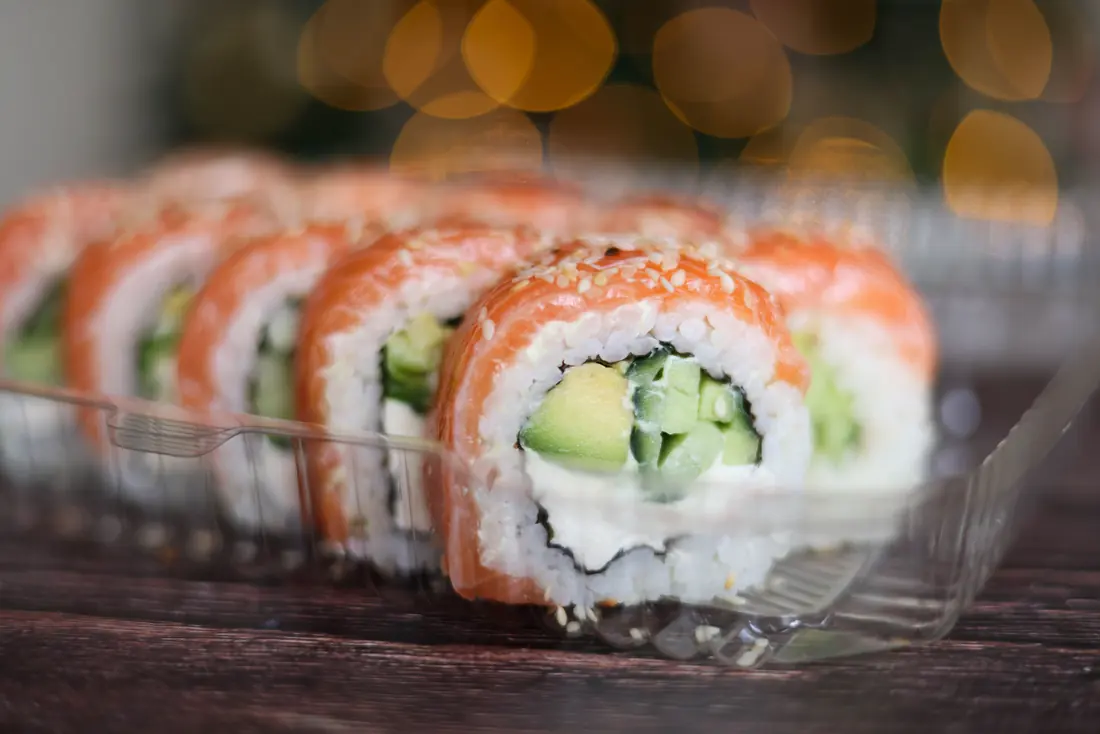
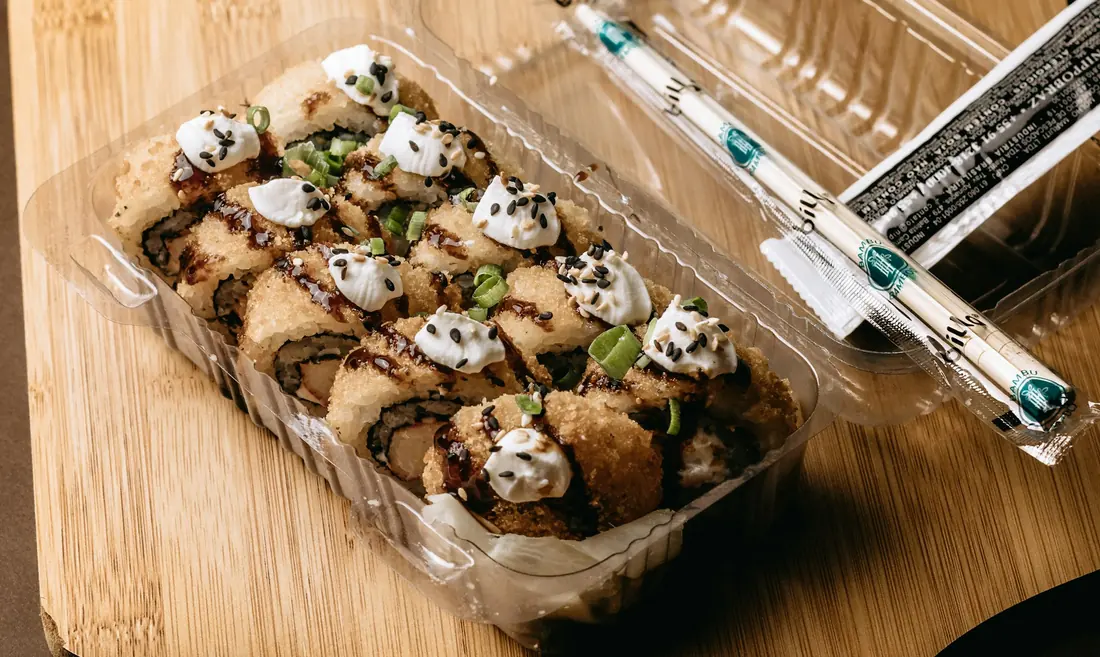
    Sushi rolls packed neatly in a clear takeout container

    Phone orders go through the restaurant directly, and delivery is handled through partners including DoorDash, GrubHub, ASAP and Uber Eats. Availability and fees are set by each partner rather than the restaurant.

    Opening hours run Tuesday to Saturday, with the kitchen closed Sunday and Monday. Hours can change, so it is worth checking the current ordering page before you set out.

    What to check before you order

    A few minutes of checking saves the common frustrations, particularly if you are ordering somewhere for the first time.

    • Opening hours for the day you want. Many independent kitchens close one or two days a week, and those days are not always the ones you would guess.
    • Whether the restaurant takes the order directly. Phoning the kitchen is usually faster and avoids third-party fees.
    • Which delivery partners actually cover your address. Coverage and fees are set by each platform, not by the restaurant.
    • Roughly how long the order will take. This sets when you should leave if you are collecting.

    None of that is unique to Asian food, but it matters more here because so much of the menu is time-sensitive once it leaves the kitchen.

    Timing your order

    1. Order ahead rather than on arrival if you are collecting at a busy hour.
    2. Aim to be eating within twenty minutes of collection for anything fried.
    3. Ask for sauces on the side so nothing goes soft in transit.
    4. Keep containers flat in the car, not stacked on a seat where they can tip.
    5. Take food out of the bag as soon as you are home — trapped steam softens everything.
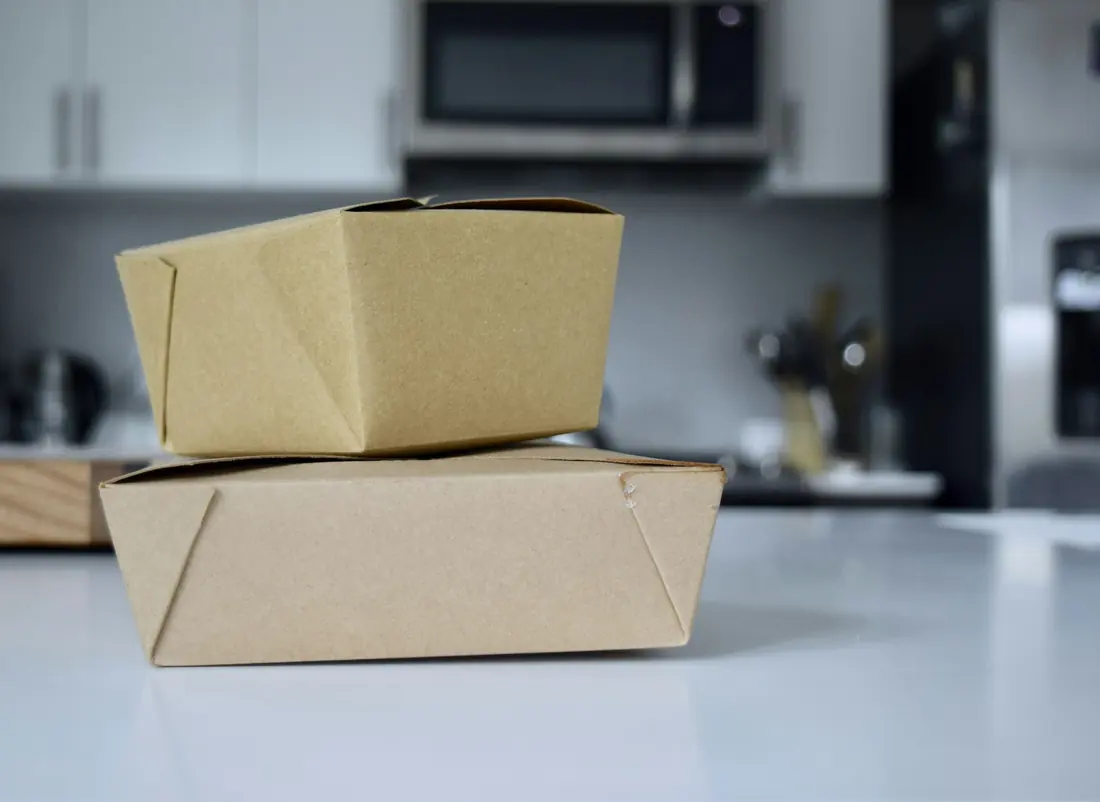
    Takeout containers stacked and ready for collection

    Ordering around the kitchen’s hours

    Fast casual kitchens are busiest in two narrow windows — roughly midday to one, and six to seven-thirty. Ordering at the edges of those bands usually means a shorter wait and food that has spent less time sitting in a bag waiting for a courier.

    The other timing point is the end of service. Ordering in the final fifteen minutes before closing is when kitchens are least able to be flexible about substitutions, and when fried items are most likely to have been sitting. If you have a specific request, earlier is better.

    Roll & Go Sushi is closed Sunday and Monday, which catches people out — a weekend takeaway plan needs to land on Saturday rather than Sunday.

    Feeding a group at home

    Takeaway for a group is a different exercise from ordering for yourself, mostly because everything arrives at once and then cools at different rates.

    1. Order the robust dishes in quantity and the delicate ones sparingly — grilled plates and noodles scale well, tempura does not.
    2. Ask for rice separately from anything saucy if that is an option; it keeps better.
    3. Have plates and serving spoons out before the food arrives, so nothing sits in containers while you look for them.
    4. Serve the fried items first while they still have texture, and the noodles second.
    5. Keep soup in its container until people are ready for it rather than decanting early.

    If you are ordering sushi for a group, a mix of cooked and topped rolls covers more preferences than several of one kind, and the cooked ones are the ones that will still be good if someone arrives late.

    Storing what you do not finish

    Cooked leftovers should go into the fridge promptly rather than sitting out. General guidance on safe food handling and storage applies to restaurant food the same way it applies to home cooking.

    Two practical exceptions worth knowing. Sushi rice hardens in the fridge, so rolls are much better eaten the same day than saved. And noodle soup is best stored with the broth and noodles separated if you have containers for it, because the noodles will otherwise keep softening overnight.

    It is also worth having somewhere to put the bag before you set off. A footwell is flatter and more stable than a passenger seat, and it keeps containers level over the kind of short, stop-start drive most takeaway journeys involve.

    Packing your own order sensibly

    If you are collecting, a few seconds of arranging makes a noticeable difference. Keep hot and cold items apart in the car — a warm hibachi container sitting against a box of sushi will soften the rice surprisingly quickly.

    Leave the bag open rather than sealed if you have more than a short drive. Trapped steam is what turns tempura soft and makes rice sticky, and simply venting the bag slows both.

    Flat and level beats stacked. Most containers are designed to be carried upright, and toppings and sauces slide the moment a box tilts.

    Frequently Asked Questions

    Does sushi survive a delivery order?

    Cooked rolls do reasonably well. Rolls topped with raw fish are better collected and eaten quickly, since both texture and temperature matter more.

    What is the best Asian dish to order for takeout?

    Grilled plates and stir-fried noodles are the most robust. They hold their texture and reheat without much loss.

    Should I reheat leftover hibachi?

    It reheats well in a pan or oven. A microwave works but tends to soften the rice and vegetables more than dry heat does.

    Is it cheaper to pick up than to have food delivered?

    Usually, since delivery adds fees, service charges and a tip. The exact difference depends on the partner used.

    For anything fried or raw, collect it and eat it soon. For grilled plates and noodles, delivery is barely a compromise.

    You can see the current menu and ordering options, or read our guide to choosing between sushi, hibachi and pho if you are still deciding what to get.
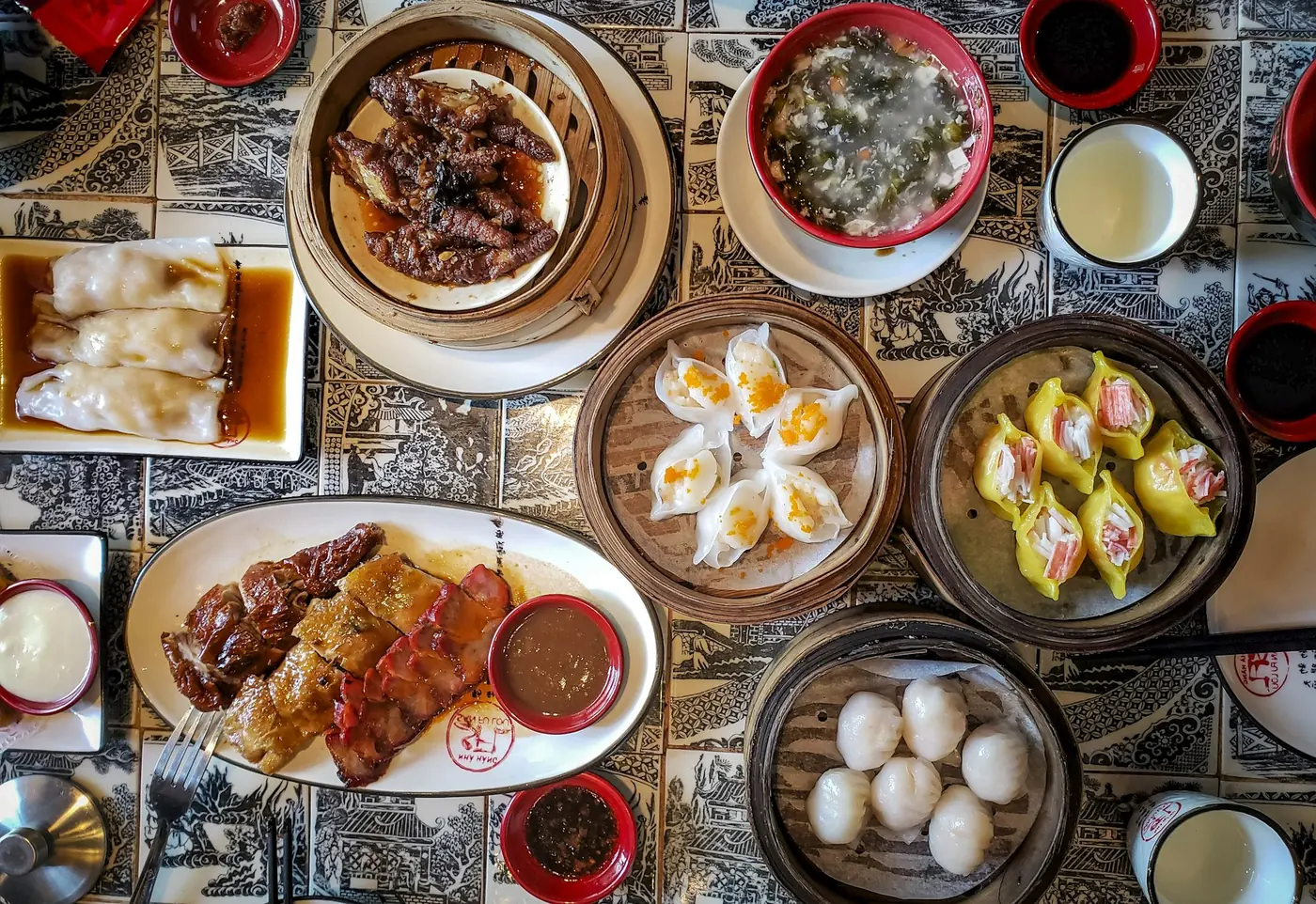
  • Sushi, Hibachi or Pho? How to Choose at an Asian Kitchen

    Sushi, Hibachi or Pho? How to Choose at an Asian Kitchen

    Some Asian kitchens do one thing. Others put sushi, a grill and a pot of noodle soup on the same menu, which is genuinely useful when a group cannot agree — and genuinely paralysing when you are ordering for yourself.

    The short version

    Choose sushi when you want something light and cool and are not especially hungry. Choose hibachi when you want a hot, filling plate with protein and rice. Choose pho when you want one large warm bowl and nothing else. Those three cover most situations.

    A diner reading a menu at a restaurant table

    Start with how hungry you are

    This decides more than taste does. The three options sit at genuinely different scales, and misjudging it is the most common ordering mistake.

    • Light — one or two sushi rolls, or a small soup and a roll.
    • Moderate — a hibachi plate, or a couple of rolls with a starter.
    • Very hungry — a full bowl of pho, or hibachi with a roll alongside.

    A bowl of pho at Roll & Go Sushi is 32 oz, which is a meal in itself. The miso and onion soups on the same menu are 8 oz and are starters. Reading those sizes before ordering avoids most disappointments.

    Then think about temperature

    Sushi is cool and clean. Hibachi is hot, seared and savoury. Pho is hot but light, and it is the only one of the three you keep adjusting as you eat.

    A shared platter of assorted sushi

    On a hot day the cool option tends to win; in winter the warm bowl does. It sounds obvious, but it is a more reliable guide than trying to rank the dishes by preference.

    Comparing the three

    SushiHibachiPho
    ServedCoolHotHot
    PortionSmall to moderate, scalableFull plateOne large bowl
    FillingDepends how much you orderYesYes
    Good for sharingVery — cut into piecesNot reallyNot really
    Customisable at the tableA littleSauces onlyExtensively
    Travels wellCooked rolls doYesBest packed separately
    Best forGrazing and varietyA hot square mealOne warming bowl
    Choosing between the three formats on an Asian kitchen menu.
    Grilled sliced beef served with rice

    Ordering for a group

    The mistake is everyone ordering their own large dish. Sushi is the only one of the three built for sharing — it arrives cut into pieces, so a few rolls in the middle of the table works far better than one roll each.

    Noodles lifted from a bowl of hot broth with chopsticks

    A reliable structure for four people: two or three rolls to share, one or two hibachi plates, and one bowl of pho for whoever wants it. Add a couple of small soups and everyone gets variety without anyone over-ordering.

    If the group includes someone who does not eat raw fish, the cooked rolls solve it quietly. Our guide to telling cooked and raw rolls apart is worth a look before you order for other people.

    Timing matters more than it does elsewhere

    These three dishes arrive on very different schedules. Sushi is assembled to order and usually comes out quickly. A hibachi plate takes as long as the protein needs. A bowl of noodle soup is essentially ready — the broth has been simmering for hours and only needs assembling.

    At a table where people have ordered across all three, expect things to arrive in stages rather than together. That is normal for a kitchen running a grill and a sushi counter side by side, and it is worth mentioning to the table so nobody waits politely while their food cools.

    If you want everything at once, say so when ordering. Most kitchens will hold plates to bring them out together if they know in advance.

    Building a balanced order

    Across a table, aim for contrast rather than repetition — something cool, something hot, something with vegetables. General guidance on building a varied plate applies as much to a shared restaurant order as it does at home.

    1. Pick the anchor first — the one large dish someone definitely wants.
    2. Add a shared item that everyone can pick at, usually sushi.
    3. Add one contrasting texture: something fried or grilled if the anchor is soup.
    4. Add a small soup or salad only if you actually want a starter.
    5. Stop. Most tables order roughly a third more than they finish.
    A group sharing dishes around a restaurant table

    Ordering for children and cautious eaters

    An Asian kitchen menu is easier for fussy eaters than it looks, because two of the three categories are entirely familiar in structure: grilled meat with rice, and noodles in broth.

    • A hibachi plate is protein, rice and vegetables — recognisable to almost anyone, and the sauces are optional.
    • Cooked or vegetable sushi rolls contain no raw fish and are often the first sushi a child will eat, particularly cucumber or crab salad.
    • A noodle soup can be served plain, with the herbs and chilli left on the side entirely.

    What tends not to work is starting someone on a heavily sauced specialty roll or a bowl they have to assemble themselves. Familiar structure first, new flavours second.

    Dietary requirements and allergies

    Ask rather than infer. Dish names on Asian menus rarely list every component, sauces frequently contain soy and wheat, and a soup base is not always what the title suggests — a miso soup may be built on a fish stock, for instance.

    Restaurants deal with these questions constantly and would far rather answer one before the order than deal with a problem afterwards. If an allergy is serious, say so explicitly at the point of ordering rather than reading the description and hoping.

    Vegetarian options exist across all three categories at most kitchens, but the specifics vary, so it is worth confirming rather than assuming a vegetable dish is prepared separately.

    If you genuinely cannot decide

    Order the thing you would be annoyed to miss, and let the rest of the table cover the other categories. At a kitchen serving all three, you are one visit away from trying the others.

    For a first visit, one cooked roll plus a hibachi plate is the lowest-risk order on the menu. It gives you both halves of the kitchen and neither is unfamiliar.

    Takeaway boxes packed and ready to go

    One more practical point: prices and portions differ across the three categories, so a table ordering one of each will not split the bill evenly. It is easier to agree how you are handling that before the food arrives than to work it out afterwards over a pile of shared plates.

    What to do with leftovers

    The three formats keep very differently, which is worth factoring in if you suspect you are over-ordering. A hibachi plate is the best of them — it refrigerates and reheats without much loss.

    Sushi is the worst. The rice hardens once chilled and does not recover, so rolls are genuinely a same-day food. Noodle soup sits in between: the broth keeps well, but the noodles will keep absorbing it, so separate the two if you can.

    If you are ordering with leftovers in mind, order the grill generously and the sushi precisely.

    Frequently Asked Questions

    Can you order sushi and hibachi together?

    Yes, and it is a common order. The two contrast well — one cool and clean, one hot and savoury.

    Is a bowl of pho too much for one person?

    It is a full meal, so it is plenty on its own. If you also want sushi, consider sharing the bowl or ordering one roll rather than several.

    What should I order if I do not like raw fish?

    Cooked rolls, hibachi or pho all work. Only some sushi contains raw fish, and plenty of rolls are built on tempura or crab salad.

    What is the best option for a quick lunch?

    A hibachi plate or a couple of rolls. Both come together quickly and travel well if you are taking them back to work.

    Hunger first, temperature second, sharing third. That order of questions resolves most menus faster than reading every description.

    You can see what is currently available before you decide, or check the hours and location if you are planning a visit.

  • Yaki Soba vs Lo Mein: How Stir-Fried Noodles Differ

    Yaki Soba vs Lo Mein: How Stir-Fried Noodles Differ

    Both are wheat noodles cooked with vegetables and a brown sauce, and both turn up on menus across the United States. They are not the same dish, and the difference is mostly in the sauce and the pan.

    The short answer

    Yaki soba is Japanese: noodles stir-fried hard on a hot surface with a tangy, slightly sweet sauce, so the edges catch and crisp. Lo mein is Chinese: noodles boiled first, then tossed with a soy-based sauce off the heat, so they stay soft and glossy. Yaki soba is fried; lo mein is dressed.

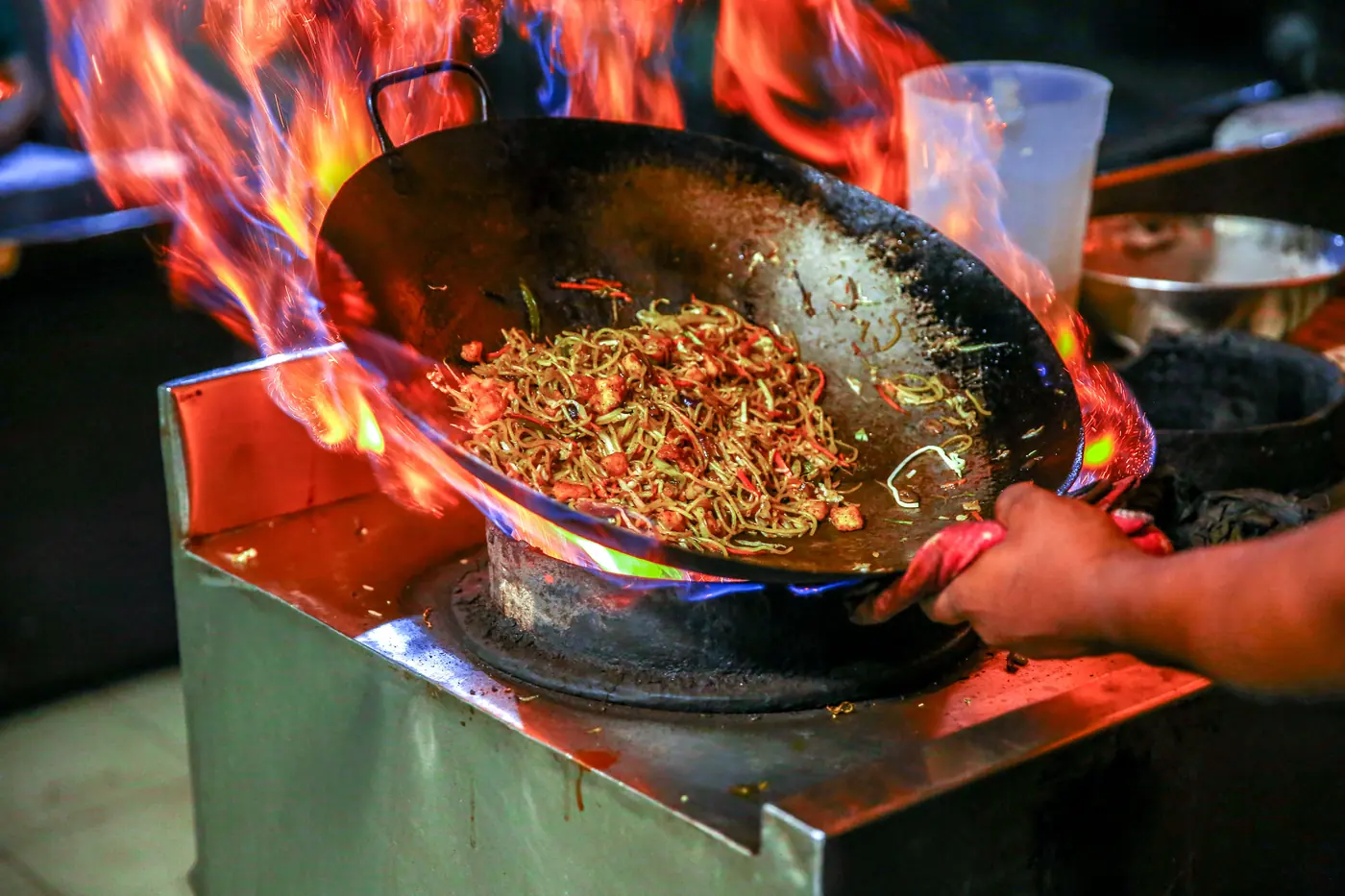
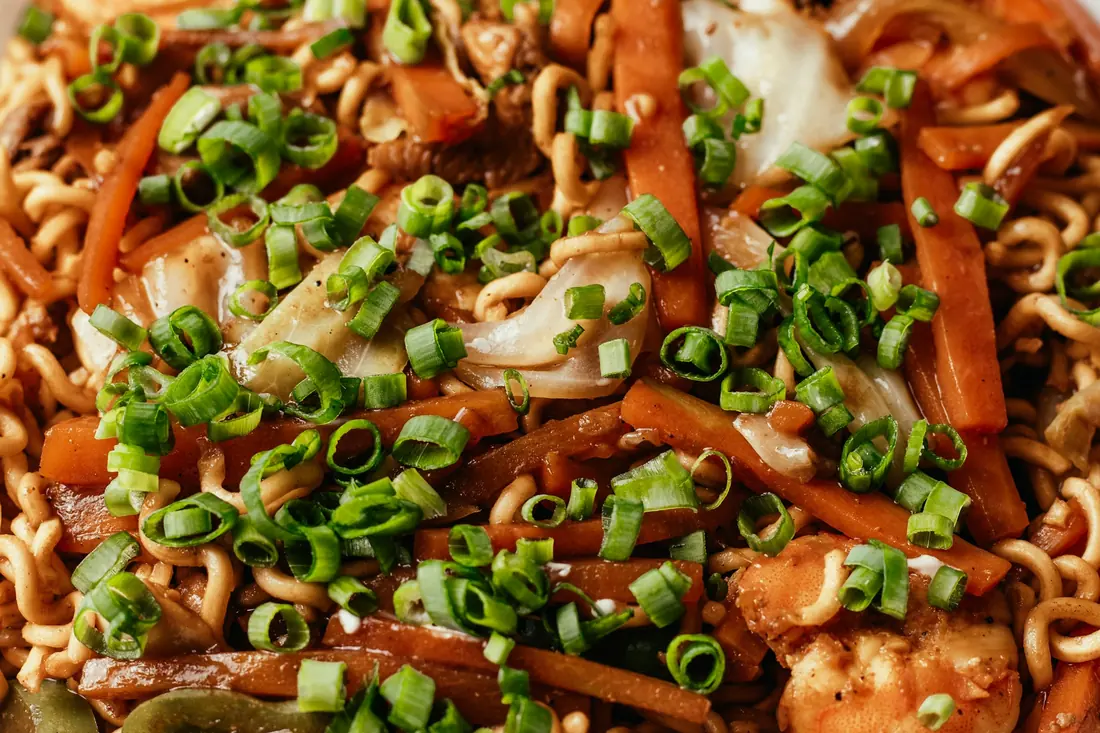
    Stir-fried noodles tossed with vegetables and spring onion

    What yaki soba is

    Yaki means grilled or fried, and soba here is misleading — despite the name, yaki soba uses wheat noodles rather than buckwheat ones. They are the same family of noodle used for ramen, cooked on a flat top or in a wok with cabbage, onion and carrot, plus a protein.

    Soft egg noodles coated in a dark sauce

    The defining element is the sauce: dark, fruity and tangy, closer to a thin Worcestershire than to soy sauce. It goes on during cooking, reduces against the hot surface, and coats the noodles rather than pooling.

    Roll & Go Sushi lists yaki soba stir-fry noodles among its Asian dishes alongside sushi, hibachi and pho.

    What lo mein is

    Lo mein means “tossed noodles”, and the method is in the name. The noodles are boiled to done, drained, then combined with cooked vegetables and protein and a soy-based sauce. The pan is often off the heat by that point.

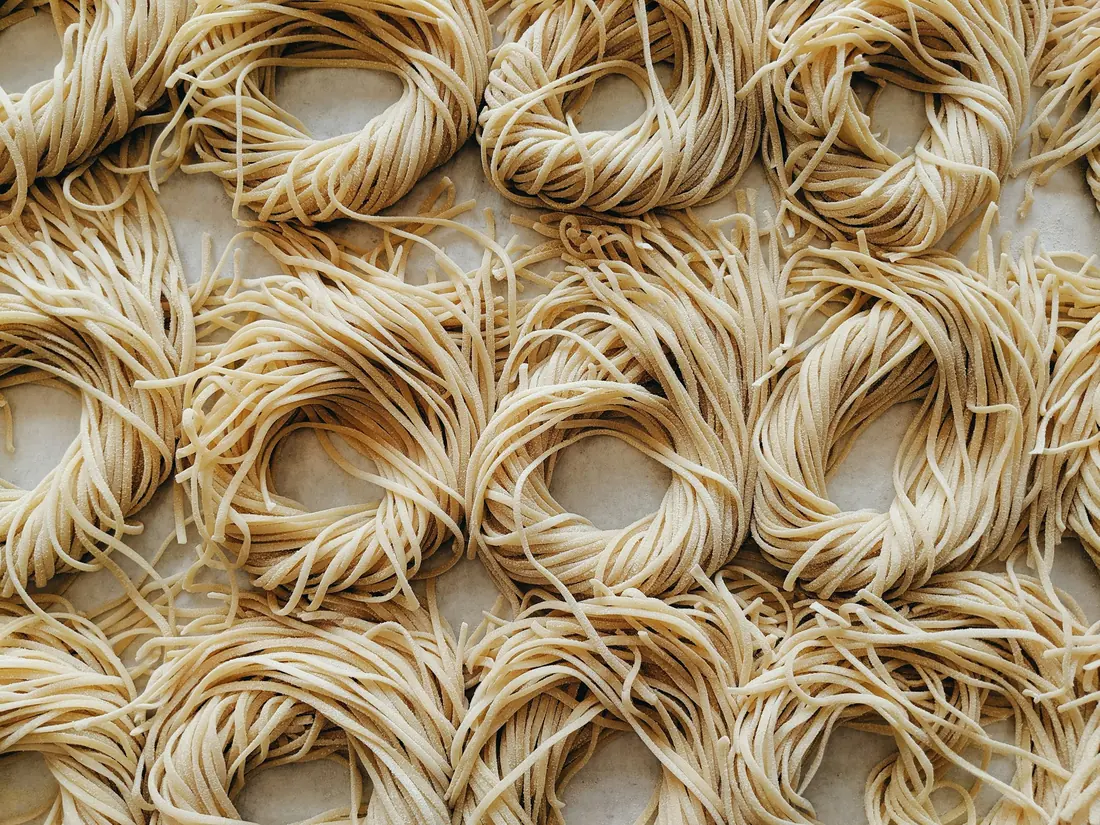
    Bundles of dried wheat noodles before cooking

    Because nothing fries, the noodles stay soft and slippery, and the sauce sits on them as a coating rather than caramelising into them. Britannica’s entry on noodles covers how widely wheat-noodle cooking varies across Asia.

    Yaki soba and lo mein compared

    Yaki sobaLo mein
    OriginJapanChina
    NoodleWheat, ramen-styleWheat, often egg noodles
    MethodStir-fried hard on a hot surfaceBoiled, then tossed with sauce
    SauceTangy, fruity, slightly sweetSoy-based, savoury
    TextureSome crisp edges, drierSoft and glossy throughout
    Usual vegetablesCabbage, onion, carrotVaries widely
    Common garnishPickled ginger, seaweed flakesScallion
    How the two stir-fried noodle dishes differ.
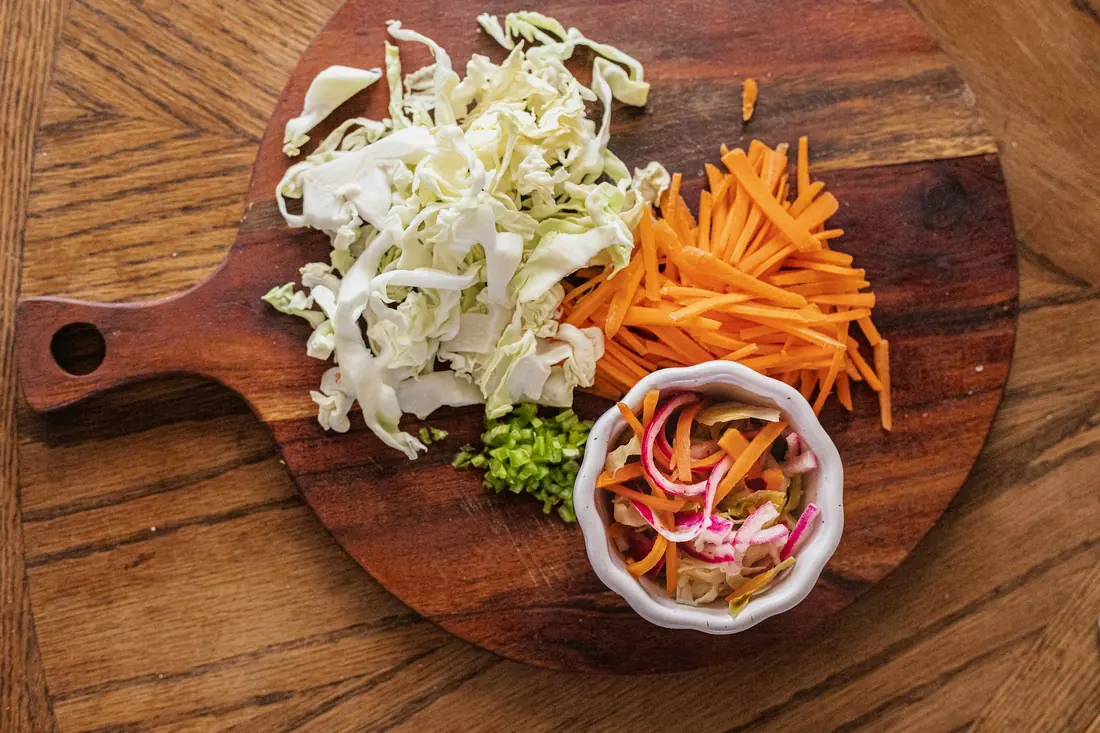
    Sliced cabbage and carrot prepared for stir-frying

    How to tell them apart on the plate

    If the noodles look dry-ish with browned edges and a matte coating, it is yaki soba. If they are uniformly glossy and slide off the fork, it is lo mein.

    Colour helps too. Yaki soba tends toward a warmer brown from the reduced sauce; lo mein is darker and more even, because the sauce was added at the end rather than cooked down.

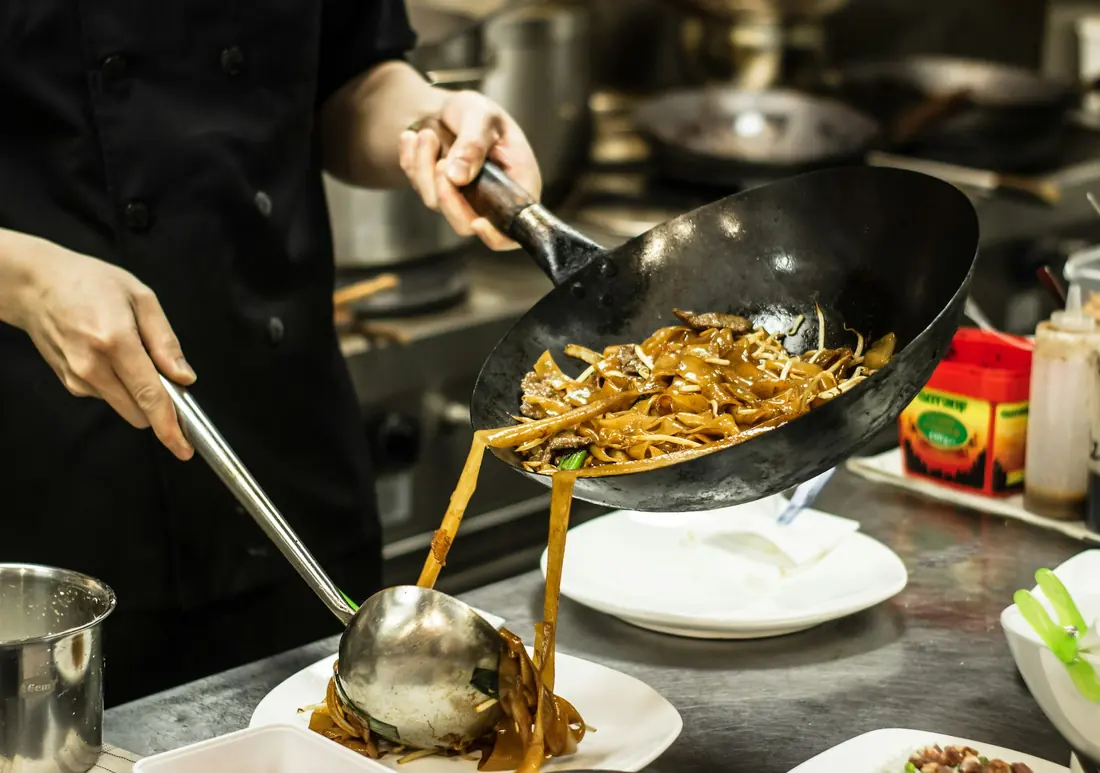
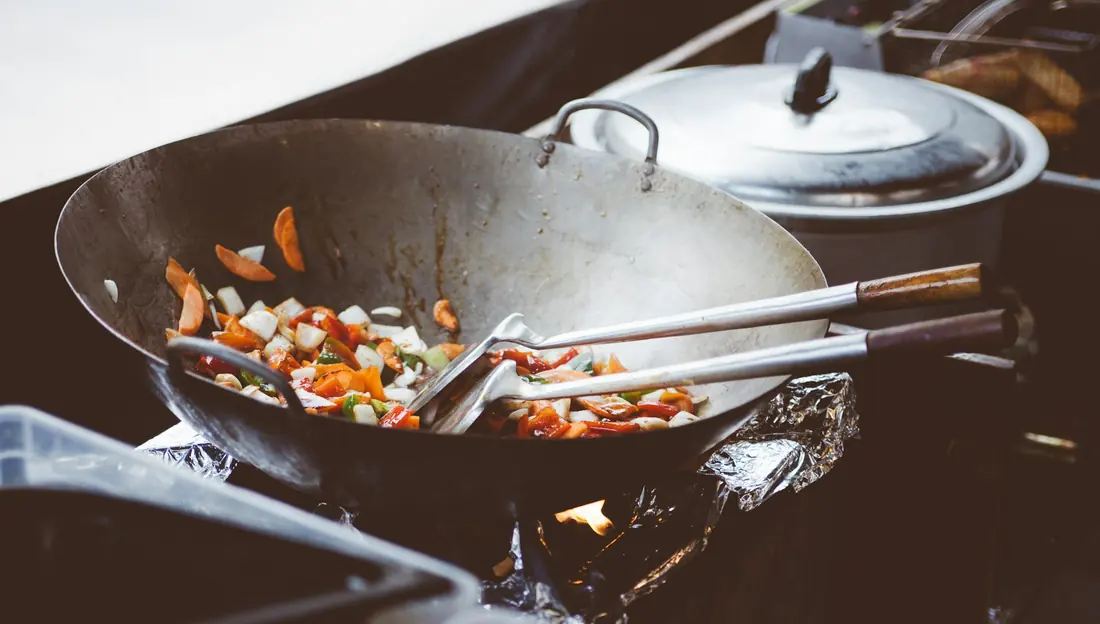
    A cook tossing noodles in a wok with tongs

    Which should you order?

    • Like texture and slightly charred edges — yaki soba.
    • Prefer soft noodles and a savoury sauce — lo mein.
    • Want something that reheats well — lo mein holds up better, since there is no crispness to lose.
    • Ordering alongside grilled food — yaki soba shares a flavour vocabulary with hibachi, which makes for a coherent table.
    • Feeding a mixed group — lo mein is the more neutral of the two and tends to please more people.

    Where chow mein fits in

    Chow mein is the third dish people confuse with these two, and it belongs closer to yaki soba than to lo mein. The noodles are fried rather than tossed, sometimes until genuinely crisp, and the sauce is soy-based like lo mein.

    So the rough map is: lo mein is boiled and dressed, chow mein is fried with a soy sauce, and yaki soba is fried with a tangy fruit-and-vinegar sauce. Method and sauce are the two variables, and every one of these dishes is a different combination of them.

    How restaurants get the texture

    The reason a restaurant stir-fry tastes different from a home one is mostly heat. A commercial burner or flat top runs far hotter than a domestic hob, which lets the noodles catch and brown in seconds rather than steaming in their own moisture.

    That heat is also why the dish is cooked in small batches. Overloading the surface drops the temperature and the noodles go soft, which is exactly the failure mode people run into cooking it at home in one big pan.

    Practically, this means yaki soba is at its best straight out of the kitchen. It still reheats acceptably, but the crisp edges that define it are the first thing to go.

    A note on the word soba

    This trips people up constantly. Plain soba refers to thin buckwheat noodles, usually served cold with a dipping sauce or hot in broth. Yaki soba is a different thing entirely and contains no buckwheat.

    If you are looking for actual buckwheat soba, the menu will normally say so, and it will not be a stir-fry.

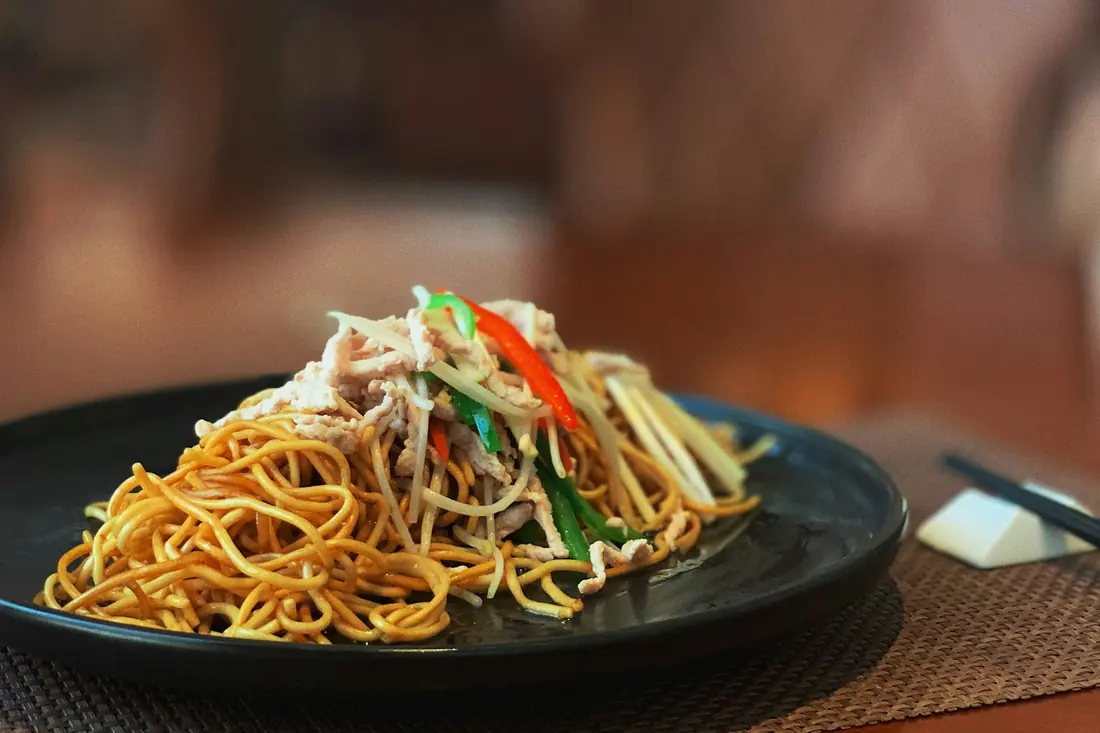
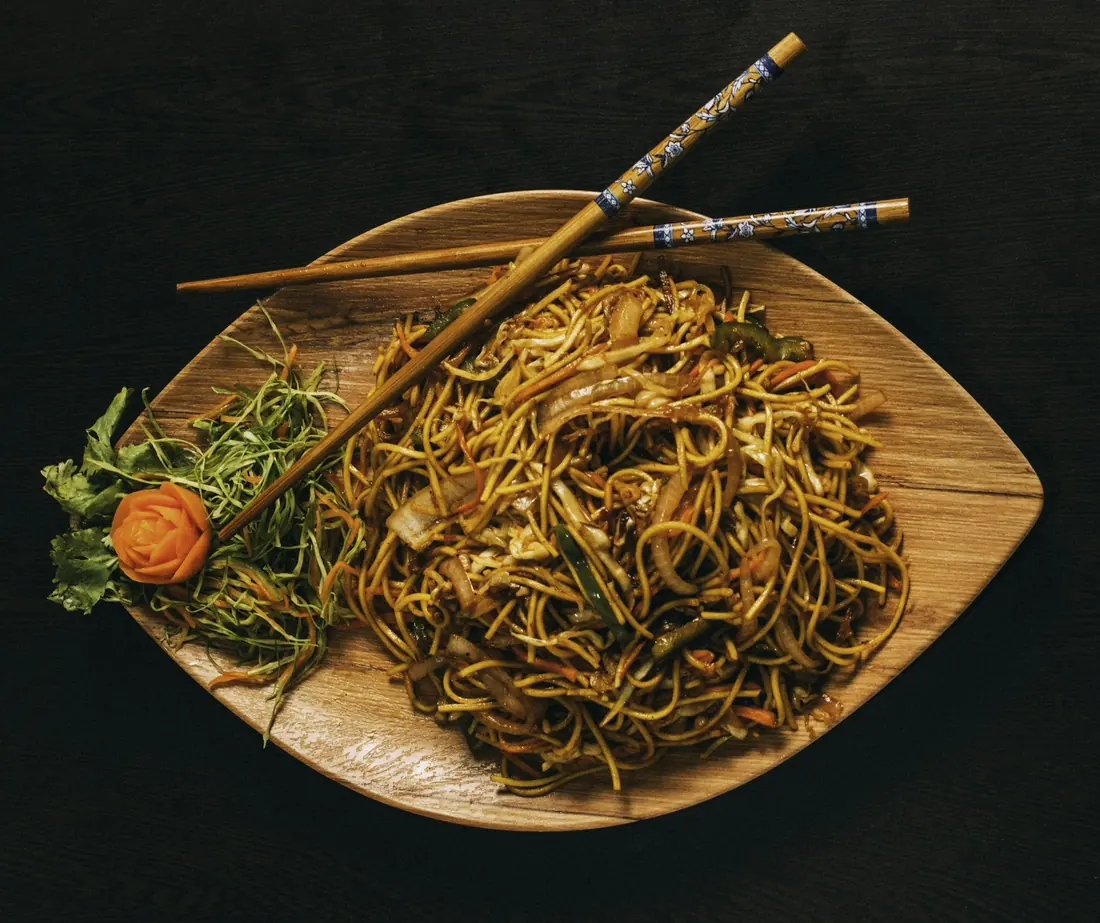
    Stir-fried noodles plated on a serving dish

    Which one reheats better

    If you routinely have leftovers, this is the practical difference between them. Lo mein reheats almost perfectly, because there is no texture to lose — the noodles were soft to begin with and the sauce protects them.

    Yaki soba reheats acceptably but never returns to what it was. The browned edges soften in the fridge and do not come back, so what you get the next day is a perfectly good noodle dish that is missing the thing that made it distinctive.

    A dry pan works better than a microwave for both. A minute or two over a medium heat, moving them constantly, recovers more texture than steaming them in a covered dish does.

    Ordering it as part of a meal

    A noodle plate is filling and works as a main course on its own. If the table is sharing, it sits comfortably next to sushi — the noodles are warm and savoury, the rolls are cool and clean, and neither overwhelms the other.

    What does not work as well is pairing a noodle stir-fry with a full bowl of noodle soup. Two large noodle dishes is more starch than most people want, so if someone is having a bowl of pho, choose something else alongside.

    Portion sizes for both tend to be generous, since noodles are cheap relative to protein and kitchens plate them accordingly. If you are ordering several dishes for a table, one noodle plate usually stretches further than the menu suggests, so it is worth ordering it as a shared item rather than one each.

    What usually comes with them

    Both dishes are normally sold as a complete plate rather than a side. A protein is included or chosen — chicken, beef, shrimp or vegetables are the usual options — and the vegetables are cooked into the noodles rather than served separately.

    That makes them one of the better value items on most menus, and one of the easier things to order when you want a single dish rather than a combination. If you are sharing, one noodle plate between two alongside something else works well.

    Garnishes vary. Yaki soba is often finished with pickled ginger or dried seaweed flakes, both of which are there to cut the sweetness of the sauce. They are worth eating rather than pushing aside.

    Frequently Asked Questions

    Is yaki soba made with buckwheat noodles?

    No, despite the name. Yaki soba uses wheat noodles, the same style used for ramen. Buckwheat soba is a separate dish.

    Is lo mein the same as chow mein?

    No. Lo mein noodles are boiled and tossed with sauce; chow mein noodles are fried, often until crisp. Chow mein sits closer to yaki soba in method.

    Which one is spicier?

    Neither is spicy by default. Both are savoury, and any heat comes from chilli added separately or from a specific version on the menu.

    Can I get either without meat?

    Many restaurants offer vegetable versions, but preparation varies between kitchens. Ask when you order if this matters to you.

    One is fried and tangy, the other is tossed and savoury. Both are good; they are just not substitutes for one another.

    Have a look at the noodle and stir-fry options, or read how flat-top cooking works if the method interests you.

  • Hibachi vs Teppanyaki: What You’re Actually Ordering

    Hibachi vs Teppanyaki: What You’re Actually Ordering

    In Japan these are two different things. In the United States the words have collapsed into one, and “hibachi” now describes a style of cooking it does not technically refer to at all.

    The short answer

    A hibachi is a small charcoal brazier with an open grate — food sits over the fire. Teppanyaki is cooking on a flat solid iron plate, usually built into a table, and it is what almost every American restaurant advertising “hibachi” is actually doing. The difference is grate versus griddle.

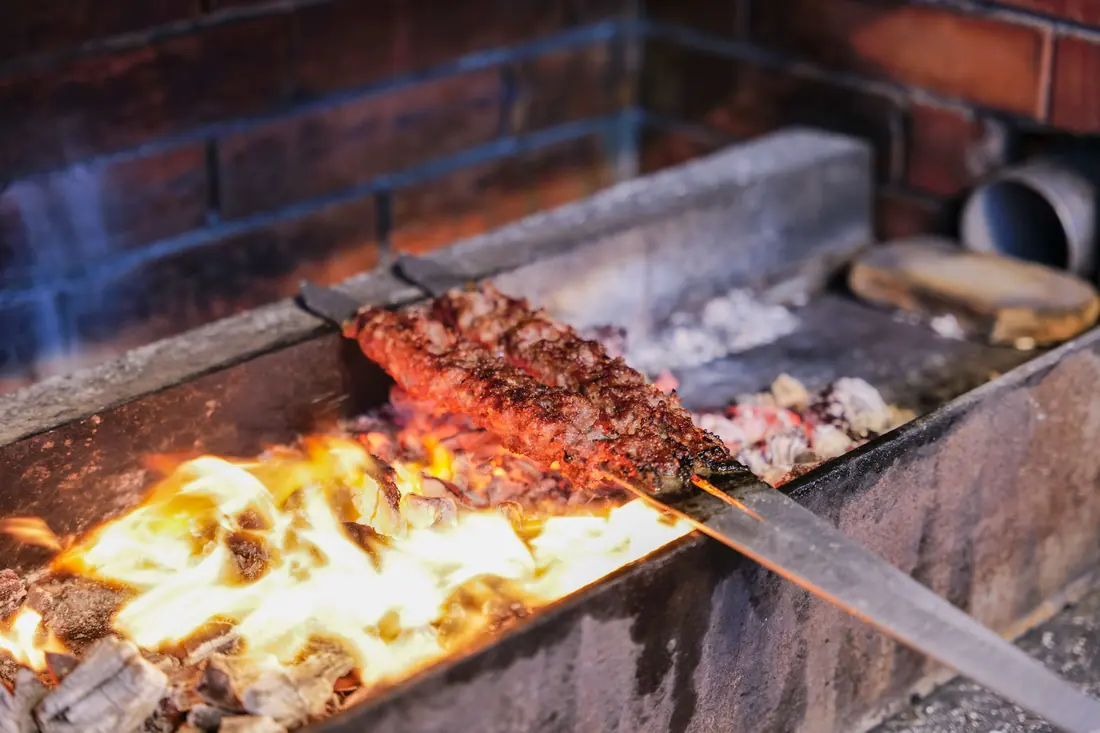
    Skewers cooking over an open charcoal fire

    What a hibachi originally was

    The word translates roughly as “fire bowl”. Traditional hibachi were open, round or box-shaped containers holding burning charcoal, used for heating rooms as much as for cooking. Food went on a grate above the coals, which is why anything cooked this way picks up smoke.

    A chef cooking on a griddle in front of seated diners

    That is grilling in the ordinary sense: direct heat, open air, minimal seasoning, with the flavour coming from the fire. Japan’s own cooking traditions are strongly regional, and the Japanese government’s guide to regional cuisine shows how much variation sits behind the handful of dishes that travelled abroad.

    What teppanyaki is

    Teppan means iron plate and yaki means grilled or pan-fried. There is no grate and no exposed flame under the food. Everything cooks on a flat steel surface, which means nothing falls through, sauces can be added directly, and rice and noodles can be cooked on the same surface as the protein.

    Fried rice being turned on a griddle with metal spatulas

    The theatrical version — the chef cooking at a table in front of guests, with knife work and an onion volcano — is a mid-twentieth-century restaurant format that became the American image of Japanese dining. It is teppanyaki, not hibachi.

    Hibachi and teppanyaki compared

    Hibachi (traditional)Teppanyaki
    SurfaceOpen grate over coalsFlat solid iron plate
    Heat sourceCharcoal or woodGas or electric under steel
    FlavourSmoky, from the fireSavoury, from sauces and butter
    SeasoningMinimalSoy, garlic, butter, sauces
    Can cook rice or noodlesNo — they would fall throughYes, on the same surface
    Typical settingSmall, portable, domesticBuilt into a table or counter
    What US menus call itRarely offeredUsually labelled “hibachi”
    What the two terms actually describe.

    What arrives when you order “hibachi”

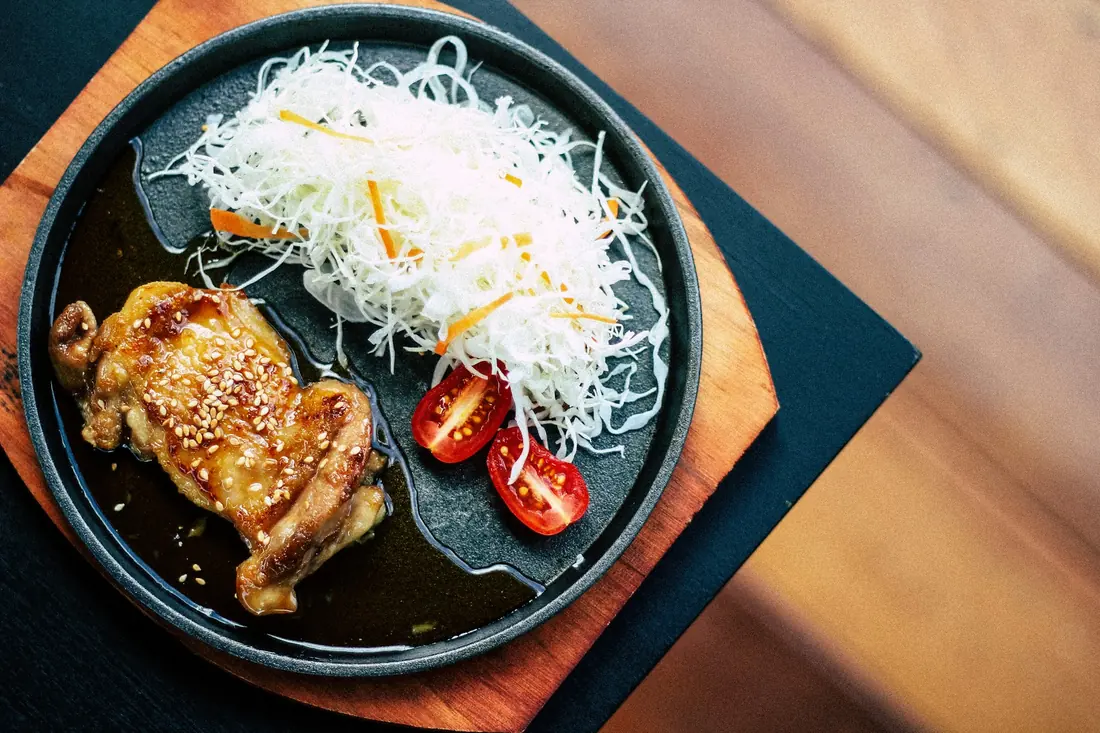
    At a fast casual restaurant it is a plate rather than a performance. The protein is seared on the flat top, vegetables are cooked alongside it, and rice comes with it.

    Vegetables sizzling on a hot steel cooking plate

    Roll & Go Sushi’s hibachi follows that format: seared on a flat top grill, with a choice of meat or vegetarian options, either fried or steamed rice, fresh grilled vegetables, and a choice of soup or salad. There is no table-side show — it is cooked in the kitchen and plated.

    That distinction matters when you are deciding where to eat. A teppanyaki steakhouse is an evening out with a booking. A fast casual hibachi plate is lunch.

    Where the American version came from

    The table-side format arrived in the United States in the 1960s and spread quickly. It solved a practical problem: it made an unfamiliar cuisine legible to diners who had never eaten Japanese food, by turning the cooking into something you could watch and understand.

    It worked, and it shaped what several generations of Americans think Japanese restaurants are. That is why the vocabulary drifted — the format was marketed as hibachi, and the name stuck to the griddle rather than to the brazier it originally described.

    None of which makes it inauthentic in any useful sense. It is a real style of cooking with a real history; it just is not the thing the word originally meant.

    Steakhouse or fast casual?

    The two formats deliver quite different evenings, and the menu word is the same for both, so it is worth checking which you are booking.

    • Teppanyaki steakhouse — a seated table around a built-in griddle, a chef cooking in front of you, a set sequence of courses, and an hour or more at the table. Usually a booking, usually an occasion.
    • Fast casual hibachi — the same cooking method done in the kitchen, plated and handed over. Faster, cheaper, and equally suited to lunch or takeaway.

    If you want the show, look for tables with grills built into them. If you want the food, the fast casual version gives you the same plate without the wait.

    Fried rice or steamed?

    Where a choice is offered, it changes the plate more than people expect. Fried rice is cooked on the same surface with egg and seasoning, so it carries some of the same flavour as the protein. Steamed rice stays neutral and lets sauces do the work.

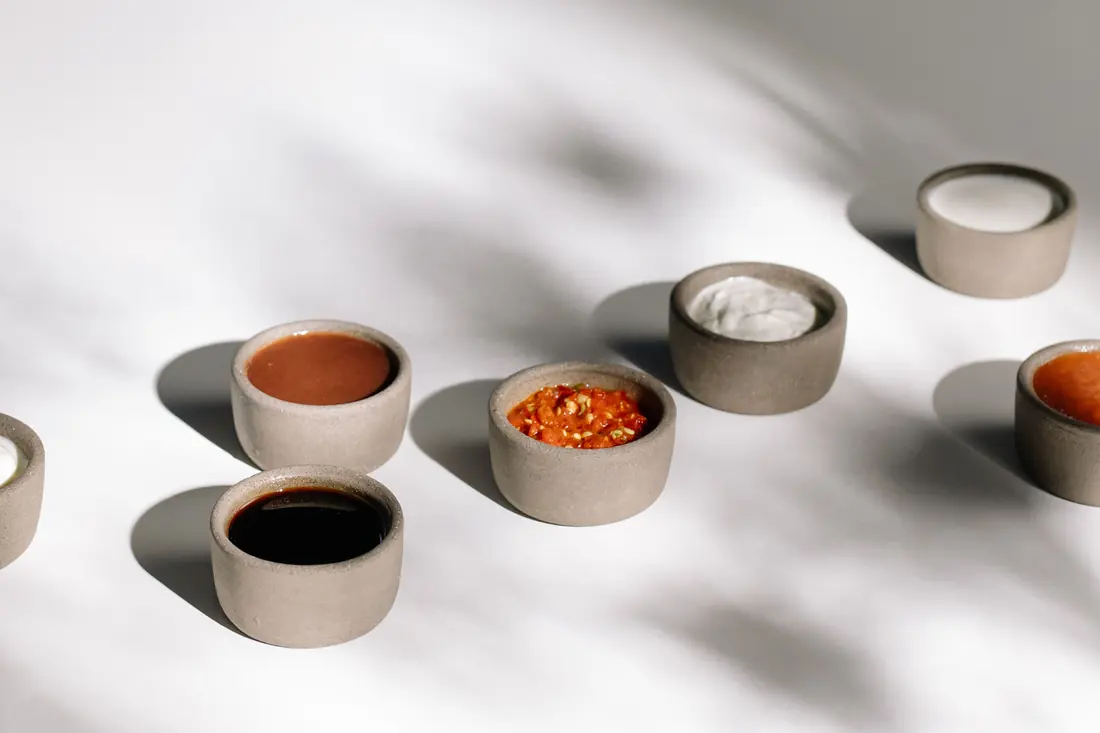
    A selection of small dipping sauces in individual cups

    If the protein is already heavily sauced, steamed rice balances it. If you want the whole plate to taste of the grill, fried rice is the one.

    What the vegetables tell you

    A flat top lets vegetables cook in the same fat and seasoning as the protein, which is why hibachi vegetables taste different from steamed or roasted ones. Onion, courgette, mushroom and carrot are the usual set, cut to sizes that finish at roughly the same time as the meat.

    They also serve a practical purpose on the plate. Grilled food with rice can be heavy on its own, and the vegetables provide the moisture and sweetness that stop it becoming monotonous.

    Roll & Go Sushi’s hibachi comes with fresh grilled vegetables as standard, alongside the rice and the choice of soup or salad, so the plate arrives balanced rather than needing additions.

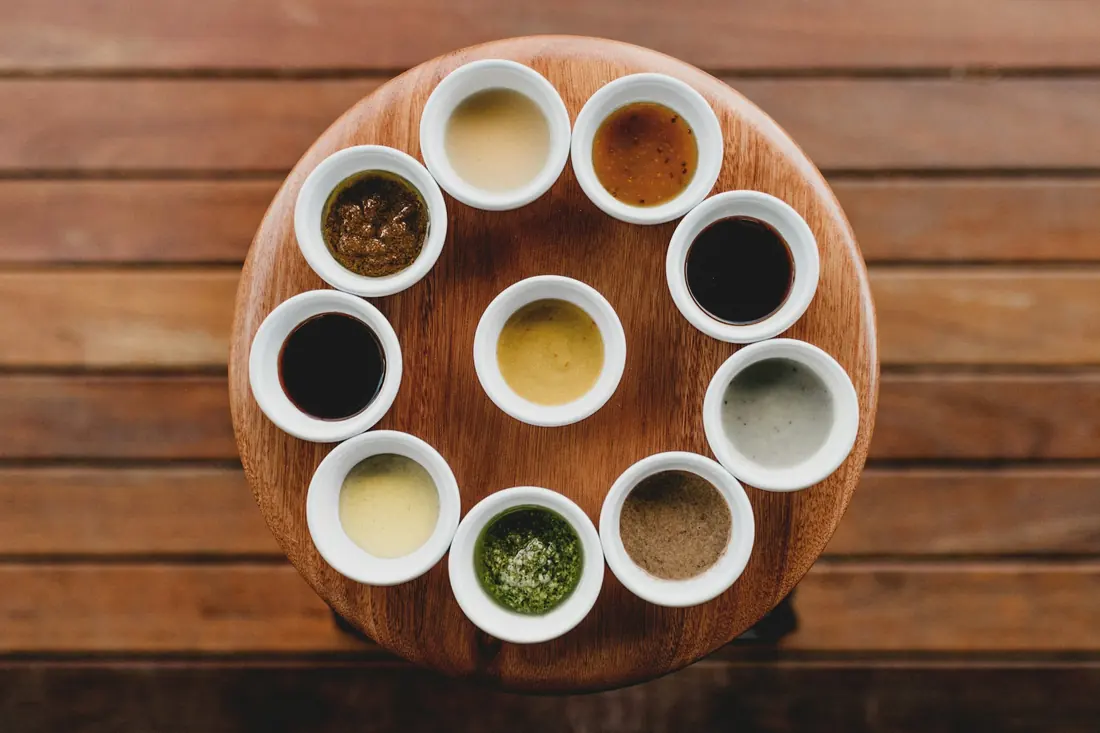
    The sauces

    Two usually appear alongside a hibachi plate in the United States, and neither is traditional Japanese cooking.

    • The pale, creamy one — mayonnaise-based, mildly sweet, sometimes called yum yum sauce. An American invention, and the one most people reach for.
    • The thin brown one — ginger-based, sharper, closer to a dressing. Better with vegetables than with rice.
    Grilled chicken plated with shredded daikon

    Both are optional. A well-seasoned plate does not need either, and using them heavily flattens the flavour that came off the grill.

    Ordering it for a first visit

    A hibachi plate is one of the safest first orders on any Asian kitchen menu. The structure is familiar, the portion is predictable, and the choices you are asked to make are limited to the protein and the rice.

    It also travels well, which makes it a reasonable choice if you are ordering to take home rather than eating in. Grilled protein and rice hold their texture far better than fried food does, and reheat without much loss the next day.

    If you are still weighing it against the other things on the menu, comparing hibachi with sushi and pho is the quickest way to narrow it down, particularly when you are ordering for a table with different tastes.

    Frequently Asked Questions

    Is hibachi Japanese or American?

    The word and the original brazier are Japanese. The restaurant format most Americans picture — a chef cooking on a flat griddle at your table — is teppanyaki, and the table-side show developed in the United States.

    Why do American restaurants call teppanyaki hibachi?

    It became the common usage decades ago and stuck. Most menus now use “hibachi” to mean flat-top cooking, and nobody in the industry expects it to mean a charcoal brazier.

    Does hibachi always come with a show?

    No. At fast casual restaurants it is cooked in the kitchen and plated like any other dish. The performance belongs to teppanyaki steakhouses with table grills.

    What normally comes with a hibachi plate?

    Usually a protein, grilled vegetables and rice, often with a soup or salad. The exact combination varies by restaurant, so check the menu.

    If you want smoke, you want a charcoal grill. If you want a seared plate with rice and vegetables, you want what the menu calls hibachi — which is teppanyaki, and there is nothing wrong with that.

    You can see the current hibachi options, or compare them with the stir-fried noodle dishes cooked on the same surface.

  • Miso Soup vs Onion Soup: Which to Order With Sushi

    Miso Soup vs Onion Soup: Which to Order With Sushi

    Most Japanese and Asian kitchens offer a small soup to start, and the choice is usually between two: miso, or a clear onion soup. They cost about the same, arrive in the same small bowl, and taste nothing alike.

    The short answer

    Miso soup is savoury and slightly salty, built on fermented soybean paste, with tofu and seaweed suspended in it. Onion soup is lighter and sweeter, a clear broth with fried onion, mushroom and scallion. Miso is the richer of the two; onion soup is the cleaner.

    A spoonful of dark fermented paste

    What miso soup actually is

    Miso is a paste made by fermenting soybeans with salt and a culture called koji, sometimes with rice or barley added. Fermentation runs for months, and the longer it goes the darker and stronger the result. Britannica’s entry on miso covers the range of styles, from pale and mild to deep red and assertive.

    Cubes of soft tofu and rehydrated seaweed

    The soup itself is simple: a light stock, a spoonful of paste whisked in, and a few additions. In a restaurant bowl those are usually small cubes of tofu and rehydrated seaweed, with scallion on top. The paste is added off the boil, because boiling it dulls the flavour.

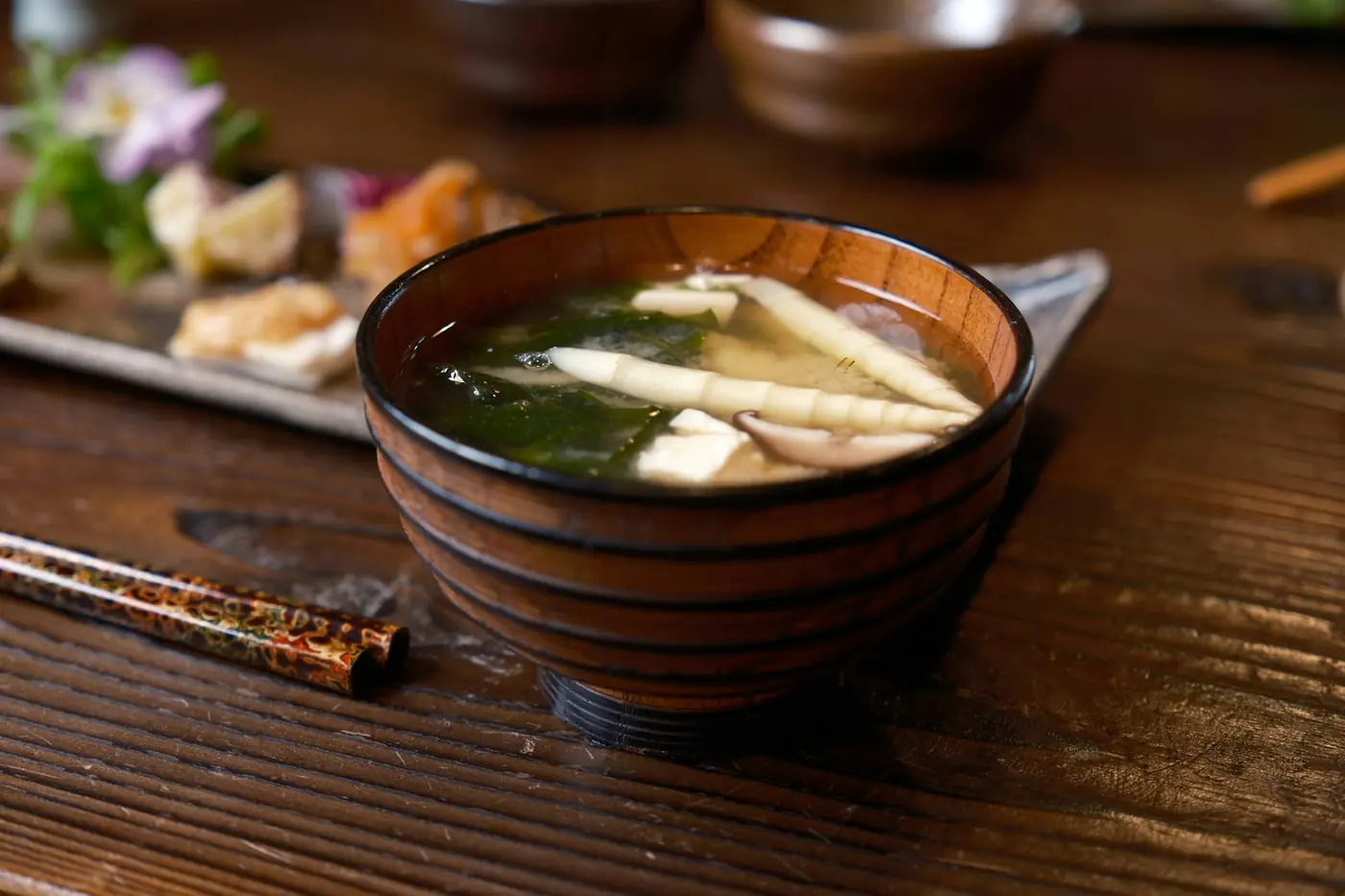
    Roll & Go Sushi’s version follows that pattern — an 8 oz bowl of soybean paste broth with seaweed and tofu.

    What onion soup is doing differently

    The onion soup served at Japanese and Asian restaurants in the United States is not French onion soup. There is no cheese, no bread, and the broth is thin and clear rather than dark and syrupy.

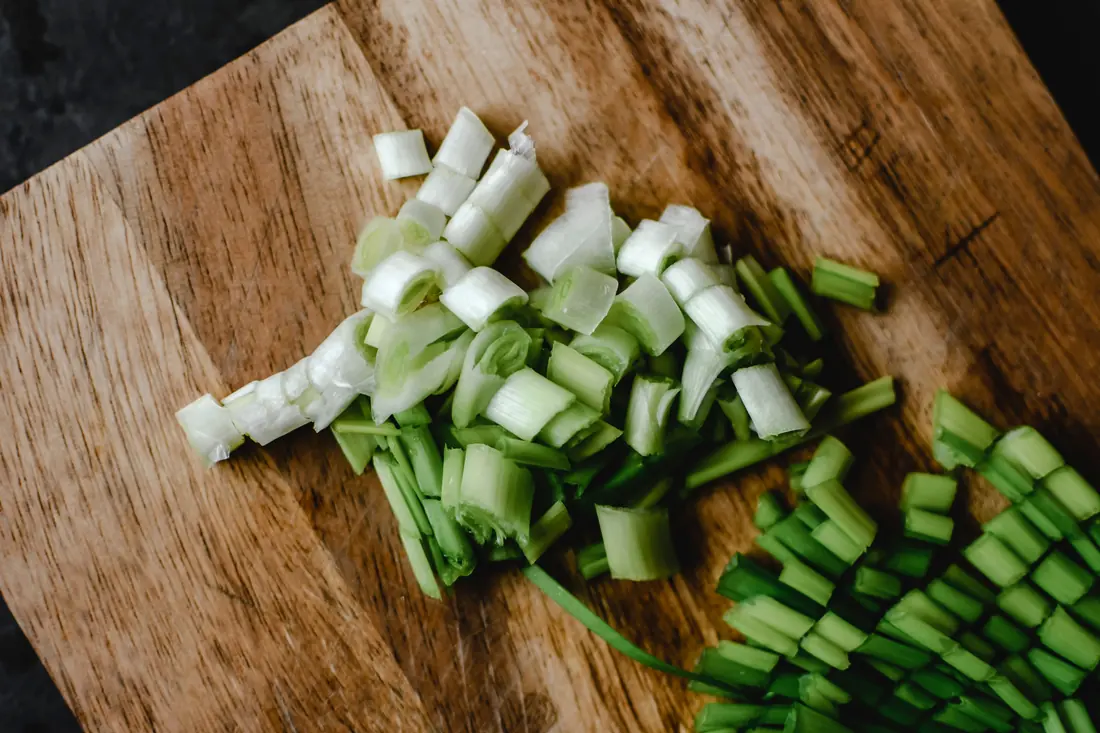
    Finely chopped spring onions

    Onions are fried first, which is where the sweetness comes from, then simmered in a light broth with mushrooms. Scallion goes in at the end. The result is delicate — the point is aroma rather than body. Roll & Go Sushi’s is an 8 oz bowl of fried onions, mushrooms and scallions.

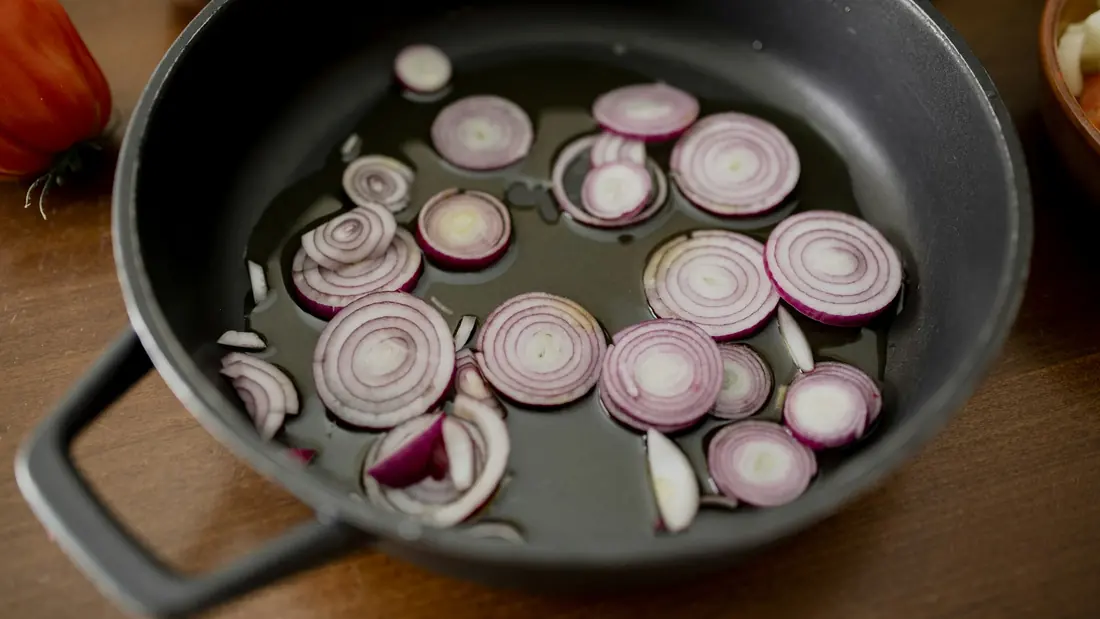
    Sliced red onion in a pan before cooking

    Miso and onion soup compared

    Miso soupOnion soup
    BaseFermented soybean pasteClear broth with fried onion
    FlavourSavoury, salty, faintly sweetLight, sweet, aromatic
    TextureSlightly cloudy, with tofu and seaweedThin and clear, with soft onion and mushroom
    Typical additionsTofu, seaweed, scallionFried onion, mushroom, scallion
    ServedHot, in a small bowlHot, in a small bowl
    Goes well withSushi and raw fishGrilled and fried dishes
    The two starter soups most Japanese and Asian menus offer.

    Which goes better with what you ordered

    There is a rough logic to the pairing, and it is worth following.

    • Ordering sushi or sashimi — miso. The savoury depth sits well against cool rice and raw fish, and it is the traditional pairing.
    • Ordering hibachi or anything grilled — onion soup. It is lighter, and it does not compete with food that already has char and sauce.
    • Ordering fried rolls or tempura — onion soup again, for the same reason. Something clear cuts through fried food better.
    • Cold day, or you want something restorative — miso, which feels substantially warmer than its size suggests.
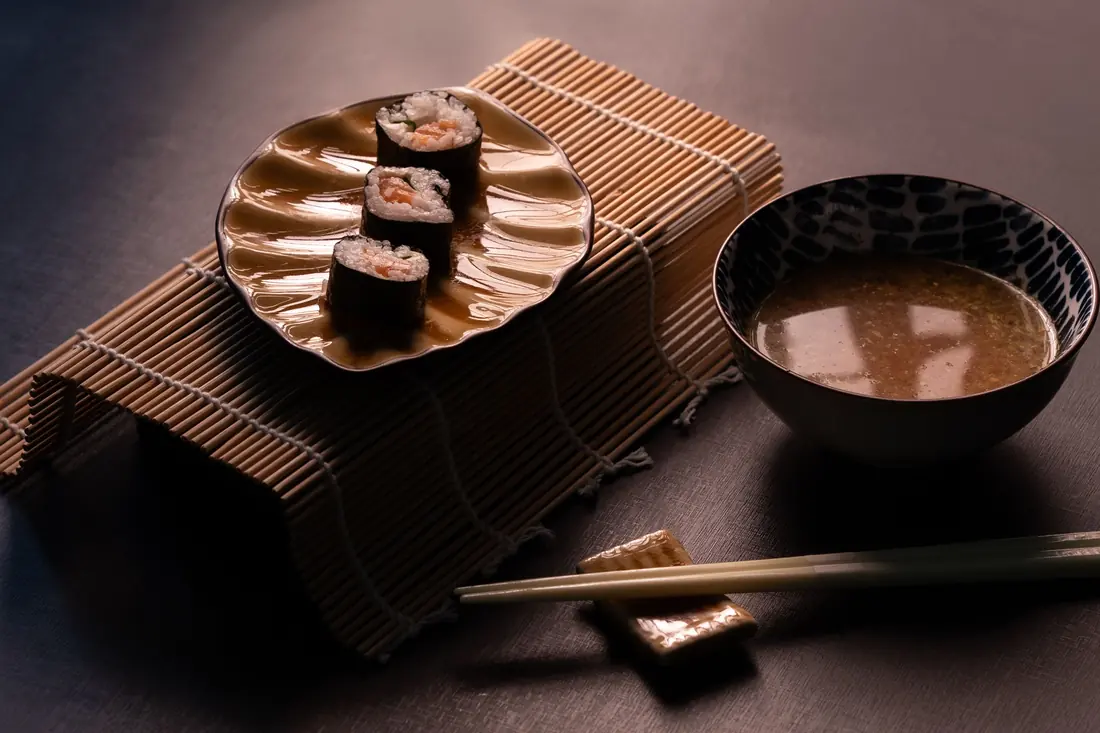
    A small bowl of soup set beside a plate of sushi

    When it is served says something too

    In Japan miso soup is not usually a starter. It arrives with the rice, partway through the meal, and is treated as part of the main course rather than something that opens it. Serving it first is a Western restaurant convention.

    That is worth knowing mostly because it explains the size. An 8 oz bowl is not meant to hold you over — it is a component, and it works best drunk alongside other food rather than finished before anything else arrives.

    Onion soup has no equivalent tradition behind it. It is a menu item developed for American Japanese restaurants, and it exists largely because it pairs well with grilled food and appeals to people who find miso too savoury.

    If neither appeals

    A salad is the usual third option, and at restaurants serving hibachi it is often included with the plate rather than ordered separately. Roll & Go Sushi’s hibachi comes with a choice of soup or salad, so the decision is built into the order rather than being an extra.

    The other option is to skip the starter entirely. Neither soup is essential to the meal, and if you are ordering a full plate or a large bowl of noodle soup, adding a small soup on top is more food than most people want.

    Neither is a meal

    Both arrive in a small bowl and are meant as a starter, not a course. If you want a soup that is the meal, that is a different item on the menu — a full bowl of noodle soup runs several times the size. Our guide to what pho actually is covers that end of the menu.

    A common mistake is ordering a small soup expecting it to fill a gap before a long wait. It will not. It is there to open the meal, in the same way a small salad is.

    Reading the description before you choose

    Menu wording tells you most of what you need. A soup described by its base — soybean paste, or a clear broth — is telling you where the flavour comes from. A soup described by its garnishes is usually the lighter of the two.

    Sizes are worth checking too, since a stated volume is the clearest signal of whether something is a starter or a meal. An 8 oz bowl is a component of a meal; anything four times that size is the meal itself.

    If the menu lists a soup with the hibachi rather than separately, it is included with the plate, and ordering another one on the side is usually more than you want.

    A few things worth knowing

    • Drink it, do not spoon it. Miso soup is traditionally lifted and sipped from the bowl, with chopsticks used for the tofu and seaweed.
    • The sediment is normal. Miso settles. A gentle swirl before drinking brings it back together.
    • Recipes vary between kitchens. Miso type, stock and additions all differ, so two bowls at two restaurants can taste quite different.
    • If you have an allergy or dietary requirement, ask. Soup bases are not always what the name suggests, and no bowl should be assumed suitable based on its description alone.

    Two small habits that improve either bowl

    Drink the first mouthful before adding anything. Both soups are seasoned in the kitchen and neither normally needs adjusting, but people reach for soy sauce out of reflex and end up with something considerably saltier than intended.

    The second is to take the soup at the pace of the rest of the meal rather than finishing it first. Both are better warm, and both work as something you return to between other dishes rather than as a course to get through.

    Frequently Asked Questions

    Is miso soup vegetarian?

    It depends on the stock. Many are made with a fish-based dashi, so a miso soup is not automatically vegetarian. Ask the restaurant rather than assuming.

    Is the onion soup the same as French onion soup?

    No. The version served at Japanese and Asian restaurants is a thin, clear broth with fried onion and mushroom, with no cheese or bread.

    Which is better with sushi?

    Miso is the traditional pairing and the one most people prefer alongside raw fish. Onion soup works better with grilled or fried dishes.

    Can I order both?

    Yes, though two small soups is a lot of liquid before a meal. If you are sharing, one of each is a good way to compare them.

    Miso for depth, onion for lightness. If you are ordering sushi, miso is the safer bet; if the table is having hibachi, onion soup will suit it better.

    Both appear on the current soup list, and our guide to choosing a sushi roll covers the other half of that order.

  • What Is Pho? A Beginner’s Guide to the Noodle Soup

    What Is Pho? A Beginner’s Guide to the Noodle Soup

    Pho turns up on more menus every year, usually without much explanation. If you have never ordered it, the bowl arriving with a separate plate of leaves can be genuinely confusing.

    What is pho?

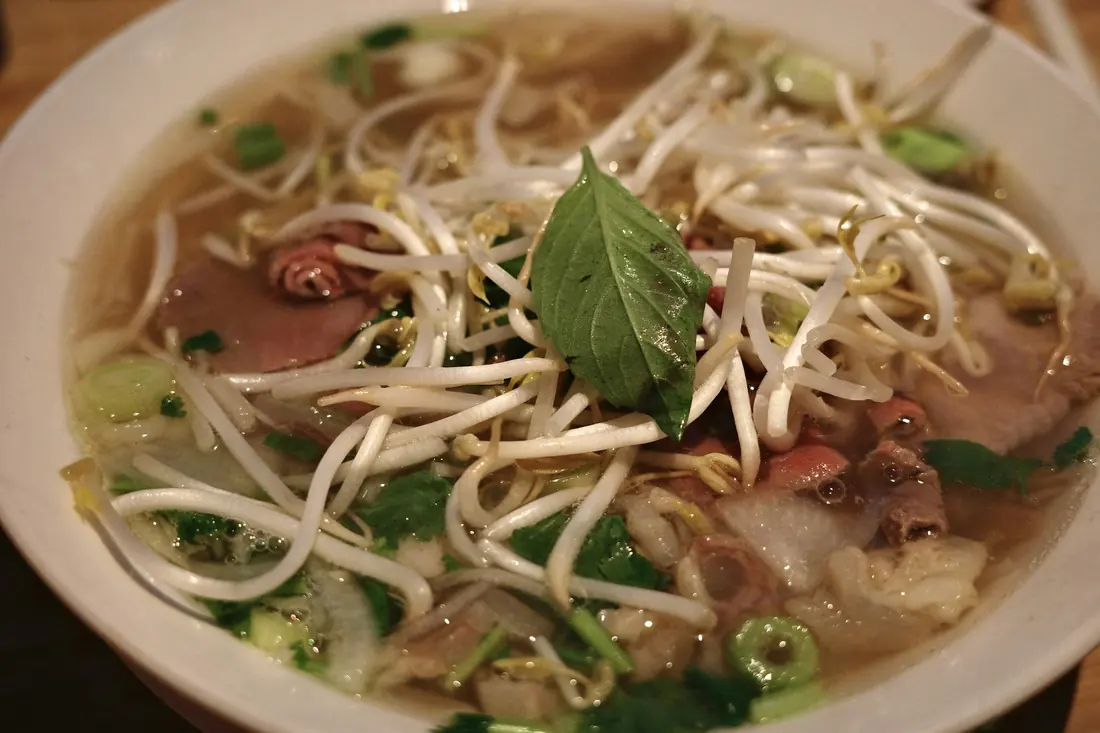
    Pho is a Vietnamese noodle soup made from a long-simmered broth, flat rice noodles and thinly sliced meat, served with a side plate of fresh herbs, bean sprouts, lime and chilli that you add yourself. It is pronounced closer to “fuh” than “foe”.

    Beef bones simmering slowly in a large stockpot

    What goes into the broth

    The broth is the dish. Beef bones are simmered for hours with onion and ginger that have been charred first, plus whole spices — star anise, cinnamon, clove, coriander seed and sometimes cardamom. It is skimmed repeatedly to stay clear.

    That process is why pho tastes the way it does: aromatic and layered, but not heavy. Britannica’s entry on pho traces the dish to northern Vietnam in the early twentieth century, and its spread south and then worldwide in the decades after.

    An overhead view of a pho bowl with chopsticks and a spoon

    The parts of the bowl

    • Broth — clear, hot and aromatic. Poured over everything else.
    • Rice noodles — flat, soft and white, cooked briefly before serving.
    • Protein — commonly beef, often several cuts in one bowl. Chicken, seafood and vegetarian versions are widespread.
    • Aromatics already in the bowl — sliced onion, scallion, sometimes coriander.
    • The herb plate — served separately: Thai basil, bean sprouts, lime wedges and fresh chilli.
    Sliced beef and noodles in a bowl of pho broth

    Why some of it arrives raw

    In a beef pho, thin slices of rare beef are often laid on top uncooked and cook through in the broth in the time it takes to reach your table. If you would rather not have that, ordering a version with fully cooked cuts — brisket or meatballs — avoids it.

    The herbs stay raw deliberately. Adding them gradually keeps them fresh rather than stewed, which is the whole point of serving them separately.

    A lime wedge being squeezed into a bowl of noodle soup

    How to eat it

    1. Taste the broth on its own first.
    2. Tear in a few basil leaves and add a small handful of sprouts.
    3. Squeeze in lime, then taste again before adding more of anything.
    4. Add chilli last, since you cannot take it back out.
    5. Alternate chopsticks for noodles with the spoon for broth.

    Hoisin and chilli sauce are usually on the table. Many people dip meat into them on a side dish rather than squeezing them into the bowl, which keeps the broth you were served intact.

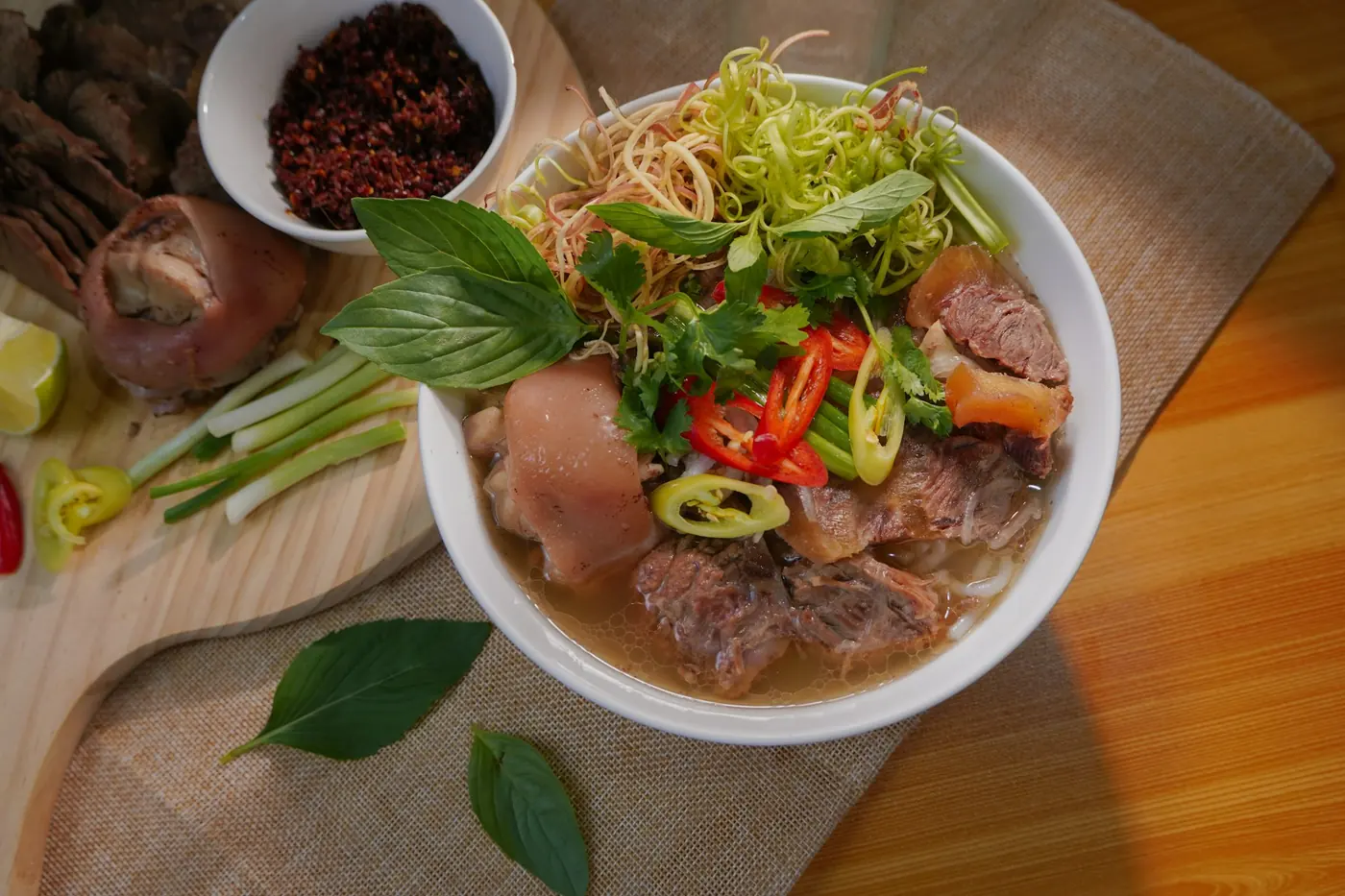
    A noodle soup bowl served with fresh herbs and scallions

    Where it came from

    Pho is younger than most people assume. It emerged in northern Vietnam in the early twentieth century, drawing on Vietnamese, Chinese and French influences at a time when beef was becoming more widely available. It spread south after 1954, picking up the herb plate and the sweeter, more elaborate garnishes associated with the southern style along the way.

    That regional split still shows on menus today. Northern-style bowls tend to be plainer, with a clearer broth and fewer additions; southern-style bowls are the ones with the loaded herb plate, hoisin and chilli sauce. Most American restaurants serve some version of the southern style.

    Pho alongside other dishes

    A standard bowl is a meal on its own, which catches people out when they order it as a starter. If you are eating with others and want to share, one bowl between two with something else alongside works better than a bowl each.

    It pairs particularly well with dishes that offer contrast — something fried or grilled cuts through the broth nicely. At an Asian kitchen that also serves sushi, a shared bowl of pho with a couple of rolls is a common order, and it gives you hot and cold, soft and crisp in the same meal. Our guide to which sushi rolls suit first-timers covers the other half of that order.

    Common versions you will see

    VersionWhat it containsGood if you
    Rare beefThin slices cooked by the broth itselfWant the most traditional bowl
    Brisket and meatballsFully cooked cuts, firmer textureWould rather nothing arrives raw
    Combination beefSeveral cuts in one bowlCannot decide, or are sharing
    ChickenLighter broth and poached chickenPrefer something milder
    SeafoodShrimp and other seafood in place of beefDo not eat red meat
    VegetarianVegetable broth and vegetablesAre avoiding meat
    The versions of pho most commonly offered on American menus.

    What it tastes like

    The first impression is aroma rather than flavour — star anise and cinnamon carry a long way in steam. The broth underneath is savoury and beef-forward but much lighter than its colour suggests, closer to a very good consommé than to a stew.

    The noodles are soft and neutral, which is deliberate; they carry broth rather than competing with it. Once you add herbs and lime the whole bowl brightens noticeably, which is why tasting before and after is worth doing the first time.

    If you are used to salty, thick noodle soups, pho can seem understated at first. That impression usually reverses by the second or third mouthful.

    Mistakes worth avoiding the first time

    None of these will ruin the bowl, but each one makes it worse than it needed to be.

    1. Emptying the herb plate in at once. The leaves wilt within a minute and lose most of their aroma. Add a few, eat, add a few more.
    2. Squeezing in the sauces immediately. Hoisin is sweet and chilli sauce is sharp; both flatten a broth that was simmered for hours. Taste first.
    3. Letting it sit. Rice noodles keep absorbing broth, so a bowl left for fifteen minutes becomes thick and soft. Pho is meant to be eaten straight away.
    4. Stirring everything together at the start. Part of the pleasure is that the bowl changes as you go, and mixing it upfront removes that.
    5. Ordering it as a side. A full bowl is a meal. If you want a starter, a smaller soup is the right size.

    The general principle is restraint at the beginning. You can always add more; you cannot take anything back out.

    Ordering pho in Daphne

    Roll & Go Sushi serves a 32 oz Vietnamese-style pho noodle soup with fresh herbs and vegetables. The beef version comes with rare beef, meatballs and brisket together, and chicken, seafood and vegetarian options are also listed.

    It is a full meal rather than a starter, which is worth knowing if you are also ordering sushi. The smaller miso and onion soups on the same menu are the better choice as a side. You can see the current soup and noodle options or compare it with how pho differs from ramen before you decide.

    Frequently Asked Questions

    How do you pronounce pho?

    Closer to “fuh” than “foe” — a short vowel with a slight upward tone. Nobody at a restaurant will mind either way.

    Is pho spicy?

    Not on its own. The broth is aromatic rather than hot. Any heat comes from the fresh chilli and chilli sauce you add yourself.

    What is the herb plate for?

    It lets you season the bowl to your own taste. Add the herbs a few at a time so they stay fresh rather than wilting all at once.

    Is pho a starter or a main course?

    A main course. A standard bowl is large and filling — the smaller soups on a menu, like miso or onion soup, are the ones intended as starters.

    Can I order pho without meat?

    Most places offer a vegetarian version, though the broth base varies between kitchens. Ask when you order if this matters to you.

    Pho is far less complicated than the herb plate makes it look. Taste the broth, add a little at a time, and adjust as you go.

    If you want to try a bowl locally, the ordering page lists what is available, and the restaurant’s hours and location are here.

  • Pho vs Ramen: What’s Actually Different?

    Pho vs Ramen: What’s Actually Different?

    Pho and ramen get grouped together as “Asian noodle soup”, which hides how different they actually are. They come from different countries, use different noodles, and are built on opposite ideas about what a bowl should taste like.

    The short answer

    Pho is Vietnamese: a clear beef or chicken broth spiced with charred aromatics, served with flat rice noodles and a side plate of fresh herbs you add yourself. Ramen is Japanese: a wheat-noodle soup with a seasoned, often richer broth, topped in the kitchen before it reaches you.

    Star anise and cinnamon simmering in a pot of broth

    The broth is the real difference

    Pho broth is simmered for hours with beef bones, charred onion and ginger, and warm spices — star anise, cinnamon, clove, coriander seed. The goal is clarity. A good pho broth is aromatic and clean rather than heavy, and you should be able to see through it.

    Flat rice noodles ready for a bowl of pho

    Ramen broth works the other way. It is usually built from a stock plus a seasoning base — soy, salt or miso — and often finished with fat for body. Some styles are deliberately cloudy and thick. Britannica’s entry on ramen covers how the dish developed in Japan from Chinese wheat-noodle soups.

    The noodles are not interchangeable

    Pho uses flat rice noodles, soft and slightly slippery, with no chew to speak of. They absorb broth quickly, which is part of why pho is served hot and eaten promptly.

    A side plate of Thai basil, lime and bean sprouts

    Ramen noodles are wheat-based and treated with an alkaline solution that gives them their springy bite and yellow tint. They hold their texture in hot broth far longer than rice noodles do.

    How each bowl is finished

    This is the difference you notice first at the table. Ramen arrives complete — the kitchen has already decided on the toppings and their arrangement.

    Fresh wheat noodles portioned into nests before cooking

    Pho arrives partly unfinished on purpose. A side plate of herbs, bean sprouts, lime and chilli comes with it, and you build the bowl to your own taste. Sauces are usually on the table for the same reason.

    Pho and ramen compared

    PhoRamen
    OriginVietnamJapan
    NoodleFlat rice noodles, softWheat noodles, springy
    BrothClear, aromatic, spice-ledSeasoned and often rich, sometimes cloudy
    Signature aromaticsStar anise, cinnamon, charred onion and gingerSoy, miso or salt base, often with added fat
    Finished byYou, at the tableThe kitchen, before serving
    Served withHerb plate, lime, chilli, saucesToppings already arranged
    Overall impressionLight and fragrantDeep and savoury
    The practical differences between a bowl of pho and a bowl of ramen.

    Which one should you order?

    • Want something light but still filling — pho. The broth is substantial without being heavy.
    • Want a rich, savoury bowl — ramen leans further in that direction.
    • Like adjusting your food as you eat — pho is built for it.
    • Prefer chewy noodles — ramen’s wheat noodles hold more bite.
    • Feeling unwell or want something restorative — pho’s clear, aromatic broth is the more common choice for that.
    A ramen bowl topped with pork, a soft egg and nori

    The toppings tell you a lot

    Look at what sits on top of each bowl and the difference in philosophy becomes obvious. Ramen toppings are cooked components chosen to sit in the broth: braised pork, a marinated soft-boiled egg, bamboo shoots, sheets of nori, corn or butter depending on the region. They are placed deliberately and they are part of the recipe.

    Pho toppings are mostly raw and mostly optional. Sliced onion and scallion arrive in the bowl; everything else comes on the side. That includes the protein in some cases — thin slices of rare beef are laid on top and finish cooking in the hot broth on the way to the table.

    Hoisin and chilli sauce served alongside a noodle soup

    This is why two people can order the same bowl of pho and end up eating quite different meals. It is also why the dish suits fussy eaters better than its reputation suggests.

    Which travels better?

    Neither is ideal for a long journey, but pho holds up better if it is packed correctly. Because the broth, noodles and herbs are separate by design, a good takeout container keeps them apart until you assemble the bowl at home.

    Ramen is harder. The noodles are cooked to a specific texture and sit in the broth immediately, so by the time it reaches you they have usually softened past where they were meant to be. If you are ordering noodle soup to take away, pho is the safer choice.

    How to eat pho properly

    There is no ceremony to it, but a few habits make the bowl better.

    1. Taste the broth first, before adding anything. It tells you how much you actually need.
    2. Add herbs a few at a time rather than all at once — they wilt fast in hot broth.
    3. Squeeze lime to taste; it sharpens the broth considerably.
    4. Use chopsticks for noodles and the spoon for broth, alternating rather than mixing.
    5. Add sauces to a small side dish for dipping meat rather than pouring them into the bowl, which flattens the broth you were served.

    What about price and portion?

    Both are usually served as a single large bowl intended as a full meal rather than a course. Portion sizes vary between restaurants, so a bowl described in ounces tells you more than the name does. Pricing moves with the protein and the size, and it is worth checking the current menu rather than assuming.

    Three things people get wrong

    A few assumptions come up constantly, and all three change how you order.

    • “Pho is just Vietnamese ramen.” They are not related. Ramen descends from Chinese wheat-noodle soups brought to Japan; pho developed separately in Vietnam using rice noodles and a French-influenced approach to beef stock.
    • “The herbs are a garnish.” They are an ingredient. A bowl of pho eaten without them tastes noticeably flatter, and the plate is not decoration.
    • “All ramen is heavy and all pho is light.” Broadly true, but there are light shio ramen styles and rich, fatty pho variants. Both cuisines have more range than the stereotype.

    The practical version of all this: if you want a bowl you finish yourself, order pho. If you want a bowl the kitchen has already balanced for you, order ramen.

    Where this lands on a local menu

    Not every Asian kitchen serves both. Roll & Go Sushi in Daphne serves a Vietnamese-style pho noodle soup — a 32 oz bowl with fresh herbs and vegetables, with beef, chicken, seafood and vegetarian versions, the beef one containing rare beef, meatballs and brisket. It does not serve ramen, so if a bowl of pho is what you are after, that is the one to look for.
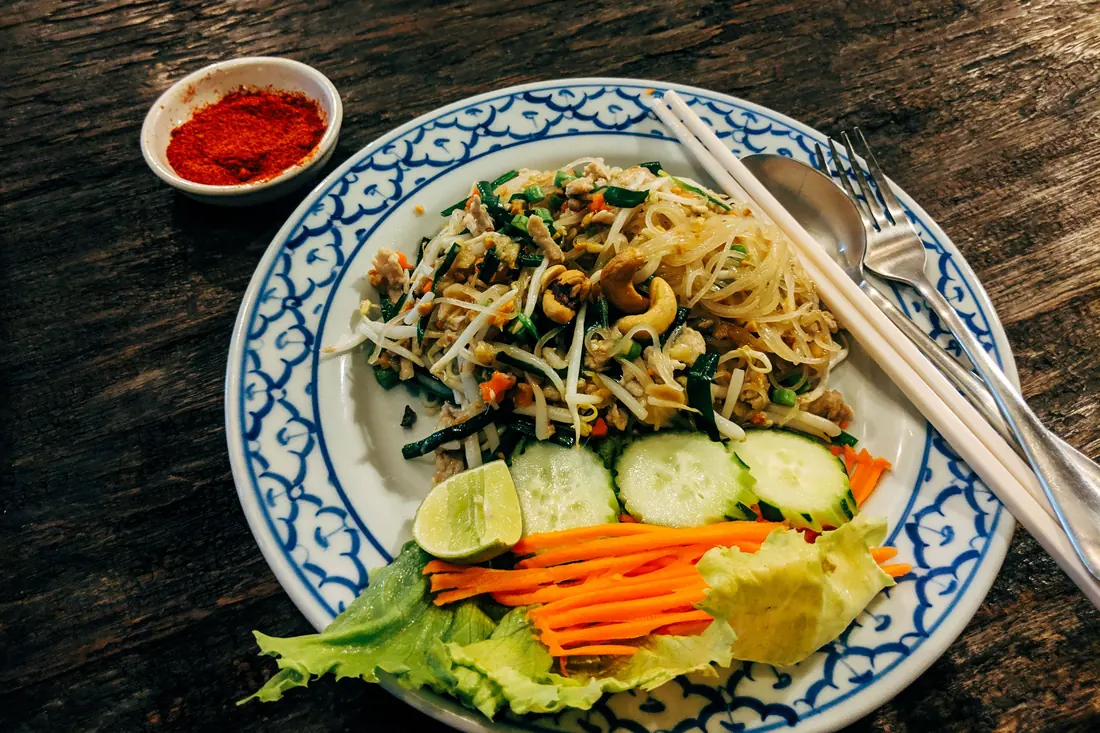
    Thin slices of rare beef ready to be added to hot broth

    Alongside it the menu carries a miso soup and an onion soup, both smaller and better suited as a starter next to sushi than as a meal. You can check the current soup options before ordering, or read our fuller guide to what goes into a bowl of pho.

    Frequently Asked Questions

    Is pho healthier than ramen?

    It depends entirely on the bowl. Pho broth is generally lighter and less fatty, but both can be high in sodium and both vary widely between kitchens. Ask the restaurant if you need specific nutritional information.

    Can you use ramen noodles in pho?

    You can, but it stops being pho in any meaningful sense. The flat rice noodle is central to the dish’s texture and the way it carries broth.

    What does pho taste like?

    Clean and aromatic rather than heavy — beefy underneath, with warm spice from star anise and cinnamon, and brightened by whatever herbs and lime you add.

    Is pho Japanese?

    No. Pho is Vietnamese. Ramen is the Japanese noodle soup, and the two developed entirely separately.

    They are not competing versions of the same dish. Pho is a clear, aromatic broth you finish yourself; ramen is a richer bowl finished for you.

    If the light-and-fragrant description is what appeals, see what is on the menu in Daphne.

  • What Makes a Specialty Roll Different from a Classic Roll?

    What Makes a Specialty Roll Different from a Classic Roll?

    Most sushi menus split into two halves. One lists short, familiar names — cucumber, salmon, California. The other lists rolls with invented names and three lines of description each. That second half is the specialty section.

    What makes a roll a specialty roll?

    A specialty roll is a house creation rather than a standard one: it combines multiple fillings, is usually built inside-out, and is finished with a topping, a sauce, or both. Classic rolls follow recognised formulas; specialty rolls are the kitchen’s own compositions and vary from restaurant to restaurant.
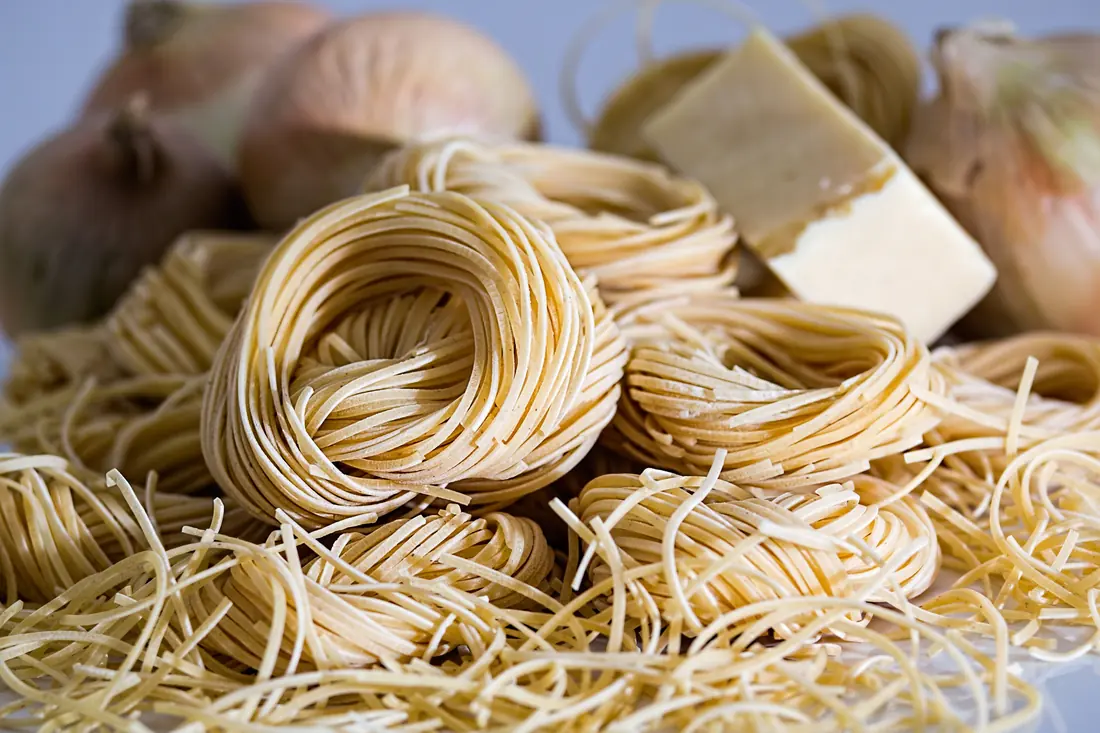
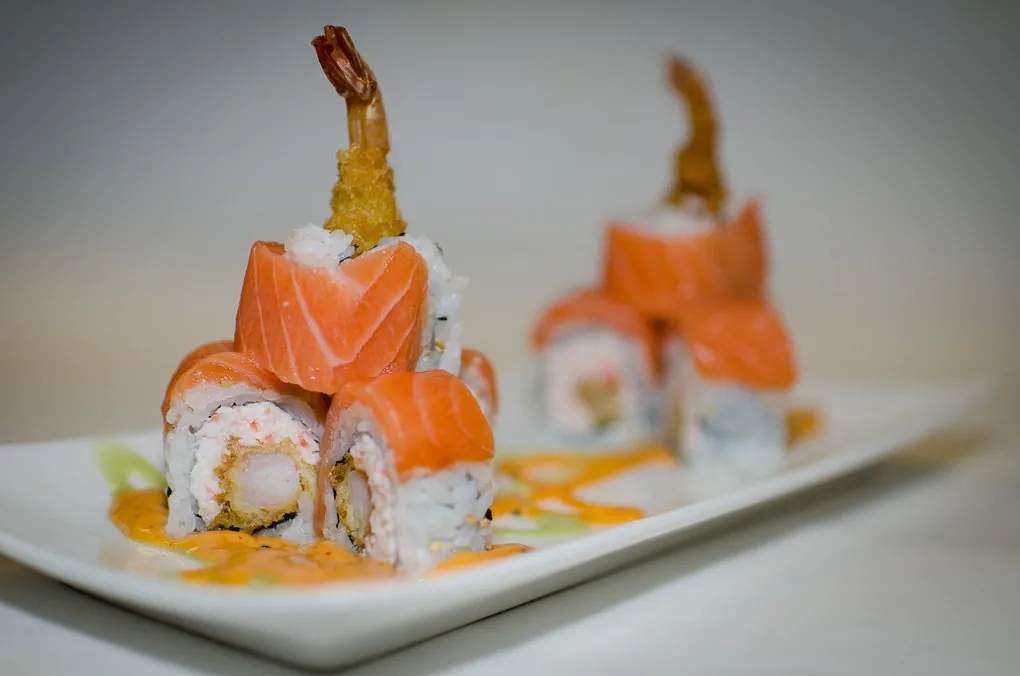
    Geisha specialty roll - shrimp tempura and crab mix topped with fresh salmon

    The four things that make a roll ‘specialty’

    It is usually inside-out

    In an inside-out roll the rice sits on the outside and the nori wraps the filling. That exterior is then coated — sesame seeds, roe, crispy onion — or left bare so a topping can sit directly on the rice.
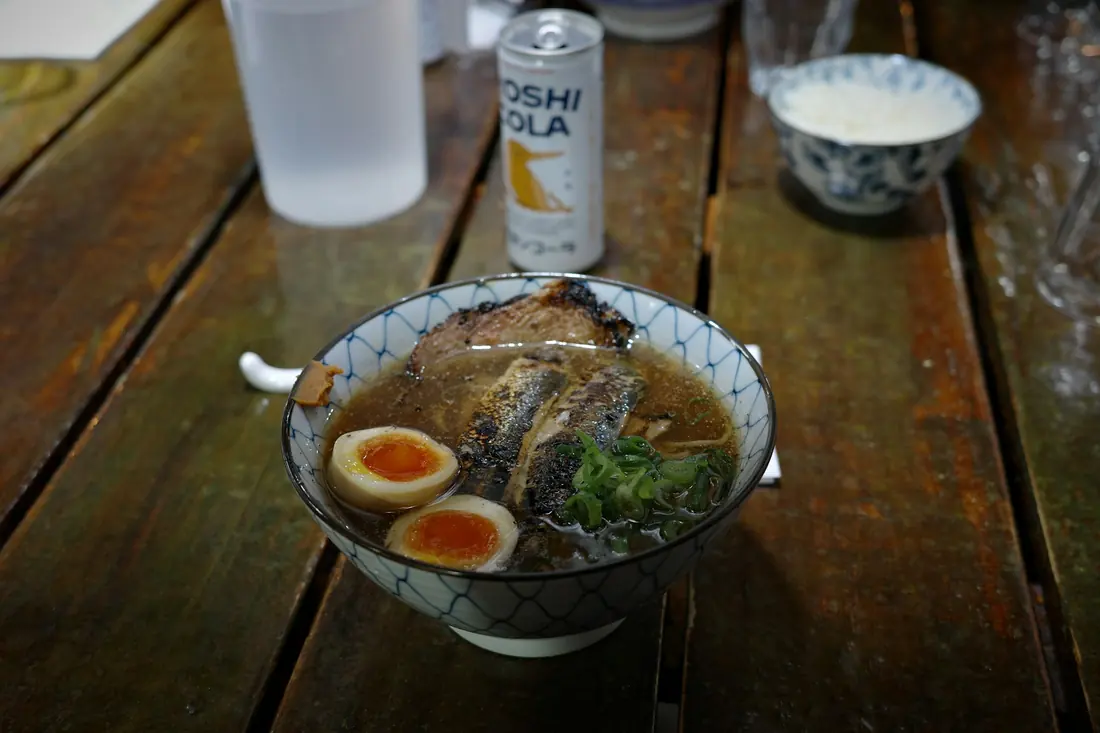
    An inside-out roll coated in toasted sesame seeds

    It combines more than one filling

    A classic roll typically has one or two components. A specialty roll layers three or more: a fried element for texture, a creamy element for body, and something fresh like avocado or cucumber to cut through both.

    It is topped

    The topping is what most obviously separates the two categories. Sliced fish laid across the roll, roe scattered over it, or scallion and crispy garnish are all common. A topped roll is usually described by its topping, which is the quickest way to read the menu.

    A roll layered with thin slices of salmon across the top

    It is finished with sauce

    Eel sauce, spicy mayonnaise and similar finishes are applied after the roll is cut. Sauce is a large part of why specialty rolls taste richer than classic ones.

    Classic rolls and specialty rolls side by side

    Classic rollSpecialty roll
    FillingsOne or twoThree or more, layered
    ConstructionOften nori on the outsideUsually inside-out
    ToppingRarelyFrequently — fish, roe or garnish
    SauceServed on the sideApplied to the roll
    ConsistencyMuch the same everywhereUnique to each restaurant
    Best forLearning what you likeOnce you know what you like
    Classic and specialty rolls compared.

    Reading a specialty roll description

    Menu descriptions follow a reliable order: what is inside, then what is on top. Split the sentence at the word ‘topped’ and you have the whole roll.

    Take the Geisha at Roll & Go Sushi, described as shrimp tempura and crab mix topped with fresh salmon. Everything before ‘topped’ is the cooked filling; everything after is the raw garnish. The Tan GO reads the same way — shrimp tempura, crab mix and avocado, topped with fresh tuna.

    Roe and sliced scallion used as a sushi garnish

    Not every house creation is a roll, either. The Crab Angels on the same menu are house-made stuffed crab wontons, which sit with the appetisers rather than the sushi. You can see the full ordering page for what is currently available.

    How to choose one

    1. Find the protein you want — salmon, tuna, shrimp or crab.
    2. Check whether the filling is fried, creamy or fresh. That decides the texture.
    3. Look at the topping. Raw fish on top means a small amount of raw fish overall.
    4. Note the sauce. Anything described as spicy usually means a mayonnaise-based sauce, not chilli heat alone.
    Finishing sauce being drizzled across a plated roll

    How many should you order?

    Specialty rolls are richer than classic ones, so they fill you up faster. One specialty roll plus one simpler roll is a comfortable meal for most people; two specialty rolls is more food than it looks like on the menu.

    If you are ordering for a group, treat them as the centrepiece rather than the whole order. A couple of specialty rolls shared around, with plainer rolls and a soup alongside, gives everyone a taste of the interesting ones without the meal becoming heavy.

    Why they vary so much between restaurants

    There is no standard recipe for a specialty roll, so the same name can mean different things in two kitchens. This is a feature rather than a flaw — it is where a sushi chef’s preferences show. Japan’s own culinary tradition is strongly regional in the same way, as the Japanese government’s regional cuisine resource illustrates.

    It also means the description matters more than the name. A roll called the same thing at two restaurants may share nothing but the title.

    Patterns you will recognise once you know them

    Specialty sections differ between restaurants, but a handful of constructions turn up almost everywhere under different names.

    • The crunch roll — a fried filling, usually shrimp tempura, with crispy tempura flakes or fried onion outside. Texture is the whole point.
    • The topped roll — a cooked or creamy centre with sliced raw fish laid across the top. The most common bridge between cooked and raw.
    • The baked roll — finished under heat with a creamy topping that browns. Served warm, and usually the least fish-forward option on the list.
    • The layered fish roll — several kinds of fish arranged in stripes across the top. Visually the most striking and the most raw-fish-heavy.
    • The wrapped roll — cucumber or soy paper instead of nori, for people who dislike the seaweed flavour.

    Once you can place a roll into one of those groups, its name matters much less than its description.

    Why the name tells you almost nothing

    Specialty rolls are named by the kitchen, and the names are marketing rather than description. A roll called the same thing in two restaurants may share no ingredients at all, and a dramatic name says nothing about whether the roll is mild or rich, cooked or raw.

    This is the single most useful habit to build when reading a sushi menu: skip the name and read the description underneath it. Everything you actually need — the filling, whether it is fried, what is on top, which sauce — is in that one line.

    Thinly fanned avocado laid over a sushi roll

    What to put alongside one

    Specialty rolls are rich — fried fillings, creamy sauces and a topping all in one piece. What you order with them matters more than it does with a plain roll.

    A clear soup is the usual counterweight. Roll & Go Sushi’s menu includes a miso soup made with soybean paste broth, seaweed and tofu, and an onion soup with fried onions, mushrooms and scallions — both light enough not to compete with a sauced roll. There is also a Vietnamese-style pho noodle soup served with fresh herbs and vegetables, which is substantial enough to be the main part of a meal rather than a side.

    If you are ordering for two, one specialty roll plus one simpler roll and a shared soup tends to work better than two rich rolls. For a fuller meal, something from the hibachi grill alongside a single roll gives you contrast in both temperature and texture — you can see what is on the menu to plan it.

    Questions worth asking before you order

    Sushi staff field these constantly, and asking gets you a better meal than guessing.

    1. Is there raw fish in this, or only on top?
    2. Is the sauce sweet or spicy?
    3. Can I have the sauce on the side?
    4. Which of these is the mildest?
    5. Does this contain anything I would not guess from the name?

    That last question matters most if you are avoiding a specific ingredient. Roll names rarely list everything inside, and no dish should be assumed safe for an allergy based on its description alone — always tell the restaurant directly.

    Frequently Asked Questions

    Are specialty rolls always more expensive than classic rolls?

    They usually cost more because they contain more ingredients and take longer to assemble, though the difference varies by restaurant. Check the current menu for pricing.

    Is a specialty roll always raw?

    No. Many are built on cooked fillings such as shrimp tempura or crab mix, with raw fish appearing only as a topping — or not at all.

    What does ‘inside-out’ mean on a sushi menu?

    The rice is on the outside of the roll and the nori is wrapped around the filling. It is also called uramaki.

    Can I ask for a specialty roll without the sauce?

    Often yes. Sauce is normally applied at the end, so it is one of the easier requests to make — ask when you order.

    Once you can read the construction, the specialty section stops being a guessing game. Filling, topping, sauce — in that order.

    Browse the specialty rolls currently on the menu, or start with our guide to which rolls suit first-timers.

  • Cooked vs Raw Sushi Rolls: Which Should You Order?

    Cooked vs Raw Sushi Rolls: Which Should You Order?

    “Is it raw?” is the single most common question at a sushi counter, and the honest answer is that it depends entirely on the roll. Plenty of sushi contains no raw fish.

    The short answer

    Cooked rolls use fried, poached, grilled or imitation-seafood fillings and are served at or near room temperature. Raw rolls use uncooked fish as the main component. Many popular rolls sit in between — a cooked centre with a few slices of raw fish laid across the top.

    Battered prawns frying to a golden colour in hot oil

    What counts as a cooked roll

    Cooked does not only mean fried. Several categories qualify, and they taste quite different from one another.

    • Tempura — shrimp or vegetables in a light batter, fried until crisp. Britannica’s entry on tempura traces the technique’s arrival in Japan through Portuguese traders in the sixteenth century.
    • Crab salad — usually a seafood blend bound with mayonnaise. Mild and the most common cooked filling on American menus.
    • Glazed and grilled fish — eel is the classic example, cooked and brushed with a sweet, dark sauce.
    • Baked or torched rolls — finished under heat, often with a creamy topping that browns slightly.
    Freshly sliced raw salmon on a cutting board

    What a raw roll actually involves

    Raw rolls put uncooked fish at the centre rather than on top. Texture is the real difference: raw fish is soft and clean-tasting, and it carries sauce very differently from a fried filling.

    Fish served this way is handled under specific conditions. The FDA’s advice about eating fish sets out who should be careful with raw seafood, including people who are pregnant, young children and anyone with a weakened immune system.

    A sushi roll finished with a dark sweet glaze

    Cooked and raw rolls compared

    Cooked rollsRaw rolls
    TextureCrisp, warm or creamy depending on methodSoft, smooth, cool
    FlavourSauces and frying leadThe fish itself leads
    TemperatureWarm centre in tempura and baked rollsServed cool
    SauceUsually a central part of the rollUsed sparingly
    Travels wellGenerally yes — holds up to a short driveBest eaten soon after it is made
    Good starting pointYesBetter once you know you like the texture
    How cooked and raw rolls differ in practice.

    The middle ground: a cooked centre with raw fish on top

    Many specialty rolls are built this way deliberately. The filling is fried or creamy, and a few slices of raw fish are laid across the outside. You get raw fish in a small, controlled amount alongside a texture you already recognise.

    On Roll & Go Sushi’s menu the Geisha follows this pattern — shrimp tempura and crab mix topped with fresh salmon — as does the Tan GO, which adds avocado and is topped with fresh tuna. If you want to try raw fish without ordering a fully raw roll, this is the format to look for. You can check the current roll selection before ordering.

    Crab salad mixed and ready to be rolled into sushi

    Which should you order?

    • New to sushi — start cooked. Tempura or crab salad.
    • Dislike the idea of raw fish specifically — glazed cooked fish gives you the flavour without the texture.
    • Curious but hesitant — a topped roll, where raw fish is a garnish rather than the filling.
    • Ordering for pickup or delivery — cooked rolls generally hold their texture better over a short journey.
    A chef slicing a finished sushi roll at the counter

    Ordering for a mixed group

    If some people at the table eat raw fish and others do not, order across both columns rather than negotiating. Two cooked rolls, one topped roll and a shared soup gives everyone something without anyone compromising.

    A shared soup is a useful anchor here — Roll & Go Sushi’s menu includes a Vietnamese-style pho noodle soup served with fresh herbs and vegetables, alongside miso and onion soups. Our guide to what pho actually is covers how it is put together.

    A baked sushi roll with a lightly torched topping

    Why texture matters more than you expect

    People who say they dislike sushi are usually describing texture rather than flavour. Raw fish is soft and yielding in a way that has no real equivalent in most Western cooking, and that unfamiliarity is what puts people off far more often than the taste does.

    Cooked rolls sidestep this entirely. A shrimp tempura roll is crisp on the outside and warm in the middle; a crab salad roll is creamy and cool. Both are textures anyone already knows. That is why they work as a starting point, and why someone who dislikes one raw roll should not conclude they dislike sushi.

    Telling cooked from raw on the menu itself

    You can usually work this out from the description alone, without asking. A few words do almost all of the signalling.

    • Tempura, crunchy, fried, baked, grilled, glazed — cooked.
    • Crab mix, crab salad, imitation crab — cooked.
    • Fresh salmon, fresh tuna, spicy tuna, yellowtail, hamachi — raw.
    • Smoked salmon, eel, shrimp (not tempura) — cooked, though the texture is closer to raw fish than to anything fried.

    The word fresh in front of a fish name is the clearest raw signal on most American menus. When a description reads “topped with fresh salmon”, the salmon on top is raw even if everything inside the roll is cooked.

    Where a description is genuinely ambiguous — and some are — ask. Kitchens vary, and the same roll name can be built two different ways in two restaurants.

    What the sauces actually are

    Sauce is one of the biggest differences between cooked and raw rolls, and the names on a menu are rarely self-explanatory.

    • Eel sauce — dark, thick and sweet, closer to a reduced soy glaze than anything fishy. It appears on cooked and glazed rolls far more often than raw ones.
    • Spicy mayonnaise — mayonnaise blended with chilli sauce. Creamy first, warm second. This is what “spicy” usually means on a sushi menu.
    • Ponzu — a thin citrus and soy dressing, sharp rather than sweet, and more common alongside raw fish.

    If you are unsure whether you will like a roll, the sauce is often the deciding factor rather than the fish. Asking for it on the side is a normal request.

    Ordering cooked rolls for pickup or delivery

    Cooked rolls are the more practical choice when food has to travel. Tempura softens but holds together, crab salad rolls are unaffected, and glazed rolls arrive much as they left. Fully raw rolls are best eaten close to where they were made.

    1. Choose cooked or vegetable fillings if the journey is more than a few minutes.
    2. Ask for sauces on the side so nothing goes soft in transit.
    3. Keep the container flat rather than upright, which stops toppings sliding off.
    4. Eat it soon after it arrives — refrigerating sushi rice makes it hard and dry.

    Roll & Go Sushi takes pickup orders by phone and works with several delivery partners, so the practical choice often comes down to how far the food has to go. The ordering page lists the current options.

    Frequently Asked Questions

    Which sushi rolls are completely cooked?

    Tempura rolls, crab salad rolls, grilled or glazed eel rolls, baked rolls and vegetable rolls contain no raw fish. Always confirm with the restaurant, since recipes vary between kitchens.

    Is a California roll raw?

    Usually not. It is typically made with imitation crab, avocado and cucumber, all of which are cooked or raw vegetables rather than raw fish.

    Does a tempura roll stay crispy for delivery?

    Partly. The batter softens as it sits, so tempura rolls are best eaten shortly after they are made, though they still hold together better than fully raw rolls.

    Can I ask for a roll to be made without raw fish?

    Often yes, though it depends on the roll and the kitchen. Ask when you order rather than assuming a substitution is possible.

    Cooked and raw are not a hierarchy. They are two different eating experiences, and most people end up ordering both depending on the day.

    Have a look at the current sushi and specialty rolls, or read our guide to what makes a roll a specialty roll.

  • Sushi Rolls for Beginners: What to Order First

    Sushi Rolls for Beginners: What to Order First

    Ordering sushi for the first time is mostly a vocabulary problem. The food itself is simple — rice, seaweed, a filling, sometimes a topping — but menus tend to list thirty rolls with invented names and no explanation of what is inside them.

    This guide covers what a roll is actually made of, which styles suit people who are new to it, and how to order without guessing.

    Where should a beginner start?

    Start with a cooked or vegetable roll built on familiar textures — crab salad, shrimp tempura, cucumber or avocado. These give you the rice, seaweed and sauce experience without raw fish, and they are the easiest way to work out whether you like the format before moving on.

    A California roll cut into pieces showing cucumber, avocado and crab filling

    What is actually in a sushi roll

    Almost every roll is a variation on four components. Once you can spot them on a menu, most descriptions stop being mysterious.

    Rice and seaweed

    Sushi rice is short-grain rice seasoned with vinegar, a little sugar and salt. That seasoning is what makes it sushi rather than plain rice — the word itself refers to the soured rice, not to the fish. Nori, the thin dark sheet, is dried and pressed seaweed, and it is what holds the roll together.

    The filling

    This is the part that varies most: crab salad, cucumber, avocado, cream cheese, shrimp tempura, salmon, tuna, or a combination. Fillings are where a menu tells you whether a roll is cooked or raw, so read this part carefully.

    What goes on top

    Simple rolls stop at the filling. Others are finished with sliced fish, roe, scallion, crispy onion or a sauce. A roll topped with fish is usually described as such — for example a roll topped with fresh salmon or fresh tuna.

    Sushi rice being spread across a sheet of nori

    Five styles that suit first-timers

    1. Cucumber or avocado rolls. No fish at all. A clean way to find out whether you enjoy the rice-and-nori texture.
    2. Crab salad rolls. Mild, slightly sweet and creamy. The most forgiving starting point on most menus.
    3. Shrimp tempura rolls. Battered and fried shrimp gives you crunch and a warm centre. Frequently the roll that converts sceptics.
    4. Cooked salmon or eel rolls. Cooked fish, often with a sweet glaze, so you get the flavour without the raw texture.
    5. A topped specialty roll. Once the basics feel comfortable, a roll finished with sliced fish is the natural next step.

    At Roll & Go Sushi’s ordering page the specialty rolls follow that same logic. The Geisha is shrimp tempura and crab mix topped with fresh salmon, and the Tan GO is shrimp tempura, crab mix and avocado topped with fresh tuna — both built on a cooked centre with raw fish on the outside, which makes them a reasonable bridge between the two.

    Cooked, raw, or somewhere in between

    Roll styleWhat you getBest if you
    VegetableCucumber, avocado, sometimes pickled radishWant to skip fish entirely
    Crab saladMild, creamy, lightly sweet fillingPrefer familiar flavours
    TempuraBattered and fried filling, warm and crispLike texture and crunch
    Cooked and glazedCooked fish with a sweet, savoury sauceWant fish but not raw fish
    Topped with raw fishCooked centre, sliced raw fish on topAre ready to try raw fish gradually
    Fully rawRaw fish as the main fillingAlready know you enjoy it
    Roll styles arranged from most to least beginner-friendly.
    A crispy shrimp tempura roll on a dark plate

    How much to order

    A standard roll is cut into six or eight pieces. For most people one roll is a light meal and two are a full one, though tempura and topped rolls are heavier than vegetable rolls.

    If you are ordering for a table, a mix works better than multiples of one thing. Two cooked rolls, one vegetable roll and a shared soup covers a wide range of preferences without anyone committing to something they have not tried.

    The things beside your plate

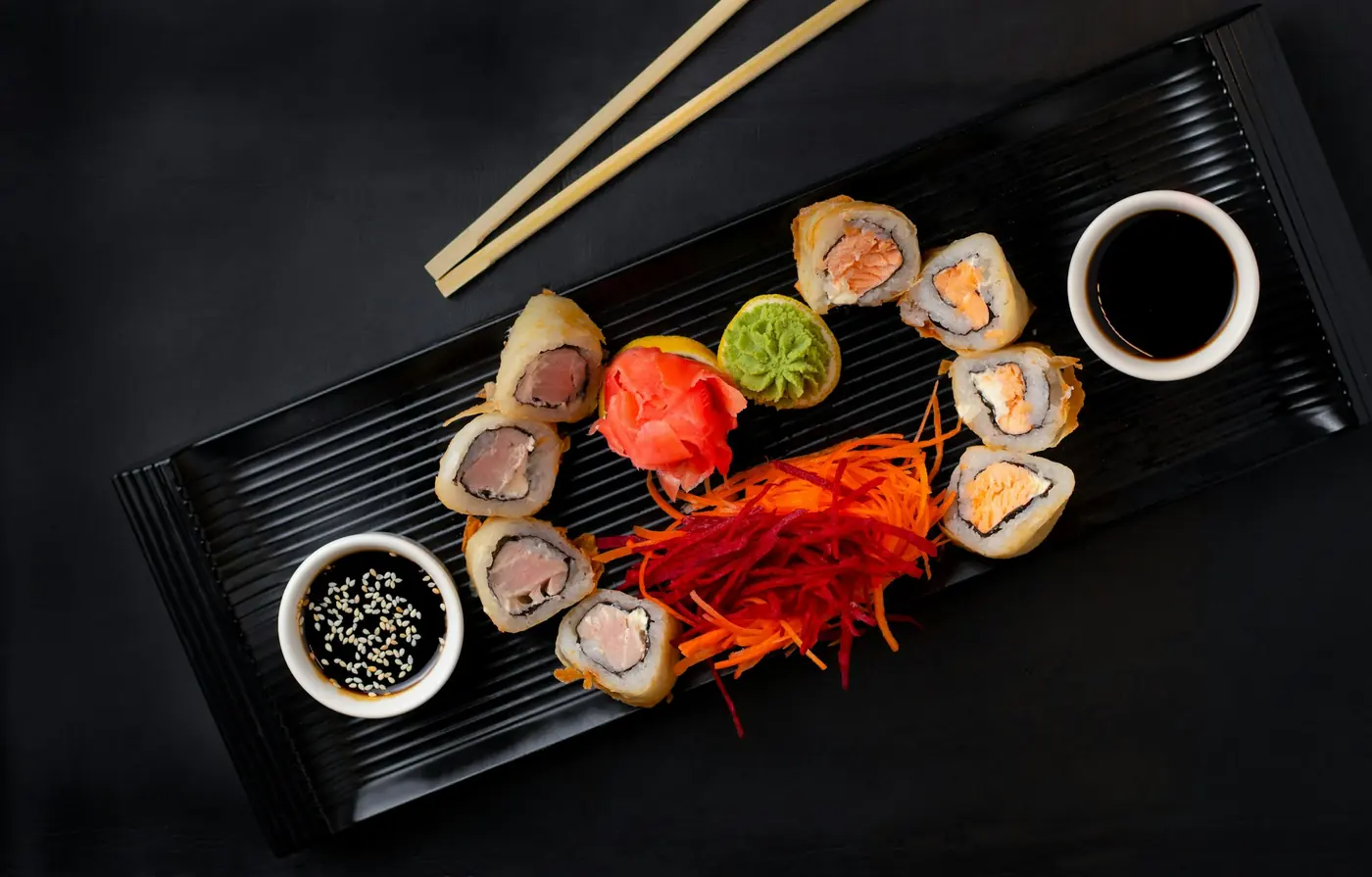
    • Soy sauce — for dipping, and easy to overdo. Touch the fish side rather than soaking the rice, which falls apart when saturated.
    • Wasabi — sharp rather than lingering. Most restaurants already put a small amount inside nigiri; adding more is a preference, not a requirement.
    • Pickled ginger — eaten between pieces to reset the palate, not piled on top of a roll.
    Soy sauce, wasabi and pickled ginger set beside a sushi plate

    Ordering without overthinking it

    Two questions solve most of the menu. First: is it cooked or raw? Second: is there anything in it I already know I dislike? If a description lists an ingredient you have never had, ask — staff answer this constantly and it is a normal question.

    Japanese food culture treats seasonality and simple preparation as central, and the Japanese government’s guide to regional cuisine gives a sense of how varied that tradition is beyond the rolls most Western menus show.

    A spicy tuna roll finished with a chilli sauce drizzle

    A note on raw fish

    Raw fish is safe to eat for most people when handled properly, but it is not recommended for everyone. The FDA’s advice about eating fish covers the groups who should be more cautious, including people who are pregnant. If that applies to you, the cooked and vegetable rolls above are the straightforward alternative.

    If you have a food allergy, tell the restaurant directly rather than inferring from a dish name. Roll names rarely list every ingredient.

    A single sushi roll piece lifted with chopsticks

    A short glossary for reading the menu

    Most sushi menus lean on the same dozen words. Knowing them removes almost all of the guesswork.

    • Maki — a rolled piece, cut into rounds. The default format.
    • Uramaki — an inside-out roll, rice on the outside.
    • Nigiri — a pressed finger of rice with a topping, not rolled.
    • Sashimi — sliced fish served on its own, with no rice.
    • Tempura — battered and fried, usually shrimp or vegetables.
    • Unagi — freshwater eel, always served cooked and glazed.
    • Masago and tobiko — small fish roe used as a coating or garnish; they add a mild salty pop rather than a strong flavour.
    • Spicy — on most American menus this means a mayonnaise-based sauce rather than chilli heat on its own.

    Two of those words do most of the work. If a description says tempura, expect crunch and a warm centre. If it says topped, expect something laid across the outside — often raw fish, sometimes avocado or roe.

    How it travels, and where to eat it

    Sushi is at its best within a short window of being made, which matters if you are choosing between eating in and taking it home. Rice firms up as it cools and fried elements lose their crunch, so a five-minute drive is fine while an hour is not.

    Roll & Go Sushi is a fast casual kitchen in Daphne serving sushi alongside hibachi and soups, so a first visit does not have to be sushi-only. If someone in your group is unsure, one roll plus something from the grill is a low-risk way to start. You can find the location and opening hours before you go.

    Frequently Asked Questions

    Is all sushi raw?

    No. A large share of rolls on most menus contain no raw fish at all — vegetable rolls, crab salad rolls, tempura rolls and cooked, glazed rolls are all common.

    What is the difference between a roll and nigiri?

    A roll is rice and filling wrapped in nori and cut into pieces. Nigiri is a small pressed mound of rice with a topping laid over it, and is not rolled or cut.

    Should I eat sushi with chopsticks or my hands?

    Either is acceptable. Hands are traditional for nigiri; chopsticks are easier for rolls, particularly ones finished with sauce.

    How do I order if I do not like seaweed?

    Ask for an inside-out roll, where the rice is on the outside and the nori sits against the filling. The seaweed flavour is much less noticeable.

    Sushi rewards a bit of trial and error. Start with something cooked, notice what you liked about it, and let that guide the next order.

    You can see what Roll & Go Sushi is serving or read more about the kitchen in Daphne before you order.