

Plates circulate past your seat on a belt, you take what you want, and the stack of empties beside you is the bill. It is a format most people have heard of and few have had explained – including how it keeps anything fresh.
Worth saying at the outset that this is an explainer for a format found elsewhere. Plenty of restaurants, this one included, are counter-service kitchens where everything is made to order.
The short answer
Conveyor belt sushi is kaiten-zushi – kaiten meaning rotation. It was opened in Osaka in 1958 by a restaurateur who could not afford enough staff and had watched a beer bottling line.
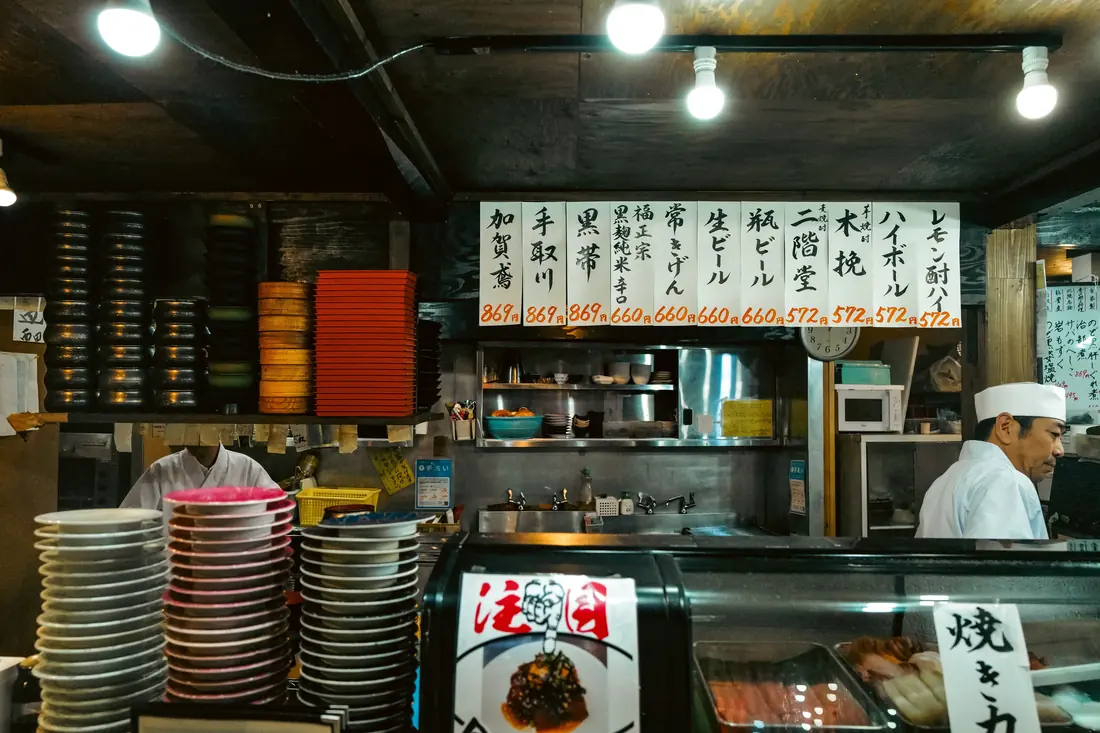
Britannica’s entry on sushi covers the dish’s long history, against which this format is extremely recent – and it changed who could afford to eat sushi more than any other single development.
The problem it solved
Sushi was expensive largely because it was labour. A counter needs a trained chef per handful of diners, and that ratio sets the price no matter how cheap the fish is.
A belt breaks that link. One kitchen supplies a whole room continuously, nobody takes an order, nobody carries a plate, and the diner does the serving. The cost per seat collapses, and sushi stops being an occasion.
How you are charged
By the plate, and the plate tells you the price. Colours and patterns correspond to price bands, and a chart on the wall maps one to the other.
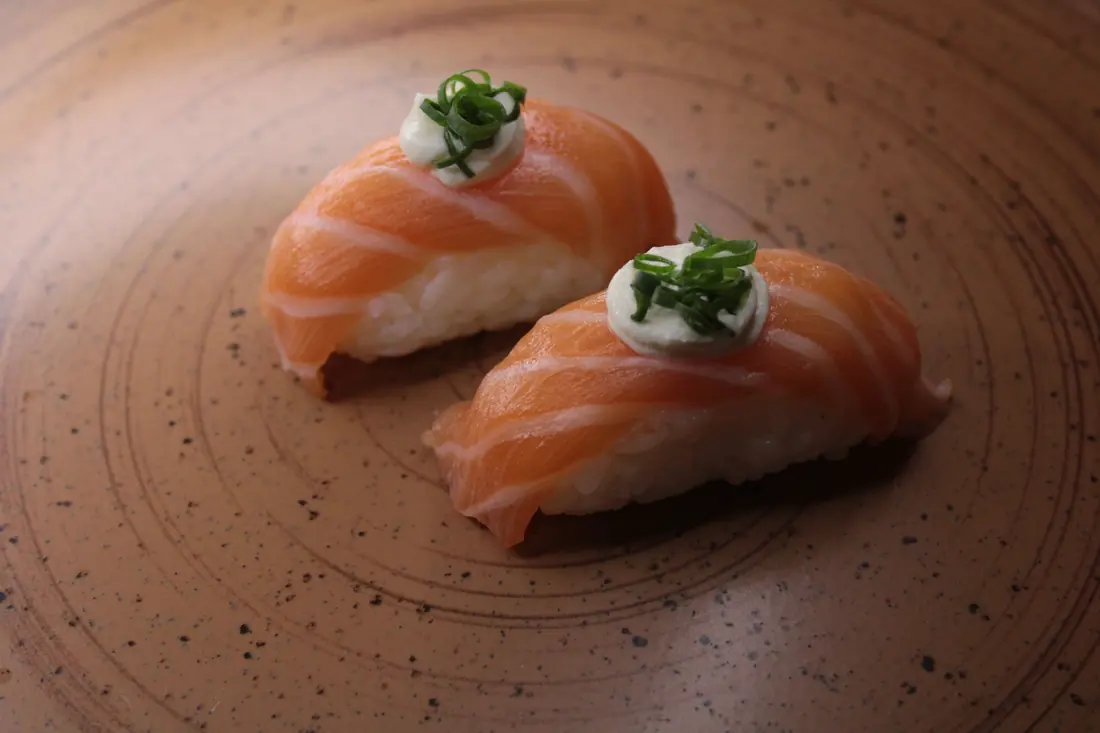
At the end, a member of staff counts your stack – or scans it, since many plates now carry a chip in the rim – and that is the bill. It is a genuinely elegant system: the pricing is visible before you take anything, and no order is ever wrong.
How it stays fresh
This is the question everyone asks and the part the format takes most seriously, because the whole model collapses if what is circulating is stale.
- Timers. Plates carry chips that log when they went on the belt, and anything past its limit is removed automatically.
- Covers. Hinged domes over each plate reduce drying and keep the belt clean.
- Chilled belts. Many run cooled, which slows everything down.
- Demand tracking. The same chips tell the kitchen what is being taken and what is going round untouched, so production follows the room.
The last one is the clever part. A belt is a live sales feed, and a well-run restaurant is making more of what is selling within minutes rather than at the end of the day.
Most of it is not on the belt anymore
The modern version has largely inverted. A touchscreen at each seat takes orders, and the belt – often a second express lane above the main one – delivers your specific plate to your specific seat.
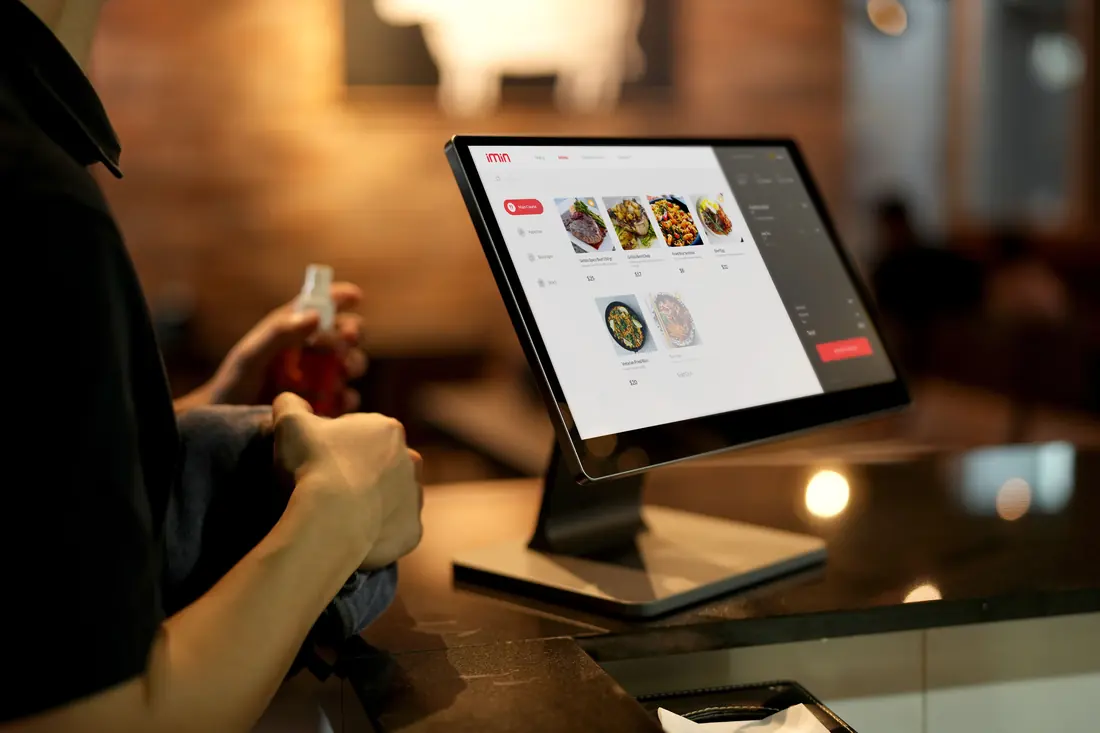
So the circulating belt has become the browsing display and the impulse channel, while most volume goes through ordering. That solves the freshness problem almost completely, at the cost of the thing that made the format charming.
What it is good at
Several things, honestly.
- Trying things. Two pieces at a time, at a known price, is the cheapest way to find out whether you like something.
- Groups who disagree. Everybody takes what they want and nobody negotiates an order.
- Speed. You can eat in fifteen minutes if you want to.
- Children. Visible food, small portions, no waiting, and a stack of plates to count.
The room is designed around the belt
Everything else follows from the loop. Seating is counter-style along the belt rather than at tables, because every seat has to be within arm’s reach of it. The kitchen sits inside the loop so plates go on with the shortest possible walk.
Water taps, tea powder, chopsticks and sauces are all at the seat rather than brought over, which is what removes table service entirely. The format is not just a conveyor added to a restaurant; it is a restaurant designed backwards from a conveyor.
And what it is not
It is not the same product as a counter, and the honest comparison is on rice rather than fish. Rice at body temperature, seasoned and hand-formed to order, is the thing a belt cannot deliver – as our piece on what a sushi chef is called sets out, the rice is where the craft is.
Anything that has been circulating has cooled and firmed. It is still good; it is not the same thing, in the same way our comparison of restaurant and supermarket sushi is a comparison of freshness rather than of ingredients.
The plates are engineered too
A kaiten plate is a designed object rather than a dish the restaurant happened to own. It is small enough that two pieces fill it, weighted so it does not slide on a moving belt, rimmed so it stacks in a stable column, and increasingly carrying a chip moulded into the base.
The stacking matters more than it sounds. The bill depends on a stack that stays upright next to a diner’s elbow for an hour, and a plate that does not stack reliably breaks the entire payment model.
What happens to what nobody takes
It is removed and discarded, and the volume of that is the number the industry worries about most. A belt restaurant is making food speculatively, and every plate that completes its allowed circuits untouched is a loss.
This is exactly why the chipped plate and the touchscreen took over. Ordering to the seat is not only fresher for the diner – it converts speculative production into confirmed demand, and cuts waste sharply. The technology arrived for freshness and stayed for economics.
Eating at one well
- Sit near the kitchen end of the belt if you can – plates there have travelled least.
- Take from the belt only what looks freshly placed; order anything else from the screen.
- Check the plate chart before you start, not when the bill arrives.
- Do not put a plate back once you have lifted it. It is the one real rule.
- Stack your empties as you go, so the count at the end is quick and obvious.
Why the first plate you take matters
A belt is a queue, and what is nearest the kitchen has been on it for the shortest time. Plates travel outward, so the far end of a long belt is where the oldest circulating food is – which is exactly why seat choice is worth thinking about for ten seconds on the way in.
The same logic explains why the busiest restaurants are the best ones for this format. High turnover means nothing completes a full circuit, and a plate that never goes round twice is effectively made to order.
Why you see them outside Japan now
Because the economics travel. The format solves a labour problem that exists in every market, and the technology that made it reliable – chipped plates, touchscreens, chilled belts – became cheap enough to export in the last two decades.
What does not travel as well is the volume. The model depends on a busy room, and a half-empty belt restaurant is a worse experience than a half-empty anything else, because you can watch the food ageing in front of you.
For the counter version, our piece on the craft covers what a trained chef is doing, the freshness comparison covers why made-to-order matters, and the beginners guide covers what to try first. The current selection is on the ordering page.
Frequently Asked Questions
What is conveyor belt sushi called?
Kaiten-zushi, meaning rotation sushi. The first opened in Osaka in 1958, inspired by a beer bottling line.
How do you pay at conveyor belt sushi?
By the plate. Colours and patterns indicate price bands, and staff count or scan your stack at the end.
How do they keep conveyor belt sushi fresh?
Chipped plates log how long each has been circulating and anything past its limit is removed. Many belts are chilled and plates are covered.
Is conveyor belt sushi as good as a sushi counter?
It is a different product. Rice served at body temperature and formed to order is what a belt cannot deliver, though modern restaurants order most plates to the seat.
Can you put a plate back on the belt?
No. It is the one firm rule, for obvious hygiene reasons.