
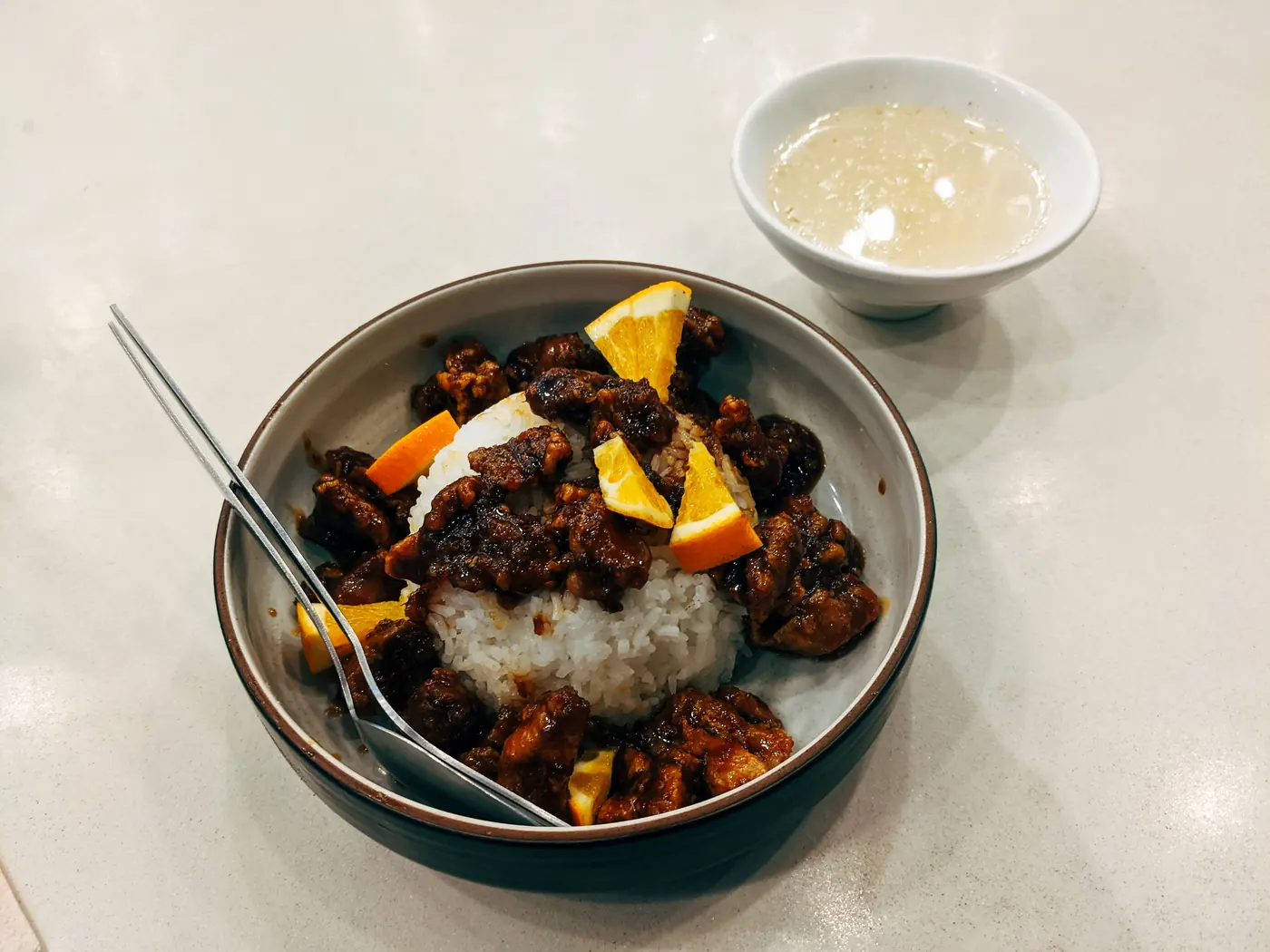
A sweet orange sauce that arrives in a sachet with fried appetisers, tastes of apricot and vinegar, and contains no duck whatsoever. It is one of the more confusing things on an American Chinese table, and the name is the least of it.
The short answer
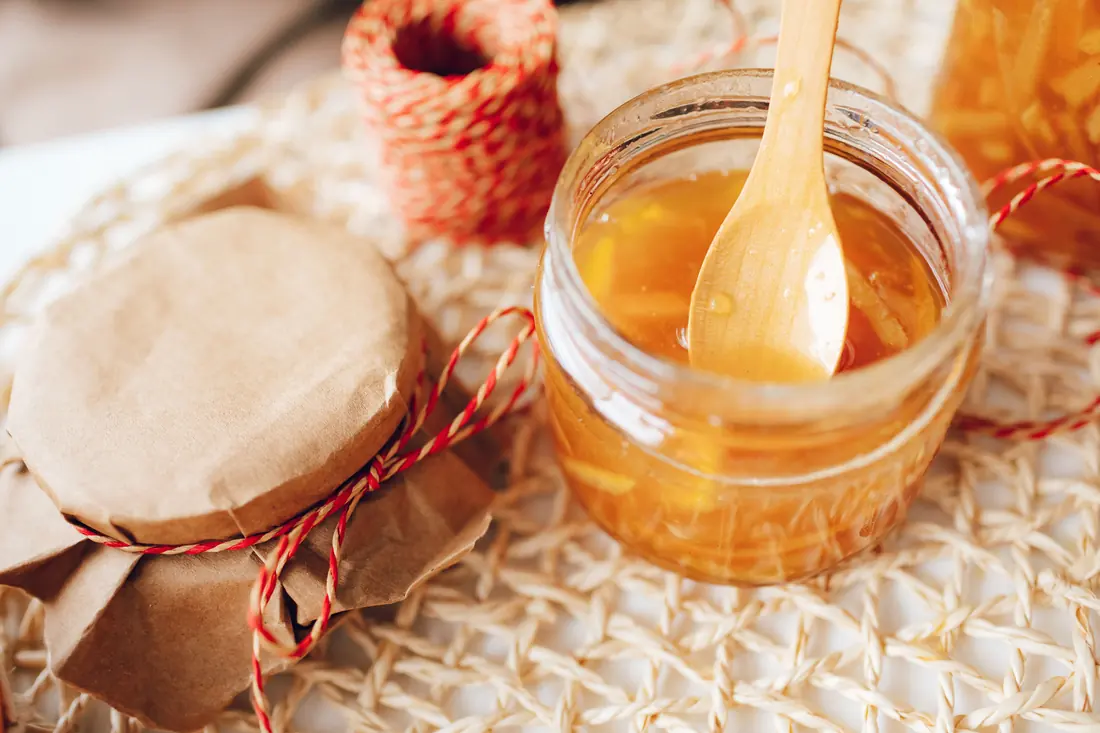
Duck sauce is a sweet and sour condiment made from apricots or plums, with sugar, vinegar, ginger and usually chilli. It is thick, translucent, orange, and closer to a jam than to a sauce.
Why it is called duck sauce
Because of what it was served with, not what is in it. In American Chinese restaurants a sweet fruit sauce was the standard accompaniment to roast duck, and the condiment took the name of the dish.
This is exactly the pattern our piece on eel sauce describes – a sauce named for the thing it was brushed onto, which then travels to a hundred dishes that have nothing to do with the original. The two are the same naming accident in two different cuisines.
What is actually in it
- Apricot or plum – the base, usually as a purée or preserve, and the source of the colour.
- Sugar – a great deal of it, which is why it is closer to jam than to a dressing.
- Vinegar – the sour half of sweet and sour.
- Ginger and garlic – in small amounts, doing most of the savoury work.
- Chilli – a background warmth rather than heat.
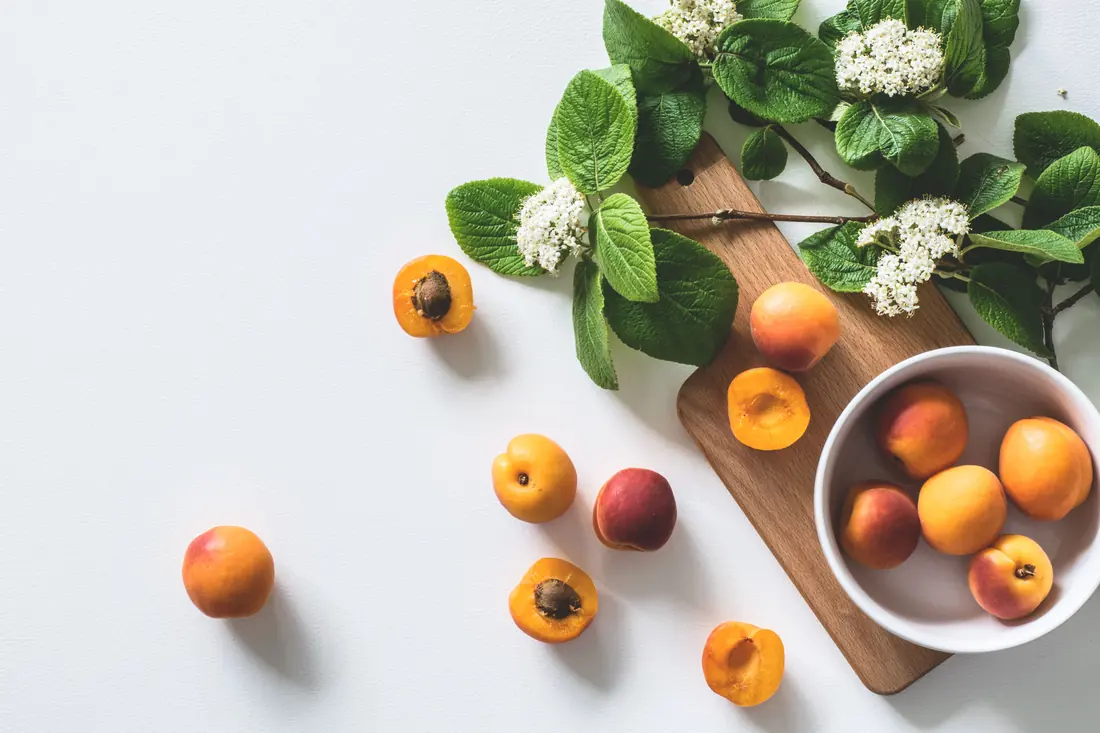
Britannica’s entry on the plum covers the fruit behind the traditional Chinese version – and the substitution of apricot in the American one is largely a question of what was cheap and available in North America.
It is not the same as Chinese plum sauce
Related, and not identical. Plum sauce as made in China is darker, more savoury, and often includes salted preserved plum, which gives it a sharpness the American version does not have.
| Duck sauce | Chinese plum sauce | Sweet and sour sauce | |
|---|---|---|---|
| Base | Apricot or plum preserve | Plum, often salted | Sugar, vinegar, often ketchup |
| Colour | Orange, translucent | Deep brown-red | Bright red or orange |
| Texture | Thick, jam-like | Thick, smoother | Glossy, thinner, poured |
| Served | In a sachet, on the side | In a dish, on the side | Cooked into the dish |
| Origin | American Chinese | Chinese | Both, in different forms |
The last row is the useful one. Sweet and sour sauce is generally cooked into a dish; duck sauce is a dipping condiment and is never cooked with.
Why sweet condiments turn up at all
There is a reason nearly every fried appetiser on an American Chinese menu arrives with something sweet beside it, and it is not a lack of imagination.
Deep frying delivers fat and salt and very little else. Fat coats the palate and dulls it over several mouthfuls, and something sweet and sharp resets it – which is the same job black vinegar does beside dumplings and pickles do beside rice. Three cuisines, three condiments, one problem.
Sugar also does something acid alone cannot: it makes the savouriness of the filling read more strongly by contrast. A fried roll eaten plain tastes mainly of the wrapper; the same roll with a dab of sweet sauce tastes of what is inside it.
The sachet is the whole story
Most people have only ever met it in a small plastic packet, arriving unrequested in the bag with a handful of soy sauce and a mustard packet. That distribution model is why it is so widespread and so rarely thought about.

It also explains the flavour. A shelf-stable sachet has to survive months in a drawer, which pushes the formulation toward more sugar and more acid than a restaurant would use if it were making the sauce fresh that morning.
Where the confusion with sweet and sour comes from
Both are sweet, both are orange-ish, and both turn up around fried food, so people use the names interchangeably. The distinction that matters is when each is applied: sweet and sour sauce is cooked into a dish in the pan, and duck sauce is never heated at all.
That is why a sweet and sour dish arrives already glossy and coated, while duck sauce arrives sealed in a packet on the side. If it was on the food when it left the kitchen, it was not duck sauce.
What it goes with
Fried things, almost exclusively. Egg rolls, spring rolls, fried wontons, crab rangoon, anything crisp and savoury that benefits from something sweet and sharp against it.
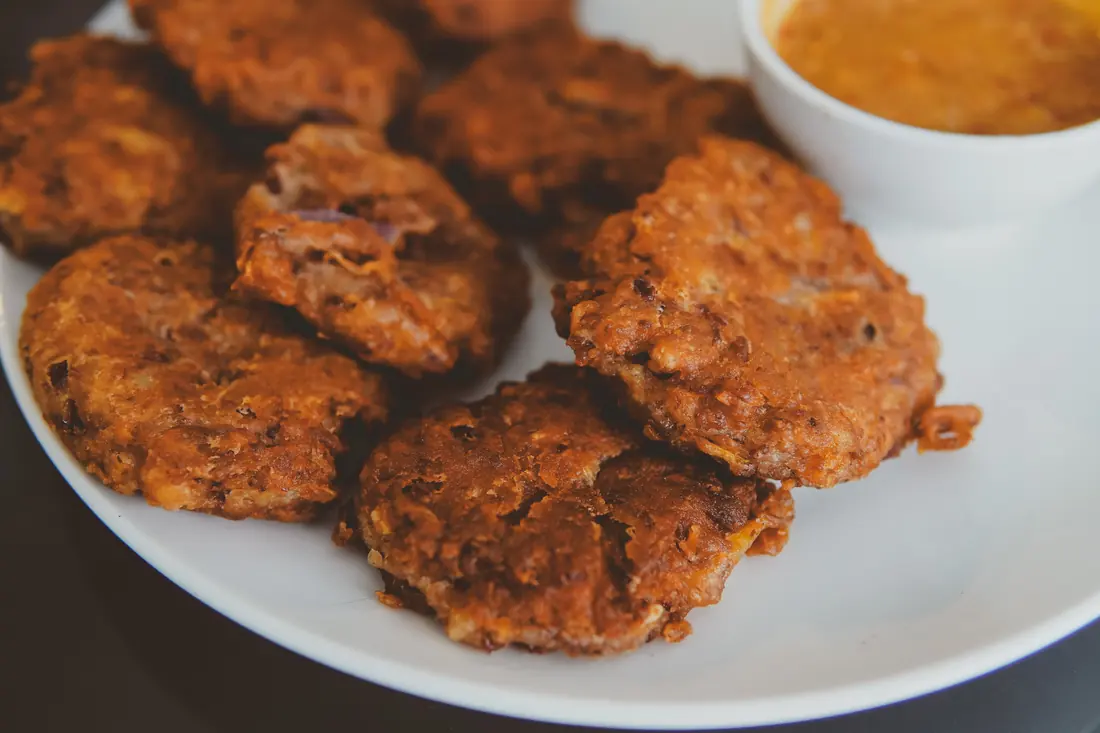
Our pieces on egg rolls and spring rolls and crab rangoon cover the two things it most often arrives beside. The logic is the same in both cases: fat and salt, cut by sugar and acid.
How long it keeps
Effectively forever in a sachet, which is why they accumulate in kitchen drawers around the world. High sugar and high acid together are a genuinely hostile environment for spoilage, and the sachet is sealed and light-proof.
The failure mode is not spoiling but flattening. Aromatics fade first – the ginger and the chilli go before the fruit does – so an old sachet tastes sweeter and duller rather than off. If you have found a drawer of them, they are safe and they are boring.
Is it Chinese?
Not in the form you have eaten it. The sweet fruit condiment is genuinely Chinese; the orange apricot sachet is an American adaptation of it, developed for and by Chinese restaurants in the United States.
That is not a criticism, and it is the same story as the takeaway carton it arrives in and the fortune cookie at the end of the meal. American Chinese food is a real cuisine with its own history rather than a degraded copy of another one.
Why it is orange rather than purple
Because of the fruit substitution. Chinese plum sauce made with dark plums is a deep red-brown; the American version leans on apricot and peach, which are orange, and the colour followed the ingredient.
There is a commercial reason too. Orange reads as sweet and mild on a table, where a dark brown sauce reads as savoury or salty, and a condiment nobody tries is a condiment nobody reorders.
Making it
- Start with apricot jam – roughly a cup – as the base.
- Add rice vinegar a tablespoon at a time until it tastes sharp rather than sweet.
- Add grated ginger, a little garlic and a pinch of chilli flakes.
- Thin with water to a dipping consistency, warming it slightly to combine.
- Cool completely before tasting properly – it reads much sweeter warm.
It keeps for weeks refrigerated, and it improves after a day. The homemade version tastes noticeably fruitier than the sachet, which is mostly a consequence of using less sugar and no preservative.
For the things it arrives with, the crab rangoon piece covers the fried appetiser, the roll comparison covers the other one, and the condiments guide covers what turns up on a Japanese table instead. The current selection is on the ordering page.
Frequently Asked Questions
Is there duck in duck sauce?
No. It is named after the dish it was traditionally served with – roast duck – rather than anything it contains.
What is duck sauce made of?
Apricots or plums with sugar, vinegar, ginger and usually a little chilli. It is closer to a jam than to a pourable sauce.
Is duck sauce the same as plum sauce?
Related but not the same. Chinese plum sauce is darker and more savoury, often using salted preserved plum; duck sauce is sweeter and lighter.
Is duck sauce Chinese?
The sweet fruit condiment is Chinese; the orange apricot version in sachets is an American Chinese adaptation.
What do you eat duck sauce with?
Fried appetisers almost exclusively – egg rolls, spring rolls, fried wontons and crab rangoon. The sweetness and acid cut the fat.