
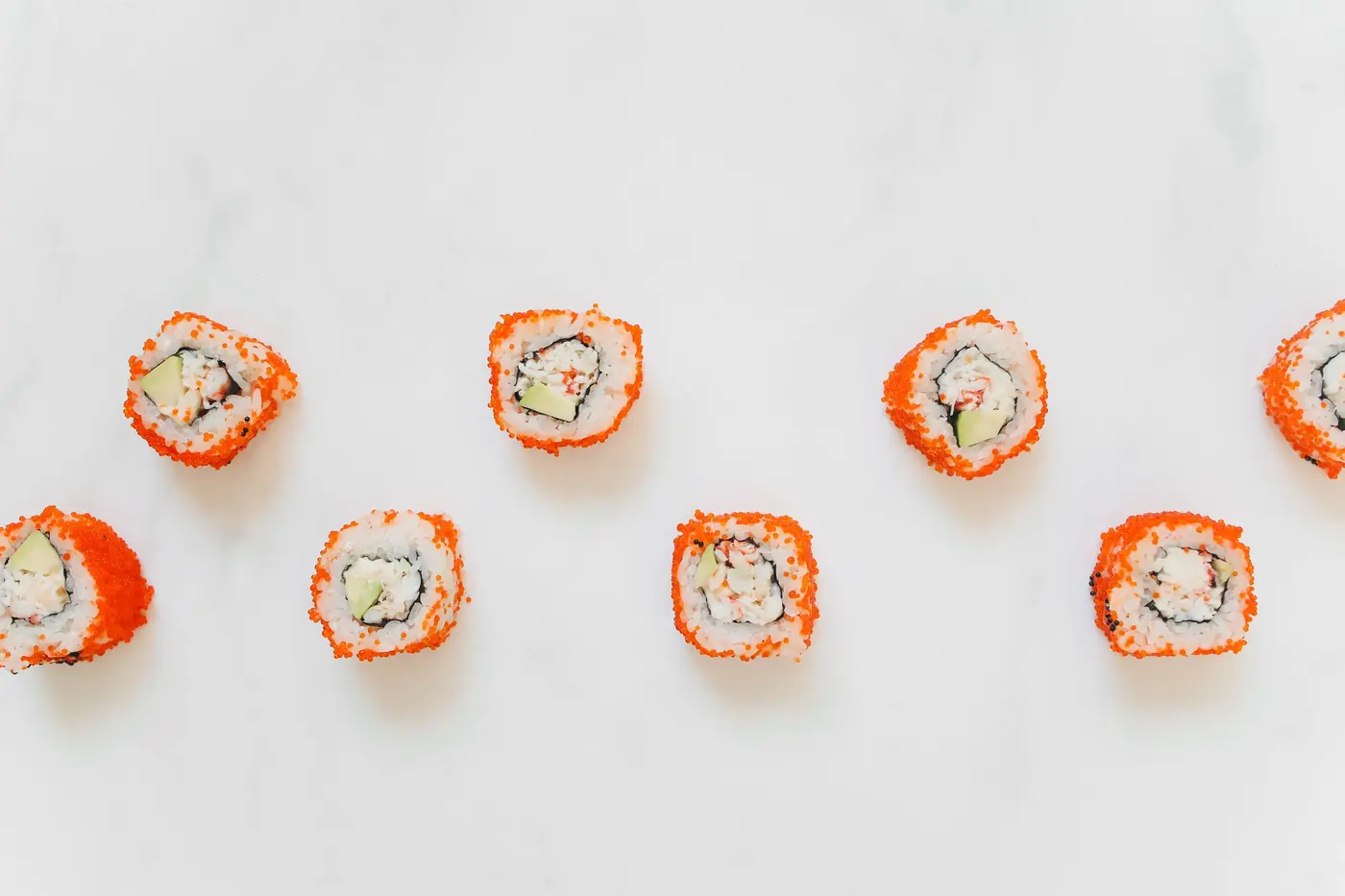
It is the roll that taught an entire country to eat sushi, and it is the one most people order first. It is also, by the standards of the cuisine it belongs to, a fairly recent invention that was designed around what diners would not eat.
The short answer
A California roll is crab – usually imitation crab – with avocado and cucumber, rolled with the rice on the outside and the seaweed hidden inside. There is no raw fish in the standard version.
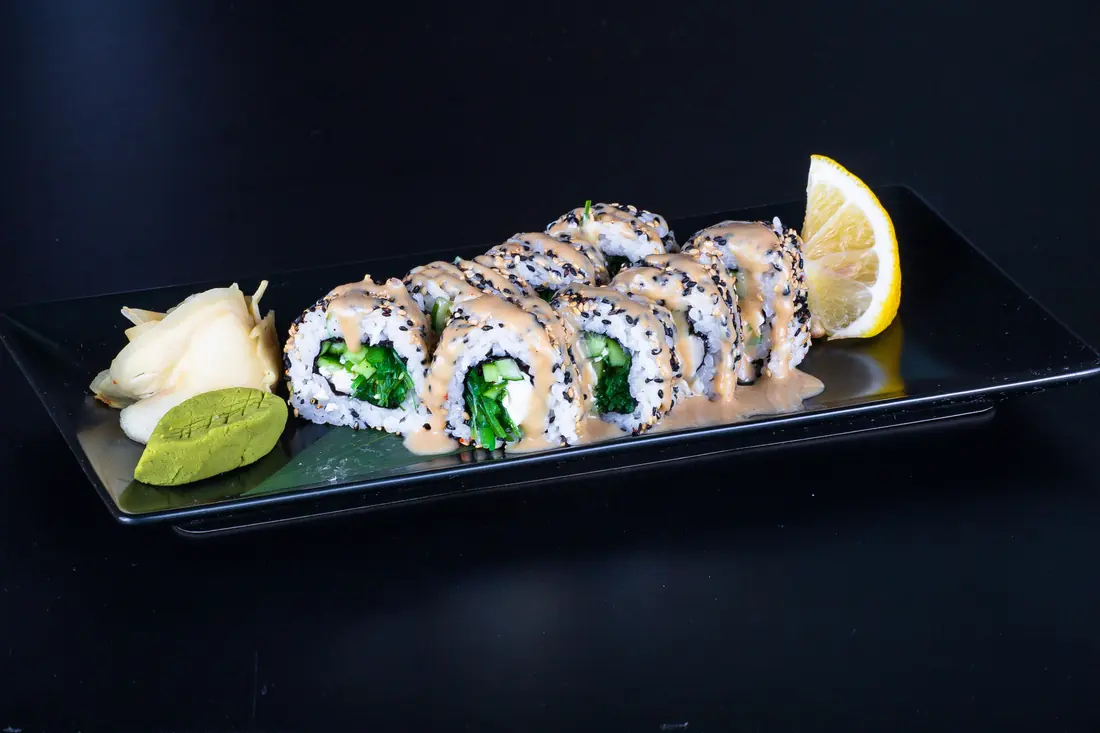
That inside-out construction is not decoration. It is the entire point of the roll, and the reason it exists.
Where it came from
Los Angeles, some time around the early 1970s, in the first wave of Japanese restaurants serving American diners who had not grown up with the food. Several chefs have been credited and the claims are impossible to settle, with a long-standing rival claim from Vancouver as well.
Britannica’s entry on sushi sets out the older history the roll departs from – a form that began as a preservation method in Southeast Asia and reached its familiar hand-formed shape in Edo-period Tokyo.
What is not disputed is the problem it was solving. Diners were rejecting two things: raw fish, and the black seaweed wrapper. The roll answers both.
Why the rice is on the outside
Because nori was the obstacle. A sheet of dark seaweed on the outside of a roll looked unfamiliar and unappealing to a lot of first-time diners, and it can be difficult to bite through cleanly.
Turning the roll inside out hides it. The rice goes on the outside, the nori sits against the filling where nobody has to look at it, and the roll reads as familiar at a glance. This construction is now so standard that most specialty rolls use it, and our piece on specialty rolls covers what it made possible.
Why avocado
Avocado does the job that fatty tuna does in a traditional roll. It is rich, it coats the mouth, and it brings a softness that plain white fish or vegetables cannot.
The substitution was practical rather than creative – good fatty tuna was expensive and inconsistent in supply, and California had a great deal of avocado. Our explainer on avocado in sushi covers the rest of that story.
The crab is usually not crab
The standard filling is imitation crab – processed white fish shaped and coloured to resemble crab leg meat, often dressed with mayonnaise into what menus call crab mix.
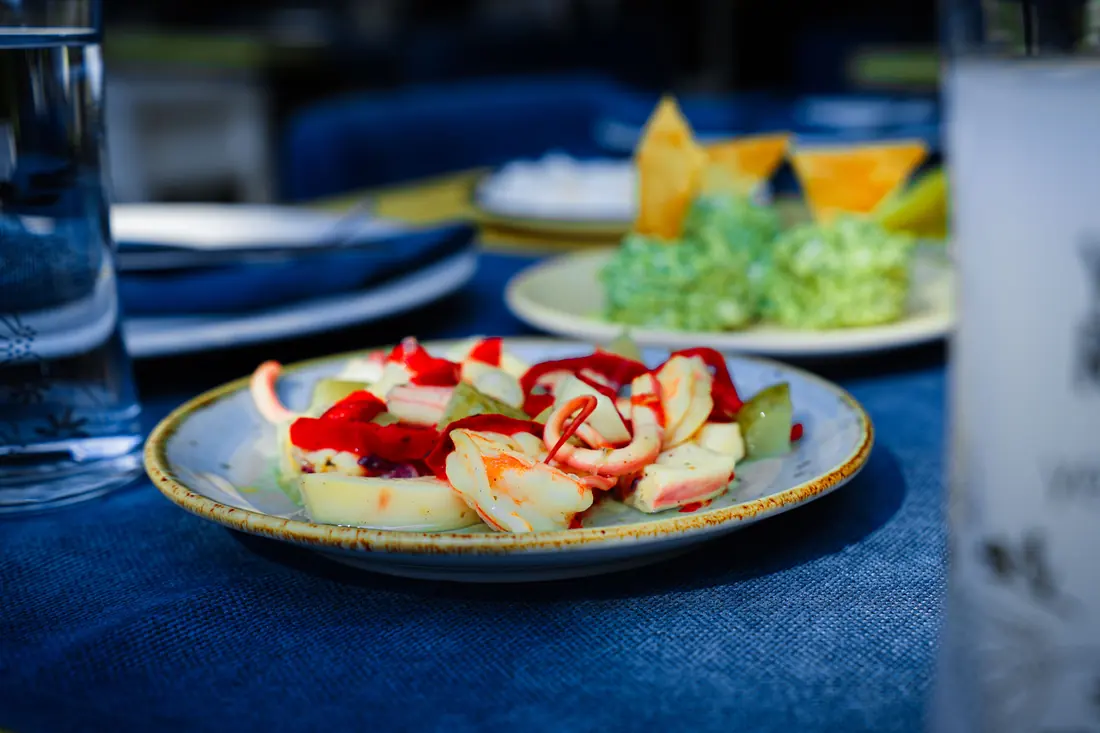
This is not a deception unless the menu claims otherwise, and most do not. Our explainer on imitation crab covers what surimi actually is. Some kitchens use real crab and will say so, usually with a price to match.
So it is not raw
Correct, and this is the single most useful thing about it. Imitation crab is cooked, avocado and cucumber are vegetables, and the rice is seasoned and cooled. Nothing in the roll is raw fish.
That makes it the standard recommendation for anyone unsure about raw fish, for children, and for a table where one person is nervous. Our comparison of cooked and raw rolls covers the wider menu on the same basis.
What it did to the menu
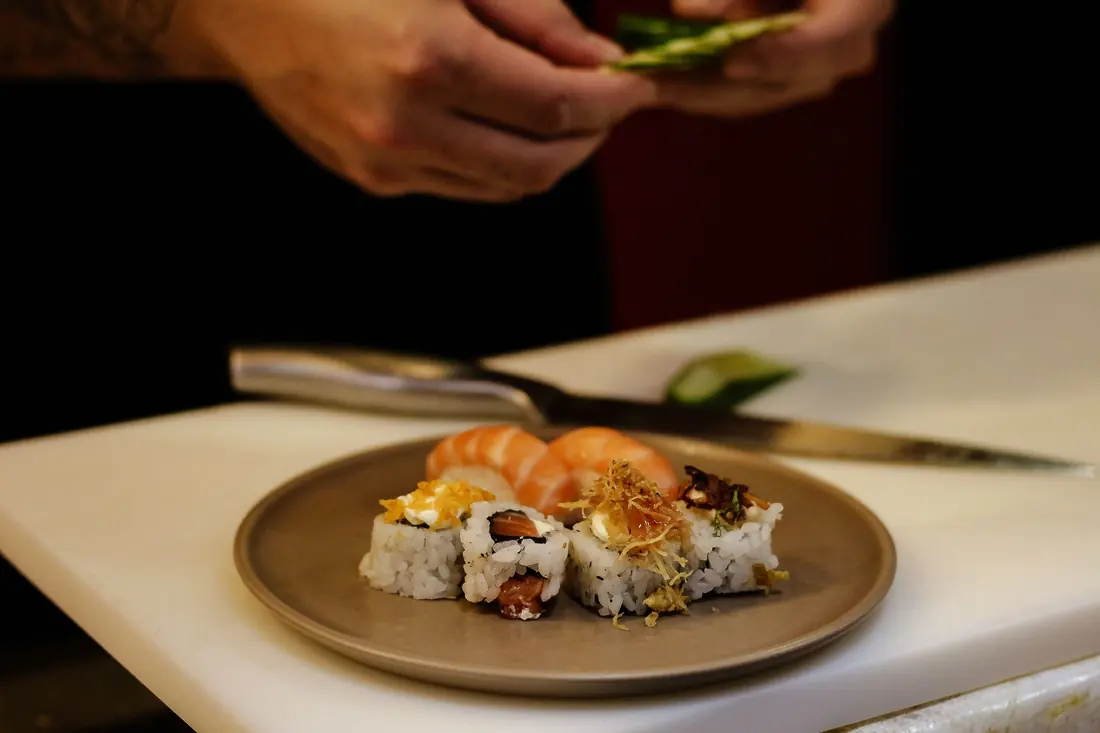
The inside-out construction it popularised is the reason a modern sushi menu looks the way it does. Once the rice is on the outside, the surface becomes something to decorate – roe, sesame, sauce, a layer of fish – and an entire category of elaborate rolls follows from that one decision.
It also changed the economics. A roll built around vegetables and processed crab costs a fraction of one built around premium fish, and it can be made by a cook who is not a trained sushi chef. That is most of how sushi spread from specialist restaurants to supermarkets, food courts and delivery apps.
Against a classic roll
| California roll | A classic maki | |
|---|---|---|
| Wrapper | Rice outside, nori hidden | Nori outside |
| Filling | Two or three components | Usually one |
| Raw fish | No | Often |
| Origin | United States, around 1970 | Japan, considerably older |
| Eaten with | Soy sauce, sometimes sauce on top | Soy sauce, wasabi, ginger |
The variations you will meet
It is the base for a large share of the menu, and the standard modifications are recognisable once you know the original.
- Roe on the outside – small orange fish eggs pressed into the rice, adding colour and a faint pop.
- Sesame on the outside – toasted seeds instead, for nuttiness.
- Topped with fish – salmon or tuna laid over the finished roll, which reintroduces the raw element the roll was built to avoid.
- Deep fried – the whole roll battered and fried, which is a different dish wearing the same name.
Why it is called a California roll
Nobody has established it definitively, which is fitting for a roll with three competing origin stories. The likeliest explanation is the dullest: it was made in California, from Californian ingredients, for Californian diners, at a moment when naming a dish after a place was how you signalled it was not foreign.
The avocado supports that reading. California was producing them in quantity, and the roll is built around one, so the name describes the supply chain as much as the geography.
What to order after it
It is a starting point rather than a destination, and the natural next steps are small ones.
- The same roll with fish on top – one raw element, introduced onto a construction you already know.
- A spicy tuna roll – raw, but chopped and dressed rather than served as a slice, which is a gentler first encounter.
- A cooked roll – shrimp, crumbed or glazed fillings, keeping the raw question out of it entirely.
- A hand roll – the same fillings in a different format, with the seaweed back on the outside where you can judge it properly.
The one thing worth doing eventually is trying nori deliberately, since this roll was designed to hide it. A lot of people who believe they dislike seaweed have only ever met it soggy.
Is it real sushi?
Yes, on the only definition that holds up. Sushi is defined by vinegared rice, not by a fixed list of fillings, and the form has absorbed local ingredients everywhere it has travelled.
The purist objection also has an odd consequence worth noticing: the roll was invented to make sushi acceptable to people who would not otherwise have eaten it, and it worked well enough that those same people now form the market that supports traditional counters.
It is fair to say it is not traditional, and no counter in Japan was making these in 1960. It is also the roll that opened the door for everything else on the menu, which is a reasonable thing for a piece of food to have done.
For the rest of the menu, the beginners guide covers what to order after this one, the imitation crab explainer covers the filling, and the avocado piece covers the ingredient that made it work. The current selection is on the ordering page.
Frequently Asked Questions
What is in a California roll?
Crab – usually imitation crab – with avocado and cucumber, rolled with the rice on the outside and the seaweed inside.
Is a California roll raw?
No. Imitation crab is cooked, and avocado and cucumber are vegetables. It is the standard choice for anyone avoiding raw fish.
Why is the rice on the outside of a California roll?
To hide the seaweed, which early American diners found unfamiliar and hard to bite through. The construction is now used for most specialty rolls.
Is a California roll Japanese?
It was invented in North America around 1970, most often credited to Los Angeles. The technique is Japanese; the roll is not.
Is the crab in a California roll real crab?
Usually not. Most use imitation crab, made from processed white fish. Kitchens using real crab generally say so.