
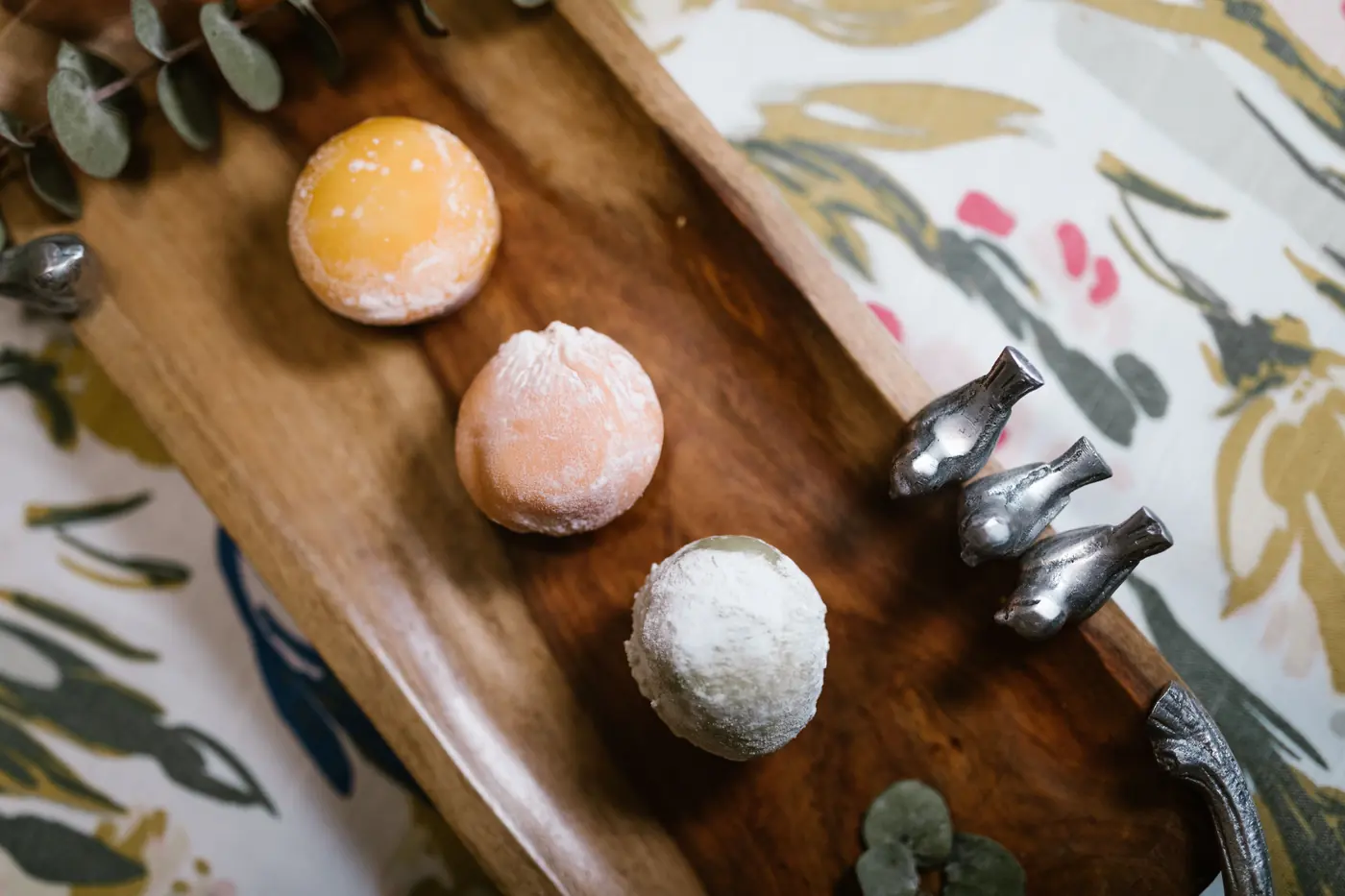
Soft, pale, dusted with something powdery, and chewy in a way that no Western confection is. Mochi is one of the few foods where the texture is the entire point, and where the texture is also what divides people.
The short answer
Mochi is rice – pounded until it stops being rice. Specifically it is glutinous short-grain rice, steamed and then beaten until the grains break down completely into a single smooth, elastic mass.
Britannica’s entry on mochi covers its place in Japanese food culture, which is older and more central than its recent appearance in supermarket freezers suggests.
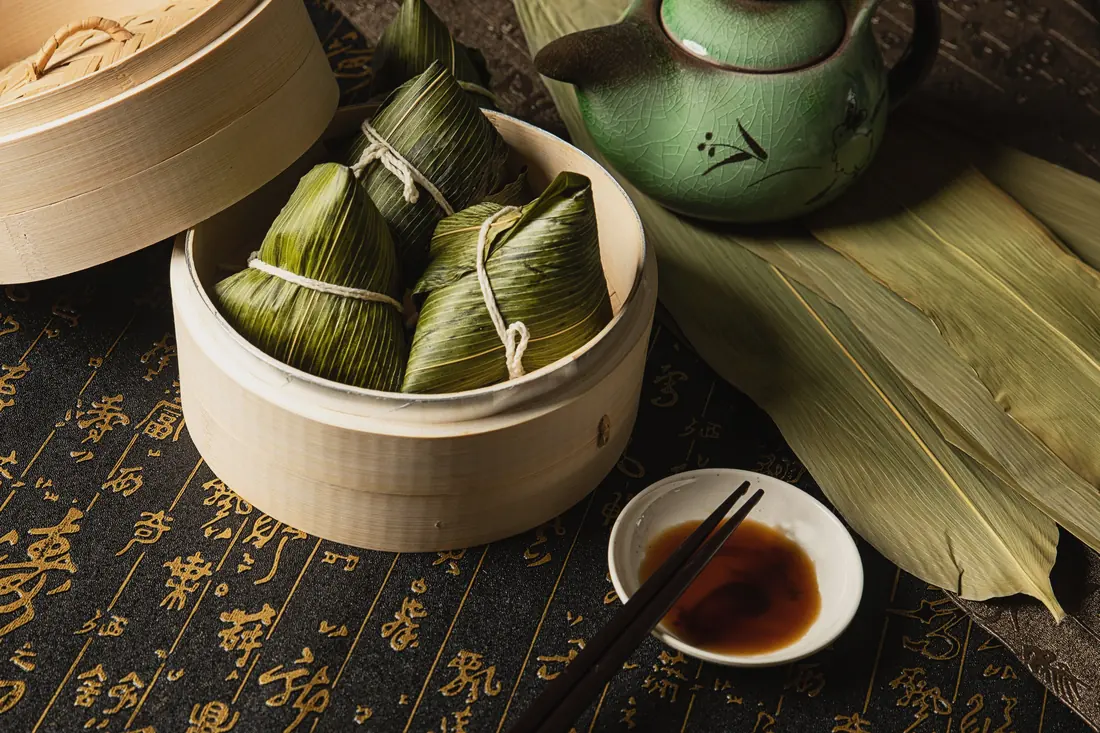
Glutinous rice contains no gluten
The name is unhelpful and worth clearing up. Glutinous here means glue-like, describing how the cooked grains behave. It has nothing to do with the wheat protein of the same-sounding name.
What makes it sticky is its starch. All rice contains two starches – amylose and amylopectin – and the ratio decides the behaviour. Glutinous rice is almost entirely amylopectin, which is the branched, sticky one, so cooked grains cling to each other rather than staying separate.
This is the same mechanism, taken further, that our comparison of jasmine and sushi rice describes – one rice falls apart, one clings, and the difference is starch chemistry rather than cooking technique.
The pounding
The traditional process – mochitsuki – is genuinely physical. Steamed rice goes into a heavy mortar and is struck with a large wooden mallet, while a second person turns and wets the mass between strikes.

The rhythm between the two is the dangerous part and the reason it is done as a practised pair. It is also a communal event as much as a cooking method, performed at new year, and that context is a real part of what the food means rather than a detail about how it is made.
Commercially it is done by machine, and increasingly from rice flour and water rather than from whole grains – which produces a similar result with a slightly different, smoother texture.
What it is filled with
Plain mochi is a starch with almost no flavour, so it is nearly always a wrapper for something else.
- Sweet bean paste – the traditional filling, made from azuki beans cooked with sugar, and far less strange than it sounds to anyone who has not met it.
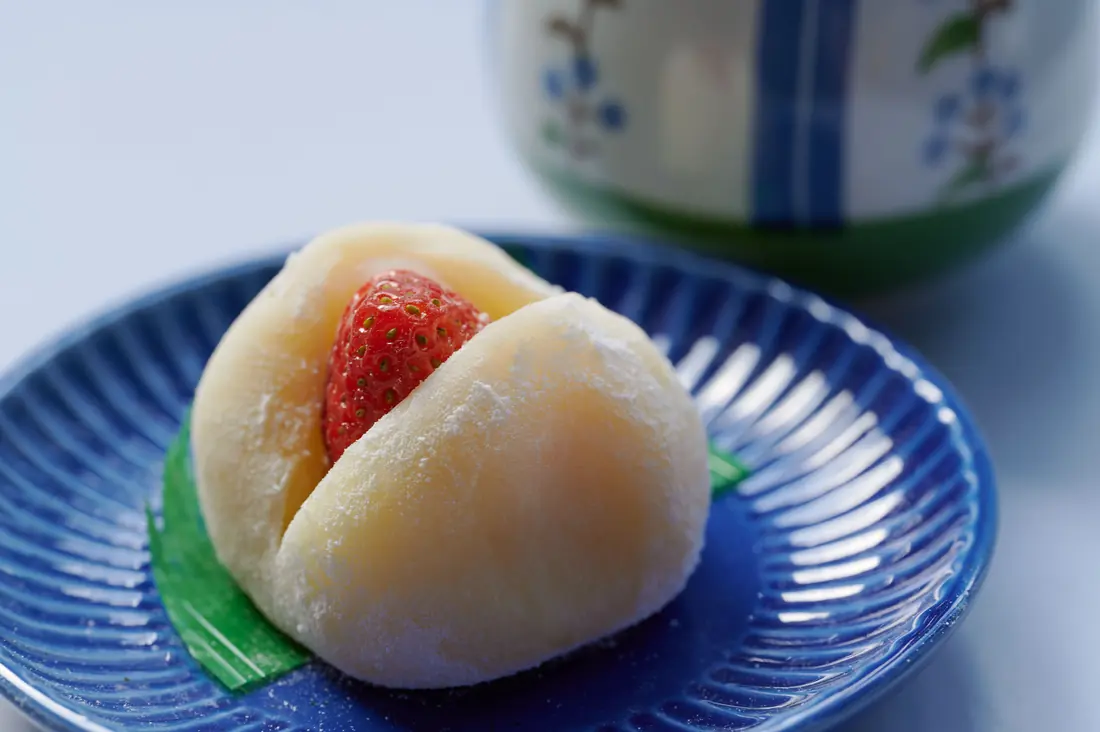
- Fruit – a whole strawberry inside bean paste inside mochi is a standard and very good version.
- Ice cream – the form most people outside Japan meet first, and a relatively recent invention.
- Nothing at all – plain mochi is grilled or dropped into soup, where it is a savoury ingredient rather than a sweet one.
Savoury mochi is the older use
The dessert framing is a modern and largely export phenomenon. In Japan, plain mochi is more often eaten savoury – grilled until it puffs and blisters, then wrapped in seaweed and dipped in soy, or dropped into a new year soup where it softens into the broth.
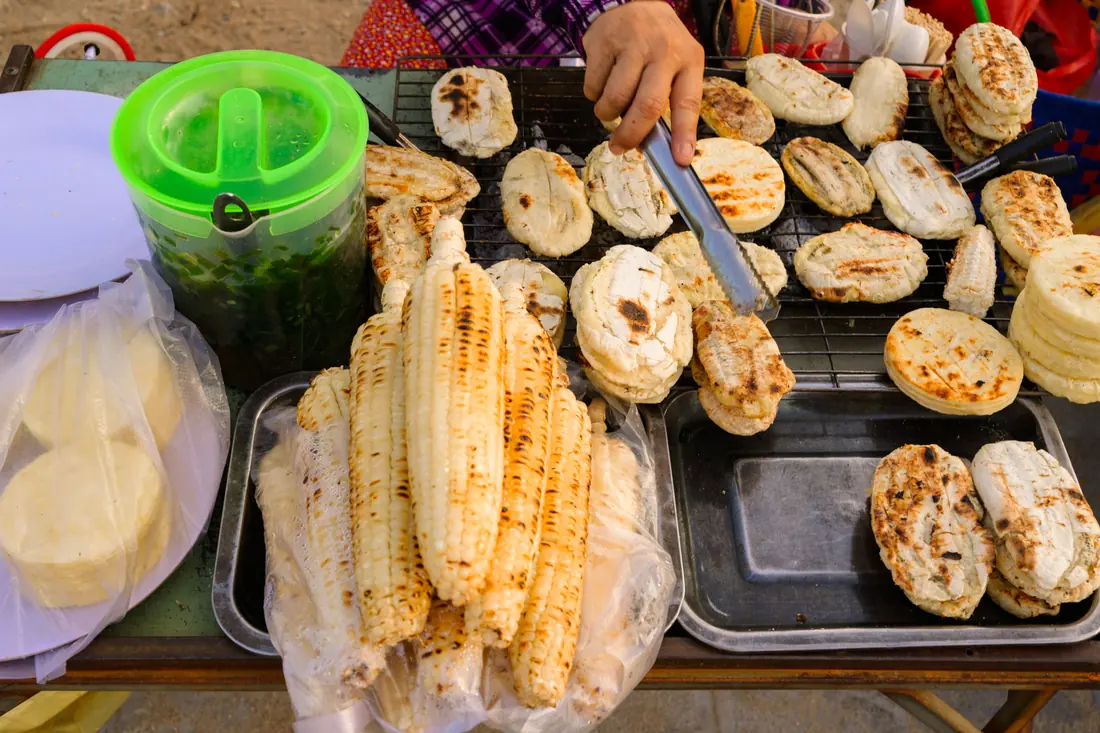
Grilling is worth describing because it is dramatic. Heat turns the moisture inside to steam and the block inflates like a balloon, splits, and collapses into something crisp outside and molten within.
The texture, and the warning that goes with it
Mochi is chewy in a specific and unusual way – elastic and resistant rather than soft, and it does not break down quickly in the mouth.
That property makes it genuinely a choking hazard, particularly for young children and older people, and particularly in the hot soup form where a large piece is swallowed while soft. Japan issues public warnings about it every new year for that reason. Small pieces and unhurried eating are the whole of the advice.
The frozen dessert version is a much smaller and softer proposition, but the same principle applies: it is not a food to eat quickly.
The powder on the outside
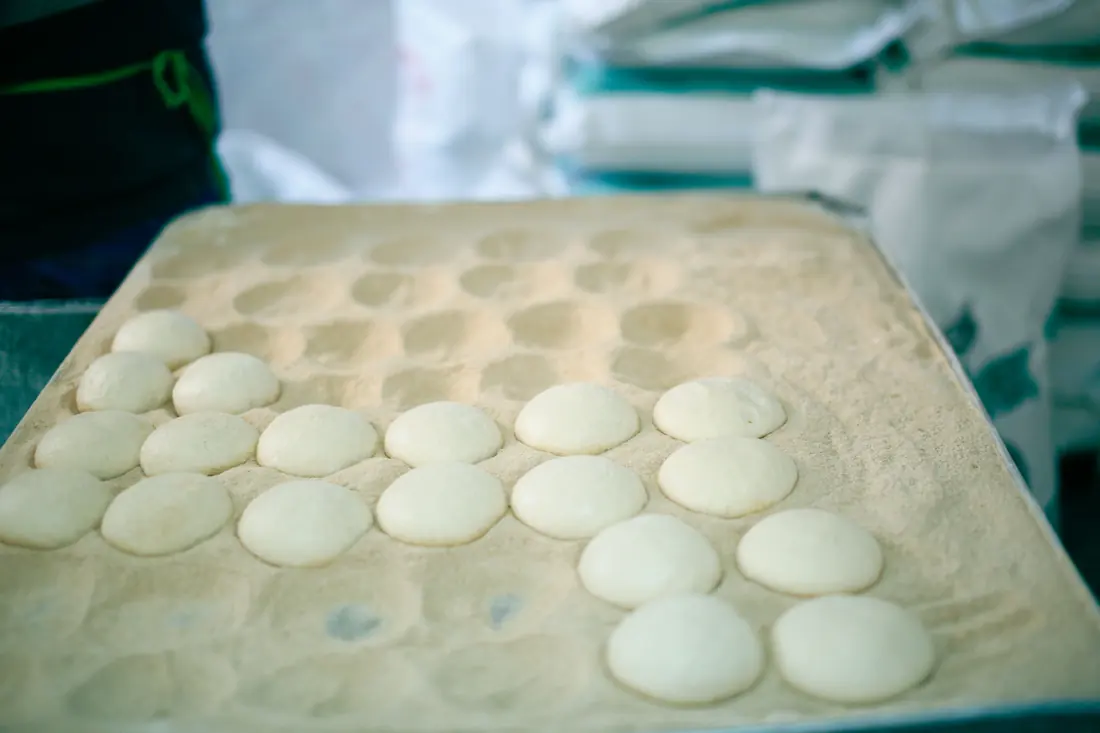
Fresh mochi is sticky enough to be genuinely difficult to handle, so it is almost always dusted with something to stop it adhering to fingers, plates and itself.
Potato or corn starch is the plain option and tastes of nothing. Kinako – roasted soybean flour – is the good one: nutty, faintly sweet, and a flavour in its own right rather than a functional coating. Mochi rolled in kinako and drizzled with a dark sugar syrup is a complete dessert with three ingredients.
Dango is not mochi
The two get confused constantly, and they arrive in similar places – often on the same skewer over the same grill.
Dango is made from rice flour mixed with water and shaped into balls, then boiled. Mochi is made from whole grains pounded into a mass. The result is that dango is denser and more uniform, closer to a dumpling, while mochi is stretchier and more elastic. If it is a neat sphere on a stick, it is probably dango.
Ice cream mochi is a different thing
| Traditional mochi | Mochi ice cream | |
|---|---|---|
| Wrapper | Pounded steamed rice | Rice flour dough, thinner |
| Filling | Bean paste, fruit, or none | Ice cream |
| Served | Room temperature or hot | Frozen |
| Texture | Firm, elastic, chewy | Soft, yielding |
| Eaten | Fresh, within a day or two | From the freezer |
Neither is more legitimate than the other, but they are far enough apart that liking one tells you very little about whether you will like the other. The frozen version is deliberately softer, because a traditional wrapper straight from a freezer would be close to inedible.
It is a new year food first
Mochi is bound up with the Japanese new year more tightly than any other food. Kagami mochi – two stacked discs with a bitter orange on top – is placed in homes as a decoration through the season and then broken apart and eaten.
Ozoni, the new year soup, is built around it, and the regional variations in that soup are a standing subject of good-natured argument – grilled mochi or boiled, round or square, clear broth or miso, all of it depending on where a family is from.
Which is worth knowing because it explains the food better than any description of the texture does. This is a celebration food that happens to have been commercialised into a freezer product, rather than a dessert that acquired a tradition.
Buying and keeping it
Fresh mochi is a short-life product – it firms within a day and goes hard after that, which is why so much of it is sold frozen or vacuum-packed.
Hardened plain mochi is not wasted, though. It is exactly what the grilled version is made from, and drying it out is a preservation method rather than a failure. The filled sweet kind is the one to eat the day you buy it.
For the rice underneath it all, our rice comparison covers why some rice clings and some does not, the mirin explainer covers the other thing made from glutinous rice, and the furikake piece covers what else goes on rice. The current selection is on the ordering page.
Frequently Asked Questions
What is mochi made of?
Glutinous short-grain rice, steamed and pounded until the grains break down into a single smooth elastic mass. Commercial versions often start from rice flour.
Does mochi contain gluten?
No. Glutinous here means glue-like and describes the sticky texture; it has nothing to do with wheat protein.
Why is mochi so chewy?
Glutinous rice is almost entirely amylopectin, the branched sticky starch, so the pounded mass is elastic and resistant rather than soft.
Is mochi always a dessert?
No. In Japan plain mochi is often savoury – grilled with seaweed and soy, or dropped into soup. The dessert version is more common abroad.
Is mochi a choking hazard?
It can be, because it is elastic and does not break down quickly. Small pieces and eating slowly are the standard advice, especially for children and older people.