
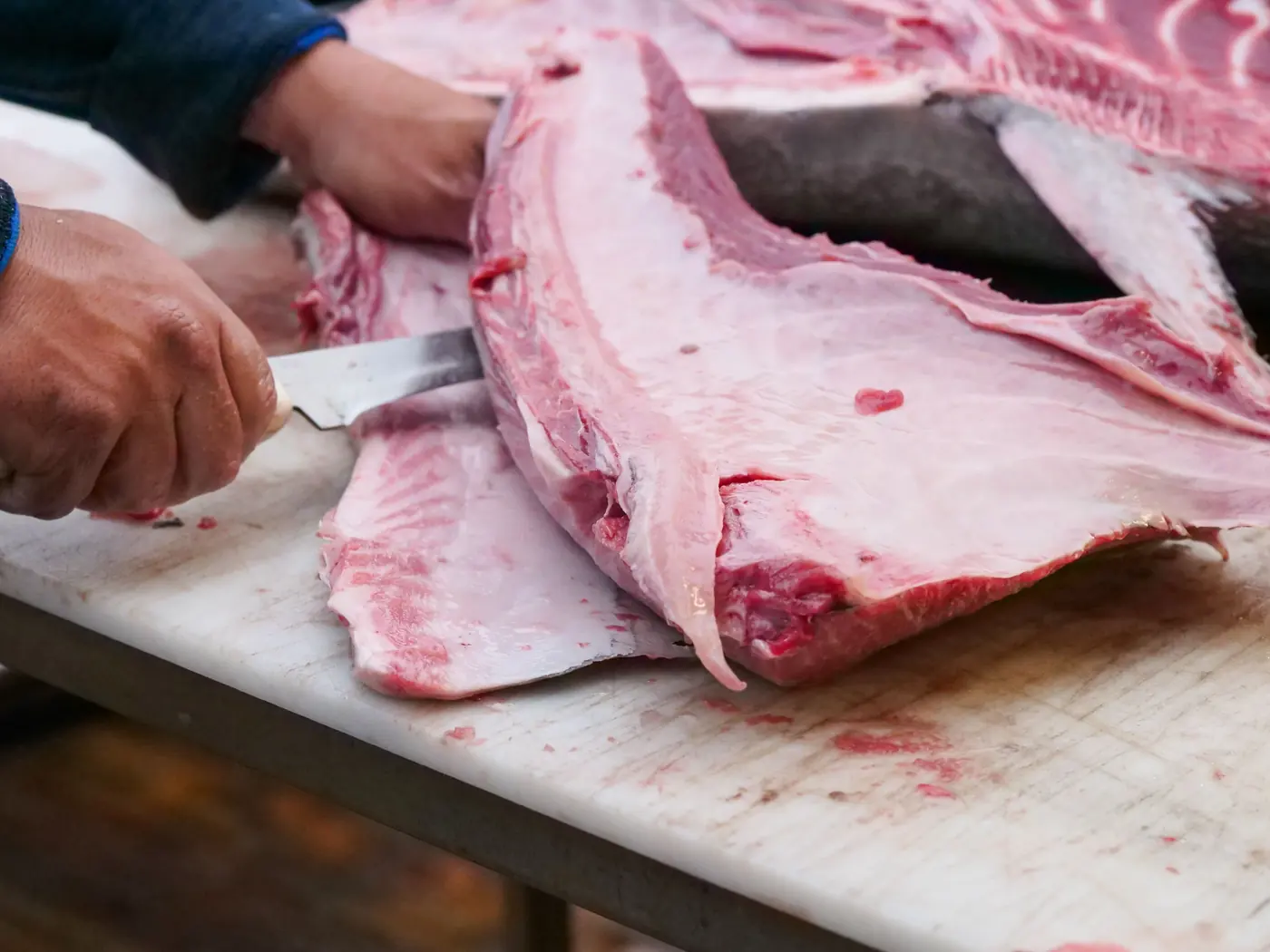
You will see the words on a label at a fish counter, on a menu, and in most recipes that involve raw fish. They sound official. They are not – and what actually stands behind safe raw fish is more interesting than a grade would be.
The short answer
There is no legal definition of sushi grade or sashimi grade anywhere in the United States. No agency issues the designation, no inspector applies it, and no standard sits behind it. It is a marketing term, applied by the seller.
That does not make it meaningless. It usually signals that a supplier considers the fish suitable for raw service. It just means the words are a claim rather than a certification.
What actually governs raw fish
The real control is freezing, and it is about parasites rather than bacteria. Freezing to a low enough temperature for long enough kills parasites that may be present in fish, which is why it is the step the guidance is built around.
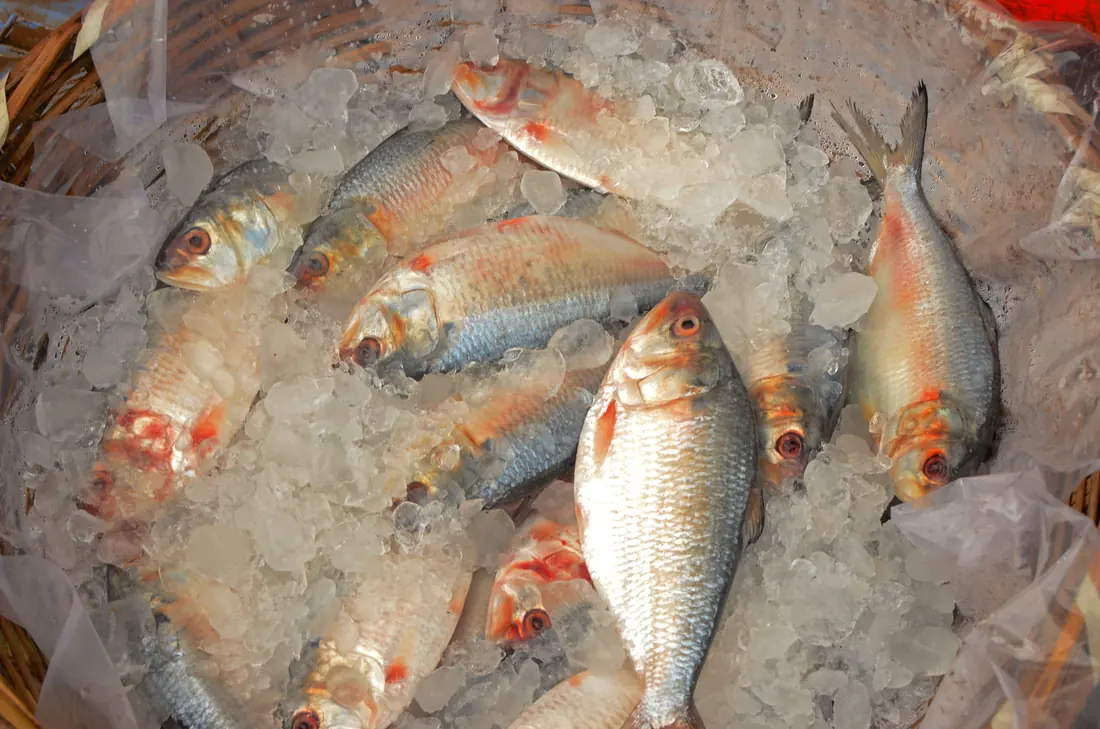
The FDA’s guidance on selecting and serving fresh and frozen seafood safely sets out the recommendation for fish intended to be eaten raw, along with the handling and cold-chain basics that matter just as much once the fish is out of the freezer.
This surprises people, because freezing sounds like the opposite of quality. For raw fish it is the safety step, and commercial freezing is far faster and colder than a domestic freezer, which is why the result is not the mush you might expect.
Fresh is not the same as safe
| What it tells you | What it does not | |
|---|---|---|
| “Fresh” | It has not been frozen | Anything about parasites |
| “Sushi grade” | The seller intends it for raw use | That any standard was applied |
| “Previously frozen” | It has been through a freeze | The temperature or duration |
| “Farmed” | Feed and environment were controlled | That handling was correct |
The second row is the one worth sitting with. A fish that has never been frozen can be immaculately fresh and still be the wrong fish to eat raw.
Species matters, and not the way you would guess
Some species carry a higher parasite risk than others, and the practice varies accordingly. Certain tuna are treated differently from other fish because of where and how they live; farmed salmon raised on controlled feed sits in a different position from wild-caught.
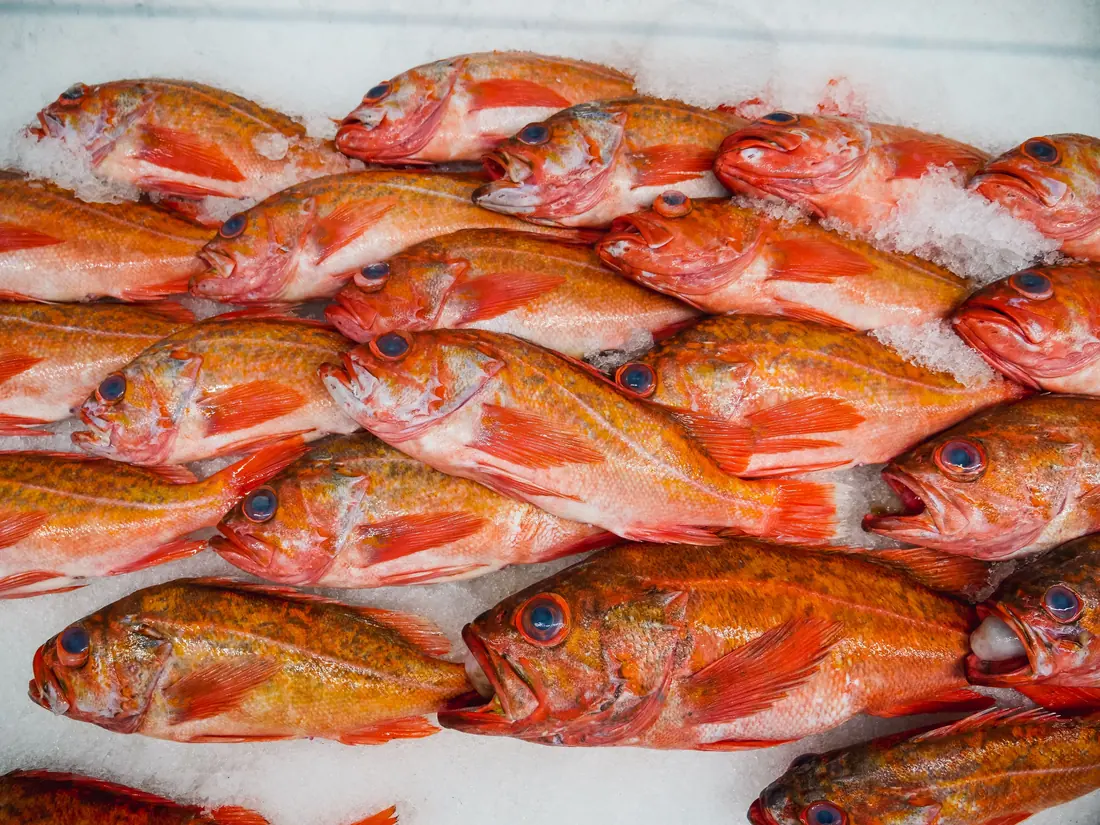
Freshwater fish are the clearest case at the other end – they are not eaten raw in this cuisine, and the reason is parasite risk rather than taste.
Tuna, and why it gets talked about separately
Tuna is the fish named most often in this conversation, and the reason is commercial rather than culinary. A great deal of it is frozen at temperatures far below anything a domestic freezer reaches and held there, which preserves the texture well enough that the fish can cross an ocean and still be served raw.
So the freezing is the point rather than a compromise. A tuna loin that has been deep-frozen and handled properly is in a better position for raw service than one that has merely been kept cold since landing.
Farmed and wild
Farming changes the parasite question because it changes the diet. Fish raised on controlled feed are not exposed to the cycle that introduces the parasites in question, which is why farmed and wild fish of the same species can sit in quite different positions.
It is not a blanket ranking in either direction. Farming practice varies enormously and the word on a label covers a lot of ground – which is one more reason the sourcing behind the fish matters more than the grade printed in front of it.
What a kitchen relies on instead
Since the label guarantees nothing on its own, restaurants that serve raw fish work from things that do.
- The supplier relationship. A known supplier who can say where the fish came from and how it was handled is the foundation, and it is not something a label can replace.
- Documentation. Records of freezing and handling exist upstream of the kitchen and are what an inspection actually looks at.
- The cold chain. Temperature maintained from the boat through delivery and storage, without an unexplained gap.
- Turnover. Fish for raw service is ordered against expected demand rather than held, which is a stock decision as much as a safety one.
Parasites and bacteria are different problems
Worth separating two things that routinely get merged. Parasites are what the freezing recommendation addresses, and freezing handles them reliably. Bacteria are a separate problem that freezing does not solve – that one is answered by temperature control, clean handling and how quickly the fish moves through.
So a fish can be correctly frozen and still be mishandled afterwards. The cold chain matters as much on the near side of the freezer as the far side, and the two controls run in parallel rather than one covering for the other.
It also explains the shape of the guidance. Freezing gets a precise specification because it is a single step with a measurable outcome. Handling gets described as practice because it is continuous and cannot be reduced to a number.
Handling once it is in the kitchen
The work does not stop at delivery. Fish for raw service is kept separate from everything cooked, cut on dedicated boards with dedicated knives, and returned to cold storage between orders rather than sitting out.
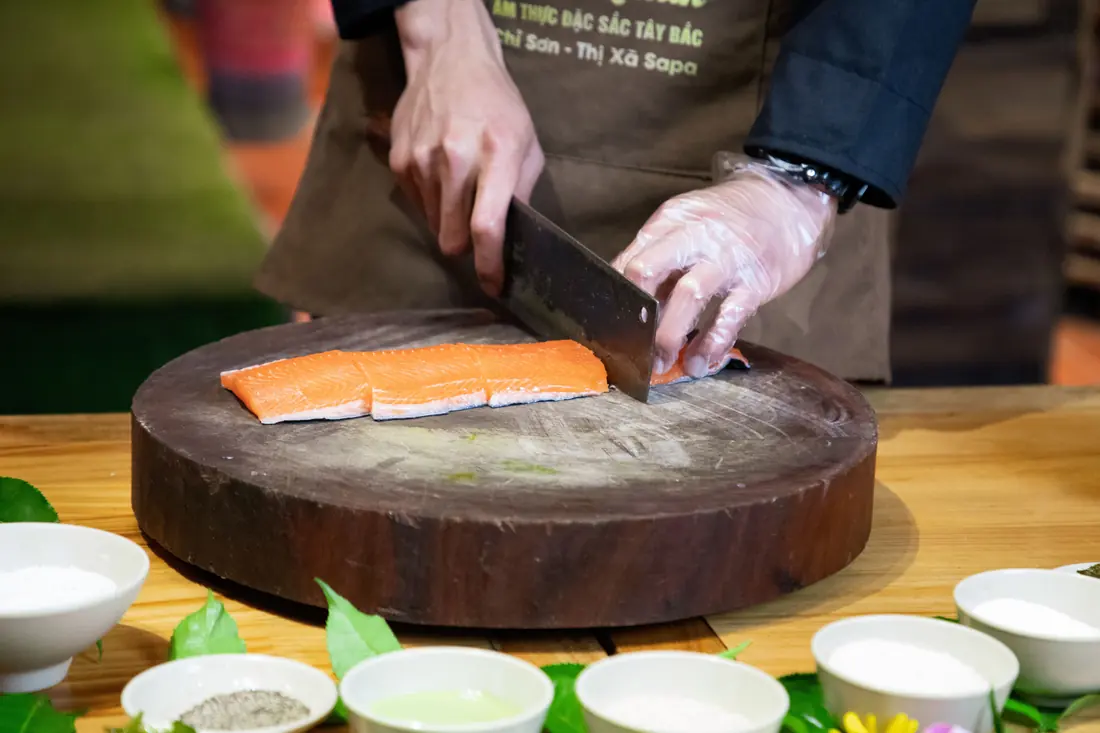
None of this is visible from a dining room, which is the honest answer to how a diner assesses it: you cannot, directly. What you can do is prefer places that sell enough raw fish to turn it over.
Buying it yourself
If you want to make something with raw fish at home, the question to ask at the counter is not whether it is sushi grade. It is whether the fish was frozen according to the FDA recommendation for raw consumption, and a counter that knows its stock can answer that.
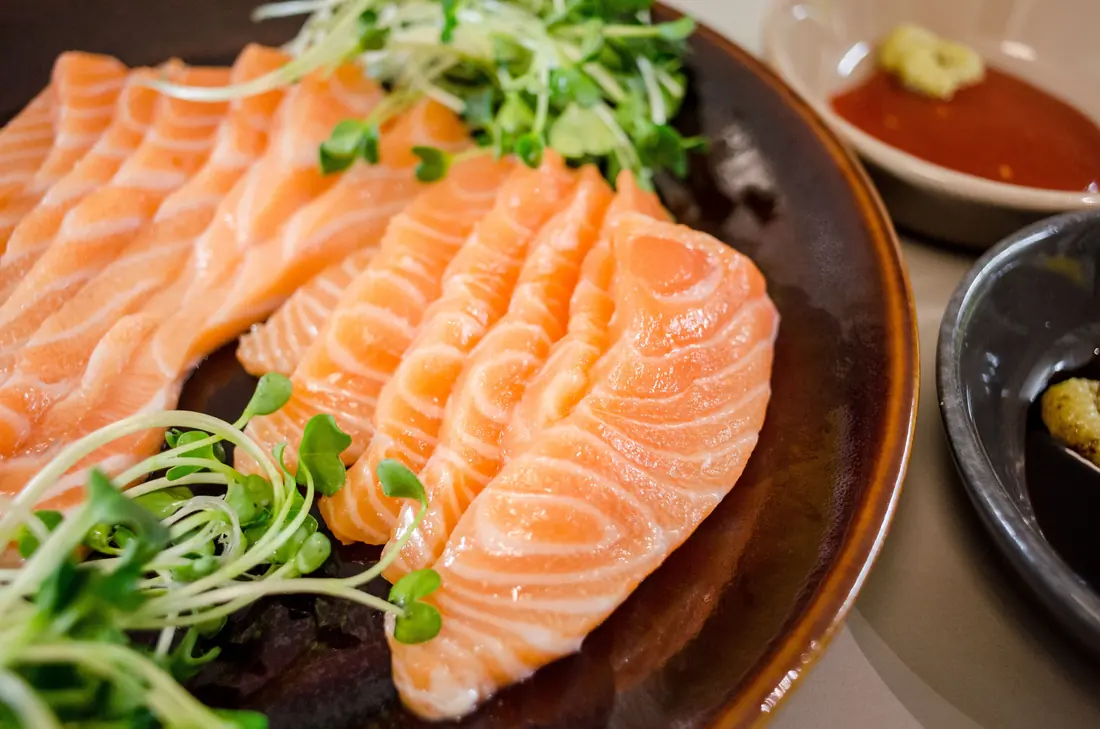
Supermarket fish sold for cooking has not necessarily been through that process, and the absence of a warning is not an assurance. This is the practical difference between a restaurant’s raw fish and a supermarket’s, and it sits upstream of anything you can see.
So is the term useless?
Not useless – just weaker than it sounds. It tells you what a seller intends the fish for, which is genuine information. It simply is not a grade, and treating it as one puts weight on a word that was never built to carry it.
The better instinct is to move the question one step back. Not “is this fish sushi grade” but “who handled this fish, and how” – which is the question a good counter can answer and a label cannot. Everything the term is trying to stand in for lives in that answer.
For the raw and cooked question generally, our comparison of cooked and raw rolls covers what each offers, the spicy tuna explainer covers the most-ordered raw filling, and the restaurant and supermarket piece covers where the difference actually lies. The current selection is on the ordering page.
Frequently Asked Questions
What is sushi-grade fish?
A seller’s term for fish they consider suitable to eat raw. There is no legal definition or official grading system behind it in the United States.
Is sushi-grade fish a real standard?
No. No agency issues or inspects the designation. What actually governs raw fish is freezing for parasite control, plus handling and cold-chain practice.
Why is fish for raw eating frozen first?
Freezing to a low enough temperature for long enough kills parasites that may be present. Commercial freezing is much faster and colder than a home freezer.
Can I eat supermarket fish raw?
Not on the basis of the label alone. Ask whether it was frozen according to the FDA recommendation for fish intended to be eaten raw.
Does fresh mean safe for raw eating?
No. Fresh means it has not been frozen, which tells you nothing about parasites. Fresh and safe-to-eat-raw are separate questions.