
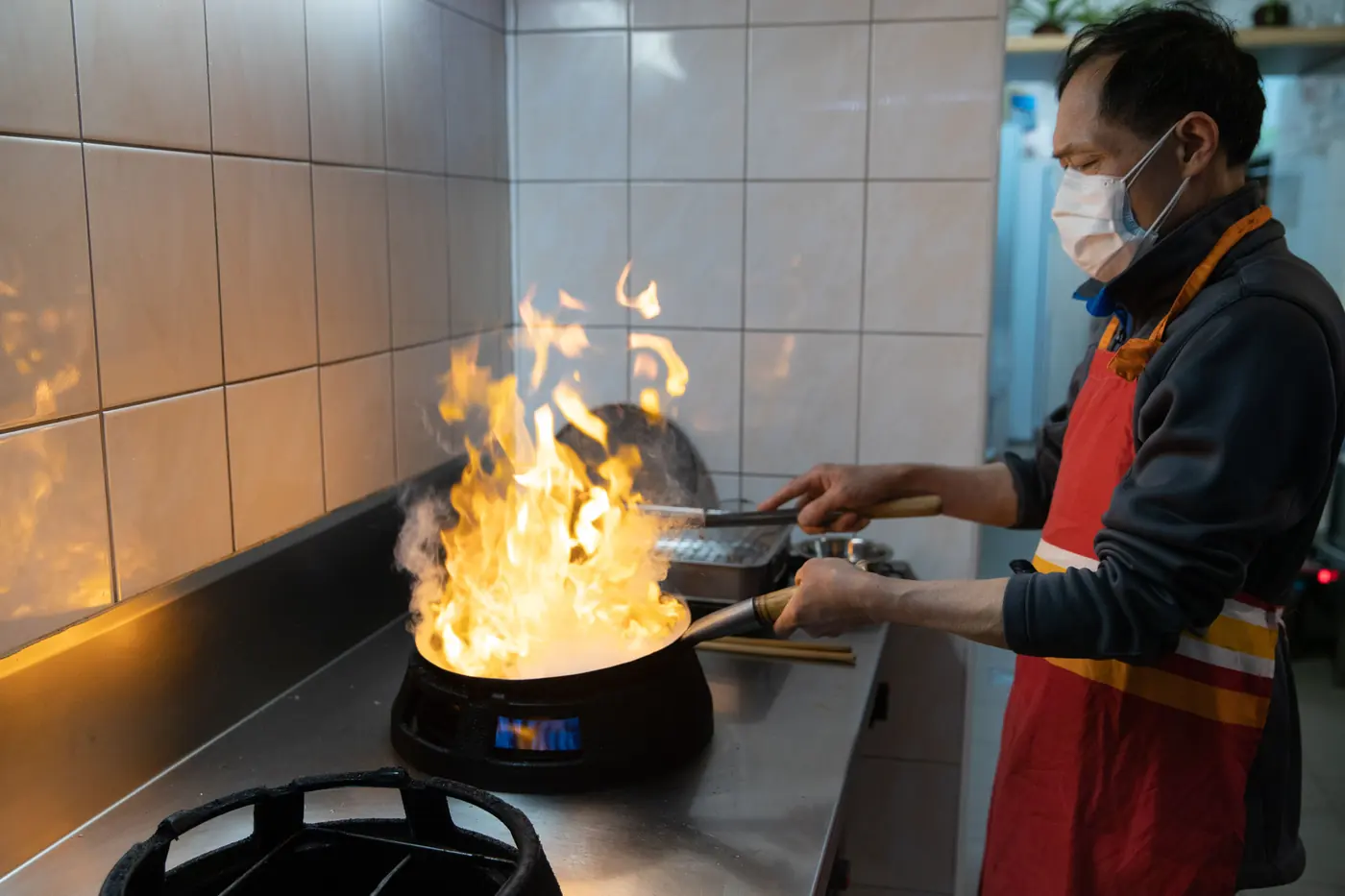
You can buy the same ingredients, follow the same steps, and end up with something that is recognisably not the same dish. Restaurant stir fry has a quality home cooking rarely reaches, and the reasons are almost entirely mechanical.
The short answer
Heat. A restaurant wok burner puts out several times the power of a domestic hob, and almost everything that distinguishes the result follows from that one difference.
Everything else – the pan shape, the batch size, the speed – exists to make use of that heat or to compensate for its absence.
What the heat actually does
Two things happen when food hits a very hot surface, and they compete with each other.
- Browning. The reactions that produce savoury, roasted flavours need high temperatures and a dry surface. They are what you are actually tasting when you say something tastes like restaurant food.
- Water release. Vegetables and meat are mostly water, and as soon as they are heated they start giving it up.
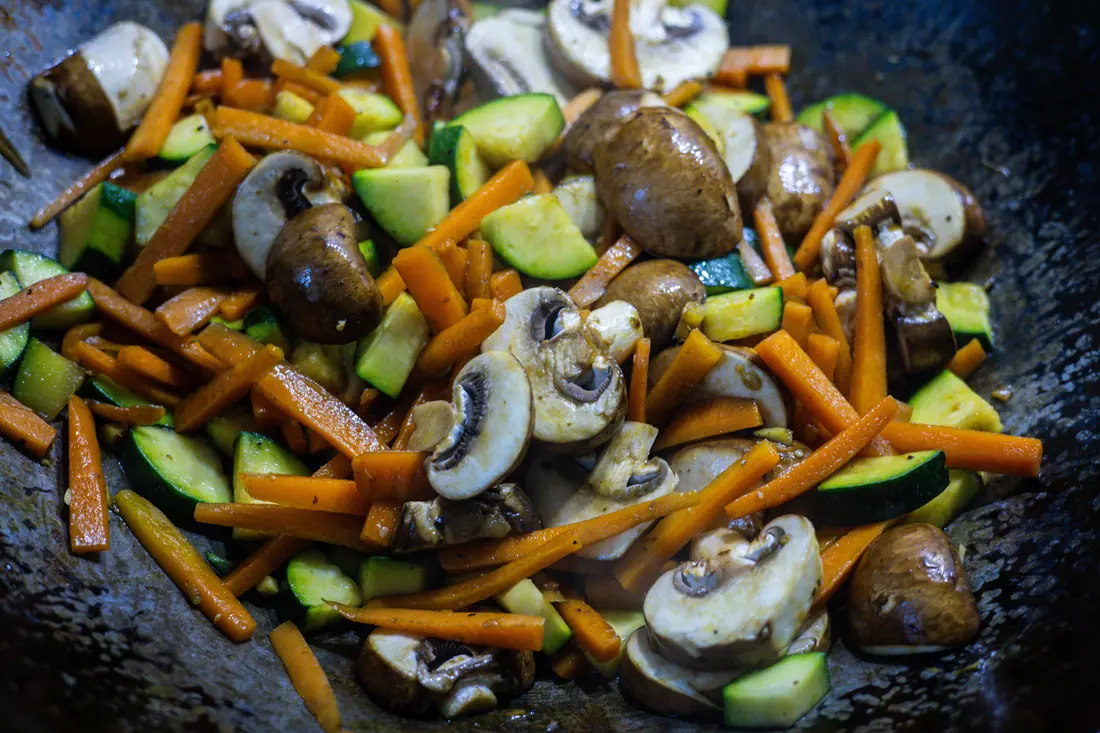
If the pan is hot enough, the released water evaporates as fast as it appears and browning continues. If it is not, the water pools, the temperature drops to boiling point, and the food steams in its own liquid. That is the difference between a stir fry and a pile of damp vegetables.
Why the pan is that shape
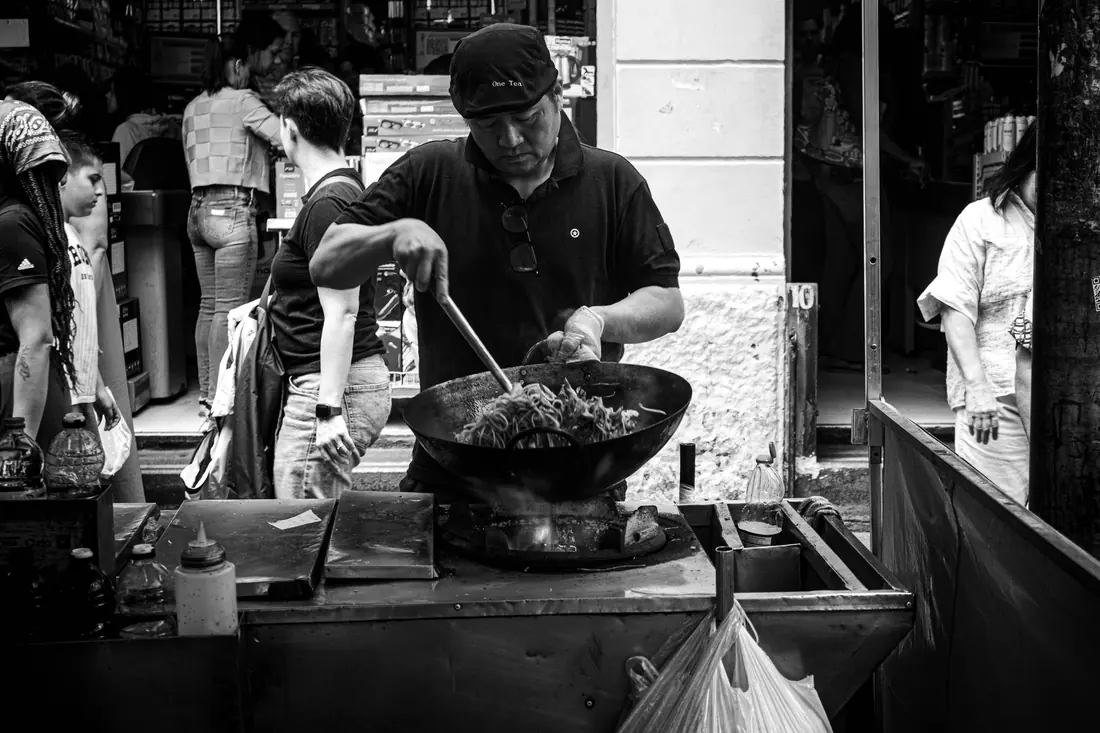
A wok is round-bottomed and thin-walled, and both features serve the same goal. The curve concentrates heat at the base while the sloping sides stay cooler, so a cook can move food between temperatures without taking it out of the pan.
Britannica’s entry on the wok notes how long the design has been in use, and the reason it has not changed much is that it solves the problem well – thin metal responds instantly to changes in flame, which a heavy pan cannot do.
The shape also makes tossing possible. Food thrown up the sloping wall falls back into the hottest part, which both mixes it and gives the surface repeated brief contact with the highest heat.
The burner is the part you cannot replicate
This is where home cooking runs into a wall. A commercial wok range is built around a burner producing many times the output of a domestic one, with the flame wrapping up around the sides of the pan rather than heating a flat disc underneath it.
That output is what allows a cook to add cold ingredients to a hot pan without the temperature collapsing. On a home hob the same handful of vegetables drops the pan temperature immediately, and it takes a minute or more to recover – by which time everything has released its water.
Batch size matters as much as heat
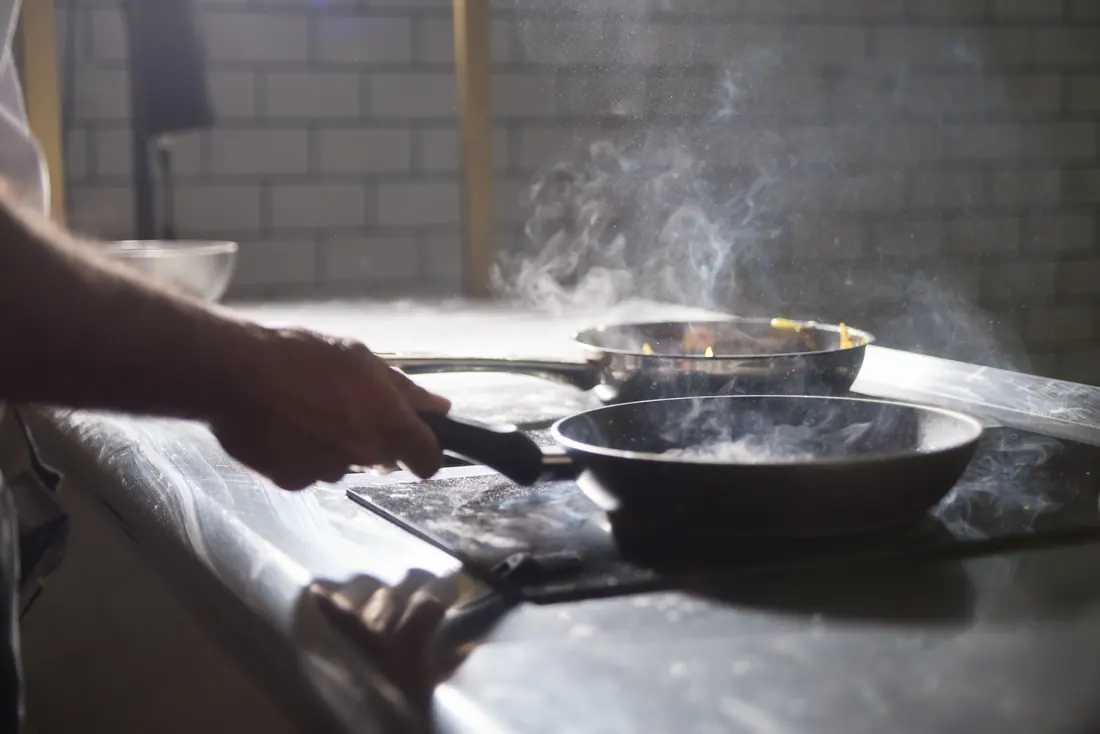
The second constraint is quantity, and it is the one home cooks most often ignore. A restaurant portion is cooked alone, in a pan sized for it, with plenty of room.
A home cook making dinner for four typically puts everything in at once, which quadruples the water being released into the same pan. Cooking the same food in two or three batches makes a larger difference than most people expect – larger, often, than buying a better pan.
Why the pan is seasoned rather than non-stick
A restaurant wok is bare carbon steel that has built up a dark polymerised layer through use. It is not a coating anyone applied – it forms from oil breaking down at high heat over hundreds of services.
That surface matters for a practical reason: non-stick coatings are not rated for the temperatures a wok burner reaches, and they degrade. Carbon steel has no such limit, which is why professional kitchens use a material that requires maintenance rather than one that does not.
It also affects flavour. A well-seasoned wok contributes a faint accumulated savoury quality that a new pan does not, which is one more small piece of the gap between a restaurant kitchen and a domestic one.
Restaurant and home conditions compared
| Restaurant | Home kitchen | |
|---|---|---|
| Burner output | Very high, flame wraps the pan | Modest, heat from below only |
| Pan | Thin carbon steel, round bottom | Heavier, usually flat |
| Portion | One serving at a time | Often four at once |
| Prep | Everything cut and ready | Often cut as you go |
| Cook time | Ninety seconds or less | Several minutes |
| Result | Seared, dry-surfaced, distinct | Softer, wetter, more uniform |
Everything is ready before anything starts
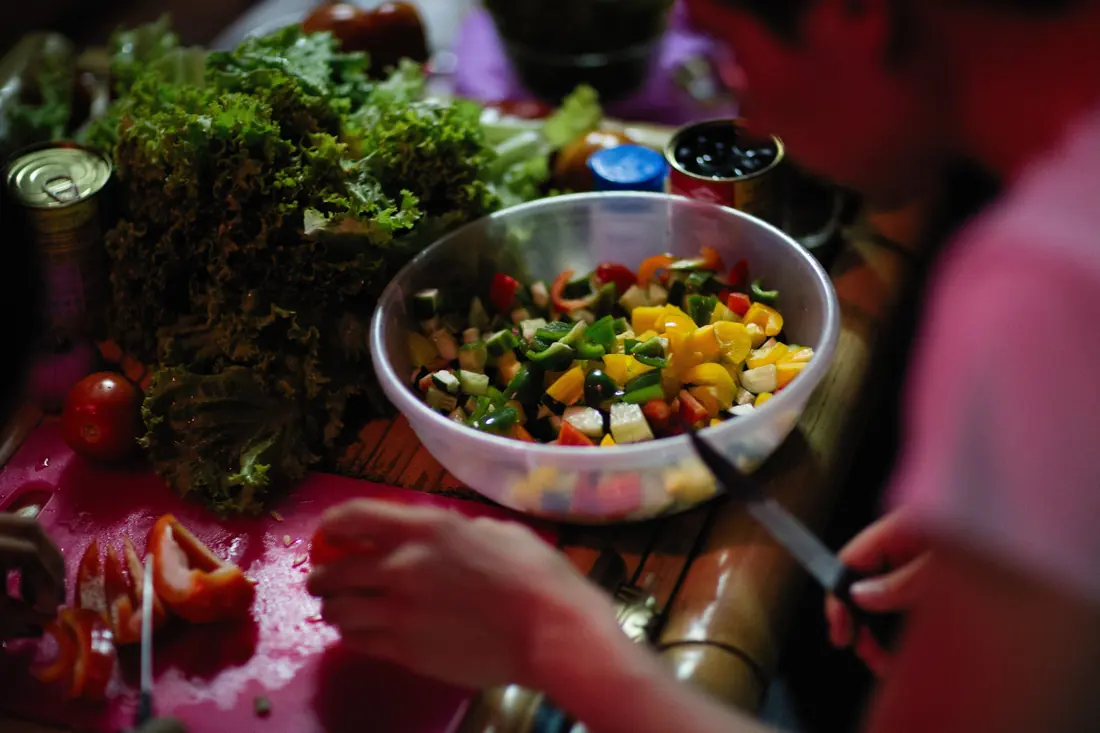
A stir fry that cooks in ninety seconds cannot accommodate any chopping partway through. Every ingredient is cut, every sauce is mixed, and everything is within arm’s reach before the pan is heated.
This is not a stylistic preference. Turning away for thirty seconds to slice something is long enough to overcook what is already in the pan, and it is the single most common reason a home stir fry goes wrong even when the heat is adequate.
The order things go in
A stir fry is assembled in a sequence, and the sequence is dictated by how long each thing needs rather than by any convention.
- Aromatics first – garlic, ginger, chilli – into hot oil for a few seconds only, since they burn quickly.
- Protein next, spread out and left alone long enough to colour, then removed.
- Hard vegetables after that, given the longest of the vegetable times.
- Soft vegetables and leaves near the end.
- The protein returns, the sauce goes in last, and everything is tossed together for a few seconds.
Removing the protein partway through is the step most home cooks skip. It is there because meat left in the pan for the whole cook overcooks while the vegetables catch up.
What you can actually do at home
- Cook in small batches, even if it means three rounds and reheating at the end.
- Get the pan hotter than feels sensible, and wait longer than feels necessary before adding anything.
- Dry everything. Wet vegetables and wet meat cannot brown until the water has gone.
- Cut everything first, including mixing the sauce, before the pan goes on.
- Leave the food alone for a few seconds at a time rather than stirring constantly – contact time is what produces colour.
None of this closes the gap entirely, because the burner is the limiting factor and there is no way around it in a domestic kitchen. It does close a surprising amount of it.
Why it matters for what you order
There is a practical consequence to all of this. Dishes that depend on hard searing are the ones worth ordering out rather than making at home, because they are the ones a home kitchen cannot reproduce.
Conversely, dishes built on long simmering – broths, braises, anything where time rather than heat does the work – are much closer to achievable at home. The equipment gap barely applies to them.
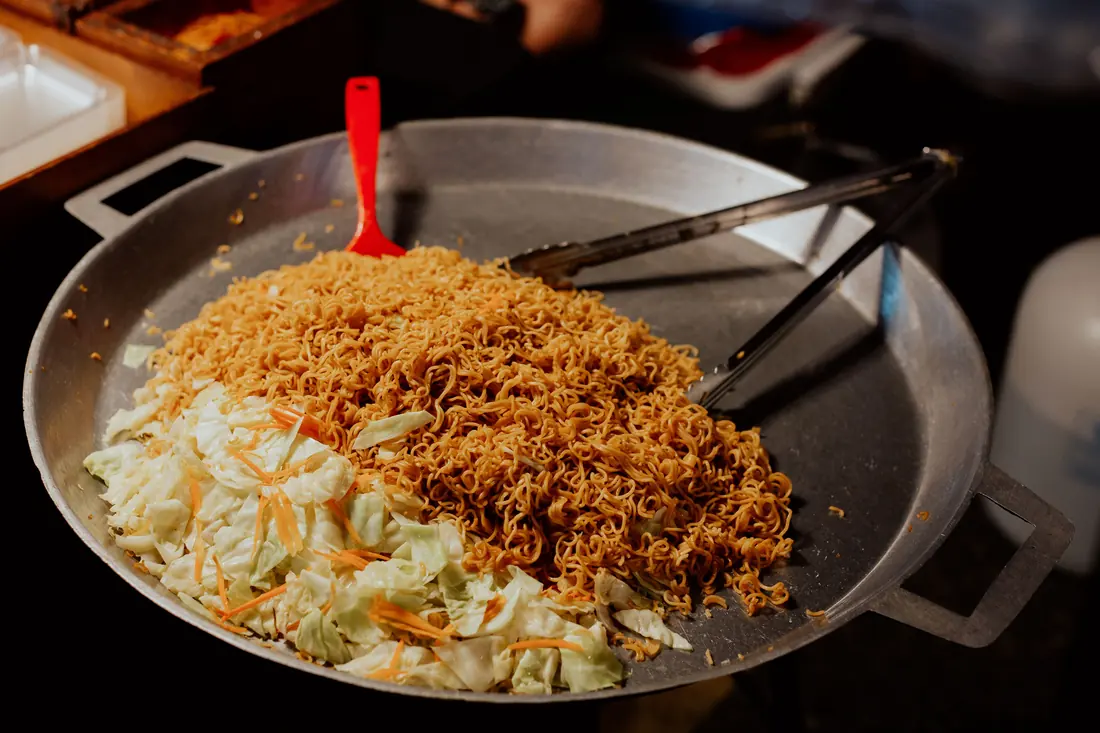
For the dishes this applies to, our noodle comparison covers the two stir-fried options, the hibachi explainer covers the flat-top version of the same principle, and the mushroom guide explains why crowding the pan ruins them. The current selection is on the ordering page.
Frequently Asked Questions
Why does restaurant stir fry taste better than homemade?
Mainly burner power. A commercial wok range is several times hotter than a domestic hob, which lets food brown instead of steaming in its own released water.
What is wok hei?
The seared, faintly smoky quality that comes from cooking at very high heat in a wok. It is a result of the temperature and the tossing rather than any added ingredient.
Can I get the same result at home?
Not entirely, but you can close much of the gap: cook in small batches, dry your ingredients, preheat longer than feels necessary, and prepare everything in advance.
Why does a wok have a round bottom?
The curve concentrates heat at the base while the sides stay cooler, so food can be moved between temperatures without leaving the pan, and tossing returns it to the hottest point.
Does the pan matter more than the burner?
No. A thin carbon steel wok helps, but the burner is the limiting factor. A good pan on a weak hob still cannot hold its temperature when cold food goes in.