
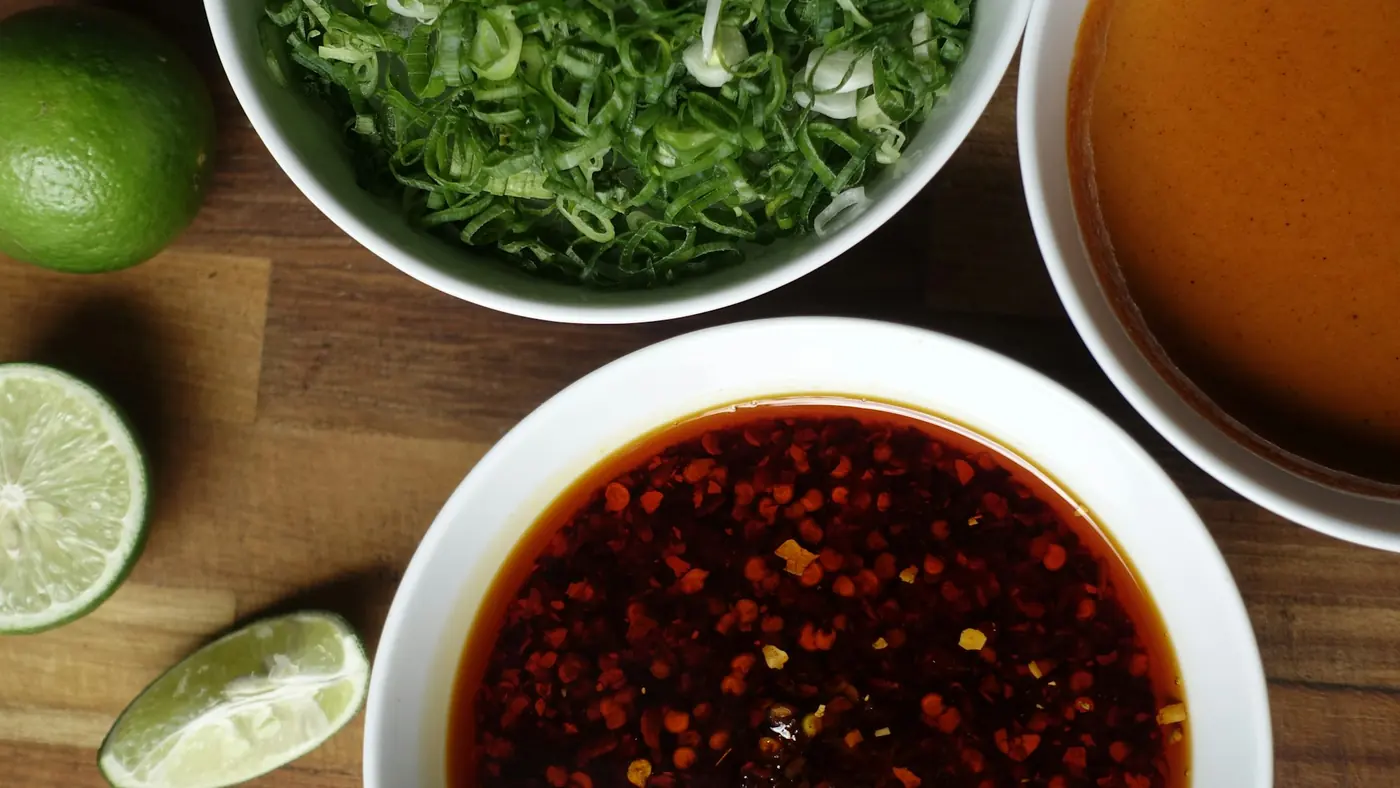
A bowl of pho arrives, and so does a small crowd of other things: a plate of herbs, a wedge of lime, two squeeze bottles and a dish of chillies. What to do with them is genuinely contested, and the disagreement is worth understanding before you pick a side.
What arrives alongside the bowl
The accompaniments are consistent across most Vietnamese kitchens, even where the broth itself differs.
- A herb plate – typically basil, sometimes mint or cilantro, with bean sprouts and lime.
- Hoisin – the thick dark sweet sauce, in a squeeze bottle.
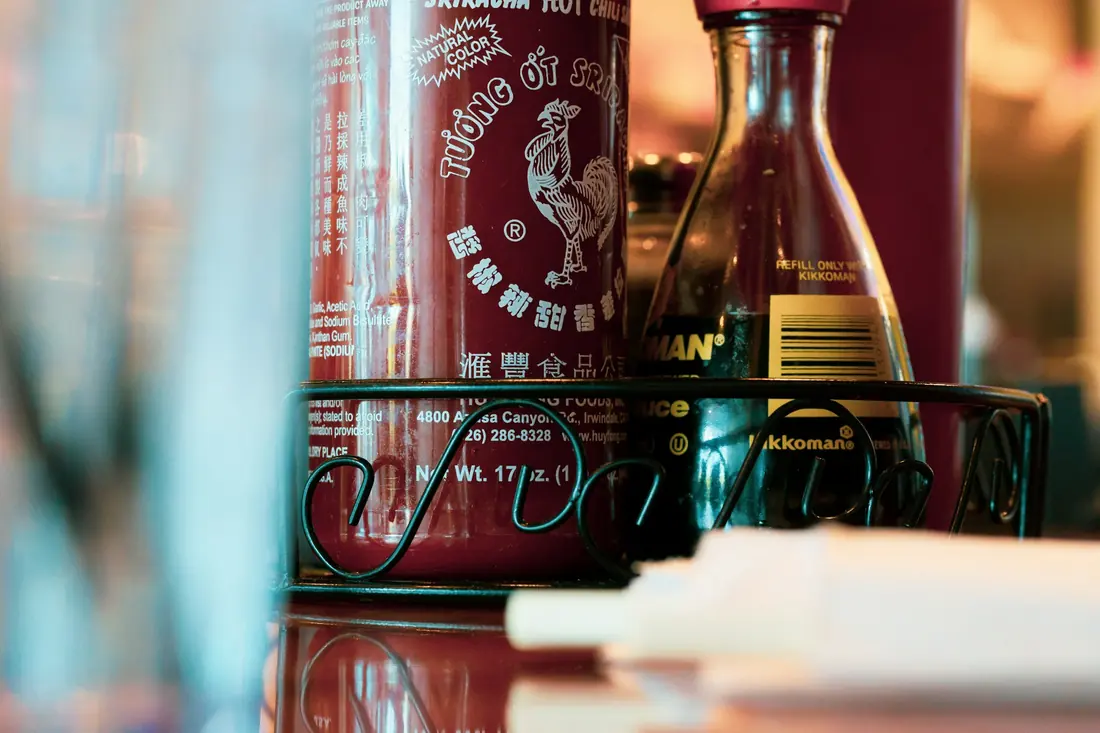
- Sriracha – the bright red chilli sauce, in the other bottle.
- Fresh chillies – sliced, in a small dish.
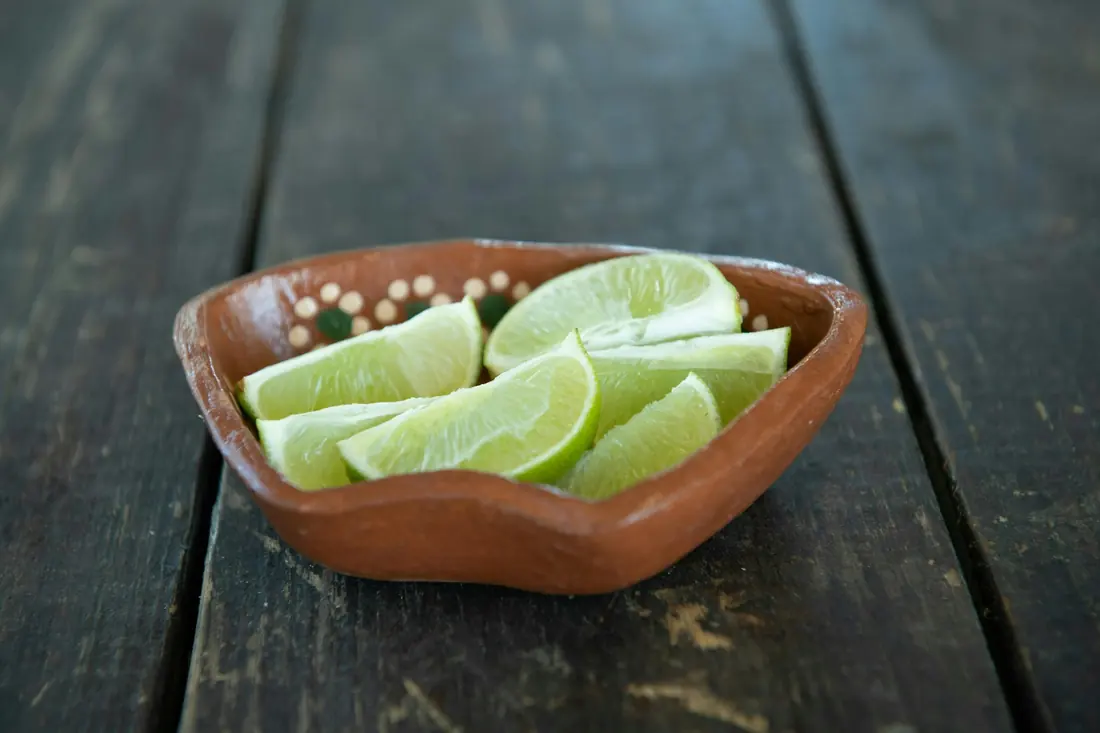
- Lime – a wedge or two, on the herb plate or beside it.
None of it is compulsory, and a bowl eaten exactly as it arrives is a complete dish. The additions are there because the broth is a base that different people finish differently.
The argument about the sauces
Here is the disagreement in full. One position holds that a good broth has been simmered for many hours and adding hoisin or sriracha directly to it destroys what that work produced. The other holds that the accompaniments are part of the dish and always have been.
Both are right about something. Squeezing sauce into the bowl does change the broth permanently, and you cannot taste what it was before. But the condiments are set on the table deliberately, and no Vietnamese kitchen puts them there as a trap.
The practical resolution most people land on: taste the broth first, then decide. That costs you nothing and settles the question for your own bowl.
What each addition actually does
Understanding the mechanism is more useful than a rule.
| Addition | What it does | Where to put it |
|---|---|---|
| Lime | Sharpens the broth and lifts the aromatics | Squeezed into the bowl |
| Herbs | Adds fresh aroma as the heat releases them | Torn into the bowl |
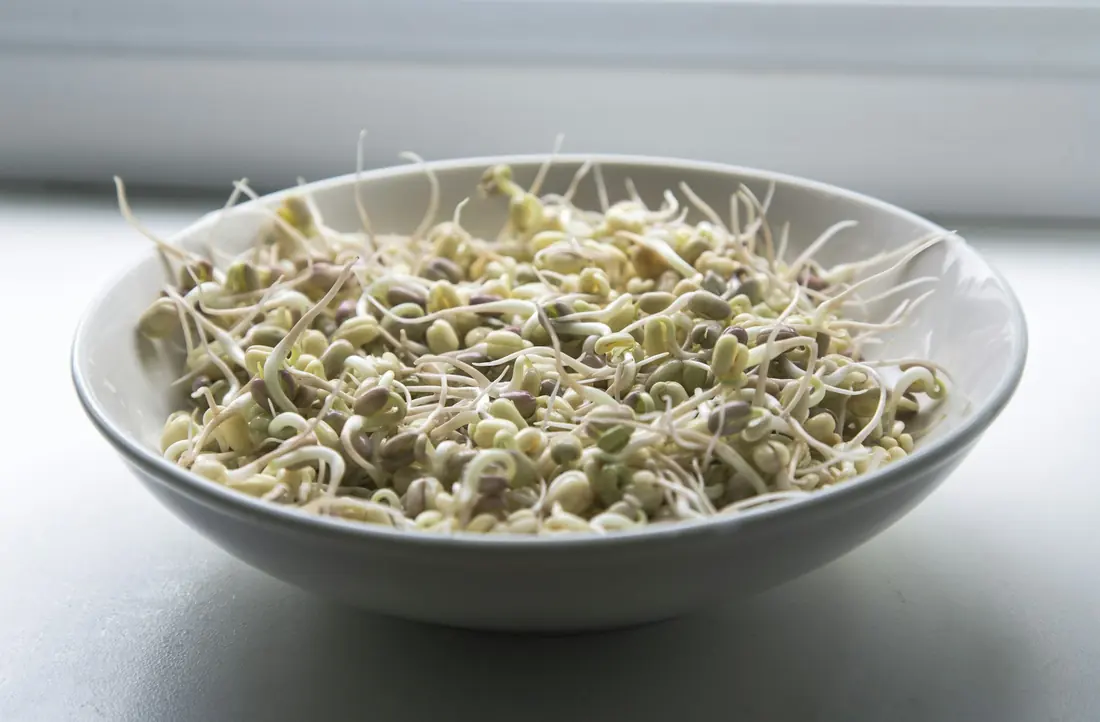
| Bean sprouts | Adds crunch and cools the broth slightly | Into the bowl |
| Fresh chilli | Adds clean heat without sweetness | Into the bowl, or a side dish |
| Sriracha | Adds heat plus garlic, vinegar and sugar | Better in a side dish |
| Hoisin | Adds sweetness and depth, and clouds the broth | Better in a side dish |
The side-dish method
This is the approach that satisfies both camps, and it is what a lot of regular pho eaters do without thinking about it.
- Squeeze a little hoisin and sriracha into the small empty dish on the table.
- Leave the broth alone.
- Dip the meat into the sauce as you eat it, so the seasoning goes on the protein rather than into the soup.
- Adjust the broth itself only with lime, herbs, sprouts and fresh chilli.
The result is that you get the sweet-and-hot element where it does the most good, and the broth stays as the kitchen made it right down to the last spoonful.
The order to add things
Sequence matters more than quantity, because each step changes what you are tasting next.
Taste the broth plain first. Then add the sprouts and herbs, which need the heat of the broth to release their aroma and should go in early enough to soften slightly. Then the lime, a little at a time. Then chilli, last, because heat builds and cannot be removed.
Why the broth is seasoned lightly
A pho broth is deliberately finished a little short of where you might expect. That is not an oversight and it is not blandness – it is the design.
The bowl is built to be completed at the table, which means the kitchen has to leave room for the lime, the herbs and whatever heat you add. A broth seasoned to its limit in the pot would be over-seasoned the moment anything went into it.
It is also why the first spoonful can seem underwhelming and the tenth does not. You are tasting an unfinished dish at the start and a finished one by the middle of the bowl.
On the chillies
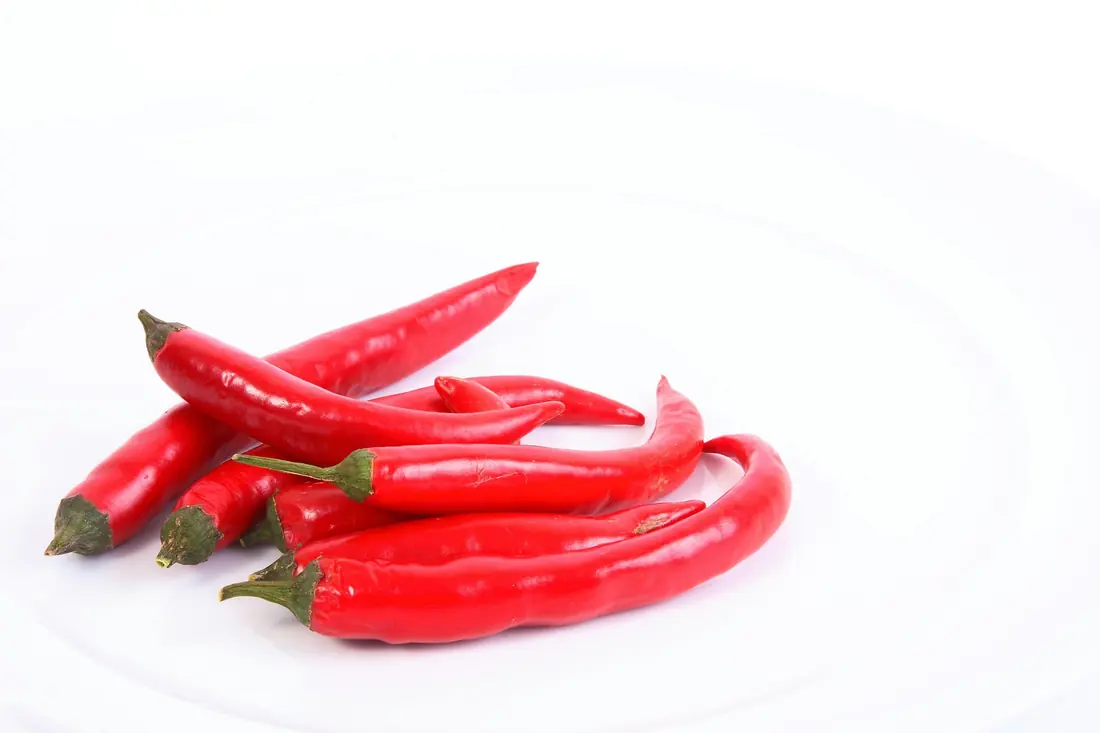
The fresh sliced chillies do something different from the bottled sauce, and they are worth using even if you normally reach for sriracha. Fresh chilli brings a clean, immediate heat with no sugar and no vinegar attached; Britannica’s entry on the chili pepper covers how varied that heat is across the species.
Add one or two slices, wait, and taste before adding more. Chilli continues to release into hot liquid for a minute or so after it goes in, so what you taste immediately is not where it will settle.
The herb plate is not a garnish
The single most common mistake is leaving the herbs on the side plate. They are an ingredient that has been deliberately left uncooked so that you can add them at the moment they will do the most.
Tear the basil rather than dropping in whole sprigs – torn leaves release far more aroma – and push them under the surface so the heat works on them. Add them in stages rather than all at once, so the last few mouthfuls are as aromatic as the first.
The bean sprouts are a texture decision rather than a flavour one. In early, they soften; added as you go, they stay crisp. Neither is wrong.
It varies by region
The condiment question is partly a regional one. Northern Vietnamese practice leans toward a clearer broth eaten with very little added – perhaps some chilli and a little vinegar. Southern practice is more generous, and the herb plate, the bean sprouts and the sauces are much more central to it.
Most Vietnamese restaurants outside Vietnam serve something closer to the southern style, which is why the plate of accompaniments is standard. Knowing that removes some of the heat from the argument: what one person learned as the correct way is genuinely the correct way somewhere.
A few things not to do
- Do not season before tasting. The broth is already seasoned, and kitchens differ in how far.
- Do not empty the bottles into the bowl. Both sauces are concentrated and a long squeeze is far more than it looks.
- Do not add everything at once. If the result is wrong you will not know which addition did it.
Beyond that there are no rules that matter. It is your bowl, and the person who made it put the condiments on the table for you to use.
For the bowl itself, our guide to pho covers the broth and the cuts of beef, the comparison with ramen explains why the two noodle soups are built so differently, and the sushi condiments guide covers the same question on the other side of the menu. The current selection is on the ordering page.
Frequently Asked Questions
Should you put hoisin and sriracha in pho?
It is your choice, but the widely preferred approach is to squeeze them into a side dish and dip the meat, rather than adding them to the broth where they cannot be undone.
What order should you add things to pho?
Taste the broth first, then add sprouts and herbs, then lime, then chilli last. Heat builds and cannot be taken back out.
What is the plate of herbs for?
It is an ingredient, not a garnish. Tear the leaves and push them into the broth so the heat releases the aroma, adding them in stages as you eat.
What is the difference between sriracha and fresh chilli?
Sriracha brings garlic, vinegar and sugar along with the heat. Fresh chilli brings clean heat and nothing else.
Is it rude to add sauce to pho?
No. The condiments are put on the table for you. The only argument is a practical one about whether they belong in the broth or in a side dish.