
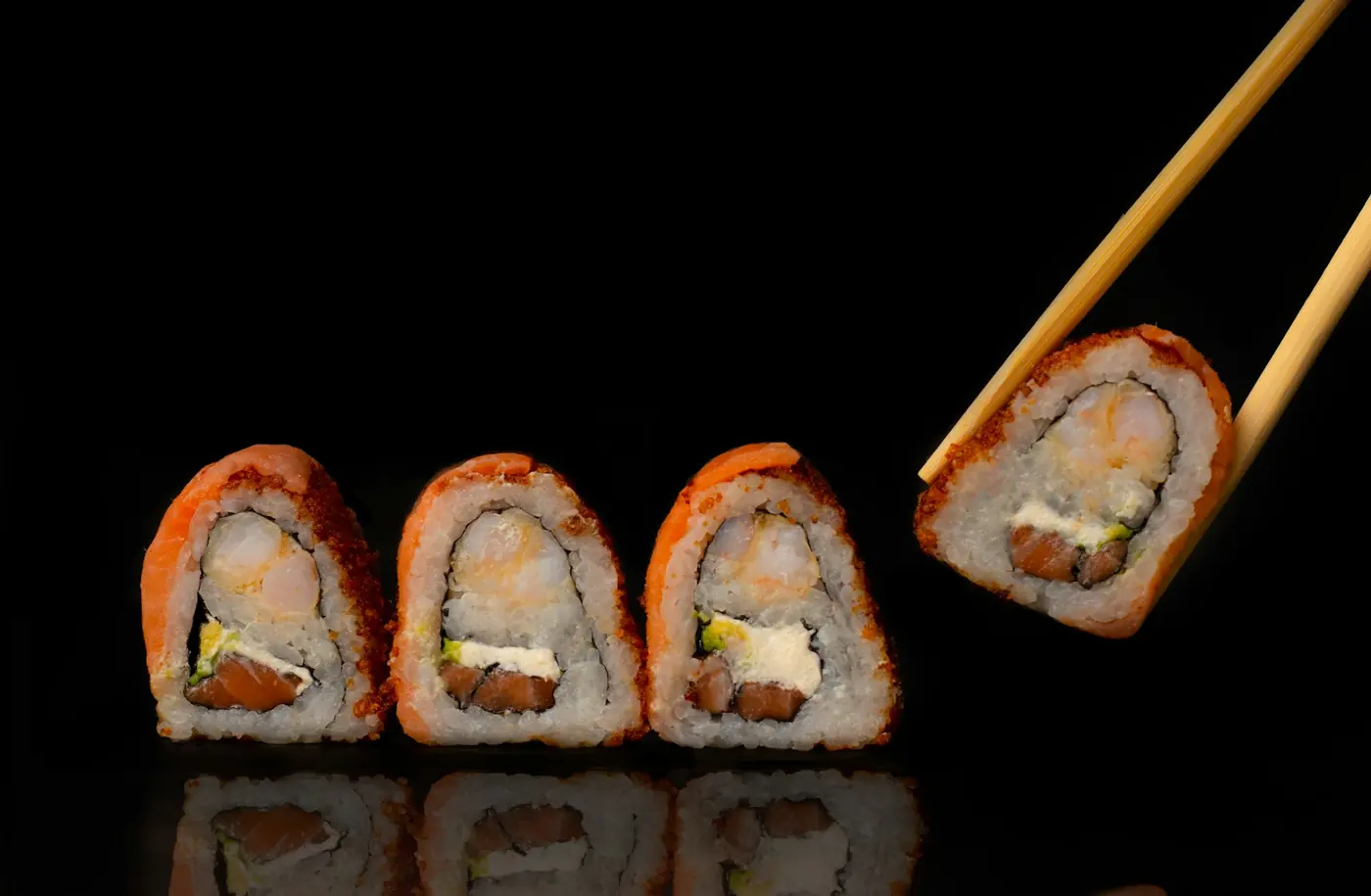
The tiny orange beads on the outside of a roll are one of the most recognisable things on a sushi menu and one of the least explained. There are two of them in common use, they come from different fish, and telling them apart is easier than it sounds.
The short answer
Tobiko is flying fish roe. Masago is capelin roe. Tobiko is slightly larger, firmer and audibly crunchy; masago is smaller, softer and generally the less expensive of the two.
Both are used the same way – rolled onto the outside of a roll, spooned on top, or scattered as a garnish – and on a menu they are frequently used interchangeably.
What tobiko is
Tobiko comes from flying fish, the species that escape predators by gliding above the surface of the water; Britannica’s entry on flying fish describes how far they can travel that way.
The eggs are around a millimetre across, firm enough to pop distinctly between the teeth, and naturally a bright red-orange. That texture is the reason tobiko is used on the outside of a roll rather than inside it – the contrast against soft rice is the whole point.

What masago is
Masago comes from capelin, a small cold-water fish that spawns in enormous numbers in the North Atlantic and North Pacific; Britannica’s entry on capelin covers the scale of those runs.
The eggs are smaller than tobiko and softer, closer to a fine paste when a spoonful is pressed. Naturally they are a duller yellow-orange, so they are usually coloured to reach the orange most people expect.
Because capelin is caught in such quantity, masago is the cheaper of the two, which is why it turns up far more often in high-volume kitchens.

The two compared
| Tobiko | Masago | |
|---|---|---|
| From | Flying fish | Capelin |
| Size | About 1mm, individually visible | Smaller, closer to a paste |
| Texture | Firm, pops distinctly | Soft, yields quietly |
| Natural colour | Bright red-orange | Dull yellow-orange |
| Usually | Used as-is or dyed for effect | Coloured to a standard orange |
| Cost | Higher | Lower |
How it is prepared
Neither roe arrives at a restaurant in anything like its natural state, and the processing explains most of what you taste.
- The roe sacs are separated and the eggs are washed free of membrane.
- They are brined, which firms them and is where most of the saltiness comes from.
- They are seasoned – soy, sometimes mirin or a little sugar, varying by producer.
- They are coloured, if the natural shade is not what the market expects.
- They are chilled and kept cold, because both are served cold and neither is cooked.
This is curing rather than cooking. Nothing is heated, which is why both keep their distinct texture, and why both are always served straight from the fridge.
How to tell them apart on a roll
Three checks, in order of reliability.
- Listen. Tobiko makes a faint crackle as you bite; masago does not.
- Look closely at the surface. If you can pick out individual beads at arm’s length, it is tobiko. If the coating reads as a single textured layer, it is masago.
- Feel it against the roof of your mouth. Tobiko stays separate; masago flattens.
Colour is the least useful signal, because both are routinely dyed. A jet-black or vivid green coating is a coloured roe rather than a different species.
The bigger orange pearls are something else
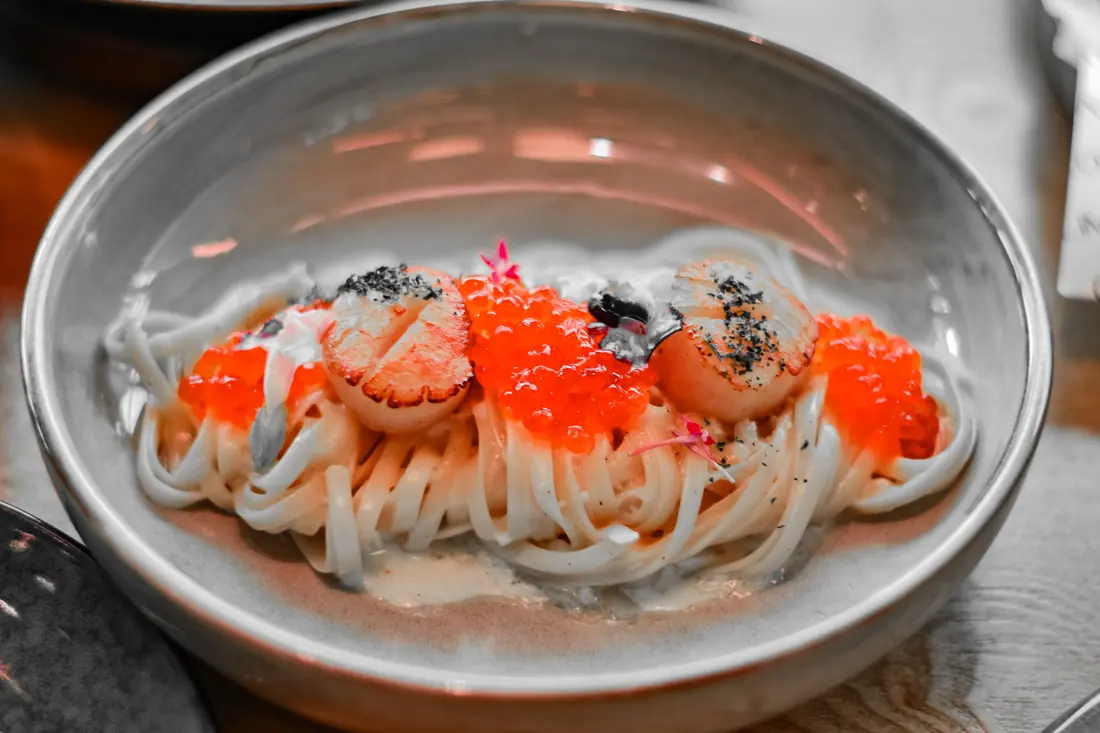
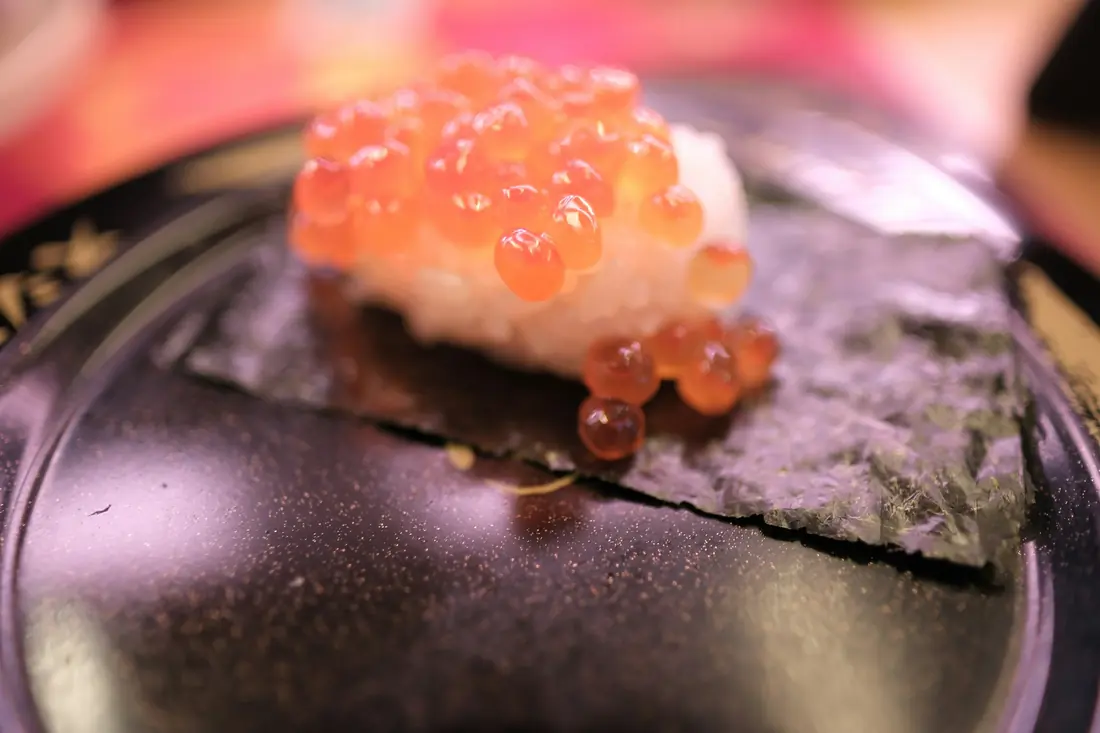
There is a third roe that is often confused with these two and is not remotely the same thing. If the beads are large – four or five millimetres, glossy, individually distinct and translucent – that is salmon roe, usually called ikura.
The difference is obvious once you have seen them together. Salmon roe is eaten a spoonful at a time, typically on its own piece of sushi, and it bursts rather than crunches.
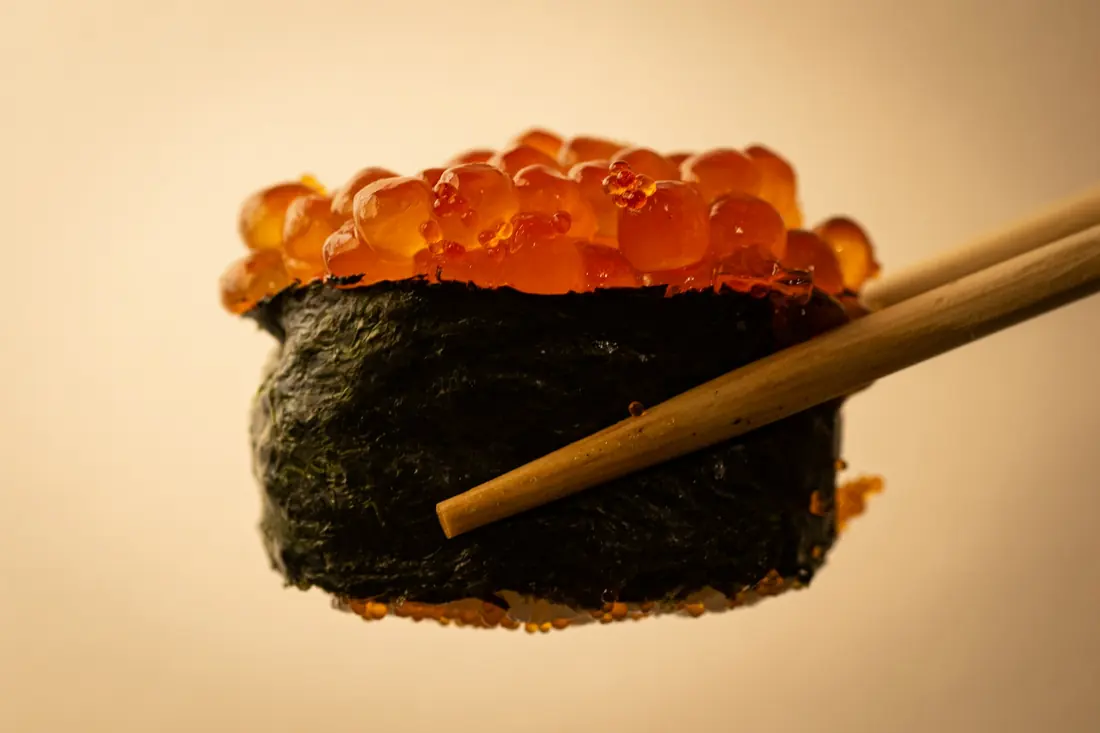
It is also a different experience to eat. Tobiko and masago are textures added to something else; salmon roe is the dish. If a menu lists a piece topped with large orange pearls, it is not offering you a garnish.
What they taste like
Less fishy than people expect, and much saltier. The dominant note in both is the brine, followed by a mild savoury sweetness from the seasoning, with the sea flavour a long way behind.
Tobiko has a slightly cleaner finish and a faint smokiness in some versions. Masago is a little more assertive and a little saltier, which is partly why it works well as a coating spread thin across a whole roll rather than concentrated in one place.
If you have avoided both on the assumption that fish eggs taste strongly of fish, the assumption is worth testing on a single piece.
The coloured versions
Both roes take dye readily, and kitchens use that.
- Black – coloured with squid ink, used where a dark outer coating is wanted.
- Green – coloured with wasabi, which adds a faint heat as well as the colour.
- Red – a deeper shade than the natural orange, sometimes with a chilli element.
- Yellow – coloured with yuzu, adding a citrus note.
These are presentation choices rather than different ingredients. If the flavouring matters to you – the wasabi green in particular – it is worth asking, because the colour alone does not tell you whether it is a dye or a seasoning.
Why it is always cold
Both roes are cured rather than cooked, which means temperature is doing real work rather than being a serving preference. Warm roe loses its pop almost immediately and the texture is most of what you are paying for.
This is worth knowing when ordering to take away. A roll coated in roe is not ruined by the trip, but it is noticeably better eaten soon after it is made, and it should not be left sitting out once it arrives.
How menus name it
Menu wording is inconsistent, and a few conventions are worth recognising. Some menus name the roe directly as tobiko or masago. Many simply write “roe” or “fish roe” and leave it there. Masago is also sometimes listed as smelt roe, which is a naming convention rather than a different ingredient.
Where the menu does not say, the safe assumption in a high-volume kitchen is masago, because it is the cheaper of the two and the one used at scale. If it matters to you, the texture will tell you within one bite.
Why rolls are coated in it at all
Beyond appearance, the coating does two useful things. It gives a soft roll a textural edge, and it stops the outside of the rice sticking to the plate, to the chopsticks and to the next piece.
That second function is why you see it most on rolls with the rice on the outside. A roll wrapped in seaweed does not need it; a roll with exposed rice benefits from almost anything on the surface, and roe happens to look striking while doing the job.
If you want to know why house rolls are built with these outer layers in the first place, our specialty rolls guide covers the construction, the beginners guide explains the basics, and the piece on crab mix covers the other component you will find in almost every one. The current selection is on the ordering page.
Frequently Asked Questions
What is the difference between masago and tobiko?
Tobiko is flying fish roe – larger, firmer and audibly crunchy. Masago is capelin roe – smaller, softer and less expensive. They are used the same way.
Is masago just cheap tobiko?
They come from different fish. Masago is cheaper because capelin is caught in far greater quantity, not because it is a lesser grade of the same product.
Why is the roe on my roll green or black?
It has been coloured – squid ink for black, wasabi for green, yuzu for yellow. The underlying roe is the same, though wasabi green does add a little heat.
Are the big orange balls on sushi the same thing?
No. Those are salmon roe, usually called ikura. They are several times larger, translucent, and burst rather than crunch.
Is the roe raw?
It is cured rather than cooked – brined and seasoned. It is not heat-treated, and it is served cold.