
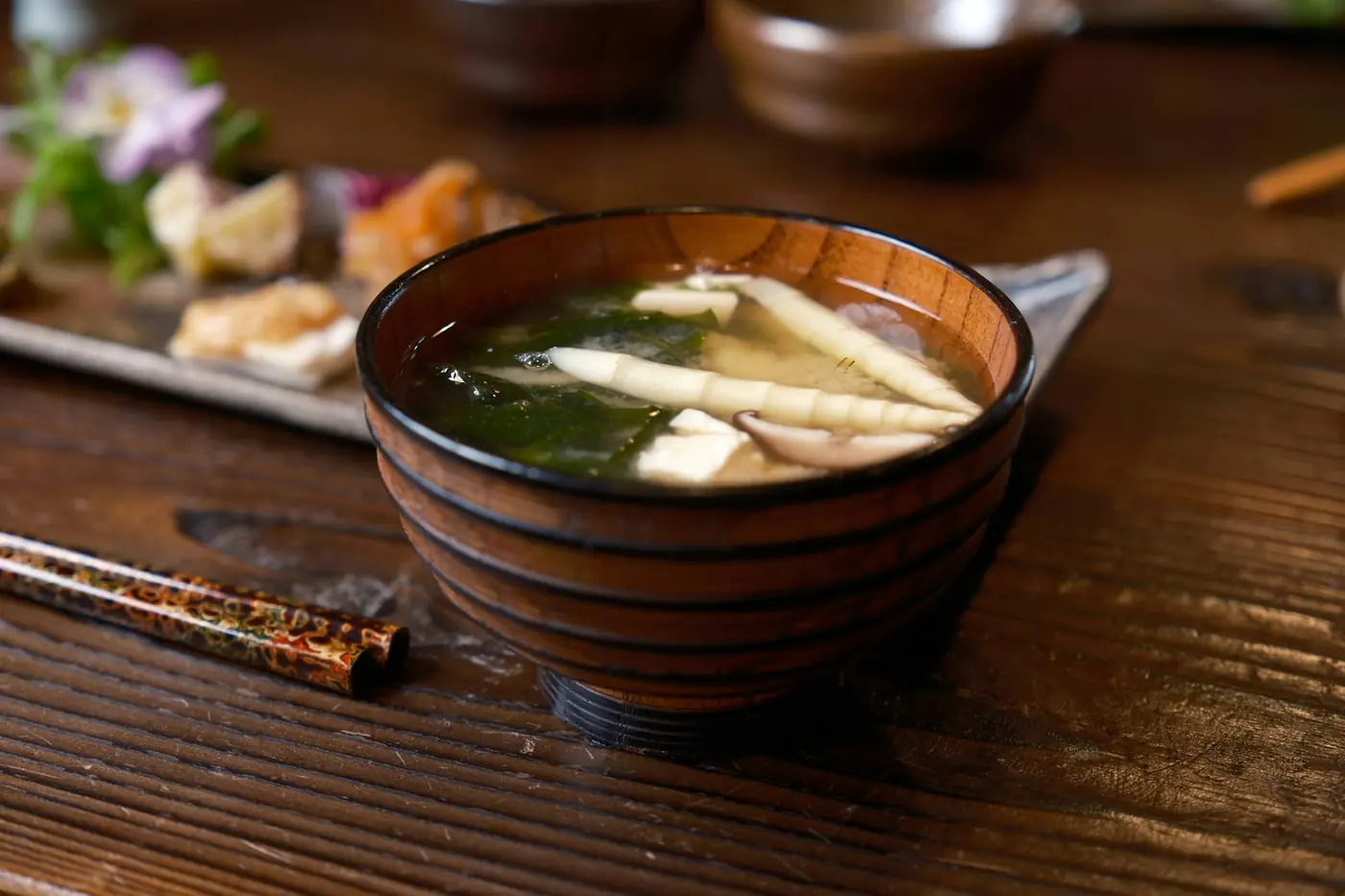
Most Japanese and Asian kitchens offer a small soup to start, and the choice is usually between two: miso, or a clear onion soup. They cost about the same, arrive in the same small bowl, and taste nothing alike.
The short answer
Miso soup is savoury and slightly salty, built on fermented soybean paste, with tofu and seaweed suspended in it. Onion soup is lighter and sweeter, a clear broth with fried onion, mushroom and scallion. Miso is the richer of the two; onion soup is the cleaner.

What miso soup actually is
Miso is a paste made by fermenting soybeans with salt and a culture called koji, sometimes with rice or barley added. Fermentation runs for months, and the longer it goes the darker and stronger the result. Britannica’s entry on miso covers the range of styles, from pale and mild to deep red and assertive.
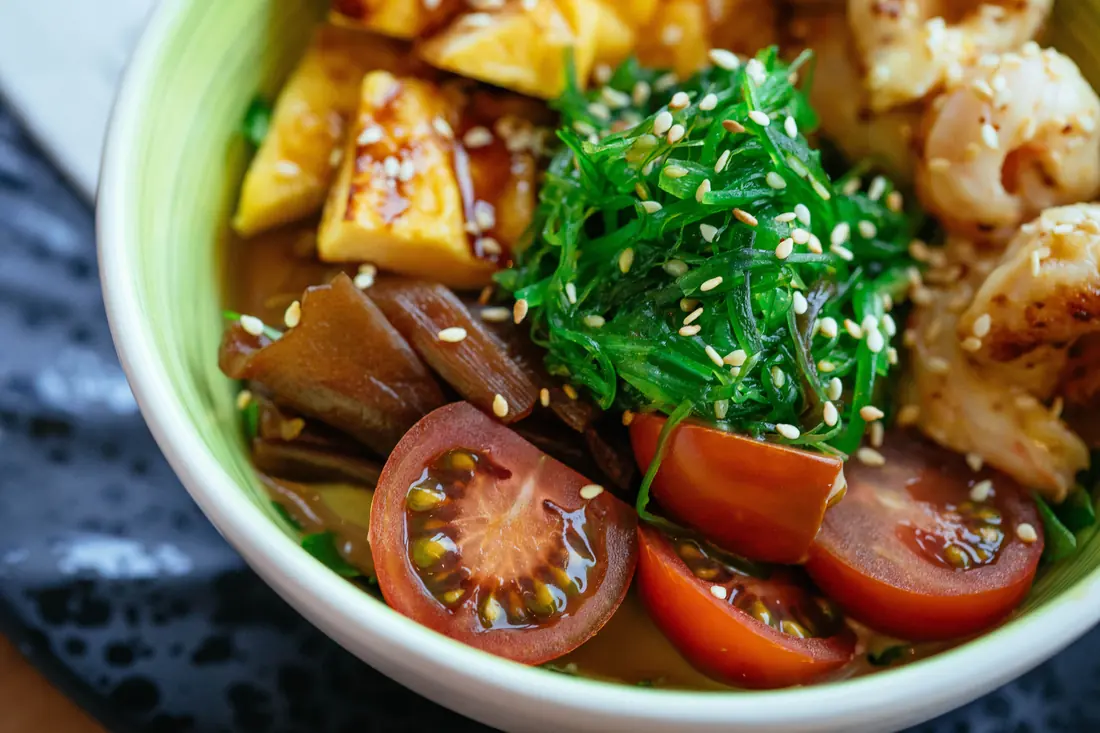
The soup itself is simple: a light stock, a spoonful of paste whisked in, and a few additions. In a restaurant bowl those are usually small cubes of tofu and rehydrated seaweed, with scallion on top. The paste is added off the boil, because boiling it dulls the flavour.
Roll & Go Sushi’s version follows that pattern — an 8 oz bowl of soybean paste broth with seaweed and tofu.
What onion soup is doing differently
The onion soup served at Japanese and Asian restaurants in the United States is not French onion soup. There is no cheese, no bread, and the broth is thin and clear rather than dark and syrupy.
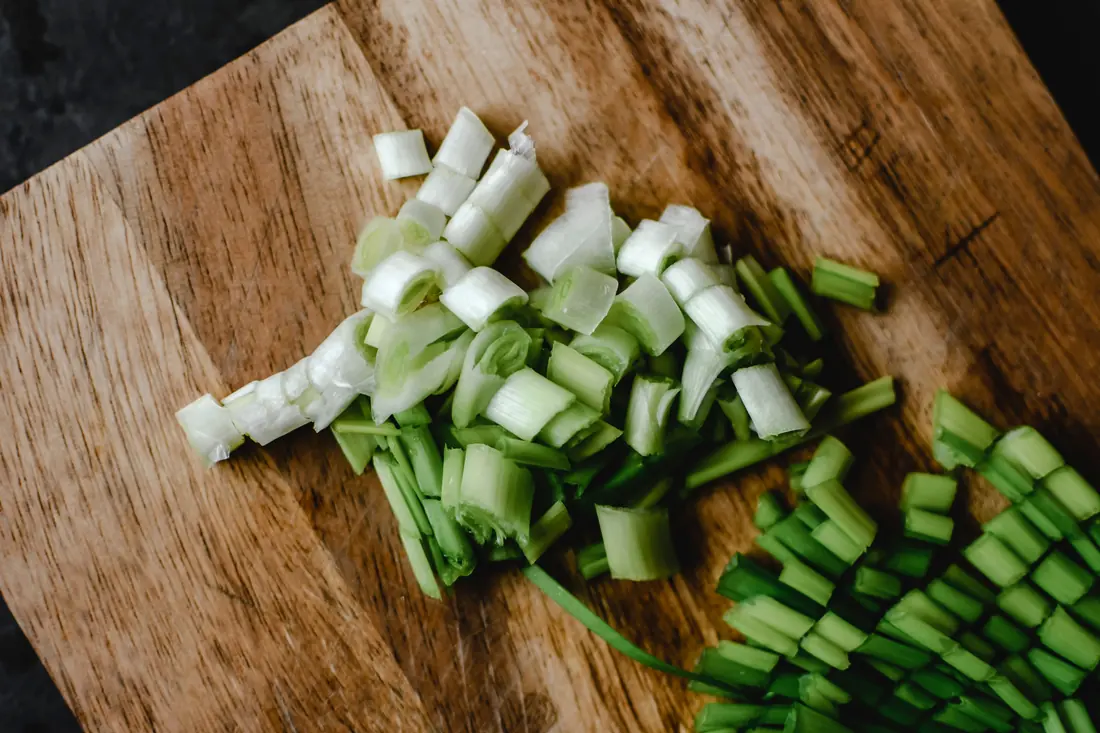
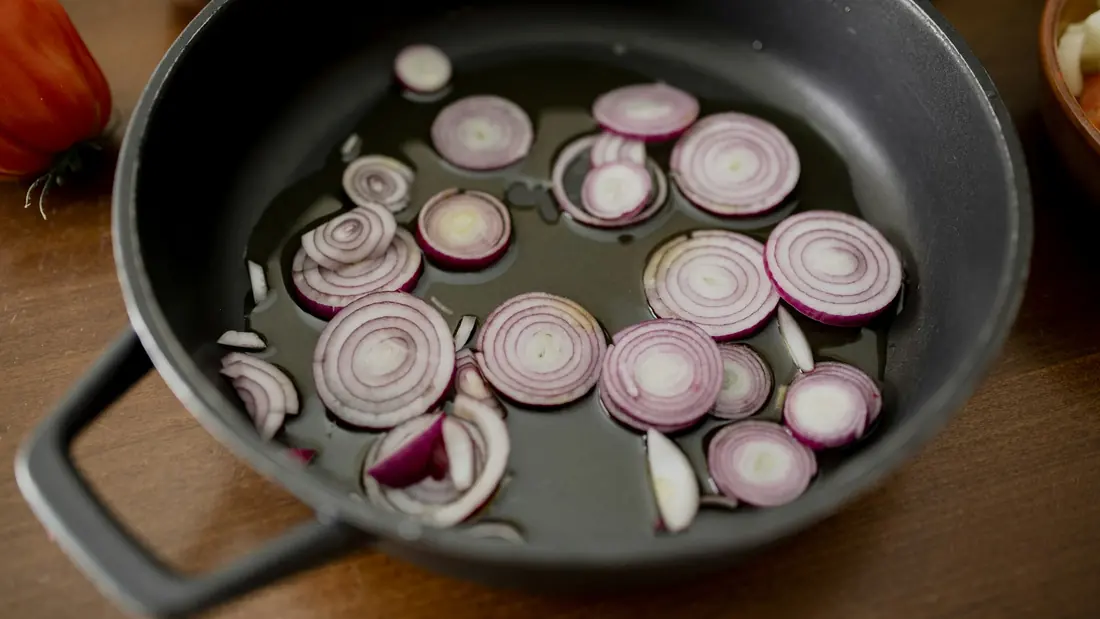
Onions are fried first, which is where the sweetness comes from, then simmered in a light broth with mushrooms. Scallion goes in at the end. The result is delicate — the point is aroma rather than body. Roll & Go Sushi’s is an 8 oz bowl of fried onions, mushrooms and scallions.
Miso and onion soup compared
| Miso soup | Onion soup | |
|---|---|---|
| Base | Fermented soybean paste | Clear broth with fried onion |
| Flavour | Savoury, salty, faintly sweet | Light, sweet, aromatic |
| Texture | Slightly cloudy, with tofu and seaweed | Thin and clear, with soft onion and mushroom |
| Typical additions | Tofu, seaweed, scallion | Fried onion, mushroom, scallion |
| Served | Hot, in a small bowl | Hot, in a small bowl |
| Goes well with | Sushi and raw fish | Grilled and fried dishes |
Which goes better with what you ordered
There is a rough logic to the pairing, and it is worth following.
- Ordering sushi or sashimi — miso. The savoury depth sits well against cool rice and raw fish, and it is the traditional pairing.
- Ordering hibachi or anything grilled — onion soup. It is lighter, and it does not compete with food that already has char and sauce.
- Ordering fried rolls or tempura — onion soup again, for the same reason. Something clear cuts through fried food better.
- Cold day, or you want something restorative — miso, which feels substantially warmer than its size suggests.
When it is served says something too
In Japan miso soup is not usually a starter. It arrives with the rice, partway through the meal, and is treated as part of the main course rather than something that opens it. Serving it first is a Western restaurant convention.
That is worth knowing mostly because it explains the size. An 8 oz bowl is not meant to hold you over — it is a component, and it works best drunk alongside other food rather than finished before anything else arrives.
Onion soup has no equivalent tradition behind it. It is a menu item developed for American Japanese restaurants, and it exists largely because it pairs well with grilled food and appeals to people who find miso too savoury.
If neither appeals
A salad is the usual third option, and at restaurants serving hibachi it is often included with the plate rather than ordered separately. Roll & Go Sushi’s hibachi comes with a choice of soup or salad, so the decision is built into the order rather than being an extra.
The other option is to skip the starter entirely. Neither soup is essential to the meal, and if you are ordering a full plate or a large bowl of noodle soup, adding a small soup on top is more food than most people want.
Neither is a meal
Both arrive in a small bowl and are meant as a starter, not a course. If you want a soup that is the meal, that is a different item on the menu — a full bowl of noodle soup runs several times the size. Our guide to what pho actually is covers that end of the menu.
A common mistake is ordering a small soup expecting it to fill a gap before a long wait. It will not. It is there to open the meal, in the same way a small salad is.
Reading the description before you choose
Menu wording tells you most of what you need. A soup described by its base — soybean paste, or a clear broth — is telling you where the flavour comes from. A soup described by its garnishes is usually the lighter of the two.
Sizes are worth checking too, since a stated volume is the clearest signal of whether something is a starter or a meal. An 8 oz bowl is a component of a meal; anything four times that size is the meal itself.
If the menu lists a soup with the hibachi rather than separately, it is included with the plate, and ordering another one on the side is usually more than you want.
A few things worth knowing
- Drink it, do not spoon it. Miso soup is traditionally lifted and sipped from the bowl, with chopsticks used for the tofu and seaweed.
- The sediment is normal. Miso settles. A gentle swirl before drinking brings it back together.
- Recipes vary between kitchens. Miso type, stock and additions all differ, so two bowls at two restaurants can taste quite different.
- If you have an allergy or dietary requirement, ask. Soup bases are not always what the name suggests, and no bowl should be assumed suitable based on its description alone.
Two small habits that improve either bowl
Drink the first mouthful before adding anything. Both soups are seasoned in the kitchen and neither normally needs adjusting, but people reach for soy sauce out of reflex and end up with something considerably saltier than intended.
The second is to take the soup at the pace of the rest of the meal rather than finishing it first. Both are better warm, and both work as something you return to between other dishes rather than as a course to get through.
Frequently Asked Questions
Is miso soup vegetarian?
It depends on the stock. Many are made with a fish-based dashi, so a miso soup is not automatically vegetarian. Ask the restaurant rather than assuming.
Is the onion soup the same as French onion soup?
No. The version served at Japanese and Asian restaurants is a thin, clear broth with fried onion and mushroom, with no cheese or bread.
Which is better with sushi?
Miso is the traditional pairing and the one most people prefer alongside raw fish. Onion soup works better with grilled or fried dishes.
Can I order both?
Yes, though two small soups is a lot of liquid before a meal. If you are sharing, one of each is a good way to compare them.
Miso for depth, onion for lightness. If you are ordering sushi, miso is the safer bet; if the table is having hibachi, onion soup will suit it better.
Both appear on the current soup list, and our guide to choosing a sushi roll covers the other half of that order.