
Three letters carry more argument than any other ingredient on an Asian menu. Most people who have an opinion about MSG have never been told what it actually is, which makes the opinion hard to hold up.
The short answer
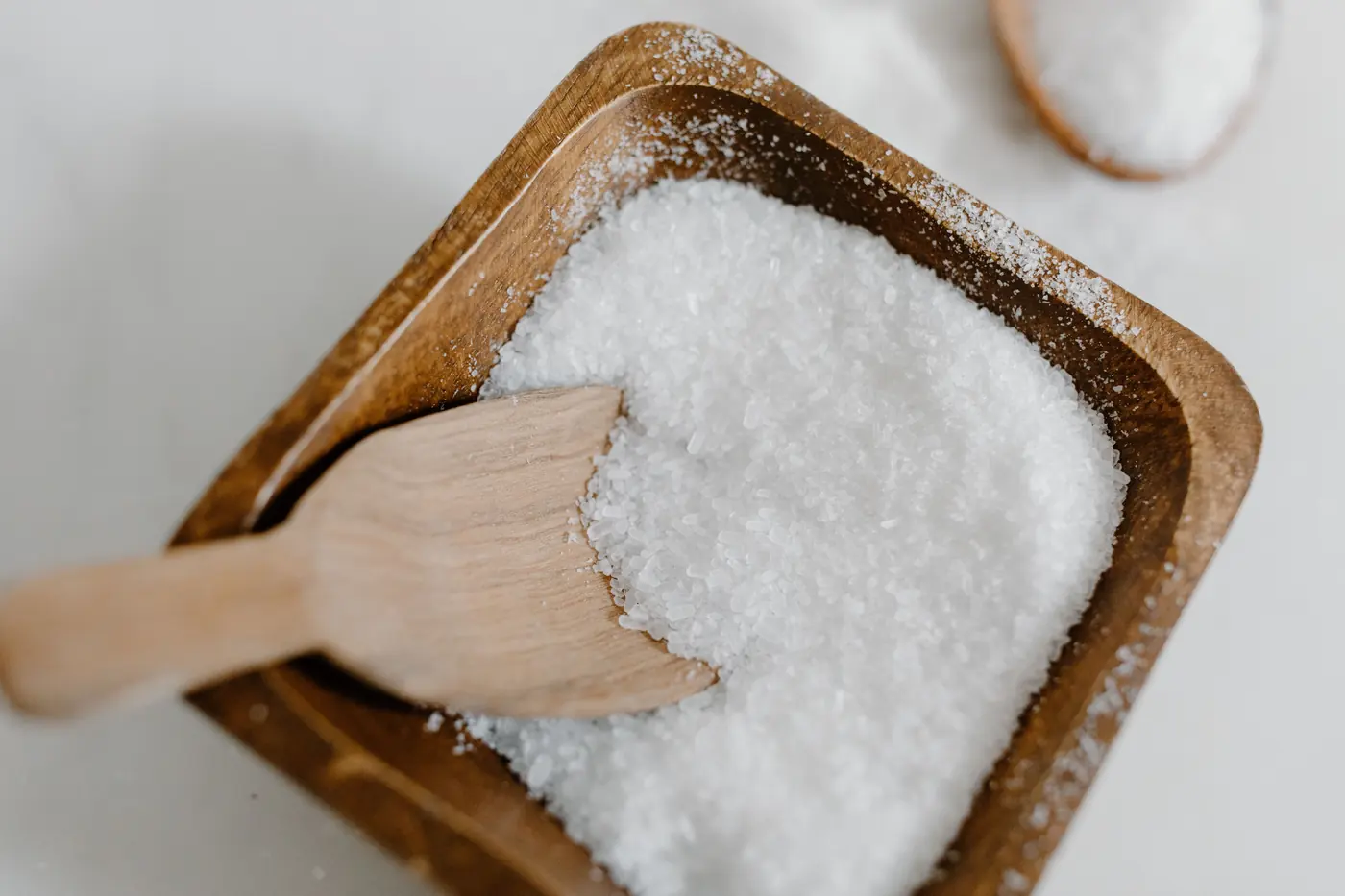
MSG is monosodium glutamate – the sodium salt of glutamic acid, an amino acid that occurs naturally in a very large number of foods. As a seasoning it is a white crystal that looks like coarse salt and dissolves the same way.
It does one thing: it makes food taste more savoury. Not saltier, not sweeter, not hotter. Savoury.
What glutamate actually is
Glutamic acid is one of the amino acids that make up protein, and it is in almost everything you eat. When protein breaks down – through ageing, fermenting, curing, drying or slow cooking – some of that glutamate comes loose from the protein chain and floats free.
Free glutamate is the form your tongue can detect, and detecting it is what savoury taste is. This is why the foods famous for depth of flavour are all foods that have been broken down somehow: aged cheese, cured ham, ripe tomatoes, dried mushrooms, fish sauce, soy sauce.

The glutamate in a ripe tomato and the glutamate in a jar of seasoning are the same molecule. Your tongue has no way of telling them apart, because there is nothing to tell apart.
Where you have already eaten it
Long before anyone isolated it, cooks were building dishes on ingredients that are concentrated glutamate by another name.
Kombu – the dried kelp that makes dashi – is one of the richest natural sources there is. That is precisely why it works. A Japanese stock made from kelp and dried fish is a glutamate extraction, done with water and patience instead of a factory.

The chemist who first isolated the compound in 1908 did it by working out what made kelp broth taste the way it does. The seasoning came second, as a way of getting the same effect without the broth.
Why kitchens use it
Two reasons, and neither is mysterious.
- Speed. Savoury depth normally takes hours – a stock, a reduction, a ferment. A seasoning gets part of the way there immediately.
- Consistency. Tomatoes vary, stock varies, suppliers vary. A measured seasoning does not, which matters when the same dish has to taste the same on a Tuesday and a Saturday.

The same logic explains why oyster sauce sits in so many stir fry pans. It is a glutamate-heavy shortcut too, just one that arrives in a bottle with a longer ingredient list.
It is not a substitute for salt
| Salt | MSG | |
|---|---|---|
| What it does | Makes food taste saltier | Makes food taste more savoury |
| Sodium content | Higher | Roughly a third of table salt, by weight |
| Used alone | Works | Tastes flat and slightly odd |
| Used together | – | Less salt needed for the same effect |
| Overdoing it | Harsh and inedible | A dulling, lingering effect |
The practical point is the third row. On its own the seasoning is unimpressive – it needs something to amplify. It is a volume knob, not an instrument.

How much a kitchen actually uses
Less than the argument implies. The quantities are on the scale of a small pinch across several servings, which is what makes it a seasoning rather than an ingredient – past a certain point it stops improving anything.
There is a real ceiling, and cooks find it quickly. Too much reads as a dulling weight that sits on the tongue after the food has gone, and no amount of it will make a thin stock taste like a good one. It amplifies what is there; it does not invent anything.
Where else it turns up
Almost everywhere in a supermarket, which is what makes the restaurant association so odd. Stock cubes, crisps, seasoning blends, instant noodles, cured meats, tinned soup and a great deal of snack food carry either added glutamate or an ingredient chosen to do the same job.
Yeast extract, hydrolysed vegetable protein and autolysed yeast are the ones to recognise on a label. They are not the same compound, but they are in the product for the same reason, and none of them attract the argument that the three letters do.
The reputation, and where it came from
In 1968 a letter to a medical journal described numbness and palpitations after eating at Chinese restaurants and floated several possible causes, MSG among them. The phrase attached to it stuck for decades and the seasoning became shorthand for food to be suspicious of.
What followed was a long run of studies. The US Food and Drug Administration’s questions and answers on monosodium glutamate sets out the current regulatory position: MSG is classified as generally recognised as safe, the same category as salt and vinegar. The FDA also notes that some people report short-term symptoms after consuming large amounts, and that a link has not been established.
Worth noting what the position does not say. It does not say nobody has ever reacted to anything. It says the evidence does not support treating the ingredient as harmful at the amounts food actually contains.
Can you taste whether it is there?
Not reliably, and this is the part that undermines most confident claims. Blind testing consistently shows people cannot identify which dish was seasoned with it, including people certain they are sensitive.

What you can taste is a dish that is more savoury than you expected. Whether that came from a seasoning, a long stock, a spoon of fish sauce or a handful of dried mushrooms is not something the tongue reports.
If you want to avoid it
It is straightforward to ask. In the United States, added MSG must be declared on packaged food labels by name, so anything in a jar or a bottle is checkable. In a restaurant, the answer comes from asking the kitchen rather than from reading the menu.
The one thing that will not work is avoiding the foods that taste savoury. Glutamate is in the tomato, the parmesan and the stock, and no menu marks that.
What it will not do
Two claims are worth refusing outright. It does not make poor ingredients taste good – it amplifies savouriness that is already present, and a dish with nothing behind it stays thin no matter how much goes in. And it does not make food taste salty, which is why kitchens using it are generally using less salt rather than more.
It also does nothing at all for sweetness, acidity or heat. Those are separate axes, and a dish that needs lime or chilli will not be rescued by a savoury seasoning. That narrowness is exactly why it lives in a jar rather than in the recipe – it is a correction for one specific thing.
For the wider question of what makes restaurant food taste different from home cooking, our piece on wok heat covers the other half, the dashi guide covers the kelp version of the same effect, and the oyster sauce explainer covers the bottled one. The current selection is on the ordering page.
Frequently Asked Questions
What is MSG?
Monosodium glutamate – the sodium salt of glutamic acid, an amino acid found naturally in foods like tomatoes, aged cheese, seaweed and cured meat. As a seasoning it adds savoury depth.
Is MSG bad for you?
The FDA classifies MSG as generally recognised as safe, the same category as salt. It notes that some people report short-term symptoms after large amounts and that a link has not been established.
Does MSG taste like salt?
No. Salt makes food taste saltier; MSG makes it taste more savoury. MSG also contains roughly a third the sodium of table salt by weight.
Is MSG only in Chinese food?
No. It is added to a wide range of processed foods, and natural glutamate is present in tomatoes, parmesan, mushrooms, soy sauce and stock of every kind.
How can I tell if a dish contains MSG?
On packaged food in the US it must be listed by name on the label. In a restaurant, ask the kitchen – it is not something you can identify by taste.