
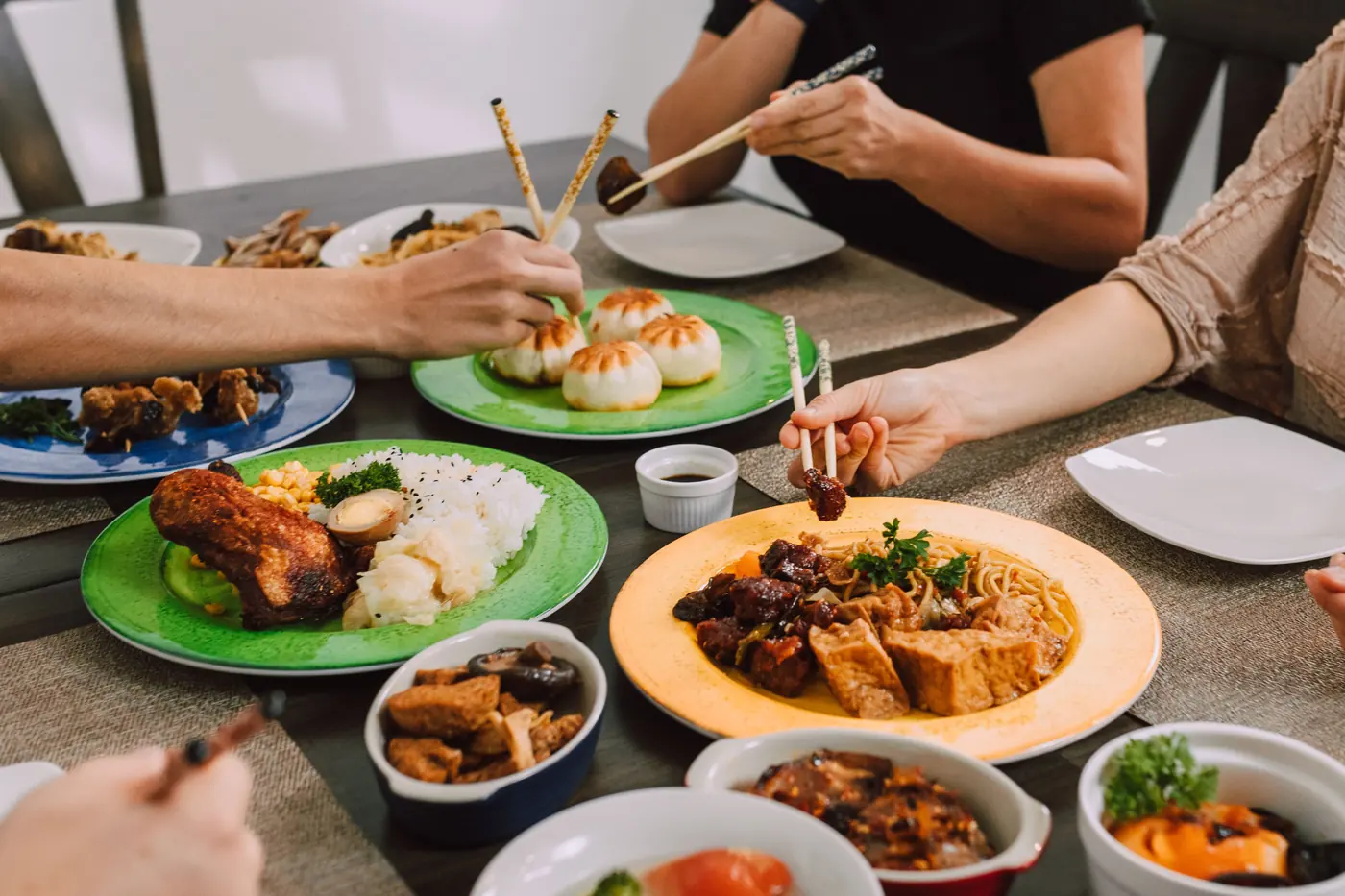
Dishes arrive when they are ready, they go in the middle, and everybody eats from all of them. If you are used to ordering a starter and a main that belong to you, this takes some adjusting to – and it changes how you should order.
What family style actually means
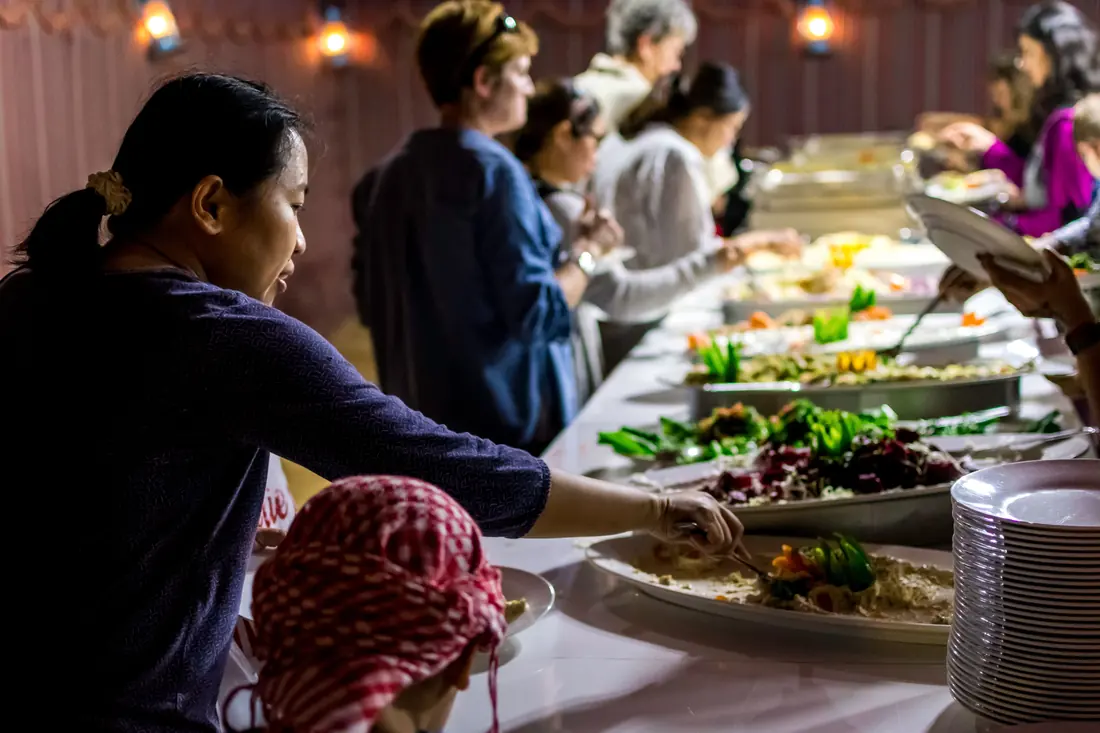
Dishes are shared rather than assigned. Each person usually has a bowl of rice and a small plate, and everything else is placed in the centre for the table to work through together.
It is not a service style a restaurant chose. It is how the food is designed to be eaten, and the dishes themselves assume it.
Why the food works this way
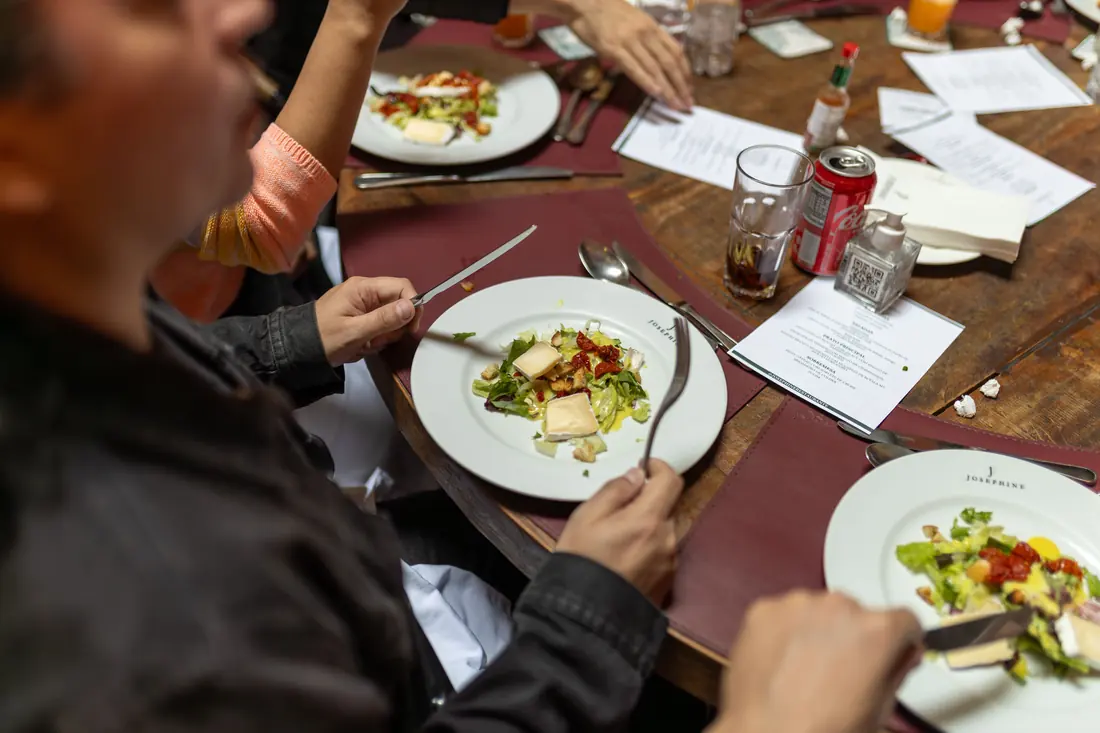
The logic is about balance across a meal rather than within a plate. A Western main course is built to be complete on its own – a protein, a starch, a vegetable, balanced in one place.
A Chinese table is balanced across the whole spread instead. One dish is rich, another is light; one is fried, another steamed; one is heavily seasoned, another plain. No single dish is trying to be a whole meal, and eating one on its own is a slightly unbalanced experience by design.
Britannica’s overview of Chinese cuisine sets out how regionally varied that tradition is, but the shared structure holds across most of it.
Rice is the anchor, not a side
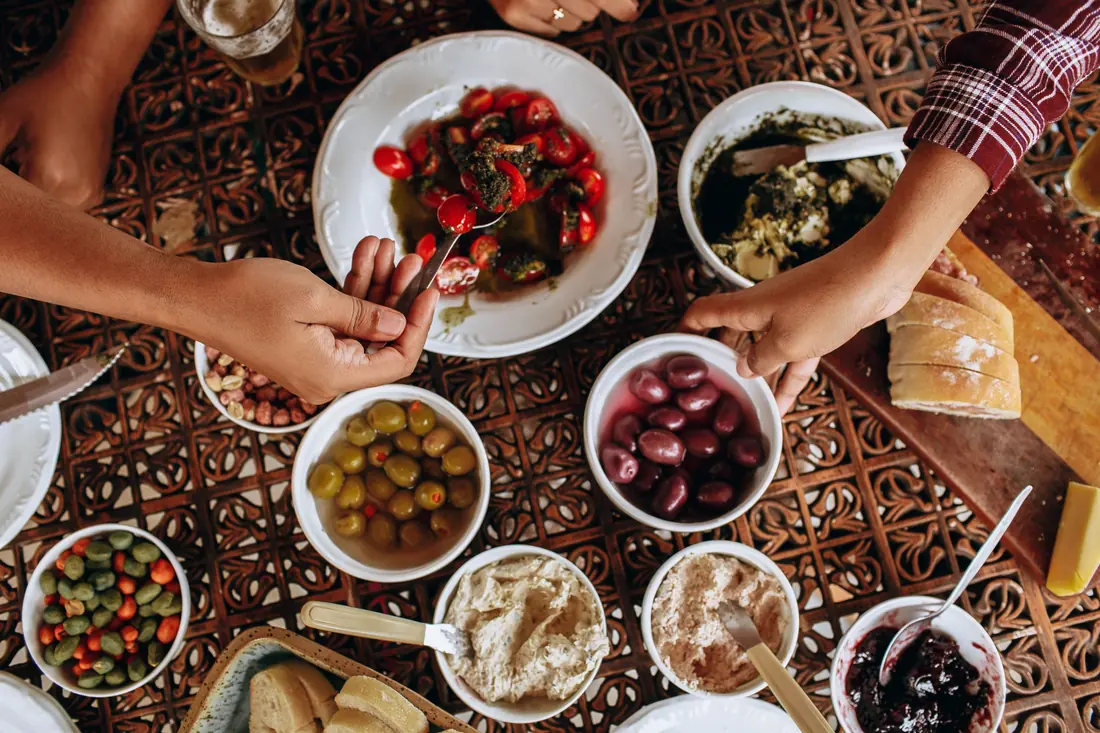
This is the piece that most often gets missed. The rice is not an accompaniment to the dishes – the dishes are accompaniments to the rice.
That relationship explains why so many shared dishes are intensely flavoured. They are seasoned to be eaten in small amounts against a large quantity of something plain, and a dish that seems too salty on its own is usually correctly seasoned for the way it is meant to be eaten.
Why dishes arrive when they do
Courses in sequence are not the convention. Dishes come out as the kitchen finishes them, which means a stir fry may arrive before a soup and a fried dish may arrive before either.
This is not disorganisation. Stir-fried dishes are cooked in ninety seconds and are at their best immediately, so holding one back to serve it in a particular order would waste it. The kitchen is prioritising the food over the sequence.
It does mean the table should start on things as they arrive rather than waiting for everything, which can feel impolite if you are used to waiting.
Why the plates are small
The small plate in front of each person is not an under-sized dinner plate. It is a working surface, and its size is doing something.
A small plate forces you to take a little at a time, which keeps the shared dishes circulating and stops any one person committing to a large portion of something before the rest of the table has tried it. It also means the food you are eating is always something you took a moment ago rather than something that has been sitting.
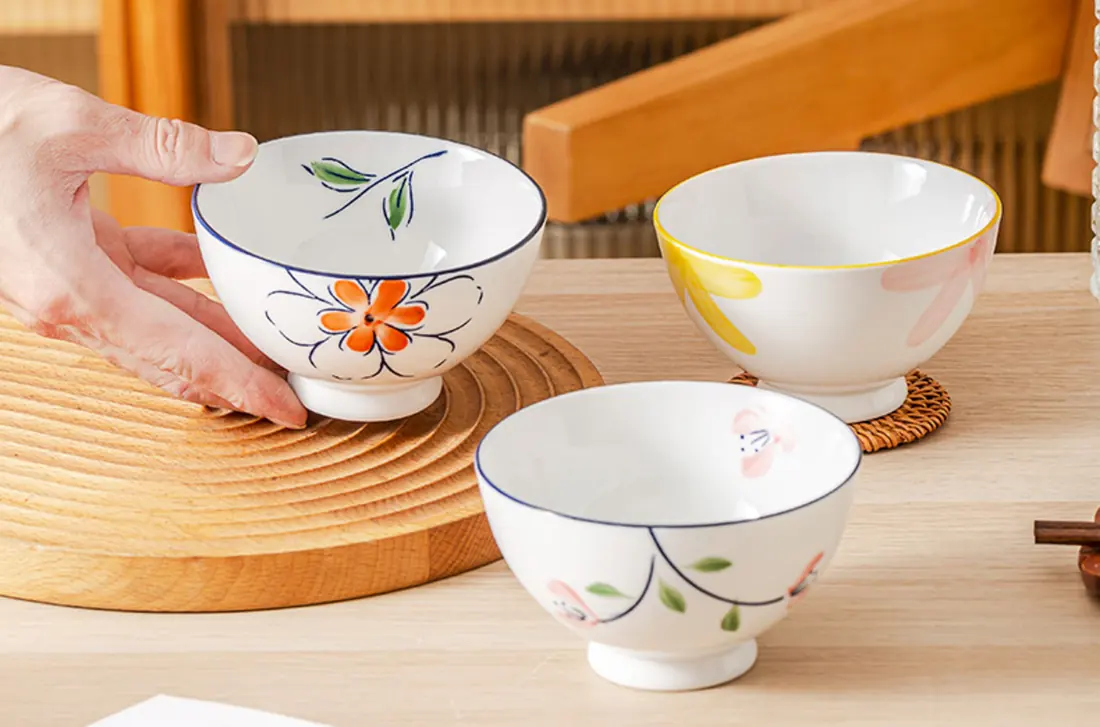
The rice bowl is separate for the same reason. Rice is eaten throughout rather than alongside a particular dish, so it needs its own vessel rather than a corner of a plate.
How this changes your order
The practical consequences are the useful part.
| Ordering individually | Ordering family style | |
|---|---|---|
| How many dishes | One per person | Roughly one per person, plus rice |
| What to pick | Something you will enjoy alone | Dishes that differ from each other |
| Balance | Within your plate | Across the table |
| Rice | A side, optional | Central, order enough |
| If someone is fussy | They order separately | Include one safe shared dish |
| Variety | Limited to your choice | Everyone tastes everything |
The second row is the one that most improves a meal. Four people each choosing their favourite chicken dish produces a table of four similar things. Deliberately picking across categories – something fried, something in sauce, a vegetable, a soup – produces a much better meal from the same number of dishes.
A simple way to order for a table
- Start with rice for everyone. This is the foundation and it is easy to under-order.
- One vegetable dish. Almost every table under-orders vegetables and regrets it.
- One dish with a sauce, for the rice to be eaten with.
- One dry or fried dish, for contrast in texture.
- One soup if the table is larger, which slows the meal down usefully.
- Then add a dish for each additional pair of people beyond four.
That structure works for almost any size of table and prevents the most common failure, which is four rich dishes and nothing to eat them against.
One more consequence worth naming: the style makes a meal slower. Nobody is working through a plate of their own, so eating stops and starts as dishes arrive and get passed around, and a table tends to sit for longer than it would otherwise.
The practical etiquette
Very little is required, and nobody expects a performance. A few things make the table work more smoothly.
- Take small amounts. Serve yourself a little at a time rather than filling your plate, so everyone can reach everything.
- Use the serving spoon if there is one. If there is not, using the back end of your chopsticks is a common courtesy.
- Do not rearrange the table. Dishes are placed where they are so everyone can reach.
- Leave a little. Clearing every dish entirely can suggest there was not enough.
Ordering for two
Two people is the awkward number, because one dish each plus rice is a thin spread and three dishes is usually too much food.
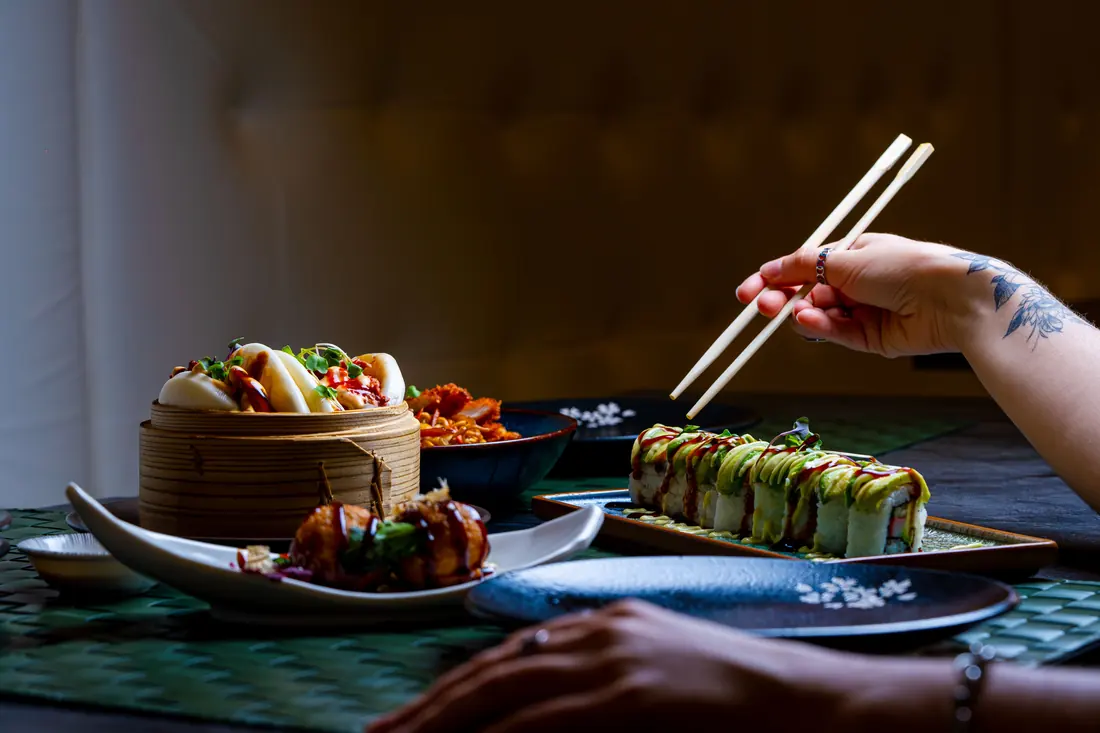
The approach that works is to order two dishes and rice, but to pick two that are as different as possible – one with sauce and one without, or one meat and one vegetable. The contrast does the work that a third dish would otherwise do.
An appetiser to share also helps more at a table of two than at a larger one, because it adds variety at a point where every additional main dish is a significant commitment.
When it does not apply
Not everything on an Asian menu is designed for sharing. A hibachi plate, a rice bowl and a large bowl of noodle soup are all built as single servings and do not divide well.
That is worth knowing when a table is mixed. A group where two people order noodle soups and three order shared dishes ends up with an awkward table, whereas either approach on its own works fine.
For ordering across the menu, our three-way comparison helps a table that cannot agree, the hibachi plate guide covers one of the dishes that does not divide, and the fish-free guide covers building a table around one person’s constraint. The current selection is on the ordering page.
Frequently Asked Questions
Why is Asian food served family style?
Because the dishes are designed to balance each other across a table rather than each being a complete meal. Eating one alone is an unbalanced experience by design.
How many dishes should we order?
Roughly one dish per person plus rice for everyone, chosen deliberately across categories – something fried, something saucy, a vegetable, a soup.
Why do dishes arrive at different times?
The kitchen serves each dish when it is ready, because stir-fried food is at its best immediately. Start on things as they arrive rather than waiting.
Is rice a side dish?
No – it is the anchor. The other dishes are seasoned to be eaten in small amounts against it, which is why several of them taste strong on their own.
What if someone at the table is a fussy eater?
Include one plainly seasoned dish everyone can eat, or let that person order a single-serving dish like a hibachi plate alongside the shared ones.