Both are wheat noodles cooked with vegetables and a brown sauce, and both turn up on menus across the United States. They are not the same dish, and the difference is mostly in the sauce and the pan.
The short answer
Yaki soba is Japanese: noodles stir-fried hard on a hot surface with a tangy, slightly sweet sauce, so the edges catch and crisp. Lo mein is Chinese: noodles boiled first, then tossed with a soy-based sauce off the heat, so they stay soft and glossy. Yaki soba is fried; lo mein is dressed.
What yaki soba is
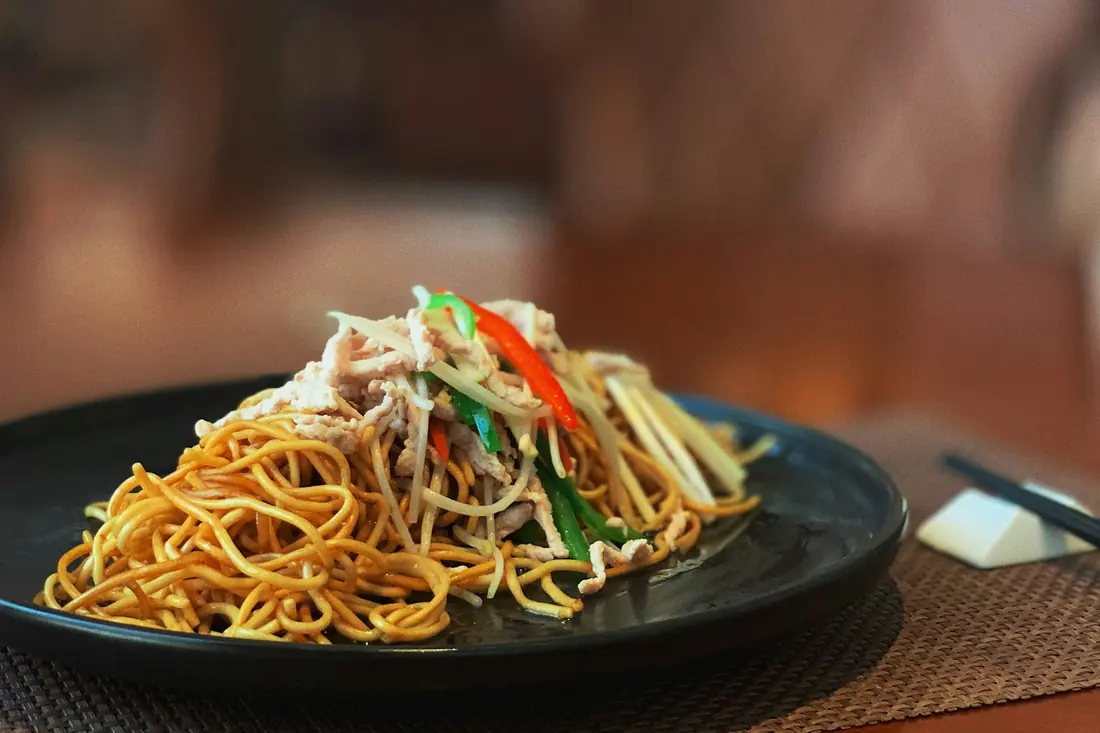
Yaki means grilled or fried, and soba here is misleading — despite the name, yaki soba uses wheat noodles rather than buckwheat ones. They are the same family of noodle used for ramen, cooked on a flat top or in a wok with cabbage, onion and carrot, plus a protein.
The defining element is the sauce: dark, fruity and tangy, closer to a thin Worcestershire than to soy sauce. It goes on during cooking, reduces against the hot surface, and coats the noodles rather than pooling.
Roll & Go Sushi lists yaki soba stir-fry noodles among its Asian dishes alongside sushi, hibachi and pho.
What lo mein is
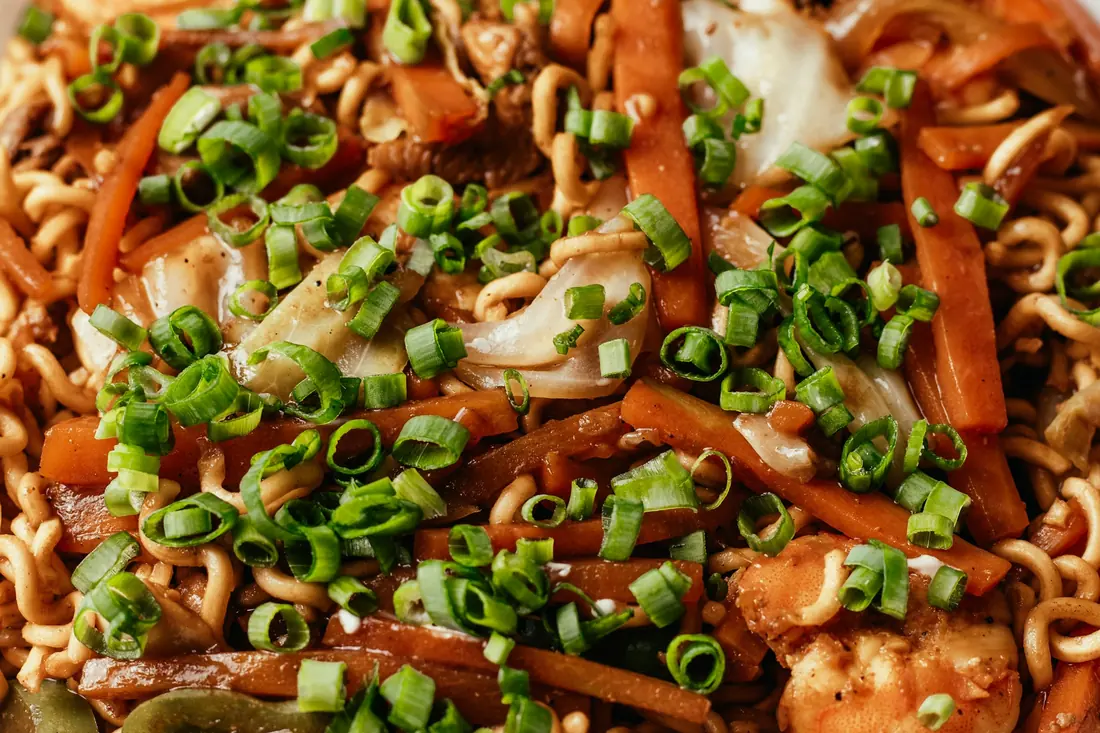
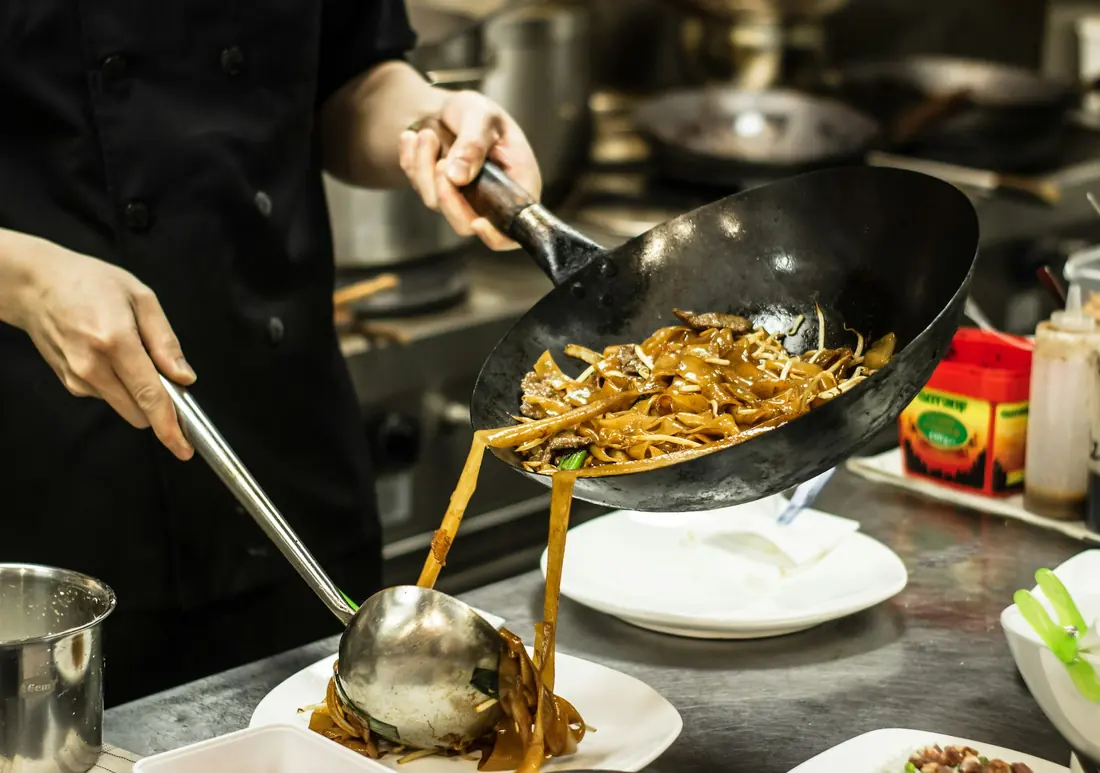
Lo mein means “tossed noodles”, and the method is in the name. The noodles are boiled to done, drained, then combined with cooked vegetables and protein and a soy-based sauce. The pan is often off the heat by that point.
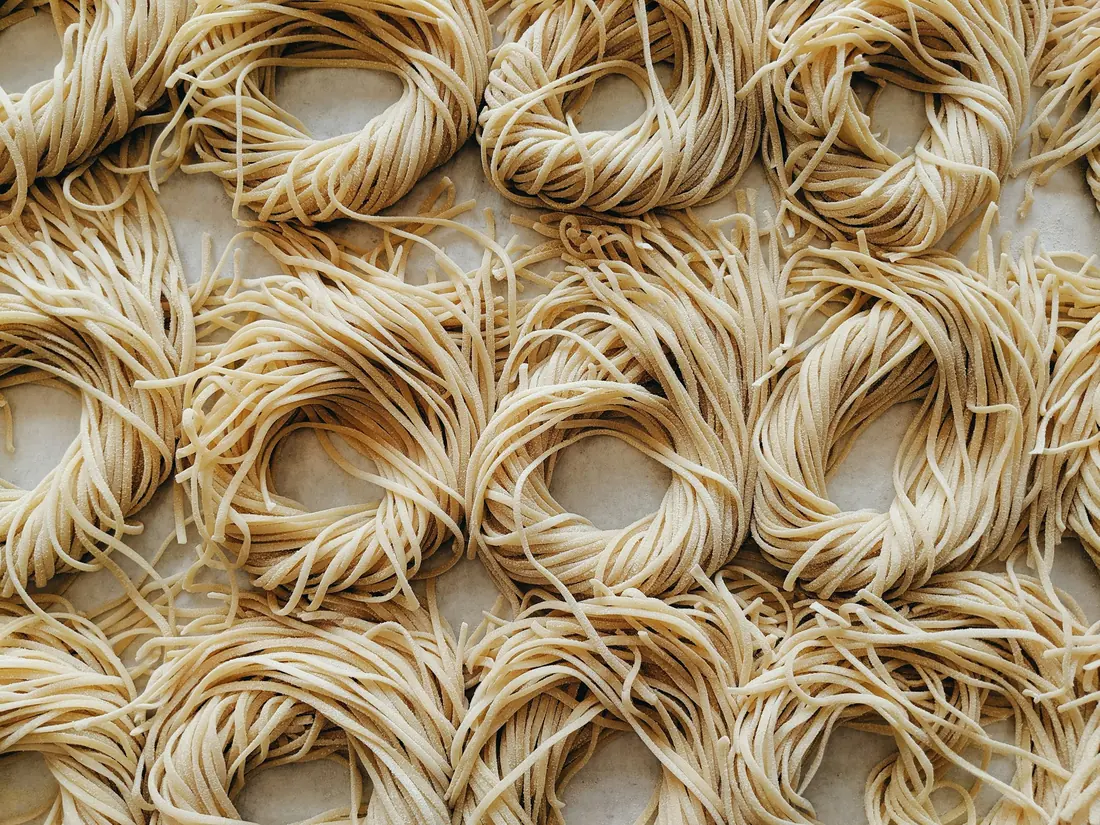
Because nothing fries, the noodles stay soft and slippery, and the sauce sits on them as a coating rather than caramelising into them. Britannica’s entry on noodles covers how widely wheat-noodle cooking varies across Asia.
Yaki soba and lo mein compared
| Yaki soba | Lo mein | |
|---|---|---|
| Origin | Japan | China |
| Noodle | Wheat, ramen-style | Wheat, often egg noodles |
| Method | Stir-fried hard on a hot surface | Boiled, then tossed with sauce |
| Sauce | Tangy, fruity, slightly sweet | Soy-based, savoury |
| Texture | Some crisp edges, drier | Soft and glossy throughout |
| Usual vegetables | Cabbage, onion, carrot | Varies widely |
| Common garnish | Pickled ginger, seaweed flakes | Scallion |
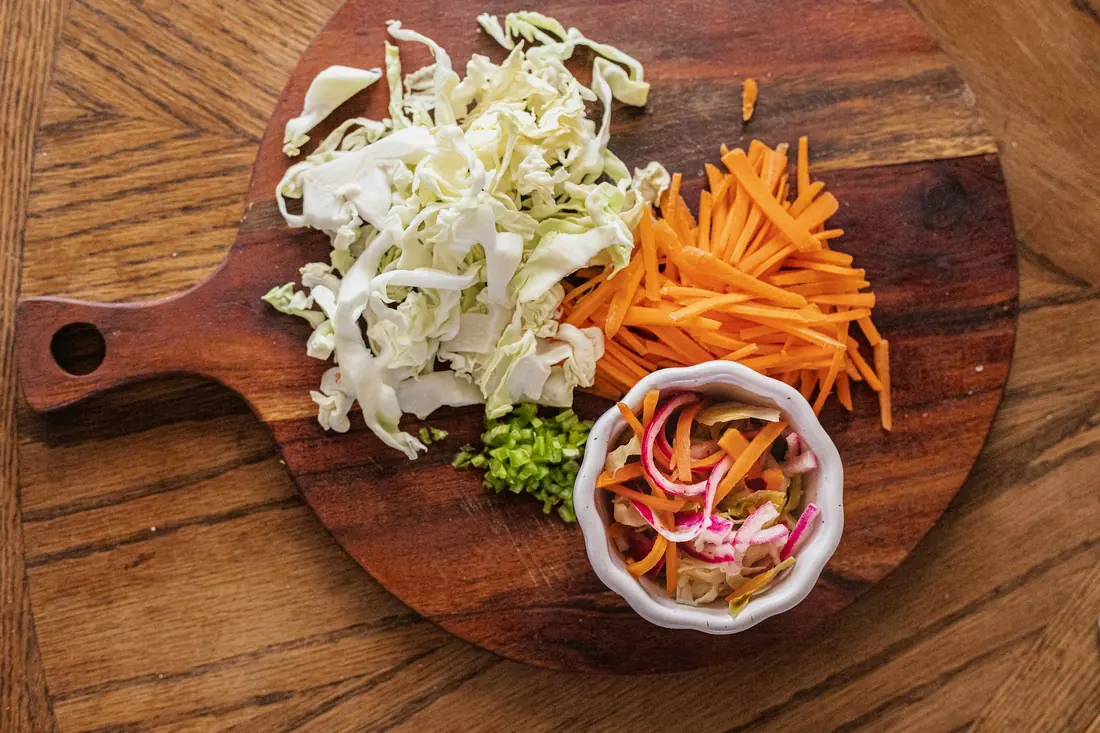
How to tell them apart on the plate
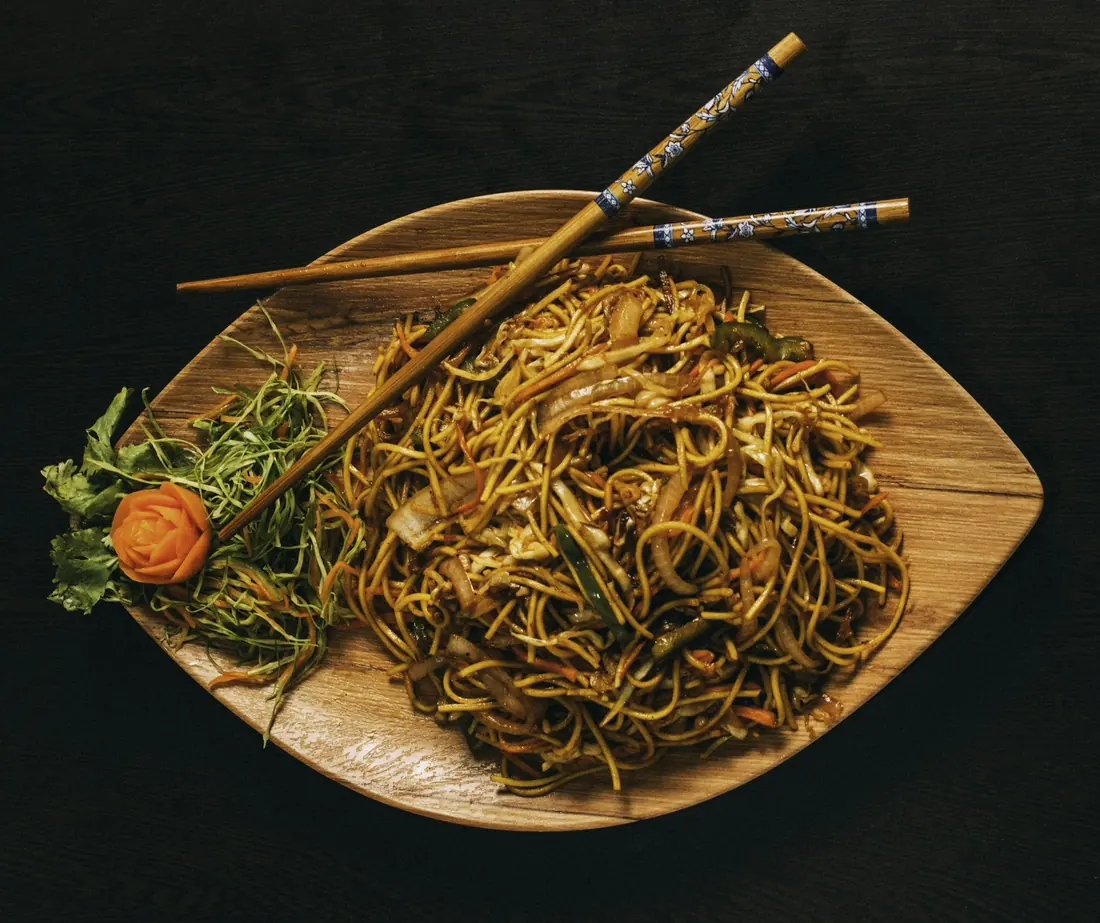
If the noodles look dry-ish with browned edges and a matte coating, it is yaki soba. If they are uniformly glossy and slide off the fork, it is lo mein.
Colour helps too. Yaki soba tends toward a warmer brown from the reduced sauce; lo mein is darker and more even, because the sauce was added at the end rather than cooked down.
Which should you order?
- Like texture and slightly charred edges — yaki soba.
- Prefer soft noodles and a savoury sauce — lo mein.
- Want something that reheats well — lo mein holds up better, since there is no crispness to lose.
- Ordering alongside grilled food — yaki soba shares a flavour vocabulary with hibachi, which makes for a coherent table.
- Feeding a mixed group — lo mein is the more neutral of the two and tends to please more people.
Where chow mein fits in
Chow mein is the third dish people confuse with these two, and it belongs closer to yaki soba than to lo mein. The noodles are fried rather than tossed, sometimes until genuinely crisp, and the sauce is soy-based like lo mein.
So the rough map is: lo mein is boiled and dressed, chow mein is fried with a soy sauce, and yaki soba is fried with a tangy fruit-and-vinegar sauce. Method and sauce are the two variables, and every one of these dishes is a different combination of them.
How restaurants get the texture
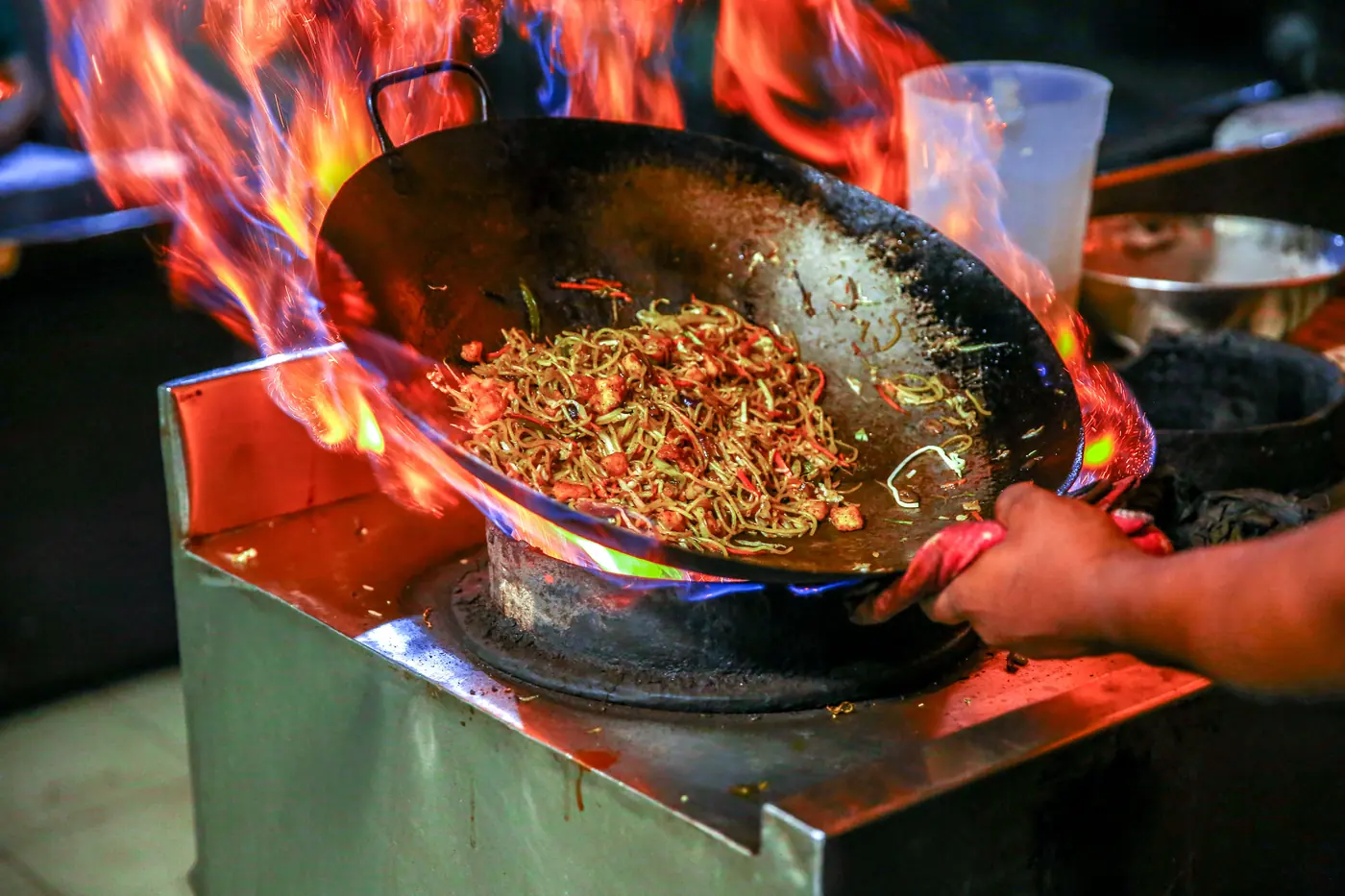
The reason a restaurant stir-fry tastes different from a home one is mostly heat. A commercial burner or flat top runs far hotter than a domestic hob, which lets the noodles catch and brown in seconds rather than steaming in their own moisture.
That heat is also why the dish is cooked in small batches. Overloading the surface drops the temperature and the noodles go soft, which is exactly the failure mode people run into cooking it at home in one big pan.
Practically, this means yaki soba is at its best straight out of the kitchen. It still reheats acceptably, but the crisp edges that define it are the first thing to go.
A note on the word soba
This trips people up constantly. Plain soba refers to thin buckwheat noodles, usually served cold with a dipping sauce or hot in broth. Yaki soba is a different thing entirely and contains no buckwheat.
If you are looking for actual buckwheat soba, the menu will normally say so, and it will not be a stir-fry.
Which one reheats better
If you routinely have leftovers, this is the practical difference between them. Lo mein reheats almost perfectly, because there is no texture to lose — the noodles were soft to begin with and the sauce protects them.
Yaki soba reheats acceptably but never returns to what it was. The browned edges soften in the fridge and do not come back, so what you get the next day is a perfectly good noodle dish that is missing the thing that made it distinctive.
A dry pan works better than a microwave for both. A minute or two over a medium heat, moving them constantly, recovers more texture than steaming them in a covered dish does.
Ordering it as part of a meal
A noodle plate is filling and works as a main course on its own. If the table is sharing, it sits comfortably next to sushi — the noodles are warm and savoury, the rolls are cool and clean, and neither overwhelms the other.
What does not work as well is pairing a noodle stir-fry with a full bowl of noodle soup. Two large noodle dishes is more starch than most people want, so if someone is having a bowl of pho, choose something else alongside.
Portion sizes for both tend to be generous, since noodles are cheap relative to protein and kitchens plate them accordingly. If you are ordering several dishes for a table, one noodle plate usually stretches further than the menu suggests, so it is worth ordering it as a shared item rather than one each.
What usually comes with them
Both dishes are normally sold as a complete plate rather than a side. A protein is included or chosen — chicken, beef, shrimp or vegetables are the usual options — and the vegetables are cooked into the noodles rather than served separately.
That makes them one of the better value items on most menus, and one of the easier things to order when you want a single dish rather than a combination. If you are sharing, one noodle plate between two alongside something else works well.
Garnishes vary. Yaki soba is often finished with pickled ginger or dried seaweed flakes, both of which are there to cut the sweetness of the sauce. They are worth eating rather than pushing aside.
Frequently Asked Questions
Is yaki soba made with buckwheat noodles?
No, despite the name. Yaki soba uses wheat noodles, the same style used for ramen. Buckwheat soba is a separate dish.
Is lo mein the same as chow mein?
No. Lo mein noodles are boiled and tossed with sauce; chow mein noodles are fried, often until crisp. Chow mein sits closer to yaki soba in method.
Which one is spicier?
Neither is spicy by default. Both are savoury, and any heat comes from chilli added separately or from a specific version on the menu.
Can I get either without meat?
Many restaurants offer vegetable versions, but preparation varies between kitchens. Ask when you order if this matters to you.
One is fried and tangy, the other is tossed and savoury. Both are good; they are just not substitutes for one another.
Have a look at the noodle and stir-fry options, or read how flat-top cooking works if the method interests you.