
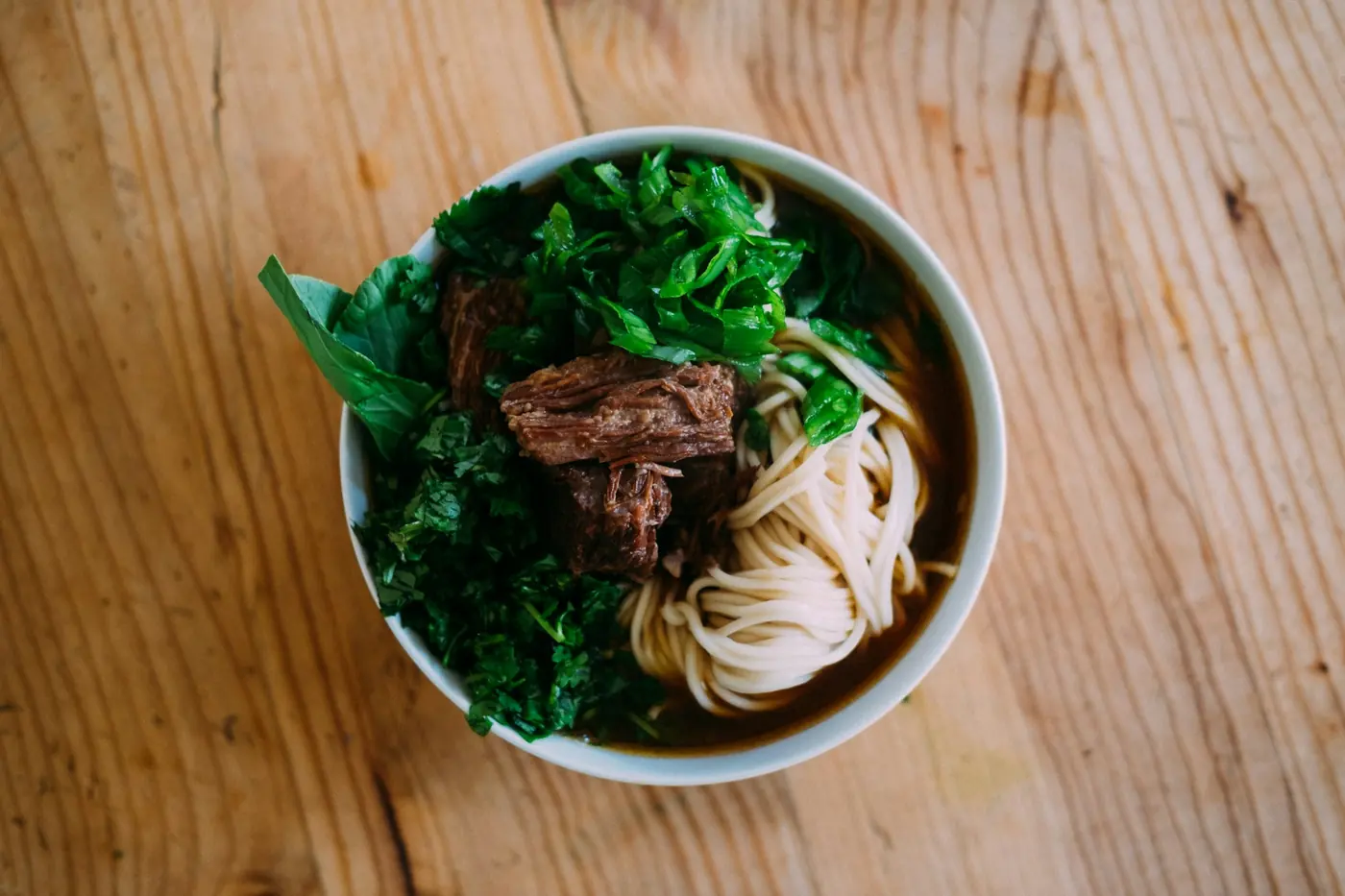
Pho and ramen get grouped together as “Asian noodle soup”, which hides how different they actually are. They come from different countries, use different noodles, and are built on opposite ideas about what a bowl should taste like.
The short answer
Pho is Vietnamese: a clear beef or chicken broth spiced with charred aromatics, served with flat rice noodles and a side plate of fresh herbs you add yourself. Ramen is Japanese: a wheat-noodle soup with a seasoned, often richer broth, topped in the kitchen before it reaches you.
The broth is the real difference
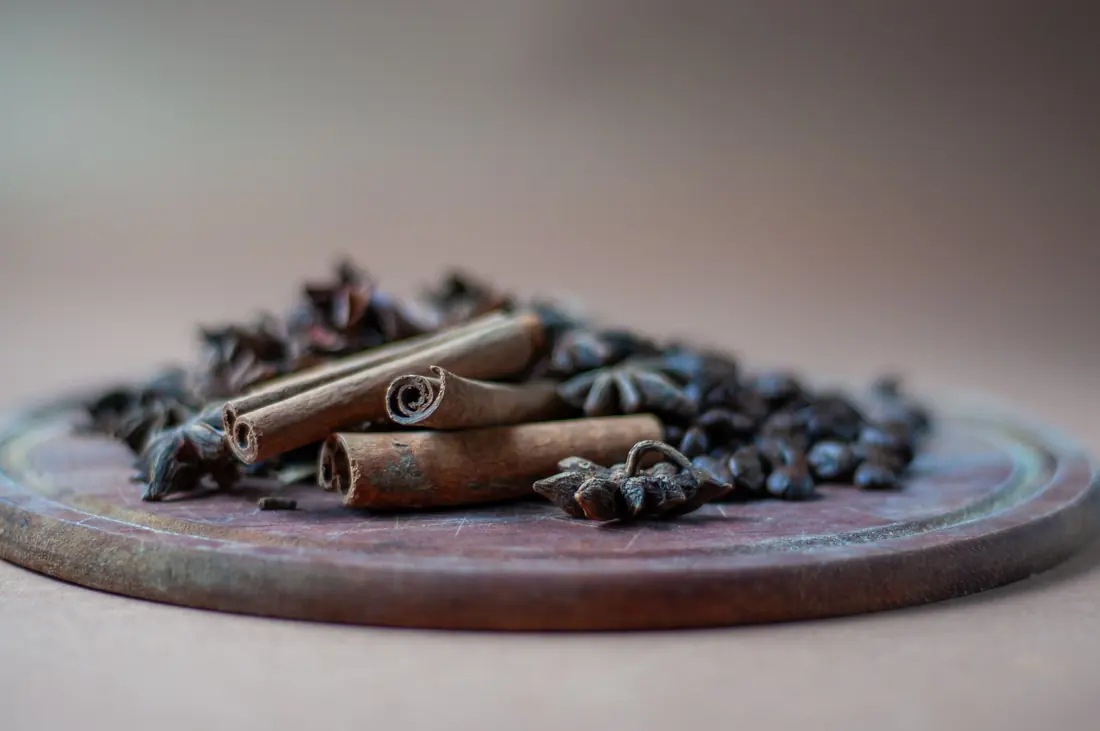
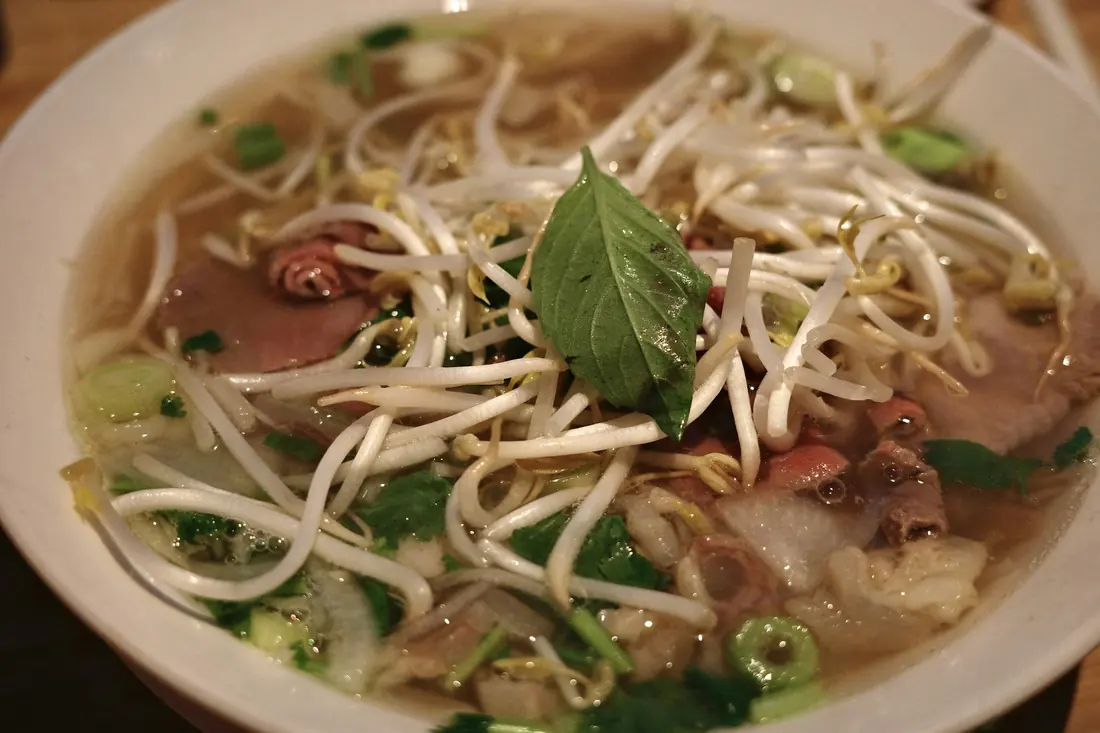
Pho broth is simmered for hours with beef bones, charred onion and ginger, and warm spices — star anise, cinnamon, clove, coriander seed. The goal is clarity. A good pho broth is aromatic and clean rather than heavy, and you should be able to see through it.
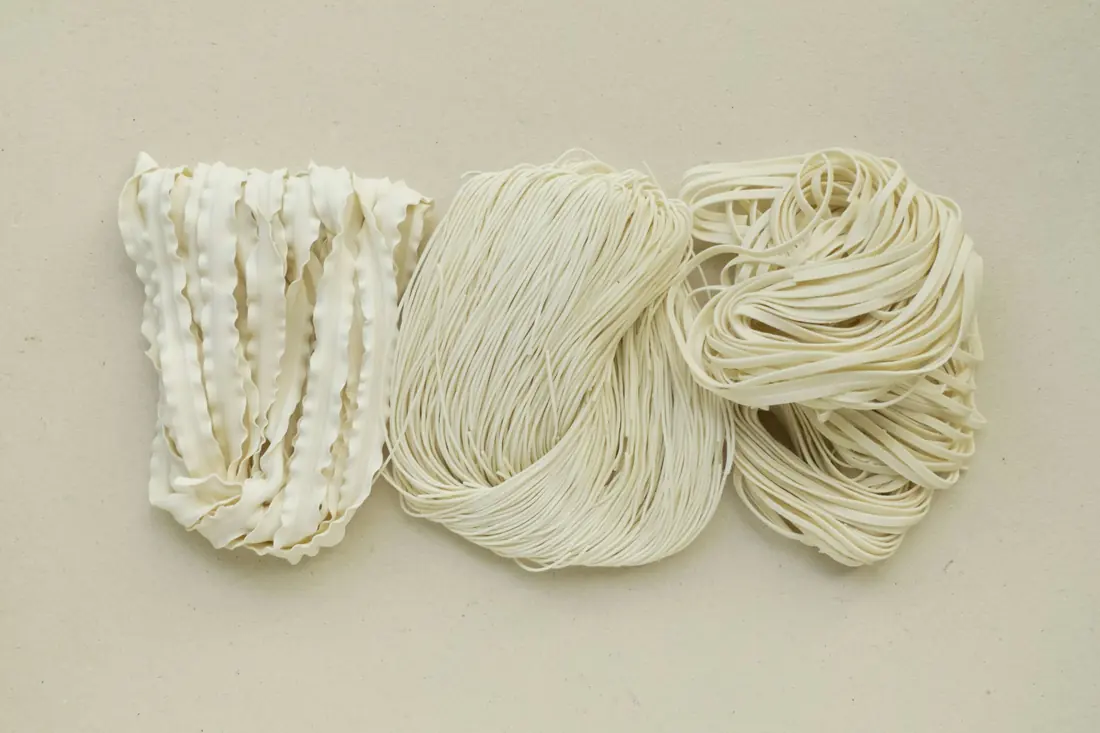
Ramen broth works the other way. It is usually built from a stock plus a seasoning base — soy, salt or miso — and often finished with fat for body. Some styles are deliberately cloudy and thick. Britannica’s entry on ramen covers how the dish developed in Japan from Chinese wheat-noodle soups.
The noodles are not interchangeable
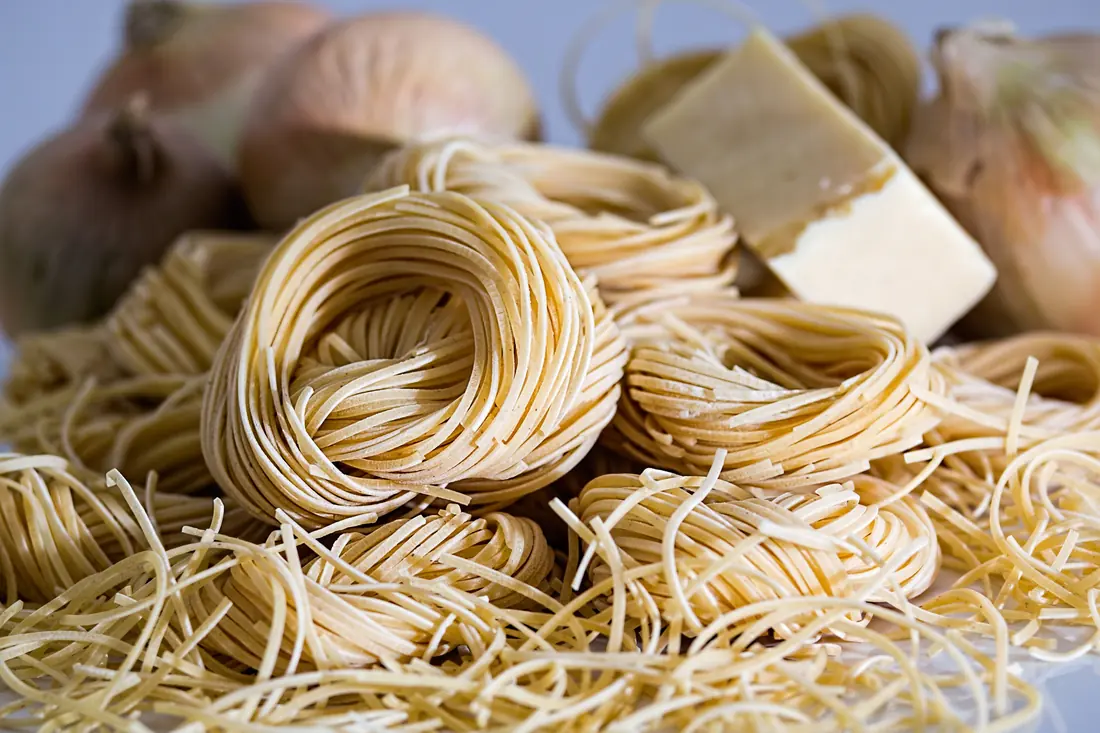
Pho uses flat rice noodles, soft and slightly slippery, with no chew to speak of. They absorb broth quickly, which is part of why pho is served hot and eaten promptly.
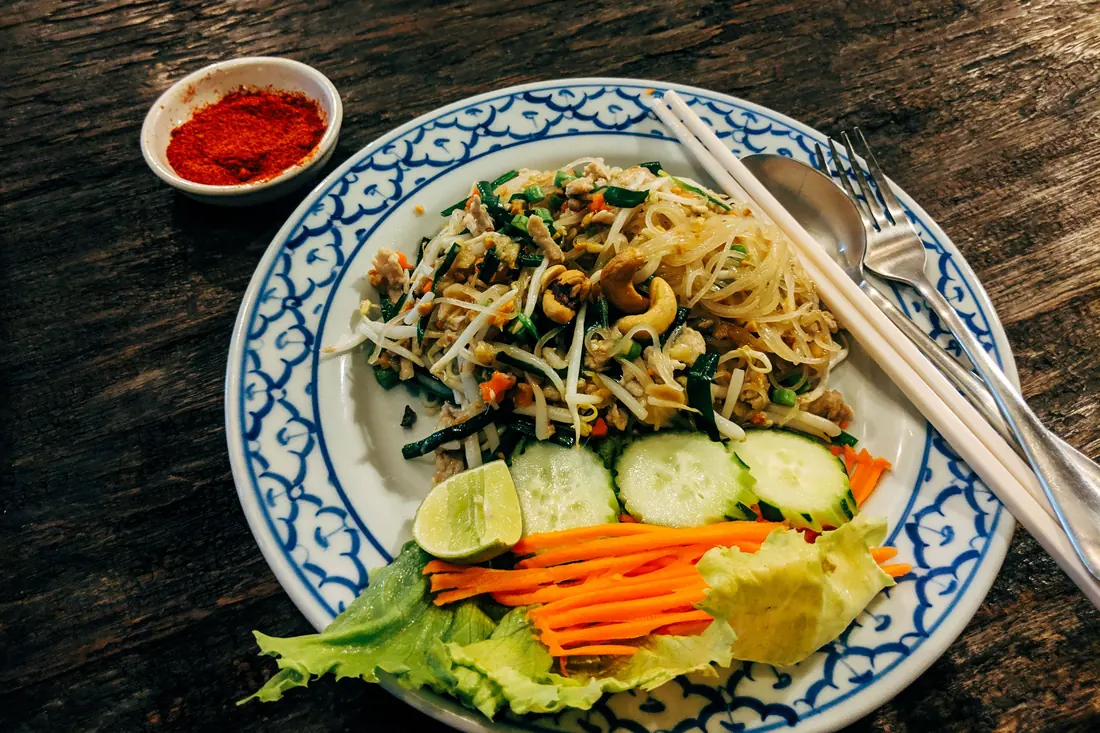
Ramen noodles are wheat-based and treated with an alkaline solution that gives them their springy bite and yellow tint. They hold their texture in hot broth far longer than rice noodles do.
How each bowl is finished
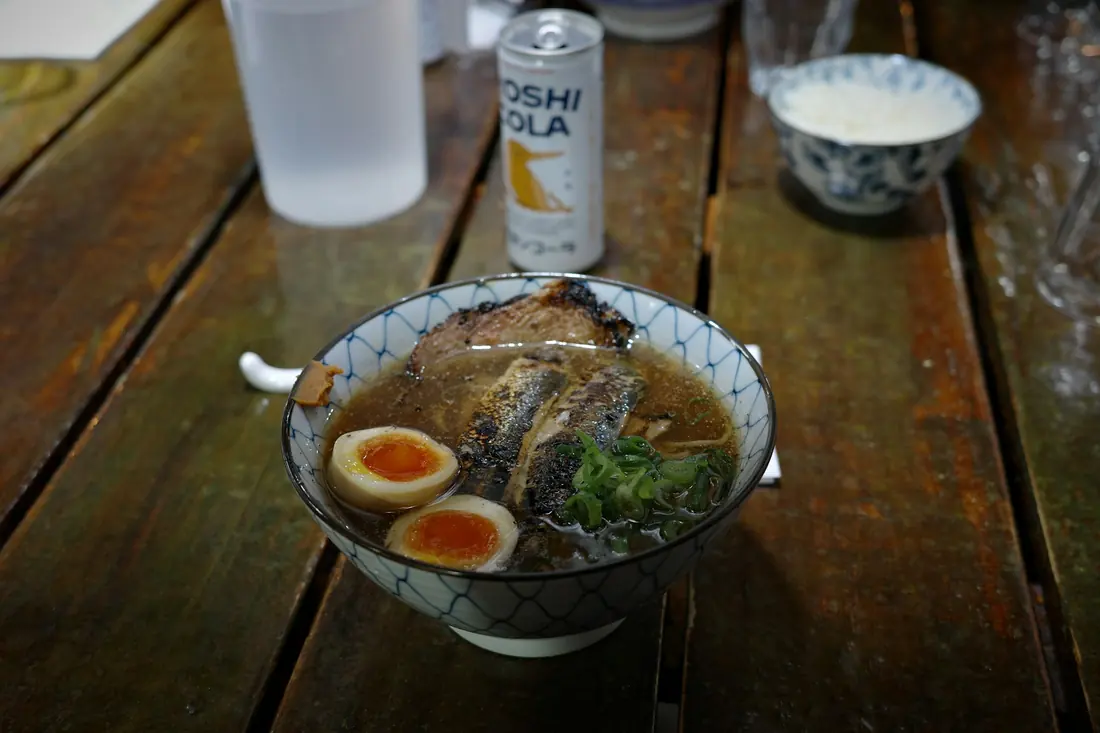
This is the difference you notice first at the table. Ramen arrives complete — the kitchen has already decided on the toppings and their arrangement.
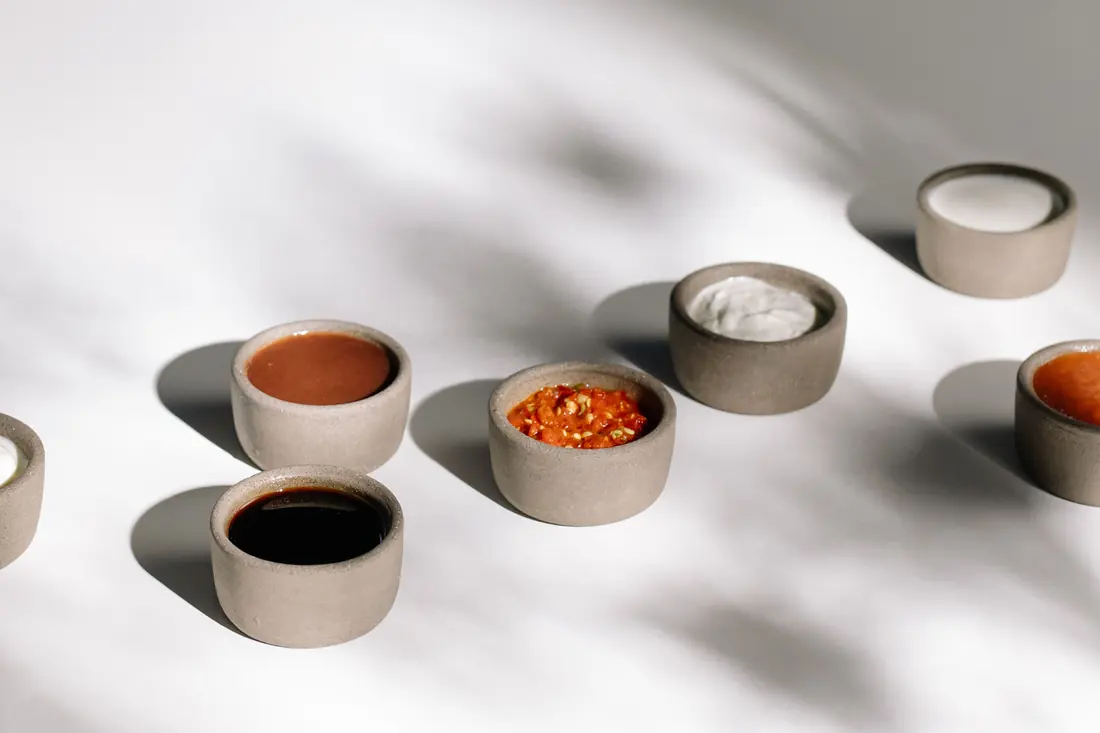
Pho arrives partly unfinished on purpose. A side plate of herbs, bean sprouts, lime and chilli comes with it, and you build the bowl to your own taste. Sauces are usually on the table for the same reason.
Pho and ramen compared
| Pho | Ramen | |
|---|---|---|
| Origin | Vietnam | Japan |
| Noodle | Flat rice noodles, soft | Wheat noodles, springy |
| Broth | Clear, aromatic, spice-led | Seasoned and often rich, sometimes cloudy |
| Signature aromatics | Star anise, cinnamon, charred onion and ginger | Soy, miso or salt base, often with added fat |
| Finished by | You, at the table | The kitchen, before serving |
| Served with | Herb plate, lime, chilli, sauces | Toppings already arranged |
| Overall impression | Light and fragrant | Deep and savoury |
Which one should you order?
- Want something light but still filling — pho. The broth is substantial without being heavy.
- Want a rich, savoury bowl — ramen leans further in that direction.
- Like adjusting your food as you eat — pho is built for it.
- Prefer chewy noodles — ramen’s wheat noodles hold more bite.
- Feeling unwell or want something restorative — pho’s clear, aromatic broth is the more common choice for that.
The toppings tell you a lot
Look at what sits on top of each bowl and the difference in philosophy becomes obvious. Ramen toppings are cooked components chosen to sit in the broth: braised pork, a marinated soft-boiled egg, bamboo shoots, sheets of nori, corn or butter depending on the region. They are placed deliberately and they are part of the recipe.
Pho toppings are mostly raw and mostly optional. Sliced onion and scallion arrive in the bowl; everything else comes on the side. That includes the protein in some cases — thin slices of rare beef are laid on top and finish cooking in the hot broth on the way to the table.
This is why two people can order the same bowl of pho and end up eating quite different meals. It is also why the dish suits fussy eaters better than its reputation suggests.
Which travels better?
Neither is ideal for a long journey, but pho holds up better if it is packed correctly. Because the broth, noodles and herbs are separate by design, a good takeout container keeps them apart until you assemble the bowl at home.
Ramen is harder. The noodles are cooked to a specific texture and sit in the broth immediately, so by the time it reaches you they have usually softened past where they were meant to be. If you are ordering noodle soup to take away, pho is the safer choice.
How to eat pho properly
There is no ceremony to it, but a few habits make the bowl better.
- Taste the broth first, before adding anything. It tells you how much you actually need.
- Add herbs a few at a time rather than all at once — they wilt fast in hot broth.
- Squeeze lime to taste; it sharpens the broth considerably.
- Use chopsticks for noodles and the spoon for broth, alternating rather than mixing.
- Add sauces to a small side dish for dipping meat rather than pouring them into the bowl, which flattens the broth you were served.
What about price and portion?
Both are usually served as a single large bowl intended as a full meal rather than a course. Portion sizes vary between restaurants, so a bowl described in ounces tells you more than the name does. Pricing moves with the protein and the size, and it is worth checking the current menu rather than assuming.
Three things people get wrong
A few assumptions come up constantly, and all three change how you order.
- “Pho is just Vietnamese ramen.” They are not related. Ramen descends from Chinese wheat-noodle soups brought to Japan; pho developed separately in Vietnam using rice noodles and a French-influenced approach to beef stock.
- “The herbs are a garnish.” They are an ingredient. A bowl of pho eaten without them tastes noticeably flatter, and the plate is not decoration.
- “All ramen is heavy and all pho is light.” Broadly true, but there are light shio ramen styles and rich, fatty pho variants. Both cuisines have more range than the stereotype.
The practical version of all this: if you want a bowl you finish yourself, order pho. If you want a bowl the kitchen has already balanced for you, order ramen.
Where this lands on a local menu
Not every Asian kitchen serves both. Roll & Go Sushi in Daphne serves a Vietnamese-style pho noodle soup — a 32 oz bowl with fresh herbs and vegetables, with beef, chicken, seafood and vegetarian versions, the beef one containing rare beef, meatballs and brisket. It does not serve ramen, so if a bowl of pho is what you are after, that is the one to look for.
Alongside it the menu carries a miso soup and an onion soup, both smaller and better suited as a starter next to sushi than as a meal. You can check the current soup options before ordering, or read our fuller guide to what goes into a bowl of pho.
Frequently Asked Questions
Is pho healthier than ramen?
It depends entirely on the bowl. Pho broth is generally lighter and less fatty, but both can be high in sodium and both vary widely between kitchens. Ask the restaurant if you need specific nutritional information.
Can you use ramen noodles in pho?
You can, but it stops being pho in any meaningful sense. The flat rice noodle is central to the dish’s texture and the way it carries broth.
What does pho taste like?
Clean and aromatic rather than heavy — beefy underneath, with warm spice from star anise and cinnamon, and brightened by whatever herbs and lime you add.
Is pho Japanese?
No. Pho is Vietnamese. Ramen is the Japanese noodle soup, and the two developed entirely separately.
They are not competing versions of the same dish. Pho is a clear, aromatic broth you finish yourself; ramen is a richer bowl finished for you.
If the light-and-fragrant description is what appeals, see what is on the menu in Daphne.