
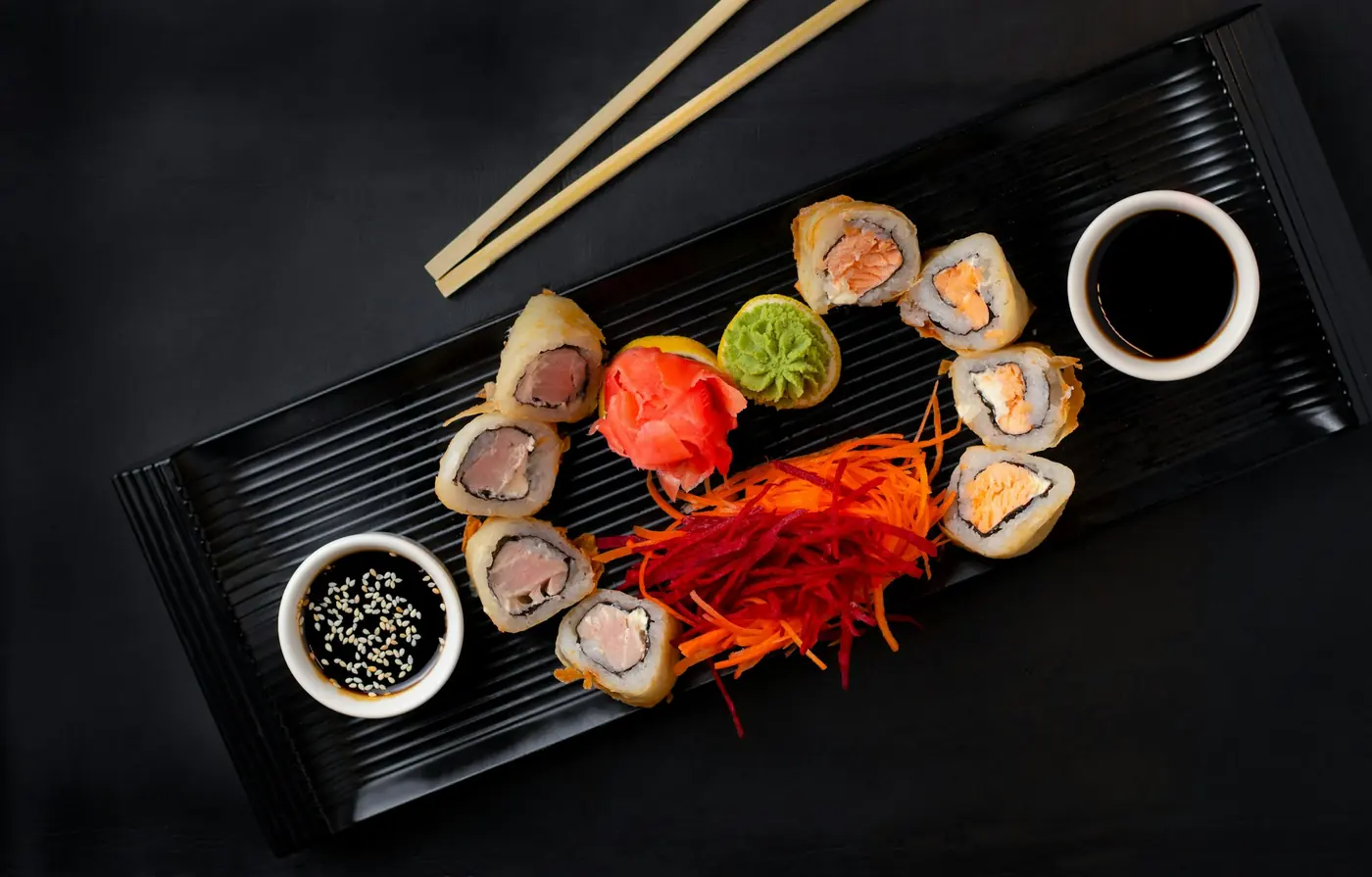
Most sushi menus split into two halves. One lists short, familiar names — cucumber, salmon, California. The other lists rolls with invented names and three lines of description each. That second half is the specialty section.
What makes a roll a specialty roll?
A specialty roll is a house creation rather than a standard one: it combines multiple fillings, is usually built inside-out, and is finished with a topping, a sauce, or both. Classic rolls follow recognised formulas; specialty rolls are the kitchen’s own compositions and vary from restaurant to restaurant.
The four things that make a roll ‘specialty’
It is usually inside-out
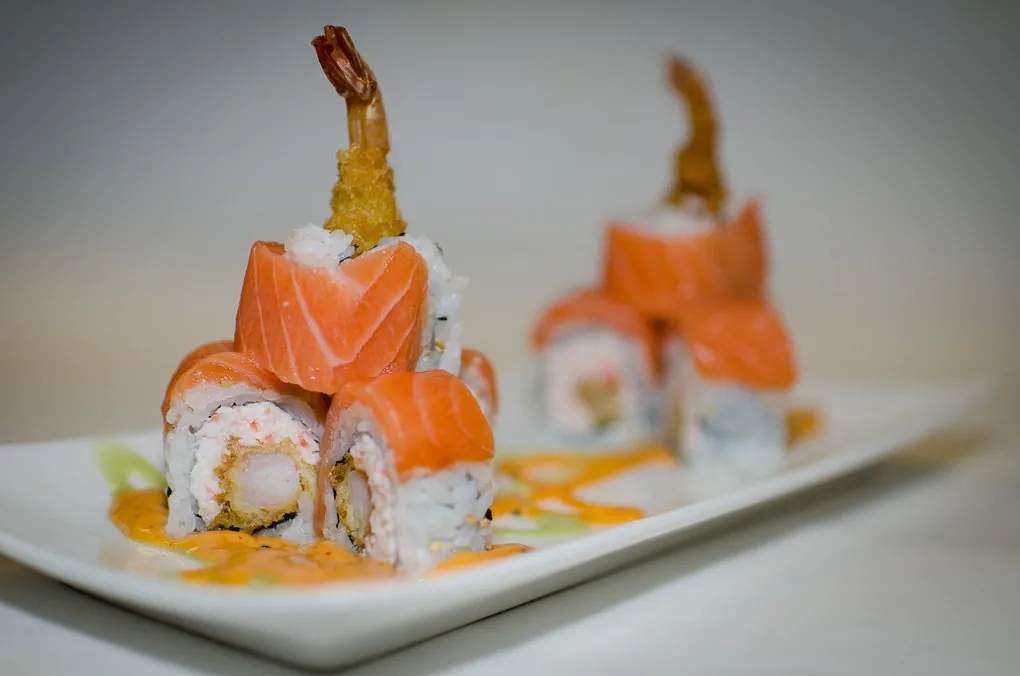
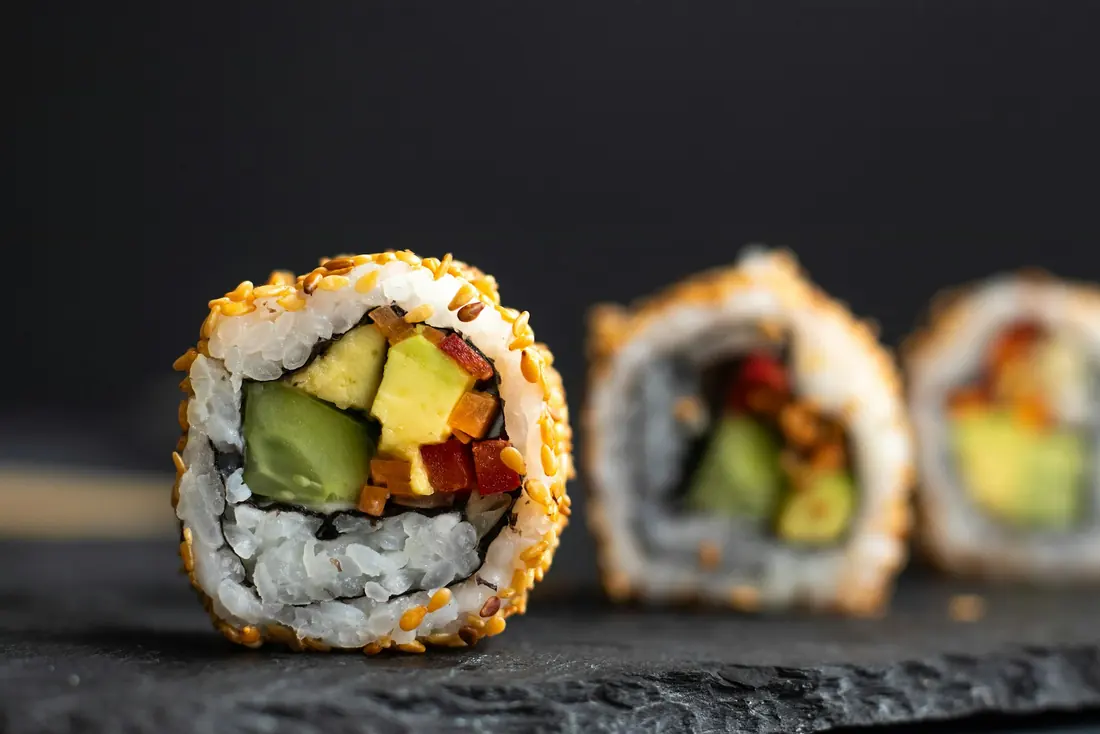
In an inside-out roll the rice sits on the outside and the nori wraps the filling. That exterior is then coated — sesame seeds, roe, crispy onion — or left bare so a topping can sit directly on the rice.
It combines more than one filling
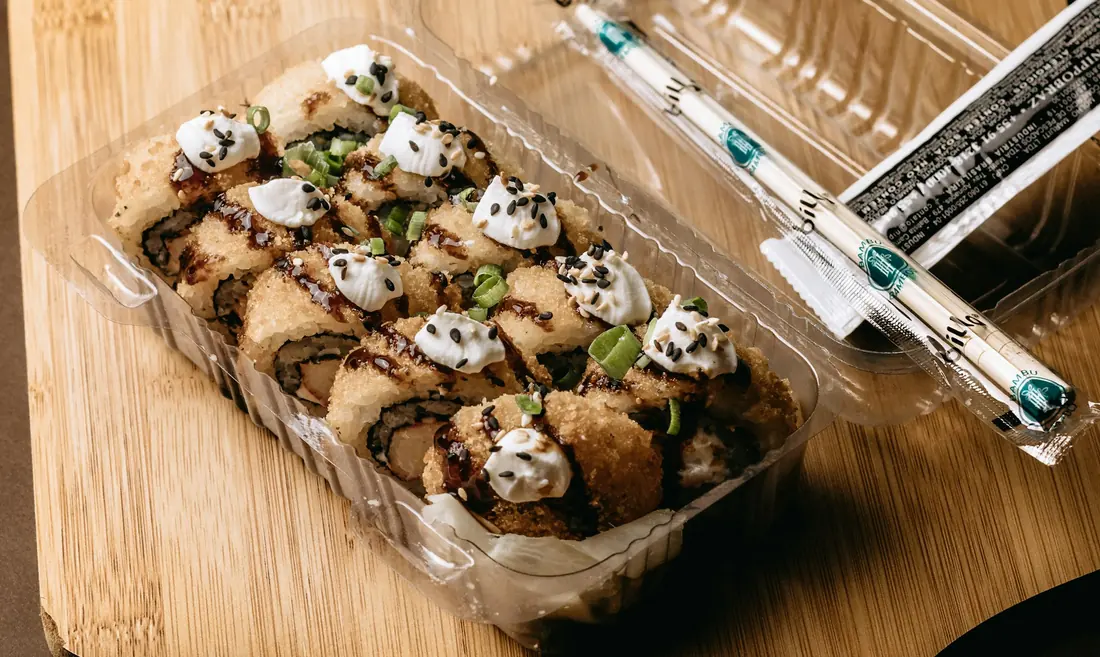
A classic roll typically has one or two components. A specialty roll layers three or more: a fried element for texture, a creamy element for body, and something fresh like avocado or cucumber to cut through both.
It is topped
The topping is what most obviously separates the two categories. Sliced fish laid across the roll, roe scattered over it, or scallion and crispy garnish are all common. A topped roll is usually described by its topping, which is the quickest way to read the menu.
It is finished with sauce
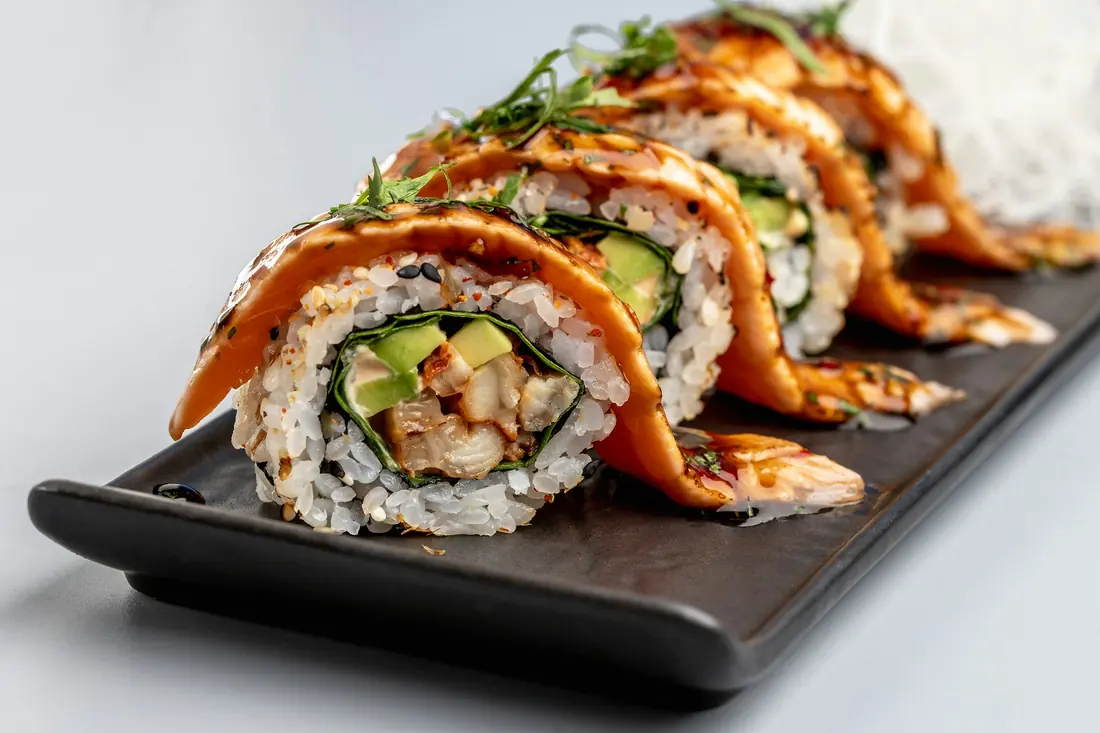
Eel sauce, spicy mayonnaise and similar finishes are applied after the roll is cut. Sauce is a large part of why specialty rolls taste richer than classic ones.
Classic rolls and specialty rolls side by side
| Classic roll | Specialty roll | |
|---|---|---|
| Fillings | One or two | Three or more, layered |
| Construction | Often nori on the outside | Usually inside-out |
| Topping | Rarely | Frequently — fish, roe or garnish |
| Sauce | Served on the side | Applied to the roll |
| Consistency | Much the same everywhere | Unique to each restaurant |
| Best for | Learning what you like | Once you know what you like |
Reading a specialty roll description
Menu descriptions follow a reliable order: what is inside, then what is on top. Split the sentence at the word ‘topped’ and you have the whole roll.
Take the Geisha at Roll & Go Sushi, described as shrimp tempura and crab mix topped with fresh salmon. Everything before ‘topped’ is the cooked filling; everything after is the raw garnish. The Tan GO reads the same way — shrimp tempura, crab mix and avocado, topped with fresh tuna.
Not every house creation is a roll, either. The Crab Angels on the same menu are house-made stuffed crab wontons, which sit with the appetisers rather than the sushi. You can see the full ordering page for what is currently available.
How to choose one
- Find the protein you want — salmon, tuna, shrimp or crab.
- Check whether the filling is fried, creamy or fresh. That decides the texture.
- Look at the topping. Raw fish on top means a small amount of raw fish overall.
- Note the sauce. Anything described as spicy usually means a mayonnaise-based sauce, not chilli heat alone.
How many should you order?
Specialty rolls are richer than classic ones, so they fill you up faster. One specialty roll plus one simpler roll is a comfortable meal for most people; two specialty rolls is more food than it looks like on the menu.
If you are ordering for a group, treat them as the centrepiece rather than the whole order. A couple of specialty rolls shared around, with plainer rolls and a soup alongside, gives everyone a taste of the interesting ones without the meal becoming heavy.
Why they vary so much between restaurants
There is no standard recipe for a specialty roll, so the same name can mean different things in two kitchens. This is a feature rather than a flaw — it is where a sushi chef’s preferences show. Japan’s own culinary tradition is strongly regional in the same way, as the Japanese government’s regional cuisine resource illustrates.
It also means the description matters more than the name. A roll called the same thing at two restaurants may share nothing but the title.
Patterns you will recognise once you know them
Specialty sections differ between restaurants, but a handful of constructions turn up almost everywhere under different names.
- The crunch roll — a fried filling, usually shrimp tempura, with crispy tempura flakes or fried onion outside. Texture is the whole point.
- The topped roll — a cooked or creamy centre with sliced raw fish laid across the top. The most common bridge between cooked and raw.
- The baked roll — finished under heat with a creamy topping that browns. Served warm, and usually the least fish-forward option on the list.
- The layered fish roll — several kinds of fish arranged in stripes across the top. Visually the most striking and the most raw-fish-heavy.
- The wrapped roll — cucumber or soy paper instead of nori, for people who dislike the seaweed flavour.
Once you can place a roll into one of those groups, its name matters much less than its description.
Why the name tells you almost nothing
Specialty rolls are named by the kitchen, and the names are marketing rather than description. A roll called the same thing in two restaurants may share no ingredients at all, and a dramatic name says nothing about whether the roll is mild or rich, cooked or raw.
This is the single most useful habit to build when reading a sushi menu: skip the name and read the description underneath it. Everything you actually need — the filling, whether it is fried, what is on top, which sauce — is in that one line.
What to put alongside one
Specialty rolls are rich — fried fillings, creamy sauces and a topping all in one piece. What you order with them matters more than it does with a plain roll.
A clear soup is the usual counterweight. Roll & Go Sushi’s menu includes a miso soup made with soybean paste broth, seaweed and tofu, and an onion soup with fried onions, mushrooms and scallions — both light enough not to compete with a sauced roll. There is also a Vietnamese-style pho noodle soup served with fresh herbs and vegetables, which is substantial enough to be the main part of a meal rather than a side.
If you are ordering for two, one specialty roll plus one simpler roll and a shared soup tends to work better than two rich rolls. For a fuller meal, something from the hibachi grill alongside a single roll gives you contrast in both temperature and texture — you can see what is on the menu to plan it.
Questions worth asking before you order
Sushi staff field these constantly, and asking gets you a better meal than guessing.
- Is there raw fish in this, or only on top?
- Is the sauce sweet or spicy?
- Can I have the sauce on the side?
- Which of these is the mildest?
- Does this contain anything I would not guess from the name?
That last question matters most if you are avoiding a specific ingredient. Roll names rarely list everything inside, and no dish should be assumed safe for an allergy based on its description alone — always tell the restaurant directly.
Frequently Asked Questions
Are specialty rolls always more expensive than classic rolls?
They usually cost more because they contain more ingredients and take longer to assemble, though the difference varies by restaurant. Check the current menu for pricing.
Is a specialty roll always raw?
No. Many are built on cooked fillings such as shrimp tempura or crab mix, with raw fish appearing only as a topping — or not at all.
What does ‘inside-out’ mean on a sushi menu?
The rice is on the outside of the roll and the nori is wrapped around the filling. It is also called uramaki.
Can I ask for a specialty roll without the sauce?
Often yes. Sauce is normally applied at the end, so it is one of the easier requests to make — ask when you order.
Once you can read the construction, the specialty section stops being a guessing game. Filling, topping, sauce — in that order.
Browse the specialty rolls currently on the menu, or start with our guide to which rolls suit first-timers.