Crab rangoon turns up on almost every Asian restaurant menu in the United States, usually under the appetisers, sometimes under a house name. It is one of those dishes nearly everyone has eaten and very few people could define.
What is crab rangoon?
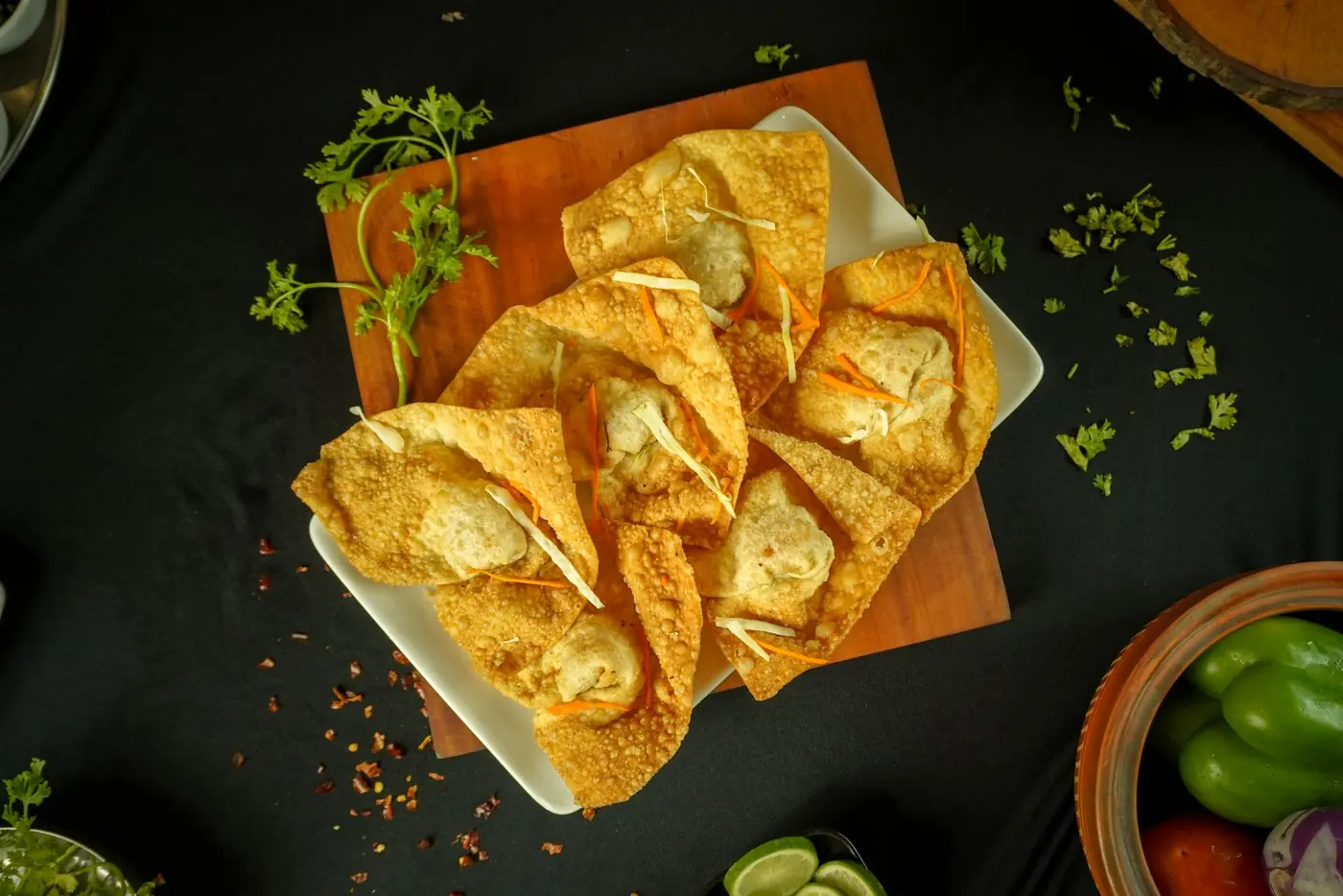
Crab rangoon is a deep-fried wonton parcel filled with crab and cream cheese, served hot with a sweet dipping sauce. It is an American invention rather than a Chinese one, and the cream cheese is what separates it from a traditional crab wonton.
Where it actually comes from
The dish is generally traced to mid-twentieth-century American tiki restaurants, where Polynesian-themed menus borrowed loosely from several Asian cuisines. The name references Rangoon, now Yangon, but the dish has no particular connection to Burmese cooking.
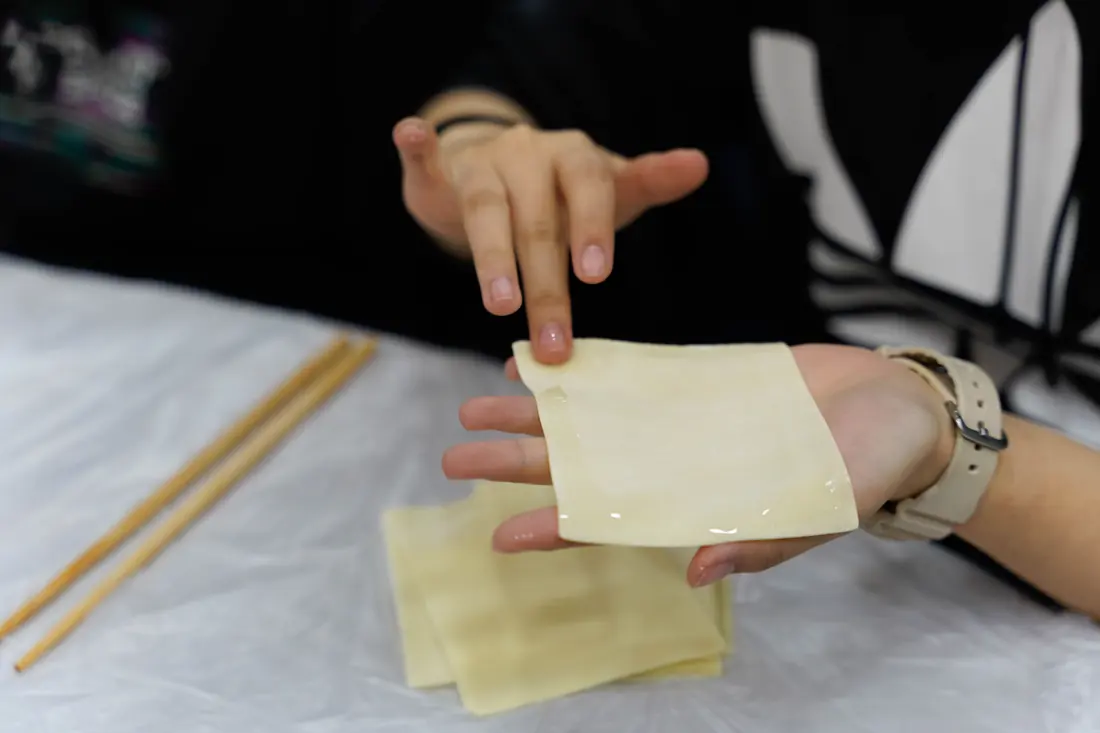
The wonton itself is much older. Filled dough parcels are one of the oldest and most widespread forms in Chinese cooking, and Britannica’s entry on dumplings gives a sense of how many variations exist across the region.
Crab rangoon or crab wonton?
The two names get used interchangeably on menus, which causes most of the confusion. In practice the distinction usually comes down to two things: whether there is cream cheese in the filling, and whether it is fried or steamed.
| Crab rangoon | Traditional crab wonton | |
|---|---|---|
| Filling | Crab and cream cheese | Crab, sometimes with pork or shrimp |
| Texture inside | Rich and creamy | Firmer, more savoury |
| Cooking method | Deep-fried | Steamed, boiled or pan-fried |
| Outside | Crisp and blistered | Soft, or lightly crisped |
| Origin | United States, mid-1900s | China, many centuries old |
| Usually served with | Sweet dipping sauce | Soy or chilli sauce, or in broth |
Because there is no fixed definition, the only reliable guide is the menu description. A kitchen may use either name for either preparation, and plenty use a house name instead.
How they are made
The construction is simple, which is part of why the dish is so widespread.
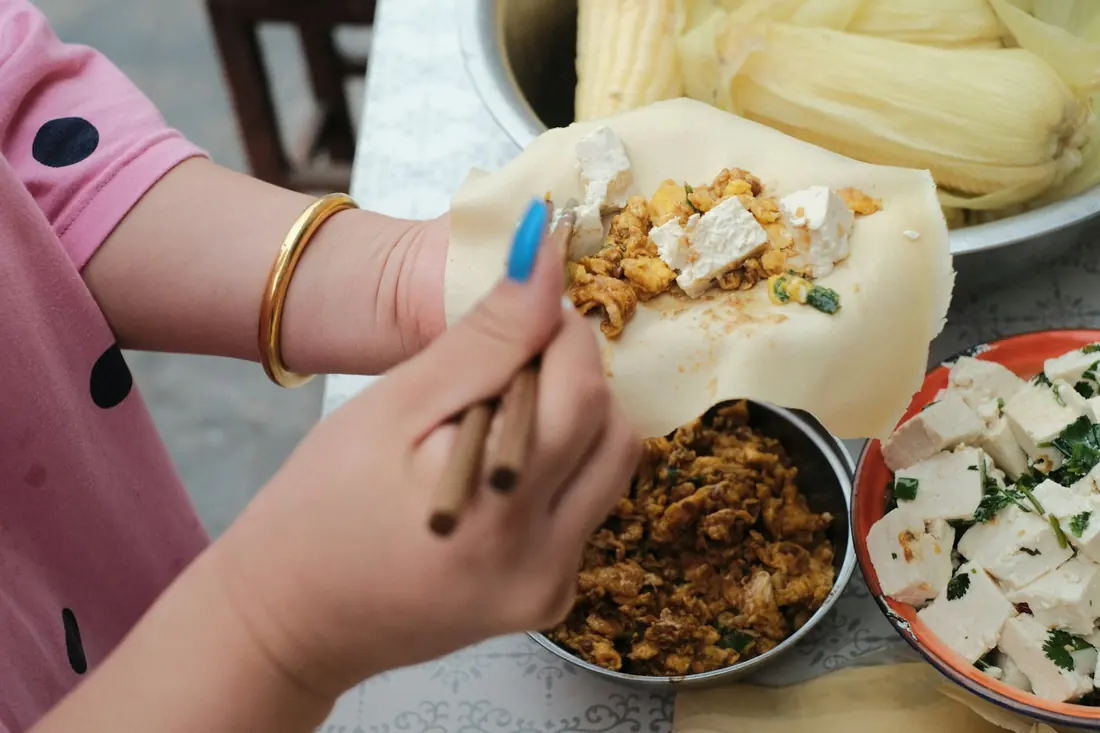
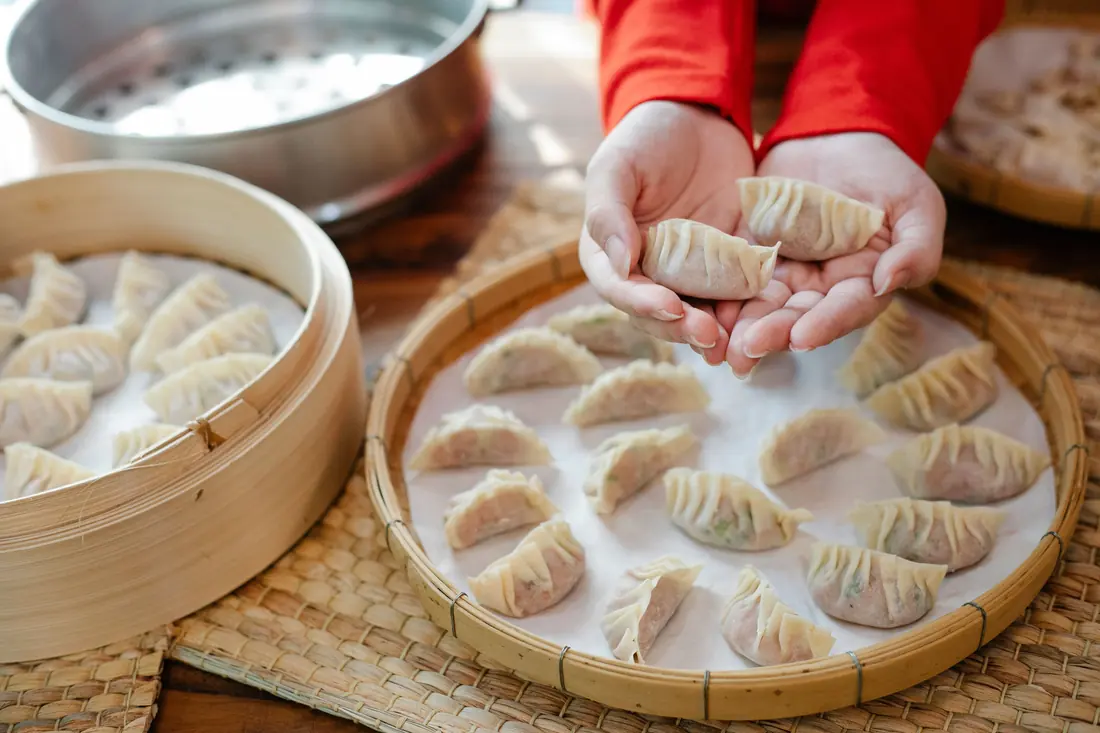
- A square wonton wrapper is laid flat.
- A spoonful of filling goes in the centre.
- The edges are moistened and folded — into a triangle, a purse, or the four-pointed shape most people picture.
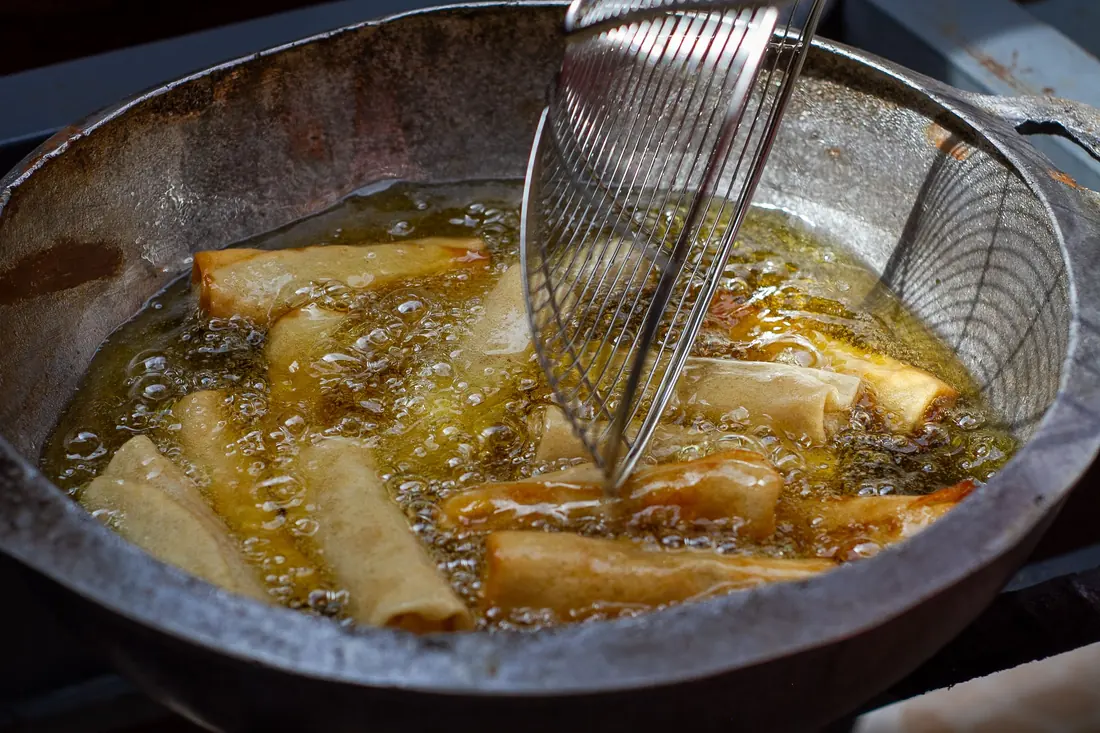
- The parcel is fried until the wrapper blisters and turns golden.
The folding matters more than it looks. A parcel sealed badly will open in the fryer, and one packed too full will burst. That is why the good ones hold their shape and the poor ones arrive as loose fried wrappers with the filling gone.
Fried or steamed changes everything
The same filling behaves completely differently depending on the method. Frying dries and crisps the wrapper, so the contrast between the crunch and the soft centre becomes the point of the dish.
Steaming keeps the wrapper soft and pliable, which pushes the flavour of the filling forward instead. Neither is better; they are different dishes that happen to share a wrapper.
What to look for on the menu
Menu wording tells you most of what you need before you order.
- “Crab rangoon” — expect fried, creamy and rich.
- “Crab wontons” — could be either; read the rest of the line.
- “Stuffed” — indicates a filled parcel rather than a plain fried wrapper.
- “House made” — the kitchen folds them itself rather than buying them in frozen, which usually shows in the texture.
Roll & Go Sushi lists Crab Angels, described on the menu as house made specialty stuffed crab wontons. As with any filled appetiser, the description is the thing to read rather than the name, and it is worth asking about the filling if you are avoiding a specific ingredient. You can see the current menu for what is available.
Why they are on almost every menu
Crab rangoon spread because it solves several problems at once for a kitchen. The components keep well, the parcels can be folded ahead of service and fried to order, and the flavour profile — fried, creamy, mildly sweet — is broadly familiar to American diners regardless of what else is on the menu.
That is also why it appears on Chinese, Thai, Japanese and pan-Asian menus alike. It is not native to any of those cuisines. It is a house appetiser that happens to work alongside most of them, and restaurants keep it because people order it.
The consequence is enormous variation. Two restaurants can serve something under the same name with different fillings, different folds and different sauces, and neither is doing anything unusual.
The sauce that comes with them
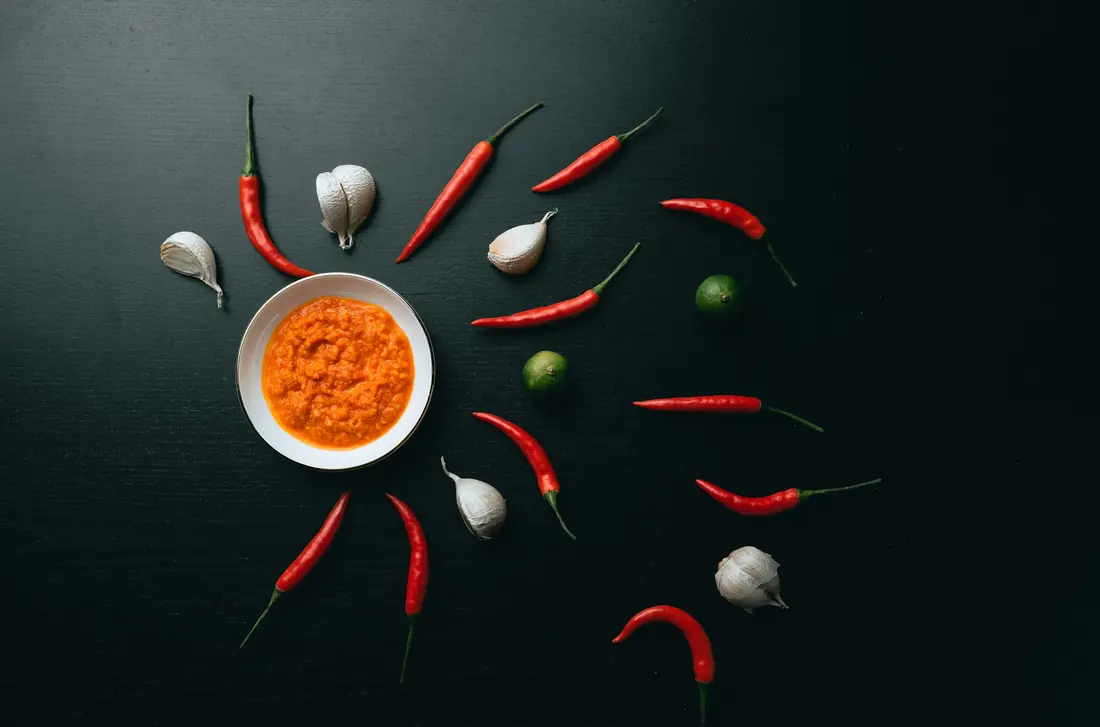
Most kitchens send a dipping sauce alongside, and which one you get says something about the house style. A sweet chilli sauce is the most common, thin and bright, and it works because the acidity cuts through the cream cheese.
Others send a darker, thicker sweet-and-sour sauce, or a plum-based one. A few send nothing at all, on the reasoning that a well-made parcel is already seasoned and does not need help.
None of these is more correct than the others, and the sauce is optional in every case. If you find the filling rich, use it; if the parcels are hot and freshly fried, they usually stand on their own.
What to order them with
Fried appetisers work best against something clean. A clear soup is the usual counterweight, and sushi works well for the same reason — cool rice and fish against something hot and crisp.
What tends not to work is stacking fried items. A tempura roll plus a fried appetiser plus fried rice is a lot of the same texture, and the individual dishes stop registering. Our guide to choosing between the starter soups covers what pairs with what.
Ordering them as part of a meal
A portion is usually four to six pieces, which suits two people as a starter and one person as a snack. They are rich, so ordering them alongside other fried items tends to be more than a table actually wants.
If you are ordering for a group, one portion between three or four works better than one each. They are a shared opener rather than a course, and the richness that makes the first two pieces good makes the fifth much less so.
Eating them at their best
These are a time-sensitive dish. The wrapper is crisp for a few minutes and then softens as steam from the filling works outward, so they are the first thing to eat when a table order arrives.
They are also the item that suffers most from a delivery journey. If you are ordering to take home and want them crisp, collect rather than have them brought, and open the container as soon as you arrive rather than leaving them sealed.
Spotting a good one
There are a few reliable signs, and none of them require expertise.
- The wrapper is blistered rather than uniformly smooth. Blisters mean it hit hot oil properly rather than sitting in oil that had cooled.
- It holds its shape. A parcel that has burst open lost its filling in the fryer.
- The colour is even gold, not dark brown. Dark edges usually mean overcooked or old oil.
- It is hot in the middle. A cold centre means it was fried ahead and reheated.
The other tell is how quickly they arrive. Fried appetisers are cooked to order in most kitchens, so a five-minute wait is a good sign rather than a bad one.
Frequently Asked Questions
Is crab rangoon Chinese?
No. It is an American dish that appeared in mid-twentieth-century tiki restaurants. The wonton wrapper is Chinese, but the cream cheese filling and the name are not.
Is there real crab in crab rangoon?
It varies. Some kitchens use crab meat, others use an imitation seafood blend. If this matters to you, ask the restaurant rather than assuming from the name.
What is the difference between crab rangoon and crab wontons?
Crab rangoon is normally fried and contains cream cheese. Crab wontons may be steamed or fried and usually have a firmer, more savoury filling. Menus use both names loosely.
What sauce is served with them?
Usually a sweet dipping sauce, often sweet chilli or a sweet-and-sour style. It is there to cut the richness of the filling.
Fried, creamy and American, whatever the menu calls it. Read the description rather than the name, and eat them while they are still hot.
Have a look at the appetisers and specialty items, or read about how the house rolls are built.